187 résultats
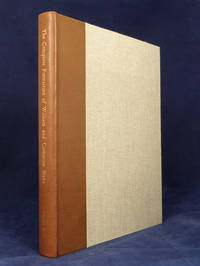
1977réf. 53391977. London: Trianon Press: 1977. 4to 155 pp. 51 plates. Original quarter brown morocco slipcase. Fine as issued. § Limited to 562 copies. This is copy 67. The definitive work on all known portraits of Mr. and Mrs. Blake. Not in Bentley BB or supplement. unknown
1968réf. 1075951968. London: Trianon Press 1968. 4 vols. 8vo and 12mo Vol. I 8vo i-vii-viii 50 4 pp. Vol. II 12mo 2 pp. 22 plates Vol. III 4 pp. 31 plates Vol. IV 12mo 2 pp. 10 plates negative and copper plate. Original tan morocco volume 4 in brown cloth as issued cloth slipcase gilt lettering to backstrips of all three volumes. Backstrips slightly flaked. § Copy #14 with the first three volumes bound in morocco. From an edition of 726 total copies including 700 numbered 1 to 700 of which the first 50 have additional material and are in a special binding and 26 reserved copies lettered A-Z. Volume I is an introductory volume followed by three volumes of plates. "In about 1818 Blake revised For Children: The Gates of Paradise giving the work the new title of For the Sexes: The Gates of Paradise and adding three new text plates at the end Plates 19-21. All twenty-one plates are intaglio etchings/engravings. Plates 19-20 contain brief interpretive statements keyed by number to the preceding design plates. The final plate is addressed to Satan as the "God of This fallen World." Blake Archive. Bentley BB 48. unknown
1972réf. 3555London: printed in Paris at the Trianon Press for the William Blake Trust 1972. No. VI of 50 de luxe copies. 21 plates - 20 plates reproduced by colour collotype with water-color washes by hand through stencil and one engraving; together with a set of plates showing progressive stages of the collotype and hand stencil process with guide sheet and stencil. Edition de luxe limited to 50 copies with additional proof sheets progressive plates and original stencil etc. 2 vols. 4to and small 4to. full brown morocco in original marbled paper covered slipcase. Near fine prospectus inserted loose.The text is a clear statement of Blake’s beliefs regarding the nature of man. The full book only came to light in 1953 and this is the first reproduction of the text. Such maxims are included as “Man’s desires are limited by his perceptions none can desire what he has not perciev’d sic” and “If any could desire what he is incapable of possessing despair must be his eternal lot”.Bentley Blake Books 202. One of only 50 de luxe copies with additional material printed in Paris at the Trianon Press for the William Blake Trust unknown
1972réf. 6961London: printed in Paris at the Trianon Press for the William Blake Trust 1972. Letter L of 26 copies reserved for the Trustees of the William Blake Trust and teh Publishers. 21 plates - 20 plates reproduced by colour collotype with water-color washes by hand through stencil and one engraving. 2 vols. 4to and small 4to. quarter brown morocco with marbled paper covered boards in original marbled paper covered slipcase. A very good copy.The text is a clear statement of Blake’s beliefs regarding the nature of man. The full book only came to light in 1953 and this is the first reproduction of the text. Such maxims are included as “Man’s desires are limited by his perceptions none can desire what he has not perciev’d sic” and “If any could desire what he is incapable of possessing despair must be his eternal lot”.Bentley Blake Books 202. printed in Paris at the Trianon Press for the William Blake Trust hardcover
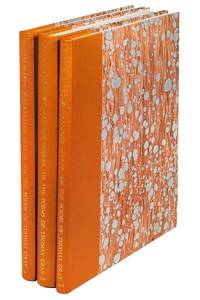
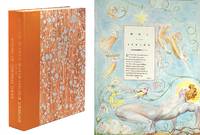
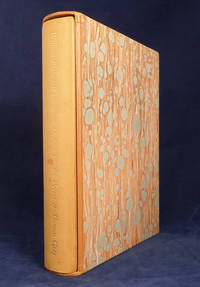
réf. 1268401972. London: Trianon Press 1972. 3 volumes folio with 116 color facsimile leaves reproduced by collotype and hand-stencil color the text of the poems reproduced from copper-plate with 3 additional printings to reproduce Blake's pencillings and the tone of the paper. Marbled boards morocco backstrips slipcases a fine set as issued. § Edition limited to 518 copies in all including 100 copies for Paul Mellon personally of which 12 copies were a super de luxe issue in three volumes with extra material 36 copies were a de luxe issue also with extra material but in sheets unbound18 copies were hors commerce contents unrecorded and 352 copies either bound in 3 volumes in slipcases or as a single set of the loose sheets in a box. This is copy #125. The 116 water-color illustrations to Thomas Gray's poems are among Blake's major achievements as an illustrator. They were commissioned in 1797 by Blake's friend the sculptor John Flaxman as a gift for his wife Ann to whom Blake addressed the poem that ends the series. The commission may have been inspired by the Flaxmans' seeing Blake's water-color designs to Edward Young's Night Thoughts begun in 1795. The Gray illustrations follow the same basic format. Blake cut windows in large sheets of the same type of Whatman paper used for the Night Thoughts illustrations and mounted in these windows the texts of Gray's poems from a 1790 octavo edition published by John Murray leaving out some prefatory materials fly-titles the notes and the 7 engraved illustrations. Blake then drew and colored his designs surrounding the letterpress texts. On blank versos near the beginning of each poem and in one case on a separate piece of paper pasted over letterpress text Blake inscribed with pen and ink either titles for each design or quotations from the poem to indicate the passage illustrated. On most text pages Blake also drew a pencil cross left of the first line of the illustrated passage. He numbered most leaves consecutively in pen and ink beginning a new sequence for each of the 13 poems. Blake conceived of his work as an illustrated book rather than a series of unbound designs as indicated by his offsetting Gray's texts above and to the right left on versos from the middle of each leaf-then the convention for all letterpress books. Although listed by William Michael Rossetti in his catalogue of Blake's drawings and paintings published in the 1863 and 1880 editions of Alexander Gilchrist's Life of William Blake the Gray illustrations were virtually unknown until their rediscovery by Herbert Grierson in 1919. The Trianon Press reproductions are recognized as the finest examples of the art of facsimile reproduction; working from the originals in Paul Mellon's collection each leaf is faithfully hand-colored through stencils to achieve an astonishing exactitude. The Times Literary Supplement stated that nothing like these books had ever been printed before and that it was highly unlikely that they could be printed again. Bentley Blake Books 385. unknown
réf. 1077171972. London: Trianon Press 1972. Folio with 116 color facsimile leaves reproduced by collotype and hand-stencil color the text of the poems reproduced from copper-plate with 3 additional printings to reproduce Blake's pencillings and the tone of the paper. Original sheets marbled boards morocco backstrip lettered in giltquarter brown morocco box. § Edition limited to 518 copies in all including 100 copies for Paul Mellon personally of which 12 copies were a super de luxe issue in three volumes with extra material 36 copies were a de luxe issue also with extra material but in sheets unbound18 copies were hors commerce contents unrecorded and 352 copies either bound in 3 volumes in slipcases or as a single set of the loose sheets in a box. This is copy 387. The 116 water-color illustrations to Thomas Gray's poems are among Blake's major achievements as an illustrator. They were commissioned in 1797 by Blake's friend the sculptor John Flaxman as a gift for his wife Ann to whom Blake addressed the poem that ends the series. The commission may have been inspired by the Flaxmans' seeing Blake's water-color designs to Edward Young's Night Thoughts begun in 1795. The Gray illustrations follow the same basic format. Blake cut windows in large sheets of the same type of Whatman paper used for the Night Thoughts illustrations and mounted in these windows the texts of Gray's poems from a 1790 octavo edition published by John Murray leaving out some prefatory materials fly-titles the notes and the 7 engraved illustrations. Blake then drew and colored his designs surrounding the letterpress texts. On blank versos near the beginning of each poem and in one case on a separate piece of paper pasted over letterpress text Blake inscribed with pen and ink either titles for each design or quotations from the poem to indicate the passage illustrated. On most text pages Blake also drew a pencil cross left of the first line of the illustrated passage. He numbered most leaves consecutively in pen and ink beginning a new sequence for each of the 13 poems. Blake conceived of his work as an illustrated book rather than a series of unbound designs as indicated by his offsetting Gray's texts above and to the right left on versos from the middle of each leaf-then the convention for all letterpress books. Although listed by William Michael Rossetti in his catalogue of Blake's drawings and paintings published in the 1863 and 1880 editions of Alexander Gilchrist's Life of William Blake the Gray illustrations were virtually unknown until their rediscovery by Herbert Grierson in 1919. The Trianon Press reproductions are recognized as the finest examples of the art of facsimile reproduction; working from the originals in Paul Mellon's collection each leaf is faithfully hand-colored through stencils to achieve an astonishing exactitude. The Times Literary Supplement stated that nothing like these books had ever been printed before and that it was highly unlikely that they could be printed again. Bentley Blake Books 385. unknown
réf. 1028821971. London: Trianon Press 1971. Small folio 72 pages with 16 color facsimile leaves suites of progressive plates and 116 monochrome illustrations. Marbled boards morocco backstrip slipcase. Signed by Keynes. A fine copy as issued. § Limited to 28 copies so inscribed and signed by Geoffrey Keynes this particular volume is labeled no. 2. This is the de luxe edition of the trade version of the Gray issued by the Trianon Press in 1972 using 8-color printing. Although the three-volume folio edition is a magnificent piece of book making this version is more accessible and easier to use and enjoy and the quality of the color printing is Trianon Press at its best. The 116 water-color illustrations to Thomas Gray's poems are among Blake's major achievements as an illustrator. They were commissioned in 1797 by Blake's friend the sculptor John Flaxman as a gift for his wife Ann to whom Blake addressed the poem that ends the series. The commission may have been inspired by the Flaxmans' seeing Blake's water-color designs to Edward Young's Night Thoughts begun in 1795. The Gray illustrations follow the same basic format. Blake cut windows in large sheets of the same type of Whatman paper used for the Night Thoughts illustrations and mounted in these windows the texts of Gray's poems from a 1790 octavo edition published by John Murray leaving out some prefatory materials fly-titles the notes and the 7 engraved illustrations. Blake then drew and colored his designs surrounding the letterpress texts. On blank versos near the beginning of each poem and in one case on a separate piece of paper pasted over letterpress text Blake inscribed with pen and ink either titles for each design or quotations from the poem to indicate the passage illustrated. On most text pages Blake also drew a pencil cross left of the first line of the illustrated passage. He numbered most leaves consecutively in pen and ink beginning a new sequence for each of the 13 poems. Blake conceived of his work as an illustrated book rather than a series of unbound designs as indicated by his offsetting Gray's texts above and to the right left on versos from the middle of each leaf-then the convention for all letterpress books. Although listed by William Michael Rossetti in his catalogue of Blake's drawings and paintings published in the 1863 and 1880 editions of Alexander Gilchrist's Life of William Blake the Gray illustrations were virtually unknown until their rediscovery by Herbert Grierson in 1919. The Trianon Press reproductions are recognized as the finest examples of the art of facsimile reproduction; working from the originals in Paul Mellon's collection each leaf is faithfully hand-colored through stencils to achieve an astonishing exactitude. The Times Literary Supplement stated that nothing like these books had ever been printed before and that it was highly unlikely that they could be printed again. Bentley Blake Books 385. unknown
1976réf. BIBLIO-57445Trianon Press Paris first edition 1976. One of 480 numbered ordinary copies from a total edition of 538. Quarter-morocco and marbled boards 4to. 5 facsimile plates 8 pp. From the Commentary: "The Book of Los was the first of the two small books executed by Blake mainly as etchings on copper to be printed as ordinary intaglio plates. The Book of Ahania was the companion volume. The title-pages of both books were dated by Blake 1795 so that they were probably the last ones to be produced in his Lambeth house. Each book exists in only a single copy. For this facsimile direct collotype negatives in the size of the originals were made from the volume in the British Museum. A proof printing was done from these and each plate was then expertly coloured in the Museum to make a faithful replica of the original. The direct collotype negatives were subsequently used again for the printing of the present facsimile the replicas being used as colour-guides for cutting the stencils and for colouring the plates." The book was printed "on Arches pure rag paper made to match the paper used by Blake. Copy no. X a misnumbering as roman numerals were reserved for the 32 special copies this being one of 480 numbered copies from a total edition of 538. Very Good in Very Good slipcase. Trianon Press, Paris, first edition, 1976 hardcover
1970Roy. 8vo., First Edition thus, on watermarked rag paper, with 10 splendid collotype reproductions in the text; marbled boards, green morocco back lettered in gilt, a very good, clean copy housed in publisher's marbled board slip-case. EDITION LIMITED TO 600 NUMBERED COPIES (THIS COPY NO. 391).
Paris, Editions du Trianon, 1930. In-12, broché, couverture rempliée, non coupé, 124 pp. Edition originale. 12ème volume de la Collection " Suppléments à quelques oeuvres célèbres ". Un des exemplaires numérotés sur vergé de Rives. Bel exemplaire.
réf. 17262Paris, Editions du Trianon, 1930. In-12, broché, couverture rempliée, non coupé, 124 pp.
2002réf. 29760Paris Éditions De Fallois 2002 Fort-in-8 735 pp et cahier photo couleurs
Paris, Editions du Trianon, 1929. In-12, broché, couverture rempliée, 155 pp. Edition originale. 11ème volume de la Collection " Suppléments à quelques oeuvres célèbres ". Un des exemplaires numérotés sur vergé de Rives. Bel ex.
réf. 8544Paris, Editions du Trianon, 1929. In-12, broché, couverture rempliée, 155 pp.
2007réf. 16130Hugo et Compagnie 2007 24x2 8x17 6cm. 2007. Broché couverture rempliée. Dans ce livre Alain Baraton jardinier en chef du domaine de Trianon et du parc du château de Versailles mêle son parcours personnel à l'histoire du parc. Il y raconte comment après avoir découvert le parc en 1976 il a consacré sa vie à ce jardin d'exception et partage de nombreuses anecdotes liées à la grande et à la petite histoire de Versailles
1930réf. 14491930 plaq. in-8 couronne, couv. recto ill., lég. mouill. en queue, 51 p., début 20 ème girard éd.,
1911réf. 2761911 br, in-12, mq coiff. de queue, fig.,cliché, plans, 110 p, bernard éd,
1760réf. 27691Paris chez Basset 1760 une vue d'optique en couleurs, GRAVÉE A L'EAU-FORTE ET AQUARELLÉE SUR PAPIER DE FORMAT: 34,5 x 51 cm., pli au centre, 1760 Paris chez Basset Editeur,
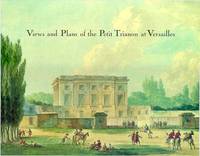
1998réf. 39679France: Alain De Gourcuff. New. Hardcover. FREE UPGRADE to Courier/Priority Shipping Upon Request – – IN STOCK AND IMMEDIATELY AVAILABLE FOR SHIPMENT - FLAWLESS COPY PRISTINE - Text in English. 30 color illustrations. -- with a bonus offer--; T-Arizzoli; Arizzoli-Clementel Pierre; Ducamp Emmanuel; Chatelet Claude-Louis Recueil Des Plans Du Petit Trianon Views and Plans of the Petit Trianon at Versailles CHATEAU VERSAILLES FRANCE PARC . 1998. 2909838307 . Alain De Gourcuff hardcover
réf. 53DxParis Brunox In 12 Oblong Cartonnage editeur toilé mauve - titre doré - dos insolé- interieur trés frais - bon etat d'ensemble
réf. 53DxParis Brunox In 12 Oblong Cartonnage editeur toilé mauve - titre doré - dos insolé- interieur trés frais - bon etat d'ensemble
1864réf. 5245Charpentier libraire-editeur 1864 371 pages in8. 1864. reliure éditeur demi basane dos à nerfs. 371 pages. Ce livre rassemble les contes et nouvelles d'Alfred de Musset poète et dramaturge romantique français du XIXe siècle. L'ouvrage s'inscrit dans une politique de conservation patrimoniale et correspond à une édition publiée par l'éditeur Charpentier notamment en 1884 et 1888
2004réf. LFA-126716845Un ouvrage de 496 pages, format 350 x 495 mm, relié toile, réimpression (2004) de grande qualité de l'édition de 1808, 134 gravures pleine page, tirage limité à 500 exemplaires sur papier Vélin, très bon état
réf. 144541352 Broché - 13,5 x 22 - 273 pp - année 1995 - Grandes Biographies Flammarion -
1892réf. 664821 vol. in-8 en feuillets réunis par un ruban vert en angle, Cerf et Fils, 32 ff., les dessins sont signés de Trianon ou Dinant