Mitamura, Kunihiro (Publisher)Antiquariat.de
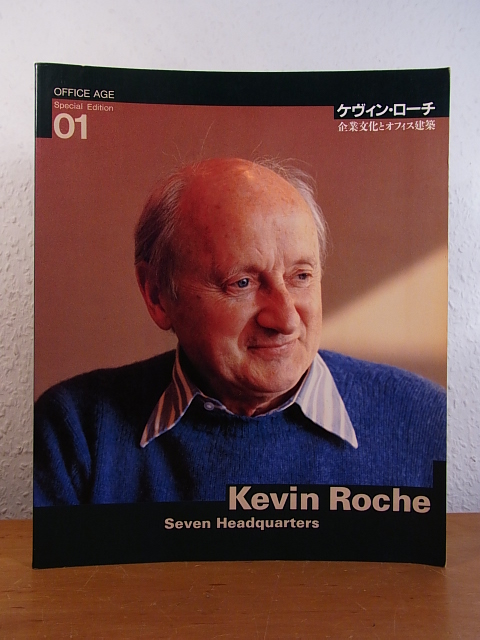
Office Age Magazine. Special Edition 01: Kevin Roche. Seven Headquarters [English - Japanese]
1991réf. 102643ITOKI, Tokyo, 1991. 29 cm ; kart.
Antiquariat Weber · Allemagne25,00 €
1 728 résultats
1911réf. 2403290090xbvkParis, Imprimerie Nationale - Octave Doin Éditeur, 1er Janvier 1911. LII, 1.170 pages; with many thousand names of all and everyone related to the French Navy and extensvie Index. - Richly gilt decorated and -titled heavy red grained full-morocco binding of the period over 4 raised bands, all edges gilt and moirée-silk covered endpapers; small-4to.(ca. 26 x 18 x 7 cm; ca. 2 kg.).
1895Very Good Turkish, Ottoman (1500-1928) Original color map. Folded. Oblong folio. (35 x 52 cm). In Ottoman script. Color lithograph. A very detailed and attractive Ottoman map of America. Scale: 1:12.000.000. Otherwise a very good copy. Slightly chipped extremities. Dated Hegira: 1311 = [Gregorian 1895]. Ali Seref Pasa or Hafiz Ali Esref. He was a soldier, who was schooled in Paris as a cartographer around 1862. Already in Paris he published his first atlas with 22 maps, called 'Yeni atlas'. Upon his return to Istanbul he became a chief cartographer at the Maatbaa-i amire Printing Press in Beyazit, which was the successor of the Muteferrika press from 1727. Among others he translated the large Kiepert map of Anatolia to Ottoman. He died in 1907, leaving his large project of a gigantic map of Anatolia in 100 sheets unfinished. Ali's name is often misunderstood or even listed as two different people: Ali Seref Pasa and Hafiz Ali Esref. Until the surname law adopted on June 21, 1934, Turks did not have surnames. They were born with one first name and were until the adulthood described only as sons or daughters of their parent's names. Later they were given titles such as Effendi (Sir), Bey (Chief) or Hanim (Madam) for higher classes, or they were given names according to their work or class. The names were not inherited by children until 1934, when the surname law was enforced. The map maker Ali received names Seref, the honourable, and Pasa, the dignitary. He was also known as Hafiz, the memorizer of Qur'an and Esref, Proud. So Ali Seref Pasa would have a meaning 'Honourable Dignitary Ali, and Hafiz Ali Esref, Memorizer of Qur'an, Proud Ali. Daruttibaa - Matbaa-I Amire Printing Press: The first press in the Muslim world, called Daruttibaa, was founded in Istanbul by Ibrahim Muteferrika in 1727, with a permission of Sultan Ahmeet III. It was located in Muteferrika's house. The first book was published in 1729 and until 1742 sixteen other works followed. After Muteferrika's death, the press was supressed for printing, as printed books were considered dangerous. In 1796 the press was purchased by the government and moved to Uskudar in Istanbul, and in 1831 finally to Beyazit, where it was renamed to Matbaa-i Amire in 1866. The press was closed in 1901 and was reopened in 1908 under the name 'Âmire' In 1927 the name changed to State Printing House. The press still exists and is known for publishing school and educational books. Extremely rare. Not in OCLC.; Not in TBMM Map Collection.
1894Very Good Turkish, Ottoman (1500-1928) Original color chromo-lithograph map. Folded. Oblong folio. (40 x 50 cm). In Ottoman script. Color lithograph. An attractive map which shows Austria-Hungary land with Venice Bay and North Italy. Scale: 1:3.500.000. Dated Hegira: 1310 = [Gregorian 1894]. This uncommon map of Austria-Hungary in Ottoman script was published in an atlas, 'Yeni cografya atlasi', which was issued in Istanbul in the late 19th century. Ali Seref Pasa or Hafiz Ali Esref. He was a soldier, who was schooled in Paris as a cartographer around 1862. Already in Paris, he published his first atlas with 22 maps, called 'Yeni atlas'. Upon his return to Istanbul, he became a chief cartographer at the Matbaa-i Amire Printing Press in Beyazit, which was the successor of the Muteferrika press from 1727. Among others, he translated the large Kiepert map of Anatolia to Ottoman. He died in 1907, leaving his large project of a gigantic map of Anatolia in 100 sheets unfinished. Ali's name is often misunderstood or even listed as two different people: Ali Seref Pasa and Hafiz Ali Esref. Until the surname law adopted on June 21, 1934, Turks did not have surnames. They were born with one first name and were until adulthood described only as sons or daughters of their parent's names. Later they were given titles such as Effendi (Sir), Bey (Chief), or Hanim (Madam) for higher classes, or they were given names according to their work or class. The names were not inherited by children until 1934 when the surname law was enforced. The mapmaker Ali received names Seref, the honorable, and Pasa, the dignitary. He was also known as Hafiz, the memorizer of the Qur'an and Esref, Proud. So Ali Seref Pasa would have a meaning 'Honourable Dignitary Ali, and Hafiz Ali Esref, Memorizer of Qur'an, Proud Ali. Daruttibaa - Matbaa-I Amire Printing Press: The first press in the Muslim world, called Daruttibaa, was founded in Istanbul by Ibrahim Muteferrika in 1727, with permission of Sultan Ahmet III. It was located in Muteferrika's house. The first book was published in 1729 and until 1742 sixteen other works followed. After Muteferrika's death, the press was suppressed for printing, as printed books were considered dangerous. In 1796 the press was purchased by the government and moved to Uskudar in Istanbul, and in 1831 finally to Beyazit, where it was renamed to Matbaa-i Amire in 1866. The press was closed in 1901 and was reopened in 1908 under the name 'Âmire' In 1927 the name changed to State Printing House. The press still exists and is known for publishing school and educational books. Extremely rare. Not in OCLC.; Not in TBMM Map Collection.
1894Very Good Turkish, Ottoman (1500-1928) Original color chromo-lithograph map. Folded. Oblong folio. (40 x 50 cm). In Ottoman script. Color lithograph. It Portugal and Spain with Gibraltar and North African shores. Scale: 1:3.500.000. Dated Hegira: 1310 = [Gregorian 1894]. OTTOMAN MAP of SPAIN & PORTUGAL] Ispanya & Portekiz: Sâye-i Türkiye Hazret Gazi Sultan Abdülhamid Hân-i Sâni'de Maarif Umûmiye Nezâret-i Celîlesi ruhsatiyle Haset tarafindan Fransa Cemiyet-i Cografya âzâlarindan mütesekkil komisyona mahsûs tanzîm edilmis oldugu son atlasinin tercümesi olarak bu def'a Erkân-i Umûmiyye Dairesi Besinci Fen Subesi'ne me'mûr piyade mirlivâlarindan saâdetlü Ali Seref Pasa maarifetleriyle tersîm ettirilmistir. This uncommon map of Spain and Portugal in Ottoman script was published in an atlas, 'Yeni cografya atlasi', which was issued in Istanbul in the late 19th century. Ali Seref Pasa or Hafix Ali Esref. He was a soldier, who was schooled in Paris as a cartographer around 1862. Already in Paris he published his first atlas with 22 maps, called 'Yeni atlas'. Upon his return to Istanbul he became a chief cartographer at the Maatbaa-i amire Printing Press in Beyazit, which was the successor of the Muteferrika press from 1727. Among others he translated the large Kiepert map of Anatolia to Ottoman. He died in 1907, leaving his large project of a gigantic map of Anatolia in 100 sheets unfinished. Ali's name is often misunderstood or even listed as two different people: Ali Seref Pasa and Hafiz Ali Esref. Until the surname law adopted on June 21, 1934, Turks did not have surnames. They were born with one first name and were until the adulthood described only as sons or daughters of their parent's names. Later they were given titles such as Effendi (Sir), Bey (Chief) or Hanim (Madam) for higher classes, or they were given names according to their work or class. The names were not inherited by children until 1934, when the surname law was enforced. The map maker Ali received names Seref, the honourable, and Pasa, the dignitary. He was also known as Hafiz, the memorizer of Qur'an and Esref, Proud. So Ali Seref Pasa would have a meaning 'Honourable Dignitary Ali, and Hafiz Ali Esref, Memorizer of Qur'an, Proud Ali. Daruttibaa - Matbaa-I Amire Printing Press: The first press in the Muslim world, called Daruttibaa, was founded in Istanbul by Ibrahim Muteferrika in 1727, with a permission of Sultan Ahmeet III. It was located in Muteferrika's house. The first book was published in 1729 and until 1742 sixteen other works followed. After Muteferrika's death, the press was supressed for printing, as printed books were considered dangerous. In 1796 the press was purchased by the government and moved to Uskudar in Istanbul, and in 1831 finally to Beyazit, where it was renamed to Matbaa-i Amire in 1866. The press was closed in 1901 and was reopened in 1908 under the name 'Âmire' In 1927 the name changed to State Printing House. The press still exists and is known for publishing school and educational books. Extremely rare. Not in OCLC.; Not in TBMM Map Collection.
1991réf. 102643ITOKI, Tokyo, 1991. 29 cm ; kart.
1957réf. 1128559(Gütersloh), C. Bertelsmann, (1957). 4to. 320 S. m. vielen Abb., Rissen u. Konstruktionszeichn. OPp.
2014réf. 11447GAUSSEN 2014 149 pages 14x1 6x21 8cm. 2014. Broché. 149 pages.
réf. Fisker, KayIn Pristine Condition. unknown
1912réf. 0008892Chicago Plan Commission 1912. First edition. Octavo. Good. Jules Guerin maps photos. Small 4to 147 pages tawny cloth some soiling This is an abridged presentation of Burnham's PLAN OF CHICAGO for the use of the Chicago schools and a very useful study. It is also a puff piece. The first sentence proclaims "Chicago is destined to become the center of the modern world if the opportunities in her reach are intelligently realized and if the city can receive a sufficient supply of trained and enlightened citizens." With Jules Guerin illustrations and questions for study. Maps photos. Chicago Plan Commission unknown
1998Oversize. 229 p., illus. Signed by the author Hardcover Very good condition good
1862réf. 118394Paris, L. Hachette 1862 2 volumes. In-8 22 x 13,5 cm. Reliures demi-basane vert-olive, dos lisses ornés de filets à froid encadrés de filets dorés, 498-349 pp, tables des matières, 6 planches repliées in fine. Mors légèrement frottés, intérieur frais. Exemplaires en bon état.
1998No marks or inscriptions. A lovely clean very tight copy with bright unmarked boards and no bumping to corners. Dust jacket not price clipped or marked or torn or creased with tiny scratch to lower front edge. 125pp. A fascinating account of enigmatic artistic and architectural mysteries throughout the world. These include the Nazca Lines, Costa Rica Balls, Sacsayhuaman's impossible stone construction, Machu Picchu. the Sphinx, Crop Circles, Mayan Crystal Skulls and many more. Very well illustrated.
195132 pages of text, 56 pages of illustrations, folded plan, French text, (Aspect du Monde en Couleurs ; 2), covers loose, ink notes on title page. eng
199711 pages, illustrated, plan. eng
Oblong folio (245 x 320 mm), 12 tinted lithograph isometrical views, and 12 lithograph plans on 11 sheets (of which one sheet has 2 plans), and an additional 8vo coloured lithograph 'Laying out of mixed plantations' bound at the rear, some light dust-soiling but generally clean, orig. publisher's cloth-backed wrappers, the upper wrapper with a printed label 'Morton's Farm Building, 24 plates. price 10s 6d.' The tinted lithographs provide bird's eye views of barns and other farm buildings, most of considerable size and sophistication. Each view is accompanied with a plan. OCLC records three copies only, at the National Library of Scotland, The National Art Library and Canadian Centre for Architecture.
Published in 1970s, 24 pages, illustrated, plans. eng
2002réf. 101904Carles Broto & Josep Ma. Minguet, Barcelona & Instituto Monsa de Ediciones, Barcelona, 2002. 34,5 x 25 cm ; Pp.
2003réf. 101603Links International, Barcelona, 2003. 22,5 cm ; kart.
2003réf. 102432Carles Broto & Josep Ma. Minguet, Barcelona, 2003. 30,5 cm ; Leinen
2003réf. 102524Carles Broto i Comerma, Barcelona, 2003. 30,5 cm ; Pp.
1954Half-leather binding. Telephone Talk was the glossy bimonthly publication of the British Columbia Telephone Company. It was written by employees for employees to present information of interest to those engaged in the plant, traffic, commercial, operating, accounting and other departments of the service. Each issue is replete with black and white photos and information on topics such as: company, industry and technological news, traffic levels, expansion plans, personnel announcements, publicity and social events, deaths, weddings, lists of exchanges, and more. As such, these issues serve as a vital preserve of rare and fascinating British Columbia history. This volume covers topics including: Port Alberni operator's help save infant's life (photo); Abbotsford and Mission 'cut' to automatic - 8 pages of photos and text; Photo of laying cable between Mission and Abbotsford; New buildings for Richmond and Steveston; Script of two successive broadcasts by Dorwin Baird of radio station CJOR re: proposed telephone rate increases; Telephone growth sets all-time record in 1952; Interim rate increase authorized; Nice photo of North Vancouver automatic telephone being installed in preparation for cut-over; Photos of cable-laying near Lion's Gate Bridge; new buildings for Albion, Belmont and Colquitz; Company earns dividends but has surplus shortage; Mr. W.S. Pipes; Gerald Clarke - Memoriam with photo; New buildings for Richmond and Steveston; Photos of expansion of Vancouver Island; Doug Beckett, 19, - Big League Baseball Prospect - photo; New International Radiotelephone Link; The Telephone in our Air Defense Picture - article; farewell to Miss H.L. Montgomery; dramatic photos of conduit installation under and on Lion's Gate Bridge; Photos of Port Coquitlam progress; Cloverdale's automatic program; R.S. Argue is new traffic manager; John Dickson Johnston in memoriam, with photo; Fred Buckle winds up record career; great Cloverdale office photos; Expansion photos from Kamloops, Vancouver and the Fraser Valley; A.J. Jack retires after 41 years; Trail and Rossland favour 'Free Calling'; 18,000 attended civil defense show; Kootenay Company joins B.C. Tel.; wonderful photo of 'sky-riders' working on lines over the Columbia River at Trail; North Van. goes automatic; Stirling Ross closes 50 year career; Nice photos of some of the company's heavy work gangs in the field; Photos of the company's war against winter; Company expansion sets new record; List of Exchanges - # of lines operating per community; Albion-Belmont Colquitz Cut-over; Radiotelephone network still expanding - article with 2 maps; Stirling Ross - in Memoriam, with photo; Port Coquitlam Photos; photos of a cable repair off Mayne Island; new New West Plant Center building; Cranbrook construction - photo of breaking ground; Editor of Telephone Talk, Peard Sutherland passes away - article with photo; Chilliwack joins B.C. Tel; photos of some of the equipment used to serve the British Empire Games in Vancouver; British Empire Games Transmitted in Record time - 2 page article; Inside New Westminster; Victoria Expansion Photos; A.H. Lemmon - Memoriam with photo; and more. Unmarked with moderate wear. Binding tight and square. Marbled endpapers. Name of company employee E.P. LaBelle stamped on top and bottom edges of text. Book
1927Telephone Talk was the glossy bimonthly publication of the British Columbia Telephone Company. It was written by employees for employees to present information of interest to those engaged in the plant, traffic, commercial, operating, accounting and other departments of the service. Each issue is replete with black and white photos and information on topics such as: company, industry and technological news, traffic levels, expansion plans, personnel announcements, publicity and social events, deaths, weddings, lists of exchanges, and more. As such, these issues serve as a vital preserve of rare and fascinating British Columbia history. This volume covers topics including: Miss K. Perrin joins as health supervisor; New West office upgraded - super photos; New York Engineer describes latest developments i.e. transmitting photos over phone lines; the truth about instrument zoning; Excitement at Duncan office; Diary describes observations on Chilliwack line; New cable successfully laid from Galiano Island to Point Grey - 9 pages of text and good photos; New Trans-Gulf circuits opened; sleeping car reservations by phone; Joe Gagnon; Phone expansion in Bay store; Seymour remodeling complete; Operating room photos; Coal, Travelling Men and Toll Lines Feature Nanaimo; High Poles removed from Seymour St. - 6 pages of text and great photos; Miss E.R. Walker - manages traffic on Vancouver Island; Cobble Hill Exchange; photo of updated Ladysmith office; Coast now linked with Okanagan by phone; Miss A. Falconer of the Port Coquitlam office; Successful Canadian jubilee broadcast from Ottawa; Photo of Chemainus Office; Royal Alexandra Apartments Fire - phones used from burning buildings by reporters; Company will have its own line to Vernon; Photo of public phones/'Pay Stations'; Photo of Belmont office near Victoria; Table of phones in use per province in Canada; Six pages of info. and great photos re: Kootenay; Battling Storm King; Mexico City can now communicate with Vancouver; Direct cable to be laid to West Vancouver; Article on poles; and more. Half-leather binding. Average wear. Ink stamp of company executive E.P. LaBelle upon top edge of text else unmarked. Binding intact. Substantial wear to backstrip with some chips missing. Book
1972Features: Nova Scotia, 1828; Notable Nova Scotians; You paint me a ship; Goldsmiths and silversmiths; Potters; Halifax Restorations; Furniture of Nova Scotia; Louisbourg - the emerging touchstone; Choice 18th century accents; Halifax - city in midpassage; Nova Scotia Museum; Places to remember; Textile Arts; Folk art in Cape Breton; A Pencil Sketch; Early Buildings; Heritage in Printing; Glass; Artists and their pictures. Average wear. Faint phone number in pencil on front cover else unmarked. Sound copy. Magazine
1975Features: New Brunswick Heritage; Biographical Studies in New Brunswick; New Brunswick Indian Crafts; Acadian Village - Preservation of a Heritage (bilingual); Early Silversmiths; Two New Brunswick Furniture Craftsmen - Thomas Nisbet and Alexander Lawrence; New Brunswick Before History; Architecture in New Brunswick - an Historical Survey; Of Ships and Shipbuilders; Heritage Under the Sea; Some Historic Buildings; The Acadian Museum of the University of Moncton (bilingual); Kings Landing; Stone Church - St. John's; George Neilson Smith - The Artist in New Brunswick; The Best of Pine and Maple; The Town of St. Andrews; A New Brunswick Contribution to Canadian Potting - Courtenay Bay Pottery; Capturing Canada's Past - The J.C. Webster Collection; The Creek and the Corner - a History of Woodstock, N.B.; New Brunswich Artists - a rapid glance at 18th, 19th and 20th century painting; Museums and Historic Sites. Date hand-written on front cover. Details blacked out on address label atop back cover. Average wear. Moisture exposure has resulted in gentle undulations to most pages, otherwise a sound copy of this very informative issue. Magazine
1981Features: The Buildings of Moose Factory - Preserving historic Hudson's Bay Co. Buildings at James Bay; Signposts for Collectors Part IV - Collecting Canadian Furniture; An Apprenticeship Piece - a pillar and block table made in Halifax in 1848; Hooked and Poked - the hand-crafted mats of Newfoundland and Labrador; The John R. Park Homestead - a monument to a Massachusetts Yankee in Upper Canada; The Glorious Red Ensign; Royal Visit to Montreal, 1860 - Memorabilia of the Prince of Wales' visit to Canada East; Four Centuries of Embroidery - needlework by Stuart gentlewoman highlights a collection. Moderate wear. Quality copy. Book