1 440 résultats
Published around 1968, 32 pages, illustrated, map, list of owners. eng
1927Very Good Turkish, Ottoman (1500-1928) Original color map. Chipped on folded places. Folded. Slightly toning on paper. Oblong atlas folio. (62 x 89 cm). In Ottoman script. Map of New Europe. Scale: 1/10.000.000. Gregorian: 1927. It's printed from 'Sudi Bey' Map Corpus. This was a map serie printed in the early Republican period in Turkish with Arabic letters. Very decorative map with its color flags of various countries longitudinal on right and left sides of map. Sudi printing house was an Ottoman / Turkish publisher who was one of the longest-running of Turkish publishers.
1927Very Good Turkish, Ottoman (1500-1928) Original color map. Chipped on folded places. Folded. Slightly toning on paper. Oblong atlas folio. (63 x 94 cm). In Ottoman script. Map of New Oceania. It shows Australia, Bahr-i Muhit-i Kebir, Pacific Ocean, New Zealand, Micronesia et alli. Scale: 1/20.000.000. Gregorian: 1927. It's printed from 'Sudi Bey' Map Corpus. This was a map serie printed in the early Republican period in Turkish with Arabic letters. Very decorative map with its color flags of various countries longitudinal on right and left sides of map. Sudi printing house was an Ottoman / Turkish publisher who was one of the longest-running of Turkish publishers.
1970réf. 1167215Hamburg, Christians Verlag, 1970. Gr.-8vo. 312 S. m. 93 Textabb., 290 Abb. auf Taf., 1 mehrfach gefaltete Taf. (Die Bau- u. Kunstdenkmale der Freien und Hansestadt Hamburg 2). OLwdbd m. OUmschl.
1980réf. 1196089Düsseldorf, Schwann, (1980). 4to. 12, 393, (1) S. m. 182 Textabb., 14 Taf. (davon 6 gefalt.). OLwd.
199395 pages. Kluckner has "drawn inspiration from his travels around the province, in most cases not from 'the days when I was drawn like a moth to the candle of a doomed building, or a doomed piece of landscape'... Records the mansions, cabins, churches, front porches and gardens, roadside shacks and grand panoramas that are the essence of the province." - from front flap. Somewhat above-average wear. Usual library markings. A sound copy. Book
1990208 pages. Index. Bibliography. "An extraordinary collection of watercolours painted in the late 1980s, many of downtown buildings and houses that have since been demolished, and others that are doomed by the changing nature and growth of the city... Accompanying the watercolours is a text of historical anecdote and architectural information, supplemented by photographs of similar designs from old architectural pattern books, and of the city itself in a less frantic age... A rare combination of architectural history, social history, contemporary politics, art, and nostalgia for the universal values of home, stability and neighbourhood." - from dust jacket. Clean and unmarked with light wear. A quality copy of this magnificent and handsome reference. Book
1937Ex Boots library book with minimal marks, to boards and rear end paper only. Foxing to page edges and a few pages. No other marks or inscriptions. No creasing to covers or to faded spine. A clean very tight copy with red cloth boards, enclosed tear to final index page and no bumping to corners. 288pp. History of the building of The Mansion House in London plus other London related history.
2001180 pages. Bibliography. References. Index. "Focuses on the topography, environment, historical development, buildings, and townscape of old Lhasa. Introduces future plans and issues concerning the safeguarding of Lhasa's historical townscape in the face of urban development. Includes 25 new maps never before published, satellite photos, historical maps and photos, watercolours, information on old buildings, and many new colour photos." - dust jacket. Dust jacket attractive in glossy new archival-grade Brodart. Average wear and usual library markings to book bound in scarlet cloth with hinges taped. A worthy reference copy. Book
1831Very Good Turkish, Ottoman (1500-1928) Original manuscript autograph handwritten document sealed 'Hüsrev Mehmed' sent to (and responded by) Serkâtib Mustafa. Written in special paper with 'ahar'. 39x21 cm. In Ottoman script. Slightly tear on folded place and slightly stains. Otherwise a very good manuscript paper. The document was written in accordance with the Ottoman state correspondence tradition prior to modernization. However, it is an indication of modernization that it is written to the serkâtib of Humâyûn (head clerk of the Ottoman / Turkish court) and not to the Sultan directly. The importance of this document is that it has many hints of modernization movements of the last period of Empire, depiction of the division of the first modern Ottoman army (Asakir-i Mansure-i Muhammediye) that's before one year of Egyptian Campaign by Koca Husrev Pasha and before eight years of proclamation of Reform (Tanzimat) and after only 22 years of Turkish Magna Carta (Sened-i Ittifak). Husrev Pasha was 'serasker' (commandant and head) of Assakir-i Mansure-i Muhammediye Army in that year. Husrev's text starts as 'Devletlü, inayetlü, atufetlü, oglum.." in 'Elqab'. In the Ottoman diplomacy, first person who used 'oglum' [i.e. my son] in elqab of the documents was Koca Hüsrev Pasha. (Source: Osmanli Arsiv Belgeleri, Orhan Sakin). Koca Hüsrev Pasha (Khosrew Pasha) was an Ottoman Kapudan Pasha ("Grand Admiral") of the Ottoman Navy and statesman who reached the position of Grand Vizier rather late in his career, between 2 July 1839 and 8 June 1840 in the reign of Abdülmecid I. However, during the 1820s, he occupied key administrative roles in the fight against regional warlords, the reformation of the army, and the reformation of Turkish attire. In 1801, Hüsrev Pasha commanded the 6,000 Ottoman troops who assisted the British in removing the French from Rashid (Rosetta). For this, he was made governor of Egypt Eyalet (province), in which position he was charged with assisting Hüseyin Pasha in the killing or imprisoning the surviving leaders of the Mamluks. Many of these were freed by or fled with the British, while others held Minia between Upper and Lower Egypt. [.] He was later made governor again by Muhammad Ali for 2 days [.] After Diyarbekir and Salonica, in 1806 he was governor of Bosnia Eyalet, before being reappointed as governor of Salonica in 1808. Hüsrev Pasha held the rank of Kapudan Pasha of the Ottoman Navy from 1811 to 1818. He was then appointed governor of the Eyalet of Trabzon twice, during which time he conducted for the Black Sea region of Turkey the struggle the central Ottoman state was waging against local feudal rulers (Derebeys). During the Greek War of Independence, he was appointed Kapudan Pasha again in the end of 1822. In 1826, Husrev Pasha played vital roles both in the Auspicious Incident (the annihilation of the Janissary Corps in 1826) and in the formation of the new "Mansure Army" modeled after those of European Powers. Appointed as seraskier (commander the army) of the Mansure in May 1827, Husrev reformed and disciplined the corps. Himself ignorant of modern military methods, he assembled a staff of foreign experts and other personnel to assist him, the "Seraskeriye", which constituted the first staff in Ottoman history. Due to his early championing of military reform and virtual control over the new Ottoman army, Husrev was able to install many of his protégés in senior military positions. Husrev Pasha was also instrumental for the near-abandonment of the turban and the adoption of the fez as a universal headgear for Muslim men of the Ottoman Empire (excluding the religious classes) under Sultan Mahmud II. (Wikipedia). Möltke talks about him in famous book includes his personal letters as 'he is more powerful than sultan'. Following the suppression of the Janissaries in 1826, Sultan Mahmud II transferred the functions of the old Agha of the Janissaries to the seraskier.
1904réf. TECH0189Lpz., Weber 1904. kl.-8°, 2 Vlgsanz., XII, 414 S., 15(1) S. Vlgsanz., mit 260 in den Text gedr. Abb., ill. OLn., leicht berieben, Et. auf Buchrü. u. vord. Innendeckel, Inst.-Stemp. auf Innentit., "Ausgereiht"-Stemp. am vord. Innendeckel, Rotschn., altersbed. schwach gebr.
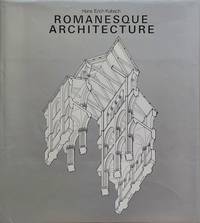
1975réf. 220197New York: Harry N. Abrams Inc. Publishers 1975. Cloth 431 pages illustrations; 29 cm. History of World Architecture Series. Translation of Architettura romanica. Near fine. Firm binding clean inside copy. Age toning. Dust jacket protected in a mylar cover. OVERSIZE! Additional shipping charges may be requested for international & priority orders. A massive coffee-table book. Profusely illustrated. CONTENTS: Pre-Romanesque architecture; Early Romanesque architecture; High Romanesque architecture; Late Romanesque architecture; Domestic and military architecture; The Church building and its environment. . 1st. Hardcover. Near Fine/Fine. 4to. Collectible. Harry N. Abrams, Inc., Publishers hardcover
198032 pages, illustrated, plan, German text. eng
1969No marks or inscriptions. No creasing to covers or to spine. A very clean very tight copy with bright unmarked boards and no bumping to corners. 128pp. A study of significant approaches to architecture taken by contemporary architects in Africa including innovations which link the present with the immediate past. Very well illustrated. Scarce in the UK.
1950Very Good Turkish In contemporary red cloth bdg. Ex-library stamps on imprint. Roy. 8vo. (24 x 17 cm). In Turkish. [vii], 159 p., 18 and 192 numerous b/w plates., and plans. Bursa'da Ulucami. In this work, Baykal introduced this magnificent temple with all his detail and cultural richness. Introducing the inscriptions and calligraphic plates of this mosque, which is a "Museum of Calligraphy", adds a distinct value to the work. Preface of this work dated March, 17, 1948. A comprehensive only study on 'Ulucamii' (The Great Mosque) in Bursa city. First Edition. Sixteen copies in OCLC: 23699098.
1946réf. 1227590Köln, Kiepenheuer, (1946). 4to. 30 S., 1 Bl., 427 Abb. in Kupfertiefdruck. OLwd (Vorsätze gebräunt).
1939réf. 1196223Karlsruhe, C.F. Müller, 1939. 4to. 6 Bl., 440 S. m. 328 Abb., 4 Falttaf., 1 mehrf. gefalt. Stadtplan. OLwd (Einbd lichtrandig, Vordergelenk gelockert, S. 71-74 u. 1 Taf. fehlen).
2014réf. 500106666Charles Massin 2014 191 pages 19x2x23cm. 2014. Relié. 191 pages.
1955Book is in excellent condition with very light shelf wear to covers only; paperback with a dust jacket. Binding is solid and square, covers have sharp corners, exterior shows no blemishes, text/interior is clean and free of marking of any kind. Dust jacket shows the slightest signs of shelf wear only, no tears. Full size b&w photos throughout with captions. Text is in German. 112 pages of German farm structures: houses, barns, agricultural buildings, public houses, with thatch roofs, exposed timber framing, stone walls, a few interior shots. An uncommon and impressive collection of period buildings.
1986211 pages. Bilingual French/English. Features: Les "Memorial Windows" - une memoire de verre; The Murals in the Toronto Municipal Buildings - George Reid's Debt to Puvis de Chavannes; Short Notes; Reviews; Publication Notices; Books Received. Average wear. Unmarked. Binding intact. A sound copy. Book
1980A clean, unmarked book with a tight binding. Small tears and edge wear to dust jacket. 10 7/8"w x 8 1/2"h. 212 pages.
1820réf. 3657Couverture rigide Etablissement lithographique du Comte de Lasteyrie 1820 Paris 29,5x22,5 cm
2013réf. 35758BBRegensburg, Schnell + Steiner, 2013. 1. Aufl. 32 cm. 467 S. zahlr. Ill., graph. Darst., Kt. OPappband, mit Schutzumschl. Geringe Textbräunung, sauber und gut erhalten. 1
réf. 103616Luster, Antwerp, 2019. 18,5 cm ; kart.
1970219 pages including index, 84 illustrations and 5 tables. Discusses the two main aspects of architectural acoustics - the control of noise in buildings and the design of auditoria. Written to satisfy the needs of the architect who wishes to gain a clear practising knowledge of acoustics. Part I covers basic theories of sound and hearing. Part II covers control of noise in buildings. Part III covers auditorium desing. Book