UTAGAWA, Hiroshige 歌川広重, UTAGAWA, Kuniyoshi 歌川国芳, & UTAGAWA, Toyokuni san sei 歌川豊国三世, artistsBiblio.com
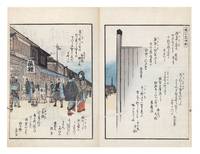
réf. 1107625 finely color-printed double-page woodcuts. 25.5; 15; 21.5 folding leaves. Three vols. 8vo orig. semi-stiff wrappers orig. block-printed title-slips on upper covers new stitching. Edo: 1853-54. First edition of this finely illustrated book which rarely appears complete in all three volumes. The “KyÅka Edo Hanabi SenryÅ has sub-titles that show the sort of specialization that was associated with the three leading Utagawa artists. Volume One by Hiroshige entitled ‘Nihonbashi Section’ consists mainly of views of central Edo figures in some prints threading their way through the hanging curtains of calligraphy showing the second floor of a brothel; Volume Two by Kuniyoshi related to the ‘licensed quarter’; and Volume Three by Kunisada = Toyokuni san sei to ‘theatre-land’.”–Hillier The Art of the Japanese Book p. 848 & image 559. At the time of publication these three members of the Utagawa school were at the pinnacles of their careers. The color-printed illustrations depict the fish markets of Nihonbashi the pleasure quarter of Yoshiwara and the backstage preparations in a kabuki theater. The witty and humorous kyÅka poetry appears with the images. Fine and fresh set preserved in an attractive modern chitsu. In the first volume the first 13 leaves have a wormhole maximum 50 mm. in length and becoming shorter as one progresses. This wormhole expertly repaired throughout is present in the woodcuts. unknown
réf. 1107625 finely color-printed double-page woodcuts. 25.5; 15; 21.5 folding leaves. Three vols. 8vo orig. semi-stiff wrappers orig. block-printed title-slips on upper covers new stitching. Edo: 1853-54. First edition of this finely illustrated book which rarely appears complete in all three volumes. The “KyÅka Edo Hanabi SenryÅ has sub-titles that show the sort of specialization that was associated with the three leading Utagawa artists. Volume One by Hiroshige entitled ‘Nihonbashi Section’ consists mainly of views of central Edo figures in some prints threading their way through the hanging curtains of calligraphy showing the second floor of a brothel; Volume Two by Kuniyoshi related to the ‘licensed quarter’; and Volume Three by Kunisada = Toyokuni san sei to ‘theatre-land’.”–Hillier The Art of the Japanese Book p. 848 & image 559. At the time of publication these three members of the Utagawa school were at the pinnacles of their careers. The color-printed illustrations depict the fish markets of Nihonbashi the pleasure quarter of Yoshiwara and the backstage preparations in a kabuki theater. The witty and humorous kyÅka poetry appears with the images. Fine and fresh set preserved in an attractive modern chitsu. In the first volume the first 13 leaves have a wormhole maximum 50 mm. in length and becoming shorter as one progresses. This wormhole expertly repaired throughout is present in the woodcuts. unknown books
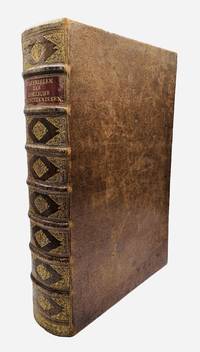
1728réf. 365The Hague Netherlands: Pieter de Hondt 1728. First Edition. Contemporary fine mottled full calf. FINE. Gerard Hoet Arnold Houbraken Bernard Picart. One of the most beautiful collections of illustrated scenes from the Bible published in the 1700s. This masterful suite of drawings was initiated by the renowned artist Bernard Picart in 1720 with the assistance of the Dutch painter Gérard Hoet and his protege Arnold Houbraken for what would undoubtedly become the pinnacle of the Figures of the Bible genre. Figures of the Bible engravings represent or signify scripture through cycles of prints covering the entire Bible and was first popularized in the 1500s. Condition: FINE interior for a nearly 300-year-old folio FINE to VERY FINE PLATES. Complete. An exemplary copy. BOOK INFO Translated Title: Figures of the Bible. Scenes of the Principal Histories of the Old and New Testament And Other Books Added to the Holy Scripture Drawn by the Renowned Artists Hoet Houbraken and Picart and Engraved by the Best Masters in Copper and Fully Described. Three volumes bound together. Published in 1728 by Pieter de Hondt in The Hague Netherlands. First edition. Descriptive text of the plates/Bible scenes in Dutch by Jacques Saurin. Second engraved title pages in French. Polyglot plate captions in six languages Dutch English French German Latin and either Hebrew Old Testament and Apocrypha or Greek New Testament. Vignette titles pages in red and black. Bound in contemporary fine mottled full calf: spine with seven gilded raised bands separating compartments richly ruled and tooled in gilt and a gilt-lettered red morocco spine label in compartment two. All board edges with a gilt roll. All page edges speckled. Heavy crown folio 16.5" x 11" x 3.5" thick. Collated and complete: 3 blanks 4 148 i.e. really 150 as 10-11 page numbers repeated twice pp.; 2 149-280 i.e. 151-282 for aforementioned reason 14 pp. 4 160 pp. 3 blanks; 214 copper engraved plates including 2 frontispieces 2 engraved dedication pages and 29 double page; 3 vignette title pages; 2 additional engraved title pages; Hundreds of historiated and decorated engraved initials; hundreds of engraved vignette head- and tail-pieces or exquisite engraved cul-de-lampe chapter ends. Thick high-quality wide-margined paper particularly the stunningly white paper used for the plates. A monumental publication of the highest quality and one of the finest books of engravings of the 18th century. CONDITION REPORT FINE INTERNALLY for a large nearly 300-year-old folio. Exterior and binding: Firm binding hinges and joints. Spine and its gilt work remarkably well preserved heavy volumes such as this are often rebacked or with significant binding strain/issues. Board edge gilt work remarkably well preserved more worn on bottom edge from shelf rubbing. Leather is colorful and supple. Rubbing to boards with some scratches scuffing a few spots of dried white paint on rear board and some splotches of leather darkening. Lightly rubbed edges and corners quite scarce given the size and age. Amazingly the top edge is not darkened caused by layers of dust accumulation over many years in nearly all antiquarian books. This book has clearly been safely stored away from the sun and dust for hundreds of years. Quite beautiful with stunning shelf appeal. Recommend storing book on its side to reduce strain on the binding. Interior: FINE. Very light dust to endpapers quite scarce some toning to endpapers. Pages are white and bright and mostly quite clean aside from some light marginal finger soiling on occasion. Plates are well struck vivid and clean. Nearly all plates are beautifully FINE to VERY FINE VF when the pages are impressively as white as the day they were cut chiefly toward the latter half of the book. Only a few leaves with some toning/modest foxing. No foxing to an infrequent spot of foxing otherwise. A few leaves with small nicks/areas of very small loss to margin not affecting text. A cluster of bent page corner tips in the third part. A hole affecting the page numbers in an Apocrypha related leaf. Some other signs of light handling. No water dampening no worming no writing no ex libris marks no former owner bookplates. All in all a superior remarkably preserved collectible copy of one of the finest illustrated books of the 18th century. ABOUT THE ARTISTS Bernard Picart or Picard 1673 - 1733 was a French draughtsman engraver and book illustrator in Amsterdam who showed an interest in cultural and religious habits. Most of his work was book-illustrations for which he collaborated with local artists like Gerard Hoet and Arnold Houbraken. The illustrations were used in various publications including Taferelen der voornaamste geschiedenissen van het Oude en Nieuwe Testament 1728. Gerard Hoet 1648 - 1733 was a Dutch Golden Age painter and engraver. Gerard Hoet trained with his father and brother who were glass painters. in 1697 he founded a drawing academy in Ultrecht. During this period he painted decorations in leading homes of gentlemen in the Utrecht area. In 1715 he returned to The Hague where he spent the rest of his life often collaborating on drawing projects with Picard. Jacobus Houbraken 1698 - 1780 was a Dutch engraver and the son of the artist and biographer Arnold Houbraken 1660-1719 whom he assisted in producing a published record of the lives of artists from the Dutch Golden Age. Houbraken devoted himself almost entirely to portraiture and became quite famous often dubbed the Dutch Hogarth. Pieter de Hondt unknown
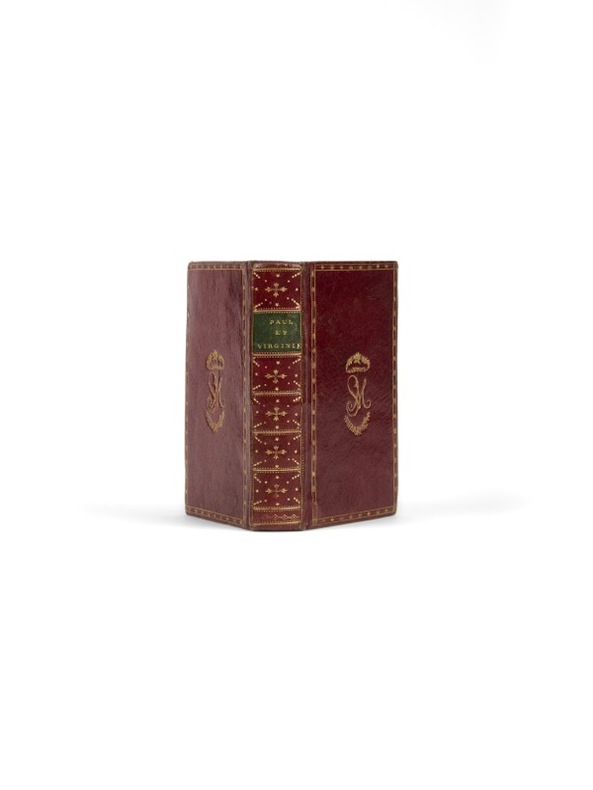
1789réf. 30655Reliure de présent en maroquin rouge, avec envoi autographe signé Paris, De l'Imprimerie de Monsieur, 1789. 1 vol. (75 x 130 mm) de 1 f., xxxv et 243 p. Maroquin rouge, deux filets dorés bordant une chaînette d'encadrement dorée sur les plats, dos lisse orné, pièce de titre de maroquin vert, monogramme doré « SM » au centre des plats, roulette intérieure (reliure de l'époque). Première édition séparée. Elle est ordonnée par Pierre François Didot, le jeune, avec une édition luxueuse sur un papier de choix provenant de ses papeteries d’Essonne, qu’il enrichit d’illustrations – l’édition sur papier ordinaire n’en contenant pas : 4 figures de Moreau le Jeune, la dernière en collaboration avec Joseph Vernet, gravées sur cuivre par Girardet, Halbou et Longueil. Envoi signé : « pour Mademoiselle Mesnard de Conichard, par l’auteur, De Saint-Pierre ».
réf. 409515From the Bart Auerbach Collection. Consisting of 188 autograph letters signed and one autograph postcard signed 336 pages 12mo and 8vo plus 25 related items. As below:. Sir Lawrence Alma-Tadema 1836-1912. 38 autograph letters signed 52 pages nearly all 12mo about half in French most signed "L Alma-Tadema" a few signed just with initials one letter with small ink sketch of Deschamps another letter with a fore-edge a bit chipped; docketed by Deschamps and a few with his penciled notes on versos. Written from London Naples and Menton 1872-1888. With six related items: three letters to Alma-Tadema from others regarding his paintings; two letters 1883 & 1910 from his wife and daughter also painters to Deschamps; and a pictorial invitation to an Alma-Tadema exhibition. Alma-Tadema writes about: sales of his paintings with some prices – payments for paintings – paintings mentioned are "Sappho" "The Audition" "La Cleopatra" – arranging meetings – portraits – arranging for paintings to go to exhibitions at Knoedler Birmingham Grosvenor Gallery – mentions four paintings leaving for America and their prospective buyers – social news – travels one letter is from Naples two are from Menton. Sir George Clausen 1852-1944. 81 autograph letters signed 158 pages 8vo one letter with two small drawings in the text 18 of the letters with condition problems because of the ink and the inferior dark stationery used fading some margins chipped all perhaps a dozen words lost; nearly all docketed by Deschamps on versos. Written from Cookham Dene in Berks St. Albans and possibly Paris 1881-1887. With eight signed receipts from Deschamps for sales of pictures and one printed Deschamps announcement. Clausen writes about: pricing pictures – exhibitions – discusses individual pictures he is working on and selling detailed – much on the Grosvenor Gallery – Royal Academy exhibition getting "The Gleaners" and other paintings ready for – thinking of moving from St. Albans to Cookham Dene – what he finds wrong with one of his pictures – which pictures should be sent to the Grosvenor or to the Royal Academy – going to Paris to paint for the winter Glow international exhibition – also Liverpool and Manchester exhibitions – framing – which pictures they are sending to each other – mentions Alma-Tadema – mentions other art dealers. Edward John Gregory 1850-1909. 30 autograph letters signed 50 pages 12mo-8vo a few letters a bit stained. Virtually all written from Maida Vale one letter from Florence 1881-1888. With two signed receipts from Deschamps. Gregory writes about: financial matters – collectors – exhibitions – sales of his pictures – prices for pictures – pictures and watercolors he is working on a few detailed – framing – travels in Italy a six-page letter giving his opinion of Florence – mentions Caldecott. John William North 1842-1024. 25 autograph letters signed and one autograph postcard signed 46 pages 8vo including one letter to Mr. Williams of Christie's one of the letters browned. Written from London and Taunton 1881-1888. With six signed receipts from Deschamps for pictures sold and an autograph note signed from the dealer making an offer on a painting with a reply from North on it. North writes about: the Grosvenor Gallery and its exhibitions – going to the New Gallery – selling a Gainsborough which Deschamps had on consignment – sales of pictures and prices he wants – other dealers – making arrangements – Deschamps getting involved with the Grosvenor Gallery – mentions the writer Richard Jefferies. William Stott of Oldham 1857-1900. 14 autograph letters signed 31 pages 8vo; almost all docketed by Deschamps a few with penciled notes by him. Written from London Cumberland and Paris 1884-1887. With a receipt from Deschamps for payment for a painting. Stott writes about: prices he wants for paintings and business dealings over his pictures in detail – names paintings he is working on – arranges appointments – mentions a Whistler painting at a Paris salon. unknown
réf. 409515From the Bart Auerbach Collection. Consisting of 188 autograph letters signed and one autograph postcard signed 336 pages 12mo and 8vo plus 25 related items. As below:. Sir Lawrence Alma-Tadema 1836-1912. 38 autograph letters signed 52 pages nearly all 12mo about half in French most signed "L Alma-Tadema" a few signed just with initials one letter with small ink sketch of Deschamps another letter with a fore-edge a bit chipped; docketed by Deschamps and a few with his penciled notes on versos. Written from London Naples and Menton 1872-1888. With six related items: three letters to Alma-Tadema from others regarding his paintings; two letters 1883 & 1910 from his wife and daughter also painters to Deschamps; and a pictorial invitation to an Alma-Tadema exhibition. Alma-Tadema writes about: sales of his paintings with some prices – payments for paintings – paintings mentioned are "Sappho" "The Audition" "La Cleopatra" – arranging meetings – portraits – arranging for paintings to go to exhibitions at Knoedler Birmingham Grosvenor Gallery – mentions four paintings leaving for America and their prospective buyers – social news – travels one letter is from Naples two are from Menton. Sir George Clausen 1852-1944. 81 autograph letters signed 158 pages 8vo one letter with two small drawings in the text 18 of the letters with condition problems because of the ink and the inferior dark stationery used fading some margins chipped all perhaps a dozen words lost; nearly all docketed by Deschamps on versos. Written from Cookham Dene in Berks St. Albans and possibly Paris 1881-1887. With eight signed receipts from Deschamps for sales of pictures and one printed Deschamps announcement. Clausen writes about: pricing pictures – exhibitions – discusses individual pictures he is working on and selling detailed – much on the Grosvenor Gallery – Royal Academy exhibition getting "The Gleaners" and other paintings ready for – thinking of moving from St. Albans to Cookham Dene – what he finds wrong with one of his pictures – which pictures should be sent to the Grosvenor or to the Royal Academy – going to Paris to paint for the winter Glow international exhibition – also Liverpool and Manchester exhibitions – framing – which pictures they are sending to each other – mentions Alma-Tadema – mentions other art dealers. Edward John Gregory 1850-1909. 30 autograph letters signed 50 pages 12mo-8vo a few letters a bit stained. Virtually all written from Maida Vale one letter from Florence 1881-1888. With two signed receipts from Deschamps. Gregory writes about: financial matters – collectors – exhibitions – sales of his pictures – prices for pictures – pictures and watercolors he is working on a few detailed – framing – travels in Italy a six-page letter giving his opinion of Florence – mentions Caldecott. John William North 1842-1024. 25 autograph letters signed and one autograph postcard signed 46 pages 8vo including one letter to Mr. Williams of Christie's one of the letters browned. Written from London and Taunton 1881-1888. With six signed receipts from Deschamps for pictures sold and an autograph note signed from the dealer making an offer on a painting with a reply from North on it. North writes about: the Grosvenor Gallery and its exhibitions – going to the New Gallery – selling a Gainsborough which Deschamps had on consignment – sales of pictures and prices he wants – other dealers – making arrangements – Deschamps getting involved with the Grosvenor Gallery – mentions the writer Richard Jefferies. William Stott of Oldham 1857-1900. 14 autograph letters signed 31 pages 8vo; almost all docketed by Deschamps a few with penciled notes by him. Written from London Cumberland and Paris 1884-1887. With a receipt from Deschamps for payment for a painting. Stott writes about: prices he wants for paintings and business dealings over his pictures in detail – names paintings he is working on – arranges appointments – mentions a Whistler painting at a Paris salon. unknown books
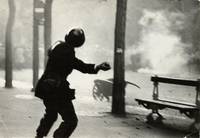
1968réf. WWP2651968. Vintage silver prints 45. A large and dramatic group of photographs documenting tumultuous times of unrest in Paris in May of 1968 taken by a varied group of photojournalists. Included in the collection are works by the following photographers: Jean-Pierre Rey 3 photos Bryn Campbell 3 photos Claude Bourquelot 1 photo Russ Melcher 2 photos Leon Hersctritt 2 photos Goksin Sipahioglu 4 photos Bergon 1 photo O. Rolland 6 photos Bergon 1 photo and Pierre-Yves de Kercadio 2 photos. There are also twenty photographs credited to either the Pix Agency the Dalmas Agency or Paris Presse. Most approx. 8 x 12 inches a few smaller ; Each with an affixed caption and agency credit verso; many with photographer's credit verso as well. unknown
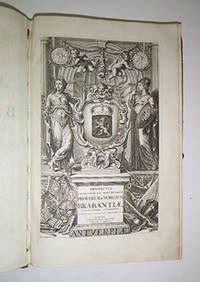
réf. 16-6511Antverpiae//Antwerpen/: Henricus Thieullier 1696. Folio. 26 x 41cm. Contemporary calf unrestored. 6pp; 117 plates some double page and some two to a page.OCLC Number / Unique Identifier:939440: . At least two different editions were published in 1696. One appears to be broadly a reissue of the plates of the first edition with new letterpress in Latin and Dutch and four different title-sources this edition is not described by Bibliotheca Belgica but is present at the British Library at 158.k.4. A Latin title page is more or less as described above while a Dutch title page reads De kastelen en borgten van de edelen van Brabant. The engraved title-plate reads 'Prospectus Castellorum Et Prætoriorum . ' as above and a small engraved half-title supplies the title Brabantia sacra et profana scenographice illustrata. The two letterpress titlepages have the Amsterdam imprint of Abraham van Someren and Arnold van Ravestein. The present edition is quite different and may perhaps be later. It has been reorganised into four books the first two of which consist of the matter extracted from Topographia historica Gallo-Brabantiae while the third is largely from the Notitia marchionatus sacri Romani Imperii. The title-plate and 'Schema metallorum . ' came originally from this last source along with all but plates 5 9 14 20 22b 23b 30 32 33b 34a 37b 38 45b 46a and 47-49 from part 3 listed above a total of 64 coppers. For the present work most of the earlier plates have been reworked to remove the original page numbers and in a few cases to revise captions signatures and add the coats-of-arms of dedicatees. The brief fourth part is entirely new to the present edition with plates which appear to have been freshly commissioned from Jacques van Croes see Plates above. The lack of a list of plates makes the content of an ideal copy extremely hard to determine although the accompanying text suggests at least which subjects should be depicted in the plates and it was probably Le Roy's intention that the letterpress printed at this period could be used to accompany a shifting body of illustrative views. .In 1696 the Antwerp publisher Hendrik Thieullier died and in 1697 Le Roy produced a new edition of the work with his own imprint Bibliotheca Belgica III pp. 851-852. Brunet II col. 1002 and the UCBA p.1174 record that the plates were also published with the title Brabantiaes scenographia in 1696 1697 and 1698 but while this is plausible no copies with this title have been traced. . Antverpiae//Antwerpen/: Henricus Thieullier, 1696 unknown
1914réf. 29430Album unique, composé de 42 lithographies originales Trévise, Longo Domenico, [1914-1915]. 1 vol. (490 x 340 mm) de 90 planches. Bradel demi-percaline violette à coins, dos lisse, pièce de titre (reliure de l'époque). Album unique, composé des lithographies originales de 42 dessins sur papier de chine collé, en double état, soit 84 compositions (42 en couleurs avec leur suite en noir). Chacune de ces lithographies, au format carte postale (140 x 90 mm), est montée dans un encadrement de filet noir, surmontée d'une couronne impériale sur une feuille de papier vélin pur chiffon filigranée «A. BINDA C. MILAN», avec la mention imprimée : «Tirage unique pour le Prince Laforge de Vitanval» ; chaque planche est signée à la plume par l'éditeur, Longo Domenico, et par l'artiste, Alberto Martini. On trouve en tête de chaque partie une notice commentée et descriptive, légendant et numérotant chaque carte, sur un feuillet interfolié avant chaque série. Une page de titre a été spécialement réalisé pour cet album.
réf. 980121 double-page one with a "trick" fold-out & four full-page color-printed woodblock illus. 17; 12; 15 folding leaves. Three vols. 8vo orig. semi-stiff wrappers rubbed orig. block-printed title labels on upper covers not present on the first vol. orig. stitching. Japan: Preface dated 1826. A remarkable and unusual shunga which depicts a hermaphrodite three scenes a ménage à trois scenes of voyeurism and masturbation a childbirth scene a deity with the face of a vagina and a nun having sex with a man two scenes. The color printing and embossing are exquisite throughout fresh and highly detailed. The third volume begins with two extremely rare images. The first depicts a husband praying for a baby girl while his wife prays for a male child. The following scene depicts a midwife assisting the wife who is bearing a hermaphroditic baby. There is much to be studied in this book; we have only suggested some of the complex subjects. There is some debate regarding the artists. WorldCat attributes the images to Utagawa Kuniyoshi and Utagawa Kunisada accession number 1020973371 but the NIJL erotica database Enpon Shiryo database and the Ritsumeikan University ARC database prefer Toyokuni and Kunitora. The author is EnkÅbÅ Tsukinari çŒ¿çŒ´åŠ æœˆæˆ. Kunitora act. 1819-40 a student of Toyokuni seems to have produced very few books including illustrated works of popular fiction as well as erotica. Fine set with minor thumbing. Minor worming in the first volume. unknown
réf. 980121 double-page one with a "trick" fold-out & four full-page color-printed woodblock illus. 17; 12; 15 folding leaves. Three vols. 8vo orig. semi-stiff wrappers rubbed orig. block-printed title labels on upper covers not present on the first vol. orig. stitching. Japan: Preface dated 1826. A remarkable and unusual shunga which depicts a hermaphrodite three scenes a ménage à trois scenes of voyeurism and masturbation a childbirth scene a deity with the face of a vagina and a nun having sex with a man two scenes. The color printing and embossing are exquisite throughout fresh and highly detailed. The third volume begins with two extremely rare images. The first depicts a husband praying for a baby girl while his wife prays for a male child. The following scene depicts a midwife assisting the wife who is bearing a hermaphroditic baby. There is much to be studied in this book; we have only suggested some of the complex subjects. There is some debate regarding the artists. WorldCat attributes the images to Utagawa Kuniyoshi and Utagawa Kunisada accession number 1020973371 but the NIJL erotica database Enpon Shiryo database and the Ritsumeikan University ARC database prefer Toyokuni and Kunitora. The author is EnkÅbÅ Tsukinari çŒ¿çŒ´åŠ æœˆæˆ. Kunitora act. 1819-40 a student of Toyokuni seems to have produced very few books including illustrated works of popular fiction as well as erotica. Fine set with minor thumbing. Minor worming in the first volume. unknown books
réf. 63846Eight large aquatint etchings each approx. 14" x 18" on ca. 17" x 24" sheets; titled as follows: "Pirouette;" "Ballotade;" "Piaffe;" "Spanish Walk;" "Levade;" "Capriole;" "Pasade;" and "Croupade;" each signed in pencil lower right; edition of 50. In the original hinged gallery mats; small areas of discoloration to margins from mounting tape well away from printed area; one mat lacking a portion of border; still close to Fine. Together with an additional 47 related original artworks signed and unsigned including 29 etchings being proofs and preliminary states of the finished prints 15 sheets of pen-and-ink studies and three watercolors. Also present are several offprints of Helen Hill Miller's article "Ballet of the White Stallions: The Lipizzaners of Vienna's Spanish Riding School" published in the December 1960 issue of Esquire for which these prints were originally commissioned; two copies of the printed poster advertising Groth's 1960 exhibition at the Janet Nessler Gallery titled "The Horse in Sport;" the entirety housed in a hand-made art-paper portfolio boldly brush-signed and with a mounted signed ink sketch above the signature. A significant archive demonstrating the legendary illustrator's technique from preliminary sketch to finished etching. Many of the sketches and proofs are heavily marked-up in the artist's hand; others are signed and clearly intended to be finished works. The finished etchings printed in deep maroon ink on a white ground are stunning and apparently rare with no examples having been recorded in the secondary market since their original appearance at the Nessler Gallery in 1960 where they sold for $50 apiece - a princely sum at the time reflecting Groth's lingering fame as a battlefield illustrator during the Second World War; but also indicative of the great refinement of these works which while retaining a good deal of Groth's famously gestural style apparent in his studies and sketches for these works are exquisitely composed balancing the athleticism and the classical elegance of their subjects. Miller's article was one of the first to introduce the Lipizzaner Stallions to a popular American audience. Not until 1970 would the Spanish Riding School perform its first world tour introducing classical dressage in its highest form to a broad and appreciative public. PROVENANCE: from the archive of the artist acquired by us in 2015. unknown
réf. 63846Eight large aquatint etchings each approx. 14" x 18" on ca. 17" x 24" sheets; titled as follows: "Pirouette;" "Ballotade;" "Piaffe;" "Spanish Walk;" "Levade;" "Capriole;" "Pasade;" and "Croupade;" each signed in pencil lower right; edition of 50. In the original hinged gallery mats; small areas of discoloration to margins from mounting tape well away from printed area; one mat lacking a portion of border; still close to Fine. Together with an additional 47 related original artworks signed and unsigned including 29 etchings being proofs and preliminary states of the finished prints 15 sheets of pen-and-ink studies and three watercolors. Also present are several offprints of Helen Hill Miller's article "Ballet of the White Stallions: The Lipizzaners of Vienna's Spanish Riding School" published in the December 1960 issue of Esquire for which these prints were originally commissioned; two copies of the printed poster advertising Groth's 1960 exhibition at the Janet Nessler Gallery titled "The Horse in Sport;" the entirety housed in a hand-made art-paper portfolio boldly brush-signed and with a mounted signed ink sketch above the signature. A significant archive demonstrating the legendary illustrator's technique from preliminary sketch to finished etching. Many of the sketches and proofs are heavily marked-up in the artist's hand; others are signed and clearly intended to be finished works. The finished etchings printed in deep maroon ink on a white ground are stunning and apparently rare with no examples having been recorded in the secondary market since their original appearance at the Nessler Gallery in 1960 where they sold for $50 apiece - a princely sum at the time reflecting Groth's lingering fame as a battlefield illustrator during the Second World War; but also indicative of the great refinement of these works which while retaining a good deal of Groth's famously gestural style apparent in his studies and sketches for these works are exquisitely composed balancing the athleticism and the classical elegance of their subjects. Miller's article was one of the first to introduce the Lipizzaner Stallions to a popular American audience. Not until 1970 would the Spanish Riding School perform its first world tour introducing classical dressage in its highest form to a broad and appreciative public. PROVENANCE: from the archive of the artist acquired by us in 2015. unknown books
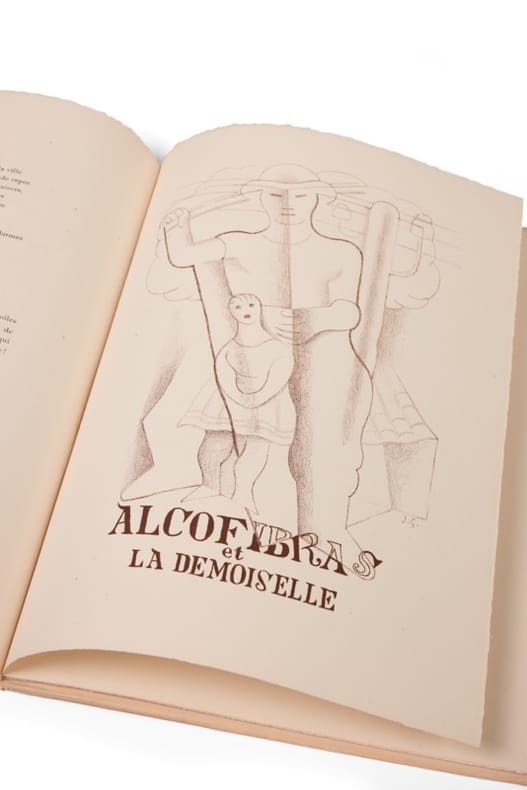
1921réf. 29047Premier livre illustré par Juan Gris Paris, Editions Galerie Simon, 1921. 1 vol. (235 x 325 mm). Broché. Édition originale. Illustré de quatre lithographies hors-texte par Juan Gris. Un des 90 exemplaires sur hollande signé au colophon par l'auteur et l'artiste. Premier livre illustré de gravures originales par Juan Gris, et première apparition de la couleur dans la production éditoriale de Kahnweiler : le bleu, le vert, le bistre et l’ocre sont utilisés. C'est également la première fois que les illustrations portent clairement un titre ou une légende.
1919réf. 5245-vitrineDen Haag: Levisson 1919-37. In total 92 issues of De Reclame also De Bedrijfsreclame published between 1919 and 1937. All issues in original illustrated wrappers printed in various colours with various lay-outs by various artists abundantly illustrated with b/w and colour illustrations as well as dozens of tipped in and loose samples and appendices. The series contain hundreds of articles about corporations and artists such as Piet Zwart Cassandre Paul Schuitema Louis Kalff V. Huszar Jac Jongert A.D. Copier O. Wenckebach Majakowski Von Stein etc. Year 1919 no: 10 12 ; 1920: 2 3 4 5 6 7 8 ; 1921: 2 3 ; 1922: 2 3 8 9 10 ; 1923: 4 5 6 7 8 9 10; 1924: 3 6 7 10 12 ; 1925: 2 4 5 6 8 10 12 ; 1926: 1 2 4 8 9 ; 1927: 1 2 4 6 9 10 11 12 ; 1928: 1 2 6 7 8 9 11; 1931: 7 11 ; 1932 weekly: 1 2 3 4 7 8 10 13 14 15 16 17 18 20 21 24 25 27 29 30 31 32 34 36 37 38 39 41 42 43 ; 1934: 2 ; 1935: 4 8 ; 1937: 10 11. All issues are sold seperately as well costing between 50 euro and 400 euro each. De Reclame successor of De Bedrijfsreklame was published between 1922-1937. The first issue appeared in January 1922 under the guidance of B. Knol and Machiel Wilmink. A year later De Vereeniging van de Reclame was established. Printer Levisson from The Hague was also involved with De Reclame. In January 1928 the magazine De Reclame became the organ of the Genootschap voor Reclame established 1927. An interesting set. Levisson unknown
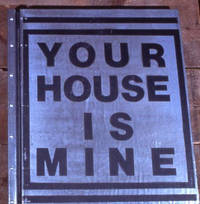
réf. 7616New York: Bulletspace etc. 1991. First Edition/Limited Edition. Hardcover. Fine in Fine Rubber Wrapper. First Edition/Limited Edition. Hardcover. "This project is a collection of images and texts defining and expressing the broad and essential issue of housing on the Lower East Side and is a statement of the underlying force of 'art as a means of resistance'. It is both a documentation and expression of social/political issues in our neighborhood and on a larger scale to symbolize similar conflicts in other parts of the world." Bulletspace Printed at Bullet Space an anarchist squatter community since 1982 The Lower East Side Workshop Black Cat Printshop Cooper Union and the Brandywine Workshop. Funded by Art Matters Artist Space Northstar Fund Andy Warhol Foundation. The work includes 32 silkscreened posters on Mohawk vellum paper all signed by the artists: Paul Castrucci; John Fekner; Stash Two; Tom McGliynn & Emily Carter; Day Gleeson & Dennis Tomas; Nadia Coen; Anton Von Dalen; Juan Sanchez; Martin Wong; Miguel Pinero & Andrew Castrucci; Betzaida Concepcion; Seth Tobocman; Sabrina Jones; Red Rodriquez; Marguerite Van Cooke & James Romberger; Neighborhood News; David Wojnarowicz; Lee Quinones & Eduardo Galleano; Lady Pink; Sebastian Schroeder; Missing Foundation; Salter Sipser; Bruce Witsiepe; Will Sales; Vincent Galgliostro & Avram Finkelstein; Eric Drooker. "This project is a collection of images and texts concerning the broad and essential issue of housing on the Lower East Side of Manhattan." It presents a series of posters created to bring attention to New York City's campaign of condemning entire blocks of decent low-income housing in order to demolish them and build more taxable high-rise housing. It is a document of an impressive and provocative public art project featuring some of the most well-known artists of this activist art movement centering on housing economics healthcare gay and lesbian and other civil rights.and of the American art world of the time. Many of the artists have become well-known in recent years with their works represented in collections at the Museum of Modern Art the Metropolitan Museum of Art the Whitney Museum of American Art the Museum of the City of New York El Museo del Barrio the Brooklyn Museum etc. Several artist included have emerged as major figures in the Graffiti Art Movement. Several are now faculty at prestigious colleges. Each of the posters was printed in an edition of approximately 300 half formed the core of this book series the rest were posted in the neighborhood. These posters catalyzed and sometimes escalated the intensity of the dialog around the ongoing issues of gentrification conservation urban development and social justice that is the bedrock of the Lower East Side experience. Beyond that culturally the posters embody a 20th Century movement where artists combined innovative materials design and aesthetics with radical and populist politics that had a great impact on the art world of New York and beyond. The unusual heavy lead-covered binding was designed to convey the feeling of oppression. The significance of the work.and a reason for its increasingly scarcity.can be seen in an overview of institutions who now hold a copies: Brooklyn Museum NY; Cooper-Hewitt NY; Fogg Museum at Harvard University MA; Getty Institute Los Angeles CA; Gutenberg Bibliotek Germany; Herzon Museum Germany; Mainz Bibliotek Germany; MoMA NY; Museo del Commune di Milan Italy; Offenback Bibliotek Germany; Pesci Museum Italy; Smith College MA; Spencer Collection at Yale University CT; Staadt Museum Germany Stielich Bibliotek Germany; University of Kansas KS; Kohler Art Library at University of Wisconsin WI; Victoria and Albert Museum UK; Wellesley College MA; the Whitney Museum of American Art NY." Bulletspace The final line of the forward to Your House is Mine reads "We have taken this opportunity to unite the following people in this collaborative project as a statement of 'art as a means of resistance.'" It is a remarkable statement. Very minor shelf/edge wear to spine else tight bright and unmarred. Black rubber sheet wrapper numbered in white ink with the limitation. Wooden boards rubber hinges bolted spine boards/spine covered in lead painted lettering on boards. fo. np. Illus. color and b/w plates. Limited numbered edition this being ___ of 150. All posters signed by the artist. Bulletspace, etc. hardcover
réf. 7616New York: Bulletspace etc. 1991. First Edition/Limited Edition. Hardcover. Fine in Fine Rubber Wrapper. First Edition/Limited Edition. Hardcover. "This project is a collection of images and texts defining and expressing the broad and essential issue of housing on the Lower East Side and is a statement of the underlying force of 'art as a means of resistance'. It is both a documentation and expression of social/political issues in our neighborhood and on a larger scale to symbolize similar conflicts in other parts of the world." Bulletspace Printed at Bullet Space an anarchist squatter community since 1982 The Lower East Side Workshop Black Cat Printshop Cooper Union and the Brandywine Workshop. Funded by Art Matters Artist Space Northstar Fund Andy Warhol Foundation. The work includes 32 silkscreened posters on Mohawk vellum paper all signed by the artists: Paul Castrucci; John Fekner; Stash Two; Tom McGliynn & Emily Carter; Day Gleeson & Dennis Tomas; Nadia Coen; Anton Von Dalen; Juan Sanchez; Martin Wong; Miguel Pinero & Andrew Castrucci; Betzaida Concepcion; Seth Tobocman; Sabrina Jones; Red Rodriquez; Marguerite Van Cooke & James Romberger; Neighborhood News; David Wojnarowicz; Lee Quinones & Eduardo Galleano; Lady Pink; Sebastian Schroeder; Missing Foundation; Salter Sipser; Bruce Witsiepe; Will Sales; Vincent Galgliostro & Avram Finkelstein; Eric Drooker. "This project is a collection of images and texts concerning the broad and essential issue of housing on the Lower East Side of Manhattan." It presents a series of posters created to bring attention to New York City's campaign of condemning entire blocks of decent low-income housing in order to demolish them and build more taxable high-rise housing. It is a document of an impressive and provocative public art project featuring some of the most well-known artists of this activist art movement centering on housing economics healthcare gay and lesbian and other civil rights.and of the American art world of the time. Many of the artists have become well-known in recent years with their works represented in collections at the Museum of Modern Art the Metropolitan Museum of Art the Whitney Museum of American Art the Museum of the City of New York El Museo del Barrio the Brooklyn Museum etc. Several artist included have emerged as major figures in the Graffiti Art Movement. Several are now faculty at prestigious colleges. Each of the posters was printed in an edition of approximately 300 half formed the core of this book series the rest were posted in the neighborhood. These posters catalyzed and sometimes escalated the intensity of the dialog around the ongoing issues of gentrification conservation urban development and social justice that is the bedrock of the Lower East Side experience. Beyond that culturally the posters embody a 20th Century movement where artists combined innovative materials design and aesthetics with radical and populist politics that had a great impact on the art world of New York and beyond. The unusual heavy lead-covered binding was designed to convey the feeling of oppression. The significance of the work.and a reason for its increasingly scarcity.can be seen in an overview of institutions who now hold a copies: Brooklyn Museum NY; Cooper-Hewitt NY; Fogg Museum at Harvard University MA; Getty Institute Los Angeles CA; Gutenberg Bibliotek Germany; Herzon Museum Germany; Mainz Bibliotek Germany; MoMA NY; Museo del Commune di Milan Italy; Offenback Bibliotek Germany; Pesci Museum Italy; Smith College MA; Spencer Collection at Yale University CT; Staadt Museum Germany Stielich Bibliotek Germany; University of Kansas KS; Kohler Art Library at University of Wisconsin WI; Victoria and Albert Museum UK; Wellesley College MA; the Whitney Museum of American Art NY." Bulletspace The final line of the forward to Your House is Mine reads "We have taken this opportunity to unite the following people in this collaborative project as a statement of 'art as a means of resistance.'" It is a remarkable statement. Very minor shelf/edge wear to spine else tight bright and unmarred. Black rubber sheet wrapper numbered in white ink with the limitation. Wooden boards rubber hinges bolted spine boards/spine covered in lead painted lettering on boards. fo. np. Illus. color and b/w plates. Limited numbered edition this being ___ of 150. All posters signed by the artist. Bulletspace, etc. hardcover books
réf. 140938852Portland OR: Nazraeli Press 2017. First Edition. Fine. 124 Volumes 100 titles five multi-volume deluxe sets and duplicates of several titles several labeled AP for Artist's Proof. A complete run of the celebrated series which features 100 uniformly sized books of various colors giving each artist a 16-page canvas to exhibit a cohesive body of work. Each volume is limited to 500 copies and each contains one photographic print tipped in and signed by the artist--hence the name of the series. Conceived in 1998 as a way to make original art more affordable titles were originally released in groups of four generally twice a year beginning in 2000 and ending in 2017 with most copies reserved in advance for subscribers. Complete sets of the 100 titles are uncommon as many volumes are out of print; even more uncommon are those with the deluxe box sets as few were issued toward the beginning of the series. All volumes are Fine to Near Fine. Several volumes with light spine sunning or a slight shelf lean. The deluxe sets are by John Gossage Four American Photographs Todd Hido Taft Street Eduardo del Valle & Mirta Gomez Four Sections of Time all marked as "AP" or artist's proofs Judy Gelles Beach Boxes and Emi Anrakuji e hakagi Comprised of 1. Terri Weifenbach Instruction Manual No. 1: 21. May 1995; 2. John Gossage Four American Photographs 4-volume set in slipcase; 3. Terri Weifenbach Instruction Manual No. 2: 21. April 1996 "Bee"; 4. Terri Weifenbach Instruction Manual No. 3: 25. June 1996 "Blue Sky"; 5. Chan Chao Letter from P.L.F. Burma; 6. Todd Hido Taft Street 4-volume set in slipcase; 7. Ron van Dongen Rosa Ferreus; 8. Susan Hornbeak-Ortiz True; 9. Bill Jay Bill Brandt 2 copies; one signed as usual on limitation line and there the other marked "print signed on verso"; 10. Julien Coulommier Soleil Cou Coupe; 11. Yuki Onodera How to Make a Pearl; 12. Robert Adams Alders; 13. Risaku Suzuki Fire: February 6; 14. Robert Heinecken studiesnineteenseventy; 15. Don Kirby You're not really initiated until your eyes are redder than your lips; 16. Masao Yamamoto The Path of Green Leaves; 17. Martin Parr 7 Communist Still Lifes; 18. Andreas Müller-Pohle Yumiko; 19. Sara Gilbert Cues; 20. Toshio Shibata Type 55; 21. Michael Kenna Boarding School; 22. Eduardo del Valle & Mirta Gómez Four Sections of Time 4-volume set all marked as "AP" or artist's proofs; 23. Weng Fen Sitting on the Wall & Bird's Eye View; 24. Judy Gelles Beach Boxes 1 copy 4-volume set in slipcase; 25. Naoya Hatakeyama River Series / Shadow; 26. Boomoon Kwon On the Clouds; 27. Camille Solyagua Twenty-One Red-Crowned Cranes and One Black Crow; 28. Martin Parr 7 Colonial Still Lifes; 29. Jim Stone Why My Photographs are Good; 30. Stu Levy Cranial Czar Eh; 31. Ken Ohara One; 32. Steve Pyke: Post Partum; 33. Steve Pyke: Post Mortem; 34. Joseph Mills e mars Lilly's Waist; 35. Yuichi Hibi Robert Frank A Weekend with Mr. Frank; 36. Twinkako Ishiwata-Pichler Desperately Seeking Twinka; 37. Ron van Dongen A. angustatum; 38. Junko Takahashi The Receptionist; 39. Daido Moriyama Kuchibiru; 40. Emi Anrakuji e hagaki 7 volumes included with 6 unique prints; no slipcase present perhaps as issued; 41. Michael Kenna Montecito Garden; 42. Tanya Marcuse Fruitless; 43. Stephen Shore Merced River; 44. Jesse Diamond Drum Circle; 45. Nancy Honey Poodle Parlour; 46. Lars Schwander Manuel Ãlvarez Bravo: One Day in April 1999; 47. John Divola Seven Dogs; 48. Masao Yamamoto Fujisan; 49. David Maisel Cascade Effect; 50. Rob McDonald Birth Place; 51. Netta Madahar Sustenance; 52. David Tseklenis Julius Shulman Does His Own House; 53. Joe Deal Indian Bingo; 54. Raymond Meeks Doctrine of an Axe; 55. Mayumi Lake Ex Post Facto; 56. Michael Kenna Heiden Hotel; 57. Eduardo del Valle & Mirta Gómez En Vista; 58. Edward Bateman Mechanical Brides of the Uncanny; 59. Todd Hido: Cracked Trees 2 copies one numbered the other labeled "AP" for Artist's Proof; 60. Todd Hido: Crooked Cracked Tree in Fog 2 copies one numbered the other marked "AP" for Artist's Proof; 61. David H. Gibson: Water Cascade: A Sequence; 62. Eiji Ina: Wacht; 63. Alec Soth: One Mississippi; 64. Mark Steinmetz: Italia: Cronaca di un Amore; 65. Pine & Woods: For Constance; 66. Hiroshi Watanabe: Love Point; 67. Terri Weifenbach: Some Insects; 68. Sally Mann Rob McDonald and Even Rogers: Cy's Rollei; 69. Corey Arnold: Fishing with My Dad 1978-1995; 70. Joni Harbeck & Neil Krug: Indian Girl; 71. Steve Fitch: Motel Signs; 72. Liz Steketee: Dystopia; 73. Stephen Shore: Pet Pictures; 74. Martin Parr: Seven Cups of Tea; 75. Stu Levy: Honk If You Love Stieglitz: Jerry Uelsmann A Grid-Portrait; 76. Leon Borensztein: Portraits ii; 77. Carol E. Richards: Birds Have Wings; 78. Melanie Pullen: Juliette; 79. Martin Usborne: Fox About Town; 80. Risaku Suzuki: Snow Letter; 81. John Divola: Supermarket; 82. Richard Misrach: iPhone Studies: Reverse Scrubs; 83. Dan Solomon: Witness; 84. Jim Goldberg: Polaroids from Haiti 2 copies one marked "AP" for Artist's Proof; 85. Roger Ballen: The Audience; 86. Doug Rickard: All Eyes on Me; 87. Aaron Ruell: Ten Years Too Late; 88. Alec Soth: Bogota Funsaver; 89. Steve Kahn: Corridors; 90. Daido Moriyama: Self 2 copies; 91. Katy Grannan: Lion King; 92. Michael Kenna: Kussharo Lake Tree; 93. Todd Hido: Season Road; 94. Elaine Ling: Habitacion Cubana; 95. Ed Templeton: Memories of the Salt.; 96. Ave Pildas: Bijou; 97. Javier Carrillo: Las Trocas Angelinas con sus Mercancia; 98. Gregori Maiofis: Taste for Russian Balet; 99. Tomoko Sawada: Face; 100. Gloria Katz: Souvenirs. Nazraeli Press unknown
réf. 140938852Portland OR: Nazraeli Press 2017. First Edition. Fine. 124 Volumes 100 titles five multi-volume deluxe sets and duplicates of several titles several labeled AP for Artist's Proof. A complete run of the celebrated series which features 100 uniformly sized books of various colors giving each artist a 16-page canvas to exhibit a cohesive body of work. Each volume is limited to 500 copies and each contains one photographic print tipped in and signed by the artist--hence the name of the series. Conceived in 1998 as a way to make original art more affordable titles were originally released in groups of four generally twice a year beginning in 2000 and ending in 2017 with most copies reserved in advance for subscribers. Complete sets of the 100 titles are uncommon as many volumes are out of print; even more uncommon are those with the deluxe box sets as few were issued toward the beginning of the series. All volumes are Fine to Near Fine. Several volumes with light spine sunning or a slight shelf lean. The deluxe sets are by John Gossage Four American Photographs Todd Hido Taft Street Eduardo del Valle & Mirta Gomez Four Sections of Time all marked as "AP" or artist's proofs Judy Gelles Beach Boxes and Emi Anrakuji e hakagi Comprised of 1. Terri Weifenbach Instruction Manual No. 1: 21. May 1995; 2. John Gossage Four American Photographs 4-volume set in slipcase; 3. Terri Weifenbach Instruction Manual No. 2: 21. April 1996 "Bee"; 4. Terri Weifenbach Instruction Manual No. 3: 25. June 1996 "Blue Sky"; 5. Chan Chao Letter from P.L.F. Burma; 6. Todd Hido Taft Street 4-volume set in slipcase; 7. Ron van Dongen Rosa Ferreus; 8. Susan Hornbeak-Ortiz True; 9. Bill Jay Bill Brandt 2 copies; one signed as usual on limitation line and there the other marked "print signed on verso"; 10. Julien Coulommier Soleil Cou Coupe; 11. Yuki Onodera How to Make a Pearl; 12. Robert Adams Alders; 13. Risaku Suzuki Fire: February 6; 14. Robert Heinecken studiesnineteenseventy; 15. Don Kirby You're not really initiated until your eyes are redder than your lips; 16. Masao Yamamoto The Path of Green Leaves; 17. Martin Parr 7 Communist Still Lifes; 18. Andreas Müller-Pohle Yumiko; 19. Sara Gilbert Cues; 20. Toshio Shibata Type 55; 21. Michael Kenna Boarding School; 22. Eduardo del Valle & Mirta Gómez Four Sections of Time 4-volume set all marked as "AP" or artist's proofs; 23. Weng Fen Sitting on the Wall & Bird's Eye View; 24. Judy Gelles Beach Boxes 1 copy 4-volume set in slipcase; 25. Naoya Hatakeyama River Series / Shadow; 26. Boomoon Kwon On the Clouds; 27. Camille Solyagua Twenty-One Red-Crowned Cranes and One Black Crow; 28. Martin Parr 7 Colonial Still Lifes; 29. Jim Stone Why My Photographs are Good; 30. Stu Levy Cranial Czar Eh; 31. Ken Ohara One; 32. Steve Pyke: Post Partum; 33. Steve Pyke: Post Mortem; 34. Joseph Mills e mars Lilly's Waist; 35. Yuichi Hibi Robert Frank A Weekend with Mr. Frank; 36. Twinkako Ishiwata-Pichler Desperately Seeking Twinka; 37. Ron van Dongen A. angustatum; 38. Junko Takahashi The Receptionist; 39. Daido Moriyama Kuchibiru; 40. Emi Anrakuji e hagaki 7 volumes included with 6 unique prints; no slipcase present perhaps as issued; 41. Michael Kenna Montecito Garden; 42. Tanya Marcuse Fruitless; 43. Stephen Shore Merced River; 44. Jesse Diamond Drum Circle; 45. Nancy Honey Poodle Parlour; 46. Lars Schwander Manuel Ãlvarez Bravo: One Day in April 1999; 47. John Divola Seven Dogs; 48. Masao Yamamoto Fujisan; 49. David Maisel Cascade Effect; 50. Rob McDonald Birth Place; 51. Netta Madahar Sustenance; 52. David Tseklenis Julius Shulman Does His Own House; 53. Joe Deal Indian Bingo; 54. Raymond Meeks Doctrine of an Axe; 55. Mayumi Lake Ex Post Facto; 56. Michael Kenna Heiden Hotel; 57. Eduardo del Valle & Mirta Gómez En Vista; 58. Edward Bateman Mechanical Brides of the Uncanny; 59. Todd Hido: Cracked Trees 2 copies one numbered the other labeled "AP" for Artist's Proof; 60. Todd Hido: Crooked Cracked Tree in Fog 2 copies one numbered the other marked "AP" for Artist's Proof; 61. David H. Gibson: Water Cascade: A Sequence; 62. Eiji Ina: Wacht; 63. Alec Soth: One Mississippi; 64. Mark Steinmetz: Italia: Cronaca di un Amore; 65. Pine & Woods: For Constance; 66. Hiroshi Watanabe: Love Point; 67. Terri Weifenbach: Some Insects; 68. Sally Mann Rob McDonald and Even Rogers: Cy's Rollei; 69. Corey Arnold: Fishing with My Dad 1978-1995; 70. Joni Harbeck & Neil Krug: Indian Girl; 71. Steve Fitch: Motel Signs; 72. Liz Steketee: Dystopia; 73. Stephen Shore: Pet Pictures; 74. Martin Parr: Seven Cups of Tea; 75. Stu Levy: Honk If You Love Stieglitz: Jerry Uelsmann A Grid-Portrait; 76. Leon Borensztein: Portraits ii; 77. Carol E. Richards: Birds Have Wings; 78. Melanie Pullen: Juliette; 79. Martin Usborne: Fox About Town; 80. Risaku Suzuki: Snow Letter; 81. John Divola: Supermarket; 82. Richard Misrach: iPhone Studies: Reverse Scrubs; 83. Dan Solomon: Witness; 84. Jim Goldberg: Polaroids from Haiti 2 copies one marked "AP" for Artist's Proof; 85. Roger Ballen: The Audience; 86. Doug Rickard: All Eyes on Me; 87. Aaron Ruell: Ten Years Too Late; 88. Alec Soth: Bogota Funsaver; 89. Steve Kahn: Corridors; 90. Daido Moriyama: Self 2 copies; 91. Katy Grannan: Lion King; 92. Michael Kenna: Kussharo Lake Tree; 93. Todd Hido: Season Road; 94. Elaine Ling: Habitacion Cubana; 95. Ed Templeton: Memories of the Salt.; 96. Ave Pildas: Bijou; 97. Javier Carrillo: Las Trocas Angelinas con sus Mercancia; 98. Gregori Maiofis: Taste for Russian Balet; 99. Tomoko Sawada: Face; 100. Gloria Katz: Souvenirs. Nazraeli Press unknown books
1838réf. 52830New York:: Bufford's Lithography 1838. First edition thus. stitched and enclosed in unprinted blue paper wrappers as issued; enclosed in a custom cloth folding box. . Some scattered inoffensive foxing; beautiful original condition. Rare. Folio. Ten lithographs and five engraved maps. . Deak Picturing America 477. These views and maps illustrate NYS Assembly Document 200 1838 and were also issued separately. Deak: "This early series of ten lithographic views and fine engraved maps constitutes one of the most important keys to the iconography of the Adirondack region." Bufford's Lithography, hardcover
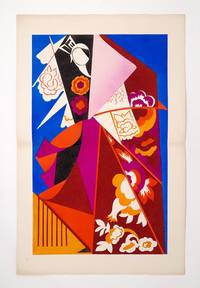
réf. 2936Celebrated portfolio reproducing with striking pochoirs Goncharova and Larionov's works for the avant-garde stage and showing a variety of styles on large folding plates. First edition limited to a total of 515 copies this one no. 162: a pleasant example complete in its original folder. Goncharova and Larionov met at art school in Moscow forming a life-long professional and personal partnership. They were founding members of several radical artistic groupings and in 1913 under the influence of Cubo-Futurism they invented Rayonism which pioneered the movement towards abstractionism in Russian art. On the invitation of Diaghilev they went to Paris in 1914 to work on costume and set design for the Ballets Russes. Like Bakst and Picasso who also designed for Diaghilev Goncharova and Larionov "transcended the frames of their studio paintings to use the theatre as a laboratory of material forms each applying different strategies but all united within what Larionov called a 'universe existing alongside the world of reality'." Bowlt "Entre les nouvelles formes que le vingtième siècle a données aux arts l'expression nouvelle de l'art décoratif fut trouvée par la génie de deux peintres – Larionow et Gontcharova." From the introduction by Parnakh. The present portfolio was published for Larionov and Goncharova's exhibition of theatre designs at the Galerie Barbazanges. It opens with Goncharova's sets for the ballet Le coq d'or her 1914 debut with the Ballets Russes and continues with various costume and make-up designs 'Costume russe' 'Kikomora' etc. before ending with colourful pochoirs stencils including Larionov's cricket costume 'Le Grillon' for the ballet Histoires naturelles with music by Ravel: an outré example of why performers found Larionov's designs a challenge to wear. Also included is Valentin Parnakh's essay discussing Larionov's theories about dance and theatre and singling out the artist as the initiator of new types of choreography including dances based on free movements types of gait animal movements mechanical dance and social dance related to work. His text is embellished with tipped-in illustrations of sets and costumes some in colour on glossy paper. "While Larionov and Goncharova recognised the importance of Western art on avant-garde artistic practice their work simultaneously fostered a distinctly Eastern character" Fox something particularly visible in this remarkable publication. Description Folio 33.2 x 25.8 cm. 18 pp. incl. limitation leaf title with colour bullseye pochoir and introductory essay with 8 tipped-in illustrations 2 pp. list of illustrations and plates 1 p. limitation 8 colour lithographs incl. 3 tipped-in and 6 pochoir plates including 5 double-page and folded. Binding Loose as issued in original publisher's printed portfolio with flaps upper wrapper with vignette in black by Larionov. Condition Minor staining on wrappers slight offset from title vignette and on a couple of the folded pochoirs minor browning to folds as usual an overall clean crisp example. Bibliography Fox D. " The Transgressive Art of Natalia Goncharova" online; Bowlt J.E. " Léon Bakst Natalia Goncharova and Pablo Picasso" in J. Pritchard ed. Diaghilev and the Ballet Russes: When Art Danced with Music. London: Victoria and Albert Museum 2013. pp. 103-28. ref: 2936 Paris, Crété for 'La Cible', 1919.
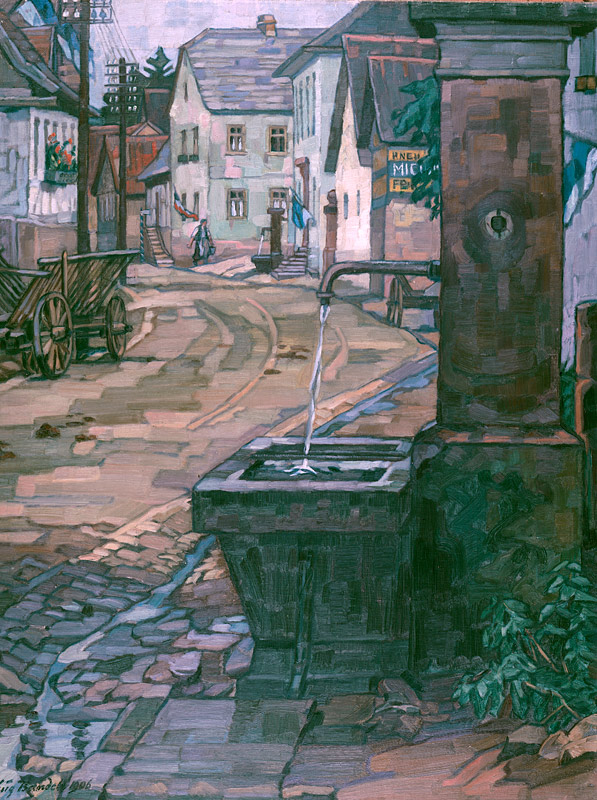
1906réf. 01-G1906. Öl auf Leinwand, links unten signiert und datiert ?Eug. Bandell 1906?, verso auf dem Keilrahmen von der Künstlerin nochmals signiert und datiert sowie betitelt. 84,5:64 cm. Literatur: S. Sumera, Eugenie Bandell (1858-1918), Eine Frankfurter Malerin - das Spätwerk. Magisterarbeit, Univ. Frankfurt am Main, 1996, Nr. 99; Ausst. Katalog: Frankfurter Malerei seit der Jahrhundertwende. Galerie und Kunstantiquariat Joseph Fach, Frankfurt am Main, 1988, Nr. 6 mit Farbabb. auf dem Titel; Ausst. Katalog: Frauen an der Staffelei - Ein vernachlässigtes Kapitel der Frankfurter Kunstgeschichte. Frankfurter Sparkasse von 1822, Frankfurt am Main 1994.
1819réf. 46939Tbilisi.: 'Feniks'. December 1918 - 1919 February / March. Stapled as issued in original publisher's printed paper wrappers with titles to front covers in black issue no. 2 in red and black issues 2 and 3 /4 with publisher's vignettes issue 1 with advertisements to rear cover; repair to spine of issue 1 front cover of issue 2 detached. 4 issues in 3. 4to. c.220 x 190 mm. Printed text and verse in Russian throughout no. 1 with 3 mounted monochrome zincograph illustrations by A. N. Geevski no. 2 with monochrome illustrations by Terent'ev and P. Iashvili issue 3 with monochrome illustrations by Goncharova and Kruchenykh. An excellent complete set of the very scarce avant garde periodical 'Kuranty'.The short-lived literary and artistic periodical 'Kuranty' produced in Tbilisi during the Russian Civil War features contributions from many of the most important Russian and Georgian avant garde figures of the time: Alexei Kruchenykh and Igor Terent'ev contributed a large body of material but the contributions of Kyril Zdanevich the editor Boris Korneev Nikolai Sudeikin Tatiana Vechorka Rafalovich and others cannot be overlooked. Natalia Goncharova's 'Portrait of A. Kruchenykh' is reproduced in the final issue together with portraits by Kruchenykh himself.This Tbilisi-produced 'Kuranty' is not to be confused with the review 'Kuranty' published in Kiev in the same year and also of considerable rarity.'Kuranty' is extremely scarce and we can locate no complete sets in libraries although a facsimile is held and Johns Hopkins holds a copy of issue 1; auction records feature one complete copy only that sold at Christie's in 2014 as well asone other incomplete set also Christie's in 2007. 'Feniks'. unknown
1952réf. 31576Exceptionnelle réunion de Cartier-Bresson et Clergue sur le plus célèbre des ouvrages du premier. Paris, Éditions Verve, (22 juillet) 1952. 1 vol. (275 x 370 mm) non paginé. Cartonnage illustré de l'éditeur, d'après une composition d'Henri Matisse. Édition originale. 126 reproductions photographiques. Exemplaire Lucien Clergue, avec une dédicace au crayon multicolore. Envoi signé : «à Clergue, bien cordialement, Henri Cartier Bresson, Arles, 6 juillet 59 ».
réf. 55855Leningrad: Izdanie V.O. Raikoma VKPb 1934. Oblong folio 23.3 × 33.5 cm. Original decorative card wrappers; 137 pp. With 27 leaves of full-page illustrations of visual statistics in color printed to rectos only. Numerous tables and photographs throughout. Professional restoration to wrappers and spine extremities lightly toned throughout due to stock else very good. A rare album of infographics photomontages and numerous tables with statistical information of the first and second Five-Year Plan with Constructivist design by a team of artists working for the Leningrad branch of Izostat a research institute and publishing house which specialized in creating easy to read visual statistics. The album was printed in only 800 copies for the 16th district Party Conference by the Regional Committee of Vasilievsky District one of the largest neighborhoods of Leningrad with the infographics providing information on the work of local factories such as Baltzavod ship building Pnevmatika mechanization of coal mining Komintern radio manufacturing and Radishchev leather goods. Other infographics show "social statistics" such as the growing number of women working in local factories growth of local schools technical colleges and daycare centers worker's canteens increased local book publishing the growing number of Komsomol members in the district etc. The visual statistics were printed to rectos only with the leaves intended to be removed from the album and used for wall newspapers at factories and other public buildings making complete albums of this kind extremely rare. This album is especially notable for containing several infographics promoting the purges of the Communist Party early in the development of this practice prior to the worst of Stalinist purges unleashed in 1937-1938. The first infographic chart shows the "number of party members who actively participated" in the purge hearings vs those who "were passively present". The second chart shows the reasons for the purging of specific party members ranging from "violating the rules and protocols of the party" 40.9% to "suppression of self-criticism" 0.6 % with the second most common reason for expulsion from the party being "passive presence in the party" 20.9%. The final infographic shows the number of party members who were identified as "most active" in the course of the party purge and were "designated for promotion" as a result. The accompanying text explains: "The purge is an expression of Bolshevik self-criticism of our party. It must be carried out "without regard to individual status" from the standpoint of verifying the fulfillment of party directives by the party members and candidate workers their participation in competition and shock work the active struggle for the industrial and financial plan the plan for the fulfillment of the most important economic tasks the fight against absenteeism and the fight against the theft of socialist property From The Central Committee's decision on the purge." The album was created by a team of artists who worked for the Leningrad branch of Izostat which according to Vladimir Laptev was distinctive from the Moscow branch for its use of "realistic backgrounds" behind the simplified diagrams which were supposed to "reveal the social essence of the figures and statistics" Russkaia infografika. St. Petersburg: Izd-vo Politekhnicheskogo Universiteta 2018 pp. 222. A research institute and publishing house Izostat operated in 1930-1940 creating easy to read graphics for Soviet posters newspapers and albums such as this one using the "Vienna method" developed by the Marxist economist and sociologist Otto Neurath and the Constructivist designer Gerd Arntz. The "international picture language" or pictograms isotypes developed by Neurath and Arntz democratized the visualization of statistical data by using images de-emphasizing the use of exact numbers information which they claimed did not stay as easily with the viewer. By contrast the aesthetics of Izostat have been compared to those of a board game with the objective of communicating simply often to illiterate audiences. Prior to making this album the same team of artists V. Dukhovich M. Pikalov and G. Fitingof collaborated on U nas i u nikh What we have and what they have one of the early albums of infographics designed by the Leningrad branch of Izostat as it developed a style of its own. "Despite the obvious influence of the Vienna method of pictorial statistics this album is considered to be undoubtedly an independent work of Soviet artists whose supervision in the part of drawing up diagrams was carried out by I. P. Ivanitsky and not by isostatists sent from Vienna" Russkaia infografika pp. 224. Little is known about the head designer on this project A.I. Dakhno who seems to have designed the wrappers for one other local Leningrad publication Molodezh v sovetakh The youth in soviet councils also in 1934. The author of the introductory text a district party boss Villi Voltsit 1895-1938 was himself purged from the party and arrested in 1937 and eventually executed in 1938. This volume not in Laptev. We were not able to trace any other copy of this album worldwide likely due to the intended local use small print run and the eventual purging of the author of the introductory text. As of July 2026 not in KVK OCLC. Not held by the Russian State or National Libraries. unknown