BOISSY (Louis de), FUZELIER (Louis), DOMINIQUE, VOLTAIRE (François-Marie Arouet, dit), GRANET (François, traducteur).Livre Rare Book
1.720 Ergebnisse
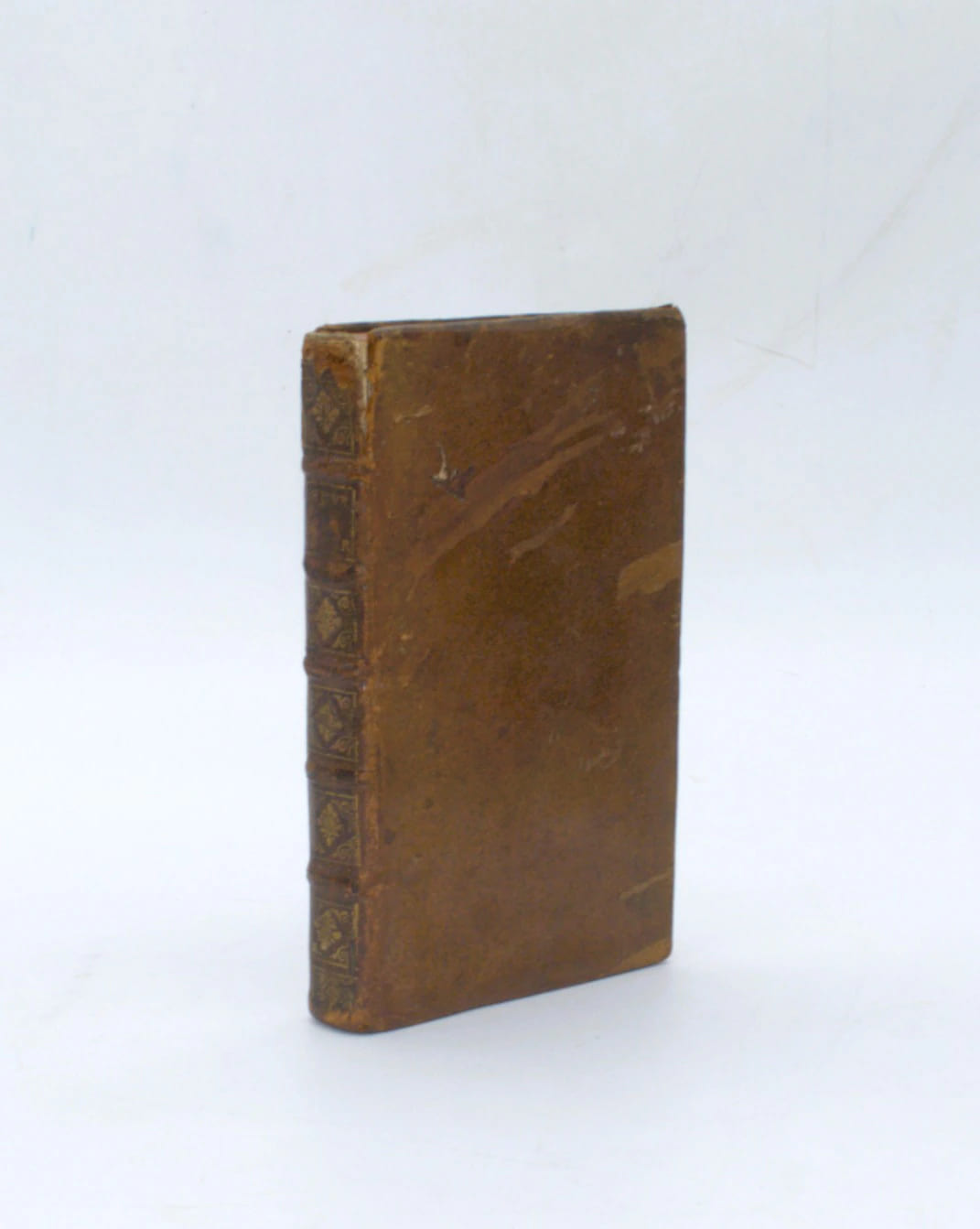
1729Best.-Nr. PHO-2653Paris, La Haye, Prault, Merville, 1729-1732. In-8 (18,5x11,5cm), basane époque, dos à nerfs orné avec titre (effacé), tranches rouges, frottements et épidermures, coins usés, , coiffe arasée, débuts de fentes, petit travail de ver au plat. Complet de son frontispice par Lancret et gravé par Cars.
Best.-Nr. 10134Paris : administration, rue de Lancry, (1854,) 2 vol.reliés en un fort volume in-4: Les Théâtres de Paris: Cinquante notices et portraits ht en lithographie en noir à fond teinté,sous serpente,avec notice imprimée par volume,soit 100 illustrations en lithographie à fond teinté ,ht .Les Folies-nouvelles. 1 vol. ; La Porte-Saint-Martin. 1 vol.100 signed sketches, each with separate pagination and portrait. Description: 2 volumes : color portraits ; 27 cm
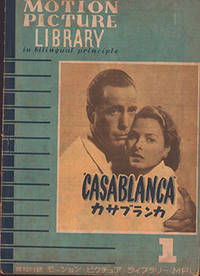
Best.-Nr. 51-7274Tokyo: Shinsei Katsusha June 1946. Original pictorial wraps. 18.2 x 25.8cm. 60pp.The Motion Picture Library was a pioneering bilingual film publication launched in Tokyo in post-WWII Japan 1946-1948. Aimed at bridging American pop culture and Japanese audiences it printed full English scripts actor profiles and bilingual synopses of imports like Casablanca. The emergence of these bilingual or heavily translated film resources during the mid-1940s marked a dramatic cultural shift. Following wartime censorship and the total ban of foreign films the sudden influx of Hollywood movies under the Supreme Commander for the Allied Powers SCAP created a boom in cine-literacy. .“MÅshon pikuchÄ raiburarÄ«” wa dainijisekaitaisengo no Nihon 1946-nen 〜 1948-nen ni oite TÅkyÅ de sÅkan sa reta senku-tekina bairingaru eiga shuppan-monodeatta. Amerika no poppukaruchÄ to Nihon no kankyaku to no kakehashi to naru koto o mezashi dÅshi wa “Kasaburanka” nado no yunyū eiga ni tsuite kanzen'na eigo kyakuhon haiyū no purofīru soshite nichiei taiyaku no arasuji o keisai shite ita. 1940-Nendai nakaba ni okeru kÅshita bairingaru aruiwa Åhabana hon'yaku o hodokoshita eiga kanren shiryÅ no tÅjÅ wa gekitekina bunka-teki tenkan o shÅchÅ suru monodeatta. Senji-chū no ken'etsu ya gaikoku eiga no zenmen kinshi o hete rengÅ-koku saikÅ shirei-kan sÅ shirei-bu SCAP no tÅchi-ka de Hariuddo eiga ga totsujotoshite tairyÅ ni ryūnyū shita koto wa eiga riterashī eiga o yomitoku chikara e no kanshin o ikkini takameru būmu o makiokoshita nodearu.『モーション・ピクãƒãƒ£ãƒ¼ãƒ»ãƒ©ã‚¤ãƒ–ラリーã€ã¯ã€ç¬¬äºŒæ¬¡ä¸–界大戦後ã®æ—¥æœ¬ï¼ˆ1946年〜1948年)ã«ãŠã„ã¦ã€æ±äº¬ã§å‰µåˆŠã•ã‚ŒãŸå…ˆé§†çš„ãªãƒã‚¤ãƒªãƒ³ã‚¬ãƒ«æ˜ 画出版物ã§ã‚ã£ãŸã€‚アメリカã®ãƒãƒƒãƒ—カルãƒãƒ£ãƒ¼ã¨æ—¥æœ¬ã®è¦³å®¢ã¨ã®æž¶ã‘æ©‹ã¨ãªã‚‹ã“ã¨ã‚’目指ã—ã€åŒèªŒã¯ã€Žã‚«ã‚µãƒ–ランカã€ãªã©ã®è¼¸å…¥æ˜ ç”»ã«ã¤ã„ã¦ã€å®Œå…¨ãªè‹±èªžè„šæœ¬ã€ä¿³å„ªã®ãƒ—ãƒãƒ•ã‚£ãƒ¼ãƒ«ã€ãã—ã¦æ—¥è‹±å¯¾è¨³ã®ã‚らã™ã˜ã‚’掲載ã—ã¦ã„ãŸã€‚1940年代åŠã°ã«ãŠã‘ã‚‹ã€ã“ã†ã—ãŸãƒã‚¤ãƒªãƒ³ã‚¬ãƒ«ã‚ã‚‹ã„ã¯å¤§å¹…ãªç¿»è¨³ã‚’æ–½ã—ãŸæ˜ 画関連資料ã®ç™»å ´ã¯ã€åŠ‡çš„ãªæ–‡åŒ–的転æ›ã‚’象徴ã™ã‚‹ã‚‚ã®ã§ã‚ã£ãŸã€‚戦時ä¸ã®æ¤œé–²ã‚„å¤–å›½æ˜ ç”»ã®å…¨é¢ç¦æ¢ã‚’経ã¦ã€é€£åˆå›½æœ€é«˜å¸ä»¤å®˜ç·å¸ä»¤éƒ¨ï¼ˆSCAP)ã®çµ±æ²»ä¸‹ã§ãƒãƒªã‚¦ãƒƒãƒ‰æ˜ ç”»ãŒçªå¦‚ã¨ã—ã¦å¤§é‡ã«æµå…¥ã—ãŸã“ã¨ã¯ã€æ˜ ç”»ãƒªãƒ†ãƒ©ã‚·ãƒ¼ï¼ˆæ˜ ç”»ã‚’èªã¿è§£ã力)ã¸ã®é–¢å¿ƒã‚’一気ã«é«˜ã‚るブームを巻ãèµ·ã“ã—ãŸã®ã§ã‚る。. Tokyo: Shinsei Katsusha , June, 1946 paperback
Best.-Nr. DADAX0754677079New unknown
Best.-Nr. DADAX1409403165New unknown
Best.-Nr. DADAX0415603420New unknown
Best.-Nr. DADAX0754673006New unknown
Best.-Nr. DADAX0415782902New unknown
Best.-Nr. DADAX041548670XNew unknown
Best.-Nr. DADAX0367249723Routledge 2020-03-24. 1. hardcover. New. 6.20x0.80x9.30. Buy with confidence. Excellent Customer Service & Return policy. Routledge hardcover
Best.-Nr. DADAX1138088684New unknown
Best.-Nr. DADAX0415899079New unknown
Best.-Nr. DADAX0415843472Routledge 2016-06-13. 1. hardcover. New. 6.25x0.75x9.25. Buy with confidence. Excellent Customer Service & Return policy. Routledge hardcover
1877Best.-Nr. 0011261877 Lyon, N. Scheuring, 1877. In-8 (150 X 217 mm) demi-maroquin rouge à coins, dos cinq nerfs filetés, titre doré, caissons richement ornés, date en queue, tête dorée, double filet doré sur les plats (reliure de l'époque) ; VIII-384 pages.
Best.-Nr. DADAX0367368900New unknown
Best.-Nr. DADAX0367198169New unknown
Best.-Nr. DADAX0367315904New unknown
Best.-Nr. DADAX0415593115New unknown
Best.-Nr. AQ22324Newcastle: W. Fordyce Printer s.d. c. 1820s Single leaf broadside edges uncut. A trifle creased and browned. An apparently unrecorded late Georgian playbill advertising three evenings of entertainment provided by a travelling troupe of actors in or around Newcastle including a performance of Church of Scotland minister John Home's 1722-1808 drama in blank verse Douglas. The play first performed in Edinburgh on 14th December 1756 found overwhelming approval with the general public despite having been rejected in London by actor and theatre manager David Garrick over concerns of taste. Not all found fault however Scottish philosopher David Hume said of Home; 'you possess the true theatric genius of Shakespeare and Otway refined from the unhappy barbarism of the one and the licentiousness of the other'. . Dimensions 150 x 230 mm. W. Fordyce, Printer, [s.d., c. 1820s] unknown
Best.-Nr. 21935Oblong 8 x 10 photograph GREAT CONDITION SIGNATURES GUARANTEED AUTHENTIC. Signed by Author. Unbound.
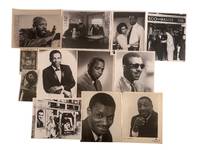
1940Best.-Nr. 225431940. Archive of African American entertainer photographs circa 1940s to 1970s documents the publicity performance and social spaces through which Black artists gained national visibility across film soul music jazz theater nightclub entertainment and stand-up comedy. Identified subjects include Isaac Hayes Harry Belafonte Sidney Poitier Dick Gregory Moses Gunn and John Marriott performers whose careers collectively illuminate the expanding but still restricted opportunities available to African Americans in twentieth-century entertainment. The group moves between controlled studio portraits motion-picture stills live-performance images and candid street photography showing how Black public identity was constructed both through commercial publicity and within community institutions. The survival of agency stamps press captions credits and editorial crop marks further documents how such photographs circulated through newspapers magazines studios and publicity departments; comparable institutional collections preserve these markings as evidence of publication and public-relations use. Twelve original silver gelatin photographs and halftone publicity prints circa 1940s to 1970s in various sizes the majority approximately 8 by 10 inches. Several bear photographer or agency stamps typed press captions printed credits or editorial markings on the versos or margins. Principal images include a tightly cropped portrait of Isaac Hayes with a caption identifying him as "composer singer actor black Moses of soul"; a film still of Harry Belafonte in a tense scene from the 1959 noir Odds Against Tomorrow; and Sidney Poitier embracing Barbara McNair in They Call Me Mister Tibbs! released in 1970. AFI records Belafonte's film as a November 1959 drama and Poitier's sequel as a July 1970 release filmed in San Francisco and Los Angeles. Additional portraits show comedian and civil-rights activist Dick Gregory; stage and screen actor Moses Gunn associated with the Negro Ensemble Company and Shaft; and veteran actor John Marriott. The unidentified material broadens the archive beyond established celebrity: a tuxedoed singer poses in a nightclub or theatrical setting; a well-dressed man stands before a facade displaying posters for entertainers identified as Kit Kara and Rio; two men shake hands beneath the marquee of Harlem's Savoy Ballroom; and smaller prints show a saxophonist performing and an image of a lobby card advertising comedian "Hot Ashes." The Savoy image is especially significant as a street-level record of a Harlem venue closely associated with Black social dance and jazz performance. Together the photographs trace several routes through which African American performers entered public view: Hayes through the assertive visual language of 1970s soul; Belafonte and Poitier through films that placed Black actors within politically charged dramatic narratives; Gregory through the union of comedy and civil-rights activism; and Gunn and Marriott through sustained stage and character work. The unidentified singer saxophonist theater facade and Savoy Ballroom scene preserve the broader entertainment culture surrounding nationally recognized artists preventing the archive from reducing Black performance history to celebrity alone. Light handling wear scattered corner creases and press crop marks; captions stamps credits and principal images remain legible and well preserved. Very good. A varied visual record connecting African American celebrity publicity with the theaters clubs films and performance networks that sustained Black entertainment across four decades. unknown
1940Best.-Nr. 225431940. Archive of African American entertainer photographs circa 1940s to 1970s documents the publicity performance and social spaces through which Black artists gained national visibility across film soul music jazz theater nightclub entertainment and stand-up comedy. Identified subjects include Isaac Hayes Harry Belafonte Sidney Poitier Dick Gregory Moses Gunn and John Marriott performers whose careers collectively illuminate the expanding but still restricted opportunities available to African Americans in twentieth-century entertainment. The group moves between controlled studio portraits motion-picture stills live-performance images and candid street photography showing how Black public identity was constructed both through commercial publicity and within community institutions. The survival of agency stamps press captions credits and editorial crop marks further documents how such photographs circulated through newspapers magazines studios and publicity departments; comparable institutional collections preserve these markings as evidence of publication and public-relations use. Twelve original silver gelatin photographs and halftone publicity prints circa 1940s to 1970s in various sizes the majority approximately 8 by 10 inches. Several bear photographer or agency stamps typed press captions printed credits or editorial markings on the versos or margins. Principal images include a tightly cropped portrait of Isaac Hayes with a caption identifying him as "composer singer actor black Moses of soul"; a film still of Harry Belafonte in a tense scene from the 1959 noir Odds Against Tomorrow; and Sidney Poitier embracing Barbara McNair in They Call Me Mister Tibbs! released in 1970. AFI records Belafonte's film as a November 1959 drama and Poitier's sequel as a July 1970 release filmed in San Francisco and Los Angeles. Additional portraits show comedian and civil-rights activist Dick Gregory; stage and screen actor Moses Gunn associated with the Negro Ensemble Company and Shaft; and veteran actor John Marriott. The unidentified material broadens the archive beyond established celebrity: a tuxedoed singer poses in a nightclub or theatrical setting; a well-dressed man stands before a facade displaying posters for entertainers identified as Kit Kara and Rio; two men shake hands beneath the marquee of Harlem's Savoy Ballroom; and smaller prints show a saxophonist performing and an image of a lobby card advertising comedian "Hot Ashes." The Savoy image is especially significant as a street-level record of a Harlem venue closely associated with Black social dance and jazz performance. Together the photographs trace several routes through which African American performers entered public view: Hayes through the assertive visual language of 1970s soul; Belafonte and Poitier through films that placed Black actors within politically charged dramatic narratives; Gregory through the union of comedy and civil-rights activism; and Gunn and Marriott through sustained stage and character work. The unidentified singer saxophonist theater facade and Savoy Ballroom scene preserve the broader entertainment culture surrounding nationally recognized artists preventing the archive from reducing Black performance history to celebrity alone. Light handling wear scattered corner creases and press crop marks; captions stamps credits and principal images remain legible and well preserved. Very good. A varied visual record connecting African American celebrity publicity with the theaters clubs films and performance networks that sustained Black entertainment across four decades. unknown books
Best.-Nr. SONG041548670XUsed: Good unknown
Best.-Nr. SONG1409403165Used: Good unknown
Best.-Nr. DADAX1138346977New unknown