17 480 résultats
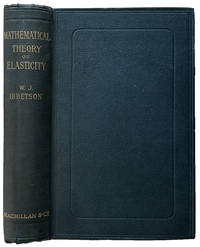
1887réf. LV1834London & New York:: Macmillan 1887. 1887. 8vo. xiii 3 515 pp. Index. Original dark green blind and gilt-stamped cloth. INSCRIBED BY THE AUTHOR to "Prof. J.J. Thomson F.R.S. with the Author's kind regards Ap. 20th 1887." PROVENANCE: Harold I. Levine 1922-2017 Stanford University Dept. of Mathematics. PROVENANCE: 1 Sir Joseph John Thomson 18 December 1856 – 30 August 1940 was an English physicist who received the Nobel Prize in Physics in 1906. 2 Harold I. Levine 1922-2017 Stanford University Dept. of Mathematics. Ibbetson B.A. F.R.A.S. was associated with Clare College where he was a Senior Scholar who worked at the Cavendish Laboratory in 1885 placing him in contact with J.J. Thomson. See: A History of the Cavendish Laboratory 1871-1910 London 1910. Macmillan, 1887. hardcover books
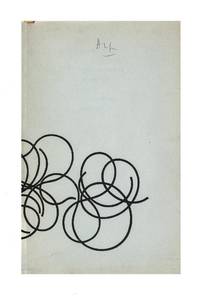
réf. 11558Three full-page engraved illus. by Taeuber-Arp. 28 pp. 8vo orig. printed thick paper wrappers & orig. pictorial dust-jacket a trifle worn staple-bound. Grasse France: Self-published 1941. A rare poetic artist's book jointly created by the Arps from a numbered edition of 150 ours is no. 72; according to WorldCat there are only five copies in North America. The couple had escaped Paris before it fell to the Nazis and headed to Vichy France in the South. One of their stops was with Peggy Guggenheim in Veyrier. They settled in Grasse in 1941 and established an artist colony with colleagues Sonia Delaunay and Alberto Magnelli. Taeuber-Arp's short time in Grasse was very formative and she experimented with overlaid undulating lines that created appealing geometric compositions which are featured here in the book paired with her husband's poetry and on the dust-jacket. Within a year Arp 1886-1966 and Taeuber-Arp 1889-1943 decamped for Zürich following Grasse's takeover by the Germans. In near fine condition; edgewear to the dust-jacket. From the edition of 150 the first ten copies were accompanied by a drawing. W. Summerfield "The Modern Artists Who Made the Most of Isolation" April 2020 Apollo Magazine website accessed 10 September 2026. We recommend visiting the Sophie Taeuber-Arp Research Project website's illustrated database to see the artist's work from this period. unknown books
1864réf. 42016Boston: Press of Geo. C. Rand & Avery 3 Cornhill 1864. 31 1 blank pp. Stitched in original dark wrappers with gilt lettering and decorative border. Fine. The Company property consists of about fifty acres in the Waverley Gold District "about twelve miles from Halifax N. S." A quarter mile away is excellent inexpensive housing for miners in the town of Waverley. "This mine will yield a large per cent. upon a capital of one million dollars." Accompanying reports fully justify this optimism. Not in TPL or Sabin. Not located on OCLC. Press of Geo. C. Rand & Avery, 3 Cornhill unknown books
1788réf. TK0149Nice:: Chez Piestre et Delamolliere 1788. 1788. 2 volumes. 4to. XVI 971; XXIV 1008 pp. Original full vellum gilt spine titles; covers heavily soiled. Internally very good – binding is stained not effecting the integrity of this original binding – holding firm. Third edition. Accompanied by an old manuscript for what reason it is preserved here is for someone else to figure – several pages in ink manuscript. "Francesco Alberti di Villanova sometimes referred to as Francesco D'Alberti di Villanuova was an Italian linguist and lexicographer. He integrated the French-Italian Italian-French dictionary of Annibale Antonini according to the doctrine of the Enlightenment with extensive encyclopedic material." Chez Piestre et Delamollie?re, 1788. hardcover books
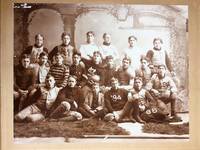
1894réf. 33580np 1894. Framed photograph 10-1/2" x 13-1/2" matted behind glass within ornate gilt frame 21" x 23-1/2". Light wear to surface of photograph. Matting has some spotting. Some wear to frame and small chip to frame edge. Else Very Good. The squad is dressed in various football uniforms including laced smock vests over long sleeved shirts caped sweaters and knee length pants. Each of the two young men wearing military style uniforms has a small billed cap. unknown books
1882réf. 28712California 1882. 62 2 blank pp. Original printed wrappers lightly dustsoiled stitched. Rubberstamp at head of front wrap: "McKee J. Filed Feb. 25 1882." Text clean. Very Good. offered with NO. 8072. . POINTS AND AUTHORITIES FOR APPELLANT. MASTICK BELCHER & MASTICK ATTORNEYS FOR APPELLANT. 41 1 blank pp. Original printed wrappers lightly dustsoiled stitched. Ink correction on front wrapper changing "Appellant" to "Respondent." A few question marks in ink written in margins. Very Good. offered with NO. 8072. . RESPONDENT'S REPLY TO APPELLANT'S BRIEF. ESTEE & BOALT AND RAMON E. WILSON ATTORNEYS FOR RESPONDENT. 23 1 blank pp. Original printed wrappers lightly dustsoiled stitched. Light creasing of a few later leaves. Very Good. offered with NO. 8072. . RESPONDENT'S POINTS AND AUTHORITIES. ESTEE & BOALT AND RAMON E. WILSON ATTORNEYS FOR PLAINTIFF AND RESPONDENT. 42pp. Original printed wrappers lightly dustsoiled stitched. Text clean. Very Good. The complaint charged that the plaintiff and defendant were owners of adjoining gold quartz mines near Plymouth California in Amador County the birthplace of the California Gold Rush; and that Defendant Empire had unlawfully entered Plaintiff Pacific Gold Mining Company's mine and taken ores of the value of $250000. Plaintiff brought suit in the Superior Court of Amador County for compensation. unknown books
1878réf. 28959Boston: Frank Wood Printer 1878. 34pp plus portrait frontis and original tissue guard of John Everitt who "sailed for Valparaiso from New York.to be associated with the General Superintendent at the Mines"; and large Bird's-Eye View 32" x 16" and Topographical Plan of the mines. Original printed wrappers stitched. Wrappers chipped at edges and reinforced at the spine with tape. Some chipping to several blank margins. Good. The Company based in New York issued this Prospectus which includes a detailed report from its Mining Engineer W.A. Holcomb. Flagler its President was a major capitalist during the last half of the 19th century; he formed the National Tube Company and owned one of the predecessors to U.S. Steel. OCLC 1013744777 1- U IL as of November 2020. Frank Wood, Printer unknown books
1872réf. ST17640-G121872-1921. 60 different editions in 61 volumes. Most items in their original publisher's bindings mostly cloth or wrappers and a few in limp suede; one in half morocco. Condition ranging from very good to very fine; many of the cloth items with light shelfwear rubbing to edges mild soiling fraying to head and tail of spine and minor condition issues internally light scattered foxing and browning a handful of items with more noticeable condition issues spine partially lost rubbed joints moderate browning etc. but on the whole an excellent group. Amassed over the course of many years by a passionate collector of the Rubaiyat this is a very substantial and wide-ranging group of 60 works that attest to the work's enduring popularity more than 150 years after Edward FitzGerald introduced it to the West. Son of a wealthy Irish landowner FitzGerald had enough money to pursue a rather desultory literary career as a "genteel gipsy" in Terhune's words before beginning to study languages in middle age. He started his translation of the quatrains "rubáiyát" in Persian attributed to "Umar Khayyam" in 1856; according to DNB about half of FitzGerald's final work paraphrases rather than directly translates portions of the 11th century poem while the rest is original verse inspired by Omar. "The result is generally seen as being in some ways an original English poem one that is much better known than Omar's poem is in Persian." DNB In Jewett's opinion it certainly earned FitzGerald "a prominent place among the immortals of English literature." In 1858 FitzGerald submitted 25 of the "less wicked" verses to "Fraser's Magazine" only to be rejected. He had 250 copies published anonymously at his own expense but had no luck selling them. Admitting defeat he gave 200 copies to Quaritch; these sold so poorly that they were relegated to the penny bin where Potter says they were discovered--and soon celebrated--by Dante Gabriel Rossetti and Algernon Swinburne. Those copies that remained unsold when Quaritch moved to Piccadilly in 1860 were either lost or destroyed but by 1861 Rossetti and his Pre-Raphaelite brethren along with Celtic scholar Whitley Stokes were evangelizing for the work embracing the lush lyrical verse that would move English poetry away from Victorian orthodoxy and convention. According to Day by the end of the 19th century "a copy of the 'Rubaiyat' upon an Oxford table was a symbol of sophistication. Today . . . it remains the most popular single poem of the Victorian era." The present collection is especially strong in illustrated editions with more than 25 artists represented including Edmund Dulac Elihu Vedder Willy Pogany Adelaide Hanscom Gilbert James Edmund J. Sullivan Arthur Szyk René Bull and Abanindro Nath Tagore. Notable text editions in this group include a Third Edition of FitzGerald's translation; a First Published American Edition; and a signed and inscribed copy of Eben Francis Thompson's translation. There is also a small group of fine press printings including examples by the Gregynog Press Thomas Mosher and Elbert Hubbard. There are no duplicated editions in this collection and there are no trade paperbacks. A full list of the collection's contents is available upon request. unknown books
1866réf. 1416935London: Dorrell and Son 1866. Hardcover. Octavo viii 262 pages. In Fair minus condition. Spine is brown with gold print. Boards in brown cloth; tattering to spine caps and corners tears to hinges toning to spine cocked spine. Text block has red tinted edges; cracked hinges intermittent spine breaks tear to edge of rear flyleaf. Illustrated: b&w drawings. NOTE: Shelved in Netdesk Column K ND-K. 1416935. FP New Rockville Stock. Dorrell and Son hardcover books
1840réf. 14089Philadelphia: not published ca 1840. Unique. Original wrappers. Very good; only a handfull of samples are missing parts or have damage. Folio. There are appx. 165 identified mounted samples in their original collection folios. A varied herbarium of 165 samples in their original folio collection folders. Each specimen is grouped according to the Latin genus 21 distinct groups in this collection; separate specimens are then individually identified. This herbarium has the feel of being a remnant of a larger collection. Individual samples are dated and cluster around two separate dates: those collected about 1833 and again around 1858. There are occasional notes or a printed label that identify the collector e.g. J C Booth or John H Balfour who were professional collectors. Many of the samples bear the intials 'H.C.' on the mount. This may correspond to Henry Carson the brother of Joseph Carson the noted medical botanist and author or possibly though not likely Hampton Carson Joseph's son. The geographical range is broad encompassing Montgomery County PA and Cassel Germany. Most of the collected specimens are uncommon plants. Alas the collection originated in an auction of the remainder of the Carson family estate and there is no further information available as to its original form or purpose. See DAB for Joseph Carson medical botanist; see Mears Guide to Plant Collectors. not published unknown books
1890réf. 4872New York: For the Author ca. 1890. First Edition. Somewhat later neat cloth. Very good; remains of small white label on the title. 8vo 32pp. 81 leaves of plates. An unusual privately printed atlas of microscopic diatoms. The OCLC entry is not clear about the author and lists it under two distinct authors. This copy traveled form New York to Germany. It is bound with a 19th century Berlin bookseller's ticket Friedlander on the front pastedown. The plates are photo-lithographic renderings of hand drawn illustrations of the diatoms seen through lens of a microscope. For the Author hardcover books
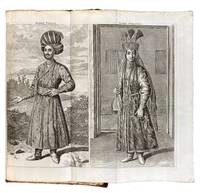
1718réf. 42045Amsterdam: Chez les Freres Wetstein 1718. 2 volumes small folio. 13 3/4 x 8 1/2 inches. Half-title in volume I titles printed in red and black. Vol 1: engraved portrait of the author by G. Valck after G. Kneller engraved allegorical frontispiece by B. Picart dedication with engraved headpiece 3 engraved double-page maps 111 engraved plates numbered 1-110 plus 1 unnumbered on 52 sheets 29 double-page 7 folding 24 engraved illustrations within the text illustration on p. 164 pasted on slip as issued. Vol 2: 162 engraved plates numbered 111-262 plus 10 unnumbered on 56 sheets 33 double-page 9 folding 20 engraved illustrations within the text. Quarter calf and marbled paper boards spines with raised bands forming six compartments tooled and lettered gilt. Uncut Provenance: Princes of Liechtenstein bookplate "Ex Libris Liechtensteinianis" of Franz Joseph II 1906-1989 on front paste-downs A fine clean uncut copy of the First edition in French of Le Bruyn's important illustrated account of his voyage to Russia Persia India and Java. From the library of the Princes of Liechtenstein. In his first expedition of 1674 Dutch traveller and painter Cornelius Le Bruyn remained in the Levant for seven years travelling principally in Asia Minor Syria the Holy Land and Egypt. On his return he published his Voyages au Levant and encouraged by its success undertook a second more far-reaching expedition. "In 1701 Le Bruyn started on the second of his journeys taking a ship to the country of the Samoyeds . and then proceeding to Moscow. Travelling by way of Asia Minor he arrived in Persia where he remained for the years 1704-05. Leaving Persia he proceeded by ship to India stopping at Cochin Ceylon and the East Indies i.e. Batavia. He returned by much the same route residing in Persia between 1706 and 1707 and describing the ruins of Persepolis and Pasargades" Howgego. The numerous finely engraved illustrations include large folding panoramas of Moscow and Isfahan views of Astrakhan and the antiquities at Persepolis and many of the forts encountered on his journey as well as portraits of native peoples and depictions of the flora fish birds animals etc. Of particular note are Le Bruyn's description and images of the Samoyeds and their country among the earliest for the region. Le Bruyn also gives an account of an encounter with William Dampier in Batavia and describes the route taken by Everard Ysbrants Ides the Danish Russian ambassador to China. Brunet III:911 calls for 262 plates based on the numbering of the plate list which does not include the unnumbered plates; Chadenat II 5085; Chahine 2078; Cohen-de Ricci 610; Lipperheide Kaa 6 calls for 128 plates and 45 engraved illustrations; Howgego B177. Chez les Freres Wetstein unknown books
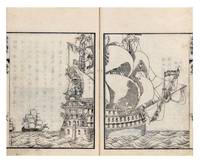
réf. 10340Many fine woodcuts throughout. Four parts & appendices in five vols. 8vo orig. semi-stiff wrappers a little frayed old stitching orig. title slips on covers. Tokyo: Yamasakiya Seishichi 山崎屋清七 et al. 1852. First printed edition of this artillery manual from the bakumatsu period. In the early 19th century Japan came under increased pressure from Western nations that wanted access to Japanese ports. “The Shogunate government issued the Order to Drive Away Foreign Ships in 1825 and commanded that foreign ships appearing along the coast of Japan be fired upon so the domains along the coast began building gun batteries and installing cannons. This is when the gun batteries and emplacements were built at Odaiba in Edo Bay and at Uraga Nakaminato Tahara Maiko Dannoura Uwajima Kagoshima and elsewhere. Dutch coastal artillery books were referred to when building these gun batteries” NDL Japan-Netherlands Exchange in the Edo Period online. Our book was published in this historical context. The book had already been translated by Motoki Masahide 1767-1822 who had left it unpublished at his death manuscript copies exist. Nunokawa Tsūboku 布å·é€šç’ž who edited Motoki’s translation and brought it to print in his Preface referenced the order that the domains build coastal defenses as one justification for publication. Motoki had studied not only Dutch but also French Russian and English. He published an English-language primer in 1811 and an English-Japanese dictionary in 1814. The Dutch original from which the book was translated was titled Het Nieuwe Licht Der Bosschieterye 1699 and was written by Gerrit van der Tollen fl. 1721-23 who worked for the Dutch East India Company. Our book is richly illustrated with a series of fine single- and double-page woodcuts of many kinds of cannons and mortars cannonballs and Western warships along with diagrams of problems in ballistics. Sections include illustrations and explanations of the structure and dimensions of cannons the measurement of gunpowder and lists of Dutch terms translated into Japanese. Some sections are written in a question-and-answer format “Which countries produce cannons Is there a difference in the making of light and heavy cannonballs”. The book begins with a history of artillery a topic that is treated further in the appendices which were not written by Motoki. The appendices treat the history of artillery both in Europe and in China. Note that Google Books presents the copy at the Bavarian State Library as being published in 1825 but the digitized title page says Kaei mizunoene which corresponds to 1852 and is the same date as seen in our book. Very fine set. ⧠Motoki: Christopher Joby The Dutch Language in Japan 1600-1900 Leiden & Boston: 2021 pp. 74 121 186 191 196-97 276 285 & 320. unknown books
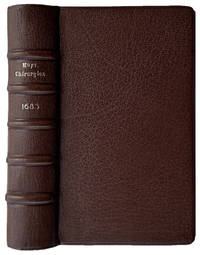
1683réf. M14555Lugduni Batavorum: Apud Petrum vander Aa 1683 -1685. 1683. 12mo. 24 84; 4 44; 24 44 8 39 1; 94 2 pp. 1 figure showing the eyes p. 52 pt. I. Complete with all five parts seldom found together. With added engraved title pages showing a contemporary surgical scene repeated. Modern full brown morocco raised bands gilt-stamped spine edges ruled in blind. Bookseller's ticket: Masson & cie.; rubber stamp: Doctor Mario E. Spada. BOUND WITH: MUYS. Podalirius Redivivus sive Dialogus inter Podalirium & Philiatrum. In quo juxta normam philosophiae Solidioris multa Medico-Chirurgica illustrantur & examinantur. Lugduni Batavorum Apud Petrum vander AA 1686. 12mo. 16 137 1 pp. The complete text with all five parts bound together published from 1683-1685. This is a collection of case reports. Among those are an ophthalmological fungus of gangrene a leg problem erypelate ulcers eye wound tumors swelling tibia fracture dislocation of the humerus puncture of the neck pain in the head tendonitis bleeding ulcer contusion of the arm ganglion of the hand canker sore of the mouth punctured nerve head pain arm wound arm contusion urinary infection scurvy gingivitis bad gums hernia gonorrhea from impure intercourse a child with a raging cold 'but how did it happen that this evil has already returned several times this winter' V: p. 81 tonsillitis the hare-lip etc. The final section contains a dialogue between 'Philiater' one interested in medical science and 'Podalir' meaning in obstetrics in birth where the fetus is turned so that the feet emerge first in delivery. / Joannes Muys was a Dutch medical doctor. Mettler the medical historian called Muys one of the chief early writers on spina bifida and hydroachitis. Muys later became mayor of Leiden. REFERENCES: Krivatsy NLM 8223 Decas prima & secunda only. Apud Petrum vander Aa, 1683 [-1685]. hardcover books
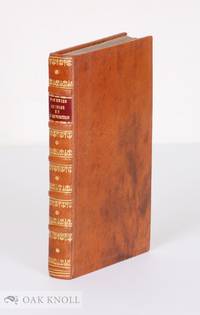
1759réf. 137120Paris: J. Barbou 1759. Full period French binding in Calf five raised bands gilt ornamentation on spine author and title in gilt on red leather spine label in second compartment. 8vo. Full period French binding in Calf five raised bands gilt ornamentation on spine author and title in gilt on red leather spine label in second compartment. 263 pages. First edition Bigmore and Wyman p.228. Minor soiling to the text block else a fine copy. In this volume Fournier sets out to prove that Gutenberg was not the inventor of the printing press by examining the history of printing. He believes that the technology Gutenberg made popular existed long before the German printer's work. "Peter Simon Fournier a French engraver and letter-founder was born at Paris 1712 and died 1768. He studied under Colson painter of the Academy of Saint Luc and devoted himself first to the art of wood-engraving; he afterwards as an engraver on steel rendered himself famous in all countries. In some of his works he seeks to prove that Gutenberg is not the inventor of printing and maintains that long before Gutenberg engraving on wood had been employed for printing images and inscriptions; that during his residence in Strasburg Gutenberg attempted the application of this art to the printing of books and that on his return to Mayence he first printed the Donatus and the Catholicon of Johannes de Janua with engraved and solid blocks. Fournier's ingenious theories were ably refuted by Baron Heinecken in his "Idée Générale d'une Collection complette d'Estamples" Leipsic: 1771" Bigmore & Wyman p 229. J. Barbou unknown books
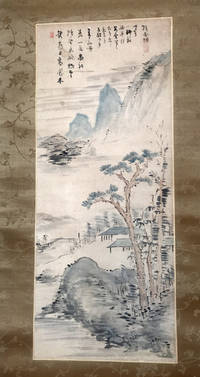
réf. 90223Rai KyÅhei 頼京平 aka ShunsÅ or Manshiro artist. Kakemono 掛ã‘物 - Hanging Scroll Landscape. N.p. n.d. Landscape painting of a mountain scene with pine trees. Hanging scroll kakemono 掛ã‘物 beautifully mounted on brocade with black wooden jiku handles. Image size 44.7x18.4cm with 49.5cm silk fabric at top 26.5cm at bottom and borders of approx 5-5.5cm on either side. Rai KyÅhei 頼京平 c.1756-1834 was an influential Confucian scholar and the uncle of the famous kanshi poet Rai SanyÅ. Sanyo was known for TÅjun KagetsuchÅ å旬花月帖 Journal of Flowers in 100 Days/ A Few Brief Moments Describing Moon and Flowers a collaborative work of poetry with floral and landscape paintings created after a three month walking tour through central Japan with his nephew and mother in the 1820s. The three poets and their entourage were influenced by the lyrical scenes of nature observed in Kyoto and Nara during their travels. This scroll is likely inspired by that period of travel and reflection in nature. Slight foxing on the image. Encased in a wooden scroll box 40.7 x 6.4cm with artist’s name brushed on label laid down on end of box. unknown books
1851réf. 28441New York: Nagel & Weingaertner 1851. Hand-coloured lithograph after Hanson titled below the image. Expert restoration closing tears. The first America's Cup: a rare hand coloured lithographed view of the winning yacht which gave its name to the cup. In 1851 the Royal Yacht Squadron proposed a race around the Isle of Wight. A group of New York Yacht Club members led by Commodore John Cox Stevens built a yacht designed to compete in such races. Designed by Steers and Co. and captained by Richard Brown the yacht America would win the race by eighteen minutes giving its name to one of the oldest and best-known trophies of the sport: the America's Cup. This lithograph and lithographer are not recorded by Harry T. Peters; we find no other extant examples of this rare print. For Nagel and Weingaertner see Peters America on Stone pp. 291-294. Nagel & Weingaertner unknown books
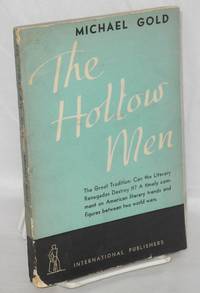
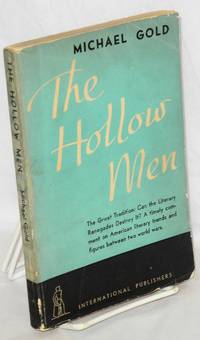
1941réf. 193594New York: International Publishers 1941. Paperback. 128p. wraps lightly worn gift inscription on half-title else very good condition. Seidman G188. International Publishers paperback books
1941réf. 4897New York: International Publishers 1941. Paperback. 128p. paperback; wraps shelfworn else very good. Seidman G188. International Publishers paperback books
réf. 21470Fine. A well-executed realist drawing signed only with initials unfortunately. Our sense is the drawing is late 19th Century or early 20th Century. It has some affinity to the Ashcan School we think as the man depicted might be a hobo. There is a considerable amount of ambiguity or a number of question marks about the details such as is the man holding a rifle or some other object. Is he guarding something or just relaxing where perhaps he doesn't belong Visible 15 by 11.5 cm. With frame and matting: 36 by 32 cm. The gilt frame done in more recent times but in a traditional style has minor wear. The frame and matting serve the drawing exceedingly well and we can't imagine a buyer not wanting to retain the whole package. unknown books
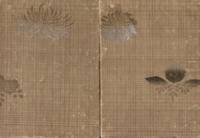
réf. 86003001Edo c.1700-50 n.p. Brown & silver covered boards very clean 7 double-page b.w. erotic woodblock illustrations mounted on mica flecked paper 18 x 25 cm. accordion folded illustration size: 31 x 12 cm. FIRST & ONLY UNRECORDED COPY! . . . . A VERY RARE UNRECORDED EARLY BOOK . . . A BIZARRE & UNIQUE EROTIC BOOK . . . UNSIGNED BUT CLEARLY THE WORK OF A MASTER ARTIST . BY SUKENOBU OR HIS :SCHOOL: . A unique and hitherto unfound odd and most unusual erotic book of the early-mid-18th century. One of the most bizarre erotic books ever done in Japan. . The graphically explicit work portrays men and women with genitals on their foreheads engaged in heterosexual and homosexual intercourse. There is no other book with such unusual and strange illustrations. . . THE TITLE: THE LEGEND OF AMANJAKU or AMAN NO JAKU: Chinese Title: TIAN XIE GUI YUN . THE MEANING OF AMANJAKU: Japanese Buddhist literature is abundant with variations on the theme of "Aman-No-Jaku" aka. "Amanjaku" "Manojaku" commonly understood to be a "Heavenly Evil Spirit." . This spirit or demon-like creature in Japanese folklore is usually depicted as being a male during the day and female at night. The demon is usually depicted as a kind of small Oni devil and is thought to be able to provoke a person's darkest desires and instigate him into perpetrating wicked deeds. . Amanjaku is also depicted in Chinese and Japanese mythology the AMANOJAKU is a changeling a water spirit that infiltrates the human world to play cruel tricks on people by reading their minds and twisting their requests or desires to be used against them. . The "AMANOJAKU" is also known the "Lord of the River" and in Japan serves Bishamonten one of the four Deva kings of Buddhism as a minor demon. See Wikipedia below. . In Japanese the term "Amanojaku" also refers to a person who is deliberately contradictory someone who argues for the sake of arguing or can be used in common Japanese conversation to refer to someone who is a "Perverted Demon." . THE ILLUSTRATIONS: THE BUDDHIST THEME:. This work is unusual in that the genitals of common people are located on their foreheads. A symbolist meaning can be in Buddhist concept that sex and sexual hedonism is openly on the minds of 'lay' people. The Buddha and his disciples on the other hand do not have sex organs on their foreheads meaning their organs are covered and in a different usual location. This can symbolize 'self control' over such biological energies. Devout Buddhist disregard sex as a pleasurable pastime and devote themselves to monastic focus. By contrast "lay" people are distracted with hedonistic pleasure a path away from rather than towards the Dharma or teachings of Buddhism. . In a sense this work illustrates the overwhelming force of evil or the "Amanojaku" and how it distracts people from the "Righteous Path" towards the Dharma and the ultimate goal of attaining Nirvana. It can be posited that this work is designed to give understanding to "lay" people by way of visual example of what forces direct their energies away from the Buddhist teachings in an effort to redirect them towards the "Righteous Path" and life style. . EXCEPTIONALLY RARE UNIQUE WORK: . The work is exceptionally RARE unusual and erotic there are no other example showing genitals on the foreheads of any other Japanese book cited anywhere in the bibliographic literature or record. . This work is certainly RARE in subject content and quantity. Though it was woodblock printed and unsigned which was usual for Japanese erotic works which were banned by the Shogun we have not found anything similar or recorded anywhere in the bibliography. Being woodblock printed one assumes there are other copies in existence. The average printing from woodblocks were somewhere between 100-200 copies. However in this instance no others exist. We have the strong feeling the book could have been the production of a famous Japanese illustrator and perhaps financed by a Buddhist temple again there are no known facts about this rarity. . THE EROTIC ILLUSTRATIONS: . Number 1: This work begins showing the Buddha flanked by two of his disciple monks. The title is written in four Japanese Kanji in Kambun & Chinese characters. The Buddha and his two disciples listen to two elderly Buddhist believers: one is a male he has and erect penis on his forehead. The other is a woman she has a vagina on her forehead. Neither the Buddha nor his two disciples monks show genitals on their foreheads. The couple have come to consult with the Buddha about their grievances. . Number 2: Shows a man and a woman in a Tatami matted room both wear lovely 18th century decorated Kimono. They embrace each other and are engaged in making love from their foreheads which show an erect penis and testicles inserted into the woman's forehead where her vagina is located. Adjacent to the young couple is an older woman who has become aroused by the adjacent couple's making love. The old woman uses a dildo tied to a post which she hugs while inserting the dildo into the vagina on her forehead. . Number 3: Shows a couple laying on a blanket their Kimono pulled down and opened and used as a top cover. They engage in love-making and kiss. The man has an erect penis on his forehead the woman a vagina on hers. There is some used Chirishi toilet paper just above her head on the floor used to wipe the love fluids. There is a folded package of yet unused Chirishi in readiness. Chishiri shown in Japanese Shunga erotic prints prints & paintings is an 'erotic symbol' indicative of sexual excitement with lots of love fluids flowing. Ergo the need for paper to clean up the results of erotic love-making. . Number 4 shows an adult man with an erect penis on his forehead penetrating the anus of a younger man who's smaller but erect penis is seen on his forehead as he faces his lover. The younger man has no pubic hair yet indicating his youth. . Adjacent to these two men is a woman in the next room. The door is open she is a secret voyeur of the two men. Her vagina is also on her forehead. A Shogi board and two bowls for stones is located in the front left of the illustration. Gay activities in Japanese society were accepted as a norm and were not especially unusual. However to find graphic examples in Japanese erotic books are exceptionally rare and seldom found. . Number 5: Depicts a fully clothed man on his knees he bends over a sleeping woman. He has a very large erect penis and begins to penetrate a woman with her vagina on her forehead. She is fully clothed and sleeping on a wooden "pillow" which supports her elaborate hair coiffeur. . Number 6: Depicts a lively scene of two men and a woman. One man with a very large and erect penis pulls the woman's arm toward him while she fends him off with a straight arm to his head. A second excited man also with a large and erect penis on his forehead masturbates and ejaculates in ecstasy. The woman has a vagina on her forehead. The scene is likely an intended rape of a young girl. She looks away in an effort not to allow him to pull her close enough to insert his penis into her exposed vagina. . Number 7: Illustrating a lonely old man in bed. He has an erect penis on his forehead and holds a kind of pot with a large opening. He faces down and inserts his penis into the pot for gratification. . THE TEXT: The text in Shunga erotic Japanese books & prints is often an erotic dialogue describing the erotic action. Often these words are onomatopoetic mimicking the sounds of people in orgasm or making comments about making love or the pleasure and good feelings. The size and hardness of the penis or the flavor and the juices of the vagina and its supple feelings of euphoria when engaged in love-making. All wear 18thcentury period Kimono. . MODE AND FASHION OF THE MID-18TH CENTURY: The room furnishing and Kimono of the participants in this work all wear 18th century period Kimono with period decorations. The style of Kimono and room screens reflect this period. . BINDING AND MOUNTING: Binding: The book has probably been rebound sometime after the 1750's with a more recent thin brown decorated paper with a silver chrysanthemum and a Mon family crest with gold and black on both front and rear covers. Each cover has a distinctly different kind of illustration but of the same theme. The corners and edges are a bit worn some loss to the paper as usual for a work from this period. . Mounting: At an earlier time each page was expertly mounted on a stiff Washi hand-made Japanese paper into an accordion folded book. Each illustration is bordered with a rare and stunning crushed oyster-shell powder mixed with rice-glue and overlaid on the border paper. The stunning effect is a rare shimmering pearl-like color and hue with a remarkable effect. This rare and largely unknown effect has been used for print backgrounds by some of the later masters. . This was no ordinary mounting and appropriate for an exceptionally and most unusual RARE book ! . Contents: By and large the contents are clean solid with a two old worm holes for the first 6 of 7 pages. These are small and towards the edge and does not detract from the overall quality of the illustration. On page 7 there are a few center margin old minor worm holes. All of these have been restored when the prints were laid down on the thick Washi paper creating book format. The work is otherwise solid and firm. There are a few 'rubs' on the old Washi paper which was made from very soft Kozo fibers common to any item of this period on this on handmade papers of the period. . CONDITION OF THE WOODBLOCK PRINTS: . These are very early black and white woodcut prints. Each print has an excellent and vivid impression key blocks are black and superbly printed with strong images. The paper is old and has the patina of paper from that age the usual minor mild surface rubbing or thumbing in the lower corners which is common. . We tend to be overly critical of any flaws found on our books and believe it is better to overly describe rather than avoid such discussion any imperfections. Suffice to say by and large this is an excellent item in very nice condition something that any collector or museum would be proud to own. Please review photos posted to our website. . R A R I T Y OF SUBJECT: The placement of the genitals on the forehead gives one a lot of room to theorize on the meaning of such artistic expression. In our 50 years of experience in dealing Japanese woodblock printed books and painted original art this is the first and only example with such imaginative and symbolist expression. With the beginning of the work showing the Buddha and his two disciples lacking any genitals on their foreheads one can simply assume that in a Buddhist way they have given up carnal desire as represented by common people who's foreheads display genitals perhaps meaning that sex is on their minds or they simply view others as sexual objects eager to make love and engage in carnal thoughts and activities. Obviously seeing an erect penis on some man whiles others see what he thinks and feels is an insight to his innermost thoughts and desires. In all cases in this book the men all show an erect penis. The women are a bit more difficult to fathom. Their vaginas are simply visible on their foreheads and no fluids are visible or other evidence of their carnal desire or sexually excited stated. All of the men have public hair adjacent to their sex organs while all women are lacking any pubic hair completely. This is an erotic symbolism giving full view to women's genitals. . "BANNED" or "PROHIBITED" BOOKS: Shun Pon Haru Bon: In the case of this item it is very likely that it was printed in a much smaller discreet quantity than the 200 copies possible off the blocks. Due to the "banned" nature of such books there is no date publisher nor place cited. One is simply left to determine the date and artist by stylistic analysis. It is well-known that during the Tokugawa period 1603-1868 erotic prints and books were "BANNED" or "PROHIBITED" by decree of the Shogun. One of the influencing factors was that during this period some Shoguns were changing their views and being influenced by Christians who entered Japan during this period. The Shogun did not want foreigners and Jesuit missionaries to think that Japan was a crass and base nation. Naturally foreigners soon learned that prostitution was rampant and so this strange logic from the Shogun never had much affect on the Christians and surely not on the Japanese. . The Shogun enforced severe punishments for persons involved in drawing printing carving blocks and publishing erotic books and prints. With out the "Kiwame" or censor's approval seal all such items were "Banned" outright by the Shogun decree. . While these "Prohibited" books and prints were widely circulated in an "underground" society there are ample examples of famous artists taking on commissions to produce erotic books and prints fun or profit. The record and bibliography is loaded with these examples. "Banning" such erotic works simply meant that the number printed were limited to smaller numbers and distribution was done under the table discretely circulating such books privately among collectors. During these times it was not necessary for artists to sign their such artistic creations by-and-large the population had a very good idea who the artist was by being familiar with their style and other works it was simply a "public secret" who the artist was. Often the artist poked fun at the Shogun with political jokes and assumed names to confound any chance of being discovered by the authorities. . Over the centuries this knowledge decreased and is now the domain of the art historian or scholar to identify and determine the actual artist. Stylistic analysis remains the standard method for unsigned works. . THE ARTIST/SCHOOLS: While there are no signatures or seals indicating the artist's name or even his alternate Go studio name we believe this work is part of the "Primitives and First Century of Ukiyo-e School 1660-1765" period. See Lane below. The women's coiffeur is very similar to those found in this period as well as the drawing style technique and genre. It is this cataloger's opinion that this work was likely the creation of one of the Moronobu School masters. Perhaps done by Sukenobu Yoshikiyo Morishige Sugimura Moronobu Kiyonobu Masanobu or others from this period. We believe this work was likely done from around 1710-1750. It was also likely that it was done by one of the artists listed below. . LIKELY ARTIST ATTRIBUTION: . MORONOBU SUKENOBU SCHOOL: Nishikawa Sukenobu 1671 -August 20 1750 often called simply "Sukenobu" was a Japanese printmaker from Kyoto. He was unusual for a Ukiyo-e in being based in the imperial capital of Kyoto. He did prints of actors but gained note for his works concerning women. His Hyakunin Joro Shinasadame: Appreciating 100 Women in two volumes published in 1723 depicted women of all classes from the empress to prostitutes and received favorable results His Hyakunin Joro Shinasadame: Appreciating 100 women in two volumes published in 1723 depicted women of all classes from the empress to prostitutes and received favorable results Leading members of this school were: Nishikawa Sukenobu the founder; Nishikawa Suketada; Kawashima Nobukiyo; Nishikawa Terunobu; and Takagi Sadatake. . NISHIKAWA MORONOBU SCHOOL: Nishikawa Moronobu 1618-July 25 1694 was a Japanese painter and printmaker known for his advancement of the Ukiyo-e woodcut style starting in the 1670s. Leading members of the MORONOBU school were: Nishikawa Moronobu the founder; Hishikawa Morofusa; Hishikawa Moroyoshi; Hishikawa Moronaga; Hishikawa Moroshige; Hishikawa Morohira; and Tamazaki Ryujo. . BIBLIOGRAPHY: . This title is NOT listed in any of the below resources: SHIBUI Kiyoshi. UKIYO-E NAISHI. BIBLIOGRAPHY OF JAPANESE EROTIC ILLUSTRATED WOODBLOCK PRINTED BOOKS. H. KERLEN. CATALOGUE OF PRE-MEIJI JAPANESE BOOKS & MAPS IN PUBLIC COLLECTIONS IN THE NETHERLANDS. Richard Lane: IMAGES FROM THE FLOATING WORLD THE JAPANESE PRINT; pages 28 40-60 show examples of the Ukiyo-e primitives 1660-1765 especially the Moronobu school pp.60-88 et al. . NOT LISTED IN: . KSM SHIBUI Kiyoshi: UKIYO-E NAISI. BIBLIOGRAPHY OF JAPANESE EROTIC ILLUSTRATED WOODBLOCK PRINTED BOOKS. Modern Reading: UKIYO-E NAISHI KERLEN H.: CATALOGUE OF PRE-MEIJI JAPANESE BOOKS & MAPS IN PUBLIC COLLECTIONS IN THE NETHERLANDS. Not in any other usual bibliographies on Japanese E-hon woodblock printed books. . See: WIKIPEDIA:. unknown books
1965réf. 56747London: Dennis Dobson. Fine in Near Fine dust jacket. 1965. 1st UK Edition; First Printing. Hardcover. A Fine first British Edition/First Printing housed in a price-clipped Near Fine dust-jacket; The Weird Ones is a collection of short stories about people who are different from the norm. The stories are written in a way that is easy to read and understand and they are sure to entertain.; 8vo; 173 pages . Dennis Dobson hardcover books
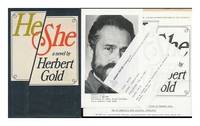
1980réf. 57899New York: Arbor House. Fine in Near Fine dust jacket. 1980. First Edition; First Printing. 1/4 Cloth. 0877952647 . A Fine first Printing of the First Edition in a Near Fine dust-jacket that has little scuffing; The life of Herbert Gold an American artist and sculptor is vividly described in this book. Born in New York City in 1915 Gold attended the School of the Art Institute of Chicago and then the University of Chicago. A talented artist and sculptor Gold worked in a variety of mediums including painting sculpture and printmaking. He is best known for his sculptures of animal and human forms which are often humorous and satirical. Gold died in 2006.; 8vo; 213 pages . Arbor House hardcover books
1979réf. 59746New York: Arbor House. Fine in Fine dust jacket. 1979. First Edition; First Printing. 1/4 Cloth. 0877952175 . A Fine first Edition/First Printing housed in a dust-jacket of the same value; The Slave Trade by Gold tells the story of the African Diaspora and the role that slavery played in it. Through the experiences of three individuals the book shows how slavery was not just a physical occurrence but also an economic and social one.; 8vo; 215 pages . Arbor House hardcover books
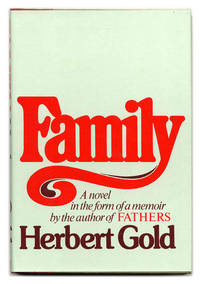
1981réf. 55086New York: Arbor House. Fine in Fine dust jacket. 1981. First Edition; First Printing. 1/4 Cloth. 0877953325 . A first printing of the first edition in Fine condition and housed in a like dust-jacket; Gold's memoir of his family is poignant funny and at times heartbreaking. Spanning three generations and spanning continents the Golds are a unique and colorful bunch. From Gold's immigrant grandfather to his rebellious daughter the Golds are a family of storytellers. Gold tells their stories in a unique and humorous way as well as providing a glimpse into the struggles and joys of family life.; 8vo; 192 pages . Arbor House hardcover books