Multiple ContributorsMareMagnum

219 resultados
1965Features: A River Dies - and is Reborn again - New Jersey's Raritan River; We are deluding ourselves in Vietnam - Hans J. Morgenthau; Even if they can't read, They should have the right to vote - Andrew Hacker; After Fifty Years the cry of Ypres still Echoes - 'Gas!' - the beginning of chemical warfare in 1915 - chlorine and tear gas; Secret of the Nureyev Spell; The New York World's Fair - Act II; Crossword completed, otherwise unmarked. Average wear. A sound copy. Book
195748 pages. Features: Cover photo of Prime Minister Harold Macmillan with Chief Justice Earl Warren; Where does the liberal go now? - A challenge to focus on spiritual and cultural, rather than economic issues; Legal pilgrimage to London for American Bar Association's 80th annual meeting; A defence of bigness in business - an argument that it promotes research and competition; What the aged need in homes - they require special safety features and should be where their occupants can join fully into community life; Europe, too, runs into a traffic jam; The passing parade at Lindy's - for 36 years it mirrored Broadway; Haircuts in review; Festival of the Parks; Curriculum for tomorrow's world; Jersey fashion photos; The Pajama Game. Ads include: Lord & Taylor, Cranston, Ban-Lon; Cone; nice colour photo centrefold ad for Judy Bond; Springmaid Fabrics; B. Altman & Co.; Leotard Scandale; Wamsutta Mills; and Fruit of the Loom. Pages somewhat brittle with age and moderately yellowed at periphery. Covers loose but present. Unmarked with somewhat above-average wear. A worthy vintage copy. Book
194552 pages. Features: Colour Studebaker ad inside front cover shows their Weasel tracked vehicle in action on a Pacific shore (it appears this vehicle or its engine was made in Windsor, ON); Not Enough To Eat - food shortages loom in the wake of WWII; My Author Husband - by Dorothy Duncan, wife of Hugh MacLennan; Hearts to Let (fiction); Test in Berlin - can Russian and Anglo-Saxons reach a common basis for the peace; What Canadians Don't Know (testing our general knowledge); Whopper! - New York Mayor La Guardia's 550 acre $42 million municipal airport; A Guest for Mary Ellen (fiction); The Liar Hunter, by W.O. Mitchell; Shoplifting in Canada; Snakes Alive!, by Gordon Sinclair on Ryerson Island in Lake Erie; Woodbury Soap ad features photos of Mary Elizabeth Graham of "Greenacres", Aylmer to Gustave Eduardo Leguizamon, Chancellor of the Legation of Argentina; Several lovely colour ads; and more. Unmarked with somewhat above-average external wear. Binding intact. A worthy vintage copy. Book
1970133 pages. "There has always existed a basic body of Truth for those who had some desire to know more than what the herd knew. But this Truth was never shown in the Churches or religions, Christian or otherwise. It was always way off by itself somewhere and had to be "found" by digging persons. We Occult students do, however, apparently owe a debt to a religion - the religion of Islam - which did collect and protect some bacis Occult concepts which we now have in the form of the Qabalah system, and which system I have tried to give some Knowledge of in this book..." - from Introduction. Above-average wear to black boards. Partial lean to spine. Two inch brown stain to each endpaper at top of spine. Prior owner's name upon front endpaper else minimal markings. Back hinge partially open. Two inch tear to bottom edge of page 1. Well-travelled copy of this uncommon work. Book
1883Mr. Pakenham passes away under allegedly outrages circumstances at Tamatave. Suez Canal difficulty - cutting a second canal parallel to the first. Echoes of the week. The Playhouses; Weather; National Sports; The Cholera in Egypt - Quarantine, with full-page engraving entitled 'Quarantine Examination at Brinsisi'. Crab-Catching in Cornwall - 9 sketches on one page (plus text on next page); News from the Court and Church plus Benevolence and Self-Help. New Townhall, Dover - with sketch; The Westminster Townhall - with sketch; The Swanley Homes for Little Boys - with sketch; Sketches in Egypt - Thebes. The Advantages of Wet Weather. Supplement includes: Chapter V of The Canon's Ward, by James Payn; The Savage Club at the Royal Albert Hall (which is featured on front cover illustration and pages 52 and 53); The Jesmond Dene Park, Newcastle; A dramatic two-page engraving entitled "Departure of Irish Emigrants at Clifden, County Galway (please note that this engraving bears a large tear); Obituaries; Chess; Wills and Bequests; Departure of Irish Emigrants; Classified Ads. The Jesmond Dene Public Park, Newcastel-on-Tyne - 8 lovely sketches. The Suez Canal - 3 pages of text and sketches, including map of the proposed Canal and sketch of M. Ferdinand De Lesseps, President of the Suez Canal Company. New Books. Musical Publications. Chipping at edges. Some pages loose but all appear to be present. Perforations along spine indicate this copy from a disbound volume. Magazine
1969ref. 29976HBdj. Stated 1ST EDITION 1969 vg-/vg- AS-IS EX-LIBRARY USUAL WEARS STAMPS WEAR EDGE TEAR ETC. Small round Hole front Btm DJ he discovered The Castle Was Haunted. & NOT BY JUST AN ORDINARY GHOST. By a Retired Spy From the Days WHEN KNIGHTHOOD WAS IN FLOWER. I WEARIED OF THE HEAVY ARMOUR The Hard Riding the Interrupted Banquets The Wearing of Poison Rings The Documents Hidden in the Hollow OF MY LANCE. Explaind Sir Roger De Rudisill. & THUS BEGAN AN UNUSUAL Friendship. & Many a Lively Evening's Exchange of Espionage Shop Talk DOUBLEDAY hardcover
1895ref. 30283SMALL HARDBACK NODustjacket Date Published: 1895 ON COPYRIGHT PG. 1st edition THUS VG/VG AS-IS NOJACKET SMALL GoldGILT red & BRown CRUSHED LEVANT LEATHER CVR SUPER EXTRA HAND FINISHED EDGES SEWN WITH SILK GILT TOPSHardback: Very Good. Binding firm. Beautiful Art Nouveau cover. Wear to cover sunning of spine. Interior clean and unmarked. No library markings in book. Dust Jacket: NO DJ issued. 4 1/4" by 6 1/4" 258pg. ads. Henry Altemus PHILADELPHIA hardcover
194435 pages. Photo and bio details of Bond inside front cover. Four pages of wonderful photos of Bond with the Andrews Sisters, Max Terhune, Jimmy Wakley, Dick Reinhart, The Red River Valley Boys, Joan Davis, Ray Corrigan, and Dennis Moore. "Gene Autry invited Johnny and Jimmy Wakely to sing with him on his CBS Melody Ranch program and soon the whole of America began to join the others in the demand for more. Songs include: I Wonder Where You Are Tonight; Down in the Dumps; One More Range; You Never Can Tell; I've Had the Blues Before; Keep Rollin' On; It's a Long Old Road; Prairie Campfire; Out Here The Wind Blows Free; One More Tear; Here's The End of the Trail (Ole Timer); Old Wagon Train; One a Blue Ridge Mountain Trail; The Road is Way Too Long; I'm Pounding the Rails Again; The Unopened Letter; I Won't Stand in Your Way; Hillbilly Town; My Red River Rose; Don't You Weep Anymore, Darlin'; Oh, My Darling Clementine. Average wear. Some light pencil markings to contents. A sound copy of this marvelously nostalgic item. Book
1909546 pages. Black and white frontis of George Vancouver plus twenty black and white photographic reproductions. Author was well-equiped for this work. By disposition a student, he became greatly engrossed in his researches, and secured copies of all the old records of voyages to the coast of British Columbia and knew their contents intimately. His duties in command of the Quadra took him to every portion of the British Columbia coast, including a great many waters that were practically unsurveyed, and so he acquired a thorough knowledge not only of the charts in existence, but also of the unwritten lore of Indians and traders experienced in the intricacies of that most magnificent coast. Major damage and closed tears to pages 527-530 with two chunks missing from page 529. Fortunately all text remains and is legible. Once inch tear to interior of page 546. Map at page 547 removed. Back hinge open. Front hinge going. Prior owner's small initial rubber stamp upon front endpaper and bottom edge else unmarked. Average soiling. Moderate yellowing. Gilt lettering upon spine remains clearly legible. Above average wear to dark green cloth spine and boards. A good first edition reading copy of this comprehensive reference. Book
1957ref. 2090202120201493Kobunsha 1957. Soft Cover. Fine. Number of books: 6 books Kobunsha paperback
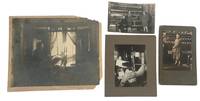
1900ref. 238851900. Women textile workers photo archive depicting Jacquard weaving and related mechanized textile production c. 1900 documenting an industrial technology directly connected to the development of programmable computation. Two photographs show women at Jacquard looms where large harness assemblies permit the selective control of warp threads required for figured weaving. The Jacquard system used sequences of punched cards to determine which warp cords were raised during successive passes storing instructions outside the loom mechanism. Charles Babbage adopted the punched card principle for his Analytical Engine in 1836 and Ada Lovelace in her 1843 Notes on the Analytical Engine compared its manipulation of mathematical operations to the Jacquard loom's weaving of figured patterns. Photo archive 4 silver gelatin photographs mounted on cardstock c.1900-1930. Two photographs show women seated at Jacquard looms enclosed by tall wooden frames supporting dense arrays of harness cords descending toward the warp; the punched card chains themselves are not visible in these views. A third shows a woman standing beside a monumental warp creel filled with scores of individually wound yarn packages each feeding thread through a corresponding guide. The fourth shows two women attending a broad industrial textile machine identified with Bruno Knobloch who patented a thread feeding device for flat warp knitting machines and a Jacquard device for warp knitting machinery. The four photographs document distinct pieces of equipment with women operating supplying and monitoring each machine. Textile manufacturing employed more women than any other industrial sector in Europe and the United States during this period and the Jacquard loom in particular was operated predominantly by women in both domestic workshops and factory settings. Jacquard demonstrated his punched card controlled loom in 1801. The women pictured here worked inside the industrial system Lovelace pointed to: textile production organized around the controlled selection of threads repeatable sequences of mechanical operations and machinery capable of translating predetermined instructions into complex physical patterns. Light fading and tonal variation with scattered surface and mount wear; overall in good condition. unknown
1900ref. 238851900. Women textile workers photo archive depicting Jacquard weaving and related mechanized textile production c. 1900 documenting an industrial technology directly connected to the development of programmable computation. Two photographs show women at Jacquard looms where large harness assemblies permit the selective control of warp threads required for figured weaving. The Jacquard system used sequences of punched cards to determine which warp cords were raised during successive passes storing instructions outside the loom mechanism. Charles Babbage adopted the punched card principle for his Analytical Engine in 1836 and Ada Lovelace in her 1843 Notes on the Analytical Engine compared its manipulation of mathematical operations to the Jacquard loom's weaving of figured patterns. Photo archive 4 silver gelatin photographs mounted on cardstock c.1900-1930. Two photographs show women seated at Jacquard looms enclosed by tall wooden frames supporting dense arrays of harness cords descending toward the warp; the punched card chains themselves are not visible in these views. A third shows a woman standing beside a monumental warp creel filled with scores of individually wound yarn packages each feeding thread through a corresponding guide. The fourth shows two women attending a broad industrial textile machine identified with Bruno Knobloch who patented a thread feeding device for flat warp knitting machines and a Jacquard device for warp knitting machinery. The four photographs document distinct pieces of equipment with women operating supplying and monitoring each machine. Textile manufacturing employed more women than any other industrial sector in Europe and the United States during this period and the Jacquard loom in particular was operated predominantly by women in both domestic workshops and factory settings. Jacquard demonstrated his punched card controlled loom in 1801. The women pictured here worked inside the industrial system Lovelace pointed to: textile production organized around the controlled selection of threads repeatable sequences of mechanical operations and machinery capable of translating predetermined instructions into complex physical patterns. Light fading and tonal variation with scattered surface and mount wear; overall in good condition. unknown books
1895ref. 2110502150304737Ima Furudo shoten 1895. Soft Cover. Fine. Volume: 1 Ima Furudo shoten paperback
ref. 2091502135702490Kyoto shoin N.A. Soft Cover. Fine. The book is in fine condition. Kyoto shoin paperback
1986ref. 2110502151003056Kyoto shoin 1986. Soft Cover. Fine. Volume: 1 Kyoto shoin paperback
1973ref. 2110502151006201Minami-Osaka Printing Center Materials Editorial Office Kyoto Shoin 1973. Soft Cover. Fine. Volume: 1 Minami-Osaka Printing Center Materials Editorial Office (Kyoto Shoin) paperback
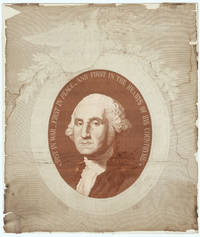
1856ref. 5672BFIRST "COMPUTER" PORTRAIT OF AMERICA'S FIRST PRESIDENT Lyon Joseph Marie Jacquard 1856. Silk machine-woven textile 49.8 x 42.2 cm. Mounted on old board. Edge wear some marginal tears and losses edge toning from mounting tape some damp staining and wrinkling. This said a remarkable survival. Rare silk textile portrait of George Washington 1732-99 woven on the earliest programmable loom – the Jacquard Loom – which influenced the development of other programmable punch-card-driven machines that in turn would lead to the early versions of IBM's digital compiler. The present work thus may plausibly be considered the first 'computer' portrait of the first President of the United States. The textile carries the monogram 'JR' and is dated 1856 from Lyon the birthplace and home of Joseph Marie Jacquard 1752-1834 who invented his revolutionary device in 1804 to aid in the production of complex patterns of damask matelassé and brocade. Based on Gilbert Stuart's 1755-1828 iconic portrait this two-color textile is inscribed with the famed line 'First in War First in Peace and First in the Hearts of his Countrymen' which is taken from Washington's eulogy delivered by Henry "Light Horse Harry" Lee 1756-1818 a major general in the Continental Army a member of the Continental Congress governor of Virginia father of the famous Civil War general Robert E. Lee and a close friend of Washington. Now rare the textile was apparently well known to American audiences for decades after its initial production: A certain R. H. Thurston for example in his 1880 inaugural address as president of the American Society of Mechanical Engineers invoked history's greatest engineers including "Jacquard who perfected the pattern-loom which to-day weaves with equal facility the portrait of him who was 'first in war first in peace and first in the hearts of his countrymen' and the most beautiful and ingenious combinations of form and color of which decorative art is so wonderfully prolific" Thurston p. 9. Provenance: Skinner Fine Books and Manuscripts 1 June 2013 lot 19. J. Essinger Jacquard's Web: How a Hand-Loom Led to the Birth of the Information Age; R. H. Thurston "The President's Inaugural Address" Transactions of the American Society of Mechanical Engineers vol. 1 1880 pp. 1-16. Joseph Marie Jacquard
1856ref. 5672BFIRST "COMPUTER" PORTRAIT OF AMERICA'S FIRST PRESIDENT Lyon Joseph Marie Jacquard 1856. Silk machine-woven textile 49.8 x 42.2 cm. Mounted on old board. Edge wear some marginal tears and losses edge toning from mounting tape some damp staining and wrinkling. This said a remarkable survival. Rare silk textile portrait of George Washington 1732-99 woven on the earliest programmable loom – the Jacquard Loom – which influenced the development of other programmable punch-card-driven machines that in turn would lead to the early versions of IBM's digital compiler. The present work thus may plausibly be considered the first 'computer' portrait of the first President of the United States. The textile carries the monogram 'JR' and is dated 1856 from Lyon the birthplace and home of Joseph Marie Jacquard 1752-1834 who invented his revolutionary device in 1804 to aid in the production of complex patterns of damask matelassé and brocade. Based on Gilbert Stuart's 1755-1828 iconic portrait this two-color textile is inscribed with the famed line 'First in War First in Peace and First in the Hearts of his Countrymen' which is taken from Washington's eulogy delivered by Henry "Light Horse Harry" Lee 1756-1818 a major general in the Continental Army a member of the Continental Congress governor of Virginia father of the famous Civil War general Robert E. Lee and a close friend of Washington. Now rare the textile was apparently well known to American audiences for decades after its initial production: A certain R. H. Thurston for example in his 1880 inaugural address as president of the American Society of Mechanical Engineers invoked history's greatest engineers including "Jacquard who perfected the pattern-loom which to-day weaves with equal facility the portrait of him who was 'first in war first in peace and first in the hearts of his countrymen' and the most beautiful and ingenious combinations of form and color of which decorative art is so wonderfully prolific" Thurston p. 9. Provenance: Skinner Fine Books and Manuscripts 1 June 2013 lot 19. J. Essinger Jacquard's Web: How a Hand-Loom Led to the Birth of the Information Age; R. H. Thurston "The President's Inaugural Address" Transactions of the American Society of Mechanical Engineers vol. 1 1880 pp. 1-16. Joseph Marie Jacquard books
1974ref. 2110502150906980Kyoto shoin 1974. Soft Cover. Fine. Volume: 1 Kyoto shoin paperback