ISLAND COAL COMPANYBiblio.com

643 résultats
1891réf. 607056"W.W. Hubbard" in black fountain pen ink on blue printed Island Coal Company Miners and Shippers of the Celebrated Island City Coal letterhead Indianapolis Indiana August 6 1891. 8 1/2" x 11"; 1 page; very good fresh; 1891. Letterhead is printed in blue. W.W. Hubbard wa the company treasurer. Proposal for selling coat to the Hospital for the Insane in Kalamazoo Michigan. Together with the original holograph mailing envelope printed in red postmarked Indianapolis Ind. August 7 1891 with 2 cent red George Washington stamp with bulls eye cancellation with backstamped "Carrier" postal cancellation advertising cover. Envelope is printed in red. Also included in an advertising flyer "Red Letter Testimonials" extolling their coal products; 1 page. Three separate items.
1826réf. GF315181826 Atlas des planches de l'ouvrage paru à Paris, Librairie de Fortic, en 1826 sous le titre "Guide du mineur et des concessionnaires des mines dans la recherche et l'exploitation des mines de houille en général et en particulier des mines du ci-devant Hainaut français ". Recueil in-4 broché de 25 planches doubles montées sur onglet, gravées au trait sur papier chiffon, non rogné (24 plans techniques et une carte minéralogique du Hainaut français) - couverture papier vert pâle portant à l'encre manuscrite le titre "mineur".
1982viii, 591 pages. Profusely illustrated with black and white reproductions of archival photos. Maps. Index of family names. Listing of names at rest in the Melville Cemetery. "We hope this book will be both interesting and valuable to those who carry on in this community. We hope that through the glimpse into the past which this book provides, we may be made appreciative of the rich legacyy left to us by those who toiled long and hard and suffered much. We are also proud to have been able to include a tribute to those who served in the armed services." - Preface. Bound in illustrated red cloth. Average wear. Moderate lean to spine. Bits of writing and liquid paper upon photographic front free endpaper which has two small peeled spots where a label was removed. A worthy copy of this excellent local history and genealogical reference. Book
1925réf. 86518Couverture souple. Broché. 23 pages. 18 x 24 cm.
réf. LFA-126724210Un ouvrage de 155 pages, format 160 x 235 mm, illustré, relié cartonnage couleurs, s.d. (milieu du XXe siècle), Editions de l'Ecole Moderne, bon état
1784réf. 186316Leipzig, Weidmann, 1784. 6 Bll., 468 S. Pp. d. Zt. m. Rsch. Einbd. etwas berieben u. bestoßen. Gebräunt, teils etwas braunfl.
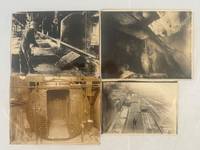
1920réf. 224531920. Appalachian Coal Mining Operations; Photo Archive of Five Original Gelatin Silver Photographs ca. 1910s-1920s. Five gelatin silver prints measuring betweenand 8" x 9" to 5" x 7" Striking vernacular archive documenting early 20th-century industrial coal mining practices through four large-format photographs capturing both above- and below-ground operations. One image depicts a smelter or foundry worker tending molten material in a heavy industrial setting possibly related to coke production-a critical process in transforming coal into fuel for steelmaking. The worker wears a protective leather apron gloves and a helmet with face shield using a long paddle to manipulate the material. Industrial piping and steel platforms surround the workspace and a massive crucible or furnace stands nearby. Another photograph captures a dramatic underground mining scene. Two Black miners in heavy coats and headlamps drill upward into the cavern ceiling using a compressed-air jackleg drill. The low uneven rock walls exposed support timbers and scattered equipment emphasize the confined and hazardous conditions of subsurface labor. Coal dust visibly clings to their garments hinting at prolonged exposure to harsh particulate-laden environments common in deep mining shafts. One image centers on a large cylindrical steel structure-likely a pressure chamber or industrial boiler associated with coal-fired power or steam generation. The riveted iron shell and complex pipe fittings suggest this is part of an early steam engine or autoclave. Tools such as a coal shovel and rake lean nearby alongside a coal scuttle reinforcing the manual labor involved in operating and maintaining this machinery. Another photograph presents an expansive view of a coal rail yard in winter. A lone worker walks atop a line of boxcars amid snow-covered tracks while coal smoke rises from the buildings along the rail lines. The archive offer a vivid and textural record of early 20th-century coal mining labor and its related technologies. At this time coal mining was one of the deadliest occupations in the United States; between 1900 and 1930 tens of thousands of miners died in accidents or from occupational illnesses such as black lung disease. Light edge wear and surface handling; one image with silvering and faint creases. Well-preserved examples of early 20th-century industrial photography documenting coal mining infrastructure labor and technology during a critical era of American energy and industrial history. Minor edge wear and light creasing; one image with mild silvering; overall very good. unknown books
1920réf. 224531920. Appalachian Coal Mining Operations; Photo Archive of Five Original Gelatin Silver Photographs ca. 1910s-1920s. Five gelatin silver prints measuring betweenand 8" x 9" to 5" x 7" Striking vernacular archive documenting early 20th-century industrial coal mining practices through four large-format photographs capturing both above- and below-ground operations. One image depicts a smelter or foundry worker tending molten material in a heavy industrial setting possibly related to coke production-a critical process in transforming coal into fuel for steelmaking. The worker wears a protective leather apron gloves and a helmet with face shield using a long paddle to manipulate the material. Industrial piping and steel platforms surround the workspace and a massive crucible or furnace stands nearby. Another photograph captures a dramatic underground mining scene. Two Black miners in heavy coats and headlamps drill upward into the cavern ceiling using a compressed-air jackleg drill. The low uneven rock walls exposed support timbers and scattered equipment emphasize the confined and hazardous conditions of subsurface labor. Coal dust visibly clings to their garments hinting at prolonged exposure to harsh particulate-laden environments common in deep mining shafts. One image centers on a large cylindrical steel structure-likely a pressure chamber or industrial boiler associated with coal-fired power or steam generation. The riveted iron shell and complex pipe fittings suggest this is part of an early steam engine or autoclave. Tools such as a coal shovel and rake lean nearby alongside a coal scuttle reinforcing the manual labor involved in operating and maintaining this machinery. Another photograph presents an expansive view of a coal rail yard in winter. A lone worker walks atop a line of boxcars amid snow-covered tracks while coal smoke rises from the buildings along the rail lines. The archive offer a vivid and textural record of early 20th-century coal mining labor and its related technologies. At this time coal mining was one of the deadliest occupations in the United States; between 1900 and 1930 tens of thousands of miners died in accidents or from occupational illnesses such as black lung disease. Light edge wear and surface handling; one image with silvering and faint creases. Well-preserved examples of early 20th-century industrial photography documenting coal mining infrastructure labor and technology during a critical era of American energy and industrial history. Minor edge wear and light creasing; one image with mild silvering; overall very good. unknown
1928504 pages. Index. Black and white photographic plates. Fold-out maps. Maps in text. Obituary for William Sloan, B.C. Minister of Mines for over eleven years. "Statistical tables provide the total mineral production of the Province and show by Districts and Divisions the output of the various metals and minerals for the year 1927 and comparative figures for previous years. The reports of the Resident Mining Engineers give much information about the progress of mining, development, and prospecting throughout the province. The reports of the Inspectors of Mines cover fully coal-mining in British Columbia." - Provincial Mineralogist. A comprehensive and extremely informative snapshot of the state of mining in B.C. in 1927, the archival photos and maps being of particular value. Average external wear and soiling. Blue card covers nearly detached from textblock. Unmarked. A worthy reference copy. Book
1916473 pages. Index. List of illustrations. Many fascinating black and white photographic plates. Diagrams and fold-outs. Above-average external wear. Sunning to spine. Hinges intact. Usual library markings. Contains a wealth of historical B.C. documentation. A worthy reference copy. Book
1886réf. H16432Harrisburg: Meyers 1886. Hardcover. Very Good. Large 8vo blue cloth very good both front and rear inner hinges were cracked and have been neatly mended. 259 & 308 pp mainly on anthracite and bituminous coal mining industry with many lithograph plates some tinted and appear to be heliotype or albertype photographs and many folding charts maps and plates. Uncommon. Early discussion of Henry Clay Frick's coal mining and coke operations. Meyers hardcover
réf. 55903Harrisburg: Lane S. Hart 1881. . Black cloth spine designed and lettered in gilt. Marbled page edges. Engraved pictorial title page and six folding maps and plates. Upper front cover a bit marked some wear and a white mark on the spine a clean very good copy in general. Small name stamp on end paper and title page. The final 180 pages and the folding plates all relate to coal mining in Pennsylvania. Plates illustrate coke ovens a coal washing machine and a columnar section from a shaft; the others are detailed maps of coal mines. Harrisburg: Lane S. Hart, 1881. hardcover
1953réf. ZB418164Cheyenne: 1953. 58 pp very good in original paper wrappers. - If you are reading this this item is actually physically in our stock and ready for shipment once ordered. We are not bookjackers. Buyer is responsible for any additional duties taxes or fees required by recipient's country. Cheyenne: unknown
1950réf. ZB418163Cheyenne: 1950. 60 pp library markings soft corner bend good in original paper wrappers. - If you are reading this this item is actually physically in our stock and ready for shipment once ordered. We are not bookjackers. Buyer is responsible for any additional duties taxes or fees required by recipient's country. Cheyenne: unknown
1948réf. ZB418165Cheyenne: 1948. 53 pp library markings else very good in original paper wrappers. - If you are reading this this item is actually physically in our stock and ready for shipment once ordered. We are not bookjackers. Buyer is responsible for any additional duties taxes or fees required by recipient's country. Cheyenne: unknown
191815 pages. Documents Manitoba Peat Bogs, Saskatchewan Coal Fields and Saskatchwan Oil shale. Clean and unmarked with light wear. Book
191825 pages. Presents information in tabular format. Topics include: Quebec Peat Bogs; Ontario Peat Bogs; Miscellaneous Samples including coal, briquettes from organic city refuse, anthracite, oil shale and natural gas. Clean and unmarked with average wear. Sound copy. Book
1916288 pages. Index. Black and white diagrams and illustrations. Fold-out 3-panel plan of Newreg Colliery. Intended "to provide students of coal mining and young surveyors with an explanation of the elementary principles which are applied to the practice of mine surveying and with a description of the constructional details of the instruments in common use." - from Preface. Markings throughout. Additional information laid inside back board and affixed to back endpaper. Above-average wear. Reading copy only. Book
réf. 0365270598.Ghardcover. Good. Access codes and supplements are not guaranteed with used items. May be an ex-library book. hardcover
1831réf. 14385Newcastle J. Marhsall; 1831. 1831. Broadside approximately 38 x 15.5 cm. Single sheet titled in bold. Edges a little frayed slight toning to top edge. Remarkably crisp and clean for such a cheaply printed and ephemeral document. Broadside which describes a meeting of a "great number" Fynes od an early trade union of miners led by Thomas Hepburn in dispute with their employer over wages fines and rights to housing. Hepburn was a veteran labour organiser whose campaigning had won shorter working days for boys in the North East. The meeting described here was a precursor to a series of meetings between the trade union and the Marquess of Londonderry which was a significant step in the history of trade unionism. The gains made in the 1831 strike were soon overturned in the 1832 strike. Fynes The Miners of Northumberland and Durham pp. 16-20; Outram 'Thomas Hepburn' Society for the Study of Labour History. Newcastle, J. Marhsall; 1831. unknown
1907243 pages. Tissue-protected frontis photo portrait of author. Attractively decorated maroon cloth-covered front board. All seventeen black and white plates present. "An autobiographical account of the author's first twelve years (from 1862 to September 1873) as a Methodist missionary among the Cowichan and Nanaimo Indians." - Lowther. Average wear. Prior owner's name in light pencil upon front free endpaper. Faint moisture marks to fore-edge of first twenty-five pages. Hinges starting. Issued without dust jacket. LOWTHER 1556, RICKS p.75, AMTMANN 3499, SMITH 2134, WALLACE p.52, MATTHEWS 295, TOD & CORDINGLEY p.85. Book
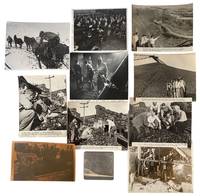
1943réf. 213381943. Anthracite coal mining photographs circa 1930s to 1950s document the daily labor conditions environmental hazards and union activity within Pennsylvania's coal industry and provide direct visual evidence of industrial work in one of the most significant energy sectors in the United States. Created during a period when anthracite coal production remained central to regional economies and national energy supply these images record both above ground and subterranean labor processes as well as the collective organization of workers responding to unsafe conditions and economic pressures. The archive supports research into labor history industrial practices occupational health and union movements in mid twentieth century America. Eleven silver gelatin photographs ranging approximately from 4 x 6 inches to 8 x 10 inches some with typed captions attached depicting mining activity and related scenes in Pennsylvania's anthracite region. Images include miners traversing severe winter conditions while guiding donkeys hauling coal carts through heavy snow; workers shoveling coal in enclosed dimly lit environments with airborne dust visible in the light captioned "Coal shoveling brigade or how I spent my summer vacation"; and inspection scenes in which workers examine coal samples prior to distribution. Additional photographs show large scale coal piles dwarfing individual laborers emphasizing production scale. One press photograph dated January 15 1943 documents a mass meeting in Hazleton Pennsylvania where union leader Andrew Yevchak addresses striking miners with caption noting that 17000 workers were ordered to return to work following the gathering. Produced during a period marked by ongoing labor disputes mechanization and heightened awareness of occupational hazards such as coal dust inhalation these photographs capture both the physical demands of mining and the organizational structures that shaped worker response. The inclusion of the 1943 Hazleton meeting situates the archive within broader wartime labor tensions when coal production was critical to the war effort and strikes carried national implications. Together the images provide a grounded record of industrial labor environmental exposure and collective action within the anthracite coal industry preserving visual documentation of work that was both economically essential and physically hazardous. Minor edge wear and light creasing to a few prints with strong image clarity overall; condition very good. unknown books
1943réf. 213381943. Anthracite coal mining photographs circa 1930s to 1950s document the daily labor conditions environmental hazards and union activity within Pennsylvania's coal industry and provide direct visual evidence of industrial work in one of the most significant energy sectors in the United States. Created during a period when anthracite coal production remained central to regional economies and national energy supply these images record both above ground and subterranean labor processes as well as the collective organization of workers responding to unsafe conditions and economic pressures. The archive supports research into labor history industrial practices occupational health and union movements in mid twentieth century America. Eleven silver gelatin photographs ranging approximately from 4 x 6 inches to 8 x 10 inches some with typed captions attached depicting mining activity and related scenes in Pennsylvania's anthracite region. Images include miners traversing severe winter conditions while guiding donkeys hauling coal carts through heavy snow; workers shoveling coal in enclosed dimly lit environments with airborne dust visible in the light captioned "Coal shoveling brigade or how I spent my summer vacation"; and inspection scenes in which workers examine coal samples prior to distribution. Additional photographs show large scale coal piles dwarfing individual laborers emphasizing production scale. One press photograph dated January 15 1943 documents a mass meeting in Hazleton Pennsylvania where union leader Andrew Yevchak addresses striking miners with caption noting that 17000 workers were ordered to return to work following the gathering. Produced during a period marked by ongoing labor disputes mechanization and heightened awareness of occupational hazards such as coal dust inhalation these photographs capture both the physical demands of mining and the organizational structures that shaped worker response. The inclusion of the 1943 Hazleton meeting situates the archive within broader wartime labor tensions when coal production was critical to the war effort and strikes carried national implications. Together the images provide a grounded record of industrial labor environmental exposure and collective action within the anthracite coal industry preserving visual documentation of work that was both economically essential and physically hazardous. Minor edge wear and light creasing to a few prints with strong image clarity overall; condition very good. unknown
1980Ex-library with the usual stamps, stickers, etc. Binding is solid and text/interior is clean and free of marking of any kind. 238 pages with graphs, charts, formulae, tables. 4 appendices and index.
1990réf. LFA-126734976N° 3 - Mai-juin 1990: une revue de 98 pages, format 210 x 270 mm, illustrée, brochée couverture couleurs, bon état