643 résultats
1951réf. LFA-126740891Une revue de 36 pages, format 240 x 315 mm, illustrée, brochée, publiée en 1951, Editions de la Propagande de France, bon état
réf. MINE22Béranger, 1902. In-12, 412pp., pl. percaline.
1925réf. 009741Fairmont West Virginia: Fairmont Printing Co. 1925. Full title from front wrapper reads: Agreement. Memorandum agreement between the Consolidation Coal Company and its employees in West Virginia Division. The local organization of employees at each operation take the name and number of the mine and is know as "space in text Miners' Association No. space." Original green printed wrappers. 40 pp. Unrecorded on OCLC/WorldCat. First Edition. Soft Bound. Fine. Fairmont Printing Co.
réf. 1396199772.Ghardcover. Good. Access codes and supplements are not guaranteed with used items. May be an ex-library book. hardcover
réf. 1396210156.Ghardcover. Good. Access codes and supplements are not guaranteed with used items. May be an ex-library book. hardcover
réf. 1396531211.Ghardcover. Good. Access codes and supplements are not guaranteed with used items. May be an ex-library book. hardcover
réf. 1390342344.Gpaperback. Good. Access codes and supplements are not guaranteed with used items. May be an ex-library book. paperback
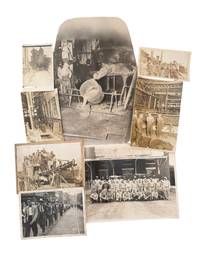
1900réf. 235961900. African American coal mining photo archive depicting Black industrial labor from the turn of the century through the postwar era documenting the changing conditions of mine work while revealing the continuity of Black employment in one of America's most dangerous industries. Spanning approximately fifty years from an early albumen photograph made around the turn of the century to silver gelatin photographs of the 1940s and 1950s the group records successive generations of miners whose labor fueled the nation's railroads steel production and wartime industries. By 1900 more than 180000 African Americans worked in mining and related extractive industries particularly across Appalachia and the industrial Midwest where operators frequently recruited Black labor during strikes while maintaining segregated workforces and company towns. Photo archive of 10 photographs including one large albumen print and nine silver gelatin photographs ranging from approximately 3 x 5 to 9 x 14 inches United States circa 1900s through the 1950s. The photographs show Black miners posed beside coal cars loaded with freshly mined coal; mixed Black and white work crews standing before steam powered mining equipment; African American workers operating within large industrial preparation plants beneath towering conveyors and ore bins; foundry and furnace interiors where molten metal is poured from massive ladles; miners gathered for formal group portraits outside industrial buildings; and workers posing beside hoists rail equipment and mechanical machinery. One of the largest photographs records a substantial interracial work crew surrounding a coal car marked with capacity information while another documents a line of African American workers walking through a commercial district following their shift preserving the contrast between industrial labor and urban life. Later photographs depict Black workers operating heavy electrical or mechanical equipment and standing inside modernized industrial facilities illustrating the technological transformation of mining and processing across the first half of the twentieth century. Coal mining became one of the largest employers of African American industrial labor following Reconstruction as southern and Appalachian operators recruited Black workers into mines expanding to meet the demands of railroads steel mills and urban growth. During both World Wars Black miners became indispensable to national coal production even while remaining concentrated in the most dangerous occupations and frequently excluded from skilled positions promotion and union representation until the growing influence of the United Mine Workers and the broader civil rights movement began to erode formal segregation after the Second World War. The chronological span of this archive distinguishes it from single period mining groups by tracing the persistence of Black industrial labor from the era of mule drawn coal cars and steam powered extraction to mechanized postwar production. Light surface wear scattered creasing and occasional edge chipping; the large albumen print shows moderate age toning. Overall in very good condition. A concentrated visual record of African American labor sustaining the American coal industry across five decades of industrial and social change. unknown books
1900réf. 235961900. African American coal mining photo archive depicting Black industrial labor from the turn of the century through the postwar era documenting the changing conditions of mine work while revealing the continuity of Black employment in one of America's most dangerous industries. Spanning approximately fifty years from an early albumen photograph made around the turn of the century to silver gelatin photographs of the 1940s and 1950s the group records successive generations of miners whose labor fueled the nation's railroads steel production and wartime industries. By 1900 more than 180000 African Americans worked in mining and related extractive industries particularly across Appalachia and the industrial Midwest where operators frequently recruited Black labor during strikes while maintaining segregated workforces and company towns. Photo archive of 10 photographs including one large albumen print and nine silver gelatin photographs ranging from approximately 3 x 5 to 9 x 14 inches United States circa 1900s through the 1950s. The photographs show Black miners posed beside coal cars loaded with freshly mined coal; mixed Black and white work crews standing before steam powered mining equipment; African American workers operating within large industrial preparation plants beneath towering conveyors and ore bins; foundry and furnace interiors where molten metal is poured from massive ladles; miners gathered for formal group portraits outside industrial buildings; and workers posing beside hoists rail equipment and mechanical machinery. One of the largest photographs records a substantial interracial work crew surrounding a coal car marked with capacity information while another documents a line of African American workers walking through a commercial district following their shift preserving the contrast between industrial labor and urban life. Later photographs depict Black workers operating heavy electrical or mechanical equipment and standing inside modernized industrial facilities illustrating the technological transformation of mining and processing across the first half of the twentieth century. Coal mining became one of the largest employers of African American industrial labor following Reconstruction as southern and Appalachian operators recruited Black workers into mines expanding to meet the demands of railroads steel mills and urban growth. During both World Wars Black miners became indispensable to national coal production even while remaining concentrated in the most dangerous occupations and frequently excluded from skilled positions promotion and union representation until the growing influence of the United Mine Workers and the broader civil rights movement began to erode formal segregation after the Second World War. The chronological span of this archive distinguishes it from single period mining groups by tracing the persistence of Black industrial labor from the era of mule drawn coal cars and steam powered extraction to mechanized postwar production. Light surface wear scattered creasing and occasional edge chipping; the large albumen print shows moderate age toning. Overall in very good condition. A concentrated visual record of African American labor sustaining the American coal industry across five decades of industrial and social change. unknown
réf. 1396285164.Ghardcover. Good. Access codes and supplements are not guaranteed with used items. May be an ex-library book. hardcover
réf. 1390268608.Gpaperback. Good. Access codes and supplements are not guaranteed with used items. May be an ex-library book. paperback
1869réf. 005463New York: L.H. Biglow & Co. printers 1869. Paperback. Good -. 32 p.; 23 cm. Front wrapper reproduces title page within decorative border. The Lykens Valley Railroad and Coal Company was incorporated in Pennsylvania in 1830; Thomas P. Cope was the first president. It ran from Millersburg to Williamstown and was the fourth in the United States and the first in Dauphin County to carry anthracite coal. By 1845 the line had to be regraded and relaid. It merged into the Penndel Co. in 1956. Written at the head of the front wrapper: "Preserve with Care." Very scarce. In Good- Condition: wrapper is lightly soiled; front wrapper is detached but present with closed 4-cm. tear from gutter edge; somewhat brittle with chipping at edges and separations at gutters; a few notations internally; otherwise clean. L.H. Biglow & Co., printers paperback
1974Covers show light wear only. Book is otherwise in excellent condition. Binding is solid and square, , text/interior is clean and free of marking of any kind. Black and white illustrations, often full page. 182 pages. "Frances Benjamin Johnston was a prominent studio photographer and photojournalist at the turn of the twentieth century. She presented three bodies of work at the Paris Exposition Universelle in 1900: a collection of photographs by American women, a series of photographs of students in the Washington, D.C., school system, and a series of photographs of students from the Hampton Normal and Agricultural Institute. These exhibits all promoted the nationalistic agenda of progress at the Paris Exposition, illustrating American advancement in art, education, and society." ; "Johnston was a significant-and arresting-figure in early twentieth-century photography.Johnston produced a good deal of the usual society portraiture of the time-including a nude photograph of a debutante that prompted the girl's outraged father to file a lawsuit-but she was also an important photodocumentarian. Students of African American history can reexamine life at Hampton Institute (now Hampton University) or Tuskegee using hundreds of photographs made by Johnston at the turn of the last century.through Johnston's work we can see Admiral Dewey on the deck of the USS Olympia, the Roosevelt children playing with their pet pony at the White House, and the gardens of Edith Wharton's famous villa near Paris. Johnston's major project on early vernacular architecture of the American South preserves scores of buildings that no longer exist except on her film." ; photos of the famous include Thordore ROosevelt, Susan B Anthony, Mark Twain, William McKinley, Joel Chandler Harris, Admiral Dewey, Booker T. Washington, Jacob Riis, Alexander Graham Bell, Jane E Clark, Andrew Carnegie, George Washington Carver, John Phillip Sousa, Helen Hay, John Milton Hay, General LEonard Ward, Julia Marlowe, Richard Hovey, Margaret James, Phoebe Apperson Hearst, Albert Beveridge, Edith Wharton, DIfford Pinchot, Jane Cowl, and Ryan Tillman
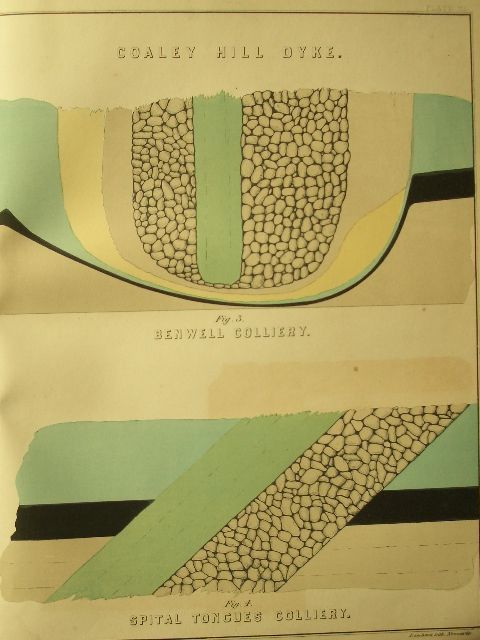
1855réf. 4840Mit 61 (57 doppelblattgr.) farbig lithogr. Tafeln. Newcastle upon Tyne, M. & M. W. Lambert, 1855. 4to. (30,9 x 24,5 cm). 3 Bl., 204 S. Halblederband d. Zt. mit goldgeprägtem Rückentitel.
1976réf. 2082402113509688Gabun Publishing Company 1976. Soft Cover. Fine. Volume: 1 Gabun Publishing Company paperback
réf. 42587Blanzy, Association "La Mine et les Hommes", 1995, in 4° broché, 44 pages ; illustrations ; couverture illustrée.
1991réf. LFA00977Un ouvrage de 223 pages, format 305 x 215 mm, illustré, relié cartonnage couleurs, publié en 1991
réf. 1162082682.Ghardcover. Good. Access codes and supplements are not guaranteed with used items. May be an ex-library book. hardcover
réf. 1168848024.Ghardcover. Good. Access codes and supplements are not guaranteed with used items. May be an ex-library book. hardcover
réf. 1120119685.Gpaperback. Good. Access codes and supplements are not guaranteed with used items. May be an ex-library book. paperback
2000A clean, unmarked book with a tight binding. 8 1/4"w x 10 3/4"h. 104 pages. Many b&w photographs.
réf. 36436various publishers n.d. Good/No Jackets. Cloth-covered Solander box Approximately 20 offprints. (various publishers) hardcover
réf. RGW22847With 4 Share certificates for the Llynvi Coal & Iron Company Ltd dated 1871 to Mary Cavan creased on one corner 1885 correspondence and endorsements about the debentures. The principal sums were repaid in 1885. In 1884 it would appear the debentures were worth £41860. The works were started in 1798. This particular company was formed in 1872. It would appear Mary Cavan held nearly one third of the shares in The Llynvi Coal and Iron Company in 1871. Her husband Colonel Cavan had died in 1870. The Cavan family had a long history of investing in the South Wales iron industry. James Cavan had invested in the Llynvi Iron Works in 1845 and before that in the Cambrian Iron and Spelter Company.In 1886 the companyÕs ironworks at Maesteg ceased to work. Possibly the paying back of the debentures was a contributing factor to the closure. unknown
1979réf. ZB444064Denver: 1979. 123 pp original paper wrappers illustrated very good. - If you are reading this this item is actually physically in our stock and ready for shipment once ordered. We are not bookjackers. Buyer is responsible for any additional duties taxes or fees required by recipient's country. Denver: unknown
1978réf. ZB444063Denver: 1978. 83 pp original paper wrappers illustrated very good. - If you are reading this this item is actually physically in our stock and ready for shipment once ordered. We are not bookjackers. Buyer is responsible for any additional duties taxes or fees required by recipient's country. Denver: unknown