19.062 resultados
1963DEMI-RAISIN. BR [BAD]. ENV 100 PP. ENV 180 ILL EN NOIR ET COULEURS [BE].
1987ref. RO20042454ALSOJOY DIFFUSION. Nov - Déc 1987. In-4. Broché. Bon état, Couv. remarquable, Dos satisfaisant, Intérieur frais. 258 pages. Nombreuses photos en couleurs dans le texte et en planches hors-texte. Quelques illustrations en noir et blanc dans le texte. Encars publicitaires. Couverture illustrée en couleurs.. . . . Classification Dewey : 391-Mode
1988ref. RO20042451ALSOJOY DIFFUSION. Mars - Avril 1988. In-4. Broché. Bon état, Couv. convenable, Dos plié, Intérieur frais. 306 pages. Nombreuses photos en couleurs dans le texte et en planches hors-texte. Quelques illustrations en noir et blanc dans le texte. Encars publicitaires.. . . . Classification Dewey : 391-Mode
1988ref. RO20042453ALSOJOY DIFFUSION. Janv - Fév 1988. In-4. Broché. Bon état, Couv. fraîche, Dos satisfaisant, Intérieur frais. 274 pages. Nombreuses photos en couleurs et noir et blanc dans le texte et en planches hors-texte. Quelques illustrations en noir et blanc dans le texte. Encars publicitaires.. . . . Classification Dewey : 391-Mode
1987ref. RO40218024Alsojoy Diffusion. 1987. In-4. Broché. Bon état, Couv. convenable, Dos satisfaisant, Intérieur frais. 274 pages. Illustré de nombreuses photos en couleur.. . . . Classification Dewey : 391-Mode
1993ref. RO40218025Alsojoy Diffusion. 1993. In-4. Broché. Bon état, Couv. convenable, Dos satisfaisant, Intérieur frais. 138 pages. Illustré de nombreuses photos en couleur.. . . . Classification Dewey : 391-Mode
1994ref. RO40218027Alsojoy Diffusion. 1994. In-4. Broché. Bon état, Couv. convenable, Dos satisfaisant, Intérieur frais. 162 pages. Illustré de nombreuses photos en couleur.. . . . Classification Dewey : 391-Mode
Alsojoy Diffusion. 1993. In-4 Carré. Broché. Bon état. Couv. convenable. Dos satisfaisant. Intérieur frais. 138 pages. Illustré de nombreuses photos en couleur. Couverture de Joseph Minutello. Fi des frimats. Gérard Pipart. Précieuses chemises. Libertin noir. Les accessoires de l'été. Balenciaga...
Alsojoy Diffusion. 1994. In-4 Carré. Broché. Bon état. Couv. convenable. Dos satisfaisant. Intérieur frais. 162 pages. Illustré de nombreuses photos en couleur. L'Île Maurice. Bijoux compressés. Fondation Cartier. Lanvin. Les maillots. Un rêve noir sur blanc...
Alsojoy Diffusion. 1987. In-4 Carré. Broché. Bon état. Couv. convenable. Dos satisfaisant. Intérieur frais. 274 pages. Illustré de nombreuses photos en couleur. La chasse à courre. Sisley. Charles Jourdan. Parfums citadins. Maurice Roger. Les gentlemen de Saint-Malo. Armani. Lanvin. Rouge comme Rubis...
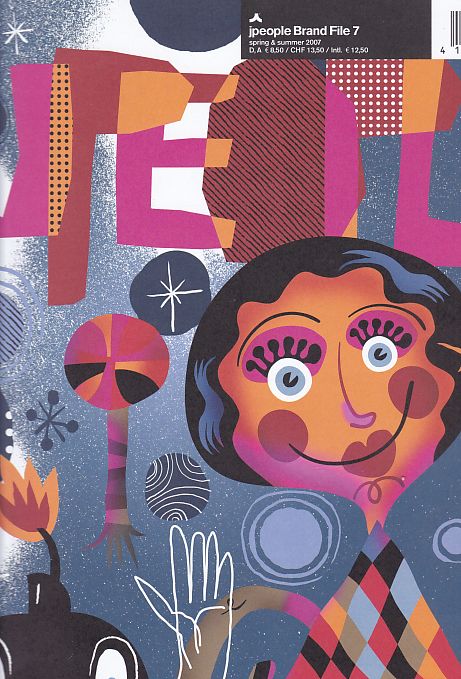
2007ref. 1150261J. M. Tec GmbH, 2007. 143 S., überwiegend Farbabb. u. -fotos, Großformat, broschiert.
1992ref. 21515Herscher 1992 In-4, cartonnage noir, sous jaquette illustrée, photographies en noir et en couleurs, 128 pp. Bon état d’occasion, jaquette abîmée.
1995ref. 009383Harry N. Abrams New York 1995 1995. 1st Edition 1st Printing. Hardcover. Fine/Fine. 159 pages : illustrations some color ; 27 cm ; ISBN 9780810935716 9780810926097 0810935716 0810926091 OCLC 30544365 ; LC TT667 .N45 1995 ; Dewey 746.9/2 LCCN 94017787 ; Exhibition held at the museum at the Fashion Institute of Technology. ; black cloth in color photographic dustjacket ; Renowned as a contemporary designer of fine handbags Judith Leiber brings together the realms of art and fashion in her creations. Coveted by many collected by celebrities and socialites affordable by only a few Judith Leiber bags are a wearable art-form appearing in the collections of America's top museums and galleries. ; Here in a lively anecdotal text by Enid Nemy a feature writer for the New York Times is the personal story of Judith Leiber--'The Bag Lady from Budapest'--spanning her roots in pre-World War II Hungary where she was the first woman accepted into the handbag Guild through her emigration to the United States where after several stints working for other handbag manufacturers she opened her own business in 1963. Some 192 full-color photographs reveal the dazzling array of bags in all their exquisite detail ; FINE/FINE Harry N. Abrams, New York, 1995 hardcover
1988ref. 33994BBDortmund Harenberg Kom. 1988. 8° 224 S., m. Illustr. (tls. farb.). brosch. Leichte Textbräunung, sauber und gut erhalten. Die bibliophilen Taschenbücher, 545.
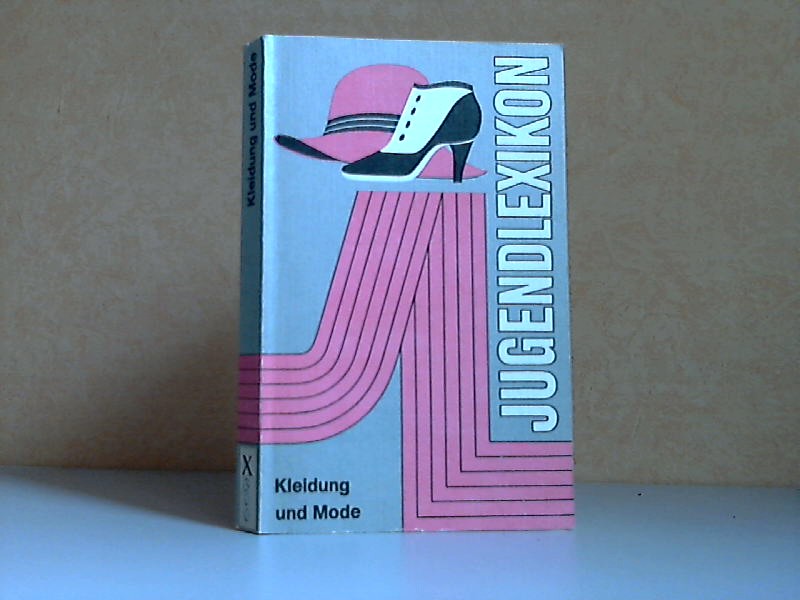
1988ref. 41979Leipzig, VEB Bibliographisches Institut, 1988. 2., dg. Auflage 255 Seiten , 19 cm, kartoniert
1985ref. 30563Hannover, Edition "libri rari", 1985. Kl. 4°. Mit zahlreichen teils farbigen Abbildungen und Tafeln, 86 S., Orig.-Pappband. Bester Zustand.
1998ref. 100136843Du Rocher éditions 1998 309 pages 14x2 2x22 4cm. 1998. Broché. 309 pages.
1966ref. 21608Pierre Cailler Éditeur, Genève - Paris. N° 7 de la collection “Peintres et Sculpteurs d’Hier et d’Aujourd’hui”. 1966 Petit in-8, pleine toile grise, sous jaquette illustrée, illustrations pleines pages en n. & b. + 4 encollées et en couleurs, 201 pp. Etat correct d’occasion, jaquette abîmée.
1986(24X21 cm); (92), pp. Brossura editoriale con titoli e illustrazione a colori al piatto anteriore. Numerose illustrazioni a colori e bianco e nero dell'artista. In lingua spagnola. Julio Le Parc (Mendoza, 1928) scultore e pittore argentino. Nel 1942 si trasferì, insieme alla famiglia, a Buenos Aires. Nel 1943 si iscrisse alla Scuola Nazionale di Belle Arti Prilidiano Pueyrredón, per abbandonarla già l'anno seguente. Poté, nel frattempo, osservare i murales che Antonio Berni, Juan Carlos Castagnino, Manuel Colmeiro Guimarás, Lino Enea Spilimbergo e Demetrio Urruchúa realizzavano per le Gallerie Pacífico, nel centro della città. La collocazione stessa dei murales, il loro forte grado di esposizione, lo fecero riflettere sull'importanza e il ruolo del fruitore dell'arte. Riprese a studiare belle arti nel 1955. In questa seconda tappa formativa, divenne presidente del Centro Studenti di Arti Plastiche e membro del Consiglio Direttivo della Scuola Nazionale di Belle Arti. Nel 1957 avvia la realizzazione di una pittura di tendenza astrattizante. Nel 1958 vince una borsa offerta dal governo francese e va a vivere a Parigi, dove, nel 1960 fonda el GRAV (Groupe de Recherche d'Art Visuel). Nello stesso periodo, entra a far parte del gruppo Nuova Tendenza. Nel 1966 realizzò la sua prima esposizione privata (alla Howard Wise Gallery, New York). Pochi mesi dopo, lo stesso anno, ottenne il primo premio alla Biennale di Venezia. Nel 1967 espose una delle sue principali opere (Desplazamientos, "Spiazzamenti") all'Istituto Di Tella di Buenos Aires e partecipò con successo all'esposizione Luz y Movimiento ("Luce e Movimento"), realizzata dal Museo di Arte Moderna di Parigi. Nel maggio del 1968 partecipò ai cosiddetti "atelier delle persone", finché non venne espulso dalla Francia. Le proteste di artisti e intellettuali fecero in modo che, cinque mesi dopo, ottenesse il permesso di ritornare a Parigi. La prima retrospettiva delle sue opere fu realizzata a Düsseldorf, verso la metà del 1972. Nel 1978, la BBC produsse un documentario sulla sua vita e la sua opera. Nel 1987, ottenne il primo premio alla Biennale di Cuenca (Ecuador). Le Parc, nella sua opera, fa largo utilizzo di elementi plastici che sorprendano e che suggestionino lo sguardo del fruitore, in modo da avvolgere quest'ultimo in una sorta di involucro. A questo scopo Le Parc ricorre a illuminazioni artificiali, riflessi e materiali in movimento ed altri effetti spettacolari: bande meccaniche mosse da dispositivi nascosti, il fluire di liquidi fosforescenti, fili di nylon. Le sue sculture sono, in certi casi, genuine installazioni che avvolgono lo spettatore. Fin dagli anni sessanta, Le Parc appare vicino tanto alla cosiddetta Op-art quanto all'arte cinetica e all'arte concettuale, per quanto il suo sperimentalismo tenti di trascendere anche questi movimenti. Nel 1969, dopo la dissoluzione del GRAV e la partecipazione all'esposizione intitolata Otto artisti cinetici, Le Parc tornò alla pittura, lavorando con una gamma di quattordici colori rigidamente definiti. Dopo il 2000, è ritornato sporadicamente al proprio paese, per realizzare nuove opere d'arte: verso la fine del 2006, installa un sistema ottico alle Gallerie Pacífico, sistema che permette un gioco di riflessi e una corretta illuminazione dei murales esistenti nella galleria. Nel 2004 realizza con Yvonne Argenterio all' elettrofiamma, in Italia, una serie di sculture(TORSIONS) presentate, nell'evento "verso la luce", nel Castello di Boldeniga(Brescia-Italia); E sempre visibile nel giardino del castello la scultura monumentale "Verso la Luce". Esemplare in ottime condizioni di conservazione.
ref. R320035246CROQUIS PARISIENS. 1969-70. In-Folio. Broché. Etat d'usage, Couv. convenable, Dos satisfaisant, Intérieur frais. 47 pages augmentées de nombreuses illustrations en couleurs et en noir et blanc in et/ou hors texte - 1er plat illustré en couleurs.. . . . Classification Dewey : 391-Mode
ref. 104903Trois plaquettes promotionnelles 210x147mm, 12, 16, 18p., 1987/1990, agrafées.Illustrations pleine page de Thierry Perez. Une des plaquettes est largement annotée sur deux pages prévues à cet effet.(104903)
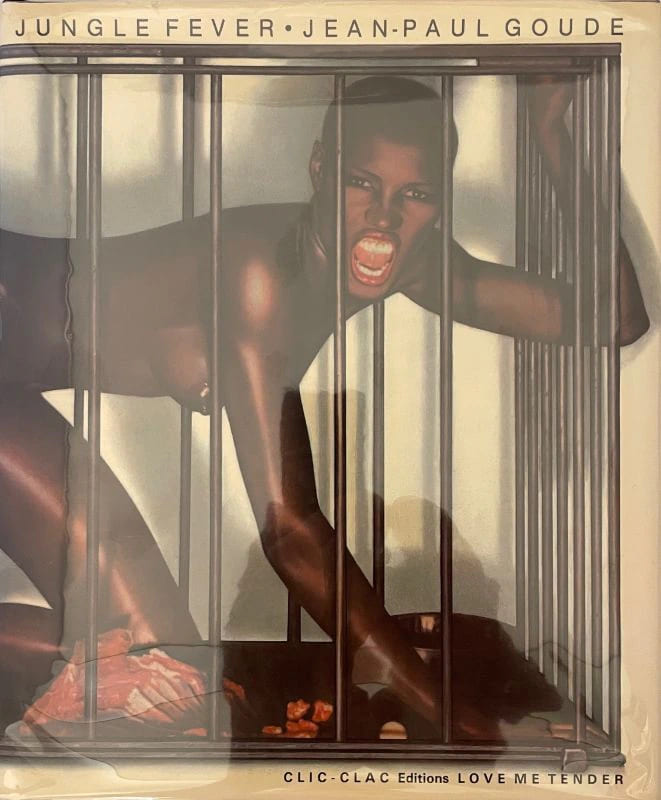
ref. 106013Paris, Clic-Clac Editions / Love me tender, 1982, 300x255mm, 148p., gardes illustrées, pleine toile noire de l'éditeur, jaquette illustrée d'un montage photographique, conception graphique de Jean-Paul Goude et Richard Weigand..
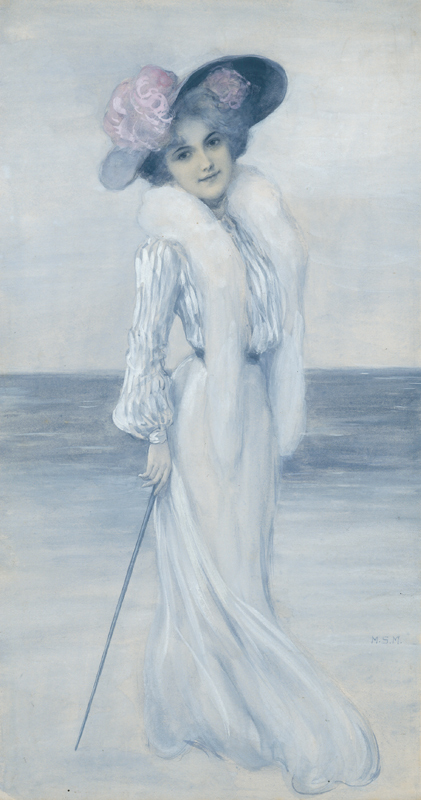
ref. 107-Wo.J. Gouache, auf Velin, rechts unten signiert ?M.S.M?. 25,6:13,4 cm. Das Ganzfigurenporträt zeigt eine in der Mode der Jahrhundertwende gekleidete junge Dame der besseren Gesellschaft, die sich vermutlich zur Erholung in einem Seebad aufhält.
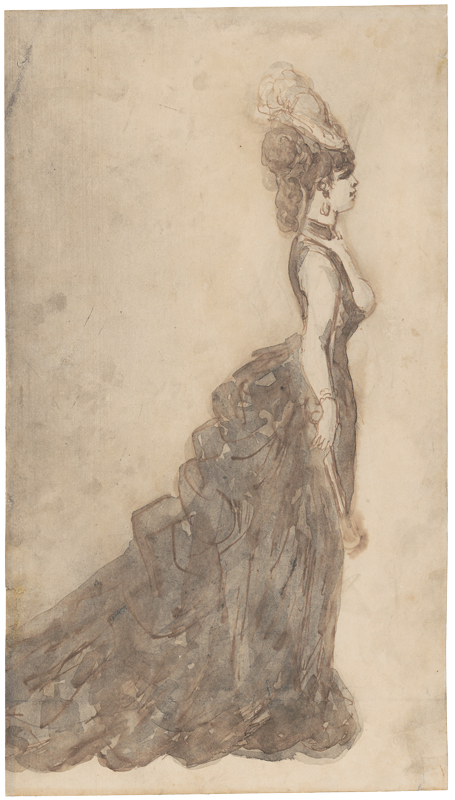
ref. 440-Eo.J. Feder in Braun, grau und braun laviert, auf cremefarbenem Velin. 28,4:15,9 cm. Fehlstelle im linken Rand ergänzt. Die in elegant-modische Abendrobe gekleidete Dame der Pariser Gesellschaft ist in Guys charakteristischer sicherer und schnell hingeworfener Zeichenweise bei sparsamster Kolorierung fixiert.
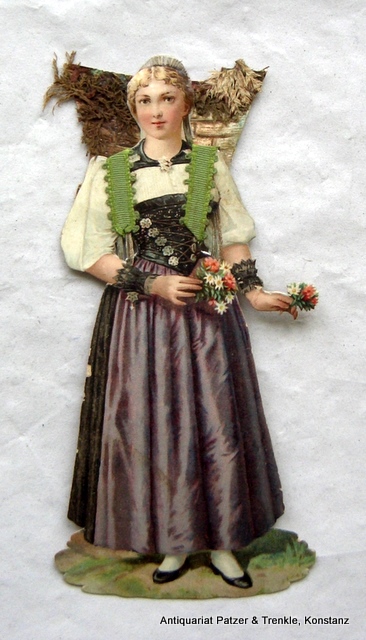
1900ref. 139862Gestanztes Glanzbild (ca. 11 : 5,5 cm) in Chromolithographie mit Prägung. Ohne Herstellerangaben, ca. 1900.