Mode, Charles JBiblio.com
Design of Workplace Dilution and Local Ventilation Systems
2026réf. x-1032800453CRC Pr I Llc 2026. Hardcover. New. 320 pages. 9.18x6.12x9.45 inches. CRC Pr I Llc hardcover

Revaluation Books · Royaume-Uni221,53 £GB≈ 263,64 €
830 résultats
réf. 6816716-6Elsevier. Used - Good. Former library copy. Pages intact with minimal writing/highlighting. The binding may be loose and creased. Dust jackets/supplements are not included. Includes library markings. Stock photo provided. Product includes identifying sticker. Better World Books: Buy Books. Do Good. Elsevier unknown
2026réf. x-1032800453CRC Pr I Llc 2026. Hardcover. New. 320 pages. 9.18x6.12x9.45 inches. CRC Pr I Llc hardcover
2025réf. x-1032814160CRC Pr I Llc 2025. Hardcover. New. 384 pages. 9.18x6.12x9.45 inches. CRC Pr I Llc hardcover
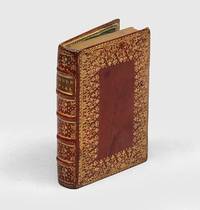
réf. 133200France: 18th century. Puffs Powders Patches Bibles Billet-doux A beautifully crafted vanity kit bound to mimic a French Book of Hours. Its elaborately gilt-tooled red morocco casing disguises an ingenious interior of fashionable accoutrements bodkin brush looking glass and miniature essentials writing tools all key elements of the ritualized toilette. Books of Hours - personal prayer books kept by laypersons for private devotion - were frequently the remit of women whether gifted to commissioned by or made for them. The books' content encouraged quiet introspection while their lavish illumination decoration and bindings became an external expression of wealth and status. This palm-sized "Heures Royal" as the spine label reads encourages reflection of a more literal kind. Instead of religious meditations its contents include a set of six vanity tools a removable mirror an ivory writing tablet and a retractable pencil all carefully positioned within a compartmentalized silk- and ribbon-lined interior. "A wealthy woman never left home without her travelling case or nécessaire which held her perfumes and toiletries" Martin p. 18. French vanity boxes ranged from the larger nécessaire de voyage and nécessaire de toilette to "nécessaires de poche which housed one or two important bottles and brushes for emergency application deep in the many pockets of their voluminous gowns" Martin. Even tinier were "much smaller vanity cases called etuis intended to fit into a pocket. another must-have item. These were also used as containers for other items such as sewing kits and writing tools" Stewart. Most of the finest manufacturers and retailers of nécessaires were located near to the Palais Royal in Paris. Cases were available in a wide variety of costly materials and designs often incorporated precious stones. Book-form examples like this are much more unusual. Alexander Pope satirized the toilette in The Rape of the Lock 1712 mocking the frivolous combination of "Puffs Powders Patches Bibles Billet-doux" - a clash of religious and cosmetic devotion neatly encapsulated in this etui case. This item has been registered with the UK government's ivory declaration service. Book-form box sextodecimo 112 x 72 mm. Original red morocco green spine label lettered "Heures Royal" raised bands compartments covers and inner dentelles heavily gilt-tooled with floriate scrollwork and star motifs edges gilt 2 metal catches. Interior lined with green moiré silk and trimmed with yellow ribbon. Interior sections include recesses one holding 12 blank paper slips tied with pink ribbon a hinged panel supporting an ivory aide-memoire leaf on recto and a pull-out mirror on verso and compartments for 6 miniature engraved vanity tools: 2 retractable styluses likely formerly holding a pencil or tooth pick pair of scissors bodkin with ear spoon at end scraper and brush. Externally bright and well preserved small chip at upper outer corner of front cover tiny pinholes at edges near catches; internally sound lining a little frayed implements tarnished mirror desilvered and corroded. A remarkable survival. Morag Martin Selling Beauty: Cosmetics Commerce and French Society 2009; Susan Stewart Common and Uncommon Scents: A Social History of Perfume 2022. hardcover
réf. DADAX1838669981New unknown
réf. DADAX0762488506New unknown
réf. SONG084783459XUsed: Good unknown
réf. ANAIS-0714816426distributed by Praeger. hardcover. Good. 1.8x09x2.1. Buy with confidence. Excellent Customer Service & Return policy. distributed by Praeger hardcover
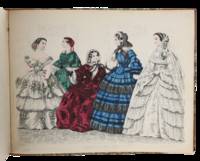
1833réf. 62953Leipzig Industrie-Comptoir / Baumgärtner etc. 1833-1856. Small queer-folio 22 x 285 cm. Nice later light brown half calf from ca. 1900 with five raised bands and gilt lines to spine Carl Petersens Enke. Slight wear to extremities. 100 engraved plates in contemporary colouring. A bit of even browning and occasional offsetting. A few plates with more browning. Some plates with tiny holes in blank margin from original stiching having been vertically bound with text-leaves. Occasional light creasing. One plate with a tear no loss. A few plates signed A. Brückner most plates numbered and dated and some plates having "Extra-Kupfer" or "Les Modes Parisiennes Réunis" the last five underneath. A lovely collection of 100 beautiful contemporarily coloured engraved fashion-plates from between 1833 and 1856 importing the highest Parisian fashion of the time to Germany. This beautiful collection magnificently documents the clothing fashion and development of two decades primarily for women but also for children and men. Also in the mid-19th-century Paris was seen as the quintessence of elegance and style. The Allgemeine Moden-Zeitung kept the German-speaking public up to date with the latest fashions from Paris. The magazine “Les modes parisiennes reunites” did the same; that too was produced for the German public despite its French title. As well as outfits for appearing in high society eg. at the theatre the fashion plates collected here show clothes and notably also accessories for almost all other parts of life - paying and receiving social calls going for walks attending different events musical siorées going out with the children etc. “As part of her evening wardrobe every fashionable lady simply had to have elegant dresses in brightly coloured silks and satins with frills and lace bows and flounces tight bodices natural waistlines and exposed shoulders which gave the female figure an hour-glass silhouette. The first thing that strikes one about these ladies’ fashions are the stiff voluminous underskirts. Horsehair crinolines invented in 1850 supported wide sweeping skirts which could measure up to two or two-and-a-half metres in diameter and made the upper body look even slimmer.” Deutsches Historisches Museum. "From the 1820s onwards and particularly under the ostentatious Second Empire 1852–1870 the classicising taste of the Napoleonic era changed completely. Instead fashion now drew inspiration from the elegance of the Rococo period so much so that the period became known as the “second Rococo”. The waistline returned to its natural level but was awkwardly styled – at least from a health point of view: agonisingly tight corsets emphasised the so-called “wasp waist”. Ostensibly guided by aesthetics on closer inspection this fashion trend also had social consequences: with styles that afforded women so little freedom of movement fashion focused on the ostentatious requirements of ladies from the upper echelons of society who didn’t have to work. Practicality was not its concern. This ostentatious and – certainly from the perspective of the 21st century – inconvenient fashion style appealed not only to the fine ladies of high society but also to women from the middle classes and the petty bourgeoisie. The expansion of the textile industry and the rise of the chemical industry made the production of dyes fabrics lace and embroidery and the processing of raw materials and textiles imported from the colonies both quicker and cheaper.” DHM hardcover
réf. DADAX1419744135New unknown
réf. DADAX1838667938New unknown
réf. DADAX1851778233New unknown
réf. DADAX1913947939New unknown
réf. DADAX1529419905New unknown
réf. B00069136Brüssel Mercatorfonds im Auftrag d. Museen. Das Buch wiegt über zwei Kilo und kann nur als Paket versendet werden 6.90¤ innerhalb Deutschland. gut. Dieser Prachtband ermöglicht einen gänzlich neuen Blick auf die nordeuropäische Kunst um 1900. Japanische Bildsprache und Stil begeisterten nach der Öffnung des Landes Richtung Westen nicht nur Franzosen Deutsche und Engländer - der »Japonismus« griff ebenfalls im nordeuropäischen Raum um sich. Der vorliegende opulent bebilderte Katalog begleitet drei Ausstellungen die dem weitreichenden Einfluss der japanischen Vorbilder auf nordische Malerei und Design vor allem in Norwegen Dänemark und Finnland nachspüren. Der Verzicht auf Illusionismus die Flächigkeit der Komposition Asymmetrie freie Formen und stilisierte Naturmotive waren Merkmale die Kunst und Handwerk der Zeit revolutionierten. Werken von Albert Edelfelt Gerhard Munthe Thorvald Bindesböll Bruno Liljefors und Helene Schjerfbeck werden dabei Arbeiten von Monet Gauguin und van Gogh gegenübergestellt. Der fundierte Band zeigt aber auch welchen Stellenwert die nordischen Länder im Rahmen des Japonismus einnahmen etwa wenn Claude Monet nach Oslo reiste um - im echten japanischen Geist - Berglandschaften im Winter zu malen. gutes Exemplar ordentlich Verlag: Brüssel Mercatorfonds im Auftrag d. Museen Bindung: Das Buch wiegt über zwei Kilo und kann nur als Paket versendet werden 6.90¤ innerhalb Deutschland Brüssel, Mercatorfonds im Auftrag d. Museen unknown
réf. 2J1067Ohne Verlag ohne Ort 1965. 174 S. kart. quart. - Anbei ein weiterer Japanischer Modekatalog mit zahlreichen Schnittmustern / Text japanisch - unknown
réf. 22557André Dupuis. Librairie Gründ Paris 1951. 435 S. mit mehr als 1200 Textabb. u. 7 colourierten Tafeln Ln. Quart. unknown
réf. 3aa42Colorierter Stahlstich. Bievre Paris um 1830. 26 cm x 185 cm. Signiert nach Louis Noel. Gerahmt mit dekorativer goldfarbener Holzleiste Passepartout unter Glas. unknown
réf. 4d2119Verlag für die Frau Berlin 1975-1983. Insgesamt ca. 570 S. mit zahlreichen Abb. und Schnittmusterbögen broschiert quart leichte Gebrauchsspuren / 1 Einband lose und mit Randeinrissen. - enthaten sind Pramo-Praktische Mode: Ausgabe 4/75 / 6/83 / 10/75 / 11/75 / 12 75 / 11/83 / 8/75 / 7/75 / 6/75 / 5/75 / 3/75 / 2/75 / 1/75 / 12/83 / 10/83 / 9/83 / 8/83 / 7/83 / 5/83 / 4/83 / 2/83 / 1/83 - unknown
réf. 3751bBraun & Schneider München 1880. 125 doppelseitige Holzschnitttafeln mit über 500 Abb. Hln. Quart Band 1 gering fl. -Sonderbände aus "Müchner Bilderbögen"; sehr guter Zustand-. unknown
réf. 2M3220Neue Verlags-Gesellschaft mbH Baden-Baden 1953. Je Heft 32 S. mit vielen Abbildungen broschierte Einbände folio teils mit leichten Gebrauchsspuren/Name auf Einband. - komplett - unknown
réf. 2M2934Bauer Hamburg 1958-1964. Je Heft ca. 95 S. mit vielen Abbildungen broschierte Einbände quart leicht randgebräunt/ein Heft Impressum mit kleinem Ausriß/Rücken teils etwas berieben. - sonst gute Exemplare / Enthalten: Jahrgang 1958 Heft Nr. 11 und 12 / Jahrgang 1959 Heft Nr. 1 2 4 5 6 7 8 10 11 12 und 13 / Jahrgang 1960 Heft Nr. 9 13 19 und 26 / Jahrgang 1961 Heft Nr. 6 und 18 / Jahrgang 1962 Heft Nr. 13 und 23 / Jahrgang 1963 Heft Nr. 3 und 12 / Jahrgang 1964 Heft Nr. 6 - unknown
réf. 5h2049John Henry Schwerin G.m.b.H. Berlin 1914-1916. Insgesamt ca. 700-800 S. mit vielen Abbildungen Halbleinen-Einband quart teils mit Randläsuren/fleckig/Einband bestoßen/Vordergelenk eingerissen. - komplett / Mit Kriegs-Beilagen - unknown
réf. 2M3219Neue Verlags-Gesellschaft mbH Baden-Baden 1952. Insgesamt ca. 240 S. mit vielen Abbildungen broschierte Einbände folio teils mit Gebrauchsspuren/Name auf Einband/1 Einband lädiert. - Enthalten: Nummer 2 13 16 17 20 22 - 26 - unknown
1997réf. 166527Boston: Bulfinch Press 1997. First Edition. Softcover. First Edition. Illustrated with 650 color 405 halftone and 150 duotone illustrations. Published in conjunction with a traveling exhibition which opened on November 8 1997 at the Whitney in New York and closed at the Andy Warhol Museum in spring of 1999. Near Fine in perfect-bound wrappers. Bulfinch Press unknown