Farameh, PatriceAntiquariat.de
18.427 Ergebnisse
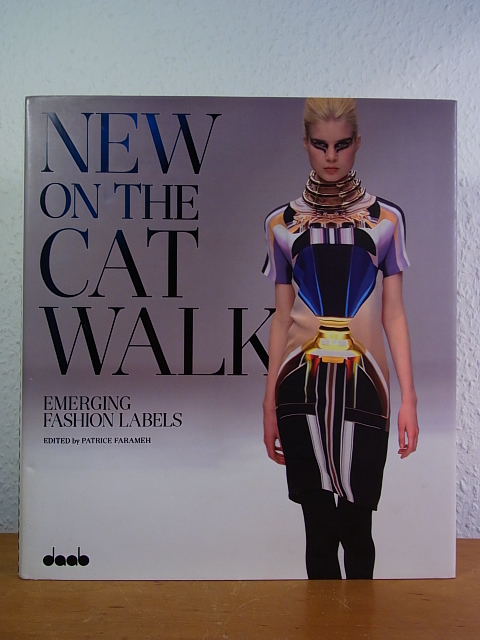
2011Best.-Nr. 109489Cologne: Daab Media, 2011. 30,5 cm ; Halbleinen
1933Best.-Nr. 241387I. G. Farbenindustrie AG Abt. Kunstseide-Verkauf um, 1933.
1984Best.-Nr. 277054München: Amphoto 1984. ca. 200 S., zahlr. Abb. Gr 8° Br.. *Modefotografie*.
1890Best.-Nr. 6371Angers, Belhomme, 1890. Grundwerk und Supplement 1 (von 2) in 1 Bd. IV, 144 S., S. (139) - 146. 215 Tafeln in Lichtdruck. Gr.-Fol. Ldr. der Zeit mit Rückentitel (etw. beschabt und bestoßen).
2002Faresin Silvano Casa Caoduro. Ediz. illustrata. , Skira 2002, Molto buono (Very Good) . Copertina flessibile 118 8884911923
1996Broché. 188 pages. 21x24cm.
2019ill., ril. Deanna Farneti Cera è avvincente nel condurci attraverso la storia dei gioielli non preziosi che dalla metà del XVIII secolo all'ultima decade del XX hanno caratterizzato la storia del costume, la sua evoluzione e le trasformazioni dei gusti femminili. I "gioielli per tutti i giorni" riflettono in maniera sorprendente lo stile della donna che li indossa, come dimostra questo volume riccamente illustrato. Dalle romantiche creazioni vittoriane, si passa agli strass e alle decorazioni argentee di epoca edoardiana per arrivare agli elementi in plastica, che spesso davano un tocco di colore agli abiti neri dell'epoca del Charlestone. Linee nette, colori contrastati e astrazione distinguono il Déco prima che lo stile leggendario di Coco Chanel negli anni Trenta e le creazioni di Christian Dior nei Cinquanta esaltassero il ruolo del bijoux nella moda, Le rivoluzioni degli anni Sessanta portano all'utilizzo di materiali innovativi e colori fluorescenti a cui seguirà la rivisitazione del passato tipica dei Settanta. Gli anni Ottanta, infine, danno voce a realizzazioni di grande creatività e successo quali quelle di Ugo Correani per Versace e Karl Lagerfeld per Chanel.
200925,5 x 25 cm. 287 p. Illustrazioni a colori e in bianco e nero. Legatura editoriale con sovraccoperta illustrata. Prima edizione
2019
1987Best.-Nr. 224281987 Pastel signé, 1987, 63 x 45 cm.
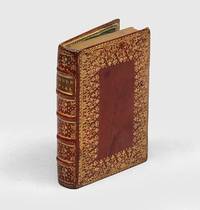
Best.-Nr. 133200France: 18th century. Puffs Powders Patches Bibles Billet-doux A beautifully crafted vanity kit bound to mimic a French Book of Hours. Its elaborately gilt-tooled red morocco casing disguises an ingenious interior of fashionable accoutrements bodkin brush looking glass and miniature essentials writing tools all key elements of the ritualized toilette. Books of Hours - personal prayer books kept by laypersons for private devotion - were frequently the remit of women whether gifted to commissioned by or made for them. The books' content encouraged quiet introspection while their lavish illumination decoration and bindings became an external expression of wealth and status. This palm-sized "Heures Royal" as the spine label reads encourages reflection of a more literal kind. Instead of religious meditations its contents include a set of six vanity tools a removable mirror an ivory writing tablet and a retractable pencil all carefully positioned within a compartmentalized silk- and ribbon-lined interior. "A wealthy woman never left home without her travelling case or nécessaire which held her perfumes and toiletries" Martin p. 18. French vanity boxes ranged from the larger nécessaire de voyage and nécessaire de toilette to "nécessaires de poche which housed one or two important bottles and brushes for emergency application deep in the many pockets of their voluminous gowns" Martin. Even tinier were "much smaller vanity cases called etuis intended to fit into a pocket. another must-have item. These were also used as containers for other items such as sewing kits and writing tools" Stewart. Most of the finest manufacturers and retailers of nécessaires were located near to the Palais Royal in Paris. Cases were available in a wide variety of costly materials and designs often incorporated precious stones. Book-form examples like this are much more unusual. Alexander Pope satirized the toilette in The Rape of the Lock 1712 mocking the frivolous combination of "Puffs Powders Patches Bibles Billet-doux" - a clash of religious and cosmetic devotion neatly encapsulated in this etui case. This item has been registered with the UK government's ivory declaration service. Book-form box sextodecimo 112 x 72 mm. Original red morocco green spine label lettered "Heures Royal" raised bands compartments covers and inner dentelles heavily gilt-tooled with floriate scrollwork and star motifs edges gilt 2 metal catches. Interior lined with green moiré silk and trimmed with yellow ribbon. Interior sections include recesses one holding 12 blank paper slips tied with pink ribbon a hinged panel supporting an ivory aide-memoire leaf on recto and a pull-out mirror on verso and compartments for 6 miniature engraved vanity tools: 2 retractable styluses likely formerly holding a pencil or tooth pick pair of scissors bodkin with ear spoon at end scraper and brush. Externally bright and well preserved small chip at upper outer corner of front cover tiny pinholes at edges near catches; internally sound lining a little frayed implements tarnished mirror desilvered and corroded. A remarkable survival. Morag Martin Selling Beauty: Cosmetics Commerce and French Society 2009; Susan Stewart Common and Uncommon Scents: A Social History of Perfume 2022. hardcover
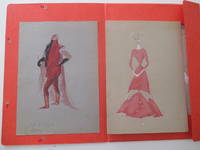
1920Best.-Nr. 14632AB1920. Vienna n.d. ca.1920 36 : 30 cm - 15 : 12 cm 21 water-colours partly heightened in white on grey cardboard. Beautiful very detailled elaborated custome designs in different colours white black blue red green yellow pink. The designs show mainly woman maybe designs for Bizet's 'Carmen' Two plates show actors and actress dancing with masks. unknown
1934Best.-Nr. FASHION004963J.H. Ltd no place. 1934. First edition. Folio. A fashion illustration portfolio with twenty nine colour lithographic plates each measuring approx 37 x 31cm showing women's dresses in various fabrics from silk to tweed. The covers are unusual: full gilt textured cloth with titles in art deco style on front.Some spotting. Very good indeed. J.H. Ltd, no place. hardcover
1919Best.-Nr. 15780AB1919. Year 1919/1920. Issues 1 - 12. Vienna 1919-1920. 32 : 235 cm With many illustrations. Coloured illustrated original wrappers. Shows very clearly the spirit of the time. unknown
1950Best.-Nr. 19417Innsbruck: Ernst Kainrath Wub . Very Good with no dust jacket. First Edition. Non-Book. These illustrated boards are in very good condition and consist of 1 Niedrosterreich 2 Obersoterriech 3 Saltzburg Pingau Flachgau 5 Steirmark 6 Karnten 7 Tirol lechtal 8 Trol Oztal. Each sheet has sixteen cut-out figures. Quite scarce.; 12.5" x 9.5"; 7 pages . c1950. Ernst Kainrath (Wub) unknown
2006Best.-Nr. 42414Roma. La Biblioteca di Repubblica, 2006. 4 origi.Pappbände, 4°, 261/521 / 513/ 281 Seiten. Text auf italienisch.
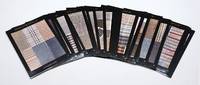
1980Best.-Nr. 140454Milan: Styling Consulting Service 1980s. Rare visual reference for patterned textiles First and only edition of this visually beguiling and historically informative collection. The title leaf reports that "this photographic publication composed of pictures of original fabrics from 1903 up to 1925 taken from private files has been created to offer a proof of art and culture in the evolution of costume". We have been unable to trace any other copies. There is no indication of a printer or publisher anywhere in either volume or in the custom boxes nor any other hints as to the origin of this fascinating collection of pin-sharp colour photographs of fabric swatches. The work however is clearly of Italian origin and there is a hint of FMR in the thematic and in the precision of execution and presentation. The first volume concentrates on wool weaves; tweeds herringbones plaids and checks in a wide range of weights and colourways; the second is filled an even wider selection of patterned cottons a fabulous array encompassing design trends from the early decades of the 20th Century with inevitable hints at art deco art nouveau and sometimes brasher "jazz" influences; all kinds of stripes gingham tartans textiles suggestive of ties cravats suit linings waistcoats figured fabrics for dresses or skirts women's coats or jackets even upholstery or blinds. A painstaking and no doubt costly exercise the precision in the execution of the photography and processing bespeak a seriousness of purpose which makes the anonymity of the project even more extraordinary. 2 vols folio 297 x 210 mm. Black rough-weave cloth solander boxes with drop sides title gilt to spines and front boards explanatory title leaf to vol. I gold printed on glossy black medium card-stock the boxes containing respectively 50 and 100 loose sheets of similar card-stock each with mounted high-quality colour photographs c.180 x 180 mm to c.228 x 172 mm of fabric swatch composites between 3 and 8 samples to each lettered and numbered in gold. Slightly rubbed and a little dusty spines sunned corners bumped small neatly repaired tear at foot of spine of volume II card leaves with the occasional minor scuff but remains very good. hardcover
1949Best.-Nr. 95082Paris: Lucien Lelong 1949. First edition of this notably rare spectacular promotional brochure for Lelong's fragrances with no other copies traced. Largely forgotten today apart from amongst the couture cognoscenti Lelong 1889-1958 was enormously influential. After the First World War Lelong took charge of his parents' small fashion house which was noted for its espousal of the modern look - the chic autobiographical heroine of Colette's 1908 novella Les Vrilles de la vigne is dressed by Lelong - and continued their tradition of innovation advancing the concept of the "kinétique" clothes "constructed in such a way that their true shape would emerge in movement not at rest". Not a designer himself he employed a number of young designers who were later to strike out on their own. Christian Dior Pierre Balmain and Hubert de Givenchy all spent time developing collections for Lelong. His contribution to the success of the house was in his vision and his marketing brilliance: he redesigned his parents' salon decorating entirely in black so that it was said to resemble a black-lined jewellery box he offered discounts to society women who agreed to be photographed in his dresses and was early into the branded perfume market. The first fragrances offered by Lelong were enigmatically named A B C J and N intending to evoke a sense of mystery and romance. The artfully designed bottles were largely the work of Lelong himself. Over 30 years he created a total of 27 different fragrances. This superbly produced catalogue features ten suitably mysterious and evocative plates by Cassandre né Adolphe Jean-Marie Mouron the Ukrainian-born French painter illustrator poster designer and typographer probably best-known for his imposing poster for the great CGT liner Normandie. Octavo. With 10 chromolithographic plates after illustrations by Cassandre and similarly printed plates from photographs of the perfume bottles themselves by Réné Messager. Original plain boards in cream wrapper front panel with company device embossed within debossed cartouche. Wrappers a little rubbed and irregularly toned spine slightly chipped at ends repair to short split at head of front joint contemporary gift inscription to front free endpaper else very good. hardcover
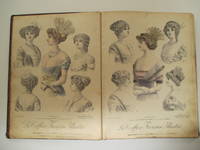
1905Best.-Nr. 11083AB1905. 2 parts in 1 volume. Paris and Berlin Brunet resp. Liebig 1905 - 1911. 365 : 27 cm. with together 56 4 double-page partly coloured plates with many illustrations. Cloth. Interesting compilation of French and German hair style at the beginning of the 20th century. With many extravagant samples. - Edges a bit stained and wrinkled; binding a bit rubbed. hardcover
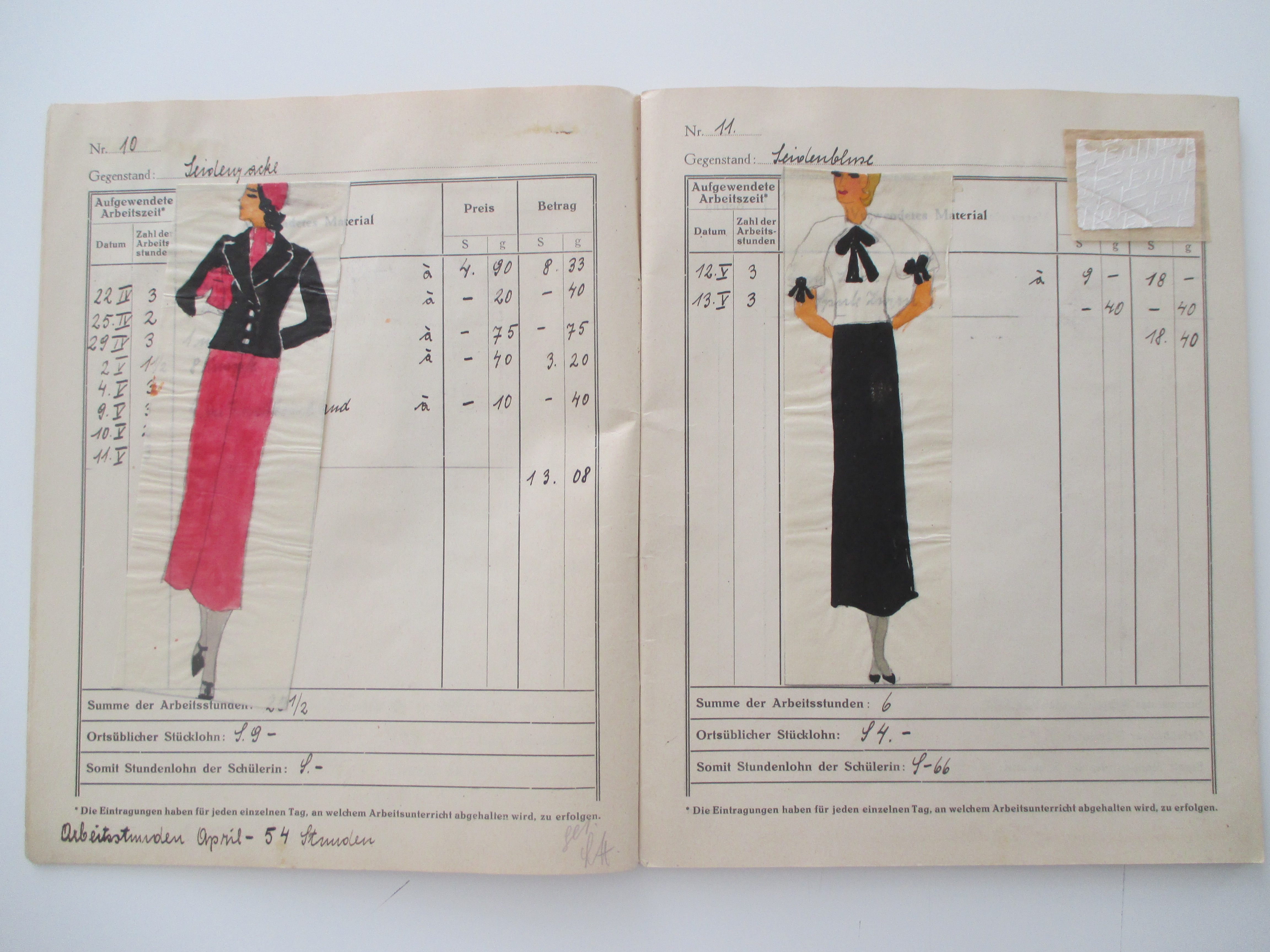
1931Best.-Nr. 11073ABVienna, 1931. 24,5 : 20 cm. 43 pages With 34 mounted coloured designs for dresses.
1950Best.-Nr. 14631AB1950. Vienna ca. 1950. 42 : 30 cm. 27 plates with many designs partly in colour. Shows also designs for smaller tallor and dicker woman. 2 plates with many designs for evening dresses. unknown