2628 risultati
1860rif. 36183Paris: Typographie de Firmin Didot Frères Fils & Cie 1860. Fifth edition. Extensively illustrated with woodcut illustrations text in Italian and French. 1 vols. Thick 8vo. Three parts bound as one volume. Later half-green morocco front wrapper of each part bound in. Darkened some rubbing especially of raised bands on spine some light offsetting and light marginal discoloration else very good. Fifth edition. Extensively illustrated with woodcut illustrations text in Italian and French. 1 vols. Thick 8vo. Hiler p. 873; Lipperhaide 25; Colas 2980 Typographie de Firmin Didot Frères Fils & Cie unknown books
1888rif. 145681888. Collection of 3 chromolithographic prints from The Illustrated History of Costume : period styles and accessories by Albert Racinet published by Firmin Didot & Cie in Paris in 1888. Titled: PERSIA - PERSE- PERSIEN. 7 ½" x 8 ¾". These lithographs beautifully depict Persian costumes and interior décor from Iran. In the first lithograph we can see 10 men and one woman dressed in the various traditional Qajar attires of Iran. The second lithograph shows the beautiful interior décor including very intercate and vibrant Persian rugs elaborately scrolled door and window frames of a Kajar residence. The third lithograph captures five musicians playing various instruments and four women dancers. In very good condition. unknown books
1864rif. 145861864. Two original antique steel costume engravings of a Persian Iran Royal Officer and Noble woman printed in 1864. Overall size: 9" x 12.5." The plate illustrations are brightly colored and intricately detailed characterization of the traditional costumes of a Persian Royal Officer and Noble woman. In the engraving of the Royal Officer titled "Khatchadour D'hohannes: Officier du Prince Royal de Perse" his attire entails a vibrant green coat with gold trimmings which covers a gold-colored ensemble with a purple sash that stores his dagger. In the engraving of the Persian Woman titled "Dame Persane" she is depicted in traditional costume as imagined by Europeans in the 1800's. The woman is shown leaning against a banister wearing an embroidered white satin gown with a pink silk and fur trimmed coat and a feathered headdress. General age related toning. Overall both prints are in very good condition. unknown books
1748rif. 143711748. Mallet Allain Manesson. "Arabes" 1748 presents two male figures identified as Arabs through the conventions of European geographical and costume illustration derived from Mallet's Description de l'Univers. Mallet's original work first published in Paris in 1683 combined maps city views portraits and images of dress with accounts of the customs religions and governments attributed to different nations; its second volume treated Asia. The engraving records the visual vocabulary through which Arab clothing and appearance were presented to European readers within this encyclopedic geographical tradition. Mallet Allain Manesson. "Arabes." 1748. Engraving. Overall page 10" x 7.25"; image 5.5" x 7.5". Beneath a decorative banner lettered "Arabes" two standing men wear contrasting garments against a mountainous landscape. One wears a buttoned tunic overcoat pointed shoes and a large turban; he holds a decorative cane while resting his other hand at his belt. The second wears a decorated collared tunic beneath an overcoat pointed shoes and a tall head covering from which a long length of fabric descends. The paired figures allow differences in headwear garment ornament and accessories to be compared within a single composition. The plate derives from an illustrated geographical work conceived by Mallet a French military engineer and mathematics teacher whose Description de l'Univers organized contemporary geographical knowledge alongside images of the "divers habillemens" of different peoples. The "Arabes" composition therefore records an eighteenth-century European printed conception of Arab dress rather than serving as direct ethnographic documentation of a specific Arab population or locality. Overall very good condition. The combination of costume detail and explicit ethnic captioning documents how Arab peoples were visually categorized for European audiences in early modern geographical publishing. unknown books
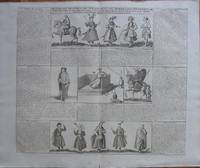
1720rif. 143601720. Atlas historique engraving of Persian costume and customs 1720 records an early eighteenth-century European presentation of dress military equipment horsemanship and tobacco use in Persia during the late Safavid period. Rather than presenting a single landscape or event the plate assembles male and female costume hairstyles turbans footwear weapons armor horses and smoking implements into a comparative visual survey. Its attention to cavalry equipment and what the accompanying description calls the "militia and their weapons" and the "offensive and defensive" equipment worn by soldiers at war documents the categories through which European geographical publications described Persian society and military culture. Atlas historique. Description of Persia and Persian costumes. 1720. Sheet size 51 x 43 cm. The engraving contains numerous individual figures and objects arranged for comparison including four men in different Persian costumes women in period dress examples of female hairstyles turbans and shoes and representations of tobacco smoking and pipes including a hookah. Military subjects include armor weapons cavalry horses an elaborate bow and equestrian equipment. The combination of human figures with separately illustrated articles of clothing arms and personal equipment allows individual elements of Persian dress and material culture to be examined across the sheet. Published in 1720 the engraving dates to the final years of Safavid rule when European atlases and geographical compilations increasingly combined maps with images and written accounts of the peoples clothing military practices and customs of regions beyond Europe. Here Persian men and women cavalry weapons tobacco consumption and dress are organized as subjects of geographical and ethnographic description providing evidence of how Persia was visually classified for an early eighteenth-century European audience. The detailed renderings of costume armor weapons horses hairstyles and smoking implements also preserve period representations of material culture associated with Safavid Persia. Very good condition. unknown books
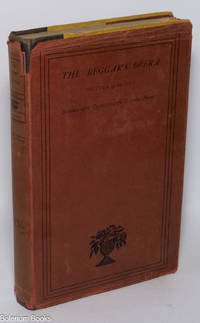
1921rif. 322026London: Heinemann 1921. Hardcover. xviii 93p. 8 color plates musical notation appreciation of Claude Lovat Fraser note on the scene & costumes at the Lyric Theatre Hammersmith preface Dramatis Personae Introduction the play with music and lyrics shelfwear and bumping else good 4th printing December 1921 bound in yellow boards and quarter-cloth with paper title labels on front cover & spine & very worn dj. The original play on which Brecht based his "Three-penny Opera". The text here is taken from the 1765 edition. Heinemann hardcover books
1900rif. 40351Weissenburg im Elsas: Druck u. Verlag v. C. Burckardt's Nachf 1900. A very good copy light toning colors vibrant. 1 sheet. Chromolithograph. 33.5 x 43 cm 13 1/4 x 17 inches. Template for the construction of a Japanese infantry cap on thin cardboard. Many such military related items were printed during the German Imperial period. C. Burckhardt Nachfolger was a successor firm to Imagerie Wentzel and one of the largest producers of paper lithographic items. Druck u. Verlag v. C. Burckardt's Nachf unknown books
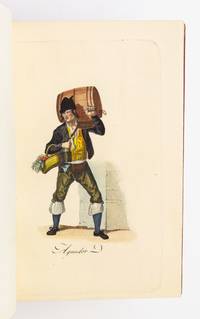
1832rif. ST19313Madrid: Real Calcografía 1832-36. 240 x 160 mm. 9 1/2 x 6 1/4". ELEGANT MODERN RED MOROCCO VERY HANDSOMELY GILT in the style of the period BY ANTOLIN PALOMINO OLALLA hand-signed on front turn-in with swirling cornerpieces and central lozenge raised bands spine panels gilt gilt turn-ins all edges gilt in slightly worn red marbled paper slipcase. With engraved title page and 112 ENGRAVED PLATES by Juan Carrafa after drawings by Jose Ribelles y Helip and ALL WITH CONTEMPORARY HAND COLORING. Colas 646; Lipperheide 1224. Edges of some leaves with faint stains and thumb soiling of no consequence but the finely colored plates beautifully preserved and THE SPARKLING BINDING IN FLAWLESS CONDITION. This is a beautifully bound work filled with exquisitely hand-colored plates depicting early 19th century Spanish costumes. Neither Lipperheide nor Colas identifiy the artist but the San Fernando Royal Academy of Fine Arts in Madrid attributes the images here to the Spanish painter and draughtsman José Ribelles y Helip and identifies the engraver as Juan Carrafa. The plates were originally published by the Royal Academy in 1825 in 14 parts with eight plates per part and the present edition was produced around 1832-36 based on the dates found in the descriptive labels incorporated into two of the plates. The illustrations depict men and women in regional dress from across Spain as well as particular "types" including shepherds fishermen merchants musicians dancers bullfighters smugglers sailors and more. The superb hand coloring enlivens each illustration with vibrant colors and careful attention to shading patterns and accessories. Antolin Palomino Olalla 1909-95 was one of the great Spanish binders of the 20th century. A versatile and meticulous artist teacher and craftsman Palomino Olalla opened his Madrid workshop in 1942 and became especially renowned for his hand-gilding mosaic bindings and marbled paper techniques. He seems to have specialized in binding antiquarian books and attracted important institutional clients as well as discerning bibliophiles such as Bartolomé March Servera. The gilding on the present work is especially elegant and applied with laser precision adding another dimension of pleasure to an already appealing work. The book is uncommonly seen for sale at Anglo-American auctions. Real Calcografía unknown books
1790rif. ST14261Paris: Drouhin 1790. FIRST EDITION. 265 x 205 mm. 10 3/8 x 8". Two volumes. VERY ATTRACTIVE CONTEMPORARY MARBLED CALF GILT IN A NEOCLASSICAL DESIGN covers with a cresting palmette frame featuring ornate urn ornaments at corners flat spine divided into compartments by Greek key roll floral spray centerpieces one green and one black label marbled endpapers. With 55 PLATES OF COSTUMES designed by Philippe Chéry and engraved by Pierre-Michel Alix 50 of these PRINTED IN COLOR five in black and white a couple of these with color highlights applied by hand and with a color portrait of the author from the 1802 edition tipped in at front. Colas 717; Hiler p. 542; Lipperheide 3203; Cohen-de Ricci 227; Brunet IV 1135. One corner worn to board joints and extremities lightly rubbed but the bindings lustrous and generally very attractive. First volume slightly browned throughout second volume occasionally so volume II with two-inch marginal stain to upper gutter affecting four quires and six plates but not touching text or images two plates with pen marks in margins touching lettering but not image other trivial defects but still an excellent copy internally the colors especially clear and pleasing. This is an elegant production with the Neoclassical binding being the perfect complement to the color engravings of ancient Greek and Roman costumes that illustrate the present history of theatrical attire. In the two volumes here theater critic and historian Jean Charles Le Vacher de Charnois 1749-92 covers Classical tragedies and comedies as well as later interpretations of these dramas by playwrights including Racine. Le Vacher de Charnois intended a series of books encompassing as the title indicates theatrical costumes from all nations and from the ancient to the modern; however the French Revolution interrupted his scheme and as a monarchist he was imprisoned in 1792 for his writings in support of the aristocracy. It was long thought that he had died in the massacres at the Abbaye prison in September of that year but later research indicates that he may have been executed during the Reign of Terror in 1794. The artists who illustrated this work were at the opposite end of the political spectrum. Painter Philippe Chéry 1759-1838 studied with Jacques-Louis David and adopted his master's passionate support for the Revolution as well as his Neoclassical style. Engraver Pierre-Michel Alix 1762-1817 was a specialist in color printing best known for his portraits of leaders of the French Revolution and later of Napoleon and First Empire dignitaries. While the handsome binding here is unsigned the palmette roll on the covers is very similar but not identical to one used by Bozerian see Culot "Jean-Claude Bozerian" roll #44 and plate #XXIV. Perhaps our binder had trained in that atelier as the design and workmanship are certainly of that level. Drouhin unknown books
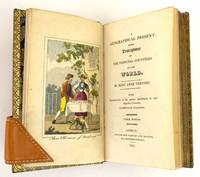
1820rif. ST16372eLondon: Printed for Harvey and Darton 1820. Third Edition. 155 x 95 mm. 6 x 3 3/4". 144 pp. Appealing sprinkled calf by Wallis for C. E. Lauriat stamp-signed on verso of front free endpaper covers bordered by double gilt fillet raised bands spine gilt in compartments with floral spray at center encircled by small tools leafy branch at corners red morocco label densely gilt turn-ins marbled endpapers all edges gilt. WITH 60 HAND-COLORED PLATES of costumes from around the world. For first edition: Lipperheide 480; Osborne Collection p. 193. See also: Megan Nourcia "X Marks the Spot: Women Writers Map the Empire for British Children 1790-1895" pp. 33-34. A tiny bit of wear to the top of the front joint occasional trivial marginal stains or the faintest of browning but still a fine copy clean and fresh internally with brightly colored plates in a well-preserved lustrous binding. Attractively bound and enhanced with excellent contemporary hand coloring this charming introduction to geography aimed at young readers contains numerous plates depicting the traditional dress of cultures from around the world. Beginning in London and spreading to almost every corner of Western Europe the book then guides us to Asia Africa and finally to the Americas ending in Tierra del Fuego. First published in 1817 "A Geographical Present" was the author's most successful work. There is little known about the life of Mary Anne Venning but according to Megan Nourcia the present work "had a broad circulation launching her career as a scientific writer and establishing her authority as an educator of the young." Nourcia also notes that "Venning's texts were marketed as educational aids of keepsake quality"; as we see here the attractive binding and lovely hand-colored plates add an element of luxury to this pedagogical work and the fine condition of our copy suggests that it was carefully looked after by its presumably young previous owners. Printed for Harvey and Darton unknown books
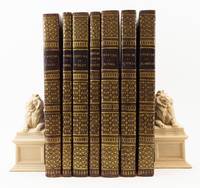
1800rif. ST17757London: William Miller; T. M'Lean; William Bulmer 1800-18. 370 x 270 mm. 14 1/2 x 10 1/2". Seven volumes. Uniformly bound in stately contemporary dark burgundy straight-grain morocco covers with gilt palmette-and-wheat-sheaf border inner frame of blind-stamped grapevine raised bands spine compartments densely gilt with repeating botanical tools gilt lettering gilt-rolled turn-ins all edges gilt. Two engraved titles with hand-colored vignettes not included in plate count and 356 FULL-PAGE HAND-COLORED PLATES FEATURING COSTUMES OCCUPATIONS AND SOCIAL INTERACTION OF VARIOUS NATIONS. Volume I-III V and VI with text in French as well as English. Front pastedown with armorial bookplate of Edward Gordon Douglas-Pennant 1st Baron Penrhyn. Abbey Life 430; Abbey Travel 71 244 370 373 532 533. Joints and extremities lightly rubbed one board with a couple of faint scratches two rear boards with neat older repairs to short tears at tail edge but the bindings quite sound and most attractive on the shelf. Flyleaves a little foxed minor offsetting from plates to text leaves occasionally more pronounced but never offensive isolated minor marginal foxing to plates otherwise very fine WITH CLEAN BRIGHT PLATES. This is a collection of major early 19th century color plate books with well-drawn and richly-colored engravings in bindings that make a handsome appearance on the shelf. All of these works have appealing plates where the costumes of the various social strata are carefully and colorfully delineated. And two of the volumes--those showing British costumes and the book on Chinese punishments--contain in addition a good deal of diverting background detail that serves as a revealing context for each of the costumes depicted. The content of each of the volumes is worth noting. With a few exceptions the plates in the "Costumes of China" portray ordinary working-class men and women toiling at their trades. We see a bookseller with his wares spread out on a mat women sewing and embroidering a butcher a fisher a barber a man with a "magic lantern" show and a "man striking a small gong during an eclipse" an ancient ritual that the author tells us he was privileged to witness on 17 November 1789. The "Punishments of China" volume is filled with almost gleefully painful depictions of all degrees of disciplinary action from the relatively minor twisting of the ears or chaining to an iron pole to the humiliating ordeal of the wooden collar to methods of execution by beheading or by crucifixion using a cord. The opulent and brightly colored costumes in Dalvimart's volume on Turkey are mostly those of the ruling classes although also represented is a wide variety of native dress from the many regions of the vast Turkish empire of the day which included Bosnia Albania Syria Egypt and parts of Greece. It is particularly interesting to contrast the clothing of the very heavily veiled Turkish and Egyptian women with the much more relaxed style of the Greek women and the nearly immodest garb of the female Bedouin. We also are shown a eunuch an odalisque from the harem a grand vizier various royal functionaries and government officials all splendidly attired. The Russian costumes based on engravings done by C. W. Müller at the request of Empress Catherine the Great are focused on the ethnic dress of the empire's many holdings. The Laplanders and Finns wear clothing that would look familiar to most Europeans but the Mongols in their Oriental dress would be quite exotic. The clothing of the northern tribes such as the Kamchatkans Aleutians Koriaks and Tungoosi will impress the modern reader with their similarity to the traditional dress of Native American and First Nation peoples. The Tchutski woman is even depicted naked to display her tattoos. Bertrand de Moleville's Austrian costumes also illustrate the native dress of the empire's citizens but the illustrations here are less fashion plates than romanticized scenes: peasant couples are shown courting and dancing; Croatian women gossip beside a stream; and a wild-haired Bohemian gypsy whose "profession is not hard to guess" from her state of "déshabillé" flees with her naked and no doubt illegitimate child. Pyne's "Costumes of Great Britain" is one of the most highly praised works in this set and for good reason: the simple working men and women of Britain it depicts are always shown going about their daily tasks in the midst of a well-realized scene. The woman selling "salop" a hot morning beverage is seated at her cart with its urn judiciously located by the watchman's stall surrounded by customers including soldiers and a woman with her market basket. A fireman with an ax and a torch hurries toward his engine company while they unwrap their hose. The potter is at his wheel the tanner is cleaning skins and the bill-sticker posts the winning lottery numbers. The clothing while carefully detailed is almost secondary to the depictions of everyday life. The "Military Costumes of Turkey" illustrates the official regalia "uniform" is much too drab a word for these outfits worn by officers in various regions of the empire. Perhaps the most intriguing plate here is that of the Ladle Bearer a post that was also illustrated in "Costumes of Turkey." What appears to be a man with a giant spoon is in fact the holder of an important military position equivalent to the color-bearer in a western army. We are told that the loss of its ladles is the greatest disgrace that can befall a Turkish regiment: if the two great ladles the size of a grown man that are borne into battle at the head of the troops are captured the regiment must be disbanded and formed anew. Former owner Edward Gordon Douglas-Pennant 1st Baron Penrhyn 1800-86 was a leading figure in the Welsh slate industry; he owned the Penrhyn Quarry the largest slate quarry in the world at the end of the 19th century. He was known for his paternalistic attitude to his employees creating the "model village" of Llandegai to house the quarry workers. It was notable for having "no corrupting alehouse." He was ruthless enough to fire 80 men in 1868 because they did not vote for his son George who was running for a seat in Parliament. Single volumes from this set appear with frequency in the marketplace; full sets show up much less often; sets as handsome and well preserved as the present are rarely seen. William Miller; T. M'Lean; William Bulmer unknown books
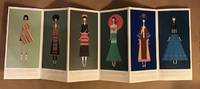
rif. 34153Dalian City: Dalian Nationalities University. Fine in Near Fine dust jacket. N.D. First Edition; First Printing. Hardcover. Fine book in close to fine cover. This was the winning graduation project of 2011 and consists of 56 individual illustrations of ethnic costumes of China including Hong Kong Macao and Taiwan. The university emphasizes educating the minorities from the 56 nationalities in China. The book is constructed in accordion folds with colored illustrations on both sides. The cover folds over the book and has a magnetic closure. The illustrations are lovely. ; 12 1/2 " tall x 6 1/2" wide . Dalian Nationalities University hardcover books
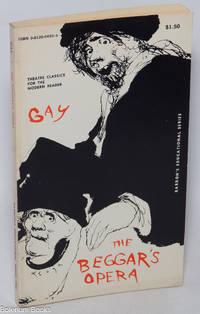
1962rif. 322346Woodbury: Barron's Educational Series 1962. Paperback. 162p. essays on the playwright the play & the staging introduction footnotes bibliography illustrations of the characters costumes and sets musical notations and lyrics very good mass-market paperback in pictorial wraps. Theatre Classics for the Modern Reader. Basis of Brecht's "Threepenny Opera Barron's Educational Series paperback books
rif. SONG0764368524Used: Good unknown
rif. DADAX1302963821New unknown
rif. 375607Unframed Print. Very Good Condition. A finely hand coloured steel engraving titled Costumes Hollandais - Amiral De Winter - Pichegru engraved by Reville and Couche after designs by Lacauchie and Couche and issued in 1835. The plate is divided into two registers: the upper scene headed France Militaire presents a pair of Dutch regional figures a woman of Zeeland and a man of the Zuiderzee depicted in richly detailed traditional costume. Below are two half length portrait medallions of Revolutionary era military figures: the Dutch born French admiral Jan Willem de Winter and the celebrated general Charles Pichegru. Typical of early 19th century French composite engravings the sheet combines picturesque ethnographic costume with notable military personalities reflecting both popular taste and the eclectic editorial practices of Parisian printmakers of the period. A bright attractive example of mid 1830s hand coloured steel engraving. An original 1835 hand coloured engraving. Mounted in a dark green surround total size 29.5 x 42 cms the print is 13 x 20 cms approx. and is ready for framing. Text is in French. Category: Antiquarian & Rare; French Language; PRINTS : Historic Interest; New Arrivals; French Language; Special Interest. This item may require more postage than the rates shown for delivery outside the UK. If extra postage is required we will contact you before processing your order and you will be given the details and option to decline the extra cost. unknown
1928rif. 54848Paris: Librairie Henri Leclerc / L. Giraud-Badin 1928. Large paperback. xvi340 pp.: 57 plates with ill.; 28x19 cm. Uncut mostly unopened. slightly browned small signs of use Very good see pictures Librairie Henri Leclerc / L. Giraud-Badin paperback
1928rif. 33146Paris: Librairie Henri Leclerc / L. Giraud-Badin 1928. Paperback. xvi340 pp.: 57 plates with ill.; 28x19 cm. Uncut unopened. sl. browned Very good. Librairie Henri Leclerc / L. Giraud-Badin paperback
1800rif. ABC_465751800. ca. 28.2 x 20.1 cm. Green sheepskin with gilt single fillet and blind tooled decorative panel on boards spine with gilt- and blind-tooled ornaments in 6 compartments board edges gilt marbled endpapers. 24 pp. An attractive and finely preserved anonymous album containing 24 original watercolour drawings depicting men and women in traditional Dutch dress and regional costumes. Each drawing is executed on paper bearing the watermark of J. Honig & Zoonen active 1765-1836 placing the album within the late 18th- or very early 19h-century fascination with documenting national identity local customs and traditional clothing.The unsigned and untitled album presents a colourful and detailed survey of Dutch costume portraying figures from different social backgrounds regions and occupations. The carefully observed costumes headwear accessories and attributes provide a valuable visual record of everyday life in the Netherlands at a time when many regional dress traditions were beginning to disappear under the influence of changing fashions and increasing urbanisation.The 15 female and 9 male figures are shown not merely as costume studies but often in connection with their social role or profession. Several figures are accompanied by characteristic objects and attributes including a woman carrying a broom another holding a book and ruler figures with folded linen hat boxes or a fish basket male figures are depicted with hay birds a dog a farmer carrying a rake a cheese seller and a man holding a telescope.The bright palette decorative quality and attention to regional details make this album an appealing example of the early 19th-century European tradition of costume albums produced for travellers collectors and those interested in the customs and appearance of different peoples.The binding shows some wear the leather is rubbed and slightly worn at extremities with some occasionally light foxing. Otherwise in good condition. hardcover
1912rif. 64707New London OH: The Ward-Stilson Co. 1912. Folio. 10.25 x 13.75 in. 129 1 pp. With 100’s of text illustrations & plates many w/ colour-tinting or in full printed colour. Red cloth-backed red softcovers raised & embossed blue & gilt lettering on front cover cover illust. of Thomas Wildey mounted on front cover minor edgewear slight bumping to couple corners shelfwear still a VG bright copy w/ TL dittoed ordering letter to Odd Fellows Secretary about ordering from this catalogue on engraved letterhead and additional leaf of premiums also laid-in. First edition thus of this lavish Edwardian costume and regalia catalogue for the Odd Fellows. The I.O.O.F. was an altruistic fraternal organization closely related to the Freemasons in ritual and regalia yet devoted to assisting those in need and built homes for seniors and orphaned children across the country. Reconstituted after being severely depleted during the Civil War the Odd Fellows became by 1912 the largest fraternal organization in the United States with more members than the Masons and had over 3.5 million members worldwide. Their ritual work was noted for their elaborate morality plays and extensive uses of scenery magic lanterns music and even reproductions of the Ark of the Covenant and Incense Altars. The automaton Self-Playing automatic harps were quite elaborate and fascinating musical machines and this catalogue illustrates several models. This catalogue encompasses 100s of costumes necessary for ritual degree work including those for past Grand Right Supporters Noble Grand Vice Grand Chaplain Warden Herald Conductor Scene Supporter Inner Guard King Saul Jesse Good Samaritan High Priest and others. Also included are swords -- some with inlaid hilts bugles horns jewels hand-painted scenery landscapes magic lanterns for projection ledgers banners and even lighting systems. Ward & Stilson originally bought a lodge rosette business in 1891 which quickly grew into one of the largest suppliers of fraternal order regalia in the country. No copies located in Worldcat; See: Foskett History of New London. The Ward-Stilson Co., paperback
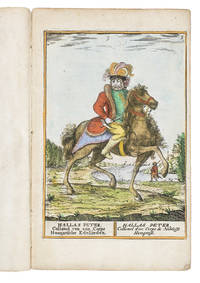
1787rif. ABC_49498The Netherlands The Hague 1787. 8vo. Contemporary marbled paper wrappers sewn through 4 holes. Kept in a custom burgundy cloth case with a leather label on the spine lettered in gold. With 6 full-page numbered engraved plates vividly coloured by a contemporary hand. 16 pp. Second copy located of the second edition of an extremely rare work on 18th-century Central European military costumes. The work was first published in folio format in The Hague in 1742 with the title referring to the Central European soldiers in the service of the "Queen of Hungary" meaning Maria Theresa 1717-1780 ruler of the Habsburg monarchy from 1740 until 1780 and the "King of Prussia" meaning Frederick II the Great in/of Prussia 1712-1786. The title of the present second edition refers to the "Emperor" and the "King of Prussia" most likely meaning Holy Roman Emperor Joseph II r. 1780-1790 and either King Frederick II r. 1740-1786 or King Frederick William II r. 1786-1797. Thus the second edition was probably published after 1780 and possibly in 1787. Two English/French editions were published in 1742 and 1743 in "London" possibly meaning The Hague by Guillaume Meyer.The present copy contains 6 beautifully contemporary hand-coloured engravings of Central Europeans in their military costumes. They show: 1. Hallas Peter a Colonel of a corps of Hungarian nobles on horseback; 2. Captain of the Croats; 3. a Croat soldier; 4. a Slavonian from a historical region in present-day Croatia; 5. an officer of the Ulans also Uhlans originally Lithuanian irregular cavalry later generally meaning a lancer in service of the King of Prussia; 6. ordinary Ulan a lancer.With the book plate of F.C. Koch on the inside of the front wrapper. Wrappers slightly frayed and slightly faded minor foxing throughout the title page is slightly browned. Otherwise in very good condition.l STCN 240071050 1 copy; WorldCat 894593905 1 copy same as STCN; cf. for the first edition: Lipperheide 2224; Colas 2410. ABE CAT Costumes & Uniforms hardcover
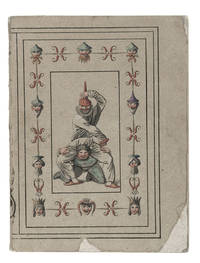
1804rif. E5UG7Z4OCT3NLeipzig 1804. 16mo in 8s 14 x 10.5 cm. Friedrich August Leo Original publisher's paperboards printed from an engraved plate and hand-coloured each board with a costume scene in a decorated frame with caricature faces also with faces and decorations on the spine green paste-downs. With 2 stiff coated leaves at the end apparently intended for writing with a stylus. With 12 numbered engraved plates by Friedrich Wilhelm Nettling all coloured by a contemporary hand each showing several figures in carnival costumes. 31 1 blank pp. Very rare first and only published part of a series of hand-coloured carnival costume plates each of the 12 with a letterpress description in German and French. Only plates 9 and 10 bear the name of the German draughtsman and engraver Friedrich Wilhelm Nettling best known for his portrait of Bach but all may have been engraved by him. The mostly comical or farcical plates illustrate a fairy with her entourage a Chinese man Don Quixote and Sancho Panza a group of beast people and many other extraordinary figures. Two figures in one plate wear funnels as hats like the Tin Man in The Wizard of Oz. Besides the 12 plates in the booklet itself the engravings on the boards show two male figures gymnasts one in a clown-like costume on the front and a dancing woman with a tambourine on the back.With some minor stains and the front of the binding slightly damaged in the lower margin and lower right corner spine cracked. Good copy.l Baumgärtel Die Almanache Kalender und Taschenbücher 1750-1860 der Landesbibliothek Coburg p. 32; Köhring 111; WorldCat 633348944 465355875 3 copies; not in Colas; Hiler; Lanckoronska & Rümann; Lipperheide; for Nettling: Thieme & Becker XXV p. 400. ABE CAT Costumes & Uniforms hardcover
1919rif. 16436AB1919. Leipzig Vier quellen 1919. 235 : 165 cm. 96 pages with 160 coloured plates. Original boards spine richly gilt. The plates show religious and secular order from all over Europe. With detailed description of each costume. hardcover
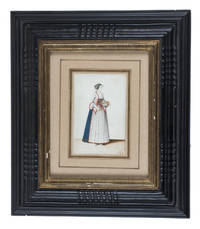
1720rif. 9AHF2VYD4ZB1Augsburg 1720. Each mounted in a later passe-partout with a gold border in an ebonized wooden frame with a gilt lip glazed 23.5 x 20.5 cm. Four drawings in brown ink watercolour and coloured gouaches on vellum highlighted with gold each 5.9 x 9.0 cm. A matching set of four lovely and delicate watercolour drawings each depicting a young lady in a fancy German costume drawn and painted on vellum by the Augsburg artist Catharina Sperling Heckel 1699-1741. She learned painting and drawing from her father the Augsburg goldsmith Michael Heckel engraving from Johann Ulrich Kraus and married the engraver Hieronymus Sperling 1695-1777 in 1725. It is not clear whether she made these drawings shortly before or shortly after her marriage. She is best known for her ca. 1728 miniature portrait of Charles Edward Stuart Bonnie Prince Charlie the young pretender to the English throne. She never recovered from the birth of her first child in 1741 dying within a few weeks. Each drawing shows a young German lady wearing a long gown and a cap or bonnet but one also carries a hat. The four drawings differ in the style of the gowns and other elements.In very good condition. With a few small chips in the paint of the frame. Lovely watercolour costume drawings of four young German ladies perhaps from a court wedding in the free Imperial city of Augsburg.l Cf. Thieme & Becker XVI pp. 208-209. ABE CAT Costumes & Uniforms hardcover
1860rif. 36183Paris: Typographie de Firmin Didot Frères Fils & Cie 1860. Fifth edition. Extensively illustrated with woodcut illustrations text in Italian and French. 1 vols. Thick 8vo. Three parts bound as one volume. Later half-green morocco front wrapper of each part bound in. Darkened some rubbing especially of raised bands on spine some light offsetting and light marginal discoloration else very good. Fifth edition. Extensively illustrated with woodcut illustrations text in Italian and French. 1 vols. Thick 8vo. Hiler p. 873; Lipperhaide 25; Colas 2980 Typographie de Firmin Didot Frères Fils & Cie unknown