7 580 résultats
réf. 83046aafZürich, Rascher & Cie, 1912, 39.5 x 57.5 cm, Farbfrohes plakatives Städtebild von Murten aus: “Schweizer Städtebilder Blatt 2”, 1 Blatt.
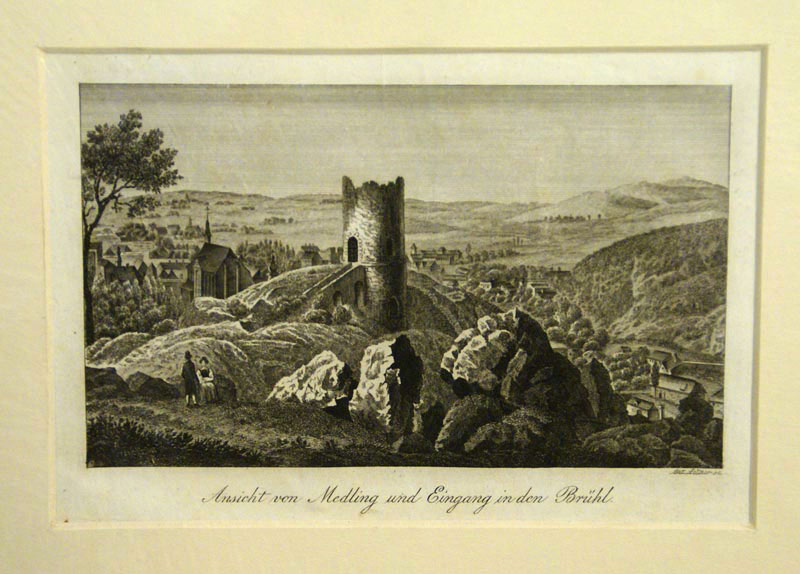
1840réf. GRAP0120ca. 1840. Bildausschnitt: 15x9 cm; unter chamoix Passepartout; mit Klarsichtfolie geschützt. Leitner, A., Kupfertecher in Graz.
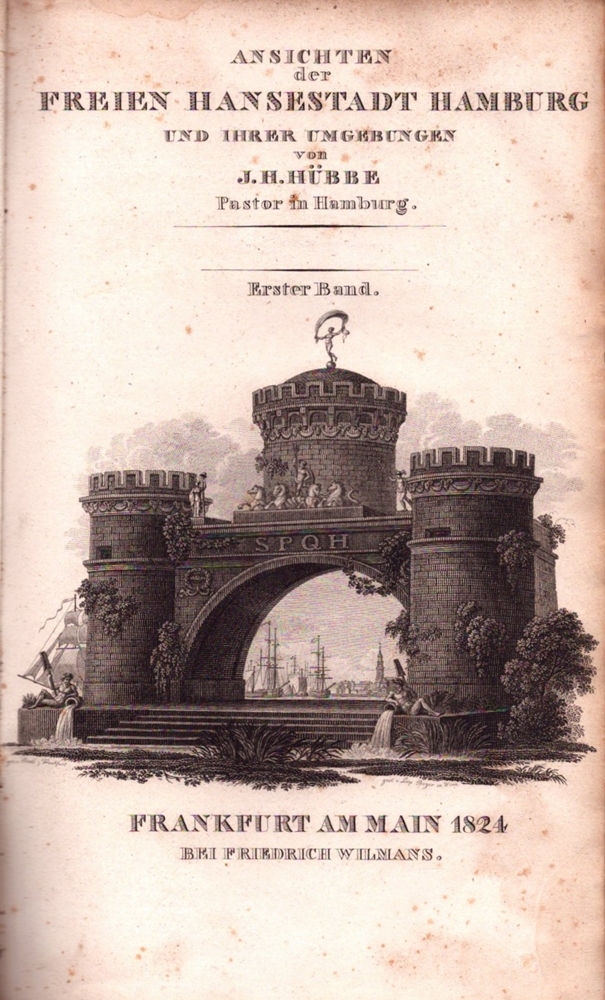
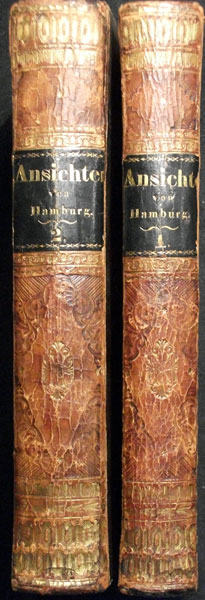
1828réf. 97261Frankfurt /M. Friedrich Wilmann, 1824/1828. VIII S., 2 Bll., 342 S.; XII S., 2 Bll., 438 S. Mit je 1 gestoch. illustr. Titel von Leopold Beyer nach Anton Radl. Gr.-8vo. 23 cm. HLdr. d. Zt. mit schw. RSch.
1828réf. 19090Frankfurt /M. Friedrich Wilmann, 1824/1828. VIII S., 2 Bll., 342 S.; XII S., 2 Bll., 438 S. Mit je 1 gestoch. illustr. Titel. Gr.-8vo. HLdr. d. Zt. mit schw. RSch.
1895réf. 21169Dresden, Kunstanstalt für Lithographie und Steindruck Zobel, (1895). 36-teiliger, lithographisch gestalteter Leporello im orig.-reich goldgeprägten roten Leineneinband. Kl.-8° (ca. 15 x 9,5 cm).
1835réf. 22764Wien, Gerold, 1835. IV, 76 S. 1 Titel und 30 Tafeln (in Stahlstich bzw. Holzstich). 8°. HLwd. des 19. Jahrhunderts mit Rückentitel (Gebrssprn.).
1982Ristampa anastatica estratta da Antica Topografia Istorica del Regno di Napoli, 1819. Edizione limitata a n. 250 esemplari. Brossura in cartoncino flessibile, dalla copertina illustrata, con bandelle, leggermente annerita. Buonissimo lo stato di conservazione, pagine perfettamente tenute e candide, come i tagli. Numero pagine 86. USATO
1977Mm 220x300 Volume di pp. 649, cartonato, piena tela, piatto anteriore e dorso impressi in oro, sovraccoperta editoriale, 264 tavole b/n, 12 piante ripiegate b/n fuori testo. Saggi di Raissa Calza, Margherita Bonanno Gaetano Messineo Beatrice Palma Patrizio Pensabene. Opera in buone condizioni.
1743réf. 22546Schwabach (später Schwabach u. Leipzig), J.J. Ender, 1734, 1743. I. Gest. Vortitel, Reihen-Titel in rot-schwarz-Druck, 5 n.n. Bll., Titel, 8 Kupfertafeln, eine große Kopfvignette, 332 SS. 14 n.n. Bll. Register. II. Titel in rot-schwarz, 3 n.n. Bll., Faltkarte, 2 Tafeln mit Wappen, große Kopfvignette, 445 (1) SS., 5 n.n. Bll. Register. III. Titel in rot-schwarz, 5 n.n. Bll., große Kopfvignette, 668 SS., Titel zur den genealogischen Stammbäumen, 10 genealogische Tafeln, 10 n.n. Bll. Register. Mehrere kl. Textkupfer (Wappen), 9 Porträt-Tafeln (von hoher Qualität) der Markgrafen zu Bandenburg-Ansbach von A. Nunzer und J.W. Windter nach J.C. Filtsch. Kl. Sammlerstempel auf dem letzten weißen Blatt. Fol. Band 1: Pergament der Zeit, Rotschnitt. Einband etwas gewellt und etwas fleckig. Band 2: Moderner Pergamentband.
réf. 22317o.J. 4°, brauner Kalbslederband der Zeit mit goldgepr. Rückenschild und reicher Rückenvergoldung. Die Vergoldung etwas verblichen. Unteres Kapital fehlend, linke obere Ecke des Vorderdeckels mit kl. Wurmspur.
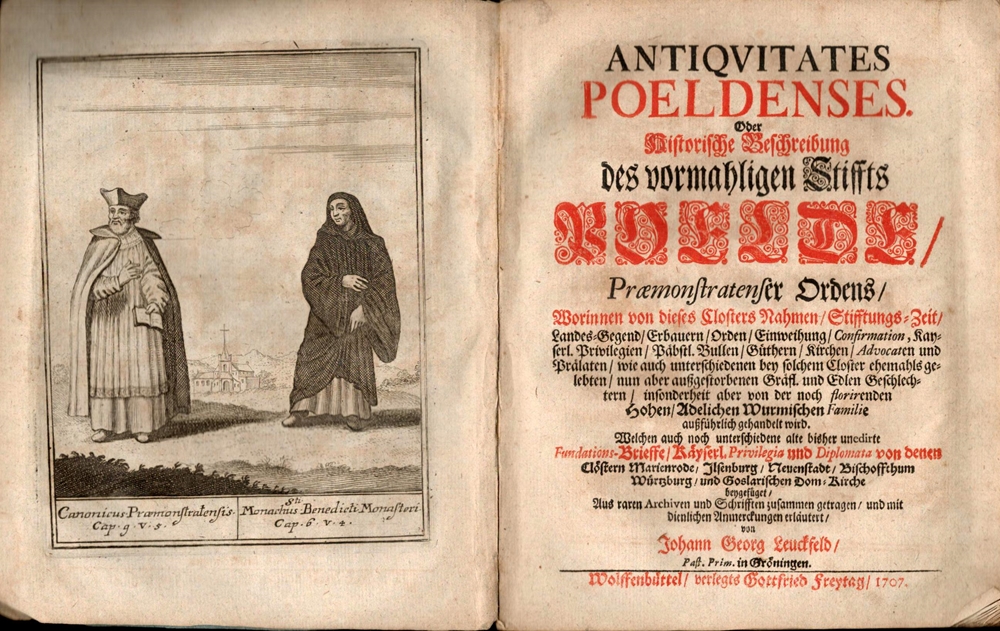
1707réf. 97194Wolffenbüttel, Gottfried Freytag, 1707. Titel in Rot-Schwarz, Kupferfrontispiz, [2] Bl., 156 S., [5] gefalt. Genealogie-Taf.; S.[205]-273 [i.e. 311] S., [4] Bl. (Addenda ad Antiquates Poeldenses...). Mit Holzschnitt-Schlußvignette. Kl.-4to (21 cm). Gehefteter Buchblock im Interimsumschlag (dieser schadhaft).
1712réf. 21589Leipzig, Johann Christian König, 1712. Gest. Frontispiz, Titel in rot-schwarz-Druck, 7 Bll., 702 SS., 21 n.n. Bll. 6 Kupfertafeln. 4° (ca. 25 x 17,5 cm), Pergament der Zeit (etwas angestaubt).
First edition, 2 parts in one, 4to (275 x 215 mm), xiv, 8, [2], 115, [1]; [117]-344pp., portrait frontispiece, folding map, 21 plates, 17 pedigrees (6 folding), nineteenth century half calf, upper cover detached. These two parts [Southwell] are almost invariably bound together. "The History of Newark." referred to in the title was not published until 1819 and then as a separate publication. Provenance: Armorial bookplate of Roger Pocklington; inscribed from M. C. Pocklington, 1873. Dobbin, 500.
1845réf. 39155ABHildburghausen, Amsterdam u.a. Bibliogr. Institut 1845.
1830réf. 2192Paris, Ch. Piquet, 1830. Texte + Atlas, complet. In-12, 10,5 x 17,5 cm (texte) ; In-folio oblong, 36 x 28 cm. Reliure postérieure pastiche en demi-veau fauve et coins crème en vélin, dos lisse orné de filets à froid et roulettes dorées, pièce de titre en maroquin noir, tranches du volume de texte marbrées. viii, 238 pp. ; 21 pl. (atlas). Deuxième édition, publiée la même année que l’originale. « La première édition de cet Aperçu a été envoyée à l’armée expéditionnaire d’Afrique. On trouvera, à la fin de celle-ci, quelques plans nouveaux, et, dans le texte ou en appendice, quelques additions que de nouvelles recherches nous ont mis à même de présenter au lecteur ». L’atlas contient 7 cartes ou plans gravés, dont 6 dépliants (2 établis d’après les relevés du Capitaine Boutin) et 14 planches lithographiées, dont plusieurs issues de la collection du Colonel Rottiers représentant des vues et des costumes, le tout monté sur onglets.« Ouvrage publié par le Dépôt Général de la Guerre à l'usage de l'armée expéditionnaire d'Afrique, qui quitta le port de Toulon le 25 mai 1830, en direction d'Alger. Il fut rédigé par le géographe Charles Piquet, en grande partie d'après le rapport du capitaine Boutin, envoyé en mission d'espionnage, en 1808, dans la régence d'Alger ». Gay, 852 et 873 ; Tailliart, 1455. Ex-dono JJL de Querelles sur la première carte.
réf. 20720Paris, Imprimerie Générale de Ch. Lahure, 1866. Demi chagrin, dos à nerfs, orné, tranches dorées. in-4, faux-titre, titre, 133-(3) pages + 21 planches (cartes et illustrations) dont certaines en couleurs, en double-page et 1 dépliante (carte), Envoi autographe, signé de l'auteur à son maitre l'historien et épigraphe Léon Renier avec un ex-libris de celui-ci (tampon).
réf. 033155206X.Ghardcover. Good. Access codes and supplements are not guaranteed with used items. May be an ex-library book. hardcover
réf. 0259041734.Gpaperback. Good. Access codes and supplements are not guaranteed with used items. May be an ex-library book. paperback
1796réf. ST20813Helmstedt: Printed and commissioned by C. G. Fleckeisen 1796. FIRST EDITION. 275 x 225 mm. 10 3/4 x 9". XVI 250 2 pp. Contemporary brown paste paper boards smooth spine with red roan label. WITH 10 ENGRAVED PLATES one folding by "G. T." after Schröter. Honeyman 2825; de la Lande p. 635; Poggendorff II 846; cf. DSB XII p. 226 NDB XXIII 590 Schröter and 510 Schrader. See also Sheehan and Baum "Observations and inference: Johann Hieronymous Schroeter 1745-1816" Journal of the British Astronomical Association vol.105 no.4 p.171-175. Joints and extremities somewhat rubbed boards with a hint of chafing occasional very minor foxing including to the final plate half a dozen leaves with faint dampstain to head edge but a really excellent copy the other plates clean and bright the text especially clean and fresh and the binding entirely sound. This is a very rarely seen early work on the topography of Venus written by the astronomer who first observed the planet's so-called phase anomaly and illustrated with 10 folding plates. One of a series of "fragments" Schröter published--the others concerning the sun the moon Saturn and Mercury--"Aphroditographische Fragmente" discusses the author's observations of Venus' surface at the same time coining the term "Aphroditographie" in reference to the Greek version of the goddess' name. The most important observation contained in our work concerns the phases of Venus: like the moon Venus appears to wax and wane when observed through a telescope. However due to the thickness of its atmosphere the planet will always appear less full than mathematical calculations indicate it should be. This phenomenon known as Venus' phase anomaly--or the Schröter Effect--first observed by the man who gave it its name in 1793 is discussed in detail in this text which is accompanied by highly detailed plates. Eight of these are focused on Venus primarily depicting its phases; another is a diagram of the telescope; and the other depicts the Orion Nebula to which there is a short addendum. Schröter 1745-1816 built a state-of-the-art observatory at Lilienthal in Lower Saxony equipped with the largest telescopes available at the time. One such instrument which he built in his own workshop was an impressive 27-foot telescope discussed in the present work which has sometimes been incorrectly credited to Schröter's colleague William Herschel 1738-1822. Schröter made systematic long-term observations of the surfaces of the moon and planets something DSB tells us he was the first to do. Not everything he discovered or asserted turned out to be true. Based on his findings he posited the existence of a mountain range on Venus' surface and suggested a rotation period for the planet. Both subsequently were disproven modern scientists have suggested that Schröter's "mountain" may have been an overly optimistic observation of a cloud formation but like the rest of his work they demonstrated the commitment to observational astronomy that leads astronomy historians William Sheehan and Richard Baum to call Schröter "the man who laid the foundations of planetology and modern selenography." His long and impressive astronomical career came to an unfortunate end in 1813 when during the Napoleonic invasion the French reportedly set fire to his observatory. His library instruments unpublished notes and copies of many of his works which were published in small runs at his expense were said to have been destroyed in the fire a fact that may partly explain the current rarity of our book. We have been able to trace at auction only an ex-library copy of the book with significant condition problems that sold in 1981 for a hammer price of £260; the fact that such an unattractive copy came from the distinguished Honeyman collection reinforces how difficult the work is to obtain. Printed and commissioned by C. G. Fleckeisen unknown
1796réf. ST20813Helmstedt: Printed and commissioned by C. G. Fleckeisen 1796. FIRST EDITION. 275 x 225 mm. 10 3/4 x 9". XVI 250 2 pp. Contemporary brown paste paper boards smooth spine with red roan label. WITH 10 ENGRAVED PLATES one folding by "G. T." after Schröter. Honeyman 2825; de la Lande p. 635; Poggendorff II 846; cf. DSB XII p. 226 NDB XXIII 590 Schröter and 510 Schrader. See also Sheehan and Baum "Observations and inference: Johann Hieronymous Schroeter 1745-1816" Journal of the British Astronomical Association vol.105 no.4 p.171-175. Joints and extremities somewhat rubbed boards with a hint of chafing occasional very minor foxing including to the final plate half a dozen leaves with faint dampstain to head edge but a really excellent copy the other plates clean and bright the text especially clean and fresh and the binding entirely sound. This is a very rarely seen early work on the topography of Venus written by the astronomer who first observed the planet's so-called phase anomaly and illustrated with 10 folding plates. One of a series of "fragments" Schröter published--the others concerning the sun the moon Saturn and Mercury--"Aphroditographische Fragmente" discusses the author's observations of Venus' surface at the same time coining the term "Aphroditographie" in reference to the Greek version of the goddess' name. The most important observation contained in our work concerns the phases of Venus: like the moon Venus appears to wax and wane when observed through a telescope. However due to the thickness of its atmosphere the planet will always appear less full than mathematical calculations indicate it should be. This phenomenon known as Venus' phase anomaly--or the Schröter Effect--first observed by the man who gave it its name in 1793 is discussed in detail in this text which is accompanied by highly detailed plates. Eight of these are focused on Venus primarily depicting its phases; another is a diagram of the telescope; and the other depicts the Orion Nebula to which there is a short addendum. Schröter 1745-1816 built a state-of-the-art observatory at Lilienthal in Lower Saxony equipped with the largest telescopes available at the time. One such instrument which he built in his own workshop was an impressive 27-foot telescope discussed in the present work which has sometimes been incorrectly credited to Schröter's colleague William Herschel 1738-1822. Schröter made systematic long-term observations of the surfaces of the moon and planets something DSB tells us he was the first to do. Not everything he discovered or asserted turned out to be true. Based on his findings he posited the existence of a mountain range on Venus' surface and suggested a rotation period for the planet. Both subsequently were disproven modern scientists have suggested that Schröter's "mountain" may have been an overly optimistic observation of a cloud formation but like the rest of his work they demonstrated the commitment to observational astronomy that leads astronomy historians William Sheehan and Richard Baum to call Schröter "the man who laid the foundations of planetology and modern selenography." His long and impressive astronomical career came to an unfortunate end in 1813 when during the Napoleonic invasion the French reportedly set fire to his observatory. His library instruments unpublished notes and copies of many of his works which were published in small runs at his expense were said to have been destroyed in the fire a fact that may partly explain the current rarity of our book. We have been able to trace at auction only an ex-library copy of the book with significant condition problems that sold in 1981 for a hammer price of £260; the fact that such an unattractive copy came from the distinguished Honeyman collection reinforces how difficult the work is to obtain. Printed and commissioned by C. G. Fleckeisen unknown books
réf. 2090.1aafum 1725, 16.2 x 30 cm, Orig.- Kupferstich von G. Bodenehr, der Randtext erklärt den Ursprung des Namens Appenzell. (Blatt aus “Theatrum der vornehmsten Städte der Schweiz”)., unter Passepartout und Glas, im Echtgoldrahmen 43 x 29 cm
1912Un volumetto di cm 18 x 12; pp. 13; leg. in brossura editoriale in cartoncino grigio con titolo al piatto ant. a caratteri neri, frontespizio in b/n; illustrazione in b/n nel testo raffigurante la bussola "Bezard";opera di grande interesse militare, rara (censito un solo esemplare presso la Biblioteca nazionale centrale - Firenze, cod. IT\ICCU\CUB\0032002). Cond.: leggere tracce d'uso e d'epoca; in condizioni generali molto buone.