160 Ergebnisse
1857Best.-Nr. 56060New York: C.M. Saxton & Co. Agricultural Book Publishers No. 140 Fulton St. 1857. 8vo. 106 pp. plus 11 1 pp. publisher’s catalogue. Woodcut-engraved frontisp. 1 text engraving. Original printed softcovers minor chipping head & foot of spine slight chipping couple lower corners dustsoiling still a VG bright copy. First edition of one of the earliest American studies on Chinese Sugarcane Sorghum and the possibilities that this was the sorghum plant that American farmers hoped would grow in the Northern United States and definitive work on growing harvesting and distilling sorghum. A variety of “Chinese Sugarcane” was imported by Father Du Halde from Sichuan China in 1851 where it was quickly adopted also under the name of “Northern Chinese or Shanghai Sugarcane” as a crop to provide sugars for alcoholic products filling the void left by the grape crop failure in the 1850s. Chinese Sugarcane seeds were first brought into United States by Jay Browne Esq. in 1854 and a few intrepid American nurseries began planting and determining if it could be planted and harvested profitably in the North. Hyde writes that in his test crop he was able to secure a dark sugar from the cane molasses and notes that it will be of tremendous value in producing alcohol and confectionaries and that the Sorghum remnants could be fed to livestock. Hyde 1825-1898 worked with his father James Hyde in developing the very successful nursery emphasizing fruit trees ornamental trees and cash crops. He was a pioneering environmentalist who founded the first improvement society in the United States the Newton Centre Tree Club whose purpose was to emphasize beautifying the roads and commons in Massachusetts. He was Newton MA first mayor after the city was incorporated in 1873 and was also successful in persuading the Boston & Albany RR to acquire the existing single-track line of the Charles River Railroad to aid his nursery business. Original editions of this work have become quite scarce in the trade. See: Deborah Jean Warner Sweet Stuff: An American History of Sweeteners from Sugar to Sucralose pp. 252-253; Watts Dictionary of Chemistry and the Allied Branches 1869 Vol. V p. 354; Newton’s First Mayor: A Hard Act to Follow Historic Newton 2019; Walnut Grove Nursery The New England FarmerVol. IV 1852 p. 538 C.M. Saxton & Co., Agricultural Book Publishers, No. 140 Fulton St., paperback
1902Best.-Nr. 4684Various 1902. Duodecimo with six pamphlet volumes bound together in black cloth with handwritten spine label with titles. Texts in French and English. Printed label to preliminary blank reads "With compliments of G.S. Nicholas sole agent for U.S." ~ Six volumes - all rare - bound as one that cover topics related to viticulture oenology spirits and alcoholism. ~ 1. "Scotch Whisky." The Illustrated London News August 30th 1890. 1890. 32 pages. Illustrated black and white plates throughout. Offprint lacks wrappers. OCLC locates no copies. 2. Galtier-Boissière Dr. L'Antialcoolisme : En Histories Vraies. Paris: Librairie Larousse undated. 96 pages. Stated sixth edition. Lacks wrappers. OCLC locates no copies. 3. Blanc Leon. The Gouty at Aix-Les-Bains : Diet and Treatment. London: J. & A. Churchill 1902. 34 pages. Lacks wrappers. OCLC locates six copies. 4. De La Vergne M. Instruction pratique pour le soufrage de la vigne et resultats d'observations nouvelles sur l'oidium le soufre et les mélanges sulfureux. Paris: Librairie Agricole de la Maison Rustique 1863. 81 pages. Stated third edition. OCLC locates sixteen copies. 5. Mestre C. La vérité sur les vins cuivrés. Bordeaux: Imprimerie J. Pechade 1891. 12 pages. Fold-out plate 22 x 38 cm. OCLC locates one copy at the Université Bordeaux. 6. Bisset G.F. De la situation actuelle de la viticulture et des moyens d'y remédier. Montpellier/Paris: Aux Bureaux du Progrés/ Georges Masson Libraire-Editeur 1889. 43 pages. Stated second edition. OCLC locates two copies at Bibliothèque interuniversitaire Sainte-Geneviève and Bibliothèque nationale de France. ~ Black cloth with some rubbing; handwritten paper spine label; some mild foxing throughout otherwise very good. hardcover
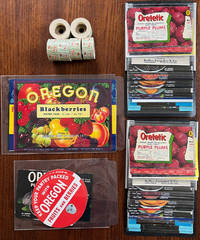
1955Best.-Nr. 61665Salem OR: Oregon Fruit Products Co. 1955. Oblong 4to. Sales kit archive: 1st - Oblong 4to. 11 x 6.75 in. Two sales counter displays w/ 25 mylar louvered leaves for with nearly all featuring inserted labels catalogue and Real Photo Postcard of company products; 2nd - 31 separate can and fruit box labels sized from 4 x 5 in. up to 7 x 10.5 in. large 12 oz. can labels folded in half; 3rd - two circular mountable clips 5.25 in. round for removing fruit can lids w/ adhesive and instructions on verso still intact; 4th - 5 unused rolls of adhesive labels marking Oregon Fruit Products Co. items. Preserved in original Dubl-Frunt File Pocket printed label for Oregon Fruit Products at upper fore-ede expandable sized 9.5 x 11.5 in. minor edgewear couple minor closed tears in the folds still a VG exemplar. First edition of this exceedingly scarce original salesman sample kit for the Oregon Fruit Products Co. in the Mid-20th-Century featuring over 50 different labels used on fruit crates canned fruit and frozen fruit packages two promotional photo postcards showing off their new frozen product line as well as touting their latest offering of Sucaryl-packed fruit products for the dieter or diabetic. Their locally Pacific Northwest-sourced fruit offerings included BlackberriesBoysenberries Royal Anne Cherries dark Sweet Cherries Purple Plums Strawberries Gooseberries Loganberries Peaches and whole Apricots. A wide variety of packing options included water pack light syrup heavy syrup and frozen offerings which were packed into 10 oz. metal and paper fibre cans. Oregon Fruit Products was one of the many U.S. Companies to quickly expand their offerings with Abbot Laboratories notorious artificial sweetener Sucaryl Calcium Cyclamate which was marketed towards those dieters and customers with diabetes or other metabolic disorders wishing for sweet-tasting foods. However within 12 years after the “Oretetic” brand products were introduced in 1969 the FDA banned cyclamates due to two 1968 studies tracing links to bladder cancer. Gehlhar 1886-1969 originally purchased 10 acres in the West Side Fruit Farm district of Salem OR in 1910 and began farming and by 1920 was operating 160 acres producing cherries & prunes and later built the Gehlhar prune dryer in 1926. In 1931 he served as the first Oregon State Director of Agriculture and after a 1935 fire destroyed his fruit dryer the cannery remained and he chose to instead focus on canning and marketing canned fruit products for distribution in the Pacific Northwest. Although originally focused on canned fruits and then later frozen products by the late 1980’s and early 1990’s the company began diversifying their product line. In 2011 the Gehlhar family sold the company to Ed Maletis who have now expanded to a new location in Salem OR. No similar copies of this collection located in Worldcat 1 WWII-era fruit label located at Wolfsonian several 1950’s labels located at OHS in Portland. Oregon Fruit Products Co., unknown
1931Best.-Nr. 64685Schenectady & Albany NY; Cleveland OH; Sales Promotion Division Electric Refrigeration Dept. General Electric Co. 1931-1932. Two vols. 1st -- Seven parts. in 1 vol. 4to. 174 19 leaves w/ hand-penciled numeration i.e. 384 pp. photo-illustrated text illustrations colour-illustrated diagrams throughout colour blueprints mimeographed & dittoed typescript price lists for a couple sections and divided by orange-coloured sheets w/ thumb tabs confiled to the rear most individual parts w/ self-printed illustrated softcovers or printed softcovers occasional thumbing edgewear & toning. Deep burgundy-brown flexible cloth post-binder 3 brass screw-posts at gutter margin rounded corners embossed gilt illustration on front cover of GE Refrigerator minor shelfwear rubbing still VG bright copy; 2nd - 8vo. 5.75 x 8 in. 2 75 7 pp. With numerous text illustrations colour diagram. Flexible textured dark-brown paper split-bin binder embossed gilt illustration of GE Refrigerator on front cover minor scuffing edgewear occasional soiling still VG copy. First editions thus of these exceedingly scarce General Electric sales catalogues containing price lists sales brochures sales information and technical instructions for salesmen to retail appliance department stores hardware stores and electrical utilities across America detailing to their potential customers the home and commercial refrigerator possibilities for better preserving foodstuffs and providing cool water and ice cream. General Electric during the opening years of the Great Depression launched themselves to the top of the fast expanding refrigeration and electrification movement as they transitioned to their Monitor Top refrigerator as well as introducing their “Thermocraft” insulation material which significantly reduced weight per cubic foot and allowed them to easily out-compete their main competitors including Westinghouse and Maytag. These Monitor-top refrigerator units were marketed widely with an ad campaign emphasizing the sanitary white enamel finish on steel that “simplifies housekeeping and safeguards health” for the family built as one air-tight units for both home and commercial uses operating relatively quitely and protecting the food inside from unwanted bacteria and decay. The name Monitor-Top derives from the refrigeration unit’s resemblance to the turret on the Civil War battleship the USS Monitor and would become the bestselling refrigerator over the next decade. The Salesman’s Handbook emphasizes how the interest on the money invested in an electric refrigerator is less than the average price paid by a consumer for ice deliveries for antiquated “Iceboxes” as well as emphasizing just how much food can be stored in them ice made inside the units and how invaluable they are for keeping healthy milk and dairy products at the proper temperatures. No similar salesman’s catalogues or individual brochures located in Worldcat; See: Andrew Shanken Better Living: Toward a Cultural History of a Business Slogan Enterprise and Society Advance Access 2006 pp. 17-30; GE Monitor-Top Refrigerator The Capital Region in 50 Objects Albany Institute of History & Art 2025; Large Appliances: Innovating the Kitchen Google Arts & Culture Celebrating 1s! 2026. Sales Promotion Division, Electric Refrigeration Dept., General Electric Co., paperback
1916Best.-Nr. 61117Mount Pleasant Westmoreland County PA: Bryce Brothers Company 1916. Oblong folio. 19 x 12.25 in. 6 389 1 pp. Illustrated in sepia & black throughout. Brown-cloth-backed decorated tan softcovers decorative borders brown lettering minor creasing & thumbing at corners very minor edgewear rubbing still a VG bright copy. First edition of this famed glassware catalogue which represented the height of the noted Pittsburgh area glass manufacturing firm just a couple years prior to Prohibition which after repeal of Prohibition it would later be augmented twice in the 1936 & 1938 in smaller format with supplements. This catalogue filled with 100’s of full-size illustrations offers essential reference for cocktail glassware and stemware including Whiskey Tumblers Cut glass Whiskey Tumblers Wine glasses for Burgundy Rhine Port & Champagnes Toddy tumblers over 20 pp. devoted entirely to cocktail classes and a substantial array of beer glasses. Included as well are fancy cut glassware monogrammed glassware specialized items such as Oyster Cocktails Oyster Glasses Decanters Ice Cream Dishes Fruit Salad Dishes Hat Pin Holders Horse Radish glasses and so much more. The company was originally founded by James S. Bryce together with his brothers Frederick & James McKee Bryce in 1850 succeded by his son James S. Bryce Jr. becoming one of the most significant glass manufacturers in the United States. The company’s clients included Curtiss-Wright Corporation the Hotel San Diego Wesley Memorial Hospital the Top of the Needle Restaurant and hotels country clubs social clubs and restaurants across the country. In 1965 Lenox Inc. acquired the Bryce Brothers Co. to manufacture and market glassware with their china market creating the Lenox Crystal booklet and high-end glassware. Worldcat locates 6 physical copies Rakow Lib. Winterthur McKinley Mem. Lib. Carnegie Lib. Heinz Hist. Center US Patent Office. Bryce Brothers Company, paperback
Best.-Nr. 179843Japan: mid-20th century. A collection of five maekake bearing the logos of famous companies including Asahi and Kikkoman. Alongside beer and soy sauce these aprons advertise Mitsuuroko's line of coke and coal briquettes the chicken served at an izakaya called Yamauchi Nojo and the shuroku brand of sake from the Otsuka brewery closed in 2011. These aprons would have been worn either by workers at the restaurants and breweries themselves or at other locations that served those products. Similar apron designs are worn by restaurant workers to this day. Five machine-woven cotton aprons in various colours 580 x 460 mm to 710 x 460 mm. Company logos to each; text in Japanese. Top edges with red orange and white striped cotton waist ties 1935 to 2540 mm bottom edges with tassels lettered and decorated in white 2 with metal 2 two with open pockets. Some soiling fraying and sunning consistent with use a few minor holes: a very good collection. unknown
2016Best.-Nr. __1783476052Edward Elgar Pub 2016. Hardcover. New. 1344 pages. 9.75x6.75x3.00 inches. Edward Elgar Pub hardcover
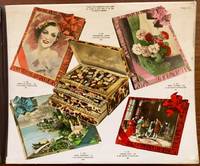
1940Best.-Nr. 53482Kingston upon Hull UK: Needler Ltd. ca. 1940. Oblong folio. 13.5 x 10.25 in. 14 leaves unnumbered. with 14 hand-coloured silver gelatin photographs sized 10 x 11.75 in. mounted on thick card stock leaves hinged with black cloth printed sales information on facing leaves each photo w/ War Restrictions Notice printed in upper fore-edge and supplementary product information in negative below each product. Original black pebbled cloth spine stiffened w/ wood spacers covered in black cloth minor bowing to leaves very minor wear to corners front outer hinge just starting still a VG copy w/ pencil date of 1940 on front pastedown. First edition of this scarce and exceptional photographic sample catalogue filled with the styles of Needler chocolate box assortment and chocolate packaging in the first years of World War II. Initially chocolates had been packed as unwrapped bars in the Victorian era with paper labels displayed on the counter. Later gold printing and metal foils repeated the luxury message of chocolate. Inspired by the innovations of Cadbury the designs for many British fancy chocolate boxes were prized by the British as special gifts to be used as trinket or button boxes and even cut out and saved in scrapbooks. The chocolate boxes in this catalogue include mixed assortments in faux 3-drawer cabinets decorated with fancy ribbons chromolithograph and colour-printed covers featuring historic scenes pets flowersArt Deco designs gold foil and more. Of special interest are the wonderful Needler’s figurine bowls and boxes featuring porcelain figurines dressed in silk fabrics atop bowls or boxes as well as a splendid pair of porcelain bookends “Sweet & Twenty” to hold up the customer’s chocolate boxes. Needler’s began as Fred Needler Ltd. in 1902 when established in Hull by Fred Needler 1865-1932 who began as a confectioner’s assistant in the 1880s. The company was a pioneer in fair treatment of his workforce incorporated profit-sharing for the staff from the beginning and covered sick pay retirement benefits and even established holiday homes in British seaside resort towns. By 1940 the company was one of the largest businesses in Hull with over 2000 employees. The company continued to operate until acquired through multiple buyouts by several different corporations until the label was acquired by Ashbury Confectionary and the factory was closed in Hull in 2002. No copies located in Worldcat; See: Chocs away: Needler of Hull History of Needlers Confectionary Let’s Look Again: A History of Branded Britain 2015. Needler Ltd., hardcover
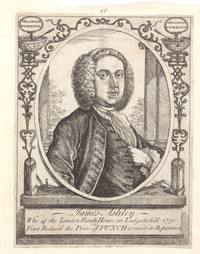
Best.-Nr. 267136London: Thomas Worlidge n.d. ca mid-18th century. Engraved portrait of James Ashley in cartouche flanked by ornate pedestals supporting two punch bowls with engraved caption as above by Thomas Worlidge. 1 vols. 7-9/16 x 5-3/4 in. A strong impression laid down light creases from prior folding small pin hole near engraved caption. Engraved portrait of James Ashley in cartouche flanked by ornate pedestals supporting two punch bowls with engraved caption as above by Thomas Worlidge. 1 vols. 7-9/16 x 5-3/4 in. Scarce trade card of James Ashley proprietor of the London Coffee House and Punch-House 1731-1776 who was "London's leading purveyor of Punch in the eighteenth century" Wondrich Punch p. 65 and "the world's first celebrity mixologist the first man to become famous for compounding and selling a mixed drink" ibid p. 172. Ashley a former cheese merchant opened his Punch-House in 1731 in Ludgatehill London. Extensive advertising in London papers as well as the distinct ornate pedestals surmounted by iron punch bowls which flanked its entrance made the London Punch-House one of the most well-known drinking establishments in the city. Clientele included Hogarth Boswell Oliver Goldsmith and Benjamin Franklin. A large sign outside of the Punch-House echoes the caption on this trade card "Pro bono publico. James Ashley in 1731 first reduced the price of punch raised its reputation and brought it into universal esteem." Ashley did indeed reduce the price of punch - from 8 shillings for punch made from a quart of arrack to 6 shillings - but his great innovation was to offer punch in smaller portions in servings as small as two ounces. These small servings made to order for the customer were the precursor to the modern cocktail. This trade card is engraved by Ashley's friend Thomas Worlidge 1700-1766 dubbed "the English Rembrandt" who also engraved portraits of Ashley's wife and one Mrs. Graywood the bar-keep at the London Punch-House. Not in ESTC Thomas Worlidge unknown
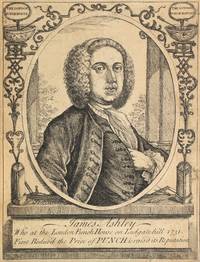
Best.-Nr. 267079London: Thomas Worlidge mid-18th century. Engraved portrait of James Ashley in cartouche flanked by ornate pedestals supporting two punch bowls with engraved caption as above by Thomas Worlidge. 7-9/16 x 5-3/4 in. A strong impression with very slight rubbing and discoloration. Engraved portrait of James Ashley in cartouche flanked by ornate pedestals supporting two punch bowls with engraved caption as above by Thomas Worlidge. 7-9/16 x 5-3/4 in. Scarce trade card of James Ashley proprietor of the London Coffee House and Punch-House 1731-1776 who was "London's leading purveyor of Punch in the eighteenth century" Wondrich Punch p. 65 and "the world's first celebrity mixologist the first man to become famous for compounding and selling a mixed drink" ibid p. 172. Ashley a former cheese merchant opened his Punch-House in 1731 in Ludgatehill London. Extensive advertising in London papers as well as the distinct ornate pedestals surmounted by iron punch bowls which flanked its entrance made the London Punch-House one of the most well-known drinking establishments in the city. Clientele included Hogarth Boswell Oliver Goldsmith and Benjamin Franklin. A large sign outside of the Punch-House echoes the caption on this trade card "Pro bono publico. James Ashley in 1731 first reduced the price of punch raised its reputation and brought it into universal esteem." Ashley did indeed reduce the price of punch - from 8 shillings for punch made from a quart of arrack to 6 shillings - but his great innovation was to offer punch in smaller portions in servings as small as two ounces. These small servings made to order for the customer were the precursor to the modern cocktail. This trade card is engraved by Ashley's friend Thomas Worlidge 1700-1766 dubbed "the English Rembrandt" who also engraved portraits of Ashley's wife and one Mrs. Graywood the bar-keep at the London Punch-House. Not in ESTC Thomas Worlidge unknown