[THE VINEGAR BIBLE].Biblio.com
436.190 resultados
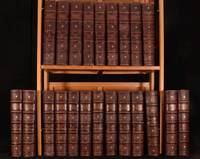
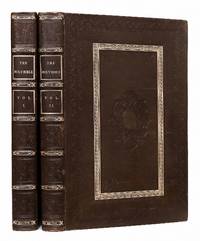
ref. 66887Oxford: Printed by John Baskett Printer to the King's most Excellent Majesty for Great Britain; and to the University 1717-1716. 2 vols. Large folio 48.5 x 31 cm. Text in double columns title-page and calendar printed in red and black with the Apocrypha. Full 19th century brown morocco the covers elegantly decorated in blind and with central gilt-tooled panel spines with gilt-tooled raised bands compartments stamped in blind gilt lettering direct to two panels gilt inner dentelles brown-coated endpapers all edges gilt. The Old Testament with additional engraved title by Du-Bose depicting Moses writing the first words of Genesis trimmed to the neatline on right side with partial loss to bottom margin and laid down engraved vignette of Oxford by G. Vander Guchtto to letterpress title and 49 engraved illustrations; New Testament with engraved vignette to title-page dated 1716 and 16 engraved illustrations. Historiated initials throughout. Provenance: Sir Herbert Eustace Maxwell 1845-1938 Scottish novelist essayist artist antiquarian horticulturalist prominent salmon angler and author of books on angling and Conservative politician who sat in the House of Commons from 1880 to 1906 with his engraved armorial bookplates to front pastedowns. Some scuffs to boards intermittent toning and spotting final leaf in Vol.2 remargined at bottom generally a very handsome set. This edition's sobriquet comes from the misprint "the parable of the vinegar" in Luke XX in place of the "parable of the vineyards." While a contemporary lambasted Baskett for this and other typographical errors in the text calling it a "Baskett-ful of errors" Oxford historian of printing Harry Carter states that "only Baskerville's Bible is its equal among English Bibles for beauty of type impression and paper" The History of the Oxford University Press I:171. Accuracy aside the most special aspect of the book's beauty resides in the sixty large and attractively-engraved head- and tailpieces featuring biblical scenes. Perhaps not until the monumental Macklin Bible of 1800-1816 does one see decoration to rival Baskett's edition. John Baskett purchased a royal patent to print Bibles from the executors of Thomas Newcomb and Henry Hills and his name began appearing with theirs on Bibles from 1710. Baskett was jealous of his privilege and won a suit against Scottish printer James Watson who had dared to sell his Bibles in England. He did not win a similar suit against the University of Cambridge. Darlow and Moule 735A; Herbert 942 Oxford: Printed by John Baskett, Printer to the King's most Excellent Majesty, for Great Britain; and to the University, 1717-17 hardcover
1881ref. SET25-A-3London : Trustees of the British Museum 1881-1904. Fine Binding. Very Good Indeed. 13.5" by 10". None. An extensive and comprehensive catalogue of the printed books included in the British Museum at the end of the nineteenth century in a fine binding. Organised alphabetically by author. The volumes contained in this set cover authors A. through to Z. in forty-seven volumes along with nine volumes of supplements to the main catalogue. Also included are one volume containing a catalogue of every edition of the Bible in the posession of the British Museum at the time of publication 1892 a volume on the periodicals in the collection 1885 and two volumes containing a list of the laws statutes and treaties of England 1900 and France and Germany 1898. During its long history the British Museum Library/British Library has published several catalogues describing its collections of printed books periodicals and ephemera. Each edition is inclusive incorporating all material included in previous versions. BL This edition was originally published in three-hundred and ninety-three parts with a forty-four part supplement and is referred to by the British Library and British Museum as GK1. Complete in sixty volumes. In half-morocco bindings. Externally mainly smart although with some rubbing in places particularly to the spines and a few marks to the boards. Dusting to textblock edges. Five joints of one hundred and twenty starting. Internally generally firmly bound although slightly strained in places. Hinges of the third volume have failed and textblock is detached. Hinges are reinforced with cloth tape. Pages are mainly bright and clean with just some scattered light spotting in places. Very Good Indeed Trustees of the British Museum unknown
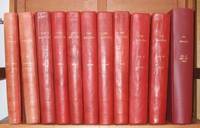
1842ref. 098065Great Britain 1842. A near complete run from 1842 to 1930 lacking only 3 half years Jan/Jun 1848 1899 & 1916 . 133 volumes. Books measures 13 x 9 inches or slightly larger 13 1/2 x 9 inches. 115 volumes bound in red quarter calf or red cloth with gilt title lettering. All these volumes are in very good clean firm condition. The other 18 volumes are bound in black half calf. Showing some minor wear occasional abrasion wear with minor loss. All in good firm condition. Generally all volumes are in very good clean firm condition. Internally extensively illustrated throughout many single page and folding plates occasional small library mark/stamp occasional minor defect or repair. Pages in very good clean condition throughout. A very nice clean well bound run. . Very Good Plus. Small Folio. hardcover
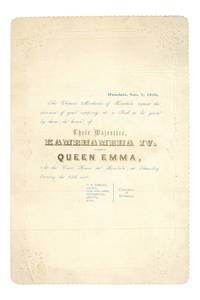
1856ref. 140946651Honolulu HI: Committee of Invitation 1856. Near Fine. 5.8"x7.25. Single sheet with scalloped edges and decorative embossed borders with text printed in gold and blue. Near Fine with minor soiling light toning and old folds. One of the earliest printed works commissioned by Chinese immigrants in what is now the United States. While the first Chinese explorers reached Hawaii in the late 18th century Chinese immigration to any part of the United States began in appreciable numbers about the time of the California Gold Rush. While much writing about Chinese immigrants survives from the mid-19th century almost nothing survives by any of those immigrants. This invitation represents a rare and very early instance of such printed matter. The Great Chinese Merchants' Ball of 1856 was thrown in celebration of the marriage of Liholiho Kamehameha IV to Emma Naea Rooke. Following a series of celebrations including balls thrown by the American Club and German Club roughly three dozen Cantonese in Honolulu felt that it was necessary for them if they were to succeed in the mercantile trade during the reign of the king to have a personal relationship with him. They decided to demonstrate the depth of their loyalty to the throne by presenting an extravaganza that would surpass those given by the Americans and Germans. A respected Cantonese merchant Chun Afong who was proficient in the Hawaiian and English languages and conversant with Western manners was persuaded to head the committee of arrangements for a ball. Afong would eventually become the first Chinese millionaire in Hawaii. The Chinese Merchants' Ball was one of the most Hawaiian elaborate affairs of the 1850s. It was a key event in Honolulu's social history where for the first time "East" and "West" met as social equals greatly solidifying the Chinese community's position in Honolulu. A rare survival of an invitation to an important social event in Hawaiian cultural history as well as an unusually early document printed by Chinese immigrants in America. Committee of Invitation unknown
1856ref. 140946651Honolulu HI: Committee of Invitation 1856. Near Fine. 5.8"x7.25. Single sheet with scalloped edges and decorative embossed borders with text printed in gold and blue. Near Fine with minor soiling light toning and old folds. One of the earliest printed works commissioned by Chinese immigrants in what is now the United States. While the first Chinese explorers reached Hawaii in the late 18th century Chinese immigration to any part of the United States began in appreciable numbers about the time of the California Gold Rush. While much writing about Chinese immigrants survives from the mid-19th century almost nothing survives by any of those immigrants. This invitation represents a rare and very early instance of such printed matter. The Great Chinese Merchants' Ball of 1856 was thrown in celebration of the marriage of Liholiho Kamehameha IV to Emma Naea Rooke. Following a series of celebrations including balls thrown by the American Club and German Club roughly three dozen Cantonese in Honolulu felt that it was necessary for them if they were to succeed in the mercantile trade during the reign of the king to have a personal relationship with him. They decided to demonstrate the depth of their loyalty to the throne by presenting an extravaganza that would surpass those given by the Americans and Germans. A respected Cantonese merchant Chun Afong who was proficient in the Hawaiian and English languages and conversant with Western manners was persuaded to head the committee of arrangements for a ball. Afong would eventually become the first Chinese millionaire in Hawaii. The Chinese Merchants' Ball was one of the most Hawaiian elaborate affairs of the 1850s. It was a key event in Honolulu's social history where for the first time "East" and "West" met as social equals greatly solidifying the Chinese community's position in Honolulu. A rare survival of an invitation to an important social event in Hawaiian cultural history as well as an unusually early document printed by Chinese immigrants in America. Committee of Invitation unknown books
1519ref. 69853Princeton:: Princeton Tiger 1915-1916. framed to an overall size of 15-1/4 x 18-1/4 inches. Very slightest of silvering to the outside areas of the image; otherwise very fine. . Image size 9-3/4 x 13 inches . The sitters are named by last name only on the verso in ms. Signed in the image by the photographer: initial illegible White N.Y." Princeton Tiger, unknown
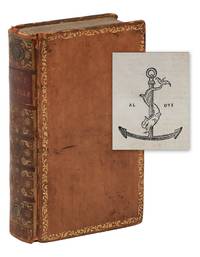
1508ref. 140949452Venice: Aldi et Andreae Asulani soceri Aldine Press 1508. First Edition Thus. Near Fine. The first Aldine Press edition of Pliny's letters and the first book to include Asulanus Andrea Torresani as Aldus' partner on the colophon. Octavo 8 4 a-z8 aa-kk8. xxiv; 525 3 pp. 46 '47' 47 '46' 119 '129' 206 '106' 210 '120' 226 '194' 245 '24' 250 '218' 254 '222' 258 '158' 274 '247' 373 '341' 457 '451' 461 '462' 497 '49' 508 '580'. Printed on laid paper text in Latin colophon and Aldine device at rear. Bound in 18th century polished calf decorative gilt tooling morocco title label and emblems to spine. All edges stained yellow marbled endpapers green silk ribbon marker. UCLA Aldine Press 100 USTC 849906. Near Fine with shallow chipping to spine ends and loss of 3 morocco spine emblems darkening to upper textblock edge; joints rubbed and starting at upper ends. Armorial bookplate of Lewis Montolieu 3rd Baron St Hippolyte to front pastedown worming to lower right corner of title page. Occasional faint foxing to contents Latin marginalia in old hand throughout trimmed short for present binding. Binding very firm; a solid copy attractively marked by a reader whose title page inscription is dated 1605. Aldus Manutius 1450-1515 founded what was to become the most important Renaissance printing press in Venice around 1490. His first dated publication was a book of Greek grammar to which Aldus added his own Latin translations. He had been an independent scholar and a tutor to the young princes of Capri and he saw a need for a new kind of book: a pocket-sized volume of classical literature something relatively affordable and very portable that a gentleman could take with him on his travels. With support from the two princes and financial backing from Andrea Torresani d'Asola whose daughter he married in 1505 Aldus set out to print Greek texts for the first time - "building a library which knows no walls save those of the world itself" in the words of his friend Erasmus. By the time he died in 1515 his books were famous across Europe. To cover their costs Aldus and his successors had to print in large runs of a thousand copies instead of the usual 250 or fewer. They also had to fit as much text on the page as possible. Aldus worked with the punch-cutter Francesco Griffo to create a slanting font modeled on the handwriting of papal chancery scribes. This condensed typeface first used in an edition of Virgil in 1501 became known as italics after it spread through Europe. The newness of the innovation can be traced in this scarce book published in Aldus' lifetime: they had not yet found a good way to italicize uppercase letters. Aldi, et Andreae Asulani soceri [Aldine Press] unknown
1508ref. 140949452Venice: Aldi et Andreae Asulani soceri Aldine Press 1508. First Edition Thus. Near Fine. The first Aldine Press edition of Pliny's letters and the first book to include Asulanus Andrea Torresani as Aldus' partner on the colophon. Octavo 8 4 a-z8 aa-kk8. xxiv; 525 3 pp. 46 '47' 47 '46' 119 '129' 206 '106' 210 '120' 226 '194' 245 '24' 250 '218' 254 '222' 258 '158' 274 '247' 373 '341' 457 '451' 461 '462' 497 '49' 508 '580'. Printed on laid paper text in Latin colophon and Aldine device at rear. Bound in 18th century polished calf decorative gilt tooling morocco title label and emblems to spine. All edges stained yellow marbled endpapers green silk ribbon marker. UCLA Aldine Press 100 USTC 849906. Near Fine with shallow chipping to spine ends and loss of 3 morocco spine emblems darkening to upper textblock edge; joints rubbed and starting at upper ends. Armorial bookplate of Lewis Montolieu 3rd Baron St Hippolyte to front pastedown worming to lower right corner of title page. Occasional faint foxing to contents Latin marginalia in old hand throughout trimmed short for present binding. Binding very firm; a solid copy attractively marked by a reader whose title page inscription is dated 1605. Aldus Manutius 1450-1515 founded what was to become the most important Renaissance printing press in Venice around 1490. His first dated publication was a book of Greek grammar to which Aldus added his own Latin translations. He had been an independent scholar and a tutor to the young princes of Capri and he saw a need for a new kind of book: a pocket-sized volume of classical literature something relatively affordable and very portable that a gentleman could take with him on his travels. With support from the two princes and financial backing from Andrea Torresani d'Asola whose daughter he married in 1505 Aldus set out to print Greek texts for the first time - "building a library which knows no walls save those of the world itself" in the words of his friend Erasmus. By the time he died in 1515 his books were famous across Europe. To cover their costs Aldus and his successors had to print in large runs of a thousand copies instead of the usual 250 or fewer. They also had to fit as much text on the page as possible. Aldus worked with the punch-cutter Francesco Griffo to create a slanting font modeled on the handwriting of papal chancery scribes. This condensed typeface first used in an edition of Virgil in 1501 became known as italics after it spread through Europe. The newness of the innovation can be traced in this scarce book published in Aldus' lifetime: they had not yet found a good way to italicize uppercase letters. Aldi, et Andreae Asulani soceri [Aldine Press] unknown books
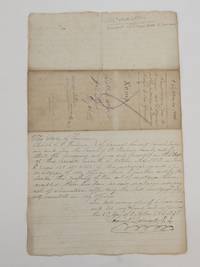
1838ref. 291492New Orleans 1838. unbound. very good. Rare autograph document signed: The Citizens Bank of Louisiana trades shares in the capitol stock of the bank for parcels of land and slaves. Folio 4 pages City and Parish of New Orleans Louisiana September 8th 1838 whereby Demey Kemp and wife who are wealthy land owners with many slaves enters into a contract with Victorin Patin President of the Citizens Bank of Louisiana to secure the sum of fifteen-hundred dollars the amount equal to fifteen shares in the Capital Stock of said bank with fifteen shares in an additional allowance of stock for the following described property to wit as adjudicated by Judge Samuel Leonard and certified by Theodore Seghers notary public in small part: ".that including four tracts or parcels of land in the Parish of St. Helena containing two-thousand and forty acres; a tract of land situated on the River Licksaw containing six-hundred acres. Likewise further: Demey Kemp declares that one of the Slaves therein mentioned and named Adelin aged nine years has died since appraisement; and he referred to the title papers in the possession of the said Bank to show from when the appraised property is derived; with the exception of twenty-eight slaves who were born on the property. A mortgage is granted by the said Demey Kemp . to secure fifteen additional shares allowerd on his subscription in the Capital Stock of the Citizens Bank of Louisiana. According to the Judge's certificate there is no mortgage in this office on the different described properties except the mortgage granted in the sum of two-hundred schares in the Capital Stock of said Bank . then this said . Demey Kemp will be recognized as a stockholder of the Citizens Bank of Louisiana for fifteen additional shares." This document has been certified by Justice Samuel Leonard on verso with his signature and embossed seal October 6th 1938. Condition: usual folds with light soiling and minor toning on the Court Filing page: Very good. Between 1831 and 1866 Citizens Bank of Louisiana currently owned by J.P. Morgan Chase & Co. accepted 13000 slaves as collateral on loans and repossessed 1250 enslaved individuals on loans that plantation owners defaulted on. Though this information is readily available through extensive historical research much of it financed by J.P. Morgan Chase and personally authorized by Jamie Dimon 2003-2005 this is the first document we have ever encountered whereby Citizens Bank of Louisiana is knowingly trading stock in their bank for slaves to shareholders. unknown
1838ref. 291492New Orleans 1838. unbound. very good. Rare autograph document signed: The Citizens Bank of Louisiana trades shares in the capitol stock of the bank for parcels of land and slaves. Folio 4 pages City and Parish of New Orleans Louisiana September 8th 1838 whereby Demey Kemp and wife who are wealthy land owners with many slaves enters into a contract with Victorin Patin President of the Citizens Bank of Louisiana to secure the sum of fifteen-hundred dollars the amount equal to fifteen shares in the Capital Stock of said bank with fifteen shares in an additional allowance of stock for the following described property to wit as adjudicated by Judge Samuel Leonard and certified by Theodore Seghers notary public in small part: ".that including four tracts or parcels of land in the Parish of St. Helena containing two-thousand and forty acres; a tract of land situated on the River Licksaw containing six-hundred acres. Likewise further: Demey Kemp declares that one of the Slaves therein mentioned and named Adelin aged nine years has died since appraisement; and he referred to the title papers in the possession of the said Bank to show from when the appraised property is derived; with the exception of twenty-eight slaves who were born on the property. A mortgage is granted by the said Demey Kemp . to secure fifteen additional shares allowerd on his subscription in the Capital Stock of the Citizens Bank of Louisiana. According to the Judge's certificate there is no mortgage in this office on the different described properties except the mortgage granted in the sum of two-hundred schares in the Capital Stock of said Bank . then this said . Demey Kemp will be recognized as a stockholder of the Citizens Bank of Louisiana for fifteen additional shares." This document has been certified by Justice Samuel Leonard on verso with his signature and embossed seal October 6th 1938. Condition: usual folds with light soiling and minor toning on the Court Filing page: Very good. Between 1831 and 1866 Citizens Bank of Louisiana currently owned by J.P. Morgan Chase & Co. accepted 13000 slaves as collateral on loans and repossessed 1250 enslaved individuals on loans that plantation owners defaulted on. Though this information is readily available through extensive historical research much of it financed by J.P. Morgan Chase and personally authorized by Jamie Dimon 2003-2005 this is the first document we have ever encountered whereby Citizens Bank of Louisiana is knowingly trading stock in their bank for slaves to shareholders. unknown books
2018ref. SBBIH-N562YWIP75EHThe Spicery 2018. hardcover. Very Good. Most of our very good books have only minor imperfections such as shelf wear consistent with a new book that's sat on a bookshop shelf for a year or two. Occasionally we may miss other minor imperfections as we have to grade books at speed. Our books are dispatched from a Yorkshire former cotton mill. We list via barcode/ISBN so please note that the images are stock images and may not be the exact copy you receive furthermore the details about edition and year might not be accurate as many publishers reuse the same ISBN for multiple editions and as we simply scan a barcode or enter an ISBN we do not check the validity of the edition data when listing. If you're looking for an exact edition please don't order at least not without checking with us first although we don't always have time to check. We aim to dispatch prompty the service used will depend on order value and book size. We can ship to most countries see our shipping policies. Payment is via Abe only. The Spicery hardcover
ref. SBBIH-XRLPWWAO4JHLStationery Office Books 1966. paperback. Good. Our good condition books are generally good for reading but not for gifting or collecting. They could have imperfections such as creasing fanning inscriptions margin notes yellowing staining on edge or cover or pages bumps scuffs etc etc sometimes multiple of these. It's a wide category that encompasses anything that isn't almost-new down to anything that is slightly better than poor. We would NOT recommend gifting Good books - these should be considered reading copies. Our books are dispatched from a Yorkshire former cotton mill. We list via barcode/ISBN so please note that the images are stock images and may not be the exact copy you receive furthermore the details about edition and year might not be accurate as many publishers reuse the same ISBN for multiple editions and as we simply scan a barcode or enter an ISBN we do not check the validity of the edition data when listing. If you're looking for an exact edition please don't order at least not without checking with us first although we don't always have time to check. We aim to dispatch prompty the service used will depend on order value and book size. We can ship to most countries see our shipping policies. Payment is via Abe only. Stationery Office Books paperback
1972ref. SBBIH-3LDB5DZK4FTBNelson Thornes Ltd 1972. hardcover. Acceptable. Please see the condition note after this for details if this is missing please consider Acceptable to mean poor quality that could include major staining water damage writing missing dustjacket etc etc. Our books are dispatched from a Yorkshire former cotton mill. We list via barcode/ISBN so please note that the images are stock images and may not be the exact copy you receive furthermore the details about edition and year might not be accurate as many publishers reuse the same ISBN for multiple editions and as we simply scan a barcode or enter an ISBN we do not check the validity of the edition data when listing. If you're looking for an exact edition please don't order at least not without checking with us first although we don't always have time to check. We aim to dispatch prompty the service used will depend on order value and book size. We can ship to most countries see our shipping policies. Payment is via Abe only. Nelson Thornes Ltd hardcover
1986ref. SBBIH-5J6LOEWYTQ4EColumba Press 1986. paperback. Good. Our good condition books are generally good for reading but not for gifting or collecting. They could have imperfections such as creasing fanning inscriptions margin notes yellowing staining on edge or cover or pages bumps scuffs etc etc sometimes multiple of these. It's a wide category that encompasses anything that isn't almost-new down to anything that is slightly better than poor. We would NOT recommend gifting Good books - these should be considered reading copies. Our books are dispatched from a Yorkshire former cotton mill. We list via barcode/ISBN so please note that the images are stock images and may not be the exact copy you receive furthermore the details about edition and year might not be accurate as many publishers reuse the same ISBN for multiple editions and as we simply scan a barcode or enter an ISBN we do not check the validity of the edition data when listing. If you're looking for an exact edition please don't order at least not without checking with us first although we don't always have time to check. We aim to dispatch prompty the service used will depend on order value and book size. We can ship to most countries see our shipping policies. Payment is via Abe only. Columba Press paperback
2008ref. SBBIH-WMIOK7NH6PYLThe Street Weapons Commission 2008. paperback. Good. Our good condition books are generally good for reading but not for gifting or collecting. They could have imperfections such as creasing fanning inscriptions margin notes yellowing staining on edge or cover or pages bumps scuffs etc etc sometimes multiple of these. It's a wide category that encompasses anything that isn't almost-new down to anything that is slightly better than poor. We would NOT recommend gifting Good books - these should be considered reading copies. Our books are dispatched from a Yorkshire former cotton mill. We list via barcode/ISBN so please note that the images are stock images and may not be the exact copy you receive furthermore the details about edition and year might not be accurate as many publishers reuse the same ISBN for multiple editions and as we simply scan a barcode or enter an ISBN we do not check the validity of the edition data when listing. If you're looking for an exact edition please don't order at least not without checking with us first although we don't always have time to check. We aim to dispatch prompty the service used will depend on order value and book size. We can ship to most countries see our shipping policies. Payment is via Abe only. The Street Weapons Commission paperback
ref. 2110824Moscow: Imperial University Press. 1768. 4to. Contemporary Russian mottled calf marbled endpapers; pp. iv 138 14 spine with some loss and wear; light spotting internally a good copy; provenance: early 20th-century collector's stamp Aleksandr Ivanovich Ivanov to title-page and beginning of text early 1960s Russian bookseller's stamp to rear fly-leaf.This is the Law Code of Ivan Vasilievich. Ivan IV's reform of the law code shifted power from the aristocracy to State and local institutions and introduced a conscription army. This is the first edition prepared by G.F. Miller from the manuscript owned by Vasilii Tatishchev the Russian statesman and historian a contemporary of Karamzin.Bitovt 1638; SK 6936; Sopikov 11593. unknown
ref. 1147051967-1974. . Periodical 161 issues 14 with supplements; tabloid newspaper 428 x 298 mm 16¾ x 11 ¾ in; toning occasional light wear coupon cut from issue 1 occasional postal labels stored flat a well-preserved set; various paginations. Jann Wenner a former student at the University of California Berkeley co-founded Rolling Stone with Ralph Gleason launching the publication in November 1967. It rejected the psychedelic approach of other publications such as The Oracle and instead focused on and promoted rock music as a vehicle for social change. The editors of Rolling Stone thought 'The Haight scene had 'become trapped by the publicity that the messianism had created. Words had become labels ideas become slogans art become advertising.' The ceremony had 'no weight. It will take more than the funeral to rescue the vision.' Burroughs' contributions: issue 69 29 October 1970 Maynard & Miles C296; Goodman & Coley B.43; Shoaf III.169; Schottlaender v.5 C304; issue 108 11 May 1972 Interview Maynard & Miles E36; Goodman & Coley D.87; Schottlaender v.4 C340; Schottlaender v.5 C345; Lotringer 18. Issue 115 17 August 1972 Maynard & Miles C336; Shoaf III.192. Issue 120 26 October 1972 Maynard & Miles C341; Goodman & Coley B.72; Shoaf III.195; Schottlaender v.4 C341; Schottlaender v.5 C346. Issue 155 28 February 1974 Goodman & Coley D.4; Shoaf III.208; Schottlaender v.4 C371; Schottlaender v.5 C377; Lotringer 21. 1967-1974. unknown
2000ref. 0803760China Renmin University Press 2000-01-01. paperback. Used - Good. Ship out in 2 business day And Fast shipping Free Tracking number will be provided after the shipment.Language: Chinese. The work is a corpus of the secret telegraph archives of the Grand Council of the Qing Dynasty. which are stored in the First Historical Archives of China. The 40.000 telegraphs collected here dated from the 10th year of Emperor Guangxus reign to the 3rd year of Emperor Xuantongs reign. These original archives contain rich information and reflect the inside stories concerning the various major decisions of the government on politics. military and foreign affairs as well as . Satisfaction guaranteedor money back. China Renmin University Press paperback
1794ref. 000035bNew Spain Mexico. Fine with no dust jacket. 1794. Full-Leather. Handsome Folio Manuscript in early calf with gilt written by the Attorney of the Real Audiencia see Bibliografia Mexicana 220 and prepared for the Viceroy. Lengthy stipulations of taxes for the freed mestizos mulattoes and negroes as well as exemptions for Indians of the repartimientos even when married to Spanish women. These taxes were the root of the perceived injustice that explains why freed men formed the core of the Revolution when it came. EXTREMELY RARE AND IMPORTANT FIRST HAND TEXT OF MEXICAN HISTORY. see Archivo General de la Nation "Los Precursores Ideologicos della Guerra de Independencia 1929 pgs 137.139." LAID IN NOTE: Arce Y Echeagary J. Yinstruction para que los Administradores de Aduanas del Reyno de Nueva Espana hagan la legitima exaccion de los dros. de Alcabalas y Pulques en los casos que por lo regular se ofrecen en las propias Aduanas. Mexico 1794. ADDITIONAL BACKGROUND: In 1519 the Spaniards conquered Mexico. This led to the formation of a new state called New Spain and later into a new hybrid culture. Several military expeditions were led to extend 'New Spain'. The whole of Central America West Indies Philippines and parts of the current Texas and California were later conquered to become part of New Spain. The Spanish political control over Mexico lasted for three centuries. The entire region was formed into a viceroyalty in 1535. The colony was divided into provinces ruled by governors. These provinces were divided into departments and subdivided into districts. Magistrates controlled the districts and mayors led smaller villages. The parliament court handled all political matters and the Council of Indies controlled the other administrative matters. Off course the supreme authority over the Spanish empire belonged to the king. This system was pretty inefficient as it took several years for directives from the king to be implemented at the lower levels. During the initial administration grants called Encomiendas were given to colonists which controlled Indian labor and produce. This led to the misuse of power and atrocities against the Indians increased. The Indians revolted against the Spaniards in 1541 but were easily subdued. The Spanish emperor Charles V initiated the decline of the Encomienda system in 1542. This decline saw the emmergence of the Roman Catholic Church. The church was successful in carrying out mass conversions. The Spaniards protected the Indians that converted. Missions and monasteries dominated much of the land. The Spaniards thrived by the new found wealth in the colonies. They amassed huge wealth by controlling silver mining large ranches and estates that grew wheat sugarcane and indigo for export. Spanish merchants exported such goods as cotton silk and dye that were produced by the Indians. The prosperity of New Spain began to decline in the 17th century. Disease and natural disasters destroyed most of the Indian population. Most others migrated slowly to remote parts. Mines were abandoned and large areas of farmland were destroyed. The economy of New Spain collapsed. In 1810 a catholic priest named Miguel Hidalgo called upon Mexicans to rise up and fight the Spanish. Although father Hidalgo was killed another priest Jose Morelos continued to lead the fighting. New Spain finally won its independence from Spain in 1810 and came to be called Mexico. ; Spanish Language; 4to - over 9¾" - 12" tall; MEXICO MEXICAN TAXES NEW SPAIN MEXICAN REVOLUTION NAPOLEON BONAPARTE CHARLES V HIDALGO MORELOS HANDWRITTEN HISTORICAL HISTORY HAND WRITTEN HOLOGRAPH MANUSCRIPT MANUSCRIPTOS SPANISH ESPANOL VICEROY mestizos repartimientos antiquité contrat vélin document manuscrit papier Antike Brief Pergament Dokument Manuskript Papier oggetto d'antiquariato atto velina documento manoscritto carta antigüedad hecho vitela documento manuscrito papel. . hardcover
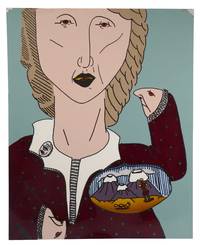
ref. 140949913San Francisco: No publisher 1974. Original reverse painting by Residents' co-founder Hardy Fox on acetate measuring 16 x 19.75". Image of Edweena variant of that used on cover of The Residents' second studio album but shelved until it was released as their fourth album overall Not Available. The back of that album credits it "based on a drawing by a Resident"-- presumably this is either the drawing or a later development of it. In this painting Edweena's skin is a normal hue not green her hair brown as opposed to bright red her eyes red her name is not written along her collar and the background is a sedate turquoise rather than Near Fine with paint loss to upper corners a few tiny flakes along sides. From the estate of Hardy Fox. Not Available is a favorite among Residents fans but also a very dark album. Not surprisingly it came from a very dark place. The fandom wiki for the group states: "Following the commercial failure of Meet The Residents which sold only forty copies in its first year of release the group's lead composer Hardy Fox was in the midst of 'a bit of depression' and simultaneously coming to terms with the growing realisation that he was gay spent a great deal of time alone in The Residents' studio writing and recording 'somber melodies' with an old piano which he later called his 'best friend' at that time . The tensions which had developed among the members of The Residents peaked in the summer of 1974 supposedly culminating in a 'horribly embarrassing' food fight in a Chinese restaurant.Instead of allowing the group to splinter The Residents isolated themselves conducting 'rehearsals' as a form of group therapy. Through these rehearsals inspired by psychodrama a psychotherapy method in which participants act out their emotions through interpersonal interaction within a stage-like setting a stylized and surreal narrative began to develop." That psychodrama informs the album an opera of sorts. Like the music its album cover is distinctively off-putting. It's cartoonish but certainly not cute or comical full of resigned frowning faces and a certain emotionally-drained surrealism. Like the Residents oeuvre it is what it is. No apologies! [No publisher] unknown
ref. 140949913San Francisco: No publisher 1974. Original reverse painting by Residents' co-founder Hardy Fox on acetate measuring 16 x 19.75". Image of Edweena variant of that used on cover of The Residents' second studio album but shelved until it was released as their fourth album overall Not Available. The back of that album credits it "based on a drawing by a Resident"-- presumably this is either the drawing or a later development of it. In this painting Edweena's skin is a normal hue not green her hair brown as opposed to bright red her eyes red her name is not written along her collar and the background is a sedate turquoise rather than Near Fine with paint loss to upper corners a few tiny flakes along sides. From the estate of Hardy Fox. Not Available is a favorite among Residents fans but also a very dark album. Not surprisingly it came from a very dark place. The fandom wiki for the group states: "Following the commercial failure of Meet The Residents which sold only forty copies in its first year of release the group's lead composer Hardy Fox was in the midst of 'a bit of depression' and simultaneously coming to terms with the growing realisation that he was gay spent a great deal of time alone in The Residents' studio writing and recording 'somber melodies' with an old piano which he later called his 'best friend' at that time . The tensions which had developed among the members of The Residents peaked in the summer of 1974 supposedly culminating in a 'horribly embarrassing' food fight in a Chinese restaurant.Instead of allowing the group to splinter The Residents isolated themselves conducting 'rehearsals' as a form of group therapy. Through these rehearsals inspired by psychodrama a psychotherapy method in which participants act out their emotions through interpersonal interaction within a stage-like setting a stylized and surreal narrative began to develop." That psychodrama informs the album an opera of sorts. Like the music its album cover is distinctively off-putting. It's cartoonish but certainly not cute or comical full of resigned frowning faces and a certain emotionally-drained surrealism. Like the Residents oeuvre it is what it is. No apologies! [No publisher] unknown books
ref. 29715Photographic portrait. 1952. A large photographic reproduction of the 1951 Trinity House portrait by Sir Oswald Birley. Inscribed to the lower margin in black ink by Winston Churchill during his second term as British Prime Minister "With many thanks / from your old friend / Winston S. Churchill / 1952". Measuring 37 x 30 cm. In excellent condition with minor creasing to the corners and toning to the margin edges the inscription and photograph bright and without fading. Contemporary dark wood frame glazed. A scarce image in inscribed state. In April 1951 the maritime authority Trinity House commissioned the distinguished portrait painter Oswald Birley to depict Winston Churchill as an Elder Brother of the Corporation. Churchill had held this prestigious association since his service as First Lord of the Admiralty before and during the First World War. His connection with Trinity House remained a visible and symbolic one: Churchill was frequently photographed wearing the distinctive Trinity House cap or uniform particularly during naval inspections and maritime visits throughout the Second World War. The recipient of this particularly warm prime-ministerial presentation was the eminent Australian statesman Lord Casey Richard Gavin Gardiner Casey 18901976. One of the most distinguished figures in twentieth-century Australian public life Casey enjoyed a remarkable career in imperial and international service. He served as an army officer in the First World War later entering politics as a cabinet minister and subsequently representing Australia as Ambassador to the United States. During the Second World War he sat in Churchill's War Cabinet and later held the office of Governor of Bengal. His long career of public service culminated in his appointment as the 16th Governor-General of Australia serving from 1965 to 1969. Further details and images for any of the items listed are available on request. All items are catalogued by humans. Lucius Books welcomes direct contact with our customers. Photographic portrait. 1952 unknown
1787ref. 122705London: Downing Street 2 Nov. 1787. Pitt seeks Anglo-French action against the slave trade An important autograph letter from Pitt then prime minister proposing confidential approaches to France over a joint agreement to end the slave trade. Writing to Britain's envoy in Paris he reveals his personal support for William Wilberforce's abolitionist initiative at a formative moment in the campaign. Pitt refers to an earlier communication from Wilberforce outlining "a scheme which may appear to some people chimerical but which I really believe may with proper management be made practicable". He asks Eden to discover "the private sentiments of the French Government upon it" explaining that he means "the idea of the two nations agreeing to discontinue the villainous traffic now carried on in Africa". The Society for Effecting the Abolition of the Slave Trade had been founded in May 1787 and Pitt encouraged Wilberforce to champion its cause in Parliament. Wilberforce's letter to Eden dated 20 October 1787 survives in the National Maritime Museum providing the immediate context for Pitt's intervention. International cooperation offered a means of overcoming a central objection to British abolition: that the trade would merely pass into the hands of rival maritime powers. Eden 17441814 later 1st Baron Auckland had been sent to Paris in 1785 to negotiate a commercial treaty signed in September 1786. He subsequently helped resolve disputes between the British and French East India companies making him a natural intermediary for these sensitive approaches. Pitt continued to pursue the proposal writing again in December 1787 to encourage preparations for discussions involving Spain as well as France. No international agreement resulted and Britain finally abolished its slave trade in 1807 a year after Pitt's death. Single sheet 239 x 196 mm written in ink on two pages. Remains of mounting guard on verso overwritten in another hand; later annotation at foot of second page "To Lord Auckland.". Browned with scattered marks and discolouration minor wear and puncture to left edge not affecting text; in very good condition. unknown
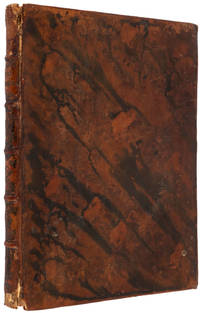
1772Sorøe, Jonas Lindgrens, 1772. 4to (260 x 214 mm). 2 volumes, uniformly bound in two nice contemporary half calf bindings with five raised bands and gilt title- and tome-labels to spines. Ex-libris (Hjalmar Hartmann) pasted on to pasted down front end-paper in both volumes. Previous owner's stamp (Hvedholm Castle) to upper part of title-page in both volumes and two small paper-labels (stating respectively 1592 and 1593 - indicating the booknumber in Hvedholm Castle's catalogue) to lower compartment on spines. A few leaves in vol. 1 with brown stripe in upper margin. An excellent and wide-margined copy. (12), 618 pp. Pp. (2), 519-1042, (62), 20, (2) + 51 engraved plates (numered I-L, with 2 plates numbered XXX) and 1 large folded map.
1772ref. 60321Sorøe, Jonas Lindgrens, 1772. 4to (260 x 214 mm). 2 volumes, uniformly bound in two nice contemporary half calf bindings with five raised bands and gilt title- and tome-labels to spines. Ex-libris (Hjalmar Hartmann) pasted on to pasted down front end-paper in both volumes. Previous owner's stamp (Hvedholm Castle) to upper part of title-page in both volumes and two small paper-labels (stating respectively 1592 and 1593 - indicating the booknumber in Hvedholm Castle's catalogue) to lower compartment on spines. A few leaves in vol. 1 with brown stripe in upper margin. An excellent and wide-margined copy. (12), 618 pp. Pp. (2), 519-1042, (62), 20, (2) + 51 engraved plates (numered I-L, with 2 plates numbered XXX) and 1 large folded map.