(BURGUNDIAN WINE & GRAINS)Biblio.com
12.343 Ergebnisse
1792Best.-Nr. 65431792. 59 leaves enumerating the names of grapes cereal crops and oils and their prices for nearly two centuries. Small folio 273 x 178 mm. 18th-cent. vellum over boards tail of spine defective two of four ties lacking. Burgundy: 1622-1792. A fascinating and rare survival which details the precipitous rise in the prices of Burgundian wine and the emergence of a hierarchy among regions and vintages over a 170-year period. This document consisting of three gatherings 28; 28; 3 leaves bound together and written in several legible hands provides a wealth of information on grain harvests in the region which varied greatly from year to year and indicates years with disastrous harvests. The present manuscript constitutes a unique history of agriculture in Burgundy especially pertaining to the evolving market for Côte de Nuits wine. “Burgundy had no experience like the boomtime of 18th-century Bordeaux. No new wines were invented no new districts planted. The Bordeaux picture is all expansion and creation; the Burgundy one of evolving tastes and techniques of new market forces and overall of slowly progressing definition: a more precise notion of the character style and value of the wine from each corner of the Côte…In the Côte de Nuits the notion of the ‘cru’ was further advanced…The vineyards were generally less overcrowded and by now planted with cuttings rather than layers; hence more deep-rooting. Increasingly in the 18th century owners of the most prestigious crus selected their best grapes to make separate cuvées the best vat being called the ‘tête de cuvée’.”–Hugh Johnson Vintage 1989 pp. 267 & 272. The motivation for compiling this record-book may have come from the introduction of a law in 1622 that outlawed the sale of Lyonnais and Beaujolais wines as Burgundian. The records of the first three decades consist mostly of grains and oil from the region but in the early 1670s wines begin to predominate and the lists for each year become increasingly long. It is very likely that at this point landowners would have shifted to using any arable land for vastly more lucrative grapes. By the 1690s dozens of grape varietals are noted from communes such as Auvilliers Les Cailles Chambolle Chorey Comblanchien Corgoloin Côte de Beaune Gilly Magny Saint Georges Saint Julien Les Cailles Vaucrains Pouilly Prissey etc. Prices for wine rose enormously from the 1690s and experienced peaks in 1701 1733 and 1770. Wines are increasingly categorized by the mid-18th century according to vineyard and in some cases cru. The name “de Bays” appears several times in the manuscript and the signature of “de Bays” is found at the end of the year 1771. Very few comparable documents survive and the present manuscript provides a vast amount of data on the prices for wine grapes and grains in the 17th and 18th centuries. A couple leaves browned. unknown
1792Best.-Nr. 65431792. 59 leaves enumerating the names of grapes cereal crops and oils and their prices for nearly two centuries. Small folio 273 x 178 mm. 18th-cent. vellum over boards tail of spine defective two of four ties lacking. Burgundy: 1622-1792. A fascinating and rare survival which details the precipitous rise in the prices of Burgundian wine and the emergence of a hierarchy among regions and vintages over a 170-year period. This document consisting of three gatherings 28; 28; 3 leaves bound together and written in several legible hands provides a wealth of information on grain harvests in the region which varied greatly from year to year and indicates years with disastrous harvests. The present manuscript constitutes a unique history of agriculture in Burgundy especially pertaining to the evolving market for Côte de Nuits wine. “Burgundy had no experience like the boomtime of 18th-century Bordeaux. No new wines were invented no new districts planted. The Bordeaux picture is all expansion and creation; the Burgundy one of evolving tastes and techniques of new market forces and overall of slowly progressing definition: a more precise notion of the character style and value of the wine from each corner of the Côte…In the Côte de Nuits the notion of the ‘cru’ was further advanced…The vineyards were generally less overcrowded and by now planted with cuttings rather than layers; hence more deep-rooting. Increasingly in the 18th century owners of the most prestigious crus selected their best grapes to make separate cuvées the best vat being called the ‘tête de cuvée’.”–Hugh Johnson Vintage 1989 pp. 267 & 272. The motivation for compiling this record-book may have come from the introduction of a law in 1622 that outlawed the sale of Lyonnais and Beaujolais wines as Burgundian. The records of the first three decades consist mostly of grains and oil from the region but in the early 1670s wines begin to predominate and the lists for each year become increasingly long. It is very likely that at this point landowners would have shifted to using any arable land for vastly more lucrative grapes. By the 1690s dozens of grape varietals are noted from communes such as Auvilliers Les Cailles Chambolle Chorey Comblanchien Corgoloin Côte de Beaune Gilly Magny Saint Georges Saint Julien Les Cailles Vaucrains Pouilly Prissey etc. Prices for wine rose enormously from the 1690s and experienced peaks in 1701 1733 and 1770. Wines are increasingly categorized by the mid-18th century according to vineyard and in some cases cru. The name “de Bays” appears several times in the manuscript and the signature of “de Bays” is found at the end of the year 1771. Very few comparable documents survive and the present manuscript provides a vast amount of data on the prices for wine grapes and grains in the 17th and 18th centuries. A couple leaves browned. unknown books
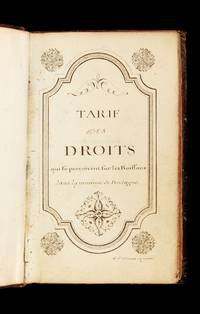
1700Best.-Nr. 12425Brittany: J.F. Clément 1700. Contemporary blind-ruled calf rubbed minor defects gilt spine and red morocco label marbled endleaves red edges. This ready reckoner's over 5000 entries would serve WHOLESALERS OF FERMENTED DRINKS AND DISTILLED SPIRITS TAX COLLECTORS VINTNERS BREWERS DISTILLERS INNKEEPERS AND TAVERNERS in Brittany which had its own semiautonomous tax system from 1532 to 1789. Elegantly executed by a professional scribe this manuscript's eight principal sections cover wines ciders beers perries meads and eaux-de-vie. Each column has volumes from small fractions of a barrel to multiple barrels on the left and the corresponding payments due in livres sous and deniers on the right. First are non-Breton wines then "domestic" wines of Nantes. Third are wines sold within the diocese where they are produced then locally manufactured and consumed ciders perries beers and meads. The following two sections treat beverages generating crown revenue collected from transactions in gross and by the drink - again non-Breton wines then local wines ciders beers perries and meads. The final two sections address distilled fruit liquors and eaux-de-vie both wholesale and retail. The owner of our codex added two one-page appendices. The first provides the payment amounts for imported wines taxed at 44 sous. The second does the math for spirits at 30 sous per velte c. 2 U.S. gallons - up to 10000 veltes. This large volume suggests a successful wine broker commissioned the manuscript. In good condition handsoiling throughout two short tears one just touching text without loss some 550 entries corrected or updated by a contemporary hand. J.F. Clément unknown
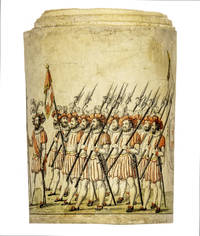
1833Best.-Nr. 1714281833. VEVEY. Fête des Vignerons 1833. Continuous panorama scroll containing 30 consecutive lithographs numbered 1-30 from the 1833 Festival of the Vignerons at Vevey hand-coloured at the time of publication backed with linen and conjoined to form a continuous scroll of 14.4 meters long. Plate size: oblong folio 170 x 470 mm. in a new cloth folding box. Lausanne: Lithographie de Spengler & Cie 1833. An extremely rare complete copy in contemporary hand-colouring of this remarkable series of plates in scroll format depicting the 1833 Festival of the Vingerons at Vevey Switzerland -- since 1791 this ancient festival has been celebrated five times per century. The scroll shows the entire procession in panorama format; the procession moved in three groups: Herds and Flocks plates 1-8 the Harvest plates 9-18 and Winemakers plates 19-30. The festival celebrates the vineyards and wine production in the Vevey area. The artist of the work was Christian Gottlieb Steinlen 1779-1847 a resident of Vevey who acted as the official artist for the 1833 Festival see Thieme-Becker. Sources for the Festival of the Winegrowers are unusually diverse: besides Greco-Roman gods such as Bacchus Plates 20 & 22 there were representations of Judeo-Christian myths such as the story of Noah first winegrower in the Bible -- see Plate 27. OCLC records only the copy at Getty Center in the U.S. Vicaire 270. Brunet I 616. Lipperheide 2870. Ruggieri 1142. Vinet 787. Brun Schweizerisches Künstler-Lexikon IV p. 415. Thieme-Becker XXXI pp. 574-5. hardcover books
1750Best.-Nr. 0001563Good. 1750. On offer is an absolutely sensational ancient original 1750s manuscript sailor's vade mecum or reference manual handwritten by and or for a mariner over 260 years ago. The name William Wine appears on the rear inside cover dated March 4th 1788. The handwriting is similar throughout to the signature but it is inconclusive if Mr. Wine is the author original owner or a later owner. The first page detached but present is dated November 1750. There are many many tables of information illustrations charts drawings etc. that are indexed and with over 420 pages written in a small meticulous hand there are within these pages everything that a mid-18th Century senior officer or mate would require being filled with geographical mathematical financial navigational and geometric information and there are also sections detailing carpenter's work joiners painters glaziers lavers masons plus foreign exchange and monetary info and conversions in foreign countries. There are sections for algebra calculus trigonometry all manners of measurement whether liquid or dry and even how to calculate the contents of a globe with many of the mathematical sections deal with measuring heights and distance from afar measuring and surveying dealing with casks all information that a Lieutenant 1st mate or Ship's Master or even a Captain would need. We conclude that the information and the quality of the manuscript book vellum which double folds and creates an envelope that would protect the pages from the elements plus a metal clasp broken give further credence that this book was owned by a senior officer and most certainly of English origin as evidenced by the section regarding Oxford and Cambridge terms plus a chart that helps one establish the dates of the Easter season leap years tides . The volume begins with a few pages of indices and in the first section one finds pages of geographical place names and distances from one to another: "the coast of Carolina Virginia etc. to Newfoundland" and the "Bohema Islands" and another "The Coast of y.e main Continent in y.e West Indies" and the degrees of longitude and latitude are listed alongside each listed place. The standard depth and sheer volume of information also leads us to conclude that the seaman was likely an officer of a merchantman as opposed to a casual traveler. This is an absolutely unique manuscript relic of ancient seafaring and the age of sail. The 7 x 4.5 x 1.5 inch book is generally soiled on the covers but the interiors are good save for the loose page and the odd stains to the inner pages. The cover is stiff somewhat fragile and has some cracks/tears but overall the book is G. ; 12mo - over 6¾" - 7¾" tall; KEYWORDS: HISTORY OF GREAT BRITAIN ENGLAND BRITANNIA RULES THE WAVES NELSON HORNBLOWER AUBREY RAMAGE REFERENCE MANUAL HANDBOOK NAVIGATION MARINE NAUTICAL NAVAL TIDES VADE MECUM SAILOR SAILING AGE OF SAIL SEVEN YEARS WAR TRAVEL ASEA SURVEYING LONGITUDE LATITUDE MATHEMATICS GEOMETRY GEOGRAPHY PORT OF CALL HARBORS SEAFARING SEAFARERS HANDWRITTEN MANUSCRIPT DOCUMENT LETTER AUTOGRAPH DIARY JOURNAL LOG KEEPSAKE WRITER HAND WRITTEN DOCUMENTS SIGNED LETTERS MANUSCRIPTS HISTORICAL HOLOGRAPH WRITERS DIARIES JOURNALS LOGS AUTOGRAPHS PERSONAL MEMOIR MEMORIAL PERSONAL HISTORYantiquité contrat vélin document manuscrit papier Antike Brief Pergament Dokument Manuskript Papier oggetto d'antiquariato atto velina documento manoscritto carta antigüedad hecho vitela documento manuscrito papel. . hardcover
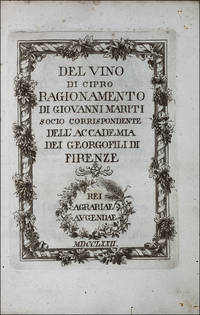
1772Best.-Nr. 117Extraordinary rare first edition of the famous treatise on Cyprus wine by Giovanni Mariti A complete analysis on wines grapes vines and production technique Mariti Giovanni. Del vino di Cipro ragionamento di Giovanni Mariti socio corrispondente dell'Accademia dei georgofili di Firenze: Rei agrariae avgendae. Firenze : G. Cambiagi MDCCLXXII 1772. 8vo 220 x 155 mm original printer cardboard pp. 2 XVI 127 1 illustrations along the text engraved title page before the dedicatory letter at leaf a1r a chalcographic vignette with coat of arms of the dedicatee Lord Nassau Clavering signature a⸠πa1 A-Hâ¸. xylographic illustrations along the text one full page plate depicting tool for wine production In his treatise Del vino di Cipro About the Cyprus Wine published in Florence in 1772 by Cambiagi Mariti dedicates an ample analysis to the wine of Cyprus discussing a lot about the types and varieties of the vines and wines produced in the different regions of the island and reporting its own "observations" made in the countryside around Larnaca where it draws indications and procedures to follow in Italy too to reach the maximus possible efficiency of the crops as Mariti himself well describe in the Preface to the volume: "In questo mio Ragionamento ho avuto il riflesso di appagare non solo la curiosità di qualche dilettante de i grati e generosi Vini di Cipro e di dar la norma per qui allignarli ma ancora di poter giovare alla Coltivazione alla Manifattura e alla Conservazione de i nostri Vini Toscani e particolarmente per migliorare alcuna sorta di quegli che oggigiorno sogliono qui farli in scelta maniera il che mi lusingo possa ottenersi dal genio de i nostri Agricoltori Mariti 1772 p. 3. In this reasoning I had the will to satisfy not only the curiosity of some amateur of the grateful and generous Wines of Cyprus giving the rules to list them but also to be able to improve the Cultivation the Manufacture and the Conservation of our Tuscan Wines and particularly to improve the quality of the wines produced there using the support from the genius of our Farmers" More in details he starts addressing the issue of the poor resistance of Tuscan wines to navigation deepening the observations already published in the first volume of his "Travels in Cyprus". Mariti studying grapes and winemaking processes in use in Cyprus gives an account of the island's wines distinguishing them by types based on the quality of the grapes the length of the aging process and their conservation and also giving data and figures relating to the sale of the product both in the East and in the West. Mariti dedicated this essay on the wines of Cyprus to Lord Clavering whose arms are engraved at the top of the first leaf of the dedication. The preliminary leaves also include an account of the Accademia dei Georgofili devoted to the study of agriculture which was founded in Florence in 1753 and is still active today. Giovanni Filippo Mariti 1736 –1806 he was an Italian antiquarian scientist and historian. Intellectual with multiple interests he became famous in Europe mainly for his travels in the East. Mariti became interested since his youth in natural sciences cultivating botany and especially agronomy studies and in 1772 he became a corresponding member of the Accademia dei Georgofili founded in Florence on July 4 1753 by Ubaldo Montelatici under the impulse of that renewal of agriculture that the Habsburgs-Lorraine hoped for and promoted to remedy the problems that arose in their lands starting from the first decade of the second half of the century regarding crops and food supplies. Mariti lived for seven years at Larnaca in Cyprus becoming honorary British vice-consul and became increasingly familiar with the wine-making process of the island. A shortened version of this treatise was included in the French translation of his "Travels in the Levant". Beside Del Vino di Cipro he is remembered for the treatise titled Della Robbia sua coltivazione suoi usi Florence 1776 dedicated by Mariti to the Grand Duke of Tuscany Pietro Leopoldo concerning a plant the Robbia Madder cultivated in the East and used for the colouring of clothes which Mariti hoped to introduce in Europe and for Odeporico o sia itinerario per le colline pisane which was published in Florence in two volumes between 1797 and 1799. The first volume of this work which remained partly unpublished deals with the agricultural history of the Tuscan hills the second is dedicated to the history of the water bath today Casciana Terme. The two volumes are divided into chapters that take the form of letters written to an imaginary friend. George Clavering-Cowper 3rd Earl Cowper 1739 - 1789 was an English nobleman and politician. In 1780 he purchased Villa Palmieri in Fiesole with a splendid view of Florence. Skilled diplomat and politician he decided to obtain prestige by turning a blind eye on the relationship that his wife had established with the Grand Duke Pietro Leopoldo from which he managed to obtain the title of Prince of Nassau d'Auverquerque. The art collection that Count Cowper built during his years in Florence was a great investment of time and money for him. Among the most important works that were part of his collection we mention two paintings by Raphael the first known with the name of Piccola Madonna Cowper and the other as Madonna Niccolini-Cowper. Conditions: fine copy untrimmed in its original printer paper board small restoration at spine. Provenance: I. Ownership signature dated 1868 at rear inside board. II. Handwritten title at front board and spine. References: Lastri p.82; Sormanni p.79; Bibl. Vinaria p. 139; Andre Simon Bibliotheca Gastronomica page 97 No 1002 G. Cambiagi hardcover
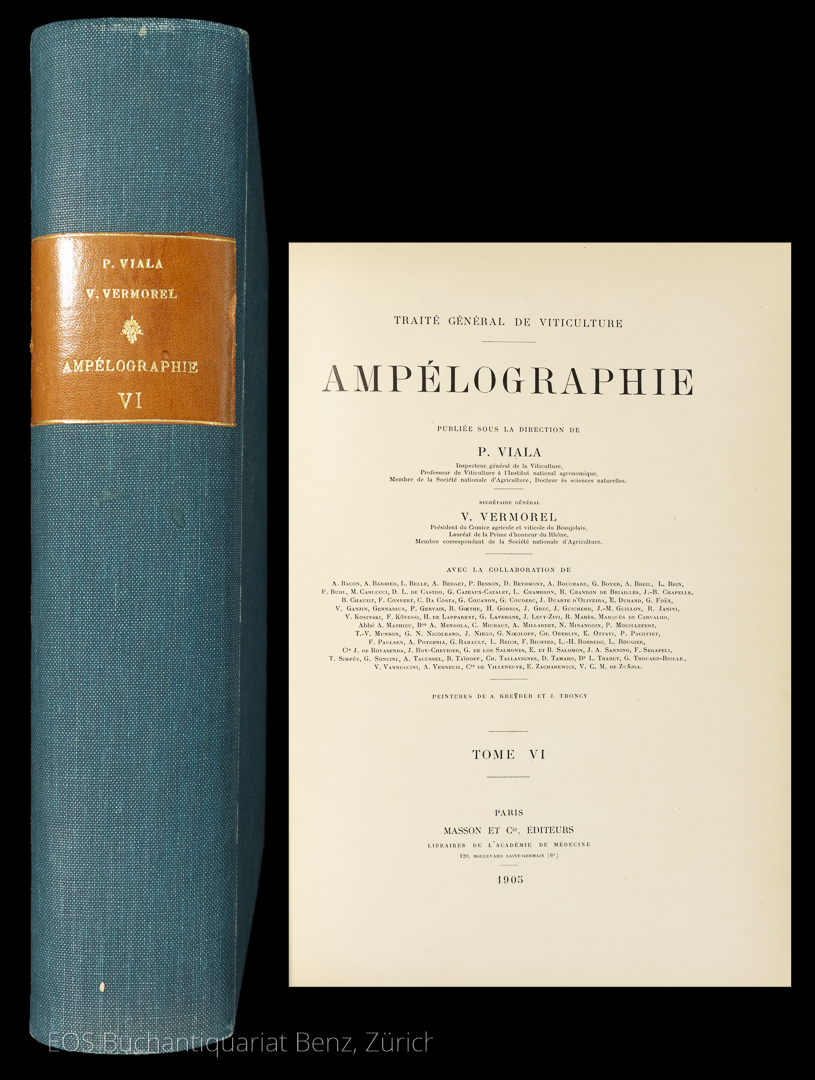
1901Best.-Nr. 4624CB7 Bände. Paris 1901–1910. 4°. Mehr als 3100 Seiten mit 570 (davon 500 farbigen) ganzseitigen Lithographien und 820 Illustrationen im Text. Leinenbände mit roten Rückenschildchen.
1901Best.-Nr. 4624CBParis, 1901?1910. 4°. Mehr als 3100 Seiten mit 570 (davon 500 farbigen) ganzseitigen Lithographien und 820 Illustrationen im Text. Leinenbände mit roten Rückenschildchen. + Wichtig: Für unsere Kunden in der EU erfolgt der Versand alle 14 Tage verzollt ab Deutschland / Postbank-Konto in Deutschland vorhanden +, 4624CB|4624CB_2 7 Bände. [2 Warenabbildungen]
Best.-Nr. 118798Paris (direction), Villefranche-sur-Saône (administration), 1901 à 1909, 7 volumes in-folio de 255x350 mm environ, complet des 570 planches. Tome I : viii, 729 pages, 70 planches en noir et blanc - Tome II : 408 pages, 100 chromolithographies - Tome III : 392 pages, 100 chromolithographies - Tome IV : 374 pages, 100 chromolithographies - Tome V : 358 pages, 100 chromolithographies - Tome VI : 476 pages, 100 chromolithographies - Tome VII : . Le volume 1 traite de l'ampélographie générale et les volumes 2 à 6 de l'ampélographie spécialisée, le volume 7 est un dictionnaire ampélographique. Reliures demi-chagrin brun à coins avec jaquettes imprimées, dos à nerfs portant titres et tomaisons dorés, tranche de tête dorée, gardes de papier marbré. Jaquettes tachées, jaquette manquante au volume VII, reliures avec des défauts (dos parfois légèrement insolés, frottements et petites taches), quelques chromolithographies présentent des adhérences de papier (minimes au Tome III mais très importantes sur 6 planches du tome V), des rousseurs éparses, sinon bon état général. Rare ensemble.
1798Best.-Nr. 4673Lausanne, Imprimé aux dépends de l'auteur, 1798. In-12 de XXIV, 406 pages, [1]ff. blanc, demi-basane à coins, dos lisse, étiquette de titre, petit accroc à la coiffe inférieure, coins un poil frottés.
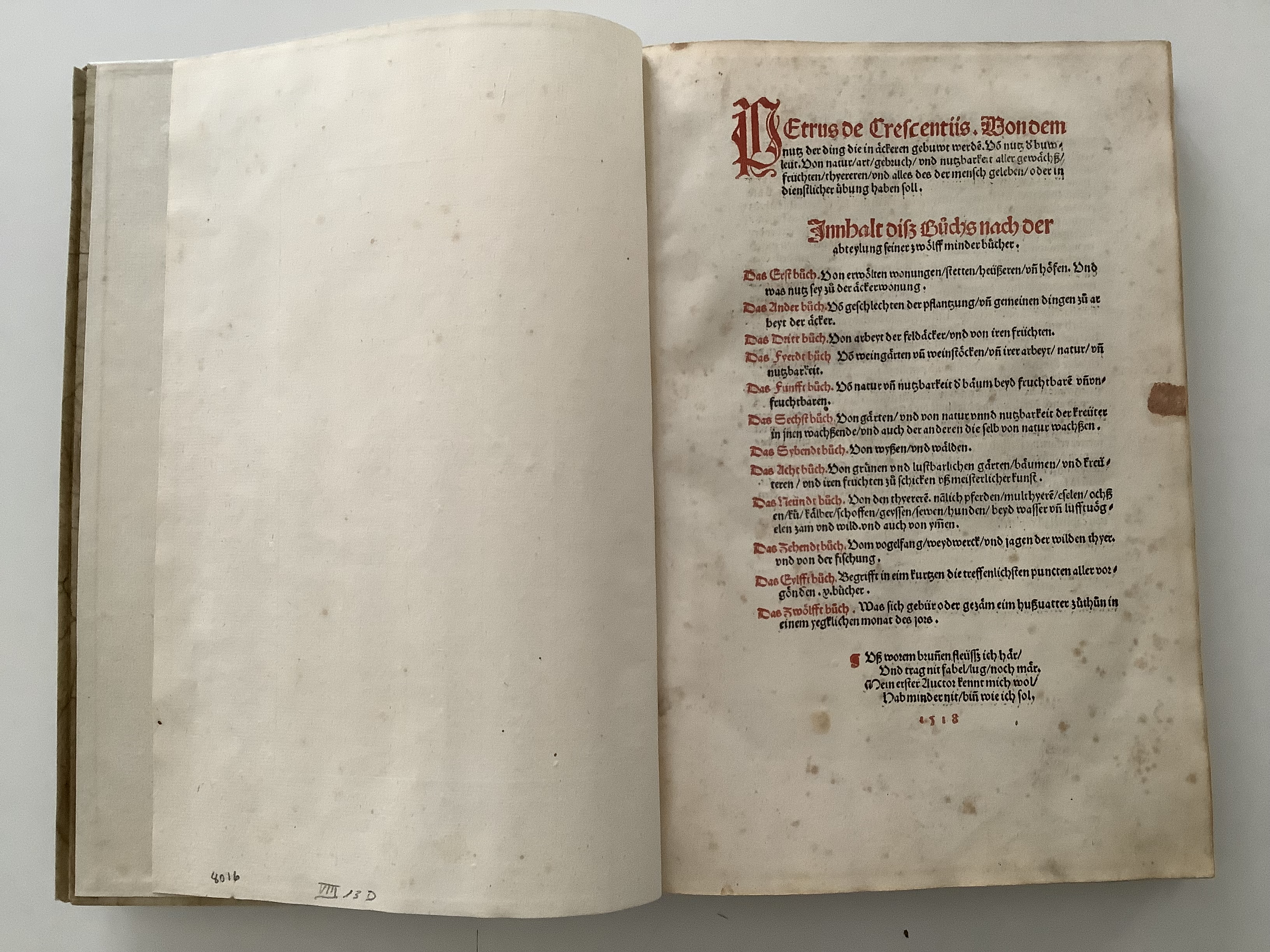
1518Best.-Nr. 19116ABStraßburg, Joh. Schott für Joh. Knoblauch und P. Götz, 1518. 31 : 21 cm. 6 not numbered, 169 numbered leaves, 153 (1 full-page) text-woodcuts (53 repeated) Modern Vellum. title on front board and spine.
Best.-Nr. AQ27989vs.: vs. 1820-40s An archive comprised of sixty-eight loose articles of late Georgian and early Victorian manuscript and printed ephemera relating to the purchase of alcohol including a number of bill-heads for merchants in inter alia Glasgow and London. The majority of the manuscript material - predominantly receipts and purchase orders - are addressed to Nottingham-based wine merchant Thomas Bailey 1785-1856 father of poet Philip James Bailey 1816-1902 noted author of Festus 1839. The elder Bailet who established his business in 1817 relinquished control in the 1830s in order to devote himself more fully to his roles as newspaper editor and author. The later material in this archive dating to the 1840s is addressed to Bailey's son-in-law and successor John Brown. A remarkable opportunity to acquire an archive of mid-nineteenth century commercial material directly connected to the provincial wine and spirit trade. . [vs.], [1820-40s] unknown
1990Best.-Nr. EXE-563Lausanne, André et Pierre Gonin, 1990. in-8° carré, en feuilles sous couverture, boîte en toile rouge de l'édition. Illustré de 20 eaux-fortes originales de Hans Erni. Tiré à 138 exemplaires, le nôtre est justifié "exemplaire B" et fait partie des 12 exemplaires de tête imprimés sur papier Duchêne et enrichis d'une suite sur Japon Torinoko, d'un cuivre original barré et d'un dessin original.
Best.-Nr. 259507New York ca. late 19th century. 8vo. Bound in full pebbled black cloth paper spine label with manuscript label. 8vo. Includes a run of very rare wine auction catalogues from the firm of Draper & Co 112 Pearl St. New York auctioning the stock of wine merchant W.H. Starin. WINE AUCTION John H. Draper & Co. Will Sell on Wednesday March 15th 1882 . by Order of Mr. W.H. Starin and Without any Reserve Whatever His Extraordinary Collection of Sherries Comprising Finos Amontillados Olorosos and East-Indias also Alto-Douros. 17 pp. 103 lots WINE AUCTION Price Current of a Collection of Old and Rare Sherry Wines Consisting of Soleras . Olorosos. Amontillados. Twenty-five to Sixty Years in Wood and Glass. W.H. Starin 40 Beaver St. New York. May 15th 1878. 12 pp. Light dampstaining to margins. WINE AUCTION John H. Draper Auctioneer. The Starin Collection of Sherry Wines . the Whole to Be Sold by Auction by Messrs. J.H. Draper & Co. Friday Dec. 19 1879 . at Their Store 112 Pearl Street New York. iv 12 pp. 29 lots. Light dampstaining to margins. Prices realized in pencil WINE AUCTION Townsend & Montant Auctioneers. 87 & 89 Leonard St. N.Y. City. 3-10 pp. 33 lots. Prices realized in pen. The Ketletas Sale 1902 HAYNE Arthur P. Olives. Pickling Processes . Proximate Analyses of Olives. By George E. COLBY. Sacremento: A.J. Johnston Superintendent State Printing 1895. 37 pp WINE AUCTION John H. Draper Auctioneer. The Starin Collection of Sherry Wines Consisting of Olorosos Amontillados east Indias Etc. The Whole to Be Sold by Auction by Messrs. J.H. Draper & Co. Friday Dec. 15 1880 . at Their Salesroom 85 Front Street New York. ii 14 pp. 40 lots. Some prices realized in pencil WINE AUCTION A Cabinet of Curiosities. The Starin Collection of Sherry Wines . The Whole to Be Sold by Auction at the Clinton Hall Sale Rooms . April 25 . Geo. A. Leavitt & Co. Auctioneers. ii 7 1 12 pp. Some contemporary manuscript notes in pen CADET C.A. Mémoire Sur la Fermentation acéteuse et sur l'art du vinaigrier. 35 pp. Foxed OCLC 457222451: 1 copy BNF The Tintometer. New York: E.B. Meyrowitz ca. 1895 2 editions. 20 pp & 26 pp. unknown
Best.-Nr. 259507New York ca. late 19th century. 8vo. Bound in full pebbled black cloth paper spine label with manuscript label. 8vo. Includes a run of very rare wine auction catalogues from the firm of Draper & Co 112 Pearl St. New York auctioning the stock of wine merchant W.H. Starin. WINE AUCTION John H. Draper & Co. Will Sell on Wednesday March 15th 1882 . by Order of Mr. W.H. Starin and Without any Reserve Whatever His Extraordinary Collection of Sherries Comprising Finos Amontillados Olorosos and East-Indias also Alto-Douros. 17 pp. 103 lots WINE AUCTION Price Current of a Collection of Old and Rare Sherry Wines Consisting of Soleras . Olorosos. Amontillados. Twenty-five to Sixty Years in Wood and Glass. W.H. Starin 40 Beaver St. New York. May 15th 1878. 12 pp. Light dampstaining to margins. WINE AUCTION John H. Draper Auctioneer. The Starin Collection of Sherry Wines . the Whole to Be Sold by Auction by Messrs. J.H. Draper & Co. Friday Dec. 19 1879 . at Their Store 112 Pearl Street New York. iv 12 pp. 29 lots. Light dampstaining to margins. Prices realized in pencil WINE AUCTION Townsend & Montant Auctioneers. 87 & 89 Leonard St. N.Y. City. 3-10 pp. 33 lots. Prices realized in pen. The Ketletas Sale 1902 HAYNE Arthur P. Olives. Pickling Processes . Proximate Analyses of Olives. By George E. COLBY. Sacremento: A.J. Johnston Superintendent State Printing 1895. 37 pp WINE AUCTION John H. Draper Auctioneer. The Starin Collection of Sherry Wines Consisting of Olorosos Amontillados east Indias Etc. The Whole to Be Sold by Auction by Messrs. J.H. Draper & Co. Friday Dec. 15 1880 . at Their Salesroom 85 Front Street New York. ii 14 pp. 40 lots. Some prices realized in pencil WINE AUCTION A Cabinet of Curiosities. The Starin Collection of Sherry Wines . The Whole to Be Sold by Auction at the Clinton Hall Sale Rooms . April 25 . Geo. A. Leavitt & Co. Auctioneers. ii 7 1 12 pp. Some contemporary manuscript notes in pen CADET C.A. Mémoire Sur la Fermentation acéteuse et sur l'art du vinaigrier. 35 pp. Foxed OCLC 457222451: 1 copy BNF The Tintometer. New York: E.B. Meyrowitz ca. 1895 2 editions. 20 pp & 26 pp. unknown books
1867Best.-Nr. 3517In-4 (37 X 28 cm), VIII et 107 pp., table des monographies et photographies, 2 pp., broché, deux plats de couverture présents mais sans le dos. Occasion, mais Etat satisfaisant
1908Best.-Nr. R300013850CHEZ L'AUTEUR. 1908. In-4. Relié. Bon état, Couv. convenable, Dos satisfaisant, Intérieur frais. 169 planches en noir et blanc avec pour la plupart une notice du château au dos. Quelques petits accrocs sur les mors.. . . . Classification Dewey : 634.8-Viticulture, vin
1866Best.-Nr. 028150Dick & Fitzgerald 18 Ann Street New York 1866. Book. Very Good. Hardcover. 12mo - over 6¾ - 7¾" tall. Brown cloth cover with gilt title to spine and embossed shield to front and rear boards. 7.5" `12mo 193 pages. Well rubbed to spine ends and corners. Foxing to few end pages. . The Independent Liquorist or The Art of Manufacturing and Preparing all Kinds of Cordials Syrups Bitters Wines Champagne Beer Punches Tinctures Extracts Essences Flavorings Colorings Worcestershire Sauce Club Sauce Catsups Pickles Preserves Jams Jellies Etc. Etc. by L. Monsert Practical Liquorist and Chemist. Complete in One Volume. Entered according to an Act of Congress in the year 1866 by L. Monzert in the Clerk's Office of the District Court for the Southern District of New York According to British Library the Dick edition is 1866. . Dick & Fitzgerald, 18 Ann Street, New York Hardcover
Three volumes, complete. FIRST EDITION of this scholarly, encyclopedic, and highly entertaining history of French gastronomy. XIII, (3), 373, (1); (4), 383, (1); (4), 363, (1). Half-titles present (they are often missing). SIGNED (in pencil) ON THE HALF-TITLE OF VOLUME I BY JORDI, JOSEP, AND JOAN ROCA OF EL CELLER DE CAN ROCA IN GIRONA, SPAIN, CURRENTLY THE BEST RESTAURANT IN THE WORLD (according to the highly prestigious San Pellegrino survey). And SIGNED (in pencil) ON THE HALF-TITLE OF VOLUME II BY FERRAN ADRIA, OF EL BULLI, winner of the San Pellegrino survey a record five times. The author originally set out to write an extensive work covering all facets of private life in France, but only this first part--which covers everything related to cooking, wine, eating, and hunting--was published. Discusses the origins of cooking tools and techniques, the provenance of all kinds of foods (including, of course, foodstuffs that came from the New World), and much more, including an extensive section on hunting. A classic. PRINTED ON FINE LAID PAPER. 8vo. ELEGANTLY BOUND IN FULL CONTEMPORARY HALF RUSSIA AND MARBLED BOARDS, SPINE IN SIX COMPARTMENTS WITH RAISED BANDS. Minimal traces of wear to bindings, upper joint of volume I cracked but firm, else a fine and bright copy with very large margins and very white paper. Vicaire 510 ("Ouvrage tres interessant et tres utile...."); Bitting 280 ("This is one of the finest works upon the social life of the French people...."); Thiebaud 576. AN OUTSTANDING SET OF A RARE AND IMPORTANT WORK.
1878Best.-Nr. 0030671878 Paris, Plon, 1878. Deux volumes grand in-quarto (216 X 305) reliés à la Bradel demi-percaline verte à coins, pièce de titre maroquin brun à grain long sertie de deux double filets dorés, fleuron doré, double filet doré et date en queue, plats de la couverture conservés (reliure de lépoque). Tome I : (1), faux-titre, frontispice, titre imprimé en rouge et noir, 328 pages ; Tome II : faux-titre, titre imprimé en rouge et noir, 329-659 pages. Fortes piqures à certains cahiers (pages 208 à 225 & 352 à 401), qui semblent habituelles au grand papier de cet ouvrage.
1621pp. (16), 316, in-8, mezza pelle con angoli e tassello al dorso
Best.-Nr. 474061/ Les principales bévues des vignerons,aux environs de Paris et par-tout.Paris.1782.43 pages. 2/ Avis et leçon à tous les laboureurs,cultivateurs.Paris.1781.EO.61 p. 3/ Nouvelle méthode non encore publiée,pour planter et cultiver la vigne.Paris.1782.E.O.30 p.4/ Théorie ou leçon sur le temps le plus convenable de couper la vendange,dans tous les pays et dans toutes les années.Paris.1782.E.O.81-30-33 pages.5/ La richesse des vignobles ou nouvelle manipulation générale des vins.Paris.1782.28-10-6-32 pages.6/ Expériences principales et instructives de la nouvelle manipulation des vins.Paris.(S.D.1782).32-30 p.7/ Moyen pour assurer la durée des vins.(S.D.)19 p. 8/Considération sur l'art de la vigne et sur la seule richesse du peuple.(S.D.) 14 p. In-8,demi-reliure XIXème,Fleurons dorés au dos.TBE. Rare recueil de textes de M.Maupin,réservés à ses clients.Reçus signés de la main de l'Auteur,à la fin de certains textes.
1572Best.-Nr. LL 290Provisioni et ordini della Gabella del sale & del modo di vender VINO a fiaschi. Et che non si possa portar vino da luogo a luogo senza licentia. TOGETHER WITH: Bando che non si possa comperare VINO per Rivendere. Et a chi e permesso & quanto sono obbligati li VINATTIERI Florence: Giunti 1572 and 1575. Two scarce Bandi on wine dated 1572 and 1575. First Edition. Together 2 pamphlets small 4to. Ad 1: 10 pp. integral blank leaf foliated in MS in upper right corners: "303"-"308." Ad 2: 4 pp. foliated in MS in upper right corners: "322"-323." Later marbled wrappers. Both Bandi with large Giunta printer's device on title-page. Very good. Ad 1: Provisions on the salt tax gabelle; selling wine in flasks; and transporting wine from place to place without a license. This Bando references regulations from 13 October 1481 1541 1542 and 1550. Scarce: FirstSearch and KVK searches produce only the much later 1616 edition and this in a single copy only BYU plus five Italian library according to EDIT16 CNCE 67599. Raffaello Uccelli Contributo alla bibliografia della Toscana no. 5339. Ad 2: Prohibiting the purchasing of wine to be RESOLD and with orders concerning the legal methods of sale of wine. Of this edition according to FirstSearch and KVK there are copies at BYU and Columbia plus 4 Italian libraries acccording to EDIT16 CNCE 67224. The Bibl. Nazionale centrale de Roma BnF Yale Law and UPenn have a Bando with this title printed in the same year by Giorgio Marescotti priority indeterminate. Giunti
Best.-Nr. 68658Amsterdam et Lyon, chez Louis-Joseph Berthoud, 1769 EDITION ORIGINALE, in-12, plein veau bordeaux, titre doré à la main sur dos lisse, reliure moderne, (1) - 175 - (1 bl.) - (1) - 166 - 6 pp., bandeaux, culs-de-lampe et lettrine, Projet, Notes, Additions, Fautes à corriger au texte et aux Notes(errata), cachets de l'ancien propriétaire (page de titre et dans le texte), François Brac (1725 - 1800) seigneur de la Perrière et fut, comme son père avocat au Parlement de Paris et de Lyon. Ils étaient propriétaires du fief de la Perrière, sis à Saint-Lager, dans le vignoble du Beaujolais. Ce livre est du plus grand intérêt pour l'histoire des vignobles du Beaujolais. C'est un traité historique et surtout économique adressé au propriétaires de cette région pour valoriser leurs vins. Une description des vins de première classe (Juliéna, Odenas, Quincié, Fleurie) avec leur historique. Il dénonce les abus des négociants parisiens qui "tripotent" les vins du Beaujolais (Oberlé - Fritsch). Bien complet des deux errata qui manquent souvent ! RARISSIME. ! Ce livre faisait partie de la Bibliothèque culinaire de Victor Michon, qui fut l'un des plus grands cuisiniers du début du XXe siècle. Il fut formé aux fourneaux de sa mère. Aujourd'hui encore, le Prix Victor Michon au Concours International Gastronomique d’Arpajon. fait partie des titres dont s'honorent beaucoup de chefs "étoilés". Cuisinier des Grands, il fut le cuisinier de l'Ambassade d'Autriche - Hongrie, située à l'Hôtel Matignon à Paris au moment de la Première Guerre mondiale. Il organisa le banquet de 3 000 couvert pour les fêtes russes, le menu offert au Roi des Belges par le président Félix Faure et le déjeuner d’Isabelle II de Castille. Mais ses recettes reflètent une cuisine à la fois bourgeoise et simple. Il présida au journal « Le cuisinier français » ainsi qu’à « L’académie Culinaire de France », créée en 1883. Sa bibliothèque privée comptait les plus grands noms de la gastronomie française : Grimod de La Reynière, Vincent La Chapelle, Jules Gouffé, Brillat-Savarin, Antonin Carême, Etienne, Urbain Dubois, Escoffier et bien d’autres dont notre exemplaire ! La tomaison "2" s'explique par la réunion de trois volumes avec la même reliure, et reprenant la "crème" de l'œnologie du 18e siècle ! La signature manuscrite de l'ancien propriétaire, Victor Michon, figure sur la première blanche de cet ouvrage. Très bon état de la reliure; très bon état du papier
In-4 (209 x 136 mm), plein vélin à rabats, dos à 4 nerfs plats, pièce de titre de maroquin brique encadré de filets dorés (reliure moderne), (12), 252 feuillets, (20) feuillets de table (pour "L'agriculture et maison rustique") et 22 feuillets titre compris (pour "La Chasse du Loup"), planches gravées sur bois. Nouvelle édition, celle-ci autorisée avec le privilège royal. Elle est illustrée de 6 gravures sur bois dans le texte et de nombreuses initiales pour la maison rustique; ainsi que de 14 grandes planches pour "La chasse au loup". L’ouvrage de Charles Estienne (1504-1564), est considérablement enrichi par Jean Liébault et augmenté du traité de Jean de Clamorgan "La chasse au loup", placé en fin sous page de titre et pagination particulières. "Après la mort de Charles Estienne, c’est son gendre Jean Liébault (vers 1534-1596), également médecin, qui assure les mises à jour et les révisions de l’ouvrage" (cf. exposition "Le succès de la Maison rustique", BM de Lyon, en ligne). Véritable encyclopédie de la vie rurale, l'ouvrage obtint un immense succès et fut édité sans interruption jusqu'au XVIIIe siècle. Il constitue une source fondamentale sur le sujet. Soins aux personnes et aux animaux, habitat, agriculture, élevage, basse-cour, chevaux et chiens, jardinage, chasse et pêche, préparation des aliments, beurre et fromages, viticulture et vin, boissons et alcools, miel et confitures, boulangerie et pâtisserie, etc., etc. (Goldsmiths'-Kress,, n°154.2-1. Thiébaud, col. 344. Mortimer, n°142). Court de marge supérieure avec petite perte en tête des titre et titres courants. Remarquable provenance: l'humaniste, érudit et bibliothécaire néerlandais Hugo Blotius ou Hugo de Bloote (1533, Delft - 29 janvier 1608, Vienne). D'abord intéressé à la bibliothéconomie, il étudia le droit puis fut nommé, en 1575, premier bibliothécaire en chef de la Bibliothèque impériale à Vienne par l'Empereur d'Autriche Maximilien II. Avec ex-libris manuscrit daté en pied du titre: "Ex haeraditate H. Guttÿ [Helfricus Guttius] exit H. Blotius Viennae 1585". La bibliothèque Nationale d'Autriche possède une épitaphe manuscrite composée par Hugo Blotius en l'honneur d'Helfricus Guttius en cette même année 1585: "Epitaph und Symbolum für Guttius" (Artikel ref. AC14250895). Très bon exemplaire, très frais, imprimé sur beau papier, bien conservé.