580 résultats
1842réf. 168145Paris; Administration de Librairie 1842. 1st Edition in this form. Hardback. Minor shadow-staining to the lower page margins; text not affected. ; 8vo 8"" - 9"" tall; 482 pages; Copiously illustrated; plates with tissue-guards and descriptice letterpress. Subjects; Bonaparte Francois-Charles-Joseph Herzog von Reichstadt 1811-1832. Paris; Administration de Librairie hardcover
réf. 16-6442Paris: G. Charpentier et E. Fasquelle 1900. Oblong folio. Prints loose as issued in 10 printed sleeves. 27.4 x 34cm. Titles beneath the prints in French German and English.OCLC Number / Unique Identifier:909111608. Paris,: G. Charpentier et E. Fasquelle, [1900] unknown
réf. 76-0918Paris: Villain 1827. Lithograph. 39 x 28 cm sheet. Good light specks of foxing throughout short tears along sheet edges. Paris: [Villain], 1827. unknown
réf. 76-0915Paris: Villain 1827. Lithograph. 28.5 x 43 cm sheet. Good light specks of foxing throughout short tears along sheet edges. Paris: [Villain], 1827. unknown
réf. 76-0920Paris: Villain 1827. Lithograph. 29 x 43 cm sheet. Good light specks of foxing throughout brown tape along top sheet edge some tears along sheet edges. [Paris: Villain, 1827]. unknown
réf. 76-0921Paris: Villain 1827. Lithograph. 41.5 x 28 cm sheet. Good light specks of foxing throughout some tears along sheet edges. [Paris: Villain, 1827]. unknown
réf. 76-0919Paris: Villain 1827. Lithograph. 29 x 43 cm sheet. Good light specks of foxing throughout brown tape along top sheet edge. [Paris: Villain, 1827]. unknown
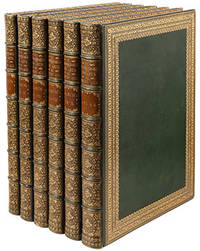
réf. 51-6251Paris: Hôtel de Cluny1838–46. Folio. 35 x 53.25cm. sheet size with pages attached to hinges for an effective width of 38cm. 6 plate volumes uniformly bound in full green morocco with elaborate gilt border designs; gilt inner dentelles marbled endpapers all edges gilt. .VERY HEAVY VOLUMES.10 plate albums bound in 5 plus the plate atlas album. With 508 lithographed plates 400 in the albums frontispiece portrait & 107 in the atlas many printed in color or hand-colored others black & white or sepia; color lithographed title pages for the atlas and the albums except for the title page of the tenth part which is not present and perhaps never published. Plain paper interleaves to the plates. Some of the plates are chromolithographs but most of the colored plates are richly handcolored and gommés. Sixty artists worked on the lithographs.References: Brunet II 920."ouvrage splendide et d'un grand intérêt"; OCLC Number / Unique Identifier: 1110334971.Dunbarton Oaks:Like his family before him Alexandre Du Sommerard 1779–1842 had a career in public service first in the military then in the civil service then in the court itself. Passion for his native country of France was even more manifest in his art collecting and studies which is where he directed most of his energies.The first items he acquired were paintings by contemporary French painters but after 1825 he devoted himself to art from the Middle Ages to the seventeenth century with particular attention to arts with French connections. In his actions and his collector’s tastes Sommerard was likely influenced by Alexandre Lenoir 1761–1839 who rescued medieval treasures and monuments from destruction during the French Revolution and who later set up the Musée des Monuments Français.By 1832 Sommerard had accumulated such a large collection that he purchased the late fifteenth-century Hôtel des Abbés de Cluny to house it. In each room of the building he arranged furniture objects and textiles according to their function or symbolic value in an attempt to replicate the interior spaces of the past.In 1838 Alexandre Du Sommerard published the first volumes of a multivolume work Les Arts du moyen-âge which he intended as a history of French medieval art. His collection and study included early Christian and Byzantine art as the precursors to western medieval art. He felt that history should not rely solely on written sources and that historians and the public needed to comprehend the history of art as well.The illustrated atlas and album were issued serially 10 installments in all and each with a beautiful unique title page. Inside each installment were large illustrations of medieval buildings and objects. In the Avertissement Sommerard brags that the publication used lithography the most advanced technique in book illustration available at the time in order to create accurate reproductions. At this point chromolithography was still in development and most lithographic illustrations were black-and-white so it seems likely that the rich colors in Sommerard’s publication were added manually.Upon his death in 1842 his collection and the building were bequeathed to the state. In 1844 Lenoir’s son Alexandre-Albert Lenoir 1801–1891 oversaw the movement of his father’s collection to Roman baths that are immediately adjacent to the Hôtel de Cluny. The combined collections became the Musée de Cluny now the Musée National du Moyen Âge. Edmond du Sommerard d. 1855 was appointed the museum’s first curator and was responsible for the acquisition of the museum’s famous lady-and-unicorn tapestries. Since then some items have been deaccessioned and moved to other museums but the existing museum still reflects the ideas and tastes of Sommerard and Lenoir.Alexandre Du Sommerard a mobilisé près de soixante artistes pour créer les cinq cents planches d’illustrations lithographiques des Arts au Moyen Âge.Dès ses débuts Alexandre a montré un intérêt marqué pour cette technique l’ayant deÌjà utilisée pour Les Vues de Provins. Cet intérêt s’explique par la faciliteÌ d’exécution offerte par la lithographie qui n’exige pas des artistes l’apprentissage d’une technique de gravure particulière. Cette simplification d’exécution permet non seulement de réduire le temps nécessaire à la réalisation d’une estampe mais aussi d’acquérir rapidement une renommée grâce à la diffusion quasi immédiate de ces images. Cette avancée technologique explique pourquoi la lithographie est devenue rapidement une alternative intéressante tant sur le plan financier que commercial par rapport à d’autres procédés.PROVENANCE; Bookplate of M.C.D. Borden in each volume. Matthew Chaloner Durfee Borden was born on July 18 1842 in Fall River Mass. the son of Col. Richard and Abby W. Durfee Bordon. He was educated at Phillips Academy in Andover and graduated from Yale University in 1864. At Yale he was a member of Delta Kappa Epsilon and Skull and Bones. Later that year he entered one of New York's leading dry goods house as a stock boy. In 1865 he married his relative Harriet M. Durfee and they had seven children.Borden came to New York after graduation working as a clerk in a dry goods jobbing house. Three years later he became a partner in a commission firm and represented the American Print Cloth Works of Fall River. This concern failed in 1879 but Mr. Borden reorganized it in 1880 as the American Printing Company. In 1869 Borden decided to manufacture his own cotton rather than buying it from others to supply his printing mills. He built three mills to begin with and ultimately the Falls River Iron Works Mills was a thriving business. He was a compassionate man regarding his employees raising wages in times of depression and his mills were not struck by the labor unions when his relatives’ mills were.Borden also kept a home in New York City at 25 West 56th Street where he had many financial interests being a director of the Manhattan Company Bank the Lincoln National Bank the Astor Place Bank the Lincoln Safe Deposit Co. and the New York Security & Trust Co. In 1885 Mayor William R. Grace appointed Borden to be the Park Commissioner a position he held for five years. He was a member of the Union League Club Merchants Club Metropolitan Club New England Society New York Yacht Club Players Club Republican Club Riding Club and the Union League Club among many others. Borden was an avid yachtsman and belonged to the Seawanhaka Yacht South Side Sportsmen's and Jekyll Island Clubs. He was the owner of the yacht Sovereign which was later bought by the government and renamed the Scorpion. Mr. Borden also amassed a large and important collection of art. Paris: Hôtel de Cluny,1838–46 hardcover
réf. 71-6304Paris: French Publisher circa 1780. Hand-colored engraving. 46 x 54.5 cm sheet. Very Good sheet mounted to another support sheet light specks of foxing in the margins. [Paris: French Publisher, circa 1780]. unknown
réf. 71-6297Paris: French Publisher circa 1788. Hand-colored stipple engraving. 48.5 x 55 cm sheet. Good sheet toned minor rubs. [Paris: French Publisher, circa 1788]. unknown
réf. 71-6296Paris: French Publisher circa 1780. Hand-colored engraving. 45.5 x 56 cm sheet. Good sheet mounted to another support sheet sheet toned minor rubs. [Paris: French Publisher, circa 1780]. unknown
réf. 71-6294Paris: French Publisher 1785. Stipple engraving. 54 x 43 cm sheet. Very Good margins trimmed sheet mounted to another support sheet a vertical rub in upper right quadrant.References: Portalis 88; Portalis & Beraldi IIIpt. 1 p. 386; Le Bl. III.292.5; NGA Widener Collection Accession Number Paris: French Publisher, 1785. unknown
réf. 16-5617Circa 1785. . Original handcolored stipple engraving. 57 x 45cm. sheet size.Small margin tears. Uniformly aged. References; Portalis 88; Portalis & Beraldi IIIpt. 1 p. 386; Le Bl. III.292.5.iii; NGA Widener Collection Accession Number1942.9.2118 Circa 1785. unknown
réf. 73-1725Paris: Fragonard Laurent circa 1800s. 26x20 cm. Black and white engraving. Very Good. Paris: [Fragonard, Laurent]?, [circa 1800s] unknown
réf. 16-5216Paris 1796. Set of 8 small format engravings. 15 x 9 cm. OCLC Number 79933702. [Paris], 1796 unknown
réf. 68-2840Paris: Berthault 1802. Etching. 18 x 24.5 cm. Good with tears repaired by tape on verso. Paris: Berthault, 1802. unknown
réf. 16-4828Paris: Auber An XIII – 1804. Large folios. 3 vols. Contemporary half calf.Overall each vol. depth variable: 47.7 x 32 x 5.7 cm 18 3/4 x 12 5/8 x 2 1/4 in. With engraved frontispieces 152 instead of 154 engraved plates 1 engraved table and 66 Portraits in the Crayon manner. Partly foxed. References: Brunet V 626; Cohen-de Ricci 969-71; Maurice Tourneux "Bibliographie de l'histoire de Paris pendant la Révolution française" Paris: 1890 v. 1 no. 282.Superbe ouvrage illustré de 3 frontispices de Fragonard fils gravés par Malapeau et Copia 152 gravures dessinées par Delvaux Duplessi-Bertaux Fragonard fils etc. et 66 beaux portraits-médaillons d'après Chinard Gérard Mme Lebrun gravés par Lavachez au bas desquels se trouvent de charmantes vignettes dessinées et gravées à l'eau-forte par Duplessi-Bertaux. Paru pour la première fois en 1791 l'ouvrage connut diverses éditions jusqu'en 1817 et les textes de Fauché Chamfort Ginguené et Pagès furent remaniés à chaque fois. Cohen indique pour cette quatrième édition que le texte de Pagès déjà adouci dans l'édition de 1798 a été définitivement « dégagé de toute rouille révolutionnaire ».IMPORTANTE COLLECTION présentant une chronologique minutieuse du déroulement de la Révolution française. "Les Tableaux historiques peuvent être considérés comme la plus importante série commerciale de gravures événementielles sur la Révolution française dépassant de loin les illustrations moins élaborées des journaux tels que Les Révolutions de Paris ou Les Révolutions de France et de Brabant" Musée de la Révolution française château de Vizille 2002. Claude Fauchet guillotiné le 31 octobre 1793 rédigea une partie des textes illustrés de gravures de Duplessi-Bertaux Fragonard Delvaux Girardet Meunier Ozane Veny etc. Le dernier volume contient les cinq constitutions 1791 1793 1795 1800 ainsi que des portraits de grands personnages et se termine par la description du sacre de Napoléon. Heavy weight 18.5kg; 41 llbs. Paris: Auber, An XIII – 1804. unknown
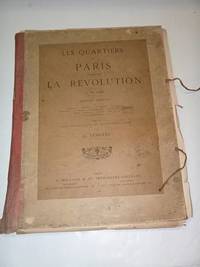
réf. 16-4572Paris: E. Bernard et Cie 1896. Folio. 53 x 41cm. Original boards worn. Title page with loss; most pages with marginal tears. Sheets loose as issued. 94 plates are called for and they are out of order in this copy; likely not complete and priced accordingly. Sold as a collection of prints.Grand in-folio en feuilles portefeuille de l'éditeur. Première édition de cet album de 94 planches reproduisant des dessins et des plans inédits du Paris révolutionnaire. Mareuse n° 719.- Barroux n° 177. Paris: E. Bernard et Cie, 1896 hardcover
réf. 17-2126Grasse : MuseÌe Jean-HonoreÌ Fragonard 2019. 4to. 30 pp. Oblong. Near Fine. Soft Cover. Illustrated paper wraps. Staple binding. Color and B&W plates throughout. Extremely Scarce.ISBN: 9782956144045 2956144049.Collection from San Francisco Museum of Modern Art. Grasse : MuseÌe Jean-HonoreÌ Fragonard, 2019. paperback
réf. 16-3527Paris: Auber Didot Ainé an XIII 1804. Folio. 49 x 32 cm. 3 volumes with 222 engraved plates. Contemporary half shagreen and marbled boards gilt spine with 6 raised bands rubbed. Bookplate of Orwell Park. Cet ouvrage constitue "la plus importante série commerciale de gravures événementielles sur la Révolution française " Musée de la Révolution française.Cohen-de Ricci 969-71; Maurice Tourneux Bibliographie de l'histoire de Paris pendant la Révolution française Paris: 1890 v. 1 no. 282. OCLC Number: 1007004655Collection complète des Tableaux historiques de la Révolution française composée de cent douze numéros en trois volumes : - 1/contenant les titre frontispice l'introduction les neuf gravures et neuf discours préliminaires depuis l'Assemblée des notables tenue à Versailles le 22 février 1787 jusqu'y compris la fusillade du faubourg St-Antoine le 28 avril 1789 de plus 34 numéros de l'ouvrage composés de 68 gravures et 68 discours historiques.- 2/ contenant les titre frontispice et les numéros 35e jusqu'au 72e composés des discours et gravures 69e à 144e finissant par le sujet qui a pour titre : Journée mémorable du 18 brumaire an 8. - 3/ contenant les titre et frontispice représentant les Droits de l'Homme les cinq Constitutions qui ont régi la France depuis 1791 ; les portraits de 66 personnages qui ont le plus marqué dans le cours de la Révolution le Concordat la proclamation sur la paix générale le voeu du peuple français pour le Consulat à vie la réponse du premier Consul le Sénatus-Consulte organique de la Constitution proclamée le 16 thermidor an X ; celui relatif à la nomination de l'Empereur les discours historiques sur les fêtes et cérémonies du Sacre et la table de l'ouvrage. Auber Didot Ainé an XIII 1804.3 volumes in folio : 153 gravures hors-texte tomes I et II inversion des planches 4 et 5 et 66 portraits-médaillons tome III. Bien complet des 3 frontispices gravés par Malapeau et Copia d'après Alexandre Fragonard. Rousseurs d'intensité variable suivant les feuillets.½ chagrin à coins frotté titres dorés des coiffes abîmées. Bel et impressionnant ensemble.Set weight 42 lbs. Paris: Auber, Didot Ainé, an XIII (1804). hardcover
réf. 16-3528Paris: la veuve Lavoye 1755-78. 2 vols. Large folio. 56 x 39 cm Contemporary quarter roan with brown marbled boards. Etched title page in one volume and letterpress table of contents in the other. Complete with the 296 plates called for on 163 leaves. Some foxing. OCLC Number: 80333578.2 volumes grand in folio : 1f. titre gravé dans médaillon allégorique 40 planches divers sites temples paysages Rome 52 planches ; Venise 38 planches ; Bologne 38 planches. Soit un total de 168 planches en 85 feuillets/ 1f. Naples 20 planches ; Herculanum 20 planches ; Antique 28 planches ; 45 planches paysages Rome caricatures portraits temples. Soit un total de 113 planches en 79 feuillets. L'ensemble des deux volumes comptent 281/296 planches sur 164 feuillets. Papier bien blanc. Planches gravées à l'aquatinte à la manière du lavis et à l'eau-forte une soixantaine environ d'après les dessins d'ANGO BOUCHER CLODION Della BELLA DOYEN ELCHENER GREUZE le prince LAUTHERBOURG MONNET NORDLIGEN PARIS REMBRANDT H. ROBERT D. & G. TIEPOLO et FRAGONARD nombreux griffonnis d'après les dessins de FRAGONARD.½ basane fauve de l'époque dos lisse pièce de titre rouge filets dorés frottements épidermures frottements sur coupes angles émoussés.L'abbé de Saint Nom amateur des arts a fait en Italie un séjour assez long pour y pouvoir réunir une collection de ce que ce pays renferme de plus intéressant en tableaux italiens et fragments antiques qu'il y a fait dessiner par les meilleurs artistes et qu'il s'est plu à graver lui-même. L'ensemble de la collection "italienne" Naples Herculanum Pompéi le Vésuve est composé d'une suite de paysages 41 planches de vues de Rome 54 planches de Venise 38 planches de Boulogne 40 planches de Naples 30 planches d'Herculanum 20 planches d'antiques 28 planches de temples 17 planches de cahier de caricatures 27 planches pour un total de 296 planches feuillet de description. Il a fallu pour entreprendre une suite aussi nombreuse une manière de graver plus expéditive que la gravure à l'eau forte ; Saint Nom a eu recours à un genre qui imite le dessin lavé à l'encre de Chine. A Paris Saint Nom fréquenta les ateliers des peintres Boucher et Leprince tout comme ceux de graveurs WILLE et TUBIERES de GRIMOARD de PESTELS de LEVIS. Il apprit l'aquatinte grâce à Leprince technique qu'il utilisa à merveille pour la réalisation de son travail de transcription des oeuvres italiennes et antiques. Paris: la veuve Lavoye, [1755-78] hardcover
réf. 63-8038New York: Frederick A. Stokes Company 1913. 8vo. Decorative Brown Covers 15 pp. 64 plates. Good with losses tears along spine some pages well worn to gutter covers worn to boards. B&W Plates. Previous owner's bookplate inside cover.Provenance: Peter Selz Collection. New York: Frederick A. Stokes Company, [1913]. hardcover
réf. 18-5608Washington D.C.: National Gallery of Art 1978. 4to 180 pp. Very Good. Soft Covers. Illustrated paper wraps. Pages fine. Color and B&W plates throughout. Washington, D.C.: National Gallery of Art, 1978. paperback
réf. 18-5340Philadelphia: Rosenbach Museum & Library 1985. 4to 41 pp. Very Good. Soft Covers. Printed paper wraps. Staple binding. Pages fine. B&W plates throughout. Philadelphia: Rosenbach Museum & Library, 1985. paperback
réf. 19-8349NY: E. S. Herrmann ca. 1940s. Large format color reproduction print poster 25” x 19”. Very Good. Printed in USA. NY: E. S. Herrmann, [ca. 1940s?]. unknown