1 198 résultats
réf. 3867347-20Used - Good. Pages intact with minimal writing/highlighting. The binding may be loose and creased. Dust jackets/supplements are not included. Stock photo provided. Product includes identifying sticker. Better World Books: Buy Books. Do Good. unknown
2005réf. SONG15925736812005-09-06. paperback. Used: Good. 5.75x0.75x8.75. Buy with confidence. Excellent Customer Service & Return policy. paperback
1988réf. 315643Norwalk Connecticut: Easton Press 1988. First Edition; First Printing. Hardcover. Near Fine Leather Bound. Accented in 22kt gold. Printed on archival paper with gilded edges. The endsheets are of moire fabric with a silk ribbon page marker. Smyth sewing and concealed muslin joints. This book is in full leather with hubbed spines. Unsigned owner bookplate on second front end page.; First Easton Press Edition.; 4to 11" - 13" tall. Easton Press hardcover
réf. 53KSIU0008MEInternational Arts; Et Al. paperback. New. . Paperback; hv paperback International Arts; Et Al paperback
réf. B9781979450386Paperback / softback. New. paperback
1995réf. AME_9781850150152Helen Exley Giftbooks 1995. 1st. Paperback. New/New. _ Helen Exley Giftbooks paperback
1996réf. AME_9780876050873CarolrhodBooks 1996. 1st. Paperback. New/New. _ CarolrhodBooks paperback
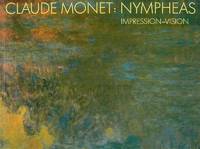
1986réf. 669BB1986. Zürich SV International 1986. 28cm x 23.5cm. 181 pages. Original Softcover Paperback. Very good condition with only minor signs of wear. German Edition / Deutsche Ausgabe. Includes for example: Claude Monets Nympheas in Basel 1949 und 1969 Leihgeber/ 'Le Spleen de Giverny' Massifs de Chrysanthemes/ Zufluchtsort einer ungestorte Meditation/ Le Bassin aux nympheas/ Paysages d'eau et de reflets/ Eine Wenig Banale Ausstellung/ Wasser Seerosen Planzen auf einer sehr grossen Flache/ Verjungende Aufschwunge un grausame Enttauschungen anmerkungen/ Srom ohne Ufer/ Anmerkungen zu Claude Monets Seerosen/ Jenseits des Impressionismus / Monet Sehen/ Der Neue Bildbau/ Unter dem Horizont/ Bilder einer stromenden Welt/ Bild und Betrachter/ Monets Welt in Giverny/ Das 'Monet revival' der funfziger Jahre Anmerkungen/ Claude Monet 14 November 1840 - 5 December 1926 was a founder of French impressionist painting and the most consistent and prolific practitioner of the movement's philosophy of expressing one's perceptions before nature especially as applied to plein-air landscape painting. The term Impressionism is derived from the title of his painting Impression Sunrise Impression soleil levant. Claude Monet was born on 14 November 1840 on the 5th floor of 45 rue Laffitte in the 9th arrondissement of Paris.3 He was the second son of Claude Adolphe Monet and Louise Justine Aubrée Monet both of them second-generation Parisians. On 20 May 1841 he was baptized in the local parish church Notre-Dame-de-Lorette as Oscar-Claude but his parents called him simply Oscar.34 In 1845 his family moved to Le Havre in Normandy. His father wanted him to go into the family grocery business but Monet wanted to become an artist. His mother was a singer. On 1 April 1851 Monet entered Le Havre secondary school of the arts. Locals knew him well for his charcoal caricatures which he would sell for ten to twenty francs. Monet also undertook his first drawing lessons from Jacques-François Ochard a former student of Jacques-Louis David. On the beaches of Normandy in about 1856/1857 he met fellow artist Eugène Boudin who became his mentor and taught him to use oil paints. Boudin taught Monet "en plein air" outdoor techniques for painting. Both received the influence of Johan Barthold Jongkind. On 28 January 1857 his mother died. At the age of sixteen he left school and went to live with his widowed childless aunt Marie-Jeanne Lecadre. When Monet traveled to Paris to visit the Louvre he witnessed painters copying from the old masters. Having brought his paints and other tools with him he would instead go and sit by a window and paint what he saw. Monet was in Paris for several years and met other young painters who would become friends and fellow impressionists; among them was Édouard Manet. In June 1861 Monet joined the First Regiment of African Light Cavalry in Algeria for a seven-year commitment but two years later after he had contracted typhoid fever his aunt intervened to get him out of the army if he agreed to complete an art course at an art school. It is possible that the Dutch painter Johan Barthold Jongkind whom Monet knew may have prompted his aunt on this matter. Disillusioned with the traditional art taught at art schools in 1862 Monet became a student of Charles Gleyre in Paris where he met Pierre-Auguste Renoir Frédéric Bazille and Alfred Sisley. Together they shared new approaches to art painting the effects of light en plein air with broken color and rapid brushstrokes in what later came to be known as Impressionism. Monet's Camille or The Woman in the Green Dress La femme à la robe verte painted in 1866 brought him recognition and was one of many works featuring his future wife Camille Doncieux; she was the model for the figures in Women in the Garden of the following year as well as for On the Bank of the Seine Bennecourt 1868 pictured here. Camille became pregnant and gave birth to their first child Jean in 1867. After the outbreak of the Franco-Prussian War 19 July 1870 Monet took refuge in England in September 1870 where he studied the works of John Constable and Joseph Mallord William Turner both of whose landscapes would serve to inspire Monet's innovations in the study of color. In the spring of 1871 Monet's works were refused authorisation for inclusion in the Royal Academy exhibition. In May 1871 he left London to live in Zaandam in the Netherlands where he made twenty-five paintings and the police suspected him of revolutionary activities. He also paid a first visit to nearby Amsterdam. In October or November 1871 he returned to France. Monet lived from December 1871 to 1878 at Argenteuil a village on the right bank of the Seine river near Paris and a popular Sunday-outing destination for Parisians where he painted some of his best known works. In 1874 he briefly returned to Holland. In 1872 he painted Impression Sunrise Impression soleil levant depicting a Le Havre port landscape. It hung in the first Impressionist exhibition in 1874 and is now displayed in the Musée Marmottan Monet in Paris. From the painting's title art critic Louis Leroy coined the term "Impressionism" which he intended as disparagement but which the Impressionists appropriated for themselves. Also in this exhibition was a painting titled Boulevard des Capucines a painting of the boulevard done from the photographer Nadar's apartment at no. 35. There were however two paintings by Monet of the boulevard: one is now in the Pushkin Museum in Moscow the other in the Nelson-Atkins Museum of Art in Kansas City. It has never become clear which painting appeared in the groundbreaking 1874 exhibition though more recently the Moscow picture has been favoured. Monet and Camille Doncieux had married just before the war 28 June 1870 and after their excursion to London and Zaandam they had moved to Argenteuil in December 1871. It was during this time that Monet painted various works of modern life. Camille became ill in 1876. They had a second son Michel on 17 March 1878 Jean was born in 1867. This second child weakened her already fading health. In that same year Monet moved to the village of Vétheuil. On 5 September 1879 Camille Monet died of tuberculosis at the age of thirty-two; Monet painted her on her death bed. Wikipedia paperback
1990réf. 91311AB1990. München / Zürich Piper 1990. 125 x 19cm. 58 Seiten. Originale Broschur. Sehr guter Zustand neuwertig. Serie Piper Band 1188. Unberührt von den Wandlungen der Bildideen und Stile vollendet der größte und eigenwilligste französische Impressionist Claude Monet sein Werk. Seine Bilder von Paris und seinen Menschen von Flußlandschaften und Kathedralen von den schimmernden Seerosen und dem Teich in seinem Gartenparadies von Giverny sind auch für den heutigen Betrachter noch immer von zeitlosem Zauber. Piper unknown
1993réf. 3164BB1993. New York Alfred A. Knopf 1993. 25 x 29 cm. XVII 318 pages. Original Softcover. Very good condition with minor signs of external wear. The Barnes Foundation is an American educational art and horticultural institution with locations in Merion Pennsylvania a suburb of Philadelphia; and Logan Square Philadelphia. It was founded in 1922 by Albert C. Barnes a chemist who collected art after making a fortune by co-developing an early anti-gonorrhea drug marketed as Argyrol and selling his company at the right time before antibiotics came into use. Today the foundation owns more than 2500 objects including 800 paintings estimated to be worth about $25 billion. These are primarily works by Impressionist and Modernist masters but the collection includes many other paintings by leading European and American artists as well as ancient works from other cultures. In the 1990s the foundation's declining finances led its leaders to various controversial moves including sending artworks on world tours and proposing to move the collection to Philadelphia. A 2009 documentary The Art of the Steal argued that the foundation had been taken over by other non-profit institutions. After numerous court challenges the new Barnes building opened on Benjamin Franklin Parkway on May 19 2012. The foundation's current president and executive director Thomas Thom Collins was appointed on January 7 2015. Wikipedia paperback
1967réf. 70424New York: Schoneman Galleries 1967. First Edition; First Printing. Softcover. Very Good in wrappers. Crease to bottom rear corner; 4to - over 9¾" - 12" tall. Schoneman Galleries unknown
1960réf. 35975New York: The Museum of Modern Art in Collaboration With the Los Angeles County Museum Distributed By Doubleday & Company Inc 1960. First Edition; First Printing. Softcover. Good in the original wrappers. A lot of soiling brown spotting throughout corners bumped and creased.; 4to - over 9¾" - 12" tall. The Museum of Modern Art in Collaboration With the Los Angeles County Museum, Distributed By Doubleday & Company, Inc unknown
1930réf. 28647New York: Privately Printed Exotica Club Inc 1930. First Edition; First Printing. Hardcover. Very good in boards. No dust jacket. Fading to spine. Privately Printed (Exotica Club, Inc) hardcover
réf. B9781020451966Hardback. New. hardcover
réf. SKU1058840Administration du "Bulletin de L'Imprimerie. hardcover. Good. 0x0x0. Paris 1878. paper and cloth covered boards; no dust jacket; cover moderately worn; flyleaf marked; endpapers bent dirty; interior slightly dirty faded; OK binding; 4to - 9.75"; 434 pages. Administration du "Bulletin de L'Imprimerie hardcover
2026réf. __6557770640Museu de Arte de São Paulo Assis Chateaubriand/KMEC Books 2026. Hardcover. New. 312 pages. 8.00x2.00x11.00 inches. Museu de Arte de São Paulo Assis Chateaubriand/KMEC Books hardcover
réf. 0023196602.Ghardcover. Good. Access codes and supplements are not guaranteed with used items. May be an ex-library book. hardcover
réf. 54343195like new. unknown
2022réf. SBBI-mon0000106742POMEGRANATE EUR CALENDARS 2023 2022. calendar. Very Good. Most of our very good books have only minor imperfections such as shelf wear consistent with a new book that's sat on a bookshop shelf for a year or two. Occasionally we may miss other minor imperfections as we have to grade books at speed. Our books are dispatched from a Yorkshire former cotton mill. We list via barcode/ISBN so please note that the images are stock images and may not be the exact copy you receive furthermore the details about edition and year might not be accurate as many publishers reuse the same ISBN for multiple editions and as we simply scan a barcode or enter an ISBN we do not check the validity of the edition data when listing. If you're looking for an exact edition please don't order at least not without checking with us first although we don't always have time to check. We aim to dispatch prompty the service used will depend on order value and book size. We can ship to most countries see our shipping policies. Payment is via Abe only. POMEGRANATE EUR CALENDARS 2023 unknown
1997réf. SBBI-mon0000161484Hachette 1997. paperback. Good. Our good condition books are generally good for reading but not for gifting or collecting. They could have imperfections such as creasing fanning inscriptions margin notes yellowing staining on edge or cover or pages bumps scuffs etc etc sometimes multiple of these. It's a wide category that encompasses anything that isn't almost-new down to anything that is slightly better than poor. We would NOT recommend gifting Good books - these should be considered reading copies. Our books are dispatched from a Yorkshire former cotton mill. We list via barcode/ISBN so please note that the images are stock images and may not be the exact copy you receive furthermore the details about edition and year might not be accurate as many publishers reuse the same ISBN for multiple editions and as we simply scan a barcode or enter an ISBN we do not check the validity of the edition data when listing. If you're looking for an exact edition please don't order at least not without checking with us first although we don't always have time to check. We aim to dispatch prompty the service used will depend on order value and book size. We can ship to most countries see our shipping policies. Payment is via Abe only. Hachette paperback
réf. 38719426-nnew. unknown
réf. DADAX088363273XDistributed by Macmillan Pub. Co 0000-00-00. First Edition. hardcover. New. 0.00x0.00x0.00. Buy with confidence. Excellent Customer Service & Return policy. Distributed by Macmillan Pub. Co hardcover
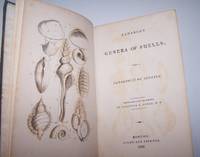
1833réf. 44880Boston: Allen And Ticknor. Very Good. First American Edition. Hardcover. 19th Century Science and History of Science Most Recent Listing; 12mo; xiv 110 pages; Boston: Very Good. 1833. First American Edition. Xiii 1 110 pages; Original owner's faint pencil note on ffep "Sylvester Judd / from his friend / Geo. Buel" Otherwise unmarked and secure in original green cloth binding with printed title label at spine. Text quite clen and fresh foxing to endpapers a couple small supeficial spots to boards. Delightful engraved frontispiece depicting various shells. OCLC 3214774 This First American Edition of Lamarck's Genera of shells is a gem from his oeuvre. During his lifetime Lamarck named a large number of species; e. G. The World Register of Marine Species attributes the names of more than 1 600 records to him. Lamarck 1744-1829 was a French naturalist soldier biologist taxonomist academic and an early proponent of the idea that biological evolution occurred and proceeded in accordance with natural laws. Today Lamarck is primarily remembered for a theory of inheritance of acquired characteristics called soft inheritance or Lamarckism. Previous owner is Sylvester Judd 1813-1853 clergyman lecturer and author. Judd received his degree from Yale in 1836 and then entered the Harvard Divinity School. In 1840 he became pastor of the Unitarian Church at Augusta Maine where he served until his death in 1853. He lived through New England's social and literary renaissance known as Transcendentalism and is best known for his novel MARGARET which was printed in 1845 and attracted critical acclaim. . 1833. Allen And Ticknor hardcover
réf. DADAX0353807265Wentworth Press 2019-02-10. hardcover. New. 6.14x1.63x9.21. Buy with confidence. Excellent Customer Service & Return policy. Wentworth Press hardcover
2009réf. DADAX1104749475Kessinger Publishing 2009-07-17. paperback. New. 6.00x1.05x9.00. Buy with confidence. Excellent Customer Service & Return policy. Kessinger Publishing paperback