SABARTES, Jaime. - PICASSO (lithographies).Livre Rare Book

5 418 résultats
réf. 61190Monte-Carlo, André Sauret 1961, 250x320mm, 153pages, reliure toile de l’éditeur. Format oblong. Bel exemplaire.
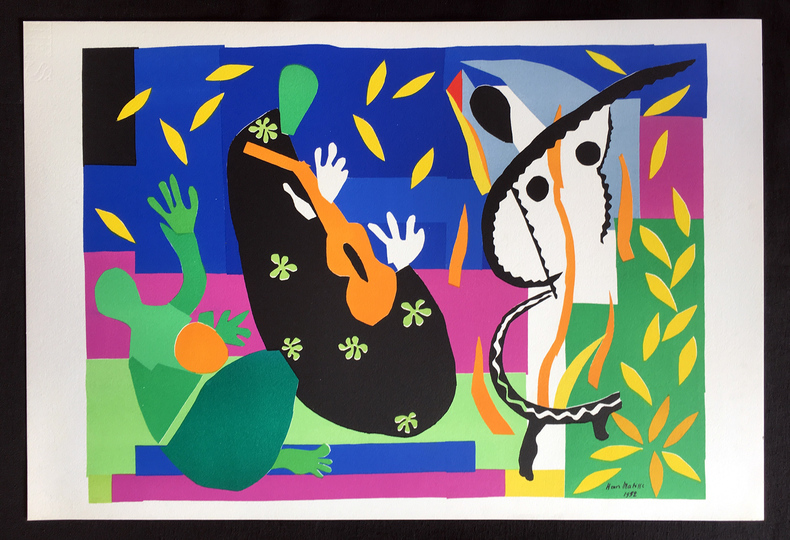
1958réf. 1381LITHOGRAPHIE EN COULEURS (36 x 52,8 cm) exécutée par Mourlot, d'après l'œuvre originale de 1952 en papiers découpés d'Henri Matisse, pour figurer dans Verve 35-36 (1958). BELLE ÉPREUVE SUR VÉLIN D'ARCHES À GRANDES MARGES, non pliée au centre. Tirage non mis dans le commerce, il était réservé à Tériade, à ses collaborateurs et amis. Parfait état.
réf. 16-6412Paris: Arts du Monde - Librairie Hachette Paris 1954. 4to. 22.5 x 31cm. Original red cloth cover by Matisse. Lithographed frontispiece created for this work by Picasso "La Danseuse" Bloch 767; Mourlot 259;: light foxing at top of the lithograph.415 text illustrations many tipped-in and/or folding color plates some after Léger Miró Bakst among others. . .Goeppert Goeppert-Frank and Cramer. Pablo Picasso: The Illustrated Books. Catalogue Raisonné no. 68. OCLC Number / Unique Identifier:977664915. Paris: Arts du Monde - Librairie Hachette, Paris, 1954 hardcover
réf. 16-5940Monte Carlo: André Sauret. 1949-1964. 4to . 4 vols. Original wraps lacking the dust-jackets and frontispieces except for the frontispiece for Vol. 1 which is present: La Petite Colombe Mourlot no. 174 We also have sets with all the lithographs. Very good.Each one of 2500 copies. Monte Carlo: André Sauret. 1949-1964. paperback
1956réf. 254464Monte Carlo: Andre Sauret 1956. First. paperback. near fine. Picasso. Illustrated with two original lithographs which are the color frontispiece and the b/w double-spread wrappers. Over 100 additional plates throughout some in color or tinted. 4to original printed wrappers slightly darkened at very top of spine. Monte Carlo: Andre Sauret 1956. Text in French. A fine bright copy of this delicate book The third volume of the catalogue raisonne of Picasso's lithographs. Andre Sauret unknown
1960réf. 39516Palma de Mallorca: Las Ediciones de Papeles de Son Armadans 1960. Picasso. FIRST EDITION OF THIS PART OF TROZO DE PIEL PICASSO'S MOST IMPORTANT LITERARY WORK AND HIS ONLY SIGNIFICANT WORK IN SPANISH. 4 blank leaves 19 pp 6 blank leaves. Printed text on the left a facsimile of Picasso´s manuscript on the right. ONE OF ONLY 88 NUMBERED COPIES PRINTED ON EXTREMELY FINE GUARRO WOVE PAPER THE ENTIRE EDITION. Large folio. Loose as issued in original wraps and parchment-backed cloth chemise. FINE AND BRIGHT WITH NO DEFECTS. EXTREMELY RARE. Las Ediciones de Papeles de Son Armadans paperback
réf. 51-1217Paris: D. Lambusier 1945. 4to one of 50 hors commerce copies on papier de lana from a total edition of 1070 copies printed for Georges Bloch frontispiece by Daragnès etching by Picasso 3 of 4 plates by Touchagues and 4 by Dignimont illustrations with a duplicate of the final quire loose as issued in original printed wrapper slipcase lacking one plate one leaf slightly creased backstrip slightly creased at head and foot. Bloch. 372; Baer 799.III.c.; Cramer 41From the collection of the late Picasso collector Stanley Seeger. Paris: D. Lambusier, [1945] unknown
1924réf. 27069Paris: Union des artistes russesFrançois Bernouard 1924. Fine. Union des artistes russes François Bernouard Paris 1924 24.50 x 29 cm broché The program is illustrated by V. Barthe wrapper and includes hors-texts by Chatzman Manet a reproduction of his Olympia Picasso Vassilieff Fotinsky and Ganovsky a spatial composition. Appearing at this event were: Olga Koklova and the Ballets Suédois of Juger Friis and Jean Borlin the dance of the lobster crab and crocodile with costumes by Marie Vassilieff and Fernand Léger the Petrograd Puppet Theatre with costumes and puppets by Goncharova and music by Bohslav Martinou and Vernon Duke three-dimensional poems by Iliazd and Katabadze as well as futurist poems from Vazry a dance by Thamara Svirskya to Satie's Gymnopédies Japanese Sports by Foujita a Spectacle on a Star from Tzara a new system of fantastical projections from Larionov and universal Foot Ball with multicolored balloons by Fotinsky and Bogoutsky. The rooms were decorated by Barthe Pougny Tchelitcheff Chazman Lanskoy Weinberg Geo Charles Chana-Orloff Alexeieff Maner-Katz and Frenkel. A rare and attractive copy. Union des artistes russesFrançois Bernouard unknown
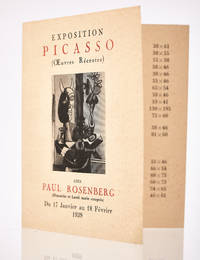
1939réf. 89995Paris: Paul Rosenberg 1939. Fine. First presentation at the Paul Rosenberg Gallery in Paris of an artwork foreshadowing the bull of Guernica: The Negro Sculpture before the Window. Paul Rosenberg Paris 1939 11 x 13.5 cm Une feuille pliée 4 pp. Rare first edition of the catalogue for Picassos final exhibition at the Galerie Paul Rosenberg in Paris held from 17 January to 18 February 1939 at 21 rue La Boétie. The front wrapper is illustrated with a black-and-white photograph of the exhibitions centrepiece: La sculpture nègre devant la fenêtre now known as Buste de Minotaure devant une fenêtre Private Collection; see Zervos vol. VIII p. 360. Painted on 19 April 1937 the work is widely regarded as a precursor to the bull of Guernica executed only a few weeks later. An excellent well-preserved copy. The plaquette lists the 33 works exhibited arranged by year of execution- 1936 1937 and 1938. The verso carries the notice of the next exhibition Centenary of Cézanne dated 20 February 1939. These two events were followed only by a final show devoted to Georges Braque before the gallery closed and Paul Rosenberg left France for permanent exile in the United States. The event met with considerable success as reported by the American collector and sculptor Meric Callery to Alfred H. Barr the first director of the Museum of Modern Art in New York: ""R's Rosenberg present show of Picasso is surprising in that it is so pretty colorful and gay. They have had over 600 people per day to see it."" Making Modernism Michael C. FitzGerald 1996 The adjectives pretty colourful and gay may seem surprising given both Picassos style and the political context of 1939. Indeed the exhibition - comprising chiefly still lifes painted between 1936 and 1938 in the Tremblay-sur-Mauldre studio - appears at first sight to contrast sharply with the tragic contemporary events. From 1937 onwards the Nazis began confiscating over 20000 modern artworks to mount the notorious Entartete Kunst Degenerate Art exhibition. Circulated throughout Germanys major cities it culminated in June 1939 in a large-scale auction to finance the war preceded by the burning of more than 5000 paintings in the courtyard of Berlins main barracks. Fully aware of the ongoing tragedy Paul Rosenberg took measures to save as many works as possible organising in the same year the first retrospective of Picasso at the Museum of Modern Art where Guernica was displayed and preserved. In 1940 he took permanent refuge in New York opening his celebrated gallery on 79th Street while some 2000 works he could not take with him were looted by the Nazis. Belying its seemingly innocuous appearance the exhibition of recent works by the foremost representative of so-called Degenerate Art held by a Jewish dealer constituted a genuine act of resistance to the rise of Nazism. Yet it was above all through a single work prominently displayed in the main salon and reproduced on the catalogues front that Rosenberg and Picasso transformed the still-life exhibition into a profoundly political statement. Later known as Buste du Minotaure devant une fenêtre this transitional work as noted by the art historian Vérane Tasseau is highly symbolic: The bull does not stand for fascism but for brutality and darkness Picasso remarked in the autumn of 1944 during an interview with the young painter Jerome Seckler for the American Marxist journal New Masses. Seckler had hoped to elicit from him the assertion that the late 1938 series of still lifes with bull heads was a political statement in continuity with Guernica."" This first bulls head in the still-life series gradually evolved over the course of 1938 into a curious zoomorphic human visage. It is nevertheless still titled in the catalogue La sculpture nègre devant la fenêtre. Although this title was not retained in subsequent monographs it establishes a remarkable link between two major themes in Picassos oeuvre: th Paul Rosenberg unknown
réf. 05-0037ca. late 1940s. Wool tapestry inspired by images from the late 1940s. 133 x 95 cm. 52 x 37.5 inches. ca. late 1940s. unknown
1946réf. 510632Editions de la Revue Verve Draeger Frères 1946. Hardcover with Dust Jacket. FINE/NEAR FINE. Tall 4to 35.5cm. Illustrated throughout by Picasso on every page with 18 mounted heliogravures and text by Picasso and Jaime Sabartès. Sewn binding in Picasso-designed lithographic paper over boards. Verve double issue devoted to Picasso's lithographs etchings and paintings which he made specifically for his Grimaldi Chateau just purchased while in the Golfe-Juan on the French Riviera with another young lover Francoise Gilot muse for most of the work here. With lithographic cover and dust jacket both designed by Picasso expressly for this issue. The manilla DJ is fairly scarce and here has kept the book itself extremely clean and sharp. Now covered in our thick mylar jacket. “In September October and November he turned out a prodigious amount of work often using boat paint and plywood or fibro-cement because supplies were short and he thought they would better withstand the château’s damp. The centerpiece was the enchanting “Joie de vivre” or “Antipolis” with a dancing Gilot in the center surrounded by frolicking satyrs and fauns… Picasso was recalling an antique past and Antipolis the ancient Greek name of Antibes” New York Times. Editions de la Revue Verve (Draeger Frères) hardcover
réf. EXE-425Paris, Éditions de la revue Verve, Tériade, 1954; Grand in-4° sous cartonnage illustré. Couverture, frontispice et page de titre en couleurs composés par Picasso, tout spécialement pur cette édition. 16 LITHOGRAPHIES en couleurs hors-texte tirées par Mourlot. 164 dessins à pleine-page reproduits en héliogravure par Draeger Frères.
1932réf. 016152Paris Galerie Georges Petit 1932 In-4 Broché, couverture rempliée
1950réf. 2843Paris Chez l'auteur 1950 In-8 (28,5 x 23 cm.), 78 pp. broché. Edition tirée à 1114 exemplaires. Exemplaire de passe (non numéroté) avec la gravure en frontispice tirée en 2 états (sur vergé au trait noir en frontispice, et à part en blanc sur fond noir).
réf. 240513Editions Jeanne Bucher. Paris 1942 In-8 ( 195 x 140 mm ) de 76 pages, broché. 4 gravures au burin, zincographies retravaillées en taille-douce reproduites à pleine pages comprises dans la pagination : un portrait de Dora Maar, deux danseuses et une femme assise. Dos légèrement fragile sinon bon exemplaire de l'édition en grande partie originale ( le poème "Non vouloir" avait originellement paru seul en 1940 ) dont le tirage est limité à 426 exemplaires numérotés. Celui-ci est le N°292, un des 400 numérotés sur vélin bouffant.LE PREMIER « TEXTE RÉSISTANT » QUI NE FUT PAS PUBLIÉ CLANDESTINEMENT, selon Louis PARROT ( LIntelligence en guerre, 1945 ). Le recueil est dédié à Paul ELUARD.
1978réf. 1032521978 6 Paris, Libération et Bazooka Production, janvier 1978-juillet 1978, collection complète.Six fascicules format journal 405x290mm, 32p., en feuilles, impression en couleurs.Directeur de la publication Alain Bizot, participation de Olivia Clavel, Loulou Picasso, Kiki Picasso et Lulu Larsen, avec le concours de Libération ou Serge July, alors directeur du journal écrira le 12 août 1977 (pp.12-13) : « Bazooka fout la merde ».Le groupe a également publié de nombreuses page d’illustration dans le même journal toujours dans un esprit de provocation c’est la première génération de l’après guerre dont la culture dominante est celle de l’image et non du texte.Défauts et manques au dos n°0.Contre-cultures 1969-1989 L'Esprit Français p.256-257. (103252)
1990réf. 138PARIS. PHILIPPE LEBAUD ÉDITEUR - CLUB DU LIVRE - SPADEM ET HÉRITIERS DE PICASSO. 1990. GRAND IN-FOLIO (63 X 42 X 8 CENTIMÈTRES ENVIRON) DE 36 PAGES + 31 PLANCHES, SOUS EMBOITAGE TOILE BLEUE DE L'ÉDITEUR, ILLUSTRÉ D'UNE REPRODUCTION EN COULEURS DE PICASSO SUR LE PLAT SUPÉRIEUR, TITRE EN BLANC. ILLUSTRÉ DE 42 ÉTUDES PRÉLIMINAIRES EN NOIR ET EN COULEURS, REPRODUITES EN FAC-SIMILÉ, RÉPARTIES SUR 31 PLANCHES SOUS PASSE PARTOUT. SANS LA NOTICE DE 36 PAGES COMMENTANT CHAQUE ILLUSTRATION. PREMIER TIRAGE LIMITÉ A 1967 EXEMPLAIRES NUMÉROTÉS DE 1 À 1937 ET DE I À XXX POUR LES COLLABORATEURS, CELUI-CI PORTANT LE NUMÉRO 1864. PETIT DEFAUT SANS GRAVITE AU NIVEAU D’UN ANGLE INTERIEUR DE L’EMBOITAGE, SINON BON EXEMPLAIRE.
1990réf. 1657PARIS. PHILIPPE LEBAUD ÉDITEUR - CLUB DU LIVRE - SPADEM ET HÉRITIERS DE PICASSO. 1990. GRAND IN-FOLIO (63 X 42 X 8 CENTIMÈTRES ENVIRON) DE 36 PAGES + 31 PLANCHES, SOUS EMBOITAGE TOILE BLEUE DE L'ÉDITEUR, ILLUSTRÉ D'UNE REPRODUCTION EN COULEURS DE PICASSO SUR LE PLAT SUPÉRIEUR, TITRE EN BLANC. ILLUSTRÉ DE 42 ÉTUDES PRÉLIMINAIRES EN NOIR ET EN COULEURS, REPRODUITES EN FAC-SIMILÉ, RÉPARTIES SUR 31 PLANCHES SOUS PASSE PARTOUT. ACCOMPAGNÉ D'UNE GRANDE NOTICE DE 36 PAGES COMMENTANT CHAQUE ILLUSTRATION. PREMIER TIRAGE LIMITÉ A 1967 EXEMPLAIRES NUMÉROTÉS DE 1 À 1937 ET DE I À XXX POUR LES COLLABORATEURS, CELUI-CI PORTANT LE NUMÉRO 706. DEFAUTS, SURTOUT EXTERIEURS : FROTTEMENTS, TACHES A L’EMBOITAGE ET RENFORT A UN ANGLE. TOUT PETIT PRIX COMPTE TENU DES DEFAUTS SIGNALES.
1990réf. 1901PARIS. PHILIPPE LEBAUD ÉDITEUR - CLUB DU LIVRE - SPADEM ET HÉRITIERS DE PICASSO. 1990. GRAND IN-FOLIO (63 X 42 X 8 CENTIMÈTRES ENVIRON) DE 36 PAGES + 31 PLANCHES, SOUS EMBOITAGE TOILE BLEUE DE L'ÉDITEUR, ILLUSTRÉ D'UNE REPRODUCTION EN COULEURS DE PICASSO SUR LE PLAT SUPÉRIEUR, TITRE EN BLANC. ILLUSTRÉ DE 42 ÉTUDES PRÉLIMINAIRES EN NOIR ET EN COULEURS, REPRODUITES EN FAC-SIMILÉ, RÉPARTIES SUR 31 PLANCHES SOUS PASSE PARTOUT. ACCOMPAGNÉ D'UNE GRANDE NOTICE DE 36 PAGES COMMENTANT CHAQUE ILLUSTRATION. PREMIER TIRAGE LIMITÉ A 1967 EXEMPLAIRES NUMÉROTÉS DE 1 À 1937 ET DE I À XXX POUR LES COLLABORATEURS, CELUI-CI PORTANT LE NUMÉRO 511. QUELQUES DEFAUTS EXTERIEURS, QUELQUES TACHES BRUNES SUR LE PLAT SUPERIEUR DE LA NOTICE. TOUT PETIT PRIX COMPTE TENU DES DEFAUTS SIGNALES.
1990réf. 2971PARIS. PHILIPPE LEBAUD ÉDITEUR - CLUB DU LIVRE - SPADEM ET HÉRITIERS DE PICASSO. 1990. GRAND IN-FOLIO (63 X 42 X 8 CENTIMÈTRES ENVIRON) DE 36 PAGES + 31 PLANCHES, SOUS EMBOITAGE TOILE BLEUE DE L'ÉDITEUR, ILLUSTRÉ D'UNE REPRODUCTION EN COULEURS DE PICASSO SUR LE PLAT SUPÉRIEUR, TITRE EN BLANC. ILLUSTRÉ DE 42 ÉTUDES PRÉLIMINAIRES EN NOIR ET EN COULEURS, REPRODUITES EN FAC-SIMILÉ, RÉPARTIES SUR 31 PLANCHES SOUS PASSE PARTOUT. ACCOMPAGNÉ D'UNE GRANDE NOTICE DE 36 PAGES COMMENTANT CHAQUE ILLUSTRATION. PREMIER TIRAGE LIMITÉ A 1967 EXEMPLAIRES NUMÉROTÉS DE 1 À 1937 ET DE I À XXX POUR LES COLLABORATEURS, CELUI-CI PORTANT LE NUMÉRO 799. QUELQUES DEFAUTS EXTERIEURS : FROTTEMENTS, TACHES A L’EMBOITAGE. PETIT PRIX COMPTE TENU DES DEFAUTS SIGNALES.
réf. 101Vallauris, Galerie Madoura, 7 calendriers à spirales [2001, 2002, 2003, 2005, 2006, 2007, 2008], 4 rectangulaires, 3 oblongs, 31 x 21,5 cm, numérotés, E.O. Très bel état. L'atelier de céramique Madoura fondé à Vallauris par Suzanne Douly Ramié (1905 -1974) et Georges Ramié (1901-1976) est l'éditeur exclusif des œuvres céramiques de Pablo Picasso (1881-1973).Les 7 calendriers présentent 91 photographies en couleur des céramiques de Picasso : poteries, vases, assiettes, plats et d'autres oeuvres. Chaque oeuvre est légendée avec son tirage et son année de création. Edition bilingue anglais français. Sur la couverture, les souhaits du fils des fondateurs: « Alain Ramié, avec ses meilleurs souhaits. Alain Ramié, with his best wishes. »Calendriers adressés aux clients de l'atelier et très rarement mis en vente.L’arrivée de Picasso à Vallauris dans les années 1940 a bouleversé la conception de la production de céramique en modifiant les références traditionnelles des potiers : plus de 3000 oeuvres originales de l'artiste furent produites dans cet atelier. Jean Cocteau, Victor Brauner, Marc Chagall ou encore Henri Matisse ont également travaillé dans cet atelier. Le fils de Suzanne et Georges Ramié, Alain Ramié, éditeur de ces calendriers, a fermé les portes de l'atelier Madoura en 2007.
1936réf. 028494New York / Los Angeles: Merle Armitage / Lynton Kistler 1936. 1st Edition 1st Printing. Hardcover. Near Fine. Original Signed Lithograph By Pasquale Giovanni Napolitano. 60 Pp. Beige Morocco Blindstamped In Similar But Not Duplicative Design As The Regular Clothbound Issue But In A Larger Format 6 9/16" X 5 3/32" Which Preserves More Of The Original Lithographic Drawing We Also Have Available Separately A Full Page Printing Of The Lithograph Signed And Annotated By Napolitano Which Image Is Abbreviated Even In This Large Paper Copy.There Is A Stated Limitation Of 112 Copies This Copy Numbered 116 One Of Armitage's Copies Of A Small Overage In The Print Run. Designed By Merle Armitage Printed By Adcraft Under Supervision Of Lynton R. Kistler. Frontispiece Lithograph Portrait Of Picasso By Napolitano Pulled By Hand From Stone By Lynton Kistler And Signed In Pencil By Napolitano. Text Printed In Bodoni 12 Pt. Additionally Inscribed By Armitage "A Special Leather Bound Copy For Napolitano Merle Armitage 1936". A Near Fine Copy Slight Rubbing At Corners Of Binding. A Possibly Unique Armitage Printing In This Larger Format. Merle Armitage / Lynton Kistler hardcover
1939réf. 785Editions Ambroise Vollard, Paris 1939. Petit in-4 (250 x 195 mm) en feuilles sous couverture illustrée à rabats. 43 GRAVURES ORIGINALES D'ARISTIDE MAILLOL : (une vignette de couverture), frontispice, (vignette de titre), 15 gravures en hors-texte et 27 dans le texte. Table des gravures et colophon illustré d'une vignette. Tirage à 230 exemplaires, celui-ci étant l'un des 170 numérotés sur vélin vergé de Montval au filigrane dessiné par Maillol. Imprimeurs : Henri Jourde pour le texte et Roger Lacourière pour les gravures. Seul livre illustré de pointes-sèches par Maillol et le dernier ouvrage édité par Ambroise Vollard qui allait se tuer dans un accident de voiture quelques semaines après la publication.
1956réf. 692231956 Paris, Editions Joseph Forêt, 1956 , Deux plaquettes in-8 en feuilles au format 17 x 25 cm, ss pp, En feuillets, très bon état, recueil sous une chemise imprimée " tête-bêche" de deux superbes lithographies originales de Jean Cocteau,
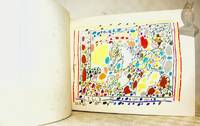
1961réf. 61190Monte-Carlo : André Sauret 1961. SABARTES Jaime. - PICASSO lithographies.A los toros avec Picasso. Texte de Jaime Sabartès. Monte-Carlo André Sauret1961 250x320mm 153 pages 103 photos couleurs et n/b4 lithographies originales dont une en 24 couleurs tirées sur les presses de Mourlot Frères reliure toile de l’éditeur. Format oblong. Bel exemplaire. For shipments to the U.S.A. with a value exceeding 800 USD VAT is not included. Please contact us via our website if needed. André Sauret unknown