Pablo Picasso, Valentine Gallery (New York, NY) (Publisher), American Artists' Congress N YBiblio.com
5 595 résultats
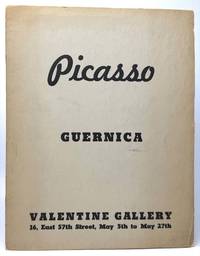
1937réf. 260601011New York: Valentine Gallery 1937. First Edition. Paperback. Very Good. 8 pages; 3 b/w plates; artists port.; 26 cm quarto. With the folding sheet insert 'Dreams and Lies of Franco' by Picasso. Light bumping to pages; worn/chipped wraps with edge creasing and some minor staining; no ownership markings. Well packaged in a box; ships with tracking Valentine Gallery paperback
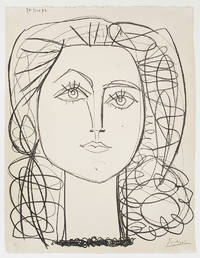
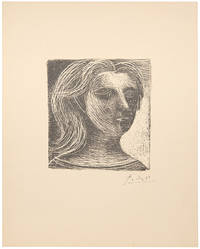
réf. 1225291946 . Lithograph 14 June 1946 on Arches wove paper signed in pencil by the artist numbered from the edition of 50 64 x 49.5 cm. 25¼ x 19½ in. Françoise Gilot was Pablo Picasso's muse and lover during the period 1943-1953. This decade spent together was to be one of the most transformative periods of Picasso's artistic career; Europe was emerging from World War II the artist left Paris for his first residence in the South of France at Vallauris and he and Gilot became parents to children Claude and Paloma. Françoise Gilot was just twenty-one years old and an art student in Paris when she first met Picasso presenting a forty-year age gap between the couple. Picasso had grown tired of his then mistress Dora Maar and swiftly became consumed with Gilot's striking beauty and vitality. He created numerous portraits of Gilot throughout their relationship often in a hyper-stylised abstract manner. In this lithograph Picasso uses his simplified mark-making to capture her characteristic dark arching eyebrows luscious locks and youthful doe-eyed face. Bloch 399; Mourlot 43; Reuße 150. 1946 unknown
1956réf. 89979Paris: Seghers 1956. Fine. Seghers Paris 1956 12 x 22.7 cm Broché First edition one of 10 lettered copies on Holland paper the only deluxe copies.Illustrated on the cover with a portrait of Max Jacob by Pablo Picasso.A rare and handsome copy. Seghers unknown
réf. 120103Paris Le degré quarante et un 1940. . Limited edition number 42 of 50 copies from a total edition of 64 oblong 4to; signed in red by Iliazd and pencil by Picasso on the Russian justification page with 6 illustrations total: 2 aquatints and 4 engravings with burin on Montval wove à la cuve paper some minor foxing more so to some leaves text in Russian; attached with string unbound in wrappers reinforced with grey cardboard and a sheet of Montval paper some pages uncut title in black kufic lettering on the front; brown paper-covered slipcase a very good copy. One of 50 copies - signed by Iliazd and Picasso. The first of nine books Iliazd and Picasso collaborated on. All of them were published under the imprint of 'Degré Quarante et Un' a name Iliazd chose in memory of a school of futurist poetry called the 'University of the 41º' which he had founded in Tiflis in 1917. Afat is a collection of seventy-six classical sonnets in Russian written by Iliazd the majority of which were written between January and June 1938. In his poems Iliazd writes of love of feminine beauty of the poet's difficult métier and the hidden meaning of words. Three sonnets are about the poet's relationship to 'Pablo' Picasso.' Patrick Cramer. The sonnets are preceded by two Arabic titles in aquatint by Picasso both titles are written in kufic letters. The title Afat is a Persian term signifying unhappiness in love. The second title 'Madjusiya' means 'sorceress' and the illustrations Picasso produced were inspired by these two words. The first ten examples were reserved for close friends. Coco Chanel's copy number five included an extra sonnet dedicated to her. Paris, Le degré quarante et un, 1940. unknown
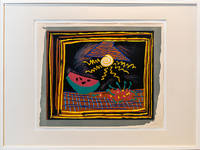
réf. 1205161962 . Linocut in colours 1962 on Arches paper signed in pencil and numbered 15 from the edition of 160 there were also approximately twenty artist's proofs published by Galerie L. Leiris Paris sheet: 61.2 x 75 cm. 24 x 29.5 in. Bloch 1098; Baer 1301. 1962 unknown
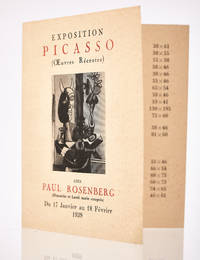
1939réf. 89995Paris: Paul Rosenberg 1939. Fine. First presentation at the Paul Rosenberg Gallery in Paris of an artwork foreshadowing the bull of Guernica: The Negro Sculpture before the Window. Paul Rosenberg Paris 1939 11 x 13.5 cm Une feuille pliée 4 pp. Rare first edition of the catalogue for Picassos final exhibition at the Galerie Paul Rosenberg in Paris held from 17 January to 18 February 1939 at 21 rue La Boétie. The front wrapper is illustrated with a black-and-white photograph of the exhibitions centrepiece: La sculpture nègre devant la fenêtre now known as Buste de Minotaure devant une fenêtre Private Collection; see Zervos vol. VIII p. 360. Painted on 19 April 1937 the work is widely regarded as a precursor to the bull of Guernica executed only a few weeks later. An excellent well-preserved copy. The plaquette lists the 33 works exhibited arranged by year of execution- 1936 1937 and 1938. The verso carries the notice of the next exhibition Centenary of Cézanne dated 20 February 1939. These two events were followed only by a final show devoted to Georges Braque before the gallery closed and Paul Rosenberg left France for permanent exile in the United States. The event met with considerable success as reported by the American collector and sculptor Meric Callery to Alfred H. Barr the first director of the Museum of Modern Art in New York: ""R's Rosenberg present show of Picasso is surprising in that it is so pretty colorful and gay. They have had over 600 people per day to see it."" Making Modernism Michael C. FitzGerald 1996 The adjectives pretty colourful and gay may seem surprising given both Picassos style and the political context of 1939. Indeed the exhibition - comprising chiefly still lifes painted between 1936 and 1938 in the Tremblay-sur-Mauldre studio - appears at first sight to contrast sharply with the tragic contemporary events. From 1937 onwards the Nazis began confiscating over 20000 modern artworks to mount the notorious Entartete Kunst Degenerate Art exhibition. Circulated throughout Germanys major cities it culminated in June 1939 in a large-scale auction to finance the war preceded by the burning of more than 5000 paintings in the courtyard of Berlins main barracks. Fully aware of the ongoing tragedy Paul Rosenberg took measures to save as many works as possible organising in the same year the first retrospective of Picasso at the Museum of Modern Art where Guernica was displayed and preserved. In 1940 he took permanent refuge in New York opening his celebrated gallery on 79th Street while some 2000 works he could not take with him were looted by the Nazis. Belying its seemingly innocuous appearance the exhibition of recent works by the foremost representative of so-called Degenerate Art held by a Jewish dealer constituted a genuine act of resistance to the rise of Nazism. Yet it was above all through a single work prominently displayed in the main salon and reproduced on the catalogues front that Rosenberg and Picasso transformed the still-life exhibition into a profoundly political statement. Later known as Buste du Minotaure devant une fenêtre this transitional work as noted by the art historian Vérane Tasseau is highly symbolic: The bull does not stand for fascism but for brutality and darkness Picasso remarked in the autumn of 1944 during an interview with the young painter Jerome Seckler for the American Marxist journal New Masses. Seckler had hoped to elicit from him the assertion that the late 1938 series of still lifes with bull heads was a political statement in continuity with Guernica."" This first bulls head in the still-life series gradually evolved over the course of 1938 into a curious zoomorphic human visage. It is nevertheless still titled in the catalogue La sculpture nègre devant la fenêtre. Although this title was not retained in subsequent monographs it establishes a remarkable link between two major themes in Picassos oeuvre: th Paul Rosenberg unknown
1973réf. 91826Paris: GLM 1973. Fine. GLM Paris 1973 16.2 x 22.5 cm En feuilles First edition one of the numbered copies on offset paper the only issue after 42 copies on Arches vellum. A pleasing copy. GLM hardcover
1971réf. 91834Paris Lausanne: Bibliothèque des ArtsClub français du livre 1971. Fine. Bibliothèque des Arts Club français du livre Paris Lausanne 1971 25.4 x 34 cm Reliure de l'éditeur sous étui Deluxe edition specially produced for members of the Club français du livre and printed in 1000 numbered copies. Publisher's special binding in full red cloth smooth spine housed in a black slipcase bearing at the foot of the upper cover the gilt statement : ""cette édition de luxe a été spécialement réalisée pour les adhérents du Club français du livre"". Richly illustrated with an essay by José Bergamin and the French translation prepared by Elisabeth Servan-Schreiber. Nice copy. Bibliothèque des ArtsClub français du livre hardcover
réf. Z1-F-049-01712Riverrun Pr. Used - Good. Ships from UK in 48 hours or less usually same day. Your purchase helps support Sri Lankan Children's Charity 'The Rainbow Centre'. Ex-library so some stamps and wear but in good overall condition. 100% money back guarantee. We are a world class secondhand bookstore based in Hertfordshire United Kingdom and specialize in high quality textbooks across an enormous variety of subjects. We aim to provide a vast range of textbooks rare and collectible books at a great price. Our donations to The Rainbow Centre have helped provide an education and a safe haven to hundreds of children who live in appalling conditions. We provide a 100% money back guarantee and are dedicated to providing our customers with the highest standards of service in the bookselling industry. Riverrun Pr unknown
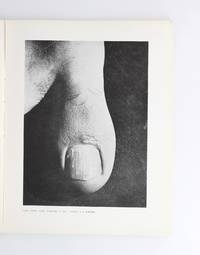
1929réf. 88960Paris: Documents 1929. Fine. ""Documents . was made into a laboratory a genesis a crucible a rebellion a madness in short an avant-garde."" Jean Jamin Documents Paris 1929-1930 nº 1 à 7 avril 1929 - décembre 1929 ; nº 1 à 8 janvier 1930- octobre 1930 22 x 27.50 cm 15 volumes brochés sous coffret First edition 15 issues in 15 separate instalments abundantly illustrated with black and white photographs. Complete with the special issue Hommage à Picasso #3 1930 and the index for the year 1929 published as a separate 8-page stapled booklet. Some spines slightly faded not affecting the text occasional minor foxing along the margins of certain covers Presented in a custom slipcase with a flat spine in blue morocco title stamped in palladium and spine framed in palladium decorative blue paper boards sky-blue suede doublures; a handsome ensemble signed Boichot. Complete series of this legendary and non-conformist magazine founded by Georges Bataille which gave voice to fields of art and knowledge unrecognised by official culture or considered controversial: popular literature jazz cabaret advertising everyday life Annie Pirabot along with so-called primitive art and objects. Texts by Jean Babelon Jacques Baron Georges Bataille Alejo Carpentier Arnaud Dandieu Robert Desnos Carl Einstein Roger Gilbert-Lecomte Marcel Griaule Juan Gris Eugene Jolas Marcel Jouhandeau Michel Leiris Georges Limbour Marcel Mauss Léon Pierre-Quint Jacques Prévert Raymond Queneau Zdenko Reich Paul Rivet Georges Ribemont-Dessaignes Georges-Henri Rivière André Schaeffner Roger Vitrac among others. Numerous full-page artistic contributions by Hans Arp Constantin Brancusi Giorgio De Chirico Alberto Giacometti Juan Gris Henri Laurens Fernand Léger André Masson Joan Miró Pablo Picasso Joseph Sima etc. The journals pioneering and interdisciplinary approach established it as one of the most important publications of the century: a dissident voice against the doctrinaire surrealism of André Breton Documents was conceived as a war machine against received ideas in Batailles own words and gathered an eclectic array of contributorsacademics ex-Dadaist and Surrealist painters and poets philosophers. It remains renowned for its striking juxtapositions: Rather than assemble documents from separate fields rather than uphold the usual subordination of image to text the journal gives photography drawing and image the privilege of being the most primal substance or the most original trace of human expression Georges Sebbag. Ethnography Documents is remembered above all for Batailles radical ethnographic stance focused on the material and detached from aesthetic criteria and the usual fascination with exoticism. These groundbreaking views foreshadow the Collège de sociologie that Bataille would later found with Michel Leiris Roger Caillois and Jules Moncrot. They are also reflected in the journal through numerous photographs of masks stones and other non-Western artistic creations Siberian Chinese. set alongside modern artworks including drawings by Klee and paintings by Picasso. Bataille also collaborated with the notorious Hans Bellmer who would go on to illustrate the famous second edition of Histoire de lil to create a terrifying portrait of the Hindu goddess of destruction Kali. photography The journal places particular emphasis on photography. Among its most celebrated contributions are the close-up photographs of toes by Jacques-André Boiffard accompanying Batailles essay on the foot in issue no. 6: The point of this article lies in an insistence on directly and explicitly challenging what seduces without relying on poetic contrivances which ultimately amount to little more than diversion Bataille concludes. His fascination with the abnormal and the destructive is also evident in Boiffards fetishistic and sadomasochistic photograph of a woman wearing a Documents hardcover
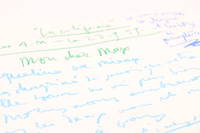
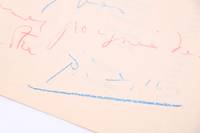
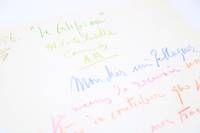
1959réf. 89523Cannes 1959. Fine. A polychrome and artistic link in an epistolary chain that linked Picasso to his prominent patron for decades Cannes 23 septembre 1959 21 x 27 cm un feuillet Multi-coloured autograph letter from Pablo Picasso to Max Pellequer signed and dated by the artist on September 23 1959. The document includes the autograph address of his villa La Californie. Ten lines in blue and green pencils on a watermarked BFK Rives sheet.Minor folds and marks. A very elegant letter written in pastel colours by Pablo Picasso. Despite his prolific correspondence Picasso's entirely autographed letters are extremely rare as Laurence Madeline points out in her article on the confidential activity of the great artist:The inertia paralyzing Picasso who preferred his work as an artist to that of a secretary made the letters he took pleasure in writing more essential and more touching Laurence Madeline Picasso épistolier L'Herne no. 106. Living on the hills over Cannes the painter was indeed helped by his faithful secretary and childhood friend Jaume Sabartés who was responsible for writing numerous missives save a few correspondents notably Pellequer. Picasso wrote each of Pellequer's letters even the most insignificant in an ample voluptuous script playing with letters and words as graphic objects blending aesthetically in the space of the page in perfect contrast to the prosaic nature of the letter's content. It could even be argued that his artistic soul largely invaded his daily and administrative correspondence with his banker and ardent collector of his works. Part of their correspondence is kept at the National Picasso Museum in Paris. An extraordinary recipient. Banker and collector Max Pellequer was introduced to Picasso in 1914 by his uncle by marriage André Level. He quickly became one of Picasso's most important collectors and his financial advisor for over 30 years. Pellequer's interest in his art began as early as the 1910's when he purchased a Picasso bronze from the art dealer Ambroise Vollard. During the 1930s and 1940s as Picasso's personal banker he secured and enhanced the painter's wealth and allowed him to settle comfortably in the South of France. Picasso created a superb ex-libris on copper for him bought him paintings including La mer à L'Estaque by Cézanne now in the Picasso museum and offered him a few works. Pellequer assembled a vast collection of paintings by the great masters of modern art: Degas Raoul Dufy Paul Gauguin Fernand Léger Henri Matisse Joan Miró Modigliani and Maurice Utrillo today preserved in the most important international museums. The epistolary art of Picasso. Picasso's epistolary production acted as an outlet for his incessant creative energy which was expressed in ceramics sculptures photographs illustrations collages or poetry. Each letter was an opportunity for genius to blossom regardless of the administrative content of his exchanges with Pellequer. Perhaps to counteract the dullness of his work Picasso redoubled his efforts: an explosion of color calligraphic letters across the page. to conjure up beauty and adorn his words in shimmering hues using oil pastels black felt-tip pens or colored pencils.These alphabet letters numbers words and sentences placed on the paper like so many musical scales are literally brought to life by the creative power of the painter. The years of La Californie in Cannes. Living with Jacqueline Roque in the villa La Californie at the time of this letter the painter was producing a series of captivating lithographed portraits of his partner. Paradoxically this colorful letter corresponds to a very monochrome period of his work a superb counterpart to the black washes on zinc. Matisse with whom Pellequer also corresponded had died a month earlier. A very beautiful and visual illustration of Picasso's need for total expression through his correspondence with one of his close advisors an unknown
1958réf. 895271958. Fine. 23 septembre 1958 20 x 17.5 cm Deux pages sur un feuillet Multi-coloured autograph letter from Pablo Picasso to Max Pellequer signed and dated by the artist on September 23 1958. The document includes the autograph address of his villa La Californie. 13 lines in a multi-coloured tip pen orange red blue and green on a sheet marked VIA WESTERN UNION.Minor folds. Tear in the lower left corner. Colour is not systematically used in Pablo Picasso's letters. It would seem that the artist wanted to make a kind gesture towards his friend and banker Max Pellequer because the more aesthetically pleasing his letters are the more valuable they are. The use of a multicoloured pen in letter writing was a practice shared by several artists notably Paul Éluard. Despite his prolific correspondence Picasso's entirely autographed letters are extremely rare as Laurence Madeline points out in her article on the confidential activity of the great artist:The inertia paralyzing Picasso who preferred his work as an artist to that of a secretary made the letters he took pleasure in writing more essential and more touching Laurence Madeline Picasso épistolier L'Herne no. 106. Living on the hills over Cannes the painter was indeed helped by his faithful secretary and childhood friend Jaume Sabartés who was responsible for writing numerous missives save a few correspondents notably Pellequer. Picasso wrote each of Pellequer's letters even the most insignificant in an ample voluptuous script playing with letters and words as graphic objects blending aesthetically in the space of the page in perfect contrast to the prosaic nature of the letter's content. It could even be argued that his artistic soul largely invaded his daily and administrative correspondence with his banker and ardent collector of his works. Part of their correspondence is kept at the National Picasso Museum in Paris. An extraordinary recipient. Banker and collector Max Pellequer was introduced to Picasso in 1914 by his uncle by marriage André Level. He quickly became one of Picasso's most important collectors and his financial advisor for over 30 years. Pellequer's interest in his art began as early as the 1910's when he purchased a Picasso bronze from the art dealer Ambroise Vollard. During the 1930s and 1940s as Picasso's personal banker he secured and enhanced the painter's wealth and allowed him to settle comfortably in the South of France. Picasso created a superb ex-libris on copper for him bought him paintings including La mer à L'Estaque by Cézanne now in the Picasso museum and offered him a few works. Pellequer assembled a vast collection of paintings by the great masters of modern art: Degas Raoul Dufy Paul Gauguin Fernand Léger Henri Matisse Joan Miró Modigliani and Maurice Utrillo today preserved in the most important international museums. The epistolary art of Picasso. Picasso's epistolary production acted as an outlet for his incessant creative energy which was expressed in ceramics sculptures photographs illustrations collages or poetry. Each letter was an opportunity for genius to blossom regardless of the administrative content of his exchanges with Pellequer. Perhaps to counteract the dullness of his work Picasso redoubled his efforts: an explosion of color calligraphic letters across the page. to conjure up beauty and adorn his words in shimmering hues using oil pastels black felt-tip pens or colored pencils.These alphabet letters numbers words and sentences placed on the paper like so many musical scales are literally brought to life by the creative power of the painter. The years of La Californie in Cannes. Living with Jacqueline Roque in the villa La Californie at the time of this letter the painter was producing a series of captivating lithographed portraits of his partner. Paradoxically this colorful letter corresponds to a very monochrome period of his work a superb cou unknown
1956réf. 89526Cannes 1956. Fine. A polychrome and artistic link in an epistolary chain that linked Picasso to his prominent patron for decades Cannes 5 juin 1956 13.5 x 21 cm un feuillet Multi-coloured autograph letter from Pablo Picasso to Max Pellequer signed and dated by the artist on June 5 1956. The document includes the autograph address of his villa La Californie. Twelve lines in orange pink blue yellow and purple pencil on one sheet. Minor folds. A very elegant letter written in pastel colours by Pablo Picasso. Despite his prolific correspondence Picasso's entirely autographed letters are extremely rare as Laurence Madeline points out in her article on the confidential activity of the great artist:The inertia paralyzing Picasso who preferred his work as an artist to that of a secretary made the letters he took pleasure in writing more essential and more touching Laurence Madeline Picasso épistolier L'Herne no. 106. Living on the hills over Cannes the painter was indeed helped by his faithful secretary and childhood friend Jaume Sabartés who was responsible for writing numerous missives save a few correspondents notably Pellequer. Picasso wrote each of Pellequer's letters even the most insignificant in an ample voluptuous script playing with letters and words as graphic objects blending aesthetically in the space of the page in perfect contrast to the prosaic nature of the letter's content. It could even be argued that his artistic soul largely invaded his daily and administrative correspondence with his banker and ardent collector of his works. Part of their correspondence is kept at the National Picasso Museum in Paris. An extraordinary recipient. Banker and collector Max Pellequer was introduced to Picasso in 1914 by his uncle by marriage André Level. He quickly became one of Picasso's most important collectors and his financial advisor for over 30 years. Pellequer's interest in his art began as early as the 1910's when he purchased a Picasso bronze from the art dealer Ambroise Vollard. During the 1930s and 1940s as Picasso's personal banker he secured and enhanced the painter's wealth and allowed him to settle comfortably in the South of France. Picasso created a superb ex-libris on copper for him bought him paintings including La mer à L'Estaque by Cézanne now in the Picasso museum and offered him a few works. Pellequer assembled a vast collection of paintings by the great masters of modern art: Degas Raoul Dufy Paul Gauguin Fernand Léger Henri Matisse Joan Miró Modigliani and Maurice Utrillo today preserved in the most important international museums. The epistolary art of Picasso. Picasso's epistolary production acted as an outlet for his incessant creative energy which was expressed in ceramics sculptures photographs illustrations collages or poetry. Each letter was an opportunity for genius to blossom regardless of the administrative content of his exchanges with Pellequer. Perhaps to counteract the dullness of his work Picasso redoubled his efforts: an explosion of color calligraphic letters across the page. to conjure up beauty and adorn his words in shimmering hues using oil pastels black felt-tip pens or colored pencils.These alphabet letters numbers words and sentences placed on the paper like so many musical scales are literally brought to life by the creative power of the painter. The years of La Californie in Cannes. Living with Jacqueline Roque in the villa La Californie at the time of this letter the painter was producing a series of captivating lithographed portraits of his partner. Paradoxically this colorful letter corresponds to a very monochrome period of his work a superb counterpart to the black washes on zinc. Matisse with whom Pellequer also corresponded had died a month earlier. A very beautiful and visual illustration of Picasso's need for total expression through his correspondence with one of his close advisors and friends. unknown
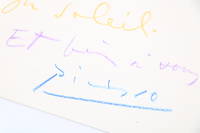
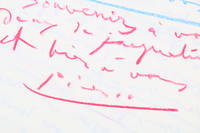
1956réf. 895241956. Fine. ""Mistral et soleil"" Mistral and sunshine 7 juin 1956 26.80 x 20.90 cm un feuillet dont deux lignes sur une page Autograph letter in blue and red pencil by Pablo Picasso to Max Pellequer signed and dated by the author on June 7 1956. The document includes the autograph address of his villa La Californie. 12 lines on the front of the letter and two lines on the back on a printed notice announcing the forthcoming publication of a book by Thérèse Leroy. Minor folds and a slight crease in the lower left corner. We have here a rare written account of Pablo Picasso engaging in self-deprecation. In his villa ""Californie"" the painter found a printed poster announcing the forthcoming publication of the book ""La technique du classement"" The Technique of Classification. On this announcement he humorously wrote the following words: ""Je vais m'y mettre. Un peu sur le tard"" I'll get started on it with slight delay well aware that he preferred to devote his time to his art rather than to administrative tasks. Picasso refers here to the topic of his letter the discovery of a new insurance document requested by its recipient. Max Pellequer who managed his finances knew only too well the disorderly nature of his friend the artist with 50000 works to his credit. Picasso's true concerns however seem to reflect in the letter's graphic composition. He changed the colour and size of the characters to highlight what really mattered to him: beauty and friendship. « Mistral et soleil. Allez bien et bonne poignée de main de votre Picasso » ! ""Mistral and sunshine and a proper handshake to you from Picasso""! Despite his prolific correspondence Picasso's entirely autographed letters are extremely rare as Laurence Madeline points out in her article on the confidential activity of the great artist:The inertia paralyzing Picasso who preferred his work as an artist to that of a secretary made the letters he took pleasure in writing more essential and more touching Laurence Madeline Picasso épistolier L'Herne no. 106. Living on the hills over Cannes the painter was indeed helped by his faithful secretary and childhood friend Jaume Sabartés who was responsible for writing numerous missives save a few correspondents notably Pellequer. Picasso wrote each of Pellequer's letters even the most insignificant in an ample voluptuous script playing with letters and words as graphic objects blending aesthetically in the space of the page in perfect contrast to the prosaic nature of the letter's content. It could even be argued that his artistic soul largely invaded his daily and administrative correspondence with his banker and ardent collector of his works. Part of their correspondence is kept at the National Picasso Museum in Paris. An extraordinary recipient. Banker and collector Max Pellequer was introduced to Picasso in 1914 by his uncle by marriage André Level. He quickly became one of Picasso's most important collectors and his financial advisor for over 30 years. Pellequer's interest in his art began as early as the 1910's when he purchased a Picasso bronze from the art dealer Ambroise Vollard. During the 1930s and 1940s as Picasso's personal banker he secured and enhanced the painter's wealth and allowed him to settle comfortably in the South of France. Picasso created a superb ex-libris on copper for him bought him paintings including La mer à L'Estaque by Cézanne now in the Picasso museum and offered him a few works. Pellequer assembled a vast collection of paintings by the great masters of modern art: Degas Raoul Dufy Paul Gauguin Fernand Léger Henri Matisse Joan Miró Modigliani and Maurice Utrillo today preserved in the most important international museums. The epistolary art of Picasso. Picasso's epistolary production acted as an outlet for his incessant creative energy which was expressed in ceramics sculptures photographs illustrations collages or poetry. Each letter unknown
1957réf. 89530Cannes 1957. Fine. ""The 7th Bull races"" Cannes 13 juin 1957 21 x 27 cm 2 pages sur un feuillet Multi-coloured autograph letter from Pablo Picasso to Max Pellequer signed and dated by the author on June 13 1957. The document includes the autograph address of his villa La Californie. 2 pages on one sheet 22 lines in green blue and red pencils on a watermarked sheet. Minor folds. An exceptional account of Pablo Picasso's passion for bullfighting a recurring theme in his art since his very first works painted at the age of eight ""The Little Yellow Picador"" 1899. Pablo Picasso gives Max Pellequer and his wife details regarding a trip to Arles on July 5 6 and 7 1957 to which the artist has invited them along with a handful of friends. With undisguised enthusiasm he announces that he has booked their rooms at the ""Norpinus"" Nord-Pinus and their seats for the bullfight. Only after providing this essential information does the painter mention the opening of his exhibition at the Réatu Museum and the official dinner with Douglas Cooper the great collector and the mayor of Arles Charles Privat: ""Dinner with Cooper & the mayor"". A performance of ""Aïda at the bullring"" is also scheduled during this Arlesian getaway which ends on the 7th with an intriguing ""bull run with the presence of a black king"". In the 1950s Pablo Picasso and Jacqueline Roque are regular visitors to the Arles bullrings. At that time the painter is not discovering the city. Fascinated by Van Gogh's portraits he paints his first Arlésienne in 1912 and his last featuring Jacqueline just after writing this letter in 1958. But it is his love of bullfighting that will ultimately bind the Andalusian to the bullfighting capital of Provence. From his early Barcelona works Scène de corrida and courses de Taureaux presented to Ambroise Vollard in 1901 to the famous and omnipresent theme of the Minotaur Picasso was one of the main promoters of bullfighting in France. In the late 1950s Arles becomes the painter's mecca for his passion immortalised in 1956 by David Douglas Duncan who photographed Pablo in the Arles bullring captivated by the bullfights. This exceptional letter bears witness to the excitement of the artist who at the height of his international fame becomes for the time being a groupie happy to accommodate his friends in the legendary ""Norpinus"" hotel known for hosting toreros after their bullfights. Bullfighting also features in the other major events presented by the artist in the 22 lines of our sheet. He announces the opening of his first exhibition at the Musée Réattu which gives pride of place to the figure of the bull in Picasso's work. Among the paintings on display from July 6 to September 2 1957 38 of the artist's artworks will be exhibited for the first time. Picasso the main lender for this event will ironically be absent from the opening too busy painting portraits of Jacqueline using pigeon feathers. The author continues his letter by proposing a dinner with British collector Douglas ""Cooper"" who along with the Barcelona Museum will also be invited to contribute to the exhibition. The ""mayor"" of Arles Charles Privat is the second personality invited to this dinner. Picasso and Privat who meet for the first time in April 1957 will maintain a fruitful relationship that will conclude in 1971 with the artist's donation of 57 artworks to the Musée Réattu. In the second part of the letter Pablo Picasso adds a performance of Verdi's opera ""Aïda"" to the schedule demonstrating the artist's continued keen interest in operatic works more than 30 years after designing sets for the Ballets Russes. Finally the only possible conclusion for Picasso's letter and stay with his friends is to attend of course one final bullfight whose announcement itself seems like the title of a painting: bullfight with the presence of a black king"". We do not know which African dignitary attended the 1957 bullfight but the pain unknown
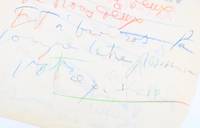
1956réf. 89529Cannes 1956. Fine. 'I continue my work with passion' Cannes 27 janvier 1956 21 x 27 cm un feuillet Autograph letter by Pablo Picasso to Max Pellequer vividly executed in multiple colours signed and dated by the artist 27 January 1956 addressed from his villa La Californie. Fourteen lines written in green blue pink orange red violet and turquoise pencil on a watermarked BFK Rives sheet.A few negligible transverse folds as expected from mailing. Picasso did not regularly employ colour in his correspondence. Here however he seems to have offered a gracious gesture to his friend and banker Max Pellequer as the more visually striking his letters the more sought-after they become. To speak of his work Picasso turns to red pencil: je continue mon travail avec ardeur - a telling choice that conveys the fervour he wished to bring to his art. Although Picasso maintained a substantial correspondence letters written entirely in his own hand remain exceedingly scarce. As Laurence Madeline observes in her study of this private facet of the artists life: The inertia that paralyses Picasso who prefers his activity as an artist to that of a secretary renders the letters he does choose to write all the more essential and touching Picasso épistolier LHerne no. 106. From his home overlooking Cannes Picasso was assisted by his devoted secretary and childhood companion Jaume Sabartés who penned many of the artists letters - except those destined for Pellequer. To him Picasso wrote every message himself however trivial in a generous flowing script playing with letters and words as though they were graphic elements arranged in an aesthetic dialogue across the sheet far removed from the sobriety of the text. His artistic impulse seems to have seeped into even his most routine administrative exchanges with his banker and impassioned collector. Part of the Picasso-Pellequer correspondence is held today by the Musée national Picasso in Paris. A singular recipient Max Pellequer banker and collector was introduced to Pablo Picasso in 1914 by his uncle by marriage André Level. He quickly emerged as one of the artists foremost collectors and in time became Picassos financial adviser for over three decades. Pellequers engagement with Picassos oeuvre began in the 1910s notably through a bronze jester acquired from Ambroise Vollard. During the 1930s and 1940s he became Picassos personal banker safeguarding the artists wealth and facilitating his comfortable establishment in the South of France. Their friendship was lifelong and intensely collaborative. Among other commissions Picasso executed a splendid copper ex-libris for Pellequer; Pellequer purchased paintings such as Cézannes La mer à LEstaque Musée Picasso Paris; and Picasso reciprocated with gifts of several works. A discerning and avid collector Pellequer assembled one of the finest collections of modern masterworks - Degas Dufy Gauguin Léger Matisse Miró Modigliani and Utrillo - today preserved in major international museums. The epistolary art of Picasso Picassos correspondence served as an outlet for his relentless creative energy expressed across ceramics sculpture photography illustrations collages and poetry. Every letter provided a space for the emergence of genius irrespective of the prosaic content of his exchanges with Pellequer. To counterbalance such banality Picasso took care to arrange his letters diagonally across the page enlivening them with colour from pastels felt pens or coloured pencils. Letters numerals words and sentences became visual and musical elements animated by the painters imaginative force. A striking and vividly visual illustration of Picassos imperative for total self-expression manifested through his correspondence with one of his closest friends and advisers. unknown
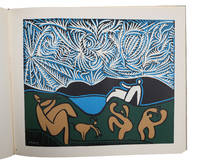
1963réf. 61834London Thames and Hudson 1963. Folio-oblong 340 x 400 mm. In the original clothbinding with black printed Picasso-drawings on front board. Housed in the original slipcase. Slipcase with some wear and stains otherwise very nice and clean. 14 pp. 45 linocuts by Picasso. The uncommon and exquisitely printed “Linocuts” by Picasso which marked the beginning a new period for him as an artist. The prints were made by carving away part of the surface of a sheet of linoleum then inking and printing the remaining surface. Picasso began creating linoleum cuts to give color a more prominent role in his graphic work having previously considered it a secondary medium. His linoleum cuts emerged from a desire to adapt previous artistic concepts to a new medium and he quickly achieved original results that were not secondary to his pervious works. Inspired by memories of bullfighting from his youth in Arles and Nimes Picasso focused on this theme in his linoleum cuts produced in the fall of 1959. Despite not having seen bullfights in Spain for many years he felt their influence after the town of Vallauris allowed bullfighting under revised rules in 1954. “Just how and when Picasso became attracted by the linoleum technique is not known. Perhaps it was like the instance of the year 1957 when he capriciously finished his “L’ Arlésienne with pigeon feathers picked up from the floor of his home “La Californie.” It must be assumed aware as we are of Picasso’s working methods that his interest in linoleum technique was derived from some insignificant yet real incident as well as from a response to a deep artistic need. The smooth and supple drawings in India ink and lithograph pencil for the “Tauromaquia” which set the tone for the subsequent linoleum cuts reveal a difference something remarkably new and fresh. The ink drawings particularly point the way to heavy and unmodeled designs which are more crisp and more succinct their similarity with a silhouette-like effect is certainly significant. When he began the series of linoleum cuts the artist was already prepared with a wide range of procedures that would adjust his subjects to the flat extended areas that are inherent in this medium. Although Picasso had made only a few woodcuts in the past he immediately adopted a resolute and robust approach to the new technique and interpreted in the widest possible way the rules of carving such an easily yielding material. Formal principles that embody lines and surfaces as well as pictorial and decorative elements are freely applied to create prints that are sometimes produced from a combination of several individual color blocks or more often from a single linoleum block that was cut and recut. Others browns and blacks reminiscent of Greek vase painting became the dominating color scheme permitting a limited range of color variations. As usual Picasso intuitively developed techniques which exhausted the medium.” From the introduction to the present work hardcover
1937réf. 105643Atoriesha. Tokyo. 1937. Atoriesha. Tokyo. 1937. First edition. Disbound collection of 50 b/w plates and 27 pages of Japanese text with illustrations with original paper covers. Lacks spine but everything is present it the original worn sunned and torn slipcase. A lovely collection and scarce in any condition. unknown
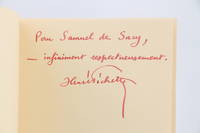
1958réf. 88251Paris: Mercure de France 1958. Fine. Mercure de France Paris 1958 14 x 20.50 cm broché sous étui First collected edition one of 20 numbered copies on vélin madagascar deluxe copy. Work illustrated with lithographs by Bazaine Gromaire Picasso Villon. Handsome copy despite the spine and back cover partially and lightly sunned without gravity. Autograph inscription signed by Henri Pichette: ""Pour Samuel de Sacy - infiniment respectueusement."" Like all the ""madagascar"" copies our copy is complete with the suite of illustrations as stipulated in the justification page. Mercure de France unknown
réf. 28833182-nnew. unknown
réf. 30334401-nnew. unknown
1945réf. 86101Paris: Les Editions de Minuit 1945. Fine. Les Editions de Minuit Paris 1945 13.50 x 20.50 cm broché First edition one of 120 numbered copies on pur fil paper the only deluxe copies. Work illustrated with a portrait of the author by Pablo Picasso. Discreet marginal restorations to the boards. Precious and handsome autograph inscription signed by Paul Eluard: ""A l'ami à Jean Cocteau ce livre écrit dans l'ombre muette d'un coeur et à un coeur qui ne se démentent pas Paul Eluard"" To my friend to Jean Cocteau this book written in mute shadow from a heart and to a heart that do not falter Paul Eluard. Les Editions de Minuit hardcover
1998réf. 004006New York: Thames & Hudson 1998. First Edition. Hard Cover. Very Good /very good. 4to. 256 pp. Bound in red cloth decoration stamped in silver on cover title in silver on spine in illustrated dust jacket. Profusely illustrated in full color and black and white. Includes chronology bibliography and index. Catalog for the exhibition held at the Fine Arts Museums of San Francisco California Palace of the Legion of Honor October 10 1998- January 3 1999 and the Solomon R. Guggenheim Museum February 5 - April 26 1999. Very Good hard bump to lower corner of front cover otherwise clean sharp copy in Very Good price-clipped dust jacket with crease to lower corner of front cover. Thames & Hudson hardcover
réf. DADAX1633451399New unknown
réf. 1120451925. . Lithograph 1925 on Japanese Imperial paper signed lower right an artist's proof gifted directly to Genevieve Laporte from Picasso's private collection aside from the edition of one hundred printed by Engelmann Paris published by D.H. Kahnweiler Galerie Simon Paris image: 12.7 x 11.8 cm. 5 x 4.6 in. sheet: 28 x 22.5 cm. 11 x 8.9 in. This work is a unique proof gifted to Geneviève Laporte 1926-2012 Picasso's lover during the 1950s. In 1951 Picasso and Laporte began an affair which lasted for two years and during which time the artist presented her with a number of his works. A poet and writer herself Laporte published her book 'Sunshine at Midnight: Memories of Picasso and Cocteau' in 1973. While Pablo Picasso never claimed to be a Surrealist his earlier Cubist works certainly laid the groundwork for such a movement to exist. By the time André Breton's 'Surrealist Manifesto' was published in 1924 Picasso was creating art with a similar surrealist style. The present work demonstrates Picasso's ceaseless desire to present an alternative to realism. The artist challenges our perception of portraiture and reality by capturing the woman's face in a simultaneous profile and frontal-facing perspective. As the viewer our eyes delight in the challenge to understand this surreal vision of a multifaceted woman made up of elegant curving intersecting lines. Bloch 73; Baer 240; Mourlot XX; Cramer Books 14 1925. unknown