26 309 résultats
1880réf. 3132Circa 1870-1880. Album in plano (30,5 x 24,5cm) composé de 52 feuilles cartonnées. Pleine percaline noire d’époque, muette, tranches dorées. Rares rousseurs, quelques photos au contraste faible, une photo avec une légère déchirure en marge, sinon très bon état de conservation. L’album est composé de soixante photos, la plupart de grand format (24 x17 cm).
1914réf. 52000Reliure demi-maroquin chocolat à coins. Dos lisse orné de motifs mosaïqués et de points et filets dorés. Tête dorée. Couvertures et dos conservés. Reliure signée Charles Lanoë. Edition richement illustrée de 100 eaux-fortes en noir de Raphaël FREIDA, dont un frontispice et 18 hors-texte, l'ensemble gravé par Edmond Pennequin.
1662réf. 30315DB1662. O.O. und Neuburg a. d. Donau o.V. und Strasser 1662 und 1665. 8°. 6 Bl. 155 recte 157 S. Mit gestochenem Kupfertitel; 8 Bl. 300 S. Pappband des 18. Jahrhunderts mit schwarz geprägtem Supralibros des Klosters Lambach. Hirsch-H. V 104. I: VD17 23:268633R. II: VD17 12:191152W. Haller I 614. Seltene Monographien über Karlsbad bzw. Bad Pfäfers beschrieben durch den Stadtarzt von Neuburg an der Donau. Laut VD17 ist beim Titel über Karlsbad kein Drucktitel nachweisbar hingegen fehlt offenbar eine Kupfertafel beim Band «Waldbad zu Pfeffers». Titelblätter sehr stark gebräunt und fleckig. Das Papier knapp beschnitten stellenweise mit leichtem Textverlust. Im Innenfalz mit durchgehendem Wasserrand. Papierbezug am Rücken angeplatzt. unknown
1662réf. 30315DBO.O. und Neuburg a. d. Donau, o.V. und Strasser, 1662 und 1665. 8°. (6) Bl., 155 (recte 157) S. Mit gestochenem Kupfertitel; (8) Bl., 300 S. Pappband des 18. Jahrhunderts mit schwarz geprägtem Supralibros des Klosters Lambach.
1662réf. 30315BBO.O. und Neuburg a.d. Donau, o.V. und Strasser, 1662 und 1665. 8°. 6 n.n. Bl., 155 (recte 157) S. Mit gestochenem Kupfertitel; 8 n.n. Bl. 300 S. Pappband des 18. Jahrhunderts mit schwarz geprägtem Supralibros des Klosters Lambach.
2025réf. __3032003849Springer-Nature New York Inc 2025. Hardcover. New. 2nd edition. 1917 pages. 9.25x6.10x9.49 inches. Springer-Nature New York Inc hardcover
1962réf. 52621962. Soyer Raphael. Soyer Raphael. SCREEN THE. Cole 85. Lithograph 1962. 18 1/2 x 14 inches. Edition of 100 signed and numbered in pencil. Excellent condition.A sensitive rendering of the model in the studio. Soyer still at his best. An unusually large print in his oeuvre and despite the size of the edition not often seen. unknown
réf. ANAIS-1555534392Northeastern Univ Pr. hardcover. Good. 6x0.6x9.1. Buy with confidence. Excellent Customer Service & Return policy. Northeastern Univ Pr hardcover
réf. 35566Paris - Furne, Jouvet et Cie - sans date (vers 1850) - 1 volume in-folio - Reliure demi chagrin brun à coins - Dos cinq nerfs très orné - tête dorée - Mors frottés - Coins émoussés - très bon état intérieur -
1786réf. 7634A l'hôtel de Thou | à Paris 1786 | 25.50 x 20 cm | deux volumes reliés
réf. 2605RS155RECITADAS EM DIFFERENTES Congressos Academicos Pelo Padre D. RAFAEL BLUTEAU Clerigo Regular DOUTOR NA SAGRADA THEOLOGIA PREGADOR DA Rainha da Grãa Bretanha Henriqueta Maria de França Qualificador do Santo Officio no Sagrado Tribunal da Inquisição de Lisboa a Academico da Academia Real. PARTE PRIMEIRA QUE CONTEM. Prosas Academicas Prosa Academica Logica Prosa Academica Politica Prosa Academica Cosmografica Prosa Academica Theologica Prosas Academico-Moraes. Prosa Instructiva Jococeria. Prosas Patriarchaes Semi-Academicas. Academia Theologica. Prosa Enigmatica Interpretativa. Prosas Gratulatorias. PARTE SEGUNDA QUE CONTEM: Prosa Censoria Prosa Symbolica Prosa Luctuosa Prosa Restitutoria Prosa Genethliaca Prosa Apologetica Prosa Grammatonomica Prosas Eucharisticas Prosa Economica. LISBOA OCCIDENTAL. Na Officina de JOSEPH ANTONIO DA SYLVA. Impressor da Academia Real. M. DCC. XXVIX. 1728 e M. DCC. XXVIII 1728. Com todas as licenças necessarias. 2 Volumes encadernados em um. In fólio de 295x195 cm. Com 32 421 1 br; 383 págs. Encadernação da época inteira de pele com um rótulo nervos e ferros a ouro na lombada. Corte das folhas carminadas. Ilustrado em extratexto com um desdobrável tipográfico com um diagrama de um dos cálices românicos de Alcobaça entre as págs. 394 e 395 com legenda das letras dos pés e das gargantas do Cálice. Impressão muito nítida e bela sobre papel de linho com um notável uso pela sua variedade de caracteres redondos e itálicos com o texto impresso a duas colunas na maior parte da obra. Ornamentado com vinhetas nas folhas de rosto cabeções e iniciais decoradas no início de cada parte e com florões de remate. As seguintes páginas incluem separadores de algumas partes da obra iguais a folhas de rosto mas sem pé de imprensa: 1ºvolume 105 267 363 Prosa Enigmatica 395 Orações gratulatórias na . vinda da. Rainha da Grã-Bretanha D Catarina 2º volume 107 Prosa Luctuosa . na morte de Luis XIV 271 Aplausos latinos e portugueses dos Académicos Aplicados ao autor 307 Instrução sobre a cultura das amoreiras. Livro de grande e extraordinária riqueza e importância que reúne um vasto conjunto de obras muito inéditas e algumas reedições que nalguns casos seriam hoje designadas por «comunicações» apresentadas nas academias da época que eram grupos mais ou menos restritos de intelectuais patrocinados pelo rei ou pela grande nobreza os quais animavam os serões e tempos livres de uma classe de homens ilustres e ilustrados que caracterizaram a época do período barroco em Portugal e às quais o autor trouxe as novas visões do mundo já influenciadas pelo iluminismo literário científico e político de França. Inclui grande diversidade de temas e também sermões orações fúnebres e orações gratulatórias assim como conjuntos de poesias incluindo um em louvor de Bluteau. Para o conhecimento da grande quantidade de assuntos tratados por Bluteau remetemos para o índice abaixo e limitamo-nos a destacar os estudos sobre o Cálice de Alcobaça sobre a criação do bichos da seda reedição exacta com acrescentos da 1.ª edição de 1679 sobre a questão da morte de D. Sebastião na batalha Alcácer-Quibir e os numerosos enigmas que designam animais e muitas coisas animadas e inanimadas. O Cálix de Alcobaça que segundo Bluteau datava de 1187 foi transferido para a Casa da Moeda em 1835 já desmantelado e depois foi enviado para a Biblioteca Pública de onde foi roubado em 1836 para nunca mais aparecer por isso esta descrição pormenorizada feita por Bluteau é de grande importância pois fica a ser a mais perfeita descrição e memória desta magnífica peça do património artístico de Portugal. Para mais Bluteau apresenta uma proposta de interpretação do significado das letras e números inscritos no Cálix. Rafael Bluteau Londres 1638 - Lisboa 1734 nasceu em Londres de pais franceses voltou a França viveu em Itália mas passou a maior parte da vida em Portugal onde foi membro de várias academias e por fim da Academia Portuguesa de História. Entrou para a Congregação dos Clérigos Regulares em 1661. A sua acção no campo da filologia literatura e história foi muito importante para o desenvolvimento destas disciplinas em Portugal. É o autor do monumental Vocabulário da Língua Portuguesa impresso em 10 volumes de grande número de sermões orações fúnebres estudos ensaios sobre diversos assuntos poesias e obras teológicas em latim. Referências/References: PESSANHA. D. José O CÃLIS DE OURO DO MOSTEIRO DE ALCOBAÇA . Imprensa da Universidade. Coimbra. 1923. Brunet I col. 982 11182 refere o Vocabulario Português e Latino de 1712-21 no entanto não refere as Prosas Portuguesas. Samodães 427. Inocêncio VII 42-45. M-9-E-74 unknown
réf. 1807JC008RECITADAS EM DIFFERENTES Congressos Academicos PELO PADRE D. RAFAEL BLUTEAU Clerigo Regular DOUTOR NA SAGRADA THEOLOGIA PREGADOR DA Rainha da Grãa Bretanha Henriqueta Maria de França Qualificador do Santo Officio no Sagrado Tribunal da Inquisição de Lisboa a Academico da Academia Real. PARTE PRIMEIRA QUE CONTEM. Prosas Academicas Prosa Academica Logica Prosa Academica Politica Prosa Academica Cosmografica Prosa Academica Theologica Prosas Academico-Moraes. Prosa Instructiva Jococeria. Prosas Patriarchaes Semi-Academicas. Academia Theologica. Prosa Enigmatica Interpretativa. Prosas Gratulatorias. PARTE SEGUNDA QUE CONTEM: Prosa Censoria Prosa Symbolica Prosa Luctuosa Prosa Restitutoria Prosa Genethliaca Prosa Apologetica Prosa Grammatonomica Prosas Eucharisticas Prosa Economica. LISBOA OCCIDENTAL. Na Officina de JOSEPH ANTONIO DA SYLVA. Impressor da Academia Real. M. DCC. XXVIX. 1728 e M. DCC. XXVIII 1728 2 volumes encadernados em 1. In fólio de 295x195 cm. Com 32 421 1 br e 383 págs. Encadernação da época inteira de pele com nervos e ferros a ouro na lombada. Ilustrado com vinhetas nas folhas de rosto cabeções e iniciais decoradas no início de cada parte e com florões de remate. Impressão muito nítida e bela sobre papel de linho com um notável uso pela sua variedade de caracteres redondos e itálicos com o texto impresso a duas colunas na maior parte da obra. As seguintes páginas incluem separadores de algumas partes da obra iguais a folhas de rosto mas sem pé de imprensa: 1ºvolume 105 267 363 Prosa Enigmatica 395 Orações gratulatórias na . vinda da. Rainha da Grã-Bretanha D Catarina 2º volume 107 Prosa Luctuosa . na morte de Luis XIV 271 Aplausos latinos e portugueses dos Académicos Aplicados ao autor 307 Instrução sobre a cultura das amoreiras. Exemplar com cantos e coifas cansados com um pequeno rasgo restaurável sem perda de papel na folha de diagrama desdobrável do cálix de Alcobaça. Com título de posse em letra coeva manuscrito no pé folha de rosto em bela caligrafia: «É do Padre Pregador Geral Frei Libório de São José» e um ex libris do Professor José Hermano Saraiva. Livro de grande e extraordinária riqueza e importância que reúne um vasto conjunto de obras muitas inéditas e algumas reedições que nalguns casos seriam hoje designadas por «comunicações» apresentadas nas academias da época que eram grupos mais ou menos restritos de intelectuais patrocinados pelo rei ou pela grande nobreza os quais animavam os serões e tempos livres de uma classe de homens ilustres e ilustrados que caracterizaram a época do período barroco em Portugal e às quais o autor trouxe as novas visões do mundo já influenciadas pelo iluminismo literário científico e político de França. Inclui grande diversidade de temas e também sermões orações fúnebres e orações gratulatórias assim como conjuntos de poesias incluindo um em louvor de Bluteau. Para o conhecimento da grande quantidade de assuntos tratados por Bluteau remetemos para o índice abaixo e limitamo-nos a destacar os estudos sobre o Cálice de Alcobaça sobre a criação do bichos da seda reedição exacta com acrescentos da 1ª edição de 1679 sobre a questão da morte de D. Sebastião na batalha Alcácer-Quibir e os numerosos enigmas que designam animais e muitas coisas animadas e inanimadas. O Cálix de Alcobaça que segundo Bluteau datava de 1187 foi transferido para a Casa da Moeda em 1835 já desmantelado e depois foi enviado para a Biblioteca Pública de onde foi roubado em 1836 para nunca mais aparecer por isso esta descrição pormenorizada feita por Bluteau é de grande importância pois fica a ser a mais perfeita descrição e memória desta magnífica peça do património artístico de Portugal. Para mais Bluteau apresenta uma proposta de interpretação do significado das letras e números inscritos no Cálix. Rafael Bluteau Londres 1638 - Lisboa 1734 nasceu em Londres de pais franceses voltou a França viveu em Itália mas passou a maior parte da vida em Portugal onde foi membro de várias academias e por fim da Academia Portuguesa de História. Entrou para a Congregação dos Clérigos Regulares em 1661. A sua acção no campo da filologia literatura e história foi muito importante para o desenvolvimento destas disciplinas em Portugal. É o autor do monumental Vocabulário da Língua Portuguesa impresso em 10 volumes de grande número de sermões orações fúnebres estudos ensaios sobre diversos assuntos poesias e obras teológicas em latim. EN 2 volumes bound in 1. In folio. 29.5x19.5 cm. With 32 421 1 blk and 383 pages. Full leather contemporary binding with raised bands and gilt tools on the spine. Illustrated with vignettes on the title pages. Headpiece and decorated capital letters in the beginning of each part ending with tailpiece . Very clear and beautiful print on linen paper with a remarkable use due to variety of round and italic characters with most of the text printed in two columns. The following pages include separators similar to title pages but lacking the printers inprint at the foot: 1st. volume 105 267 363 Prosa Enigmatica 395 Orações gratulatórias na . vinda da. Rainha da Grã-Bretanha D Catarina 2nd volume 107 Prosa Luctuosa . na morte de Luis XIV 271 Aplausos latinos e portugueses dos Académicos Aplicados ao autor 307 Instrução sobre a cultura das amoreiras. Copy with worn corners and headbands with a small recoverable tear in the foldable diagram sheet of the Alcobaça chalice. With handwritten ownership title in the title page: «É do belongs to Padre Pregador Geral Frei Libório de São José»; and an ex-libris of Professor José Hermano Saraiva. Book of great and extraordinary importance which brings together a vast set of works many unpublished and some reissued that in some cases would today be called papers presented in the academies of that time which were more or less restricted groups of intellectuals sponsored by the king or the great nobility. They who brightened the evenings and free time of a class of illustrious and illustrated men characteristic of the Baroque period in Portugal and to whom the author brought new worldviews already influenced by the literary scientific and political Enlightenment of France. It includes a great diversity of themes sermons funeral and gratulatory prayers as well as several poems including one in honour of Bluteau. To list the large number of subjects treated by Bluteau we refer to the index below and limit ourselves to highlighting studies on the Alcobaça Chalice on the creation of silkworms reissue with additions from the 1st edition of 1679 on the question of the death of D. Sebastião in the battle of Alcácer-Quibir and the numerous enigmas about animals and many lively and inanimate things. The Alcobaça Chalice which according to Bluteau dated from 1187 was transferred to the Casa da Moeda in 1835 already dismantled and later sent to the Public Library from where it was stolen in 1836 never to appear. This detailed description by Bluteau is of great importance as it remains the most perfect description and memory of this magnificent piece of Portugal´s artistic heritage. In addition Bluteau presents a proposal to interpret the meaning of the letters and numbers inscribed in the Chalice. Rafael Bluteau London 1638 - Lisbon 1734 was born in London to French parents returned to France lived in Italy but spent most of his life in Portugal where he was a member of several academies and finally of the Portuguese Academy of History. He joined the Congregation of Regular Clergy in 1661. His work in the field of philology literature and history was very important for the development of these disciplines in Portugal. He is the author of the monumental Vocabulary of the Portuguese Language printed in 10 volumes with a large number of sermons funeral prayers studies essays on various subjects poetry and theological works in Latin. Referências/References: PESSANHA. D. José O CÃLIS DE OURO DO MOSTEIRO DE ALCOBAÇA . Imprensa da Universidade. Coimbra. 1923. Brunet I col. 982 11182 refere o Vocabulario Português e Latino de 1712-21 no entanto não refere as Prosas Portuguesas. Samodães 427. Inocêncio VII 42-45. M-8-C-36 hardcover
réf. 111079Oficinas del Diccionario Geográfico-Estadístico 1879-1883 Barcelona. 31x21. 1/2 piel con hierros. Aprox. 1000 pgs. cada vol. Estadillos plegados. R2775 Oficinas del Diccionario Geográfico-Estadístico, 1879-1883, Barcelona. unknown
réf. 47627PRIMERA EDICION.- Altea: Ediciones Art Lanuza D.L. 1983.- 20 h.: contiene cuatro poemas autógrafos de Alberti facsímiles en gran formato y dedicados al caballo el perro el gallo y el toro cada uno de ellos acompañado por un fino grabado original de Jardiel donde estos animales figuran junto a mujeres en poses eróticas todos ellos firmados a lápiz por el artista; Folio imperial 585 x 42 cm; Excelente impresión a dos tintas sobre grueso papel con la marca del editor en las hojas de los grabados; Se trata de pliegos sueltos encartados en un sobre de gran formato a su vez protegido por una carpeta de madera con cordeles.- Edición limitada de 125 ejemplares numerados siendo éste el número 69. MUY RARO. Ejemplar con una dedicatoria autógrafa del autor y su mujer Lucrecia en la portada fechada en 1997. Todas las hojas incluyendo poemas y grabados se encuentran en excelente estado. El sobre que las protege ligeramente desgastado en los bordes. La impresión de texto sobre la carpeta de madera mostrando el contenido levemente descolorida. En general un magnífico ejemplar. José Paredes Jardiel estudió bellas artes en la Academia de San Fernando tras lo cual viajó a Francia e Italia. Aunque originalmente de estilo informalista acabó siendo un exponente de la neofiguración y en 1962 fue uno de los fundadores del grupo Hondo contra la abstracción total del arte. La mayor parte de sus pinturas se encuentran en el Museo Español de Arte Contemporáneo de Madrid. PINTURA DIBUJO Y GRABADO ESPAÑOLES Libro en español Ediciones Art Lanuza hardcover
réf. 52-0014Paris: Imprimerie Royale ca. 1730s. Woodcut after Raphael Urbino. Etched plate by P.P. A. Robert painter to the Cardinal de Rohan printed in dark brown. Two blocks: pale and medium yellow brown. 25 x 35.9 cm. Nagler 7. Le Blanc 15. AKA: Christus setzt den Petrus zum Haupte der Kirche ein. Pierre Jésus donnant les clefs du paradis à S. Paris: Imprimerie Royale, ca. 1730s. unknown
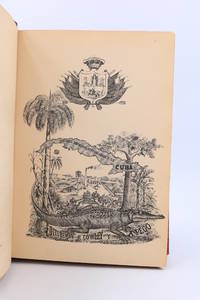
1876réf. 89659La Habana La Havane Havana: Andres Pego 1876. Fine. Andres Pego La Habana La Havane Havana 1876-1877 17.5 x 25.2 cm 3 volumes reliés New edition embellished at the close of the first volume with a folding plate printed out of text cf. Palau 17346.Cherry half-shagreen bindings spines with four raised false bands decorated with gilt fillets and double gilt panels gilt lettering at the foot of the spines slight rubbing to the headcaps blind-tooled frames on the textured cloth boards pebble-paper endpapers and pastedowns a few bumped corners period bindings. Rear board of the first volume partially soiled.New edition prepared under the supervision of the physician Rafael Ãngel Cowley Valdés-Machado 18371908 and Andrés Pego gathering three major sources for Cuban historiography: José Martín de Arrate y Acostas 17011765 Llave del Nuevo Mundo. Antemural de las Indias Occidentales a meticulous portrait of eighteenth-century Cuban society first published only in 1830; Ignacio Urrutia y Montoyas 17351795 Teatro Histórico Jurídico Político Militar de la Isla Fernandina de Cuba of which only the first part had appeared in 1795; and finally Antonio José Valdéss 17701824 Historia General de la Isla de Cuba y en especial de la Habana published in 1811.Provenance: from the library of Ricardo Quintiliano Garcia his name gilt-stamped at the foot of the spines; with his presentation inscription to his brother dated 15 July 1877 on the front flyleaf of the first volume. Andres Pego hardcover
réf. 0001923MEXICO CITY MEXICO ALICANTE SPAIN On offer is an interesting original undated Spanish language manuscript treatise titled 'La educacion en Espana' Education in Spain handwritten and signed by renowned Spanish educator historian lawyer humanist and prolific author Rafael Altamira y Crevea 1866-1951 who was born in Spain but died in Mexico City following his 1944 exile. The 5 page 6.25" x 8.5" autograph manuscript is signed on the last page. Overall G save fo some old discreet pinholes. Good. 8vo - over 7¾" - 9¾" tall. Spanish Language Manuscript. unknown
1931réf. 48258Paris.: Carlos Rodríguez-Pintos. 1931. Loose as issued in original publisher's thick Japon printed wrappers with flaps and titles in black to upper cover. 4to. 210 x 290 mm. Printed title quotation printed verso see below leaf with poem by Carlos Rodriguez-Pintos 'Nuestra Senora de la Cinta printed recto and verso followed by Alberti's illustration of the same title Alberti's poem 'Nuestra Senora de la Buena Leche' printed recto and verso followed by an illustration by Rodriguez-Pintos of the same title final leaf with achevé d'imprimer and illustration of Rodriguez-Pintos at his press. A charming double collaboration between artist and poet printed on the poet's own press with each providing a poem and an illustration.From the edition limited to 325 copies with this unnumbered copy seemingly on Japon; copies were issued on 'papel Holland Pannekoek' and on 'papel Ronsard' and this copy appears to be neither.'Tota pulchra est . ' from the verso of the title.'Dos Oraciones a la Virgen' is scarce with OCLC reporting copies at the Biblioteca Nacional de España the Sorbonne and the British Library in Europe and at Notre Dame and Syracuse in the US only. Carlos Rodríguez-Pintos. unknown
1947réf. 28251New York: Forward Association 1947. Hardcover. vg to near fine. Oblong 4to. 575pp. 21 x 27 cm. Red cloth with woodcut-illustrated paste-down and gold lettering. Illustrated title-page. This 1947 publication is the finest photographic documentary of Jewish life in Eastern Europe during the 1920's and 30's. It has never been superseded. In addition to choosing from some thousands of postcards and family photographs submitted by readers of the Yiddish "Daily Forward" the editors were able to reproduce images previously published in the Forward's Rotogravure section by the photographers Alter Kacyzna and M. Kipnis. Additionally the now famous images of Roman Vishniak were first presented to the public in this work. Profusely illustrated with b/w reproductions of photographs. In two parts: 1 Jewish Cities. 2 Jewish People. Text in Yiddish and English. One of the most powerful photographic works on Eastern European Jewry ever published. Binding with some light sunning light staining extending slightly to the back cover and a sticker residue to the spine. A few tiny stains to the front cover. Book block tight with interior clean. Binding in very good interior in near fine condition overall. Protected in modern mylar. "In presenting this book to our readers we intend to give them the picture of the Jewish world in Eastern Europe as it existed during the 1920's and 1930's previous to the Second World War. This world does not exist any longer. It is a vanished world the world of East European Jewry that world in which for centuries the greatest concentration of Jewish people in history lived and worked. On the eve of the Second World War over seven million Jews resided in that part of Eastern Europe which was swept by Hitler's divisions in the years 1939-45. If we also include sections of Southern and Western Europe the Balkans Italy France Belgium Holland and Scandinavia the Jewish population under Nazi rule may be estimated at approximately 7.8 million persons. More than 9400000 Jews lived in the whole of Europe in 1939. Only about 3700000 are left now including the "Displaced Persons" in the UNRRA camps and those repatriated from Soviet Russia and Poland. Five million of these were exterminated in the death camps and the ghettos. About seven hundred thousand perished from starvation deportation epidemics and as a result of military operations. The East European period of Jewish history ended in the greatest catastrophe known to mankind." Raphael Abramovitch was a 20th century Russian Jewish political activist. As a Marxist he was part of the Jewish Bund. He took part in the Russian Revolution on the side of the Mensheviks. After the Bolshevik victory he fled to Germany France and eventually to the United States. Abramovitch was a vocal opponent of both Nazi Germany and the Soviet Union. Forward Association hardcover
1947réf. 28251New York: Forward Association 1947. Hardcover. vg to near fine. Oblong 4to. 575pp. 21 x 27 cm. Red cloth with woodcut-illustrated paste-down and gold lettering. Illustrated title-page. This 1947 publication is the finest photographic documentary of Jewish life in Eastern Europe during the 1920's and 30's. It has never been superseded. In addition to choosing from some thousands of postcards and family photographs submitted by readers of the Yiddish "Daily Forward" the editors were able to reproduce images previously published in the Forward's Rotogravure section by the photographers Alter Kacyzna and M. Kipnis. Additionally the now famous images of Roman Vishniak were first presented to the public in this work. Profusely illustrated with b/w reproductions of photographs. In two parts: 1 Jewish Cities. 2 Jewish People. Text in Yiddish and English. One of the most powerful photographic works on Eastern European Jewry ever published. Binding with some light sunning light staining extending slightly to the back cover and a sticker residue to the spine. A few tiny stains to the front cover. Book block tight with interior clean. Binding in very good interior in near fine condition overall. Protected in modern mylar. "In presenting this book to our readers we intend to give them the picture of the Jewish world in Eastern Europe as it existed during the 1920's and 1930's previous to the Second World War. This world does not exist any longer. It is a vanished world the world of East European Jewry that world in which for centuries the greatest concentration of Jewish people in history lived and worked. On the eve of the Second World War over seven million Jews resided in that part of Eastern Europe which was swept by Hitler's divisions in the years 1939-45. If we also include sections of Southern and Western Europe the Balkans Italy France Belgium Holland and Scandinavia the Jewish population under Nazi rule may be estimated at approximately 7.8 million persons. More than 9400000 Jews lived in the whole of Europe in 1939. Only about 3700000 are left now including the "Displaced Persons" in the UNRRA camps and those repatriated from Soviet Russia and Poland. Five million of these were exterminated in the death camps and the ghettos. About seven hundred thousand perished from starvation deportation epidemics and as a result of military operations. The East European period of Jewish history ended in the greatest catastrophe known to mankind." Raphael Abramovitch was a 20th century Russian Jewish political activist. As a Marxist he was part of the Jewish Bund. He took part in the Russian Revolution on the side of the Mensheviks. After the Bolshevik victory he fled to Germany France and eventually to the United States. Abramovitch was a vocal opponent of both Nazi Germany and the Soviet Union. Forward Association hardcover books
réf. 021511-FSpain: Ministerio De Culture 1982. Book. Illus. by Rafael Canogar. Very Good. Soft cover. Signed by Artist. 1st.Edition 1st.Printing 1982 French wrap illustrated soft cover 178 page book with color and black & white illustrations of the art of this Spainish artist . The text of this book is in Spanish.This copy is also signed by the artist very rare and dated 14-12-82 to a Mr. & Mrs Fisher. A scarce book on this artist and very rare to find signed by him . Condition : Very Good with some corner bumps . Size: Folio - over 12" - 15" tall Size: Folio - over 12 - 15" tall. Ministerio De Culture Paperback
réf. ABE-1720114617641Cartiere Miliani Fabriano Cartiere Miliani Fabriano nd but c 1980. Publisher's original clamshell folding box stamped with repeating bird motif. First and only edition of this rare suite of Raphael chiaroscuro watermarks or 'filigrane' reproduced here in painstaking detail with publisher's watermark in lower left hand margin of each plate. The suite includes "l'Autorittrato di Raffaello" "La Madonna del Cardellino" "La Madonna della Seggiola" and "La Velata". Each plate measures approximately 14 7/8 x 17" and is housed in its own sleeve reproducing the artwork on front panel. The process of manufacturing watermarks such as these is extremely involved and time consuming. As summarized by Julie L. Mellby of The Princeton University Library Graphic Arts Center: "This sheet of handmade paper comes from the Fabriano Paper Mill in Milan. In regular light it looks like a blank sheet but when you hold it to the light the watermark becomes visible. The image comes from the variations in thinness or thickness in the paper. The watermark begins with the Italian artisan carving the engraving in wax; a process that may take from five months to a year to complete. Copper dies positive & negative are made from the wax sculpture. The dies are pressed into a brass screen which will form the papermaking mould. Then tiny wads of screen must be stuffed and stitched invisibly into the mould as reinforcements in all the cavities such as the forehead or cheeks." Minor chafing and fraying to one corner of clamshell folding box with some buckling to the margins of each sheet but condition is otherwise Fine. OCLC locates no copies. 1st Edition. Hardcover. Near Fine. Cartiere Miliani Fabriano Hardcover
1912réf. 5917Havana 1912. Good plus. 196pp. Original printed front wrapper bound into 20th-century faux leather paper boards spine and front board gilt lettered. Contemporary ownership inscription and bookseller's ink stamp on title page. Lower corners of initial and final leaves repaired with tissue. Even tanning occasional foxing heavier to initial leaves. A scarce contemporary account of what the authors term the "Guerra de Razas" also known as the 1912 Cuban War an uprising by parts of the island's Afro-Cuban population demanding equal rights which was brutally extinguished by government forces. The conflict had its roots in racial tensions between Cuba's Hispanic and Black populations after the reestablishment of self-government in 1909. Race-based political parties such as the Partido Independiente de Color had been established in the 1900s to fight for the civil rights of Black Cubans but these groups were outlawed by the predominantly Hispanic government in 1910. The PIC continued to operate however and its leaders Evaristo Esteñoz and Pedro Ivonet agitated for a rebellion that would force the government to reverse the law. When the uprising finally occurred in the eastern provinces of Cuba on May 20 1912 it was met with extreme force with contemporary accounts and eyewitnesses numbering the executed and massacred at anywhere between 2000 and 6000 people including Esteñoz and Ivonet. The authors of the present work present their account from a pro-government perspective but nevertheless make some attempt toward social history and analysis of the causes of conflict. The whole is photographically illustrated with numerous portraits of significant military figures. OCLC locates a small handful of copies in U.S. institutions. unknown
1912réf. 5917Havana 1912. Good plus. 196pp. Original printed front wrapper bound into 20th-century faux leather paper boards spine and front board gilt lettered. Contemporary ownership inscription and bookseller's ink stamp on title page. Lower corners of initial and final leaves repaired with tissue. Even tanning occasional foxing heavier to initial leaves. A scarce contemporary account of what the authors term the "Guerra de Razas" also known as the 1912 Cuban War an uprising by parts of the island's Afro-Cuban population demanding equal rights which was brutally extinguished by government forces. The conflict had its roots in racial tensions between Cuba's Hispanic and Black populations after the reestablishment of self-government in 1909. Race-based political parties such as the Partido Independiente de Color had been established in the 1900s to fight for the civil rights of Black Cubans but these groups were outlawed by the predominantly Hispanic government in 1910. The PIC continued to operate however and its leaders Evaristo Esteñoz and Pedro Ivonet agitated for a rebellion that would force the government to reverse the law. When the uprising finally occurred in the eastern provinces of Cuba on May 20 1912 it was met with extreme force with contemporary accounts and eyewitnesses numbering the executed and massacred at anywhere between 2000 and 6000 people including Esteñoz and Ivonet. The authors of the present work present their account from a pro-government perspective but nevertheless make some attempt toward social history and analysis of the causes of conflict. The whole is photographically illustrated with numerous portraits of significant military figures. OCLC locates a small handful of copies in U.S. institutions. unknown books
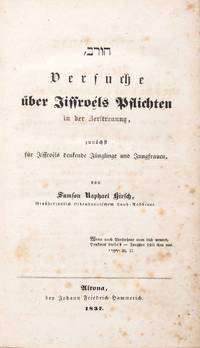
1837réf. 48406Altona Hamburg: Johann Friedrich Hammerich 1837. First edition. Hardcover. g to g. Octavo. xvi 800pp. Bound in brown pebbled half cloth over black pebbled boards. Treatise of Jewish law and observances by Samson Raphael Hirsch the German Orthodox Rabbi who founded the school of contemporary Orthodox Judaism Today's modern Orthodoxy and a vocal opponent of Reform Judaism. The work is organized in six sections according to Hirsch's classification of the commandments: Thaurauß Laws derived from the Five Books of Moses Edauß Jewish Holidays Mischpotim Laws Between Man and Man Chukim Laws Regarding Daily Life and Animals Mizwauß Laws about Devotion and Awaudoh Service and Prayer. The book was written in a literary German to explain Jewish customs ceremonies and doctrines with the special emphasis on German-Jewish youth. List of abbreviations and symbols in German and Hebrew at front and registers in German and Hebrew an addendum of explanation and abbreviations in Hebrew and errata at rear. Publisher's advertisement for the German Bible for Israelites a new translation from the Masoretic text and edited by Gotthold Salomon on last page. Text in German Gothic script titles subtitles and abbreviations in Hebrew. Binding with some wear along edges small chips and some scuffing along leather spine. Light foxing of block diminishing towards end of block. Binding in overall good interior in good to goo condition. Johann Friedrich Hammerich hardcover