725 résultats
réf. 362.1aaf22x15.5 cm, feuille: 31x23 cm.
1830réf. P5455Edinburgh : Schenck & Ghemar c.1830. Very Good. Notes: John Calvin 10 July 1509–27 May 1564 was a French theologian pastor and reformer in Geneva during the Protestant Reformation. He was the principal figure in the development of the system of Christian theology later called Calvinism. He was a Religious reformer. Image Size : 268x223 mm 10.55x8.78 Inches Platemark Size : Paper Size : 392x283 mm 15.43x11.14 Inches Coloring: Black & White Medium: Lithograph Categories: Portraits Others; Schenck & Ghemar unknown
réf. 500325320editions fabbri Sans date.
1869réf. C81663London: Holbein Society 1869. First Edition Thus. Hardback. Hardcover Hardcover. Very Good. First Edition Thus. Hardback. Large wide 8vo. The Holbein Society's Facsimile Reprints Vol. I. 1869 pp xxx 290. Original publisher's purple blind-stamped and decorative cloth. Engravings in the text. Reproduces the illustrated 1638 Lyon edition scholarly notes and essays.Front cover lettered and ruled in gilt spine lettered and decorated in gilt. Spine slightly faded uniformly. Spine ends a little bumped; hinges cracked but holding. Decorative bookplate on front pastedown. Scattered light foxing. About VG. Uncommon. Holbein Society hardcover
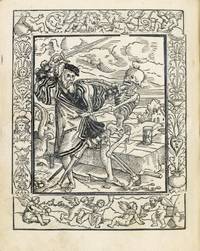
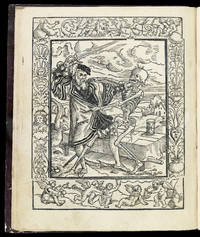
1572réf. 88The Dance of the Dead described in the British Museum as follows: " A series of 40 woodcuts by Jost de Negker which are free and enlarged copies after Hans Holbein the Younger's " Dance of Death " series with exception of the first two leaves all leaves with woodcuts on verso and German letterpress on recto both text and images in decorative woodcut borders the woodcuts with traces of colour and with a titlepage mutilated the text partly cut up and rearranged mounted and in modern binding ; fourth edition published in Leipzig by David de Negker. 1572 Woodcut and letterpress. According to Hollstein there were four editions of Jost de Negker's 'Todtentantz' after Holbein : Augsburg 1544 n.p.; n.d; Augsburg 1561 and Leipzig1572 the last two by David de Negker. The BL holds an imperfect coloured copy of the 1544 Jobst Denecker Jost de Negker edition C.43.d.3. A comparison of that and the 1572 edition would confirm that the woodcuts are by Jost de Negker as stated by Hollstein and not by David de Negker as stated by Paisey. The 1544 edition appears to have two woodcuts with inscriptions fol.F2 verso with date '1542' and fol.D3 verso with monogram 'HVE' see Dodgson II.207 which however this edition does not have. The original woodcuts for Holbein's Dance of Death series were cut by Lützelberger. " B.M. Engraved title framed by a large woodcut frieze depicting faces animals and plant decorations 10 pages of text 2 blank pages and 40 full-page engravings framed by a large frieze 4 types repeated text in Latin gothic characters framed by identical friezes opposite. Jost de Negker c. 1485-1544 was a cutter of woodcuts and also a printer and publisher of prints during the early 16th century mostly in Augsburg Germany. He was a leading "formschneider" or blockcutter of his day but always to the design of an artist. He is "closely tied to the evolution of the fine woodcut in Northern Europe". For Adam von Bartsch although he did not usually design or draw the quality of his work along with that of Hans Lützelburger and Hieronymus Andreae was such that he should be considered as an artist. Some prints where the designer is unknown are described as by de Negker but it is assumed there was an artist who drew the design although it has been suggested that de Negker might fill in a landscape background to a drawing of a figure… On Maximilian's death in 1519 the large teams assembled for his projects dispersed and de Negker became as much a publisher as a cutter retaining many blocks by Burgkmair Hans Weiditz and others and infringing many works such as the Dance of Death by Holbein Lützelburger's masterpiece as a cutter. Negker's edition of this was published in 1544 and is his last known work. Rare complete copy of this very interesting Danse des Morts. Durch David de Necker Formschneider hardcover
réf. 122234Paris Boussod Valadon & Cie Éditeurs 1886. xliij. 51 planches. 55x42 Cm. Demi-toile rouge à coins. Déchirures au dos. Coins et coiffes émoussés. Taches. Cet ouvrage de 1886 présente sous forme de fac-similé en photogravure un ensemble de motifs décoratifs attribués à Hans Holbein le Jeune peintre et dessinateur de la Renaissance nordique né à Augsbourg vers 1497 et mort à Londres en 1543. Le texte dÉdouard His inscrit cette publication dans le goût du XIXe siècle pour la redécouverte et la reproduction des arts du livre et de lornement. Holbein est surtout connu pour ses portraits de cour mais son uvre graphique témoigne aussi dun intérêt constant pour la composition la ligne et les usages décoratifs. Cet ouvrage éclaire la réception savante de son travail et la place durable de son langage formel dans lhistoire de lestampe et des arts décoratifs. Très belles planches en bon état. Mouillures sur les premiers feuillets de texte. Quelques rousseurs et eptits accrocs dans les marges des planches. Exemplaire nº 152 / 325 imprimé sur papier de Hollande. Paris, Boussod, Valadon & Cie, Éditeurs, 1886. unknown
1572réf. 117A rare complete copy of de Jost de Negker's Dance of Death well described by the British Museum. From A. Brölemann's library. The Dance of Death's description by theBritish Museum : " A series of 40 woodcuts by Jost de Negker which are free and enlarged copies after Hans Holbein the Younger's " Dance of Death " series with exception of the first two leaves all leaves with woodcuts on verso and German letterpress on recto both text and images in decorative woodcut borders the woodcuts with traces of colour and with a titlepage mutilated the text partly cut up and rearranged mounted and in modern binding ; fourth edition published in Leipzig by David de Negker. 1572 Woodcut and letterpress. According to Hollstein there were four editions of Jost de Negker's 'Todtentantz' after Holbein : Augsburg 1544 n.p.; n.d; Augsburg 1561 and Leipzig1572 the last two by David de Negker. The BL holds an imperfect coloured copy of the 1544 Jobst Denecker Jost de Negker edition C.43.d.3. A comparison of that and the 1572 edition would confirm that the woodcuts are by Jost de Negker as stated by Hollstein and not by David de Negker as stated by Paisey. The 1544 edition appears to have two woodcuts with inscriptions fol.F2 verso with date '1542' and fol.D3 verso with monogram 'HVE' see Dodgson II.207 which however this edition does not have. The original woodcuts for Holbein's Dance of Death series were cut by Lützelberger. " B.M. Engraved title with an engraved border illustrated withfaces animals vegetal 10 pages of text 2 blank pages and 40 full page engravings with border text in Latin gothic. Jost de Negker c. 1485-1544 was a cutter of woodcuts and also a printer and publisher of prints during the early 16th century mostly in Augsburg Germany. He was a leading "formschneider" or blockcutter of his day but always to the design of an artist. He is "closely tied to the evolution of the fine woodcut in Northern Europe". For Adam von Bartsch although he did not usually design or draw the quality of his work along with that of Hans Lützelburger and Hieronymus Andreae was such that he should be considered as an artist. Some prints where the designer is unknown are described as by de Negker but it is assumed there was an artist who drew the design although it has been suggested that de Negker might fill in a landscape background to a drawing of a figure… On Maximilian's death in 1519 the large teams assembled for his projects dispersed and de Negker became as much a publisher as a cutter retaining many blocks by Burgkmair Hans Weiditz and others and infringing many works such as the Dance of Death by Holbein Lützelburger's masterpiece as a cutter. Negker's edition of this was published in 1544 and is his last known work. A rare complete copy of this very interesting Dance of Death. Durch David de Necker Formschneider hardcover
1960réf. 652München Deutscher Kunstverlag, 1960. 122 S. 348 Abb. 8° Oln mit goldgepr. Deckel- und Rückentitel
réf. 126098aafZürich, Adrian Flühmann schöne Bücher, 1998, in-4to, 88 S., 29 Abbildungen, davon 21 in Farbe + 1 Bl. ‘Angebot Katalog 11’, mit Preisen in Sfr. (1998). OLwd. mit Silberprägung, Schönes Ex.
1949réf. 133539Paris: GLM 1949. Softcover. Umschlag minim angestaubt aufgeschnitten. kl.8°. mit insgesamt 48 Abbildungen davon 41 nach den Holzschnitten der ersten Ausgabe sowie 7 weiteren zu verwandten Themen. Or.br. fadengeheftet mit mont. Deckelillustration Coron 297. - Nummerierte Ausgabe gedruckt auf vélin du Renage. Eines der 25 von Guy Lévis Mano im Kolophon eigenhändig signierten und nummerierten Exemplare "reservé aux Amis de GLM". Das Exemplar "K" . Die Gesamtauflage betrug 1120. Frankreich; 20. Jahrhundert; Totentanz Der Tod GLM, paperback
1954réf. 553062Leipzig: Insel-Verlag 1954. Hardcover. Good. Later printing. Forward by Wilhelm Waetzoldt. 12mo. 4 37pp. Text in German. Profusely illustrated in color by Hans Holbein d.J. Illustrated papercovered boars. Good only with the bottom third of the spine absent and the remaining portion neatly repaired with sunning and bumping to the boards and a spot of purple paint on the front board. Insel-Bücherei Nr. 95. Publisher's advertisement laid in. Insel-Verlag hardcover books
1884réf. 159806Georg Hirth Münche Georg Hirth 1884, In-8 relié demi véon blanc, plats cartonnés. Non paginé (102 pages), couverture conservée. Réédition à l'identique de l'édition de Lyon 1538, avec les bois gravés. Imprimé sur papier Van Gleder filigrané. Liebhaber-Bibliothek Alter Illustratoren in facsimile-reproduction. Bon état.
1954réf. RO80277520Im insel verlag leipzig und wiesbaden. 1954. In-12. Cartonné. Bon état, Couv. convenable, Dos satisfaisant, Papier jauni. 37 pages - livre en allemand - nombreuses illustrations en couleurs hors texte.. . . . Classification Dewey : 430-Langues germaniques. Allemand
réf. 0366724894.Gpaperback. Good. Access codes and supplements are not guaranteed with used items. May be an ex-library book. paperback
1920réf. 54865Berlin: Verlag für Jüdische Kunst und Kultur Fritz Gurlitt 1920. First edition. Softcover. Good condition. Small Octavo. Unpaginated 24pp. Original string-bound decorative stiff wraps with white lettering on cover. Title page with publisher's device. Excerpts from the Book of Numbers and Deuteronomy the German edition of the fourth and fifth book of Moses published in 1538 with Holbein woodcut on title page and eight woodcuts in text. Two pages of Gurlitt publisher's releases at rear. Text in German and Latin. Minot wear along edges of wraps. Block lightly age-toned. Verlag für Jüdische Kunst und Kultur Fritz Gurlitt unknown
1920réf. 54865Berlin: Verlag für Jüdische Kunst und Kultur Fritz Gurlitt 1920. First edition. Softcover. Good condition. Small Octavo. Unpaginated 24pp. Original string-bound decorative stiff wraps with white lettering on cover. Title page with publisher's device. Excerpts from the Book of Numbers and Deuteronomy the German edition of the fourth and fifth book of Moses published in 1538 with Holbein woodcut on title page and eight woodcuts in text. Two pages of Gurlitt publisher's releases at rear. Text in German and Latin. Minot wear along edges of wraps. Block lightly age-toned. Verlag für Jüdische Kunst und Kultur Fritz Gurlitt unknown books
1912réf. 200WGMFR10Deutsches Verlags-Anstalt 1912. Hardcover. Good. in x in x in. Klassiker der Kunst in Gesamtausgaben Vierter Band DURER Stuuttgart und Leipzig 1904 - DURER Des Meisters Gemmalde Kupferstiche und Holzxchnitte in 447 Abbildungen. PublisherDeutsche verlags-anstalt 1904. Hardcover. Book Condition: Very Good. No Jacket. quorto xxxiii 2 424pages. Red cloth with bevelled edges. a Art nouveau title and decorative emblem gilt blocked on front board and spine. Top edge gilt. Grey-green art nouveau endpapers. Deutsches Verlags-Anstalt hardcover
réf. 58528Uttweil am Bodensee Conrad Uhler 1845. 8°. VIII mit 48 getönt. Holzst.-Tafeln OLwd. d. Zt. mit Deckeltitel gold- u. blindgepr. Deckel etwas fleckig Rücken sauber verstärkt innen durchgehend fingerfleckig Nicht in Pfister/Oppermann u. Massmann.- Seltene Ausgabe mit 48 Wiedergaben inkl. Titel nach den Radierungen von Christian de Mechel aus "Le Triomphe de la mort" Basel 1780. Die letzten beiden Blätter zeigen die zwei Seiten einer Dolchscheide mit dem Totentanz-Motiven in der Art eines Resumées. 010 Uttweil am Bodensee, Conrad Uhler, [1845] unknown
réf. B9781015471221Hardback. New. hardcover
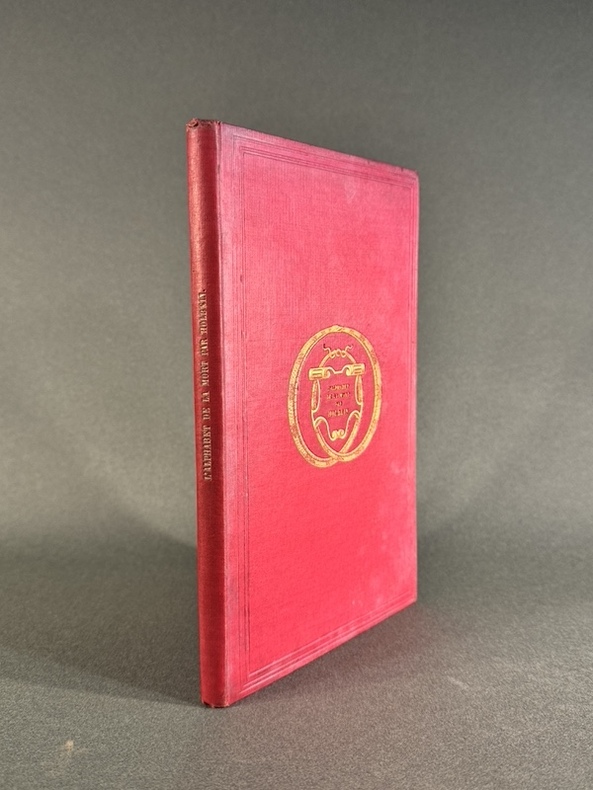
1856réf. 3385Paris Firmin-Didot 1856 Percaline rouge, superlibros sur premier plat frappé or, deux serpents formant un double cercle en encadrement du titre. In-8, beau papier velin filigrané, non ébarbé.Les reproductions du livre d'heures de Simon Vostre ont été gravées, comme nous le précise la préface, par un habile artiste Monsieur Léon Lemaire de la ville de Paris. L'origine de l'Alphabet par Hans Holbein reste fort obscure. Le premier ouvrage dans lequel on signale cet alphabet est une Bible grecque publiée à Strasbourg en 1526. D'autres lettres de la même source se retrouvent utilisées de façon éparse dans plusieurs autres ouvrages. Les lettres sont entremêlées avec d'autres Danses des Morts, mais aussi avec des lettres ornées de toutes sortesLa préface érudite d'Anatole de Montaiglon fait part de ses recherches sur ces prouesses typographiques utilisées ici pour la première fois de manière continue. L'entreprise éditoriale ambitieuse a nécessité la mise en oeuvre la mise en chantier de gravures sur bois reproduisant au plus près les ornements typographiques de Simon Vostre, mais aussi de Hans Holbein. Imprimé pour Edwin Tross, libraire-antiquaire.
1856réf. vd1464Edwin Tross Cartonné 1856 Alphabet de la mort (L’). Entouré de bordures du XVIe siècle et suivi d’anciens poëmes français sur le sujet des trois mors et des trois vis [sic]. Publiés d’après les manuscrits par Anatole de Montaiglon. Imprimé pour Edwin Tross. Paris. Rue des Bons-Enfants, 28. 1856. (22,5 x 14,4 cm). (96) pp. : cartonnage de l’éditeur de percaline rouge, triple filet d’encadrement estampé à froid sur les deux plats, titre doré dans un double cercle de serpent sur le premier. Vingt-quatre lettrines gravées, dans des encadrements également illustrés figurant les acteurs de la Danse des Morts dessinées par Hans Holbein (1497?-1543). Les premières lettres suivent la hiérarchie habituelle de ceux qui marchent en tête : après les funèbres musiciens, le pape, l’empereur, le roi, le cardinal.... mais à partir du M, Holbein illustre l’initiale avec le nom latin de la figure représentée, Medicus, médecin, pour le M, Numérarius, changeur ou banquier, pour le N etc... Préface explicative de l’archiviste paléographe Anatole de Montaiglon (1824-1895) sur ce rare écrit dont on ne sait ni la date exacte de réalisation ni pour quel ouvrage il était destiné. On le trouve pour la première fois dans une Bible publiée à Strasbourg en 1526. Le dessin original de Holbein avait été gravé par Hans Lutzeburger, notre exemplaire de 1856 par Léon Le Maire, de Paris qui en réalisa toutes les bordures et les gravures. A la suite de l’alphabet sont ajoutés les différents dits des Trois Mors et des Trois Vis. Quelques traces sur les plats, intérieur frais, bon état général. Livraison a domicile (La Poste) ou en Mondial Relay sur simple demande.

1956réf. R200119785Edwin Tross / Firmin-didot frères. 1956. In-8. Cartonnage d'éditeurs. Etat passable, Plats abîmés, Dos fané, Fortes mouillures. Environ 100 pages. Ouvrage gondolé, suite à de fortes mouillures. Nombreuses pages perforées (mite) , gênant parfois la lecture. Bordures illustrées sur chaques pages+ nombreuses lettrines, en noir et blanc. Quelques rousseurs. 4 photos disponibles.. . . . Classification Dewey : 840.03-XVI ème siècle
réf. 14883,Paris, Imprimé pour Edwin Tross 1856, (96) pp., 1 vol. in 8 relié entouré de bordure du XVIe siècle et suivi d'anciens poème français sur le sujet des trois mors et des trois vis, publié d'après les manuscrits par Anatole de Montaiglon . Reliure pleine percaline noire, plats ornés d'un encadrement et d'un médaillon central à froid, titre doré sur le premier plat et 'à la chinoise', entre deux fleurons décoratifs dorés, au dos. Imprimé sur vergé de Hollande. TBE
1816réf. 850.1816London J. Coxhead 1816. Publisher's printed gray boards copy set within decorative borders; spine renewed with matching paper.Based upon Holbein's original 15th century designs Wenceslaus Hollar the Bohemian etcher born in Prague in 1607 created copper plates for his own Dance of Death. In 1647 an edition of 30 copperplates was brought out in London; another edition from these plates was published in 1651. The plates then disappeared from sight until the late 18th-early 19th centuries when several editions from the "newly discovered" plates began to appear. In this copy which appears "as issued" by the publisher the plate section is gathered together at the front just after the title-page and before the letterpress i.e. "The Life of Holbein" followed by an essay on the history of the dance of death called "The Dance of Death" is followed by "Descriptions of the Cuts in Hollar's Dance of Death" in English and French. At the end is a short essay entitled "The Dance of Macaber". Typically these copies in boards were handed over to bookbinders who before sewing the gatherings interleaved the descriptive text with the plates. It is HIGHLY UNCOMMON to find the work in the original boards in such an unsophisticated state. According to a notice on the boards the work was issued by Coxhead coloured for 25s and plain for 16s. See: Warthin A. S. The Physician of the Dance of Death. pp. 72-75. Minns Catalogue No. 253. IN THE PUBLISHER'S PRINTED BOARDS London J. Coxhead hardcover books
1803réf. 2250.1803London S. Gosnell 1803. Sm. 4to. contemporary paneled calf with blind decorated sides and spine which has been rebacked much earlier; red morocco label all edges stained red. Occasional foxing mainly to the beginning and end; a handsome well-printed copy. The 46 Dance of Death plates are within separately engraved borders in four different designs three of which are copied with slight variations from the Diepenbeke borders to W. Hollar's plates. As to the plates themselves 30 are copies from Hollar's designs the rest are from the spurious editions of Holbein's cuts with variations. The last plate not mentioned by Douce as being in this work and often lacking is a design by De Mechel called "Petite Danse de Morts" which was originally engraved on the sheath of a poignard after drawings by Holbein. The work was first published in Edinburgh in 1788. According to Aldred Warthin "The paper used in the Edinburgh edition is extremely poor which may account for the poor impressions of the plates. Two other editions of Deuchar were printed by S. Gosnell London in 1803 one WITH and one WITHOUT the Diepenbeke borders. The prints in these London editions are much better than those of the Edinburgh and a better quality of paper is used." It would appear that Warthin did not know that there were two editions of 1803 printed for Scott by two different printers S. Gosnell and W. Smith & Co. See: Warthin Aldred S. The Physician of the Dance of Death. pp. 79-80. Douce Francis. The Dance of Death. pp. 135-36. Minns Collection. AAA Catalogue 1922. No. 268 "Large uncut copy of this rare edition of Deuchar's plates. Printed on heavier paper than the first edition and with very fine impressions of the plates.". PLATES WITH THE DECORATIVE BORDERS London S. Gosnell unknown books