598 Ergebnisse
1860Best.-Nr. 11159Flushing L.I.: published by the Home Lecture Committee of 1857-8 1860. First edition 12mo 180pp. frontis. and 9 lithograph plates depicting Flushing landmark buildings; original brown embossed cloth faded with light wear to extremities minor fraying to lower spine end two small holes in cloth at upper joint scattered light foxing. A scarce fragile work in remarkably good shape. With a directory of Flushing businesses at pp. 179-180. Sabin 44230. published by the Home Lecture Committee of 1857-8 unknown
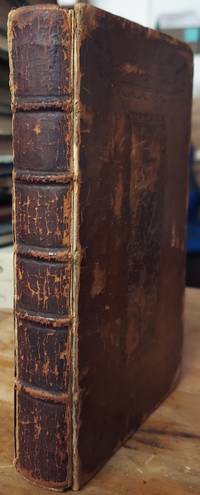
1729Best.-Nr. 16348Printed for John Brotherton at the Bible in Cornhill 1729. 2nd Edition . Book Hardcover. Good. Important book. Original copies rare. First edition 1720. Blank leaf xiv 2 409 1 xxii index 2 Brotherton book list blank leaf. Original full calf lacking spine title label blind decorated. Text block somewhat yellow otherwise v.g. Printed for John Brotherton, at the Bible in Cornhill hardcover
1732Best.-Nr. 220824-MB55London: Printed for John Brotherton at the Bible in Cornhill 1732. Good original tooled calf binding hinges fragile previous owner's inscription and bookplate. First Edition. Leather Binding. Good/No Dust Cover. Printed for John Brotherton at the Bible in Cornhill Hardcover
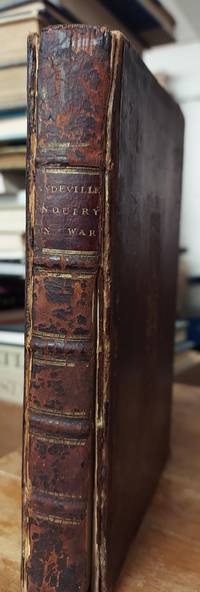
1720Best.-Nr. 220824-MB52London: Printed By T. Jauncy at the Angel Without the Temple Bar and J. Roberts in Warwick Ln 1720. Good original tooled calf binding hinges fragile title bands previous owner's name and bookplate . First Edition. Leather Binding. Good/No Dust Cover. Printed By T. Jauncy, at the Angel Without the Temple Bar, and J. Roberts in Warwick Ln Hardcover
Best.-Nr. 0420H974049Leather Bound. Very Good. Edinburgh: W. Gray and W. Peter full leather five raised bands. Good on the outside with title barely visible stamped on spine 2mm bumps and loss head and foot of spine not affecting the binding VG inside Front hinge tender though binding is tight. See pics. William Bayley's signature and coat of arms pic on paste-down. Toning browning at endpapers only. Gilt gone from spine but fleur de lys giltwork along edge of boards still beautiful. Intro: xxii 345 346 - 370 Index contemporary 1755 calf. Thanks to John Gach who points out that this was the first edition to be published in Edinburgh. hardcover
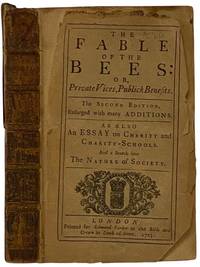
1723Best.-Nr. 2353259London: Printed for Edmund Parker at the Bible and Crown in Lombard-Street 1723. Second Edition. Full-Leather. Fair/No Jacket. Signed by author. Second edition. Lacks front board and spine label some loss along edges of rear board and spine leather dry and rubbed title page loose with some loss along edges. 1723 Full-Leather. vi 428 11 pp. Full calf with hand-tooled design five raised spine bands. A collection of essays including discussion of the origin of moral virtue the nature of charity and society etc. The work comprises a satirical poem entitled The Grumbling Hive: or Knaves turn'd Honest which was first published anonymously in 1705; a prose discussion of the poem called 'Remarks'; and an essay An Enquiry into the Origin of Moral Virtue. In 1723 a second edition the one offered here was published with two new essays 'An Essay on Charity and Charity-Schools' and 'A Search into the Nature of Society'. In the original portion of the work Mandeville controversially asserts that self-interest is the lynchpin of a properly functioning society and that practicing honesty and virtue while objectively desirable in practice leads to negative outcomes. His theories influenced Scottish Enlightenment thinkers like Francis Hutcheson David Hume and Adam Smith as well as economic constructs like the division of labor laissez-faire capitalism etc. Mandeville also wrote A Treatise of the Hypochondriack and Hysterick Passions which Garrison-Morton 10703 describes as: "Probably the first psychiatric self-help book. Hunter and Macalpine call Mandeville's work 'the first book on minor mental maladies 'writ by way of Information to Patients' rather than 'to teach other Practitioners'. Mandeville gave a graphic account of his own attack of melancholy when he developed the delusion that he had syphilis' Hunter & Macalpine p. 296. Printed for Edmund Parker at the Bible and Crown in Lombard-Street hardcover
1729Best.-Nr. 2329103London: Jonh Brotherton at the Bible in Cornhill 1729. Second Edition. Full-Leather. Very Good/No Jacket. Second edition ESTC T106235. Both joints beginning to split front more so than rear with minor loss from spine head and foot quarter-sized spot on rear board which appears to be some sort of clear lacquer. Text clean and unmarked binding tight and holding firmly. 1729 Full-Leather. xiv 2 409 1 xxii 4 pp. Full calf four raised spine bands speckled edges blind stamped rules and inner board decoration. This second edition published nine years after the first includes substantial additions and corrections and is about twenty-five percent longer than the original. It was influential particularly in Germany where it was printed in several editions. Routledge in reference to a recent scholarly reissue of the text states "Bernard Mandeville was best known for The Fable of the Bees in which he demolishes the supposed moral basis of society by a Hobbesian demonstration that civilization depends on vice. Today Mandeville is seen as a trenchant satirist of the manners and foibles of his age. He is also seen as a precursor of some of Adam Smith's doctrines a forerunner in the field of sociology. A prescient analyst of the dynamics of our modern consumer society Mandeville is author of a striking naturalistic account of the gradual evolution of modern society from its primitive antecedents. His literary signature in a manner of speaking is his famous paradox 'private vices public benefits.' To understand Mandeville's Free Thoughts one needs to situate it within the context of the religious and political controversies ongoing subversion fear and dormant warfare of his times. Those would eventually erupt again and for the last time in the bloody Jacobite rebellion of 1745-46. The first five chapters of the book explore religious and theological issues including the nature of belief and knowledge the significance of rites and ceremonies and controversies about Christian mysteries such as the Trinity and free will and predestination. The next five chapters explore controversial issues of church politics including persecution and toleration across the centuries the basis of Mandeville's anticlericalism. In the eleventh chapter he turns aside from matters of religion to review the balance of powers in Britain's government a mixed or limited monarchy. The final chapter is essentially a repetition of Mandeville's pleas for civil and religious peace through mutual toleration by opposing religious parties. Mandeville's work is of continuing interest to students of culture and history religion and theology and political science. Jonh Brotherton, at the Bible in Cornhill hardcover
1729Best.-Nr. 74775E-190: J. Roberts in Warwick Lane. Fair. Hardcover. Leather. 12mo. Printed for J. Roberts in Warwick Lane. London UK. 1729. Xxx 432 pgs. Bound in full calf leather covered in gilt paper contact paper. Boards have shelf-wear present to the extremities. Bookplate present to the reverse of the front board. Previous owner's name present to the FFEP. Text is clean and free of marks. Binding tight and solid. This masterpiece of 18th century satire sparked controversy as a rejection of a positive view of human nature and argued for the benefits of vice as the foundation of capitalism. The poem elucidates many key principles of economic thought such as the division of labor "the invisible hand" the paradox of thrift and the terrible propensity of economists to conflate moral values with economic ones.; 8vo 8" - 9" tall . 1729. J. Roberts in Warwick Lane hardcover
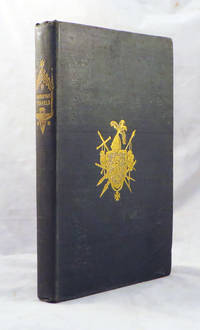
1839Best.-Nr. 26571London: Edward Lumley 1839. First edition with Halliwell's introduction and additions. Illustrated with an engraved frontispiece vignette title-page and many illustrations throughout the text in the style of medieval woodcuts. 8vo publisher's original green cloth the upper cover with large coat of arms in gilt and additional decoration in blind blind decoration on the lower cover and in gilt with gilt lettering on the spine. vxii xii 326 2 ads pp. An unusually handsome and well preserved copy as fine and highly unusual for a book of the period especially as this copy is preserved in its original early cloth binding. FIRST EDITION WITH HALLIWELL'S INTRODUCTION AND ADDITIONS AND A BEAUTIFULLY PRESERVED COPY. 'In his preface the compiler calls himself a knight and states that he was born and bred in England of the town of St Albans. Although the book is real it is widely believed that 'Sir John Mandeville' himself was not. Common theories point to a Frenchman by the name of Jehan a la Barbe or other possibilities discussed below. The most recent scholarly work suggests that The Travels of Sir John Mandeville was “the work of Jan de Langhe a Fleming who wrote in Latin under the name Johannes Longus and in French as Jean le Long." Jan de Langhe was born in Ypres early in the 1300s and by 1334 had become a Benedictine monk at the abbey of Saint-Bertin in Saint-Omer which was about 20 miles from Calais. After studying law at the University of Paris de Langhe returned to the abbey and was elected abbot in 1365. He was a prolific writer and avid collector of travelogues right up to his death in 1383. John de Mandeville crossed the sea on 1322; had traversed by way of Turkey Asia Minor Armenia the Little Cilicia and the Great Tartary Persia Syria Arabia Egypt upper and lower Libya great part of Ethiopia Chaldea Amazonia India the Less the Greater and the Middle and many countries about India; had often been to Jerusalem and had written in Romance as more generally understood than Latin. In the body of the work we hear that he had been at Paris and Constantinople; had served the Sultan of Egypt for a long time in his wars against the Bedouin and had been offered and declined a princely marriage and a great estate on condition of renouncing Christianity and had left Egypt under Sultan Melech Madabron al-Muzaffar Sayf-ad-Din Hajji I who reigned in 1346-1347; had been at Mount Sinai and had visited the Holy Land with letters under the great seal of the sultan which gave him extraordinary facilities; had been in Russia Livonia Kraków Lithuania "en roialme daresten" Dristra or Silistra in Bulgaria and many other parts near Tartary but not in Tartary itself; had drunk of the Well of Youth at Polombe Quilon on the Malabar coast and still seemed to feel the better for it; had taken astronomical observations on the way to Lamory Sumatra as well as in Brabant Germany Bohemia and still farther north; had been at an isle called Pathen in the Indian Ocean; had been at Cansay Hangchow-fu in China and had served the emperor of China for fifteen months.had been through a haunted valley which he places near "Milstorak" i.e. Malasgird in Armenia; had been driven home against his will in 1357 by arthritic gout; and had written his book as a consolation for his "wretched rest".' Copies of this work are scarce in the marketplace. Edward Lumley hardcover
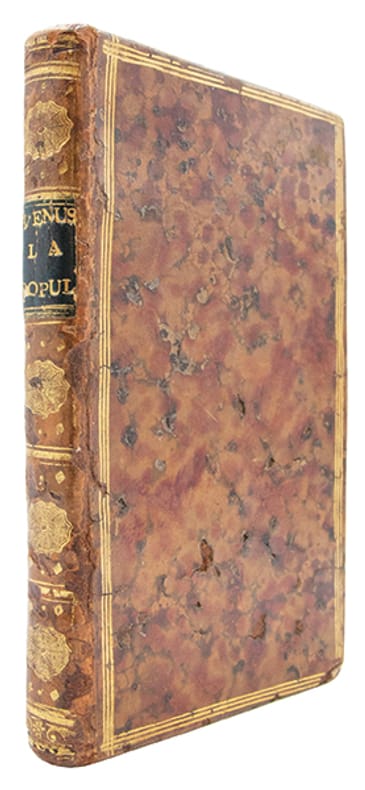
1740Best.-Nr. ZNC-112A Londres, Aux dépens de la compagnie, 1740, 4 volumes in-12°, XXII-333, 267, XLVIII-282 et 270 pages, cartonnage marron, dos lisses ornés de filets dorés.
Best.-Nr. elala3545London: Printed for J.Tonson 1732-33. Sixth Edition of Vol. I; Second Edition of Vol. II. Mandeville’s most famous and controversial work in which he advanced the view that virtue derives from the practice of selfish instincts and that the public prosperity is dependent upon private vices. His original intention was probably to satirize the political state of England in 1705 when the Tories were accusing Marlborough and the ministry of advocating the French war for personal reasons. The ironical nature of his commentary on the hypocrisies of artificial society was overlooked by his contemporaries and the Fable was widely attacked and condemned notably by Bishop Berkeley Francis Hutcheson and Archibald Campbell. NCBEL II 1096. cfKress 4024. cfRothschild I 1371. 2 Volumes. 8vo. pp. 8 p.l. 477; 1 p.l. xxx 432 24index. woodcut ornaments & initials. later calf rebacked rubbed front cover of Vol. I loose. armorial bookplate of George Goddard Knowles London: Printed for J.Tonson, 1732-33 unknown
1887Best.-Nr. 293400London: Pickering 1887. hardcover. near fine. Edited Annotated and Illustrated in Facsimile by John Ashton. 289 pages with untrimmed edges. 4to Original pale blue boards rubbed and somewhat discolored with vellum spine. London: Pickering 1887. Limited edition. Endpapers a bit foxed otherwise a beautiful pristine copy. Number 28 of 100 copies printed in Large Paper. Based on a reprint of the unique Pynson edition the oldest English printed version extant in the Grenville Library of the British Museum. ".Grenville and Dibdin believe the Pynson edition to be earlier than that of Wynken de Worde's" See Cox I p. 319. Pickering unknown books
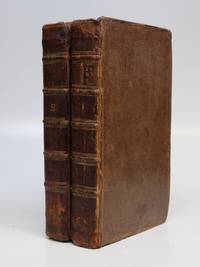
1728Best.-Nr. 211271London: J. Tonson 1728. hardcover. very good. With an Essay on Charity and Charity Schools and A Search into the Nature of Society. Also A Vindication of the Book from the Aspersions contained in a Presentment of the Grand Jury of Middlesex and an Abusive Letter to Lord C-. 2 volumes published 1 year apart and by different publishers 8vo original calf; rubbed spine labels partially present. London: J. Tonson 1728 Fifth Edition and James Roberts 1729. First Edition. Very Good. This is one of many editions of the famous and popular satire on the true causes of social welfare and riches Mandeville suggesting that base behavior produces positive economic effects. The conspiratorial theory of the origin of society so prominent in Part I was widely criticized after the publication of the 1723 edition. In the second volume probably in response to his critics Mandeville moved towards a more evolutionary account of society. This had an influence on the thinking of David Hume. Mandeville also adumbrated the division of labour theory subsequently developed by Adam Smith. J. Tonson unknown books
1887Best.-Nr. 293400London: Pickering 1887. hardcover. near fine. Edited Annotated and Illustrated in Facsimile by John Ashton. 289 pages with untrimmed edges. 4to Original pale blue boards rubbed and somewhat discolored with vellum spine. London: Pickering 1887. Limited edition. Endpapers a bit foxed otherwise a beautiful pristine copy. Number 28 of 100 copies printed in Large Paper. Based on a reprint of the unique Pynson edition the oldest English printed version extant in the Grenville Library of the British Museum. ".Grenville and Dibdin believe the Pynson edition to be earlier than that of Wynken de Worde's" See Cox I p. 319. Pickering unknown
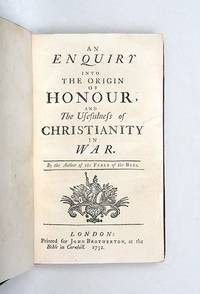
1732Best.-Nr. 158809London: Printed for John Brotherton 1732. First edition of the author's last book; the final instalment of a long string of incendiary treatises which incensed his contemporaries. Following his tracts attacking Christian ethics defending brothels and opposing charity schools Mandeville here turns to the readiness with which Christianity can be perverted to militarism and asserts that honour is no more than pride. As with his Fable of the Bees Part II 1729 an entirely different work to the first part the treatise takes the form of a dialogue between two interlocutors Cleomenes and Horatio. "Mandeville repeated his view that the passions of pride and shame are both forms of self-liking. Honour and worldly religion are treated as devices that are useful for socializing humans. Honour is discovered to be even less demanding than virtue or the artificial courage discussed in the Fable of the Bees. The work again reveals Mandeville's anti-clericalism in his account of how a perverted version of the truly peaceful doctrine of Christianity can be used to motivate soldiers" ODNB. Octavo 184 x 115 mm. Late 19th-century half sheep and pebble-grain cloth spine ruled gilt in compartments black leather label sprinkled edges. Joints and corners rubbed head of spine with tiny chip. Margins trimmed a little close; a crisp clean copy. ESTC T59021; Kaye pp. 440ff. hardcover
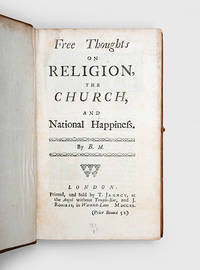
1720Best.-Nr. 168926London: Printed and Sold by T. Jauncy and J. Roberts 1720. First edition of the author's forceful argument for the secularization of British politics his most substantial and wide-ranging political tract. This copy comes from the library of John Wallop Lord Viscount Lymington 1690-1762 a Whig politician who was an ally of Robert Walpole and bears his armorial bookplate on the front pastedown. Bernard Mandeville 1670-1733 grew up and studied in the Netherlands before settling in England at some point after the Glorious Revolution. Free Thoughts walks a fine line between advocating religious toleration and criticising the practices of the English priesthood advocating a Whiggish support of secularized constitutional government. "Despite the objections of the pious history and a growing segment of influential opinion were on Mandeville's side; and the ensuing years of the eighteenth century were to see an increasing acceptance in practice if not always in theory of the secularization of politics he so forcefully advocated in the Free Thoughts on Religion the Church and National Happiness" Cook p. 92. Two variants of the first edition are known. This example contains page xix correctly numbered - no priority has been identified. The book was reissued in 1721 and 1723 with new editions in 1729 and 1731 and was translated into French Dutch and German. The shelf label reads "Dr Mandevi Works Vol:1" indicating that this volume originally formed part of a collected set. Octavo 190 x 114 mm. Wood-engraved head- and tailpieces. Contemporary panelled calf spine with raised bands forming six compartments brown morocco label lettered in gilt edges sprinkled red. Light bumping and wear slight cracking to front joint holding firm minor browning to endpapers and outer margins of contents: a very good copy. ESTC T59022. Richard Cook Bernard Mandeville 1974. hardcover
1750Best.-Nr. 262982Londres: Jean Nourse 1750. hardcover. very good. 4 volumes 12mo 2 396 4 62lxv1 339 et 4 362 pages original mottled calf; rubbed rubricated edges. Londres: Jean Nourse 1750. Very good. Translated from the sixth English edition. This is one of many editions of the famous and popular satire on the true causes of social welfare and riches Mandeville suggesting that base behavior produces positive economic effects. Jean Nourse unknown books
1750Best.-Nr. 262982Londres: Jean Nourse 1750. hardcover. very good. 4 volumes 12mo 2 396 4 62lxv1 339 et 4 362 pages original mottled calf; rubbed rubricated edges. Londres: Jean Nourse 1750. Very good. Translated from the sixth English edition. This is one of many editions of the famous and popular satire on the true causes of social welfare and riches Mandeville suggesting that base behavior produces positive economic effects. Jean Nourse unknown
Best.-Nr. 1627802J. Tonson 1730. Used-Very Good. London : J. Tonson 1730. Recent full calf with contrasting spine label. 380 pp. Some edgewear to binding with a small split at the bottom rright of spine. Internally very sound with just a trace of foxing in some initial and final leaves. J. Tonson, 1730 unknown
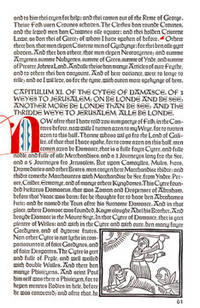
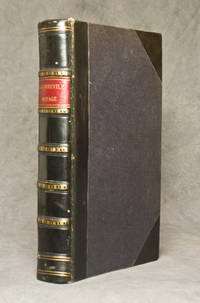
1928Best.-Nr. 527461928. MANDEVILLE John. Itinerarium English. The Voiage and Travaile of Sir John Maundevile Kt. Which treateth of the way to Hierusalem and of marvayles of Inde with other ilands and countryes. 4 156 1 pp. Illustrated throughout with woodcuts and illuminated initials by Valenti Angelo. Folio bound by William Wheeler in recent half morocco. New York: Printed by Edwin and Robert Grabhorn for Random House 1928. The superb Grabhorn edition of Mandeville's Travels originally written in Anglo-Norman French in 1356-7. "It claims to be a guide both geographical and ethical for pilgrims to the Holy Land but it carries the reader far off course to Turkey Tartary Persia Egypt and India. It was an important influence on subsequent English writers from Chaucer to Shakespeare and was the prototype in English of the popular genre of the fabulous travel book" Osborne Oxford Companion. The illustrations were drawn by Valenti Angelo from those in early editions and manuscripts. The type was designed by Rudolph Koch here used for the first time in America. The text of this Grabhorn edition is taken from that of the English edition of 1725. One of an edition of only 150 copies. Ransom p. 302 no. 12. unknown books
Best.-Nr. 39364In-16 (133 x 80 mm), veau porphyre de lépoque, dos lisse orné de compartiments garnis dun fer à la toile daraignée répété au centre, filets et palettes dorés, pièce de titre de veau vert bronze, (4), xij, [13]-136 pages et 4 pages de catalogue éditeur. Paris, Mercier, s.d. [1796].
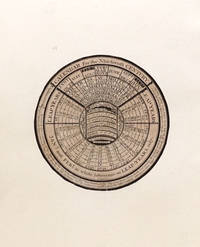
1801Best.-Nr. 319639Philadelphia 1801. Small circular engraved broadside engraved by Draper. Approx. 3 1/2 inches in diameter. Inlaid into a larger sheet at a later date. Small circular engraved broadside engraved by Draper. Approx. 3 1/2 inches in diameter. America Looks to the Future: An Unusual Early American Perpetual Calendar. The Explanation running arount the outer border of the lower portion of the Calendar details its use: "Intersect the Column of the Month by the circle in which the Year stands & the Day you there find look for under October which day of the week with those on the right hand will stand over such Days of the Month as falls on them." The Explanation continues with how to determine days of the month using the calendar in the previous century and into the 20th century. A January 14 1802 review in the Philadelphia Gazette extolls its virtues: ".I am induced to think that sufficient justice can hardly be done to the ingenuity of this little production: The Author has modestly called it a Calendar for the 19th Century while it is in fact a Calendar for twenty-one centuries . It will shew sic in what day of the week an event in history occurred . This Calendar is handsomely executed on copperplate . when framed its figure and beauty will entitle it to a station in the parlour as well as counting house." The review further reveals that the Calendar was being sold for $.25 and was also being marketed as a hat maker's label. Just a few days prior to that review Mandeville had taken the liberty of sending his Calendar to President Thomas Jefferson writing to him on January 9 1802: "Permit me the honor to present to you . a Calendar for the Nineteenth Century to which I have recently given publicity -- Should I learn that in your estimation I have combined usefulness with originality and comeliness I shall be highly gratified.". According to Philadelphia Directories from the period David Mandeville lived at North Sixth Street in Philadelphia in 1801 and 1802 and worked as an "accomptant" and clerk in the Bank of the United States. The broadside is engraved by John Draper; a former apprentice to Robert Scot he engraved for Dobson's Encyclopedia and was an early American banknote engraver. Very rare with only three examples recorded by Shaw and Shoemaker American Antiquarian Society New York Public Library and Massachusetts Historical Society. The AAS example with a variant spelling of the word Calendar "Calender" and with the engraver's name below the outer circle suggesting two issues. Shaw-Shoemaker 269 unknown books
1727Best.-Nr. 244219London: Woodman Lyon and C. Davis 1727. Reissue of the 1725 edition with cancel title-page. xvi 8 384 8 pp. 1 vols. 8vo. Half dark brown polished calf and cloth red leather spine label. Title and final leaf backed title page a little toned otherwise a clean crisp copy. Reissue of the 1725 edition with cancel title-page. xvi 8 384 8 pp. 1 vols. 8vo. Translation of a French manuscript of Mandeville's Itinerarium. and for centuries a standard book for travellers. "Mandeville is said to have set out on his travels in 1322 and after visiting Egypt Palestine Tartary India the Indian isles etc. returned home in 1355. His death is set at 1371." Cox I 319. This is the second issue of the "best English edition" Lowndes and "the completest edition up to date" Cox. Woodman, Lyon and C. Davis unknown books
Best.-Nr. 2314A Londres. Aux dépens de la Compagnie. 1740. 4 tomes en 3 volumes 100 x 165 mm. Reliure d'époque en plein veau blond, dos à cinq nerfs ornés de motifs dorés, pièces de titre en maroquin rouge, tranches rouges. XXII + 333 pp. & 267 pp. & XLVIII + 282 pp. & 270 pp. Les coins et dos des reliures sont un peu frottés, sans manque, sans gravité. Quelques inscriptions anciennes sur les gardes du premier volume. Bon exemplaire, très propre intérieurement.
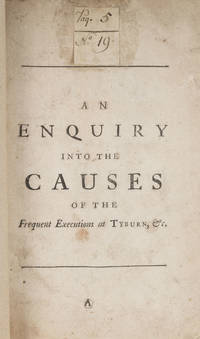
1725Best.-Nr. 728381725. Executions and the Causes of Crime Mandeville Bernard 1670-1733. An Enquiry Into the Causes of the Frequent Executions at Tyburn: And A Proposal for Some Regulations Concerning Felons in Prison And the Good Effects to be Expected from Them. To which is Added A Discourse on Transportation And a Method to Render that Punishment More Effectual. London: Printed and Sold by J. Roberts 1725. xvi 55 1 pp. Octavo 7-3/4" x 5". Stab-stitched pamphlet in recent plain wrappers. Moderate toning to interior light foxing finger smudges and minor tears to a few leaves some soiling to half-title which has an early label reading "Pag. 5 No. 19" and verso of final leaf. $1500. Only edition. Mandeville's vivid account of the wretched state of public executions in England and the causes of crime introduced several themes that would be explored further by Henry Fielding Adam Smith and Adam Ferguson. Mandeville was an Anglo-Dutch social philosopher political economist and satirist. His most important work and the source of his fame is The Fable of the Bees 1714 an allegorical study of social behavior. OCLC locates 3 copies in North American law libraries Library of Congress University of Iowa Yale. English Short-Title Catalogue T61379. unknown