Otto BobertagAntiquariat.de

429 risultati
1914rif. 275648Georg Müller, 1914. XXX, 400 Seiten. Originalhalblederband. 23 cm
1985rif. 146314Amsterdam: Rodopi 1985. IV, 444 Seiten. Als Typoskript gedruckt. Gr. 8° (22,5 -25 cm). Orig.-Pappband. [Hardcover / fest gebunden].
1973rif. 1128770Frankfurt (am Main) : Suhrkamp, 1973. 249 S.; 18 cm, kart.
1985rif. 73133Amsterdam: Rodopi 1985. IV, 444 Seiten. Gr. 8° (22,5 -25 cm). Orig.-Pappband. [Hardcover / fest gebunden].
1888rif. 19532Berlin, Pormetter, 1888. 105 S., 2 Bll. (Vita und Druckfehler). 8°. Interims-Brosch. der Zeit (etw. lädiert).
1960rif. Diss1013Köln, 1960. 100 Seiten, Normalformat, 8°, kartoniert.
1988rif. Khe02054Leipzig / Weimar (Gustav Kiepenheuer) 1988 (= Erste Auflage). 8°, Origianlleinen mit illustriertem Originalumschlag (Hardcover), 441 S., Abbildungen 1
8vo., First Edition thus; original buff wrappers printed in black, a near fine copy. Augustan Reprint Society, Publication No. 162. This facsimile is a high-quality photographic reprint of copies in the William Andrews Clark Memorial Library. VERY SCARCE.
8vo., First Edition thus; original buff wrappers printed in black, wire-stitched as issued, a near fine copy. Augustan Reprint Society, Publication No. 120. This facsimile is a high-quality photographic reprint of the copy in the William Andrews Clark Memorial Library. VERY SCARCE.
8vo., First Edition, with illustrations in the text; original Society binding of blue cloth, upper board with multiple frame border in blind enclosing a sailing vessel blocked in gilt, gilt back, a fine copy in unclipped dustwrapper. Hakluyt Society, Third Series, Vol.14.
2 vols., 8vo., First Edition, with illustrations and maps; original Society binding of blue cloth, upper boards with multiple frame border in blind enclosing sailing vessel blocked in gilt, gilt backs, uncut, a near fine set. With personal bookplate on front paste-down. Vol. I: The text of BL Egerton MS 1982 with an essay on the cosmographical ideas of Mandeville's day by E.G.R. Taylor; Vol. II: The Paris text (in French, with translation), the Bodleian text, and extracts from other versions. COMPLETE SETS IN THIS CONDITION ARE SCARCE. Hakluyt Society, Second Series, Nos. 101, 102. Bridges & Hair, p.283.
pp. 192, cm 18x11, bross., coll. I Filosofi 86
pp. 222, in 8°, bross.
Mm 140x220 Volume in copertina rigida con sovraccoperta originale, x + 525 pagine con tavole in nero fuori testo. Opera in ottime condizioni, presenta una piccola etichetta di biblioteca dismessa alla prima carta. Spedizione in 24 ore dalla conferma dell'ordine.
19X12,6 cm; (XIII), (3), 395, (32) pp. Legatura editoriale in piena tela con titolo impresso in rosso e nero al piatto anteriore. Bella raccolta di passi tratte da numerose opere classiche e non della letteratura inglese come Jhon Mandeville, More, Trevisa, Cavendish, Melville, Florio, Donne ecc. Buono-ottimo stato di conservazione (a parte un minimo ed ininfluente difetto alla cerniera anteriore). Esemplare ancora in barbe.
Atti del convegno (Napoli, 2-4 dicembre 2004) LIGUORI 2010. FONDO DI MAGAZZINO, PARI AL NUOVO. Il tema dei rapporti tra etica e progresso è stato affrontato privilegiando in particolare due ambiti cronologici: l'età moderna e i secoli XIX e XX. La filosofia dei lumi - e in particolare il pensiero illuministico francese - è risultato il momento privilegiato, anche se non esclusivo, per indagare i rapporti tra etica e progresso in relazione alle dispute sulla morale naturale e sulla tolleranza, così come in riferimento ai nessi tra antropologia ed etica. La concezione illuministica del progresso risulta inoltre, per le reazioni e i dibattiti suscitati, un ineludibile punto di riferimento per le discussioni filosofiche successive, comprese quelle novecentesche. Il volume raccoglie gli atti di un convegno internazionale organizzato a Napoli nei giorni 2 - 4 dicembre 2004 presso il Dipartimento di Filosofia e Politica dell´Università degli Studi di Napoli “L´Orientale” in collaborazione con l´Université de Bourgogne (Dijon) e l´Istituto Italiano per gli Studi Filosofici. Il tema dei rapporti tra etica e progresso – ma insieme anche quello delle antinomie che l´idea di progresso ha prodotto – è stato affrontato privilegiando in particolare due ambiti cronologici: l´età moderna – e al suo interno il pensiero dell´Illuminismo – e i secoli XIX e XX. La filosofia dei lumi – e in particolare il pensiero illuministico francese – è risultato il momento privilegiato, anche se non esclusivo, per indagare i rapporti tra etica e progresso vuoi in relazione alle dispute sulla morale naturale e sulla tolleranza, vuoi in riferimento ai nessi tra antropologia e etica. La concezione illuministica del progresso risulta inoltre, per le reazioni e i dibattiti suscitati, un ineludibile punto di riferimento per le discussioni filosofiche successive, comprese quelle novecentesche. Saggi di: Lorenzo Bianchi, Valeria Chiore, Caterina de Caprio, Maria Donzelli, Jean Ferrari, Letizia Gai, Giuseppe Landolfi Petrone, Mariassunta Picardi, Georges Pieri, Marco Platania, Roland Quillot, Paolo Quintili, Giulio Raio Parole e frasi comuni Aby Warburg Alvaro Antropologia arts Auguste Comte autres avait Bachelard Bestimmung des Menschen bien c'est Calas Cassirer choses Comte Corbin critica cultura d'une dell'uomo deux développement Dictionnaire philosophique Diderot Discours droiteffet Encyclopédie epistemologica état été etica être Fable faire fait faut filosofia Filosofia Islamica fisico fois Foucault Guèbres historique hommes humaine Jean-Jacques Rousseau Kant KGS VII l'Esprit l'histoire l'hommel'humanité l'on l'uomo Lettres Lévi-Strauss libertà Littré lois mais Mandeville Marco Platania metafisica Mettrie mœurs mondo Montesquieu morale n'est natura naturelle Paris pensée pensiero perfectibilité perfection peut point politicapolitique positivismo premier problema progresso proprio qu'elle qu'il qu'on qu'un ragione raison rapport reinen religione Rousseau Sandro Botticelli Science Universelle sciences scientifica scienza senso seulement siècle sociale società sociétésSohrawardi Sorel Spalding storia temps tolérance tolleranza tout Traité Trattato sulla tolleranza Troglodytes trouve umana Vernunft vertu vices virtù voir Voltaire Warburg XVIII secolo
Book is in excellent condition with light shelf wear to covers only. Binding is solid and square, covers have sharp corners, exterior shows no blemishes, text/interior is clean and free of marking of any kind. 285 pages, maps, b&w illustrations.
Wells Mandeville Michael Come affrontare il crollo economico del 2006-2007. , Macro Edizioni 2009-01-01, Piatti e dorso lievemente segnati dal tempo. Tagli lievemente segnati. Interno in buono stato ma saltuariamente ci sono delle sottolineature e segni a matita. Buono (Good) . Copertina flessibile 312 8875075433
br. Questo libro tenta un'interpretazione del pensiero di Bernard Mandevilie ponendo in dialogo fra loro le sue opere. Operazione non priva di difficoltà rappresentate sia dai diversi generi letterari adottati, sia dai differenti argomenti trattati. Confrontando gli scritti di Mandevilie, però, emergono alcuni nuclei tematici da cui è possibile delineare una struttura coerente. Per questa ragione la prima parte del libro è focalizzata sul metodo e su come questo metodo, applicato all'indagine della natura umana, porti all'individuazione di pochi semplici principi. Un approccio empirico che prelude e sostanzia la dimensione umoristica e la sua funzione oggettivante. Tenendo fermo questo apparato concettuale, la seconda parte muove dall'antropologia per tracciare il pensiero socio-economico di Mandevilie. Qui, mantenendo distinti il piano morale, etico e politico si può comprendere come i "vizi privati" diventino "pubblici benefici". Lontano dall'essere una dichiarazione utilitarista ante litteram, l'aforisma diventa il correlativo oggettivo di un pensiero che vede nel male minore una possibilità filosofica: possibilità non libera da problemi e contraddizioni.
Bernard de Mandeville, filosofo e medico olandese, intuisce, prima ancora di altri pensatori moderni e contemporanei, che la contraddizione, il paradosso, non è qualcosa che l'uomo possa pensare di eliminare, ma è la caratteristica d'esistenza della sua vita, l'espressione più evidente della sua natura. L'impossibilità di rimuoverla fa nascere l'esigenza di governarla effettuando una "comprensione scientifica" dell'esistente, scevra da pregiudizi moralistici, in grado di consentire uno sviluppo reale della qualità della vita degli esseri umani. Autori: Gaetano Vittone.
1964rif. UMANTRA00DPEDover Publications 1964. Very Good. Mandeville John. The Travels of Sir John Mandeville. New York: Dover Publications 1964. 390pp. Illustrated. 8vo. Paperback. Book condition: Very good with remainder marks and former bookseller's stamp on front flyleaf. Dover Publications paperback books
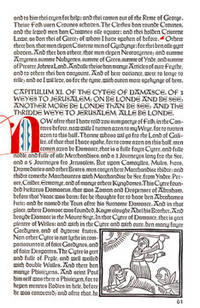
1928rif. 527461928. MANDEVILLE John. Itinerarium English. The Voiage and Travaile of Sir John Maundevile Kt. Which treateth of the way to Hierusalem and of marvayles of Inde with other ilands and countryes. 4 156 1 pp. Illustrated throughout with woodcuts and illuminated initials by Valenti Angelo. Folio bound by William Wheeler in recent half morocco. New York: Printed by Edwin and Robert Grabhorn for Random House 1928. The superb Grabhorn edition of Mandeville's Travels originally written in Anglo-Norman French in 1356-7. "It claims to be a guide both geographical and ethical for pilgrims to the Holy Land but it carries the reader far off course to Turkey Tartary Persia Egypt and India. It was an important influence on subsequent English writers from Chaucer to Shakespeare and was the prototype in English of the popular genre of the fabulous travel book" Osborne Oxford Companion. The illustrations were drawn by Valenti Angelo from those in early editions and manuscripts. The type was designed by Rudolph Koch here used for the first time in America. The text of this Grabhorn edition is taken from that of the English edition of 1725. One of an edition of only 150 copies. Ransom p. 302 no. 12. unknown books
1924rif. 9022351Oxford: Clarendon Press 1924. Hardcover. Very good. One of 25 presentation copies printed on India paper and bound in the publisher's original green cloth over boards as two volumes in one spine and cover stamped in gilt. Spine is slightly faded but legible. Lightly rubbed at the edges and extremities. All edges gilt. Facsimile illustrations. With a commentary critical historical and explanatory by F. B. Kaye. From the library of R.S. Crane with a signed and dated presentation to him by the author on the ffep. Clarendon Press hardcover books
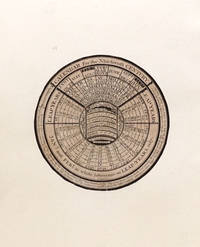
1801rif. 319639Philadelphia 1801. Small circular engraved broadside engraved by Draper. Approx. 3 1/2 inches in diameter. Inlaid into a larger sheet at a later date. Small circular engraved broadside engraved by Draper. Approx. 3 1/2 inches in diameter. America Looks to the Future: An Unusual Early American Perpetual Calendar. The Explanation running arount the outer border of the lower portion of the Calendar details its use: "Intersect the Column of the Month by the circle in which the Year stands & the Day you there find look for under October which day of the week with those on the right hand will stand over such Days of the Month as falls on them." The Explanation continues with how to determine days of the month using the calendar in the previous century and into the 20th century. A January 14 1802 review in the Philadelphia Gazette extolls its virtues: ".I am induced to think that sufficient justice can hardly be done to the ingenuity of this little production: The Author has modestly called it a Calendar for the 19th Century while it is in fact a Calendar for twenty-one centuries . It will shew sic in what day of the week an event in history occurred . This Calendar is handsomely executed on copperplate . when framed its figure and beauty will entitle it to a station in the parlour as well as counting house." The review further reveals that the Calendar was being sold for $.25 and was also being marketed as a hat maker's label. Just a few days prior to that review Mandeville had taken the liberty of sending his Calendar to President Thomas Jefferson writing to him on January 9 1802: "Permit me the honor to present to you . a Calendar for the Nineteenth Century to which I have recently given publicity -- Should I learn that in your estimation I have combined usefulness with originality and comeliness I shall be highly gratified.". According to Philadelphia Directories from the period David Mandeville lived at North Sixth Street in Philadelphia in 1801 and 1802 and worked as an "accomptant" and clerk in the Bank of the United States. The broadside is engraved by John Draper; a former apprentice to Robert Scot he engraved for Dobson's Encyclopedia and was an early American banknote engraver. Very rare with only three examples recorded by Shaw and Shoemaker American Antiquarian Society New York Public Library and Massachusetts Historical Society. The AAS example with a variant spelling of the word Calendar "Calender" and with the engraver's name below the outer circle suggesting two issues. Shaw-Shoemaker 269 unknown books
1727rif. 244219London: Woodman Lyon and C. Davis 1727. Reissue of the 1725 edition with cancel title-page. xvi 8 384 8 pp. 1 vols. 8vo. Half dark brown polished calf and cloth red leather spine label. Title and final leaf backed title page a little toned otherwise a clean crisp copy. Reissue of the 1725 edition with cancel title-page. xvi 8 384 8 pp. 1 vols. 8vo. Translation of a French manuscript of Mandeville's Itinerarium. and for centuries a standard book for travellers. "Mandeville is said to have set out on his travels in 1322 and after visiting Egypt Palestine Tartary India the Indian isles etc. returned home in 1355. His death is set at 1371." Cox I 319. This is the second issue of the "best English edition" Lowndes and "the completest edition up to date" Cox. Woodman, Lyon and C. Davis unknown books