Cham (Amédée Charles de Noé, dit)Livre Rare Book

835 resultados
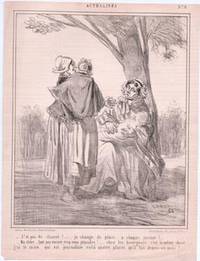
1849ref. 256601849 Le Charivari, 1849 - 1 feuillet-4p. ; illustration page 3.- Lithographie- Hauteur: 27.5cmx Largeur: 36cm
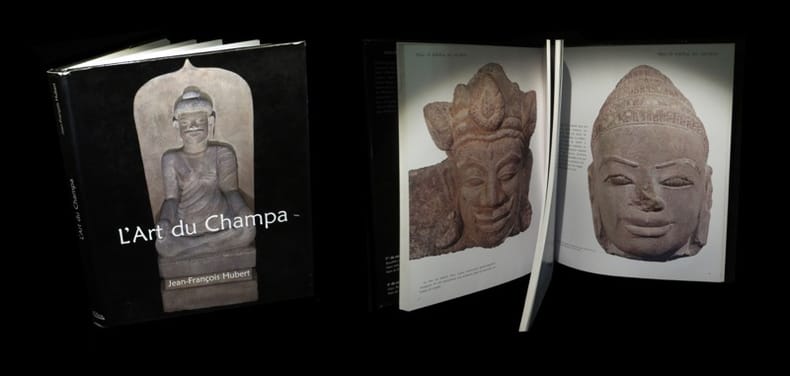
2005ref. 27086S.l., chez l'auteur, (2005). Un vol. au format in-4 (324 x 272 mm) de 231 pp. Reliure d'édition de plein cartonnage, sous jaquette illustrée par la photographie.
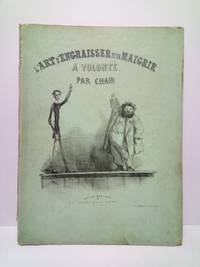
1860ref. 21274Paris Maison Martinet [vers 1860] gr. in-4 cartonnage de l'éditeur demi-toile verte, plats de papier grenu vert, titre doré sur le premier, dos lisse muet, piqûres à la première moitié de l'ouvrage
ref. 04875Paris: Maison Martinet 1856. Three of Cham's Greatest Rarities Three Complete Hand-Colored Albums Bound Together Sixty Superb Hand-Colored Lithographs by the Great Master of French Comic Illustration CHAM pseudonym of Charles Amédée de Noé 1818-1879. L'Art d'Engraisser et de Maigrir à Volonté. & Mr. Papillon ou L'Amour Autour du Monde. & Pincez-moi à la Campagne!! Paris: Maison Martinet 1856-ca. 1860. Three complete first editions bound together in one folio volume. Folio 12 11/16 x 9 7/8 inches; 326 x 251 mm. Three magnificent pictorial hand-colored lithograph title-pages and sixty superb hand-colored lithograph plates all heightened with gum arabic and containing more than two hundred individual comic scenes. Plates lithographed by Fernique and Destouches. Late nineteenth-century olive-green buckram over boards marbled endpapers. Spine lightly rubbed. An exceptionally bright fresh copy the original hand-coloring remarkably vibrant throughout and beautifully heightened with gum arabic. Few artists captured the humor absurdity and quiet eccentricities of nineteenth-century French life more brilliantly than Cham. During a career spanning more than forty years Charles Amédée de Noé became one of the principal illustrators of Le Charivari producing thousands of caricatures that chronicled bourgeois society with inexhaustible wit and extraordinary graphic invention. While Daumier supplied biting political satire and Gavarni revealed the elegance and vanities of Parisian society Cham excelled in transforming the comic mishaps of everyday life into irresistibly entertaining visual narratives. His finest work appeared not only in newspapers but as luxurious hand-colored lithographic albums published by Maison Martinet. Intended for the fashionable drawing room rather than the newsstand these beautifully colored folios represent the highest achievement of French comic lithography during the Second Empire. Complete examples are today among the rarest survivals of nineteenth-century illustrated publishing. The present volume unites three of Cham's most elusive albums each complete and preserved with exceptionally rich contemporary hand-coloring. Together they comprise sixty large folio lithographs whose sparkling color and delicate gum arabic highlights remain remarkably fresh. The Art of Gaining Weight and Losing Weight Cham's wonderfully absurd satire on Victorian health fads follows the fortunes of two inseparable friends whose greatest ambitions could scarcely be more different. Monsieur Lesec painfully thin longs to become stout while the enormously overweight Monsieur Legras dreams only of becoming slim. Their increasingly desperate attempts at self-improvement lead them across Europe North Africa the Crimea Turkey and India where every new adventure - from lion hunting and camel riding to exotic diets and improbable medical cures - produces precisely the opposite effect. Cham transforms what begins as a parody of fashionable diet manuals into a wonderfully sustained comic novel in pictures culminating in a delightfully macabre conclusion worthy of the finest nineteenth-century satire. Only four hand-colored institutional copies are recorded worldwide. Mr. Papillon or Love Around the World Among Cham's rarest productions Mr. Papillon recounts the romantic adventures of an incurable optimist whose search for love carries him from country to country. Everywhere he encounters unfamiliar customs impossible misunderstandings cultural mishaps and romantic disappointment each episode providing Cham with fresh opportunities for gentle social satire. The album is one of Cham's most elegant narrative works combining graceful draftsmanship with an effortless sense of comic timing. Beneath its humor lies a sly parody of both sentimental romance and the fashionable travel literature of the period. Only a single institutional copy appears to survive. Pinch Me I'm in the Country!! Perhaps the rarest of all Cham's albums Pincez-moi à la Campagne!! is a masterpiece of observational comedy. Convinced that life in the countryside promises peace simplicity and healthy recreation an urbane Parisian eagerly exchanges the capital for rural France. His idyllic expectations collapse almost immediately. Instead he encounters uncomfortable lodgings impossible furniture sleepless nights aggressive livestock disastrous hunting expeditions endless insects suspicious villagers and every conceivable rural inconvenience. Each attempt to embrace country life merely compounds his misery producing one comic disaster after another. More than a century and a half later Cham's observations remain strikingly modern. His humor derives not from exaggerated caricature alone but from universal human experience - the city dweller discovering that nature is far less accommodating than imagined. The album anticipates the gentle observational comedy of Jacques Tati and possesses a timeless quality rarely found in nineteenth-century caricature. In more than one hundred years of recorded auction results we have been unable to trace another copy. Only eight institutional examples are known worldwide. Cham's comic albums occupy a unique position in the history of French illustration. They bridge the gap between the early Romantic lithographers and the mature social satire of the later nineteenth century combining sophisticated narrative structure with some of the most attractive hand-colored lithography ever produced in Paris. As Gordon N. Ray observed: "Among the most attractive. is Amédée de Noé known as Cham. of whom it was said that he had 'an idea a day' for Le Charivari. A good proportion of his thousands of lithographs were gathered into albums." The Art of the French Illustrated Book pp. 155-156. Three complete hand-colored albums by Cham are seldom encountered together. Preserved in such fresh condition with unusually brilliant original coloring and comprising three of the artist's rarest publications this volume represents one of the finest surviving monuments to the golden age of French comic lithography. Paris: Maison Martinet, 1856 unknown books
ref. 04875Paris: Maison Martinet 1856. Three of Cham's Greatest Rarities Three Complete Hand-Colored Albums Bound Together Sixty Superb Hand-Colored Lithographs by the Great Master of French Comic Illustration CHAM pseudonym of Charles Amédée de Noé 1818-1879. L'Art d'Engraisser et de Maigrir à Volonté. & Mr. Papillon ou L'Amour Autour du Monde. & Pincez-moi à la Campagne!! Paris: Maison Martinet 1856-ca. 1860. Three complete first editions bound together in one folio volume. Folio 12 11/16 x 9 7/8 inches; 326 x 251 mm. Three magnificent pictorial hand-colored lithograph title-pages and sixty superb hand-colored lithograph plates all heightened with gum arabic and containing more than two hundred individual comic scenes. Plates lithographed by Fernique and Destouches. Late nineteenth-century olive-green buckram over boards marbled endpapers. Spine lightly rubbed. An exceptionally bright fresh copy the original hand-coloring remarkably vibrant throughout and beautifully heightened with gum arabic. Few artists captured the humor absurdity and quiet eccentricities of nineteenth-century French life more brilliantly than Cham. During a career spanning more than forty years Charles Amédée de Noé became one of the principal illustrators of Le Charivari producing thousands of caricatures that chronicled bourgeois society with inexhaustible wit and extraordinary graphic invention. While Daumier supplied biting political satire and Gavarni revealed the elegance and vanities of Parisian society Cham excelled in transforming the comic mishaps of everyday life into irresistibly entertaining visual narratives. His finest work appeared not only in newspapers but as luxurious hand-colored lithographic albums published by Maison Martinet. Intended for the fashionable drawing room rather than the newsstand these beautifully colored folios represent the highest achievement of French comic lithography during the Second Empire. Complete examples are today among the rarest survivals of nineteenth-century illustrated publishing. The present volume unites three of Cham's most elusive albums each complete and preserved with exceptionally rich contemporary hand-coloring. Together they comprise sixty large folio lithographs whose sparkling color and delicate gum arabic highlights remain remarkably fresh. The Art of Gaining Weight and Losing Weight Cham's wonderfully absurd satire on Victorian health fads follows the fortunes of two inseparable friends whose greatest ambitions could scarcely be more different. Monsieur Lesec painfully thin longs to become stout while the enormously overweight Monsieur Legras dreams only of becoming slim. Their increasingly desperate attempts at self-improvement lead them across Europe North Africa the Crimea Turkey and India where every new adventure - from lion hunting and camel riding to exotic diets and improbable medical cures - produces precisely the opposite effect. Cham transforms what begins as a parody of fashionable diet manuals into a wonderfully sustained comic novel in pictures culminating in a delightfully macabre conclusion worthy of the finest nineteenth-century satire. Only four hand-colored institutional copies are recorded worldwide. Mr. Papillon or Love Around the World Among Cham's rarest productions Mr. Papillon recounts the romantic adventures of an incurable optimist whose search for love carries him from country to country. Everywhere he encounters unfamiliar customs impossible misunderstandings cultural mishaps and romantic disappointment each episode providing Cham with fresh opportunities for gentle social satire. The album is one of Cham's most elegant narrative works combining graceful draftsmanship with an effortless sense of comic timing. Beneath its humor lies a sly parody of both sentimental romance and the fashionable travel literature of the period. Only a single institutional copy appears to survive. Pinch Me I'm in the Country!! Perhaps the rarest of all Cham's albums Pincez-moi à la Campagne!! is a masterpiece of observational comedy. Convinced that life in the countryside promises peace simplicity and healthy recreation an urbane Parisian eagerly exchanges the capital for rural France. His idyllic expectations collapse almost immediately. Instead he encounters uncomfortable lodgings impossible furniture sleepless nights aggressive livestock disastrous hunting expeditions endless insects suspicious villagers and every conceivable rural inconvenience. Each attempt to embrace country life merely compounds his misery producing one comic disaster after another. More than a century and a half later Cham's observations remain strikingly modern. His humor derives not from exaggerated caricature alone but from universal human experience - the city dweller discovering that nature is far less accommodating than imagined. The album anticipates the gentle observational comedy of Jacques Tati and possesses a timeless quality rarely found in nineteenth-century caricature. In more than one hundred years of recorded auction results we have been unable to trace another copy. Only eight institutional examples are known worldwide. Cham's comic albums occupy a unique position in the history of French illustration. They bridge the gap between the early Romantic lithographers and the mature social satire of the later nineteenth century combining sophisticated narrative structure with some of the most attractive hand-colored lithography ever produced in Paris. As Gordon N. Ray observed: "Among the most attractive. is Amédée de Noé known as Cham. of whom it was said that he had 'an idea a day' for Le Charivari. A good proportion of his thousands of lithographs were gathered into albums." The Art of the French Illustrated Book pp. 155-156. Three complete hand-colored albums by Cham are seldom encountered together. Preserved in such fresh condition with unusually brilliant original coloring and comprising three of the artist's rarest publications this volume represents one of the finest surviving monuments to the golden age of French comic lithography. Paris: Maison Martinet, 1856 unknown
1860ref. 23178PRIMERA EDICION .- Paris: Maison Martinet Lith. Fernique ca. 1860.- 1 h. 20 folios de láminas litográficas en negro la portada con 4 figuras cada lámina y leyendas al pie de cada dibujo grabadas solamente en la cara anterior; Folio mayor 345 x 26 cm; Texto en francés; Cartoné Ed.- Simpática historieta de dos personajes Mr. Lesec y Mr. Legras que hacen dietas contrapuestas el uno para engordar y el otro para adelgazar. ESTE ALBUM ES DE LOS MAS RAROS Y DIFICILES DEL AUTOR NO FIGURANDO EN EL "CATALLOGUE COLLECTIF DE FRANCE - BIBLIOTHEQUE NATIONALE DE FRANCE". La encuadernación original de la edición se encuentra con algunos deterioros en las esquinas y la lomera a la que le falta un pequeño trozo al pie de la misma. El interior en perfecto estado. CUENTOS AVENTURAS LEYENDAS LITERATURA INFANTIL CÓMICS HUMORISMO. Livre en français Maison Martinet, Lith. Fernique hardcover
ref. 6468Paris, Vanoest, Les Editions d'Art et d'Histoire, 1948. 1 volume in-4 , 255 pp., illustré de 271 figures sur 94 planches, broché, état de neuf, feuillets non coupés. Très bon exemplaire. Un autre exemplaire, relié plein cuir moderne, en excellent état, est vendu 90 .
1895ref. 47224Paris, A la Librairie Nouvelle, ca. 1895. Illustrierte Original-Broschur, Gr.-8°, 18 Blatt.
ref. 6469Paris, Les Editions d'Art et D'histoire, 1944. 1 volume in-4, 265 pp., broché, couverture rempliée illustrée, enrichi de 150 figures in-texte, 50 planches en héliogravures, très bon état.
1875Le Figaro, 1875. In-4 oblong relié pleine percaline rouge estampée à froid , motif doré (plaque de Souze). Tranches dorées. Illustrations de Bertall, Cham et Henry Monnier. 1 mors supérieur fendu, sinon bel exemplaire.
1875ref. 126150Le Figaro Le Figaro, 1875. In-4 oblong relié pleine percaline rouge estampée à froid , motif doré (plaque de Souze). Tranches dorées. Illustrations de Bertall, Cham et Henry Monnier. 1 mors supérieur fendu, sinon bel exemplaire.
ref. 66511Cham - Steinhausen Stiftung Ziegelei-Museum Cham/ HaslerHotz AG 1984-1999. kartoniert; flexible weisse illustrierte Einbände / 15 Bände / Anz. Seiten: 72 76 64 72 60 92 75 63 44 55 47 91 76 96 102 / 15 x 21 cm / mit zahlreichen Schwarzweissabbildungen / Zustand: gut geringe bis leichte Gebrauchsspuren; Einbände leicht berieben die älteren Ausgaben etwas lichtrandig Jahrgänge 1990/1991 in 1 Band Cham - Steinhausen, Stiftung Ziegelei-Museum Cham/ Hasler+Hotz AG, 1984-1999 unknown
2014ref. BN679284RM-Medienagentur 2014. 2014. Kirche und Kloster "Maria Hilf" in Cham: Die Redemptoristen und ihre Kirche prägen die Stadt. Kirche und Kloster "Maria Hilf" in Cham: Die Redemptoristen und ihre Kirche prägen die Stadt. Kloster der Redemptoristen in Cham RM-Medienagentur unknown
ref. 76-0699Paris: Le Charivari 1862. Lithograph on newsprint. 28 x 21 cm sheet. Text on verso. Good sheet aged. Paris: Le Charivari, 1862. unknown
ref. BN294063Junge Jäger mögen's WILD Junge Jäger mögen's WILD Jägerkameradschaft Cham e.V. unknown
1871ref. 23662Paris "LE CHARIVARI" 1871 -in-4 demi-basane un volume, reliure demi-basane marron in-folio (43,6 x 31 cm), dos long (spine without raised bands), Titre + Année et tomaison frappés "or"avec un filet "or", un filet large et un filet fin à froid de part et d'autre, dos trés légèrement épidermé, papier couleur "chocolat" aux plats, toutes tranches lisses, Le JOURNAL : "LE CHARIVARI" est un quotidien satirique de 4 pages dont une 1/2 page de dessin par jour lithographié en noir, l'Année 1871 (du 6 Mars 1871 au 31 Décembre 1871) comprend un ensemble de numéros tous illustrés d'une lithographie in-texte en noir par de trés nombreux illustrateurs dont : Honoré DAUMIER 42 Lithos), CHAM (112 lithos), GREVIN (17 lithos), HADOL (11 lithos), DRANER (24 lithos), NARCY (1 litho), STOP (18 lithos), gG. LAFOSSE (1 litho) et MORLAND (1 litho), Année 1871 Paris "LE CHARIVARI" Editeur,
1849ref. 23659Paris "LE CHARIVARI" 1849 -in-folio demi-basane un volume, reliure demi basane violet foncé in-folio à coins (37 x 26 cm), dos long (spine without raised bands), titre, année et tomaison frappés "or", double filets "or" en place des nerfs et en tête et en pied, papier peigné crème, marron et violet aux plats, toutes tranches lisses, Le JOURNAL : "LE CHARIVARI" est un quotidien satirique de 4 pages dont une page de dessin par jour lithographié en noir . le 4ème trimestre 1849 comprend un ensemble de 91 numéros se décomposant comme suit : du N° 274 au N°365 : l'ensemble comprend 30 lithographies hors-texte en noir d'Honoré DAUMIER, 11 lithographies hors-texte en noir de Charles VERNIER, 36 lithographies hors-texte en noir de CHAM, 14 lithographies hors-texte en noir d' E. DE BEAUMONT , 18ème Année du N°274 du 1er octobre 1849 au N°365 du lundi 31 décembre 1849 Paris "LE CHARIVARI" Editeur,
1849ref. 25760Paris "LE CHARIVARI" 1849 -in-folio demi-basane un volume, reliure demi basane violet foncé in-folio à coins (37 x 26 cm), dos long (spine without raised bands), titre, année et tomaison frappés "or", double filets "or" en place des nerfs et en tête et en pied, papier peigné crème, marron et violet aux plats, toutes tranches lisses, Le JOURNAL : "LE CHARIVARI" est un quotidien satirique de 4 pages dont une page de dessin par jour lithographié en noir . le 2ème trimestre 1849 comprend un ensemble de 91 numéros se décomposant comme suit : du N° 182 au N°273 : l'ensemble comprend 30 lithographies hors-texte en noir d'Honoré DAUMIER, 14 lithographies hors-texte en noir de Charles VERNIER, 36 lithographies hors-texte en noir de CHAM + 8 lithographies hors-texte en noir d'E. DE BEAUMONT + 4 Lithographies hors-texte en noir de BOUCHOT, 18ème Année du N°182 du 1er Juillet 1849 au N°273 du 30 Septembre 1849, Paris "LE CHARIVARI" Editeur,
1848ref. 25758Paris "LE CHARIVARI" 1848 -in-folio demi-basane un volume, reliure demi basane violet foncé in-folio à coins (37 x 26 cm), dos long (spine without raised bands), titre, année et tomaison frappés "or", double filets "or" en place des nerfs et en tête et en pied, papier peigné crème, marron et violet aux plats, toutes tranches lisses, Le JOURNAL : "LE CHARIVARI" est un quotidien satirique de 4 pages dont une page de dessin par jour lithographié en noir . le 3ème trimestre 1848 comprend un ensemble de 91 numéros se décomposant comme suit : du N° 183 au N°274 : l'ensemble comprend 14 lithographies hors-texte en noir d'Honoré DAUMIER, 14 lithographies hors-texte en noir de Charles VERNIER, 32 lithographies hors-texte en noir de CHAM, 28 lithographies hors-texte en noir d' E. DE BEAUMONT + 2 Lithographies hors-texte en noir de BOUCHOT , 17ème Année du N°183 du 1er Juillet 1848 au N°274 du 30 septembre 1848, Paris "LE CHARIVARI" Editeur,
1849ref. 25759Paris "LE CHARIVARI" 1849 -in-folio demi-basane un volume, reliure demi basane violet foncé in-folio à coins (37 x 26 cm), dos long (spine without raised bands), titre, année et tomaison frappés "or", double filets "or" en place des nerfs et en tête et en pied, papier peigné crème, marron et violet aux plats, toutes tranches lisses, Le JOURNAL : "LE CHARIVARI" est un quotidien satirique de 4 pages dont une page de dessin par jour lithographié en noir . le 2ème trimestre 1849 comprend un ensemble de 90 numéros se décomposant comme suit : du N° 91 au N°181 : l'ensemble comprend 40 lithographies hors-texte en noir d'Honoré DAUMIER, 13 lithographies hors-texte en noir de Charles VERNIER, 34 lithographies hors-texte en noir de CHAM + 2 Lithographies hors-texte en noir de BOUCHOT , 18ème Année du N°91 du 1er Avril 1849 au N°181 du 30 Juin 1849, Paris "LE CHARIVARI" Editeur,
1851ref. 23643Paris "LE CHARIVARI" 1851 -in-folio demi-basane un fort volume, reliure demi basane bleu-marine in-folio (37 x 26 cm), dos long (spine without raised bands), titre et tomaison frappés "or", filet large à froid en place des nerfs avec un double filet "or" de part et d'autre, roulette chainette "or" en tête et en pied, papier bleu-marine granité imitation percale aux plats, toutes tranches lisses, gardes glacées jaunes, timbre fiscal de la seine en noir en haut à droite en 1ère page sur tous les 173 journaux, Le JOURNAL SATIRIQUE ILLUSTRE : "LE CHARIVARI" est un quotidien satirique de 4 pages dont une page de dessin par jour lithographié en noir . le 1er semestre 1851 comprend un ensemble de 173 numéros se décomposant comme suit : du N° 1 au N°180 (Manque les Nos 55-74-107-111-120-125-126) : l'ensemble comprend 51 lithographies hors-texte en noir d'Honoré DAUMIER, 44 lithographies hors-texte en noir de Charles VERNIER, 50 lithographies hors-texte en noir de CHAM, 25 lithographies hors-texte en noir d' E. DE BEAUMONT et 3 lithographies hors-texte en noir d'artistes inconnus non-signés, 20ème Année du N°1 du 1er Janvier 1851 au N°180 du Dimanche 29 Juin 1851 Paris "LE CHARIVARI" Editeur,
ref. 9795In folio broché, 32 pages, texte sur 3 colonnes. Collection de 30 numéros en deux reliures brochées, n°17 17 janvier 1847 texte de Léon GOZLAN- DICKENS- Arsène HOUSSAYE Marco de SAINT HILAIRE Illustrations de Henry EMY. N° 18-19-du 31 janvier 1847,28 pages- n°20 du 7 févier 32 pages-n°21 du 14 février, 32 pages- n° du 21 février 32 pages-n° 22 du 21 février 32 pages-n°23 du 28 février 32 pages-n°24 du 7 mars, 32 pages- n°25 du 14 mars- n° 26 du 21 mars, 32 pages- n°26 du 28 mars , 32 pages, n°27 28 mars, 32 pages,3 déchirures pages 9 à 14-n° 29 du 11 avril 32 pages, salon de 1847 illustré, 20 vignettes par CHAM- n° 30 du 18 avril Les enfans de France caractères, portraits, 18 vignettes par GAVARNI. A. GEGNOLE, H. MONNIER- Emile WATTIER- n° 31 25 avril, 32 pages-n°32 du 2 mai Charges de DANTAN chanteurs musiciens, danseurs. 15 vignettes, Le dimanche théâtral L’hippodrome illustré-le camp du drap d’or, 8 vignettes-n° 33 du 9 mai 1847-n° 34 du 16 mai Esquisses satiriques- Les annonces à Paris, 11 vignettes par QUILLEMBOIS.-n° 35 du 23 mai Annonces vivantes, 15 vignettes par QUILLEMBOIS- n°36 du 30 mai, 32pages et n° 37 du 6 juin 1847, 30 pages. Non rogné. Peu courant
ref. AGF27AP
1971ref. 38689New York: Random House 1971. 3rd printing. Hardback in yellow/green illus cloth boards in white illus jacket. Fine unmarked in VG bright unclipped jacket. Author inscription on half-0title pg: For Buzz M_____ with warm regards Ed Giobbi - Katomah 1973. 6-1/2 x 9-1/2 252 pp index b/w & coklor illus red endpapers. Random House hardcover
1992ref. 257954PN. New. 1992. Soft Cover. Date is original print. This is a reprint edition . PN paperback