1.685 resultados
1981ref. 2080502106509847Ryukeishosha 1981. Soft Cover. Fine. Volume: 1 Ryukeishosha paperback
1981ref. 2080502106510763Ryukeishosha 1981. Soft Cover. Fine. Volume: 1 Ryukeishosha paperback
ref. 2082402113506502Greater Japan National Convention N.A. Soft Cover. Fine. Volume: 1 Greater Japan National Convention paperback
1928ref. 2090202123003639Good Book Promotion Society 1928. Soft Cover. Fine. The book is in fine condition. Good Book Promotion Society paperback
1946ref. 2092902140316214police association 1946. Soft Cover. Fine. Number of books: 1 police association paperback
2014ref. 2090202118105923Bungeishunju Bunshun Bunko 2014. Soft Cover. Fine. The book is in fine condition. Bungeishunju Bunshun Bunko paperback
1989ref. 2090202118101368New Japan Publishing Company 1989. Soft Cover. Fine. The book is in fine condition. New Japan Publishing Company paperback
ref. 2090502128706097Okawa Sogo Interior Industry Promotion Center N.A. Soft Cover. Fine. Size: B5 Number of books: 1 book Okawa Sogo Interior Industry Promotion Center paperback
1993ref. 2110502150312705Industrial Research Institute Design Information Center 1993. Soft Cover. Fine. Volume: 1 Industrial Research Institute Design Information Center, paperback
1993ref. 2110502150312706Industrial Research Institute Design Information Center 1993. Soft Cover. Fine. Volume: 1 Industrial Research Institute Design Information Center, paperback
1947ref. 2110502150412837Hiroshima Map Co. Ltd. Hiroshima City 1947. Soft Cover. Fine. Volume: 1 Hiroshima Map Co., Ltd. (Hiroshima City) paperback
ref. 2090502113717542Not Available N.A. Soft Cover. Fine. The book is in fine condition. Not Available paperback
1998ref. 2090502113708880Not Available 1998. Soft Cover. Fine. The book is in fine condition. Not Available paperback
1985ref. 2090502113708390Not Available 1985. Soft Cover. Fine. The book is in fine condition. Not Available paperback
1907ref. 2090202122800577Kinko-do shoseki 1907. Soft Cover. Fine. Number of pages: 560 pages Size: A5 Kinko-do shoseki paperback
1966ref. 2091202133001628Togensha Popular Books 1966. Soft Cover. Fine. Number of books: 1 Togensha Popular Books paperback
1901ref. 2082402113506072Dobun-kan 1901. Soft Cover. Fine. The book is in fine condition. Dobun-kan paperback
1961ref. 85417Washington DC: U. S. Department of Interior National Park Service Carter Barron Amphitheater 1961. Presumed First Edition First printing thus. Single sheet printed on both sides. Good. One sheet 8.5 inches by 11 inches folded in half resulting in four pages. Rare surviving event program. Front page has a large photograph of Harry Belafonte on the left side. Second page first interior page is the programmatic information. The third page second interior page has coming attractions and production staff listing and other venue information. The back page is a full page advertisement for The Woodner Hotel. Harry Belafonte born Harold George Bellanfanti Jr.; March 1 1927 is an American singer activist and actor. As arguably the most successful Jamaican-American pop star he popularized the Trinbagonian Caribbean musical style with an international audience in the 1950s. His breakthrough album Calypso 1956 was the first million-selling LP by a single artist. Belafonte is best known for his recordings of "The Banana Boat Song" with its signature "Day-O" lyric "Jump in the Line" and "Jamaica Farewell". He has recorded and performed in many genres including blues folk gospel show tunes and American standards. He has also starred in several films including Carmen Jones 1954 Island in the Sun 1957 and Odds Against Tomorrow 1959. Belafonte has won three Grammy Awards including a Grammy Lifetime Achievement Award an Emmy Award and a Tony Award. In 1989 he received the Kennedy Center Honors. He was awarded the National Medal of Arts in 1994. In 2014 he received the Jean Hersholt Humanitarian Award at the Academy's 6th Annual Governors Awards and in 2022 was inducted into the Rock and Roll Hall of Fame in the Early Influence category. Zenzile Miriam Makeba 4 March 1932 - 9 November 2008 nicknamed Mama Africa was a South African singer songwriter actress and civil rights activist. Associated with musical genres including Afropop jazz and world music she was an advocate against apartheid and white-minority government in South Africa. Her vocal talent had been recognized when she was a child and she began singing professionally in the 1950s with the Cuban Brothers the Manhattan Brothers and an all-woman group the Skylarks performing a mixture of jazz traditional African melodies and Western popular music. In 1959 Makeba had a brief role in the anti-apartheid film Come Back Africa which brought her international attention and led to her performing in Venice London and New York City. In London she met the American singer Harry Belafonte who became a mentor and colleague. She moved to New York City where she became immediately popular and recorded her first solo album in 1960. Makeba's career flourished in the United States and she released several albums and songs her most popular being "Pata Pata" 1967. Along with Belafonte she received a Grammy Award for her 1965 album An Evening with Belafonte/Makeba. After apartheid was dismantled in 1990 Makeba returned to South Africa. She continued recording and performing including a 1991 album with Nina Simone and Dizzy Gillespie and appeared in the 1992 film Sarafina!. Makeba was among the first African musicians to receive worldwide recognition. She brought African music to a Western audience and popularized the world music and Afropop genres. Upon her death former South African President Nelson Mandela said that "her music inspired a powerful sense of hope in all of us." U. S. Department of Interior, National Park Service, Carter Barron Amphitheater unknown
ref. 2092902143700892Sanno University Press Interior Industry Association N.A. Soft Cover. Fine. Number of pages: 297p Size: 30cm Sanno University Press Interior Industry Association paperback
Vollständige 2. Lfg. dieses insgesamt 100 großformatige Tafeln in 10 Lfg. umfassenden Mappenwerks, mit dem der renommierte Fachverleger Ernst Wasmuth den Versuch tätigte, gehobene, dekorative Raumausstattungen moderner Stilarten (z.B. Jugendstil) mit jenen des Historismus nach den Auswahlkriterien des Geschmacks, der Bequemlichkeit und der Materialtauglichkeit zu präsentieren. Vorliegende Lfg. enthält v.a. Abb. aus Berliner Wohn- und Geschäftsräumen (Pommersche Bank (Behrenstraße), Empfangszimmer (Mittelstr. 11), die u.a. von den Architekten Wittling & Güldner, Max Schulz & Co., oder den Möbelfabriken Thierichen und Trunck in den Stilarten »Englische Gotik«, »Moderner Englischer Stil«, »Moderner Nordischer Stil« und »Moderner Empire-Stil« entworfen und/oder ausgeführt wurden. - Ex. aus dem Archiv und mit dem Inventarstempel der bedeutenden Wiener Möbelfabrik Carl Bamberger, u.a. Auftragnehmer der Wiener Werkstätte. - Umschlag mit leichtem Lichtrand und kleinen Randeinrissen, die Taf. sind insgesamt gut erhalten.
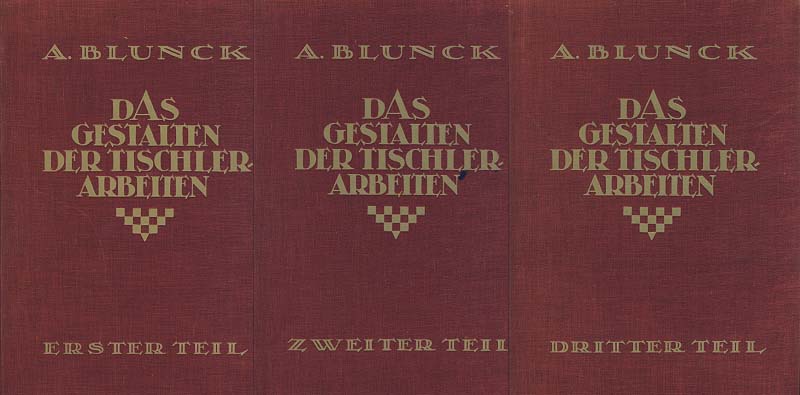
1926ref. 34513ABBerlin, Verlagsanstalt des Deutschen Holzarbeiter-Verbandes, 1926. 4°. 30,5 x 22,5 cm X, 46, VIII, 194, VII, 179 Seiten. Original-Leinenbände.
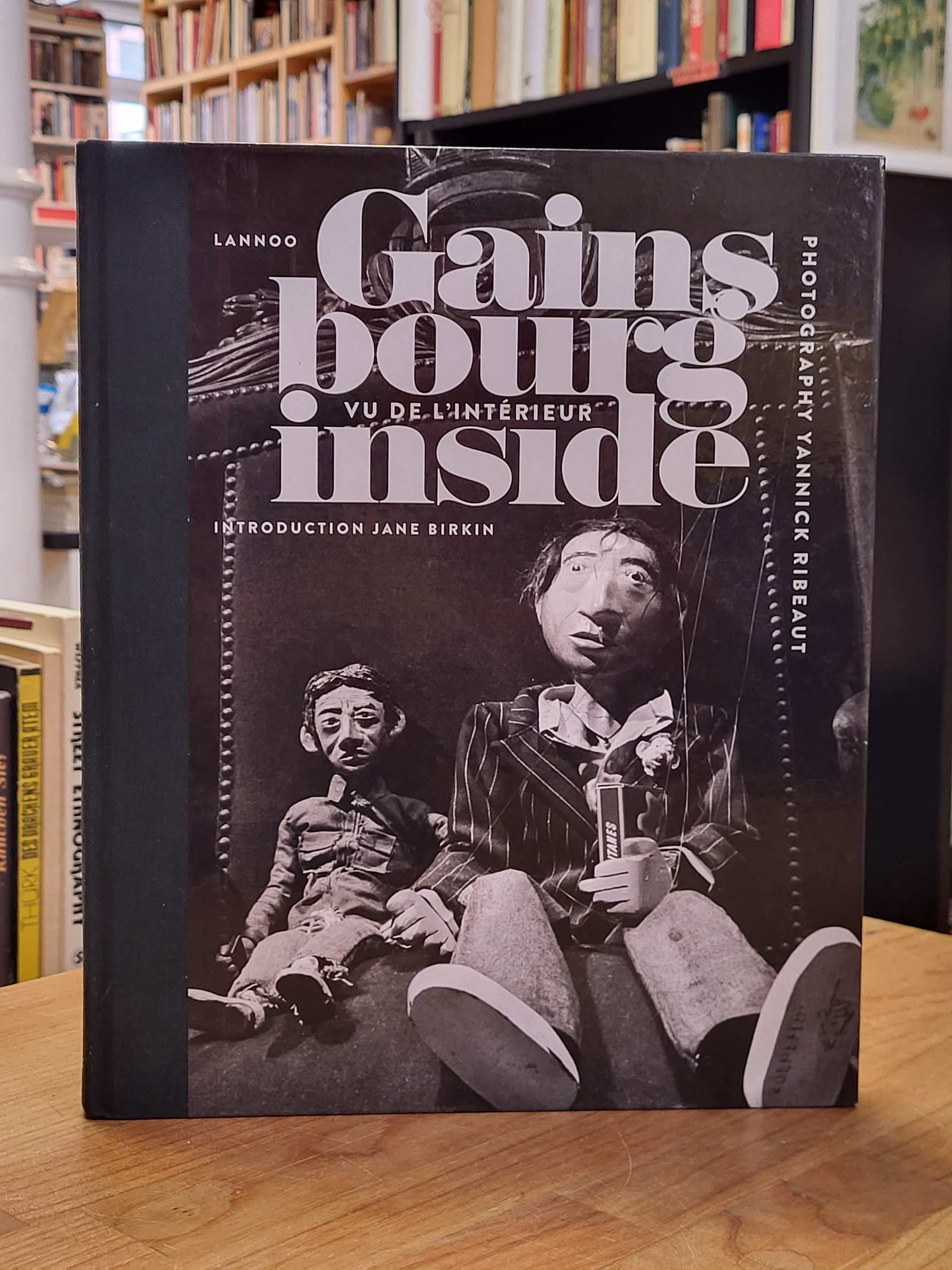
2011ref. 22044CBTielt, Lannoo, 2011. 4°, 111 S. mit zahlreichen s/w- und Farbabbildungen, zweisprachig: englisch und französisch, illustr. original Halbleinen-Einband (Hardcover), sehr schönes, sauberes Exemplar.
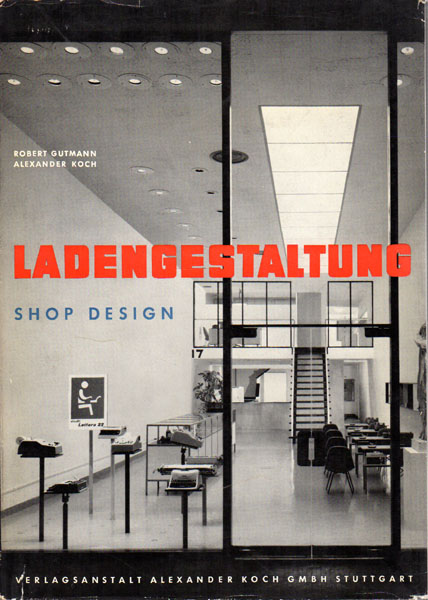
1956ref. 2446EBStuttgart., Verlagsanstalt Alexander Koch GmbH., 1956/ 1967. 30 x 22 cm. 195 S.; 240 S. OLeinen mit illustriertem OUmschlag., 2446E 2 Bände. Erste Auflage. Band 1: Einband etwas aufgehellt, Buchschnitt nachgedunkelt. Umschlag berieben, läsiert und teilweise mit kleinen Einrisse, sonst gutes Exemplar. Band 2: Umschlag minimal berieben, mit einem kleinem, hinterlegtem Einriss, sonst gutes bis sehr gutes Exem
1987ref. ART5909MRelié, 382 pages, paru en 1987 aux éditions Vilo, très bon état général.
relie, de toile, 23x30.5cm, 400 pages ., 600 illustrations couleur et noir et blanc Texte en Francais. ISBN 9782915542042. Jean-Michel Frank (1895-1941) est une figure mythique des arts decoratifs. Son style qualifie de ?« luxe pauvre » est tout aussi paradoxal que sa vie entre fetes et solitude, avec des amities fideles pour des poetes, des artistes qui ont ete determinants dans l?elaboration de son esthetique, mais aussi ses clients, gens du monde, de la mode ou intellectuels. Les contraignant a se defaire de leurs objets, de leurs tableaux et de leurs tapis, Frank a invente pour eux des lieux propices a la meditation et au reve, un mobilier d'une simplicite parfaite, proche d?un neoclassicisme francais depouille de ses ornements. Indifferent aux grands debats de la premiere moitie d'un XXe siecle, Jean-Michel Frank n?a cherche ni a construire un nouveau monde ni a se raccrocher a un passe nostalgique. Avec elegance, il a casse les conventions, nettoye les lieux de leur histoire. Peut-etre est-ce ce melange de legerete et de rigueur, de reve et de poesie, ce detournement tres actuel des objets et des materiaux qui ont amene tant de decorateurs et de designers contemporains a se reclamer de lui.