MARTIN CharlesMareMagnum

10.198 resultados
1920- Lucien Vogel éditeur, Paris Mai 1920, 18x24cm, une feuille. - Original color print, printed on vergé paper, signed in the plate. An original print used to illustrate the Gazette du bon ton, one of the most attractive and influential 20th century fashion magazines, featuring the talents of French artists and other contributors from the burgeoning Art Deco movement. A celebrated fashion magazine established in 1912 by Lucien Vogel, La Gazette du bon ton appeared until 1925, with a hiatus from 1915 to 1920 due to the war (the editor-in-chief having been called up for service). It consisted of 69 issues printed in only 2,000 copies each and notably illustrated with 573 color plates and 148 sketches of the models of the great designers. Right from the start, this sumptuous publication "was aimed at bibliophiles and fashionable society," (Françoise Tétart-Vittu, "La Gazette du bon ton", in Dictionnaire de la mode, 2016) and was printed on fine vergé paper using a type cut specially for the magazine by Georges Peignot, known as Cochin, later used (in 1946) by Christian Dior. The prints were made using stencils, heightened in colors, some highlighted in gold or palladium. The story began in 1912, when Lucien Vogel, a man of the world involved in fashion (he had already been part of the fashion magazine Femina) decided, with his wife Cosette de Brunhoff - the sister of Jean, creator of Babar - to set up the Gazette du bon ton, subtitled at the time: "Art, fashion, frivolities." Georges Charensol noted the reasoning of the editor-in-chief: "'In 1910,' he observed, 'there was no really artistic fashion magazine, nothing representative of the spirit of the time. My dream was therefore to make a luxury magazine with truly modern artists...I was assured of success, because when it comes to fashion, no country on earth can compete with France.'" ("Un grand éditeur d'art. Lucien Vogel" in Les Nouvelles littéraires, no. 133, May 1925). The magazine was immediately successful, not only in France but also in the United States and Latin America. At first, Vogel put together a team of seven artists: André-Édouard Marty and Pierre Brissaud, followed by Georges Lepape and Dammicourt, as well as eventually his friends from school and the School of Fine Arts, like George Barbier, Bernard Boutet de Monvel and Charles Martin. Other talented people soon came flocking to join the team: Guy Arnoux, Léon Bakst, Benito, Boutet de Monvel, Umberto Brunelleschi, Chas Laborde, Jean-Gabriel Domergue, Raoul Dufy, Édouard Halouze, Alexandre Iacovleff, Jean Émile Laboureur, Charles Loupot, Chalres Martin, Maggie Salcedo. These artist, mostly unknown when Lucien Vogel sought them out, later became emblematic and sought-after artistic figures. It was also they who worked on the advertising drawings for the Gazette. The plates put the spotlight on, and celebrate, dresses by seven designers of the age: Lanvin, Doeuillet, Paquin, Poiret, Worth, Vionnet and Doucet. The designers provided exclusive models for each issue. Nonetheless, some of the illustrations are not based on real models, but simply on the illustrator's conception of the fashion of the day. The Gazette du bon ton was an important step in the history of fashion. Combining aesthetic demands with the physical whole, it brought together - for the first time - the great talents of the artistic, literary, and fashion worlds; and imposed, through this alchemy, a completely new image of women: slender, independent and daring, which was shared by the new generation of designers, including Coco Chanel, Jean Patou, Marcel Rochas, and so on... Taken over in 1920 by Condé Montrose Nast, the Gazette du bon ton was an important influence on the new layout and aesthetics of that "little dying paper" that Nast had bought a few years earlier: Vogue. [FRENCH VERSION FOLLOWS] Estampe originale en couleur, tirée sur papier vergé, signée en bas à droite de la planche. Gravure originale réalisée pour l'illustration de
1920- Lucien Vogel éditeur, Paris Mai 1920, 18x24cm, une feuille. - Estampe originale en couleur, tirée sur papier vergé, signée en bas à droite de la planche. Gravure originale réalisée pour l'illustration de La Gazette du bon ton, l'une des plus belles et des plus influentes revues de mode du XXème siècle, célébrant le talent des créateurs et des artistes français en plein essor de l'art déco. Célèbre revue de mode fondée en 1912 par Lucien Vogel, La Gazette du bon ton a paru jusqu'en 1925 avec une interruption durant la Guerre de 1915 à 1920, pour cause de mobilisation de son rédacteur en chef. Elle se constitue de 69 livraisons tirées à seulement 2000 exemplaires et est illustrée notamment de 573 planches en couleurs et de 148 croquis représentant des modèles de grands couturiers. Dès leur parution, ces luxueuses publications « s'adressent aux bibliophiles et aux mondains esthètes » (Françoise Tétart-Vittu « La Gazette du bon ton » in Dictionnaire de la mode, 2016). Imprimées sur beau papier vergé, elles utilisent une police typographique spécialement créée pour la revue par Georges Peignot, le caractère Cochin, repris en 1946 par Christian Dior. Les estampes sont réalisées grâce à la technique du pochoir métallique, rehaussées en couleurs et pour certaines soulignées à l'or ou au palladium. L'aventure commence en 1912 lorsque Lucien Vogel, homme du monde et de la mode - il a déjà participé à la revue Femina - décide de fonder avec sa femme Cosette de Brunhoff (sur de Jean, le père de Babar) la Gazette du bon ton dont le sous-titre est alors « Art, modes et frivolités ». Georges Charensol rapporte les propos du rédacteur en chef : « En 1910, observe-t-il, il n'existait aucun journal de mode véritablement artistique et représentatif de l'esprit de son époque. Je songeais donc à faire un magazine de luxe avec des artistes véritablement modernes [...] J'étais certain du succès car pour la mode aucun pays ne peut rivaliser avec la France. » (« Un grand éditeur d'art. Lucien Vogel » in Les Nouvelles littéraires, n°133, mai 1925). Le succès de la revue est immédiat, non seulement en France, mais aussi aux Etats-Unis et en Amérique du Sud. À l'origine, Vogel réunit donc un groupe de sept artistes : André-Édouard Marty et Pierre Brissaud, suivis de Georges Lepape et Dammicourt ; et enfin ses amis de l'École des beaux-arts que sont George Barbier, Bernard Boutet de Monvel, ou Charles Martin. D'autres talents viennent rapidement rejoindre l'équipée : Guy Arnoux, Léon Bakst, Benito, Boutet de Monvel, Umberto Brunelleschi, Chas Laborde, Jean-Gabriel Domergue, Raoul Dufy, Édouard Halouze, Alexandre Iacovleff, Jean Émile Laboureur, Charles Loupot, Charles Martin, Maggie Salcedo. Ces artistes, inconnus pour la plupart lorsque Lucien Vogel fait appel à eux, deviendront par la suite des figures artistiques emblématiques et recherchées. Ce sont ces mêmes illustrateurs qui réalisent les dessins des publicités de la Gazette. Les planches mettent en lumière et subliment les robes de sept créateurs de l'époque : Lanvin, Doeuillet, Paquin, Poiret, Worth, Vionnet et Doucet. Les couturiers fournissent pour chaque numéro des modèles exclusifs. Néanmoins, certaines des illustrations ne figurent aucun modèle réel, mais seulement l'idée que l'illustrateur se fait de la mode du jour. La Gazette du bon ton est une étape décisive dans l'histoire de la mode. Alliant l'exigence esthétique et l'unité plastique, elle réunit pour la première fois les grands talents du monde des arts, des lettres et de la mode et impose, par cette alchimie, une toute nouvelle image de la femme, élancée, indépendante et audacieuse, également portée par la nouvelle génération de couturiers Coco Chanel, Jean Patou, Marcel Rochas... Reprise en 1920 par Condé Montrose Nast, la Gazette du bon ton inspirera largement la nouvelle composition et les choix esthétiques du « petit journal mourant » que Nast avait racheté quelques années auparavant : le magazine Vogue. [ENGLISH DESCRIP
1921- Lucien Vogel éditeur, Paris 1921, 18x24cm, une feuille. - Original color print, printed on vergé paper, signed in the plate. An original print used to illustrate the Gazette du bon ton, one of the most attractive and influential 20th century fashion magazines, featuring the talents of French artists and other contributors from the burgeoning Art Deco movement. A celebrated fashion magazine established in 1912 by Lucien Vogel, La Gazette du bon ton appeared until 1925, with a hiatus from 1915 to 1920 due to the war (the editor-in-chief having been called up for service). It consisted of 69 issues printed in only 2,000 copies each and notably illustrated with 573 color plates and 148 sketches of the models of the great designers. Right from the start, this sumptuous publication "was aimed at bibliophiles and fashionable society," (Françoise Tétart-Vittu, "La Gazette du bon ton", in Dictionnaire de la mode, 2016) and was printed on fine vergé paper using a type cut specially for the magazine by Georges Peignot, known as Cochin, later used (in 1946) by Christian Dior. The prints were made using stencils, heightened in colors, some highlighted in gold or palladium. The story began in 1912, when Lucien Vogel, a man of the world involved in fashion (he had already been part of the fashion magazine Femina) decided, with his wife Cosette de Brunhoff - the sister of Jean, creator of Babar - to set up the Gazette du bon ton, subtitled at the time: "Art, fashion, frivolities." Georges Charensol noted the reasoning of the editor-in-chief: "'In 1910,' he observed, 'there was no really artistic fashion magazine, nothing representative of the spirit of the time. My dream was therefore to make a luxury magazine with truly modern artists...I was assured of success, because when it comes to fashion, no country on earth can compete with France.'" ("Un grand éditeur d'art. Lucien Vogel" in Les Nouvelles littéraires, no. 133, May 1925). The magazine was immediately successful, not only in France but also in the United States and Latin America. At first, Vogel put together a team of seven artists: André-Édouard Marty and Pierre Brissaud, followed by Georges Lepape and Dammicourt, as well as eventually his friends from school and the School of Fine Arts, like George Barbier, Bernard Boutet de Monvel and Charles Martin. Other talented people soon came flocking to join the team: Guy Arnoux, Léon Bakst, Benito, Boutet de Monvel, Umberto Brunelleschi, Chas Laborde, Jean-Gabriel Domergue, Raoul Dufy, Édouard Halouze, Alexandre Iacovleff, Jean Émile Laboureur, Charles Loupot, Chalres Martin, Maggie Salcedo. These artist, mostly unknown when Lucien Vogel sought them out, later became emblematic and sought-after artistic figures. It was also they who worked on the advertising drawings for the Gazette. The plates put the spotlight on, and celebrate, dresses by seven designers of the age: Lanvin, Doeuillet, Paquin, Poiret, Worth, Vionnet and Doucet. The designers provided exclusive models for each issue. Nonetheless, some of the illustrations are not based on real models, but simply on the illustrator's conception of the fashion of the day. The Gazette du bon ton was an important step in the history of fashion. Combining aesthetic demands with the physical whole, it brought together - for the first time - the great talents of the artistic, literary, and fashion worlds; and imposed, through this alchemy, a completely new image of women: slender, independent and daring, which was shared by the new generation of designers, including Coco Chanel, Jean Patou, Marcel Rochas, and so on... Taken over in 1920 by Condé Montrose Nast, the Gazette du bon ton was an important influence on the new layout and aesthetics of that "little dying paper" that Nast had bought a few years earlier: Vogue. [FRENCH VERSION FOLLOWS] Estampe originale en couleur, tirée sur papier vergé, signée en bas à droite de la planche. Gravure originale réalisée pour l'illustrat
1913- Lucien Vogel éditeur, Paris Septembre 1913, 19x24,5cm, une feuille. - Original color print, printed on vergé paper, signed in the plate. An original print used to illustrate the Gazette du bon ton, one of the most attractive and influential 20th century fashion magazines, featuring the talents of French artists and other contributors from the burgeoning Art Deco movement. A celebrated fashion magazine established in 1912 by Lucien Vogel, La Gazette du bon ton appeared until 1925, with a hiatus from 1915 to 1920 due to the war (the editor-in-chief having been called up for service). It consisted of 69 issues printed in only 2,000 copies each and notably illustrated with 573 color plates and 148 sketches of the models of the great designers. Right from the start, this sumptuous publication "was aimed at bibliophiles and fashionable society," (Françoise Tétart-Vittu, "La Gazette du bon ton", in Dictionnaire de la mode, 2016) and was printed on fine vergé paper using a type cut specially for the magazine by Georges Peignot, known as Cochin, later used (in 1946) by Christian Dior. The prints were made using stencils, heightened in colors, some highlighted in gold or palladium. The story began in 1912, when Lucien Vogel, a man of the world involved in fashion (he had already been part of the fashion magazine Femina) decided, with his wife Cosette de Brunhoff - the sister of Jean, creator of Babar - to set up the Gazette du bon ton, subtitled at the time: "Art, fashion, frivolities." Georges Charensol noted the reasoning of the editor-in-chief: "'In 1910,' he observed, 'there was no really artistic fashion magazine, nothing representative of the spirit of the time. My dream was therefore to make a luxury magazine with truly modern artists...I was assured of success, because when it comes to fashion, no country on earth can compete with France.'" ("Un grand éditeur d'art. Lucien Vogel" in Les Nouvelles littéraires, no. 133, May 1925). The magazine was immediately successful, not only in France but also in the United States and Latin America. At first, Vogel put together a team of seven artists: André-Édouard Marty and Pierre Brissaud, followed by Georges Lepape and Dammicourt, as well as eventually his friends from school and the School of Fine Arts, like George Barbier, Bernard Boutet de Monvel and Charles Martin. Other talented people soon came flocking to join the team: Guy Arnoux, Léon Bakst, Benito, Boutet de Monvel, Umberto Brunelleschi, Chas Laborde, Jean-Gabriel Domergue, Raoul Dufy, Édouard Halouze, Alexandre Iacovleff, Jean Émile Laboureur, Charles Loupot, Chalres Martin, Maggie Salcedo. These artist, mostly unknown when Lucien Vogel sought them out, later became emblematic and sought-after artistic figures. It was also they who worked on the advertising drawings for the Gazette. The plates put the spotlight on, and celebrate, dresses by seven designers of the age: Lanvin, Doeuillet, Paquin, Poiret, Worth, Vionnet and Doucet. The designers provided exclusive models for each issue. Nonetheless, some of the illustrations are not based on real models, but simply on the illustrator's conception of the fashion of the day. The Gazette du bon ton was an important step in the history of fashion. Combining aesthetic demands with the physical whole, it brought together - for the first time - the great talents of the artistic, literary, and fashion worlds; and imposed, through this alchemy, a completely new image of women: slender, independent and daring, which was shared by the new generation of designers, including Coco Chanel, Jean Patou, Marcel Rochas, and so on... Taken over in 1920 by Condé Montrose Nast, the Gazette du bon ton was an important influence on the new layout and aesthetics of that "little dying paper" that Nast had bought a few years earlier: Vogue. [FRENCH VERSION FOLLOWS] Estampe originale en couleur, tirée sur papier vergé, signée en bas à droite de la planche. Gravure originale réalisée pour
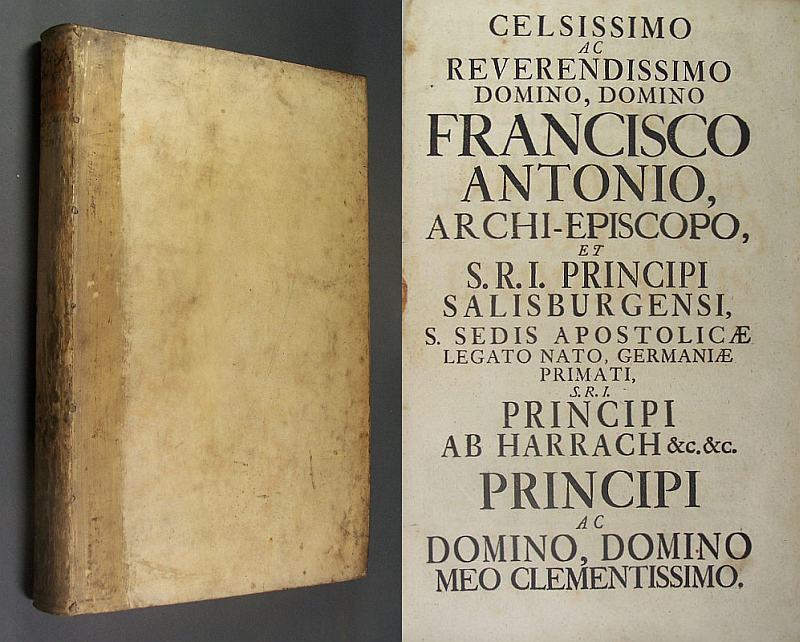
1722ref. 1045261[Salzburg, Mayr 1722]. (28), 436 Seiten, 38 Seiten Index. Mit einigen Vignetten und Kopfstücken in Holzschnitt. 2° (33,5 x 22,5 cm). Schöner Pergamentband der Zeit mit durchgezogenen Bünden, spanischen Deckelkanten, handschriftlichem Rückentitel und rot gefärbten Schnitten.
ref. DADAX080481936XNew unknown
1905Two volumes. pp. vii, 516; v, 528. Both volumes are illustrated with numerous full page portrait engravings. Double column. All edges gold. Marble end papers. Quarto. Original three quarters leather bindings. Spines gold lettered with raised bands, slight loss. Joints fragile. Hardbound. Nice set. Very interesting local history. FIRST EDITION. PA 39
ref. 8O-HZD1-EK9QHardcover. Good. FIRST EDITION London T. Moffitt 1877. Tall hardcover in gilt-decorated embossed cloth boards. Vol XXV: Jan. 3 1877 - Jun 27 1877; 258 pages illustrated throughout with b/w wood engravings including some double-page of political and other current interest. Rare title in good overall condition with light soiling wear to boards owner name on front paste-down. NOT EX-LIBRARY frnc hardcover
1860ref. biblio651Leipzig: Rudolph Weigel 1860-1864. in8 rel demi-toile 6 vol en 3 fortes mouillures au tome 5-6 vol3 sans dommages fongiques mais le papier ondulé ex-libris MKG t 1 Histoire de la gravure sur bois et sur meÌtal jusque vers la fin du XVIe siècle Histoire de la gravure au burin jusque vers la fin du XVIe siècle Nielles t 2 Les maîtres allemands et neÌerlandais du XVe siècle t 3 Les maîtres neÌerlandais et allemands du XVIe siècle t 4 Suite des maîtres allemands et neÌerlandais du XVIe siècle t 5 Les maîtres italiens du XVe et XVIe siècle t 6 Suite des maîtres italiens du XVe et XVIe siècle Table geÌneÌrale et alphabeÌtique des maîtres et des monogrammes Rudolph Weigel unknown
1880ref. 0054081880. Near Fine. 1 albumen print 224 x 272 mm. Mat is 16 x 18 inches. No identification of photographer publisher or location. On the hill above the river are a tent and a small structure with smoke coming out of the chimney. On the board walkway over the shallow river sit two women with parasols and behind them two women stand; all are dressed primarily in white. In the carriage pulled by two horses are a man and a woman. Some cattle stand in the river and next to them are a man and a woman on horses the woman sidesaddle. On the far sde of the river are three men with cattle pulling a wagon. In Near Fine Condition: slight vertical creasing on left side; clean and bright. unknown
1819ref. 006595London: H. R. Young; and T. H. Whitely 1819. Hardcover. Fair . Volume 1 only. xii 171 1 p. 39 leaves of engraved plates; 30 cm. Calf boards. Marbled endpapers. Bound in following the title page is a slip "To the Public" stating that two of the prints Will Ellis and William Carstairs would "be delivered in the second volume." A pencilled note below states that they were never published and that the biographical sketches of the two found here were omitted from the small paper edition. Former owner's inscription on blank page following front endpapers: "James A. Taylor Nov 1884 No. 2035." This volume contains descriptions and portraits of interesting people from the reigns of William III and Queen Anne ranging from John Gale "a singular Deaf and Dumb Man" and Harry "an Old Raree-show-man" to Yorkshire Nan "Prince George's Cap Woman" and Daniel Defoe "a Political Writer and Novelist". In Fair Condition: lacking spine; front board detached but present; first few leaves of text partially detached; shadows from plates on facing pages of text; occasional foxing; otherwise clean and bright. H. R. Young; and T. H. Whitely hardcover
1815ref. 005399London: J. Jenkins 1815. Very Good -. 1 hand-colored aquatint etching 262 x 328 mm image is 154 x 222 mm; mat is 14 x 17 inches. Published July 1 1815. From The Martial Achievements of Great Britain and Her Allies from 1799 to 1815. In Very Good- Condition: lightly soiled in margins; image is clean and bright. J. Jenkins unknown
1929ref. 004149Paris: The Pleiad 1929. Hardcover. Fine. Giauque Fernand. 57 1 p. 1 hand-colored frontispiece 1 addition leaf of a hand-colored plate and 10 in-text illustrations; 28 cm. Original red cloth with gilt-rooled spine title. Burgundy slipcase with printed paper label on front section with handwritten copy number. Designed by Frederic Warde. This is no. 172 of a limited edition of 550. "The twelve illustrations ten in lithography and two hand-coloured have been made by Mr. Fernand Giauque. The Lutetia type used for the text designed by Mr. J. van Krimpen has been composed and printed by Joh. Enschedé en Zonen Haarlem Holland." -- Colophon. Former owner's name on front free endpaper Theodore W. Bozarth dated 1946. Inscribed by same hand at lower edge of back fixed endpaper: "S-- Trenton N.J." Theodore W. Bozarth 1918-2005 was a lieutenant colonel in the U.S. Air Force who served overseas in England and Japan. Book is in Fine Condition: clean and bright. Slipcase is in Very Good- Condition: edges are rubbed; minor separation at opening; otherwise solid; label is intact. The Pleiad hardcover
1890ref. 003892London: T.F. Robey 1890. Very Good. 16 black-and-white collotype views loose as issued in a light green envelope. Title from envelope. "Robey's Series" -- on envelope and on each image. Thomas F. Robey was a photographer active in London beginning in the 1890s. From about 1894 to about 1905 he was also active as a commercial photographer and printer with Eustace Curzon. They were among many photographers producing platinotypes or platinum prints around the turn of the century. "Platinogram" was the name given by Robey to these images made from platinotypes. As listed on the envelope the views are: The Tower Bridge Tower of London London Bridge Royal Exchange St. Paul's West Front Embankment Houses of Parliament Westminster Abbey Rotten Row Piccadilly Circus Albert Hall Albert Memorial Crystal Palace Trafalgar Square Ludgate Circus and the Great Wheel. There is no date of publication but the images appear to be from the 1890s. The detail in the street scenes is particularly impressive. There are no motorized vehicles in any of the scenes. Oval stationers label on front of envelope: Rowsell & Son Cheapside. In Very Good Condition: minor creasing at a few corners; loss of corners on two images; clean and bright. Envelope is in Good- Condition: separated into two sections; chipping along edges; minor loss at corners. Extremely scarce -- no other copies of these "Platinogram" views have been located. T.F. Robey unknown
1846ref. 006787Philadelphia: Illman & Sons 1846. Very Good. 1 leaf 19 x 11 cm. with engraving of Thomas Paine from a painting by George Romney. No date of publication. Although Thomas Illman and his sons were active as engravers and printers in Philadelphia from 1844 onward Illman & Sons is only listed in city directories for the years 1845-47. Scarce. In Very Good Condition: lightly soiled; very small dampstain at lower edge. Illman & Sons unknown
1917Format 60x80 cm.
1888pp. (44), 763 + Fifteen fine engravings, including one of Civil War General Henry H. Sibley. Thick 8vo. Original half leather binding, requires rebacking. First Edition A wonderful history of early Wisconsin and Minnesota. Howes 228. **PRICE JUST REDUCED! W141
1819UNIQUE single volume featuring only the plates from Pierre François Tissot's popular work "Trophées des Armées Français". The book, published around 1820, described the French victories during the French revolutionary wars, and was accompanied by b&w engravings made by the artist Edme Bovinet and F. L. Couché fils. These engravings, 70 in number, comprise this volume, and depict scenes of famous land and naval battles, sieges and conquests. The volume features no title page. The only text present in the book are the image captions, and the occasional mention of a famous general present in a battle. 150x230mm. Unpaginated (70 plates). Black quarter-cloth Hardocver. Cover and cover edges slightly worn. Cover corners bumped and peeling. Small sticker on front cover. Spine edges and front hinge peeling. Ornate stickers on both endpapers. Binding slightly loose, several plates partly loose from binding. Pages yellowing and age-stained. [SUMMARY]: Save for the aforementioned wear, this one of a kind volume featuring valuable engravings of the Napoleonic wars, is in good condition.
19618vo., First Edition, with coloured frontispiece and numerous fine engravings in monochrome (a number full-page) in the text, small neat contemporary signature on front free endpaper; green cloth, backstrip lettered in silver, grey endpapers, a near fine copy in price-0clipped dustwrapper. SCARCE IN THIS CONDITION.
1977Roy. 4to., First Edition, with numerous engravings throughout; original navy buckram, gilt back, grey endpapers, a near fine copy in lightly browned dustwrapper.
1845ref. 007972London: Printed for Thomas Tegg 1845. Book. Very Good. Hardcover. New Edition. Tall 8vo. Very Good in contemporary half pebbled brown morocco over marbled boards spine with five raised bands and lettered in gilt marbled end papers the bookplate of noted Celtic language and folklore scholar Edgar M. Slotkin front paste down along with a small bookseller's label. Prior owner name top edge verso front end page. Boards rubbed at edges binding solid contents quite clean and unmarked. A scholar's copy. Printed for Thomas Tegg Hardcover books
ref. AA/SC/14042Art; Prints; Lithograph; Religious; A full color image of Our Lady of Guadeloupe on canvas with certification of authenticity at footer dated October 12 1978. Measures 18 3/4 X 11 1/2 inches Condition is VVG. unknown
ref. 9248M. A. Donohue Chicago. HB NODJ No Date Early Vintage 1st edition Thus Purple with Black decorated cloth Cover minor rub & Wear & tiny Chips Extremities NF/VG NODJ back cover couple stains . First Thus. Hard Cover. M. A. Donohue Chicago hardcover
ref. 34214North Point 1989. First edition. Very close to fine and bright decorative boards issued without dustjacket with crisp bright text throughout. A lovely balance of poetry prose and illustrations. New and bright all around gift quality North Point, 1989 hardcover
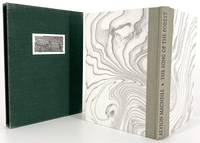
1987ref. 2327Llandogo Gwent UK: The Old Stile Press 1987. First Limited Edition. Fine in a near-fine slipcase. 12mo 7 x 5 inches 175 x 124 mm; 54 pp. Illustrated with 23 wood-engravings by Alyson MacNeill. Quarter grey cloth over marbled paper boards by Woolnought Fine Bindings using handmade paper by Frances McDowall and marbling by Nicolas McDowall. Housed in the original green cloth slipcase embossed with a decorative frame incorporating one of the wood engravings printed in grey. Slipcase edges lightly rubbed; binding and interior in pristine condition. Copy 106 of 160 as per limitation page SIGNED BY THE ARTIST in pencil. A meticulously produced imprint of The Old Stile Press the first after the press's relocation to Llandogo South Wales. The 23 finely executed wood-engravings accompany selected passages from Colin Mackay's novel evoking "the leather-hard lives of these long-ago villages and the power of the forest that overshadows their year's story" Preface. The Old Stile Press unknown