Vogel, Friedrich und Escher, Gottfried vonAntiquariat.de
10.182 resultados
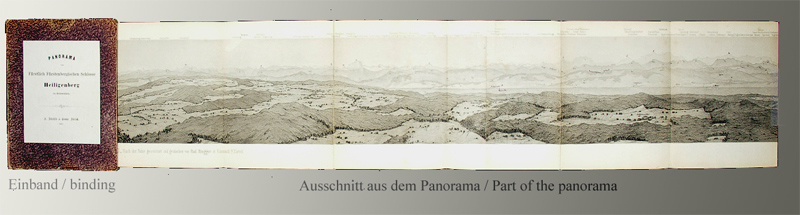
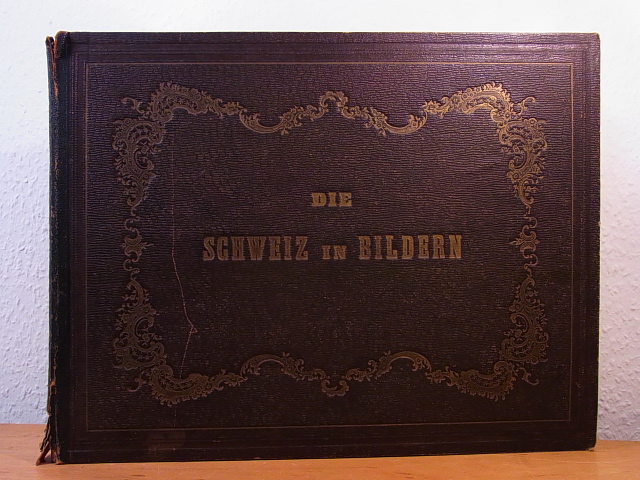
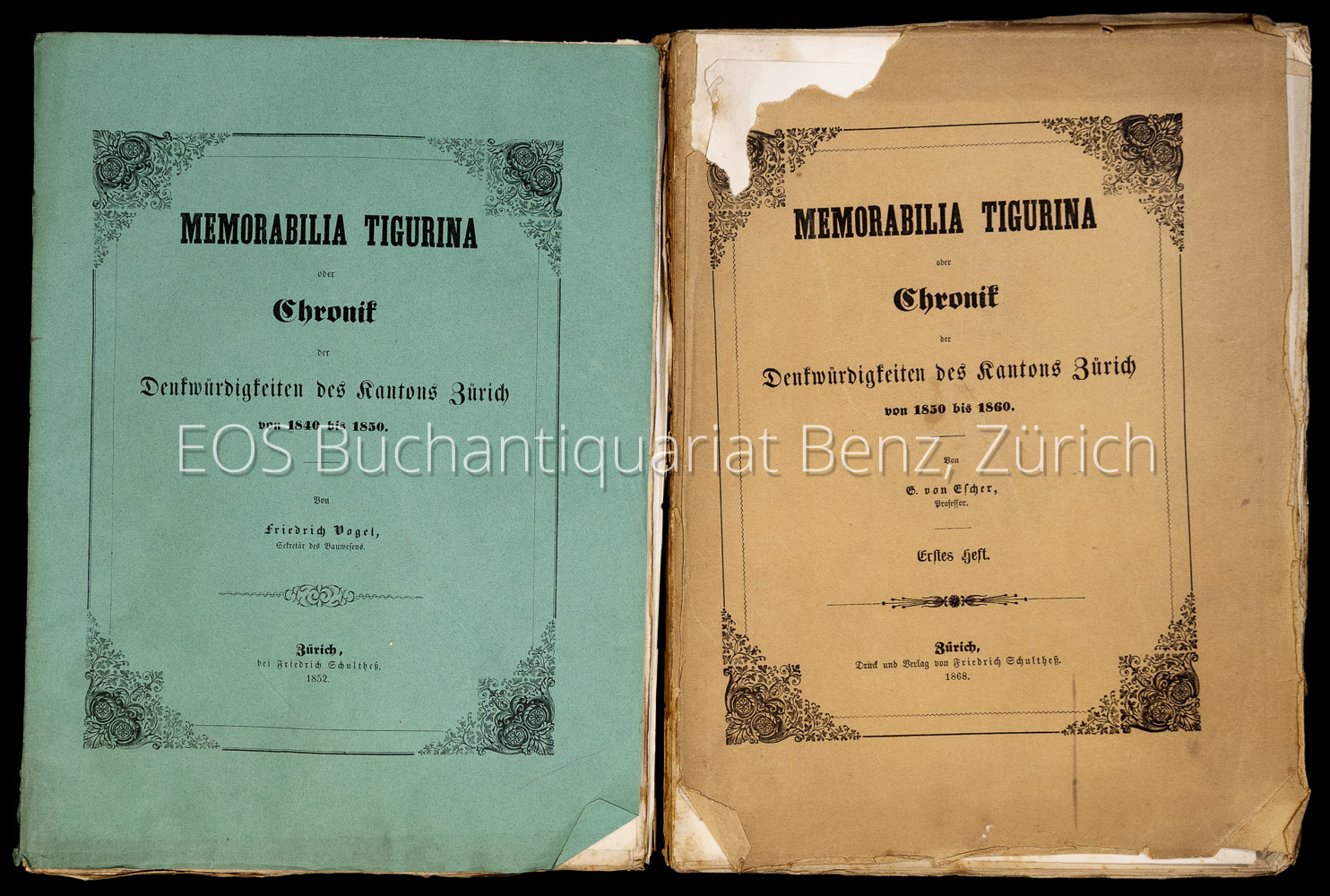
1853ref. 6983CBZürich, Druck und Verlag Friedrich Schulthess, 1853?1868. 4°. VIII, 713 (1) S.; VIII, 742 S., (1) Bl. Mit 12 Aquatinta. Orig.-Umschläge. + Wichtig: Für unsere Kunden in der EU erfolgt der Versand alle 14 Tage verzollt ab Deutschland / Postbank-Konto in Deutschland vorhanden +, A|B|C 12 Lieferungen. [3 Warenabbildungen]
ref. 2977Fin XVIe siècle Belle épreuve légèrement jaunie, coupée au sujet avec des accidents restaurés au verso, petit manque. 31 x 22,8cm. Filigrane à la crosse la Bâle dans monogramme utilisé au XVIe siècle de 1520 à 1606, Gaudriault, Filigranes (…) p119 N° 488. Avant la signature te l’inscription sur la dalle. Portrait médaillon représentant Michel-Ange, le visage tourné vers la gauche, mention « MICHAEL ANGELUS BONAROTUS PATRICIUS FLORENT AN ANGENS LXXIII »C’est surtout par la gravure, permettant d’avoir une vue d’ensemble du jugement dernier, que la fresque de Michel-Ange obtint une reconnaissance universelle. Ce qui explique la prolifération des copies tout au long du XVIe et XVIIe siècle de cette œuvre majeure. Bel exemplaire ne tirage du XVIe siècle avant la lettre et d’un très bel encrage.
1880ref. 17628Colt Publishing Co. . Very Good. Late 19th century original lithograph view of Hyde Park. The margin has staining with light chipping at the extremities and several tears in the bottom margin one of which extends 3/4" into the left side of the lithograph. The lithograph itself is toned with modest faint foxing. Dimensions: 24" x 18". Lithograph: 20.25" x 14.5". .; Prints . c. 1880. Colt Publishing Co. unknown
1784ref. 5543Eau-forte et burin 320 x 390 D’après Lavreince. Importante et célèbre estampe. Belle épreuve, sans marges mais à la bonne adresse de Dequevauvillers (1er tirage) et avant la correction du mot Stockholm. Cadre moderne, passe-partout. cadre 1784
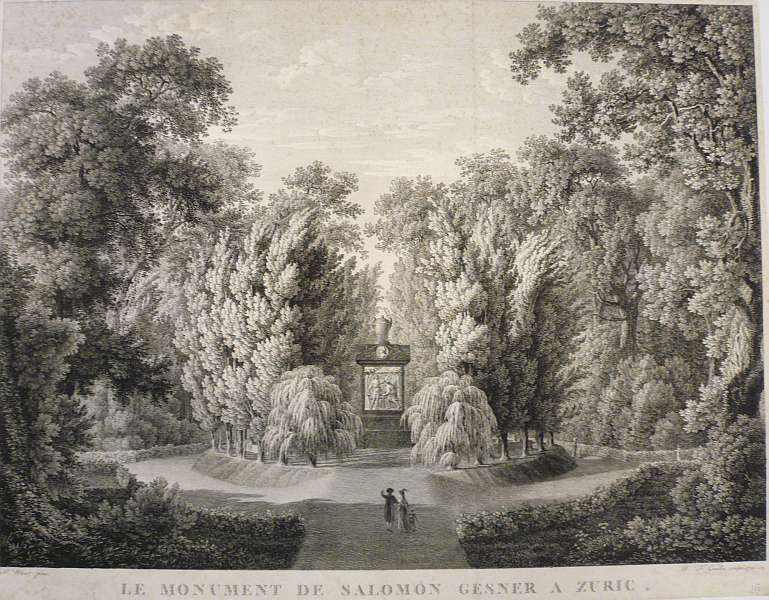
1791ref. 1102871791. In der Platte signiert "H. Wüest pinx. / W. F. Gmelin sculps.", datiert und betitelt. Ausgezeichneter malerischer Druck mit gleichmäßigem Rand um die Darstellung und mit Schriftrand. Auf festem Bütten. 35 x 47,5 cm (Darstellung).
2011ref. 38447London: The Folio Society 2011. Hardcover. Fine. Hardcover. Number 459 of 1250 numbered copies for sale to members of The Folio Society. There were also 25 lettered copies that were not for sale. This folio sized work was originally printed b Robert Gibbings at the Golden Cockerel Press in 1926-27 using the text from the Globe edition of 1898. This is an exquisite modern edition of this classic work by Chaucer that is beautifully illustrated with drawings by famed artist and illustrator Eric Gill. It is a facsimile edition after the original of 1898. Bound in black goatskin with gilt stamped illustrations and lettering on front cover and spine gilt edges accompanied with a companion book in black half leather over dark blue boards with black lettering on cream paper label on cover; housed in matching black cloth slipcase with gilt lettering on spine. Dark blue endpapers. Illustrated title page. With a companion volume that has a frontispiece photograph of Eric Gill by Howard Coster 1885-1959 a self-styled photographer of men taken in 1927. This facsimile edition was printed in 2011 by Memminger MedienCentrum for the Folio Society on Rigoletto Panna felt-marked paper and bound by G. Lachenmaier in full goatskin leather with Merida Indigo endleaves. The companion volume here Barry Windeatt's essay on Troilus and Criseyde was first published as an introduction to his translation of the poem published by the Clarendon Press in 1992. Reprinted by permission of Oxford University Press. The text of this edition follows that of the first edition with minor emendations. " from the imprint. Contains notes at rear. A beautiful production fine condition in a near fine solander box. 309 2; 48 pages. Measures 7.75 x 12.25 inches. PRI/101826. The Folio Society hardcover
2011ref. 38447London: The Folio Society 2011. Hardcover. Fine. Hardcover. Number 459 of 1250 numbered copies for sale to members of The Folio Society. There were also 25 lettered copies that were not for sale. This folio sized work was originally printed b Robert Gibbings at the Golden Cockerel Press in 1926-27 using the text from the Globe edition of 1898. This is an exquisite modern edition of this classic work by Chaucer that is beautifully illustrated with drawings by famed artist and illustrator Eric Gill. It is a facsimile edition after the original of 1898. Bound in black goatskin with gilt stamped illustrations and lettering on front cover and spine gilt edges accompanied with a companion book in black half leather over dark blue boards with black lettering on cream paper label on cover; housed in matching black cloth slipcase with gilt lettering on spine. Dark blue endpapers. Illustrated title page. With a companion volume that has a frontispiece photograph of Eric Gill by Howard Coster 1885-1959 a self-styled photographer of men taken in 1927. This facsimile edition was printed in 2011 by Memminger MedienCentrum for the Folio Society on Rigoletto Panna felt-marked paper and bound by G. Lachenmaier in full goatskin leather with Merida Indigo endleaves. The companion volume here Barry Windeatt's essay on Troilus and Criseyde was first published as an introduction to his translation of the poem published by the Clarendon Press in 1992. Reprinted by permission of Oxford University Press. The text of this edition follows that of the first edition with minor emendations. " from the imprint. Contains notes at rear. A beautiful production fine condition in a near fine solander box. 309 2; 48 pages. Measures 7.75 x 12.25 inches. PRI/101826. The Folio Society hardcover books
1929RARE LIMITED EDITION OF 435 COPIES - COPY No.236 of a book set in British-ruled Palestine, written by Goncourt prize winners - the brothers Jérome (1874-1953 ) and Jean Tharaud (1877-1952). The exquisite illustrations are by two eminent French artists: the Orientalist painter and illustrator André Suréda (1872-1930) and the graphic artist Georges Beltrand (1881-1969). 300x215mm. 164 pages. Red leather Hardcover with gilt spine. Cover slightly curved. Cover and spine stained, rubbed/scratched and fading/yellowing. Cover corner bumped and peeling. Cover upper edge rubbed. Spine hinges upper part cracked and glued. Spine edge bumped and peeling/tattered. Pages slightly yellowing and rough-cut as published. [SUMMARY]: This extremely rare deluxe edition of a lavishly illustrated book about the Holy Land is in good condition. PLEASE NOTE: This item is overweight. We may ask for extra shipping costs.
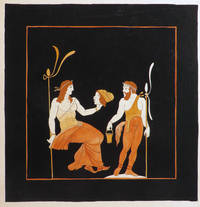
1766ref. 26548Naples 1766-1776. A single aquatint plate drawn and engraved after the original pieces in the Hamilton collection. The colour aquatint shows a seated muscular long-haired man he holds the head of a dwarf or murdered reveler in his left hand his right hand holds a spear. In front of this man there stands a satyr holding a spear and wine bucket. The background is black the image coloured with shades of tan brown terra-cotta and gold. Printed on a single folio sheet measuring approximately 20" x 13" the image approximately 11.25" X 11.5". Now presented in cream mounting boards 22" x18" behind clear mylar. A very fine plate in an excellent state of preservation. A BEAUTIFUL AND IMPRESSIVE PLATE FROM A MASTERPIECE OF CLASSIC ART RENDERINGS AND PUBLICATION. Hamilton served as British envoy to the court of Naples where he began collecting Greek vases and other antiquities immediately upon arriving at his post. In 1766–67 he published a volume of engravings of his collection entitled A Collection of Etruscan Greek and Roman antiquities from the cabinet of the Honble. Wm. Hamilton. A further three volumes were produced in 1769–76. Josiah Wedgwood the potter and porcelain maker drew great inspiration from the reproductions presented in Hamilton's volumes. While widely recognized for their beauty the reproductions from Hamilton's vases have become evidence of the irreconcilable problem of neoclassicism in the Romantic period. Significant changes in the way the vases were engraved over a span of thirty or forty years demonstrate how an immutable collection of objects is subject to radical shifts in representation in response to the social and artistic styles of the time. hardcover
1922- Lucien Vogel éditeur, Paris 1922, 18x24cm, en feuilles. - Set of nine original prints in color, drawn on laid paper. The boards are introduced by a text signed Joan Ramon Fernandez. Sketch XII and XIII are signed David, respectively bottom left and right planks. Original prints made ??for the illustration of The Gazette fashionable, one of the finest and most influential twentieth century fashion magazines, celebrating the talent of creators and artists French burgeoning art deco. Famous fashion magazine founded in 1912 by Lucien Vogel, The Gazette fashionable appeared until 1925 with an interruption during the War of 1915 to 1920, due to mobilization of its editor. She is 69 Deliveries from just 2000 copies and is illustrated including 573 color plates and 148 sketches depicting models of fashion designers. Upon publication, these luxury publications "are for bibliophiles and worldly aesthetes" (Françoise Tétart-Vittu "good Gazette of tone" in the fashion dictionary, 2016). Printed on fine laid paper, they use a typeface created specifically for the magazine by Georges Peignot, the Cochin character, taken in 1946 by Christian Dior. The prints are made with the technique of metal stencil, enhanced color and some outlined in gold or palladium. The adventure began in 1912 when Lucien Vogel, man of the world and fashion - it has already participated in Femina magazine - decided to found with his wife Cosette de Brunhoff (John's sister, the father of Babar) Gazette good tone in which the subtitle is then "Art, fashions and frivolities." Georges Charensol quotes the editor: "In 1910, he observed, there was no truly artistic fashion magazine and representative of the spirit of his time. So I thought of making a glossy magazine with truly modern artists [...] I was certain of success because for any fashion country can compete with France. "(" A great art editor. Lucien Vogel "in literary News, No. 133, May 1925). The success of the magazine is immediate, not only in France but also the US and South America. Originally, Vogel therefore brings together a group of seven artists: André-Édouard Marty and Pierre Brissaud, followed by Georges Lepape and Dammicourt; and finally his friends from the School of Fine Arts as are George Barbier, Bernard Boutet de Monvel or Charles Martin. Other talents come quickly reach the equipped Guy Arnoux, Léon Bakst, Benito, Boutet de Monvel, Umberto Brunelleschi, Chas Laborde, Jean-Gabriel Domergue, Raoul Dufy, Edward Halouze Alexander Iacovleff, Jean Emile Laboureur Charles Loupot, Charles Martin, Maggie Salcedo. These artists, mostly unknown when Lucien Vogel appealed to them, will eventually become iconic figures and artistic sought. These are the same illustrators who make the drawings advertisements Gazette. The boards highlight the dresses and sublime seven artists of the time: Lanvin, Doeuillet, Paquin, Poiret, Worth, Vionnet and Doucet. The designers provide for each number of exclusive models. Nevertheless, some of Illustrations contained no real model, but only the idea that the illustrator is done in the fashion of the day. Gazette fashionable is a milestone in the history of fashion. Combining the aesthetic requirement and plastic unit, it brings together for the first time the great talents of the world of arts, literature and fashion and imposed by this alchemy, a new image of women, slender, independent and bold, also driven by the new generation of designers Coco Chanel, Jean Patou, Rochas Marcel ... Recovery in 1920 by Condé Montrose Nast, Gazette fashionable modeled for the new composition and the aesthetic choices of the "little dying newspaper" that Nast had bought a few years ago: the Vogue magazine. [FRENCH VERSION FOLLOWS] Ensemble de neuf estampes originales en couleur, tirées sur papier vergé. Les planches sont introduites par un texte signé Jeanne Ramon-Fernandez. Les croquis XII et XIII sont signés David, respectivement en bas à gauche et à droite des planches. Gravures orig
1922- Lucien Vogel éditeur, Paris 1922, 18x24cm, relié. - Set of eight original prints in color, drawn on laid paper. The boards are introduced by a text signed Joan Ramon Fernandez. The sketches are signed XIX and XXI David, respectively on the lower right and left boards. Original prints made ??for the illustration of The Gazette fashionable, one of the finest and most influential twentieth century fashion magazines, celebrating the talent of creators and artists French burgeoning art deco. Famous fashion magazine founded in 1912 by Lucien Vogel, The Gazette fashionable appeared until 1925 with an interruption during the War of 1915 to 1920, due to mobilization of its editor. She is 69 Deliveries from just 2000 copies and is illustrated including 573 color plates and 148 sketches depicting models of fashion designers. Upon publication, these luxury publications "are for bibliophiles and worldly aesthetes" (Françoise Tétart-Vittu "good Gazette of tone" in the fashion dictionary, 2016). Printed on fine laid paper, they use a typeface created specifically for the magazine by Georges Peignot, the Cochin character, taken in 1946 by Christian Dior. The prints are made with the technique of metal stencil, enhanced color and some outlined in gold or palladium. The adventure began in 1912 when Lucien Vogel, man of the world and fashion - it has already participated in Femina magazine - decided to found with his wife Cosette de Brunhoff (John's sister, the father of Babar) Gazette good tone in which the subtitle is then "Art, fashions and frivolities." Georges Charensol quotes the editor: "In 1910, he observed, there was no truly artistic fashion magazine and representative of the spirit of his time. So I thought of making a glossy magazine with truly modern artists [...] I was certain of success because for any fashion country can compete with France. "(" A great art editor. Lucien Vogel "in literary News, No. 133, May 1925). The success of the magazine is immediate, not only in France but also the US and South America. Originally, Vogel therefore brings together a group of seven artists: André-Édouard Marty and Pierre Brissaud, followed by Georges Lepape and Dammicourt; and finally his friends from the School of Fine Arts as are George Barbier, Bernard Boutet de Monvel or Charles Martin. Other talents come quickly reach the equipped Guy Arnoux, Léon Bakst, Benito, Boutet de Monvel, Umberto Brunelleschi, Chas Laborde, Jean-Gabriel Domergue, Raoul Dufy, Edward Halouze Alexander Iacovleff, Jean Emile Laboureur Charles Loupot, Charles Martin, Maggie Salcedo. These artists, mostly unknown when Lucien Vogel appealed to them, will eventually become iconic figures and artistic sought. These are the same illustrators who make the drawings advertisements Gazette. The boards highlight the dresses and sublime seven artists of the time: Lanvin, Doeuillet, Paquin, Poiret, Worth, Vionnet and Doucet. The designers provide for each number of exclusive models. Nevertheless, some of Illustrations contained no real model, but only the idea that the illustrator is done in the fashion of the day. Gazette fashionable is a milestone in the history of fashion. Combining the aesthetic requirement and plastic unit, it brings together for the first time the great talents of the world of arts, literature and fashion and imposed by this alchemy, a new image of women, slender, independent and bold, also driven by the new generation of designers Coco Chanel, Jean Patou, Rochas Marcel ... Recovery in 1920 by Condé Montrose Nast, Gazette fashionable modeled for the new composition and the aesthetic choices of the "little dying newspaper" that Nast had bought a few years ago: the Vogue magazine. [FRENCH VERSION FOLLOWS] Ensemble de huit estampes originales en couleur, tirées sur papier vergé. Les planches sont introduites par un texte signé L. R. F. Les croquis L, LII, LIII, LV, sont signés David, respectivement en bas à droite et à gauche des planches. Reliure à la br
1922- Lucien Vogel éditeur, Paris 1922, 18x24cm, relié. - Set of eight original prints in color, drawn on laid paper. The boards are introduced by a text signed Joan Ramon Fernandez. The sketches are signed XIX and XXI David, respectively on the lower right and left boards. Original prints made ??for the illustration of The Gazette fashionable, one of the finest and most influential twentieth century fashion magazines, celebrating the talent of creators and artists French burgeoning art deco. Famous fashion magazine founded in 1912 by Lucien Vogel, The Gazette fashionable appeared until 1925 with an interruption during the War of 1915 to 1920, due to mobilization of its editor. She is 69 Deliveries from just 2000 copies and is illustrated including 573 color plates and 148 sketches depicting models of fashion designers. Upon publication, these luxury publications "are for bibliophiles and worldly aesthetes" (Françoise Tétart-Vittu "good Gazette of tone" in the fashion dictionary, 2016). Printed on fine laid paper, they use a typeface created specifically for the magazine by Georges Peignot, the Cochin character, taken in 1946 by Christian Dior. The prints are made with the technique of metal stencil, enhanced color and some outlined in gold or palladium. The adventure began in 1912 when Lucien Vogel, man of the world and fashion - it has already participated in Femina magazine - decided to found with his wife Cosette de Brunhoff (John's sister, the father of Babar) Gazette good tone in which the subtitle is then "Art, fashions and frivolities." Georges Charensol quotes the editor: "In 1910, he observed, there was no truly artistic fashion magazine and representative of the spirit of his time. So I thought of making a glossy magazine with truly modern artists [...] I was certain of success because for any fashion country can compete with France. "(" A great art editor. Lucien Vogel "in literary News, No. 133, May 1925). The success of the magazine is immediate, not only in France but also the US and South America. Originally, Vogel therefore brings together a group of seven artists: André-Édouard Marty and Pierre Brissaud, followed by Georges Lepape and Dammicourt; and finally his friends from the School of Fine Arts as are George Barbier, Bernard Boutet de Monvel or Charles Martin. Other talents come quickly reach the equipped Guy Arnoux, Léon Bakst, Benito, Boutet de Monvel, Umberto Brunelleschi, Chas Laborde, Jean-Gabriel Domergue, Raoul Dufy, Edward Halouze Alexander Iacovleff, Jean Emile Laboureur Charles Loupot, Charles Martin, Maggie Salcedo. These artists, mostly unknown when Lucien Vogel appealed to them, will eventually become iconic figures and artistic sought. These are the same illustrators who make the drawings advertisements Gazette. The boards highlight the dresses and sublime seven artists of the time: Lanvin, Doeuillet, Paquin, Poiret, Worth, Vionnet and Doucet. The designers provide for each number of exclusive models. Nevertheless, some of Illustrations contained no real model, but only the idea that the illustrator is done in the fashion of the day. Gazette fashionable is a milestone in the history of fashion. Combining the aesthetic requirement and plastic unit, it brings together for the first time the great talents of the world of arts, literature and fashion and imposed by this alchemy, a new image of women, slender, independent and bold, also driven by the new generation of designers Coco Chanel, Jean Patou, Rochas Marcel ... Recovery in 1920 by Condé Montrose Nast, Gazette fashionable modeled for the new composition and the aesthetic choices of the "little dying newspaper" that Nast had bought a few years ago: the Vogue magazine. [FRENCH VERSION FOLLOWS] Ensemble de huit estampes originales en couleur, tirées sur papier vergé. Les planches sont introduites par un texte signé Jeanne Ramon-Fernandez. Les croquis I et II sont signés David, en bas à droite des planches. Reliure à la bradel en plein papier à
1972- Aubier 1972, 65x50cm, une feuille. - Lithographie originale imprimée sur BFK de Rives. Mention "Epreuve d'artiste" rédigée au crayon en bas à gauche. Signature de l'artiste au crayon en bas à droite de la planche. Marges salies avec petites traçes de pliure. Paysage mystérieux à la végétation luxuriante, le feu au centre, représente le titan sur un fond de collines dans des tons verts et orangés. [ENGLISH DESCRIPTION ON DEMAND]
1922- Lucien Vogel éditeur, Paris 1922, 18x24cm, relié. - Set of eight original prints in color, drawn on laid paper. The boards are introduced by a text signed Joan Ramon Fernandez. The sketches are signed XIX and XXI David, respectively on the lower right and left boards. Original prints made ??for the illustration of The Gazette fashionable, one of the finest and most influential twentieth century fashion magazines, celebrating the talent of creators and artists French burgeoning art deco. Famous fashion magazine founded in 1912 by Lucien Vogel, The Gazette fashionable appeared until 1925 with an interruption during the War of 1915 to 1920, due to mobilization of its editor. She is 69 Deliveries from just 2000 copies and is illustrated including 573 color plates and 148 sketches depicting models of fashion designers. Upon publication, these luxury publications "are for bibliophiles and worldly aesthetes" (Françoise Tétart-Vittu "good Gazette of tone" in the fashion dictionary, 2016). Printed on fine laid paper, they use a typeface created specifically for the magazine by Georges Peignot, the Cochin character, taken in 1946 by Christian Dior. The prints are made with the technique of metal stencil, enhanced color and some outlined in gold or palladium. The adventure began in 1912 when Lucien Vogel, man of the world and fashion - it has already participated in Femina magazine - decided to found with his wife Cosette de Brunhoff (John's sister, the father of Babar) Gazette good tone in which the subtitle is then "Art, fashions and frivolities." Georges Charensol quotes the editor: "In 1910, he observed, there was no truly artistic fashion magazine and representative of the spirit of his time. So I thought of making a glossy magazine with truly modern artists [...] I was certain of success because for any fashion country can compete with France. "(" A great art editor. Lucien Vogel "in literary News, No. 133, May 1925). The success of the magazine is immediate, not only in France but also the US and South America. Originally, Vogel therefore brings together a group of seven artists: André-Édouard Marty and Pierre Brissaud, followed by Georges Lepape and Dammicourt; and finally his friends from the School of Fine Arts as are George Barbier, Bernard Boutet de Monvel or Charles Martin. Other talents come quickly reach the equipped Guy Arnoux, Léon Bakst, Benito, Boutet de Monvel, Umberto Brunelleschi, Chas Laborde, Jean-Gabriel Domergue, Raoul Dufy, Edward Halouze Alexander Iacovleff, Jean Emile Laboureur Charles Loupot, Charles Martin, Maggie Salcedo. These artists, mostly unknown when Lucien Vogel appealed to them, will eventually become iconic figures and artistic sought. These are the same illustrators who make the drawings advertisements Gazette. The boards highlight the dresses and sublime seven artists of the time: Lanvin, Doeuillet, Paquin, Poiret, Worth, Vionnet and Doucet. The designers provide for each number of exclusive models. Nevertheless, some of Illustrations contained no real model, but only the idea that the illustrator is done in the fashion of the day. Gazette fashionable is a milestone in the history of fashion. Combining the aesthetic requirement and plastic unit, it brings together for the first time the great talents of the world of arts, literature and fashion and imposed by this alchemy, a new image of women, slender, independent and bold, also driven by the new generation of designers Coco Chanel, Jean Patou, Rochas Marcel ... Recovery in 1920 by Condé Montrose Nast, Gazette fashionable modeled for the new composition and the aesthetic choices of the "little dying newspaper" that Nast had bought a few years ago: the Vogue magazine. [FRENCH VERSION FOLLOWS] Ensemble de huit estampes originales en couleur, tirées sur papier vergé. Les planches sont introduites par un texte signé Jeanne Ramon-Fernandez. Les croquis XIX et XXI sont signés David, respectivement en bas à droite et à gauche des planches. Reliure
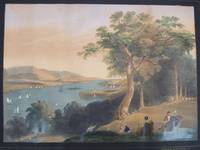
1835ref. 7948CBSchaffhausen, um 1835. Bildausschnitt: 18,5 x 28 cm. Kolorierte Aquatinta von Johann Jakob Falkeisen nach Johann Ludwig Bleuler. Hinter Passepartout in Goldrahmen.
1771ref. 32613BBBern, In der Hoch-Oberkeitlichen Druckerey, 1771. 18,6x15,5 cm. 18 S. Ohne Einband.
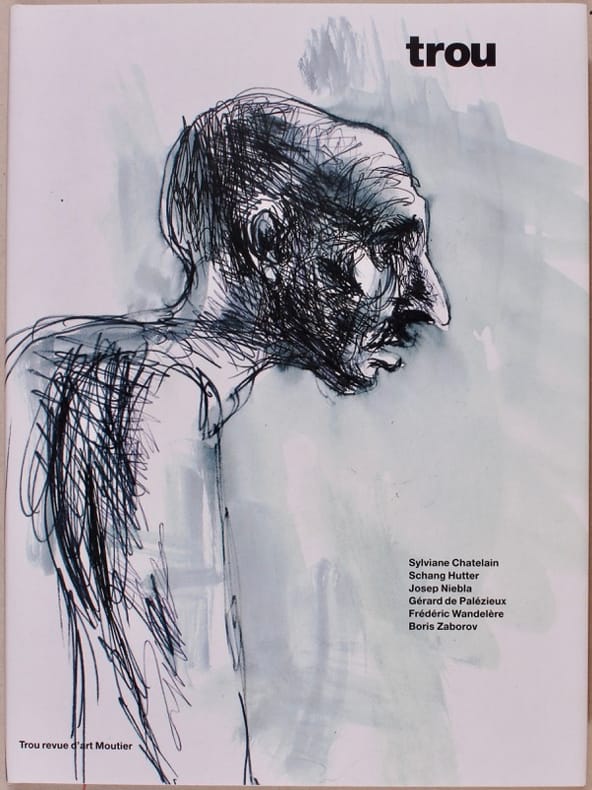
2005ref. 21825Moutier, Association Trou, 2005. In-4 de 144 pages, relié en toile blanche, titre frappé en creux au premier plat, jaquette illustrée, étui.
ref. LITT5840M1865, Hachette. Fort volume in-folio, relié, pleine percaline rouge à encadrements, dos à nerfs. IV-194pp. 75 planches hors textes des illustrations de Doré. Mouillure généralisée sur la première moitié de l'ouvrage. Quelques frottements sur la reliure. Cassure entre le premier plat et la garde. Exemplaire satisfaisant
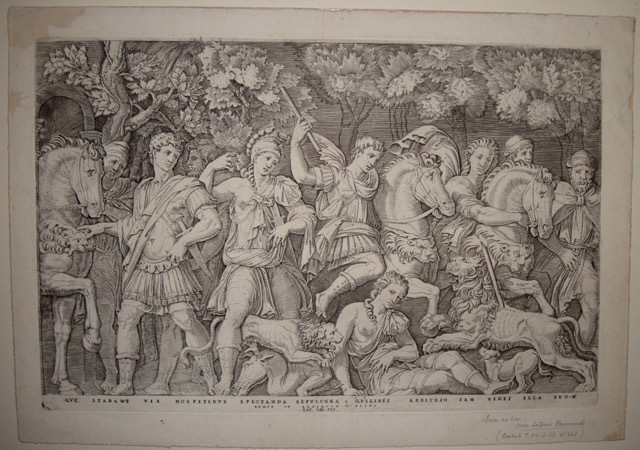
ref. 5618Grandes marges. On lit en bas au milieu : Ant. sal. exc. Bartsch XIV, p.317, 422 En feuille Très bon XVIè 26,7 x 40,9 cm
1865ref. 37BGZürich, H. Füessly & Comp. zur Meise, 1865. Stahlstich. Nach der Natur gezeichnet und gestochen von Rud. Ringger in Küsnach b/Zürich. Druck von D. Herter in Zürich. Bildgrösse: 10,2 cm x 302 cm. + Wichtig: Für unsere Kunden in der EU erfolgt der Versand alle 14 Tage verzollt ab Deutschland / Postbank-Konto in Deutschland vorhanden +, 37BG Orig.-Pappdeckel (Gelenke u. Kanten leicht berieben, Ecken minim bestossen) in Orig.-Papp-Schuber (berieben, Gelenke angeplatzt, etwas verblasst).
1850ref. 89657Zürich: Verlag von Henri Fuessli & Cie, um 1850. 41 x 31 cm quer ; Halbleder
ref. 0411B948288Leather Bound. Good. Philadelphia: George W. Gorton 1843 first ed. Full leather edgeworn slightly raised bands worn down all edges creamy fading marbled gilt titling on black leather compartment. 165 engravings all present pages with engravings toning. Front hinge starting though all signatures tight and complete. PAWLING's contemporary signature on title page and a marginal note at foot of page describing Pawlings family of Montgomery County. Historical Collections of the State of Pennsylvania Containing a Copious Selection of the Most Interesting Facts Traditions Biographical Anecdotes etc. Relating to the History and Antiquities.with Topographical Descriptions of Every County. 708 pps. including index. hardcover
ref. 14992Paris Textes Prétextes 1951 in 4 (28,5x23,5) 1 volume broché, en faux-feuillets sous couverture illustrée, 234 pages [4], chemise et étui de l'éditeur. Ouvrage illustré de 10 eaux-fortes originales de Gus Bofa, en deux états, dont un avec remarques (le frontispice est en un seul état). Collationné complet. Tirage limité à 250 exemplaires numérotés sur vélin d'Arches, celui-ci un des 175 exemplaires numérotés de 76 à 250, avec la signature de Gus Bofa sur la justification. Bel exemplaire
1871ref. FOSTERBI004667E. Moxon London. 1871. First edition thus: illustrated with 22 exquisite engravings by Birket Foster. Quarto. pp viii 109 1 adverts. 22 plates. Fine period binding by H. Sotheran of full straight-grain morocco with raised bands gilt decoration and rules all edges gilt.A bit of foxing here and there otherwise fine. E. Moxon, London. hardcover
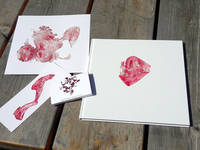
2018ref. ABE-1675259210036Strange Attractor Press London 2018 This is a truly odd listing. It is easy to understand at one level. It has a powerful impact. It will set you thinking. It is also a truly original take on an historical theme. Ian Johnstone worked on this odd and fascinating collection. It is VERY odd; it is possibly unique. The wounds all twenty three of them were inspired by this artist's conception of how each stab was wielded and delivered upon Julius Caesar. An attempt to describe it sounds pretentious but with this strange book in your hands you can look and share something of this odd vision. Each was produced on - I believe - white melamine. The wounds are rendered in red pigment or ink. One of them is featured on the shiny white cover. It is an image inset into a blind stamped shape. The images inside are all in keeping with the cover and one can speculate; is this Brutus's mark And can that be yon Cassius's lean and hungry blade Was this how each wound appeared upon the toga of JC Speculate as you wish and contemplate them in whatever order you like. They are all worth a look and you will have seen nothing so strange before. And there are some photographs of the artist at the back by Kerry and Daniel O'Sullivan. Geoff Cox and Serena Korda have written the text. This is hard to describe and easy to look at. It is wondrous strange. It is peculiar.On the back cover it says '23 hawk beaks 23 fragments of a skull 23 curses hung round the neck of a scavenger.' And there are only 300 copies in the whole wide world of this book and it might be a masterpiece. It is not signed or numbered but the publisher insists only 300 copies exist. There is also a cassette of special music. YES! A cassette. The loose prints are ready to frame and the whole package is something very special indeed. Limited Edition. Hardcover. New. Strange Attractor Press London hardcover