10.174 resultados
1969Acquaforte e bulino. Tiratura: 60 es. su carta a mano + X es. su carta Giappone + alcune p.d.a. (alcuni es. colorati a mano dall'Artista) Firma e numerazione a matita. Stampata da Giorgio Upiglio, Milano. Esemplare 27/60. cm 24,5x34,7 (Foglio 50x60). pp.. . Ottimo (Fine). . Tiratura: 60 + X + alcune p.d.a. .
19254 Bll. (als Blockbuch gebunden) mit mont. handschriftl. Titel, 3 handschriftl. Gedichten [von Rudolf Pointner?] u. den 3 Orig.-Holzschnitten (ca. 25:18 cm) von Edgar Jené. Karton der Zeit mit marmor. Umschlag und hs. Deckelschild ("Naturgaben"). 4to. Wohl sehr frühe Arbeit des österreichischen Künstlers Edgar Jené, vermutlich nur in kleinster Auflage (vielleicht aber auch nur dieses eine Exemplar) handschriftlich hergestellt. Während die ersten beiden Holzschnitte noch unausgereift und unausgewogen wirken, hat das dritte Blatt bereits den für Jené so typischen surrealistischen Anklang.
ref. 6617Épreuve retouchée par Philippe Thomassin (1536-1600). Très belle épreuve d'après Raphaël. Bartsch t. XV p. 206 n° 31.
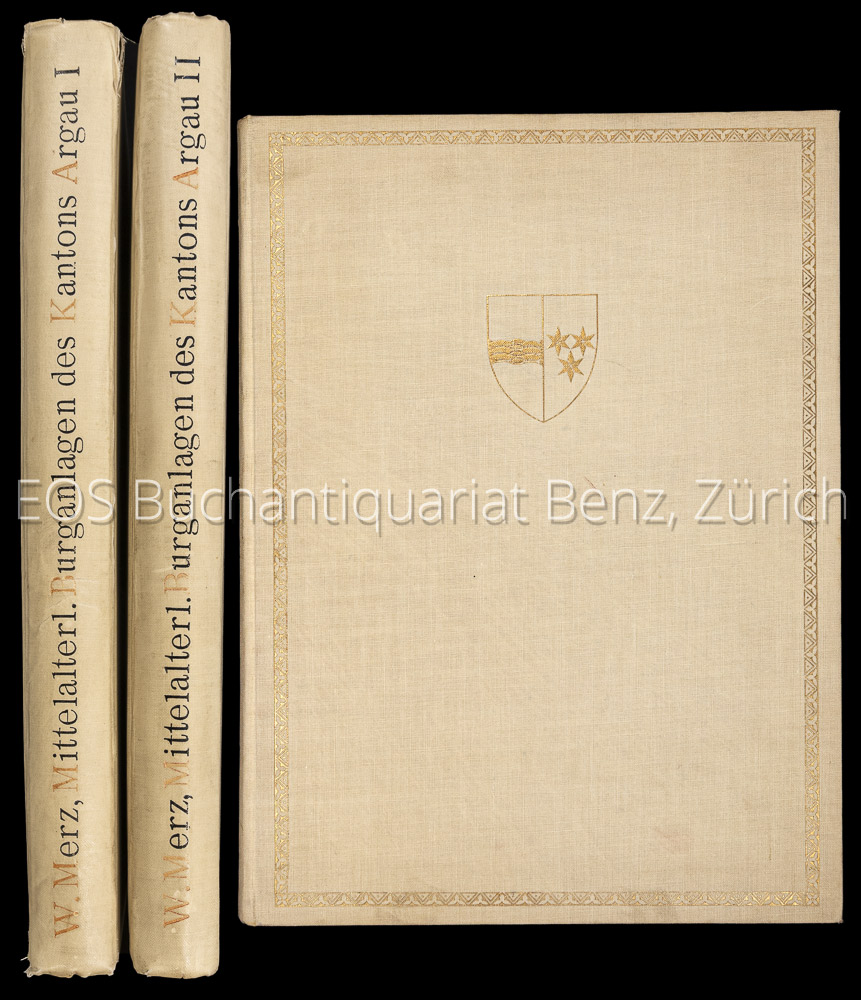
1905ref. 4179DBAarau, Sauerländer, 1905-1929. 4°. XII, 344, 10 S.; X S.345-714; IX, 186 (1) S. Mit zahlr. Tafeln, Stammtafeln und Abb. im Text. Orig.-Leinenbände (nicht uniform). + Wichtig: Für unsere Kunden in der EU erfolgt der Versand alle 14 Tage verzollt ab Deutschland / Postbank-Konto in Deutschland vorhanden +, A|B|C|D 3 Bände. [4 Warenabbildungen]
Sei incisioni originali all'acquaforte acquatinta a colori realizzate con una, due e tre lastre per foglio. Six original etching-aquatints in colours by Gaston Orellana Tiratura eseguita coi torchi di Giorgio Upiglio a Milano su carta delle Cartiere Filicarta. Esemplare 61/99. cm 28x30; 25,5x2,5 (Foglio 55x42,5). pp. cartella in mezza tela cm 56x44. . Perfetto (Mint). . Tiratura 99 + X. . ''A lo largo, de tu pais alargado; las largas lineas tuyas, Gaston, Chile es tan alargado y triste; una pincelada azul, y el mar; Ya sabes, reposar es muy dificil. . . '' (Asturias, Buenos Aires 1958)
ref. 19145Paris, chez la Vve Chereau, s.d. In-8 oblong, 27 ff., veau marbré brun, triple filet doré en encadrement sur les plats, dos long orné de caissons et fleurons dorés, pièce de titre noire (petits manques, 2 mors fendus, coiffe supérieure arasée, quelques petites taches ou rousseurs, 5 gravures manquantes).
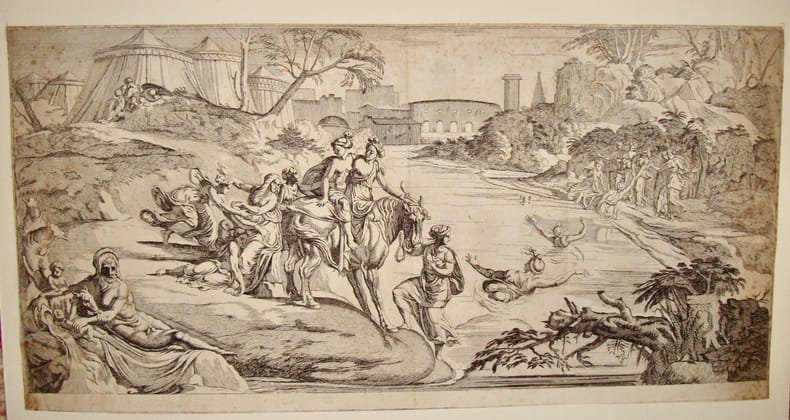
ref. 14692Très rare estampe d'après Jules Romain. Voir Bartsch tome XVI, p. 395, 49. L'estampe est très proche de celle gravée par René Boyvin (milieu du XVIè). Au verso à la plume et encre brune: F. Rechberger 1805. Celui-ci fut conservateur de la collection Moriz von Fries, puis entra à l'Albertina. Sa signature se trouve sur les feuilles de la collection du comte von Fries. En feuille. Ancienne réparation dans l'angle supérieur droit. Bon XVIè 64 x 75 cm
Puntasecca, acquaforte e acquatinta originale in nero Firma, data, titolo e numerazione a matita. Timbro a secco dello stampatore Giorgio Upiglio. Stampata su carta Hahnemuhle 350 g. Esemplare 7/30. cm 83x59 (Foglio 98,5x69). . . Ottimo (Fine). . Tiratura 30. .
Puntasecca e calcografia originale Firma, data e numerazione a matita. Timbro a secco dello stampatore Giorgio Upiglio. Carta Graphia. Esemplare 2/20. cm 49x66 (Foglio 60x80). pp.. . Ottimo (Fine). . Tiratura 20. .
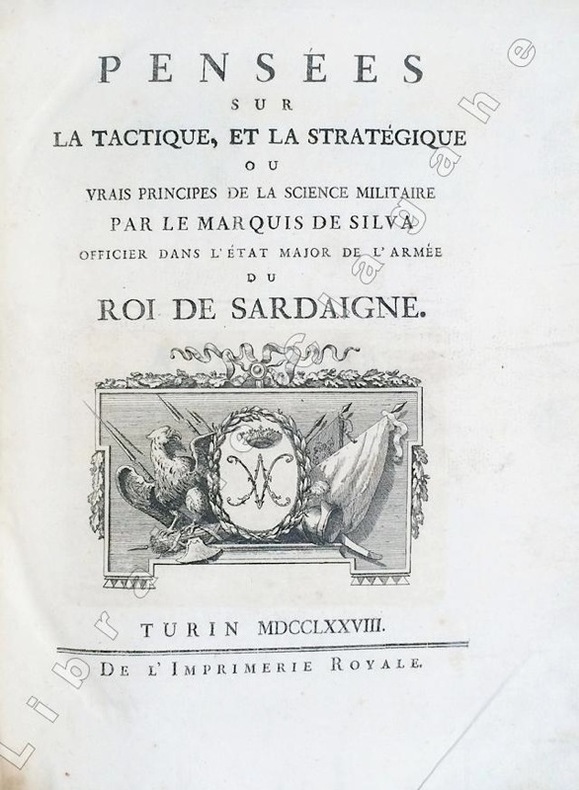
1778ref. 6494Turin, Imprimerie Royale, 1778 ; in-4 ; demi-veau glacé havane, dos à faux-nerfs dorés et palettes décoratives, pièce de titre vert-pistache, tranches mouchetées de bleu (reliure de l'époque) ; (14), 359, (1 bl.) ; (4), 55, (1) pp. et 30 planches gravées dépliantes.SUIVI DE : "CONSIDERATIONS SUR LA GUERRE DE 1769 ENTRE LES RUSSES ET LES TURCS. Nouvelle édition corrigée et augmentée de plusieurs notes historiques."
Each 216:298 mm. (Opaque) watercolor and pencil on solid cardboard, monogrammed. Finely executed drawings, showing some female allegories (a red rose, a bellflower and red weed). - Decorative gouaches by the artist Stern, who emigrated to Hollywood via Paris in 1933.
1971The album contains the frontispiece, one leaf with an ideogram, the colophon, one frame for kite, one leaf with title and two leaves with index engravings, the woodcut reproduction of Hokusai's famous view, 18 hand-painted sails on Japanese paper each in their black folder with the stylized design of the sail and the title. All the paintings are executed by master Kato Tatsusaburo, who has been painting and making kites for more than sixty years / Il portfolio contiene il frontespizio, una pagina con ideogramma, il colophon, una struttura in bambù per aquiloni, una pagina con titolo, due pagine con indice delle 18 forme di aquiloni, una riproduzione xilografica della famosa vista di Hokusai, 18 acquiloni dipinti a mano su carta giapponese, ciascuno nella sua cartella nera con impresso al piatto il disegno stilizzato dell'acquilone e il titolo. Tutti i dipinti sono stati eseguiti dal maestro Kato Tatsusaburo, che ha dipinto e realizzato aquiloni per oltre sessant'anni Original bordeaux cloth case with gold ideogram. Copy N. 10 / Cartella in tela bordeaux con ideogramma in oro impresso al piatto anteriore. Copia n. 10. Folio (cm 49,5 x 35,5). . . . . Edizione originale di 100 esemplari numerati (Original edition of 100 numbered copies). . Guarda il video
Tecnica mista su base litografica Firma e data a matita in basso a destra. Cm 100x70. . . Perfetto (Mint). . . .
Litografia originale dalla cartella ''El circulo de piedra'' Firma e numerazione a matita. Timbro a secco dell'Editore Giorgio Upiglio. Stampata su carta delle Cartiere Filicarta. cm 55x45. pp.. . . . Tiratura 125 + XXV. .
Litografia a tre colori Firma e data a matita. Carta Arches. Cm 76,5x56,6. . . . . Tiratura 200. .
1920- Lucien Vogel éditeur, Paris 1920-1922, 18x24cm, relié. - [FASHION] POIRET Paul & WORTH Charles Frederick & BEER & DOEUILLET Georges & LANVIN Jeanne & SIMON Mario & WOODRUFF André-Edouard. Croquis de mode Lucien Vogel éditeur, Paris 1920-1922, 18 x 24 cm, bound Set of 24 original lithographs in color, on vergé paper: - Croquis de mode d'été par Mario Simon ("Croquis", La Gazette du Bon ton, 1920 n° 3). - Les modes en l'an de grâce Mil neuf cent vingt un ("Croquis", La Gazette du Bon ton, 1921 n° 3) - Pour la Riviera. Robes garnies de fleurs naturelles, dans la mesure où l'on en a et où l'on ne préfère pas d'employer, moins coûteuses, les fleurs artificielles ("Croquis", La Gazette du Bon ton, 1921 n° 10). - Costumes tailleur de fantaisie ornés de colifichets ("Croquis", La Gazette du Bon ton, 1922 n° 4). Original prints used to illustrate the Gazette du Bon ton, one of the most attractive and influential 20th century fashion magazines, featuring the talents of French artists and other contributors from the burgeoning Art Deco movement. A celebrated fashion magazine established in 1912 by Lucien Vogel, la Gazette du Bon ton appeared until 1925, with a hiatus from 1915 to 1920 due to the war (the editor-in-chief having been called up for service). It consisted of 69 issues printed in only 2,000 copies each and notably illustrated with 573 color plates and 148 sketches of the models of the great designers. Right from the start, this sumptuous publication "was aimed at bibliophiles and fashionable society," (Françoise Tétart-Vittu, "La Gazette du Bon ton", in Dictionnaire de la mode, 2016) and was printed on fine vergé paper using a type cut specially for the magazine by Georges Peignot, known as Cochin, later used (in 1946) by Christian Dior. The prints were made using stencils, heightened in colors, some highlightened in gold or palladium. The story began in 1912, when Lucien Vogel, a man of the world involved in fashion (he had already been part of the fashion magazine Femina) decided, with his wife Cosette de Brunhoff - the sister of Jean, creator of Babar - to set up the Gazette du Bon ton, subtitled at the time: "Art, fashion, frivolities." Georges Charensol noted the reasoning of the editor-in-chief: "'In 1910,' he observed, 'there was no really artistic fashion magazine, nothing representative of the spirit of the time. My dream was therefore to make a luxury magazine with truly modern artists...I was assured of success, because when it comes to fashion, no country on earth can compete with France." ("Un grand éditeur d'art. Lucien Vogel" in Les Nouvelles littéraires, n° 133, May 1925). The magazine was immediately successful, not only in France but also in the United States and Latin America. At first, Vogel put together a team of seven artists: André-Édouard Marty and Pierre Brissaud, followed by Georges Lepape and Dammicourt, as well as eventually his friends from school and the School of Fine Arts, like George Barbier, Bernard Boutet de Monvel and Charles Martin. Other talented people soon came flocking to join the team: Guy Arnoux, Léon Bakst, Benito, Boutet de Monvel, Umberto Brunelleschi, Chas Laborde, Jean-Gabriel Domergue, Raoul Dufy, Édouard Halouze, Alexandre Iacovleff, Jean Émile Laboureur, Charles Loupot, Chalres Martin, Maggie Salcedo. These artist, mostly unknown when Lucien Vogel sought them out, later became emblematic and sought-after artistic figures. It was also they who worked on the advertising drawings for the Gazette. The plates put the spotlight on, and celebrate, dresses by seven designers of the age: Lanvin, Doeuillet, Paquin, Poiret, Worth, Vionnet and Doucet. The designers provided exclusive models for each issue. Nonetheless, some of the illustrations are not based on real models, but simply on the illustrator's conception of the fashion of the day. The Gazette du Bon ton was an important step in the history of fashion. Combining aesthetic demands with the physical whole, it brought tog
1960- Louis Broder, Paris 1960, 20x24,1cm, une feuille. - Pointe sèche originale de Valentine imprimée sur japon et réalisée pour l'ouvrage Feuilles éparses en hommage à René Crevel. Envoi autographe signé de l'artiste en marge basse de la planche : "pour Louis Broder - Son amie Valentine Hugo" Très bel exemplaire. [ENGLISH DESCRIPTION ON DEMAND]
1753ref. 7649BB2 Bände. Zyrich, bei Heidegger und Comp., 1753–1754. 8°. I: (4) Bl., 108 S.; (3) Bl., 132 S.; 52 S.; (1) Bl., 102 S.; (1) Bl., 60 S.; 48 S.; 28 S. – II: (2) Bl., 164 S.; (2) Bl., 132 S.; (4) Bl., 16 S.; 16 S.; 83 S. Pappbände der Zeit mit Rückensch.
ref. 2092902138300218Hosei shobo N.A. Soft Cover. Fine. The book is in fine condition. Hosei shobo paperback
2007ref. 0042502007 Aux Pujols, Philippe Parage «l'Atelier de la Guinguette », 2007. Huit planches in-folio (475 X 330 mm) et un lavis original (485 X 335) sur BFK de Rives sous boite écrin de toile grise anthracite à l'intérieur de laquelle est contrecollé le feuillet de justification du tirage. Petites rousseurs en marge de certaines planches.
ref. 54442 gravures galantes rehaussées, dans leurs cadres en bois doré anciens. 500 x 400 XIXè siècle
Kolorierte Lithographie auf Papier. 605 x 800 mm. Sehr seltene Monumentallithographie von Joseph Lanzedelli dem Jüngeren nach einem Entwurf von Adam Brenner, gedruckt bei B. Greiffenstein für J. Sedlaczek in Wien. Das Plakat zeigt eine Anbetung Jesu Christi als Himmelskönig auf textlicher Basis des "Te Deum Laudamus". Die irdische Sphäre ist zentral durch den schreibenden Heiligen Ambrosius von Mailand repräsentiert, dem der berühmte Hymnus zugeschrieben wird. Mehrere Textzitate mit Strophenangabe der deutschen Nachdichtung des Te Deums von Ignaz Franz sind illustriert, darunter die Anbetung der Cherubim. Erst durch die Bildunterschrift wird der Zusammenhang mit der Hochzeit des Kaiserpaares hergestellt: "Zur Erinnerung an die Oesterreichs Völker beglückende Vermählung und glorreiche Regierung Sr. kais. königl. Apostolischen Majestät unsers allgeliebten und allergnädigsten Kaisers Franz Joseph I., mit Ihrer königl. Hoheit der durchlauchtigsten Prinzessin Elisabeth Amalie Eugenie, Herzogin in Bayern". Die Betonung des Heiligen Ambrosius von Mailand als Schutzpatron des österreichischen Kaisertums hatte in der angespannten Lage vor dem zweiten italienischen Unabhängigkeitskrieg (1859) auch eine politische Dimension. - Der Wiener Kaufmannssohn Adam Brenner (1800-91) studierte unter Leopold Kupelwieser und Ferdinand Georg Waldmüller an der Akademie der bildenden Künste. Er trat sowohl in der Historienmalerei als auch in den niedrigeren Gattungen als begabter akademischer Maler hervor. - Mehrere geklebte Einrisse sowie fachgerechte Ergänzungen im Randbereich. Leicht fleckig und gebräunt.
1923Ensemble de deux volumes de format in 4° de 8 ff.; une eau-forte originale numérotée; 141 planches reproduites en phototypie avec serpentes protectrices explicatives; 4 ff. pour le tome 1. Pour le tome II: 4 ff.; planches 142 à 271 reproduites en photypie; 4ff.. Reliure de l'éditeur en demi maroquin noir à longs grains; dos à quatre nerfs, caissons richement ornés et dorés, titres dorés, dates en pied; décor de filets dorés sur les coins; têtes dorées; non rogné. Couvertures entièrement conservées. Tirage total à 1030 exemplaires; celui-ci N°132 sur vélin, second papier. Rousseurs en marge de la gravure originale sans atteinte à l'oeuvre sinon exemplaire frais en état quasi neuf. Joint une photographie de l'artiste.
1781ref. 704313Göttingen, Victorinus Bossiegel, 1781. Kl.-8°. Gestoch. Frontispitz, gest. Titelvign., 7(2 gef.) Kupfertaf., 9 Bl., 136 Seiten. Schlichter Pappband der Zeit mit kleinem Rückenschild.
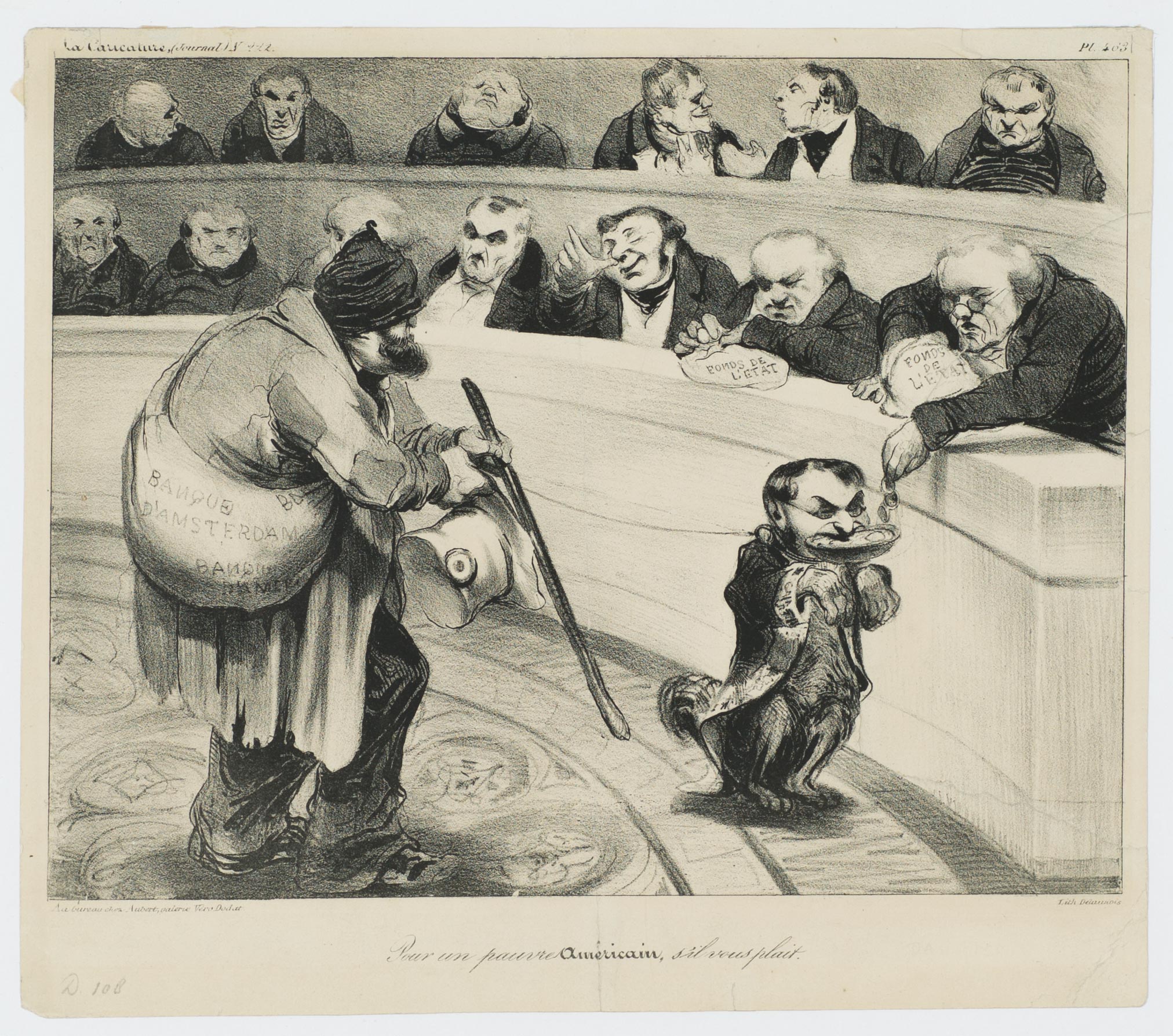
ref. HD-161o.J. Lithographie, auf chamoisfarbenem Velin, mit den Adressen: Au bureau ,chez Aubert, pass. Véro-Dodat., sowie: Lith. Delaunois. Darstellungsgröße 21,7:27,8 cm, Blattgröße 25,5:29 cm. Literatur: Daumier-Register 108 I, (von III); Delteil 108 I (von III); Blatt 463, erschienen am 05.02.1835 in ?LA CARICATURE?, Nr. 222. ? Sur blanc.