Kaempfer, H. M,MareMagnum
Newland, Amy and Chris UhlenbeckAntiquariat.de
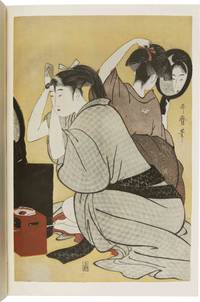
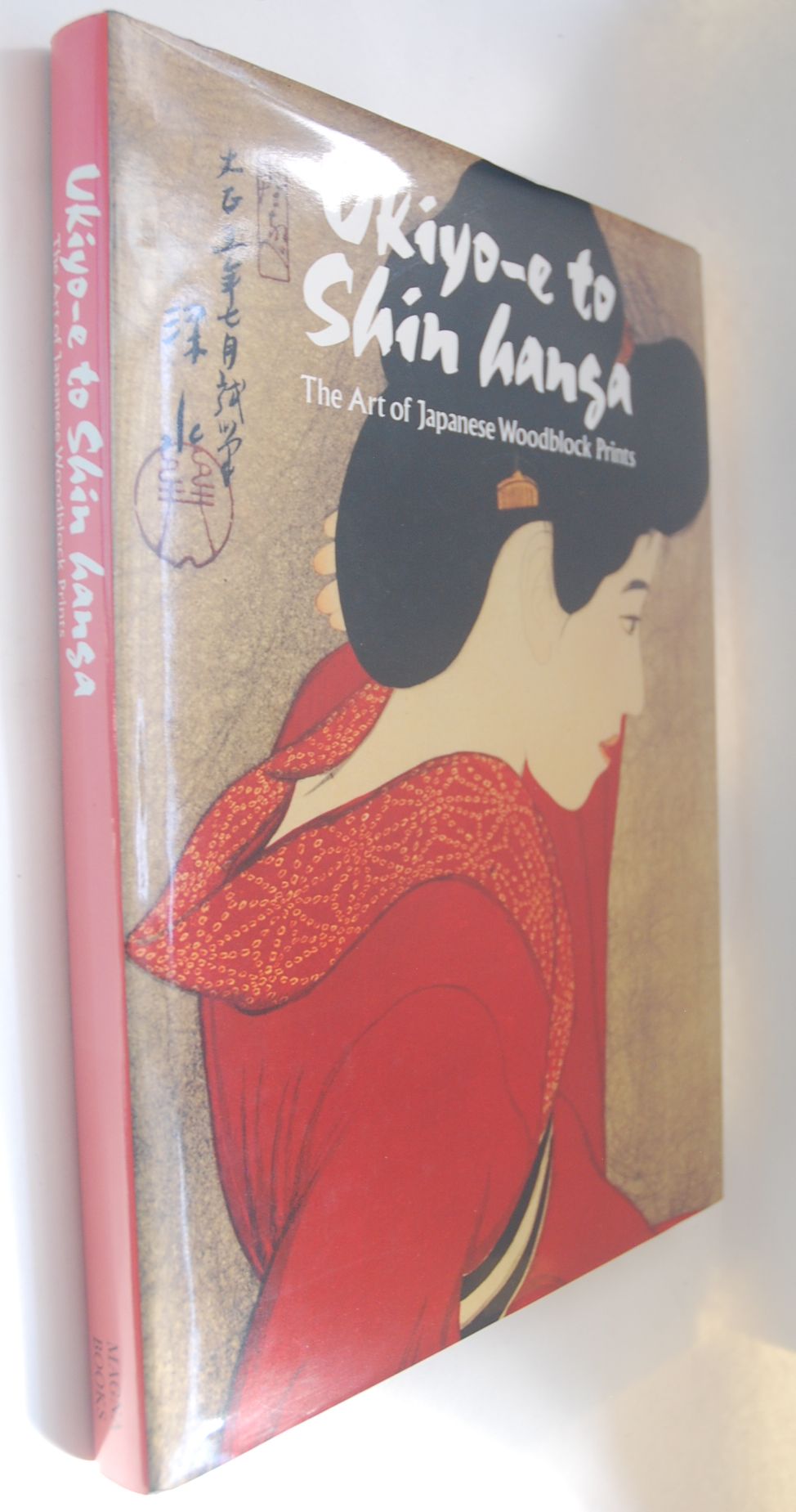
Ukiyo-e to Shin hanga. The Art of Japanese Woodblock Prints
1990ref. 57700Magna Books, Leicester 1990. 256 S., 37 cm Pappe 0
Antiquariat Biebusch · Alemania40,00 €
10.194 resultados
1978This is an about very good softcover copy with light wear. The rear cover has some marks to it, there is also a small blank paper label at the foot of the spine. No other marks or labels internally. Edited by H.M. Kaempfer with half a dozen authors. Illustrated throughout in black & white. 12" high X 8" wide, 83 pages. This book will be securely packed and shipped with tracking.
1990ref. 57700Magna Books, Leicester 1990. 256 S., 37 cm Pappe 0
1991ref. R300315298PML. 1991. In-Folio. Relié. Bon état, Couv. convenable, Dos satisfaisant, Intérieur frais. 256 pages - nombreuses illustrations en noir et blanc et en couleurs dans et hors texte et en frontispice. Jaquette convenable.. Avec Jaquette. . . Classification Dewey : 769-Estampes
1985ref. RO30371151Flammarion. 1985. In-4. Relié. Bon état, Couv. convenable, Dos satisfaisant, Intérieur frais. 390 pages. Jaquette et sous emboîtage corrects. Tranches légèrement fanées. Nombreuses reproductions en couleurs et en noir et blanc.. Avec Jaquette. Sous Emboitage. . Classification Dewey : 769-Estampes
1962ref. 36263San Francisco: Printed for the Book Club of California 1962. One of 400 copies printed by the Grabhorn Press with the prints culled from the private collection of Edwin and Marjorie Grabhorn. The Grabhorns produced three such books the first focusing on figure prints and the second on landscape. This final volume in the trilogy centers around portrait prints or prints with people as their main subject. Folio. Original half cloth and patterned paper boards paper label. Fine. In a plain red dust jacket slightly faded. GRABHORN BIBLIOGRAPHY 638. hardcover
1962ref. 36263San Francisco: Printed for the Book Club of California 1962. One of 400 copies printed by the Grabhorn Press with the prints culled from the private collection of Edwin and Marjorie Grabhorn. The Grabhorns produced three such books the first focusing on figure prints and the second on landscape. This final volume in the trilogy centers around portrait prints or prints with people as their main subject. Folio. Original half cloth and patterned paper boards paper label. Fine. In a plain red dust jacket slightly faded. GRABHORN BIBLIOGRAPHY 638. hardcover books
1991Ex-library book with the usual stamps and markings. Interior pages clean and unmarked; tight binding. 390 pages. Lavishly illustrated with 377 color plates. Large format: 9 1/2"w x 12 1/4"h.
1991286 pages. Exhibition catalog of 244 ukiyo-e prints carefully selected from the Matsukata collection in order to display the history of ukiyo-e prints from their earliest days to the end of the Edo period. Text predominantly in Japanese. Illustrated in colour. Light to moderate wear. Unmarked. Binding tight and square. Sound copy. Book
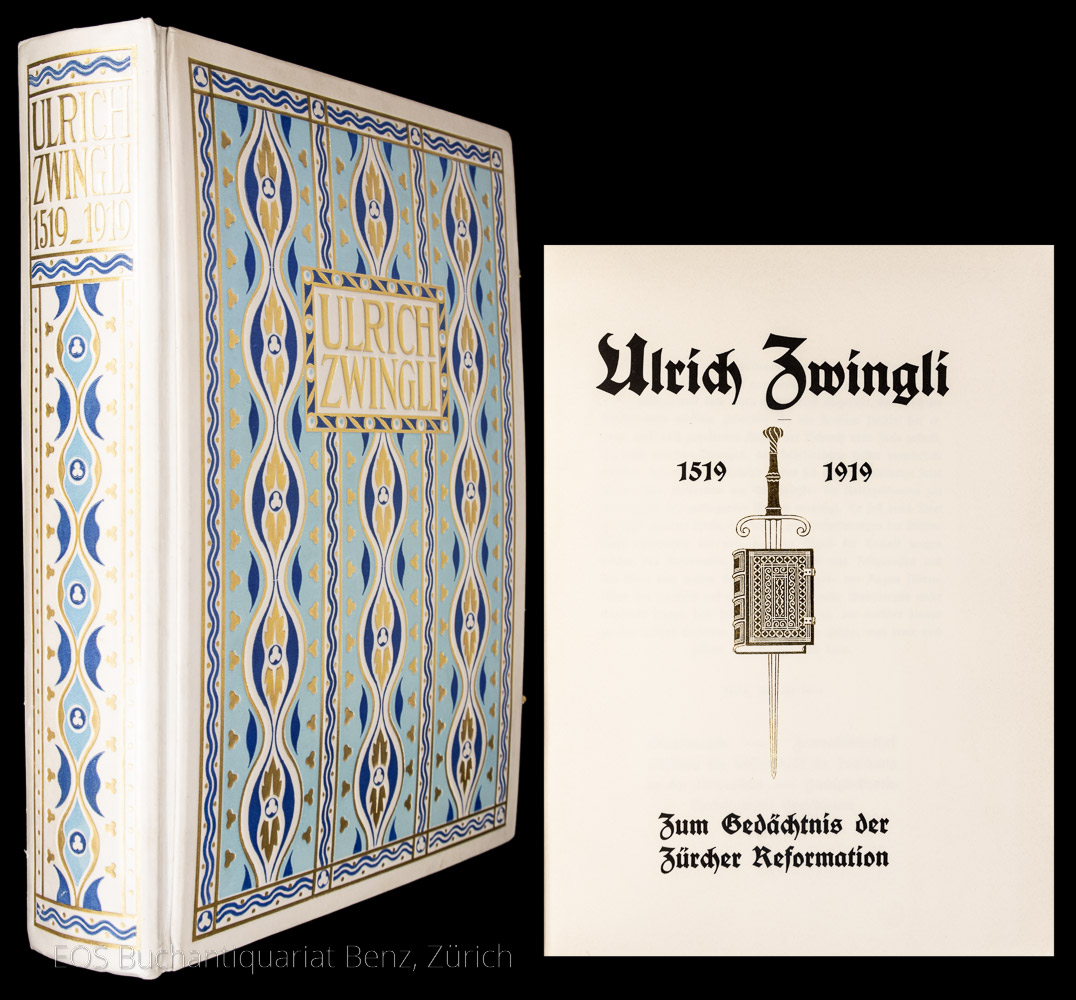
1919ref. 2612BBZürich, Berichthaus, 1919. Kl.-Folio. 1 Bl, XIV, 308 Spalten (recte 154 S.), (10) S. Mit 1 farb. Frontispiz u. 179 (dv. viele mont., farb.) Tafeln mit Portraits u. Illustr. nach alten Vorlagen. Farb- u. goldgepr. Orig.-Pergamentbd. über Holzdeckeln mit 2 Schliessen u. 3-s. Goldschnitt. + Wichtig: Für unsere Kunden in der EU erfolgt der Versand alle 14 Tage verzollt ab Deutschland / Postbank-Konto in Deutschland vorhanden +, 2612BB|2612BB_2 [2 Warenabbildungen]
1919ref. 2612BBZürich, Berichthaus, 1919. Kl.-Folio. 1 Bl, XIV, 308 Spalten (recte 154 S.), (10) S. Mit 1 farb. Frontispiz u. 179 (dv. viele mont., farb.) Tafeln mit Portraits u. Illustr. nach alten Vorlagen. Farb- u. goldgepr. Orig.-Pergamentbd. über Holzdeckeln mit 2 Schliessen u. 3-s. Goldschnitt.
1883ref. 6934CBZürich, S. Höhr, 1883. X, 144 S. + Wichtig: Für unsere Kunden in der EU erfolgt der Versand alle 14 Tage verzollt ab Deutschland / Postbank-Konto in Deutschland vorhanden +
ref. 365112The Folio Society 1998. IN SLIPCASE super octavo blue heavy boards gilt lettering to spine gilt & white/black illus to front board 735pp illus/engravings Near FINE in slipcase VG The Folio Society 1998 hardcover
1922ref. 24469ABHamburg, Carl Hoym Nachf., 1922. 12°. 182 (2) S. Orig.-Broschur mit einer Umschlagzeichnung von Charlot Strasser + Wichtig: Für unsere Kunden in der EU erfolgt der Versand alle 14 Tage verzollt ab Deutschland / Postbank-Konto in Deutschland vorhanden + (berieben und bestossen).
1922ref. 24469ABHamburg, Carl Hoym Nachf., 1922. 12°. 182 (2) S. Orig.-Broschur mit einer Umschlagzeichnung von Charlot Strasser (berieben und bestossen).
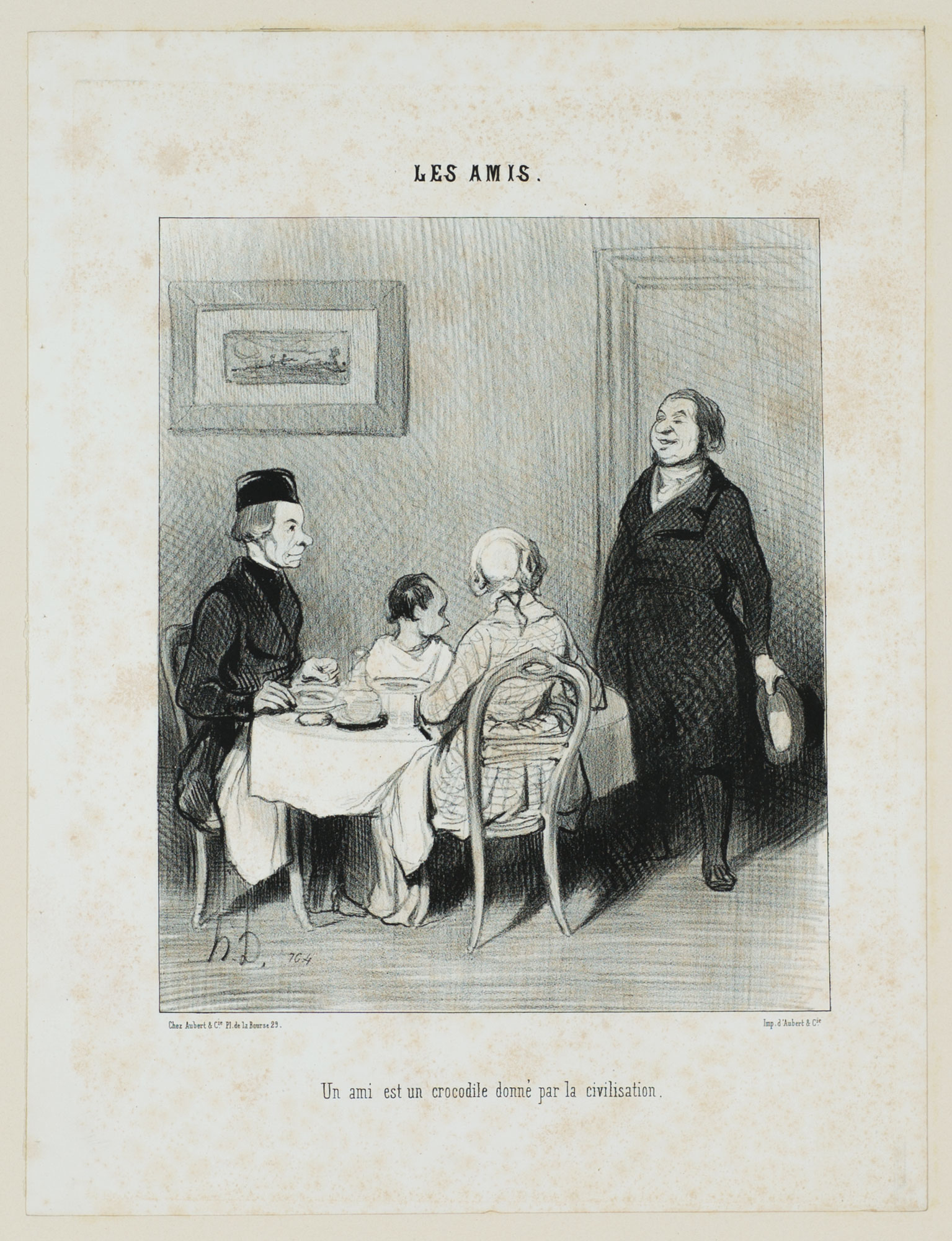
ref. HD-182o.J. Ein Freund ist ein Krokodil, Produkt unserer Zivilisation. Literatur: Daumier-Register 1384 II (von 2); Delteil 1384 II (von 2), Blatt der 6 Folge ?LES AMIS.?, erschienen 19.06.1845 in ?LE CHARIVARI?. ? Sur blanc!
1897ref. 5273Belle estampe tirée sur Japon et signée au crayon. Marque de contrôle du Cercle de la Librairie en bas à gauche. C'est la dernière eau-forte de Jean-Paul Laurens. Elle a paru dans la Revue de l'Art ancien et Moderne en 1897. Paris Revue de l'Art ancien et moderne 1897 18,5 x 23 (31 x 45)
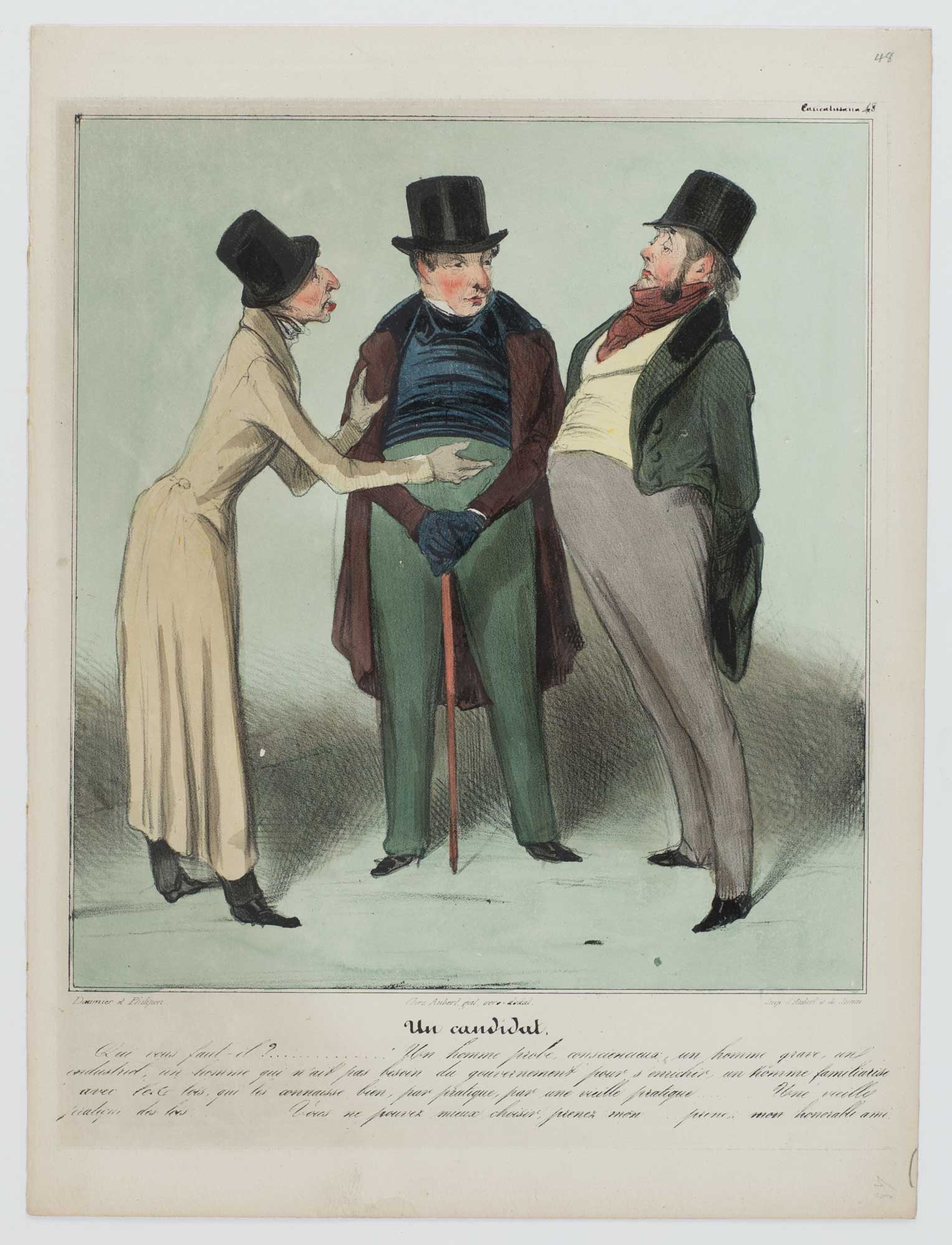
ref. HD-021o.J. Qui vous faut-il?..... Un homme probe, consciencieux, un homme grave, un industriel, un homme qui n'ait pas besoin du gouvernement pour s'enrichir, un homme familiarisé avec les lois, qui les connaisse bien, par pratique, par une vieille pratique....... Une vieille pratique des lois... Vous ne pouvez mieux choisir, prenez mon...... prenez mon honorable ami. (Ein Kandidat. Wen brauchen Sie?... Einen anständigen, ehrlichen, seriösen Mann, einen Mann, der sich nicht der Regierung bedient um sich zu bereichern, einen Mann, der mit dem Gesetz vertraut ist, einen Mann, der es aus der Praxis kennt, einer langen Praxis.... einer sehr langen Praxis...... Sie könnten wirklich keine bessere Wahl treffen... nehmen Sie meinen Freund!). Zeitgenöss. aquarellierte Lithographie, auf chamoisfarbenem Velin, mit Text von Charles Philipon (1800-1862), mit den Adressen: Chez Aubert gal. véro-dodat, sowie: Imp. d?Aubert et de Junca. Darstellungsgröße 24,5:22,3 cm, Blattgröße 33,3:25 cm. ? Literatur: Daumier-Register 403; Delteil 403. No. 48 der 100 Blatt-Serie ?Caricaturana?, erschienen 18.05.1837 in ?Le Charivari?. ? Bei vorliegendem Exemplar handelt es sich wohl um ein Blatt aus dem Album ?Caricaturana?, das 1838 erschien. ? Sur papier blanc!
ref. ART7086M1916, Dorbon-Aîné, Paris. In-4, broché, 50pp illustrées de 42 compositions de Robida, dont 7 hors texte. Couverture émoussée. Intérieur frais et complet. Exemplaire satisfaisant.
1894ref. 14337Programme de l'Alcazar-d'été. Le dessin de Feure est reproduit, gravé par Ch. Decaux, sur la couverture. En feuille Très bon Paris 1894
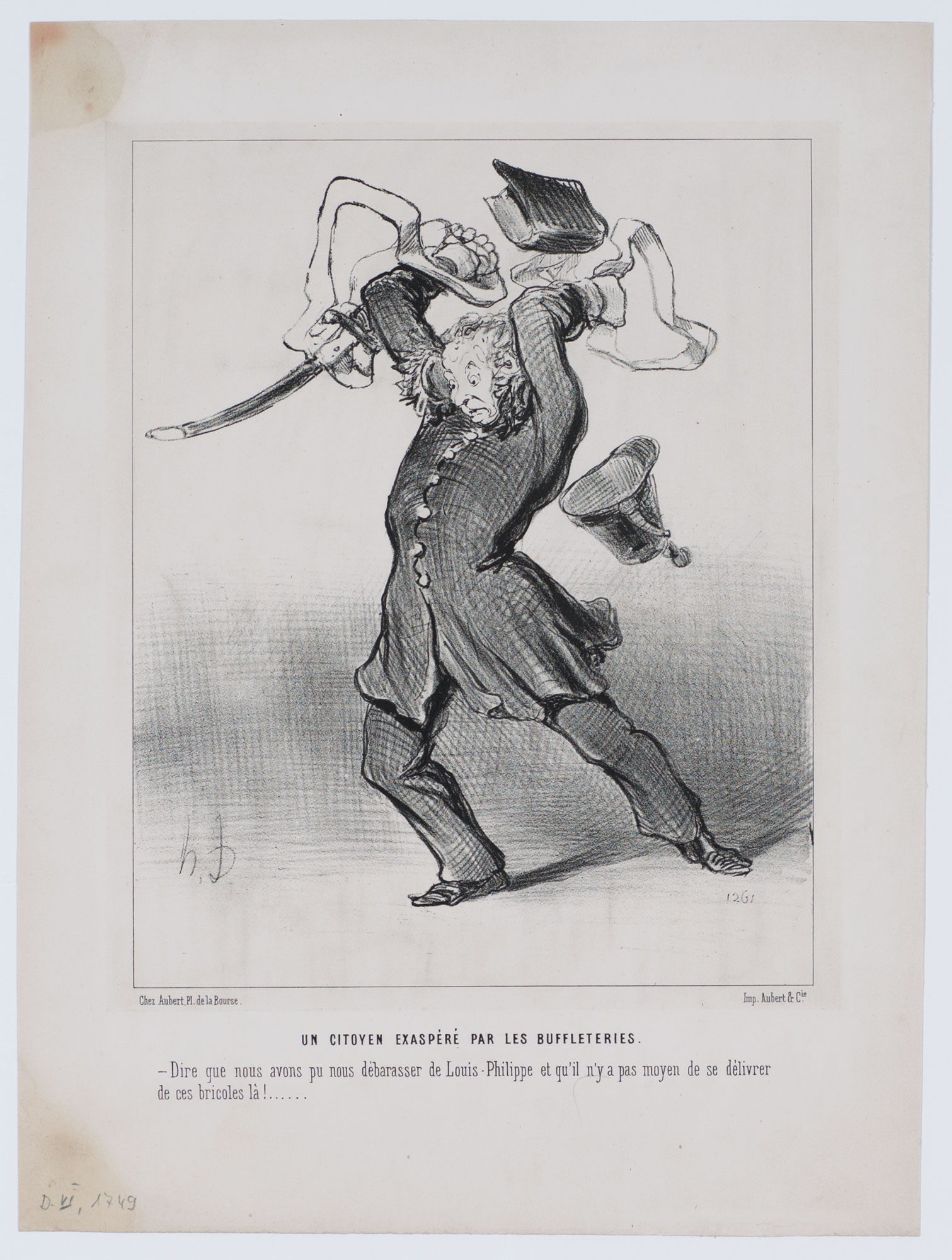
ref. HD-197o.J. EIN ÄUSSERST KONSTERNIERTER BÜRGER, DER DAS LEDERZEUG SEINER UNIFORM VON SICH WIRFT. Wir haben uns Louis-Philippe vom Halse geschafft, aber es scheint viel schwieriger zu sein, diesen Kram hier loszuwerden. Lithographie, auf chamoisfarbenem Velin, mit den Adressen: Chez Aubert, Pl. de la Bourse, sowie: Imp. Aubert & Cie. Darstellungsgröße 24,4:19,5 cm, Blattgröße 34,9:25,9 cm. Literatur: Daumier-Register 1749 II (von 2); Delteil 1749 II (von 2), erschienen am 01.04.1848 in ?LE CHARIVARI?. ? Sur blanc!
1892ref. 114892Imprimerie de l'Art 1892 Paris, Imprimerie de l'Art, 1892, 32 p., demi-percaline rouge, plats d'origine conservés, environ 27x20cm, exemplaire numéroté 36/120. Percaline un peu salie, pièce de titre frottée, bon état pour le reste et intérieur bien propre. Avec un envoi de Pierre Vidal.
1920- Lucien Vogel éditeur, Paris 1920, 18x24cm, une feuille. - Estampe originale en couleur réalisée par Pierre Mourgue, tirée sur papier vergé, signée en bas à droite de la planche. Planche publicitaire pour des robes de Jeanne Lanvin au verso. Gravure originale réalisée pour l'illustration de La Gazette du bon ton, l'une des plus belles et des plus influentes revues de mode du XXème siècle, célébrant le talent des créateurs et des artistes français en plein essor de l'art déco. Célèbre revue de mode fondée en 1912 par Lucien Vogel, La Gazette du bon ton a paru jusqu'en 1925 avec une interruption durant la Guerre de 1915 à 1920, pour cause de mobilisation de son rédacteur en chef. Elle se constitue de 69 livraisons tirées à seulement 2000 exemplaires et est illustrée notamment de 573 planches en couleurs et de 148 croquis représentant des modèles de grands couturiers. Dès leur parution, ces luxueuses publications « s'adressent aux bibliophiles et aux mondains esthètes » (Françoise Tétart-Vittu « La Gazette du bon ton » in Dictionnaire de la mode, 2016). Imprimées sur beau papier vergé, elles utilisent une police typographique spécialement créée pour la revue par Georges Peignot, le caractère Cochin, repris en 1946 par Christian Dior. Les estampes sont réalisées grâce à la technique du pochoir métallique, rehaussées en couleurs et pour certaines soulignées à l'or ou au palladium. L'aventure commence en 1912 lorsque Lucien Vogel, homme du monde et de la mode - il a déjà participé à la revue Femina - décide de fonder avec sa femme Cosette de Brunhoff (sur de Jean, le père de Babar) la Gazette du bon ton dont le sous-titre est alors « Art, modes et frivolités ». Georges Charensol rapporte les propos du rédacteur en chef : « En 1910, observe-t-il, il n'existait aucun journal de mode véritablement artistique et représentatif de l'esprit de son époque. Je songeais donc à faire un magazine de luxe avec des artistes véritablement modernes [...] J'étais certain du succès car pour la mode aucun pays ne peut rivaliser avec la France. » (« Un grand éditeur d'art. Lucien Vogel » in Les Nouvelles littéraires, n°133, mai 1925). Le succès de la revue est immédiat, non seulement en France, mais aussi aux Etats-Unis et en Amérique du Sud. À l'origine, Vogel réunit donc un groupe de sept artistes : André-Édouard Marty et Pierre Brissaud, suivis de Georges Lepape et Dammicourt ; et enfin ses amis de l'École des beaux-arts que sont George Barbier, Bernard Boutet de Monvel, ou Charles Martin. D'autres talents viennent rapidement rejoindre l'équipée : Guy Arnoux, Léon Bakst, Benito, Boutet de Monvel, Umberto Brunelleschi, Chas Laborde, Jean-Gabriel Domergue, Raoul Dufy, Édouard Halouze, Alexandre Iacovleff, Jean Émile Laboureur, Charles Loupot, Charles Martin, Maggie Salcedo. Ces artistes, inconnus pour la plupart lorsque Lucien Vogel fait appel à eux, deviendront par la suite des figures artistiques emblématiques et recherchées. Ce sont ces mêmes illustrateurs qui réalisent les dessins des publicités de la Gazette. Les planches mettent en lumière et subliment les robes de sept créateurs de l'époque : Lanvin, Doeuillet, Paquin, Poiret, Worth, Vionnet et Doucet. Les couturiers fournissent pour chaque numéro des modèles exclusifs. Néanmoins, certaines des illustrations ne figurent aucun modèle réel, mais seulement l'idée que l'illustrateur se fait de la mode du jour. La Gazette du bon ton est une étape décisive dans l'histoire de la mode. Alliant l'exigence esthétique et l'unité plastique, elle réunit pour la première fois les grands talents du monde des arts, des lettres et de la mode et impose, par cette alchimie, une toute nouvelle image de la femme, élancée, indépendante et audacieuse, également portée par la nouvelle génération de couturiers Coco Chanel, Jean Patou, Marcel Rochas... Reprise en 1920 par Condé Montrose Nast, la Gazette du bon ton inspirera largement la nouvelle composition et les choix esthétiques du « petit journal mourant » que
1920- Lucien Vogel éditeur, Paris 1920, 18x24cm, une feuille. - original print in color, printed on laid paper, signed lower right of the board. advertising board for Jeanne Lanvin dresses overleaf. Trained at the School of Fine Arts in the studio of Fernand Cormon, André Édouard Marty works in the Gazette du Bon tone from the start of the review; it is then known for his elegant style in which often stand a whimsical or humorous touch. In a decidedly Art Deco inspiration, he draws Poiret dresses alongside Lepape but also those of Lanvin or to Doeuillet. This is particularly illustrating the dresses of the latter trait that reveals a multifaceted: fun, in silent, my heart .. where a young Cupid aims his arrow of a young woman falsely frightened!. The Taste bucolic in the garden, where little girls dresses with carefully placed serve their mother dressed in a stylish dress. Melancholic, perhaps, in The Secret pretty where we see two girls shyly confide any thought. Like his colleagues in the Gazette, Marty also works with other fashion magazines such as Vogue and Harper's Bazaar, yet two competing magazines for which he will be one of the few illustrators to work on it together. In parallel fashion illustrations, Marty also designs scenes for literary works such mythological scenes Henry Regnier or The Songs of Bilitis by Pierre Louÿs in 1937. The eclecticism of his style reached its peak in 1943 when he realizes a cartoon, Callisto, little nymph of Diana, "setting in motion ultimate feminine silhouettes that he composed for the Gazette. Original content produced for the illustration of The Gazette fashionable, one of the finest and most influential twentieth century fashion magazines, celebrating the talent of creators and artists French burgeoning art deco. Famous fashion magazine founded in 1912 by Lucien Vogel, The Gazette fashionable appeared until 1925 with an interruption during the War of 1915 to 1920, due to mobilization of its editor. She is 69 Deliveries from just 2000 copies and is illustrated including 573 color plates and 148 sketches depicting models of fashion designers. Upon publication, these luxury publications "are for bibliophiles and worldly aesthetes" (Françoise Tétart-Vittu "good Gazette of tone" in the fashion dictionary, 2016). Printed on fine laid paper, they use a typeface created specifically for the magazine by Georges Peignot, the Cochin character, taken in 1946 by Christian Dior. The prints are made with the technique of metal stencil, enhanced color and some outlined in gold or palladium. The adventure began in 1912 when Lucien Vogel, man of the world and fashion - it has already participated in Femina magazine - decided to found with his wife Cosette de Brunhoff (John's sister, the father of Babar) Gazette good tone in which the subtitle is then "Art, fashions and frivolities." Georges Charensol quotes the editor: "In 1910, he observed, there was no truly artistic fashion magazine and representative of the spirit of his time. So I thought of making a glossy magazine with truly modern artists [...] I was certain of success because for any fashion country can compete with France. "(" A great art editor. Lucien Vogel "in literary News, No. 133, May 1925). The success of the magazine is immediate, not only in France but also the US and South America. Originally, Vogel therefore brings together a group of seven artists: André-Édouard Marty and Pierre Brissaud, followed by Georges Lepape and Dammicourt; and finally his friends from the School of Fine Arts as are George Barbier, Bernard Boutet de Monvel or Charles Martin. Other talents come quickly reach the equipped Guy Arnoux, Léon Bakst, Benito, Boutet de Monvel, Umberto Brunelleschi, Chas Laborde, Jean-Gabriel Domergue, Raoul Dufy, Edward Halouze Alexander Iacovleff, Jean Emile Laboureur Charles Loupot, Charles Martin, Maggie Salcedo. These artists, mostly unknown when Lucien Vogel appealed to them, will eventually become iconic figures and artistic
1920ref. 55372Lucien Vogel éditeur | Paris 1920 | 18 x 24 cm | une feuille