(LANVIN Jeanne) BRISSAUD PierreMareMagnum

10.194 resultados
1920- Lucien Vogel éditeur, Paris Juin 1920, 18x24cm, une feuille. - Original color print, printed on vergé paper, signed in the plate. An original print used to illustrate the Gazette du bon ton, one of the most attractive and influential 20th century fashion magazines, featuring the talents of French artists and other contributors from the burgeoning Art Deco movement. A celebrated fashion magazine established in 1912 by Lucien Vogel, La Gazette du bon ton appeared until 1925, with a hiatus from 1915 to 1920 due to the war (the editor-in-chief having been called up for service). It consisted of 69 issues printed in only 2,000 copies each and notably illustrated with 573 color plates and 148 sketches of the models of the great designers. Right from the start, this sumptuous publication "was aimed at bibliophiles and fashionable society," (Françoise Tétart-Vittu, "La Gazette du bon ton", in Dictionnaire de la mode, 2016) and was printed on fine vergé paper using a type cut specially for the magazine by Georges Peignot, known as Cochin, later used (in 1946) by Christian Dior. The prints were made using stencils, heightened in colors, some highlighted in gold or palladium. The story began in 1912, when Lucien Vogel, a man of the world involved in fashion (he had already been part of the fashion magazine Femina) decided, with his wife Cosette de Brunhoff - the sister of Jean, creator of Babar - to set up the Gazette du bon ton, subtitled at the time: "Art, fashion, frivolities." Georges Charensol noted the reasoning of the editor-in-chief: "'In 1910,' he observed, 'there was no really artistic fashion magazine, nothing representative of the spirit of the time. My dream was therefore to make a luxury magazine with truly modern artists...I was assured of success, because when it comes to fashion, no country on earth can compete with France.'" ("Un grand éditeur d'art. Lucien Vogel" in Les Nouvelles littéraires, no. 133, May 1925). The magazine was immediately successful, not only in France but also in the United States and Latin America. At first, Vogel put together a team of seven artists: André-Édouard Marty and Pierre Brissaud, followed by Georges Lepape and Dammicourt, as well as eventually his friends from school and the School of Fine Arts, like George Barbier, Bernard Boutet de Monvel and Charles Martin. Other talented people soon came flocking to join the team: Guy Arnoux, Léon Bakst, Benito, Boutet de Monvel, Umberto Brunelleschi, Chas Laborde, Jean-Gabriel Domergue, Raoul Dufy, Édouard Halouze, Alexandre Iacovleff, Jean Émile Laboureur, Charles Loupot, Chalres Martin, Maggie Salcedo. These artist, mostly unknown when Lucien Vogel sought them out, later became emblematic and sought-after artistic figures. It was also they who worked on the advertising drawings for the Gazette. The plates put the spotlight on, and celebrate, dresses by seven designers of the age: Lanvin, Doeuillet, Paquin, Poiret, Worth, Vionnet and Doucet. The designers provided exclusive models for each issue. Nonetheless, some of the illustrations are not based on real models, but simply on the illustrator's conception of the fashion of the day. The Gazette du bon ton was an important step in the history of fashion. Combining aesthetic demands with the physical whole, it brought together - for the first time - the great talents of the artistic, literary, and fashion worlds; and imposed, through this alchemy, a completely new image of women: slender, independent and daring, which was shared by the new generation of designers, including Coco Chanel, Jean Patou, Marcel Rochas, and so on... Taken over in 1920 by Condé Montrose Nast, the Gazette du bon ton was an important influence on the new layout and aesthetics of that "little dying paper" that Nast had bought a few years earlier: Vogue. [FRENCH VERSION FOLLOWS] Estampe originale en couleur, tirée sur papier vergé, signée en bas à gauche de la planche. Gravure originale réalisée pour l'illustration de
1920ref. 54777Lucien Vogel éditeur | Paris Juin 1920 | 18 x 24 cm | une feuille
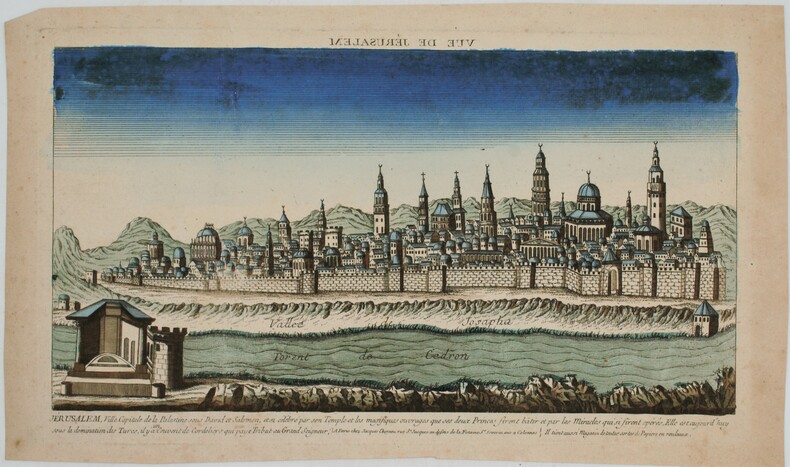
ref. gra1Mvue d'optique 32,5 cm /47 cm (cuvette42/29,3 cm) restaurée (nettoyée par un excellent restaurateur . gravure en TBE ,aquarellée d'époque ,superbe ! nos envois sont soignés en France et dans le monde.
1900ref. A119Paris, s.e., s.d. (vers 1900) ; 310/460 mm, 1 pp., une feuille. Vue coloriée d'époque et encadrée. La tour de Nesle, aujourd'hui disparue, était une des tours d'angle de coin de l'ancienne enceinte de Paris, dite enceinte de Philippe Auguste, construite par Philippe II Auguste au début du XIIIe siècle. Elle était située à l'emplacement actuel du pavillon ouest de la bibliothèque Mazarine. Bon état.
1900Paris, s.e., s.d. (vers 1900); 310/460 mm, 1 pp., une feuille. Vue coloriée d'époque et encadrée. La tour de Nesle, aujourd'hui disparue, était une des tours d'angle de coin de l'ancienne enceinte de Paris, dite enceinte de Philippe Auguste, construite par Philippe II Auguste au début du XIIIe siècle. Elle était située à l'emplacement actuel du pavillon ouest de la bibliothèque Mazarine. Bon état.
ref. PHO-1298Vue d'optique originale , en colories d’époque , dimension de feuille 450x274mm , de l’impression 410x242mm, titre à l’envers ,verso blanc .
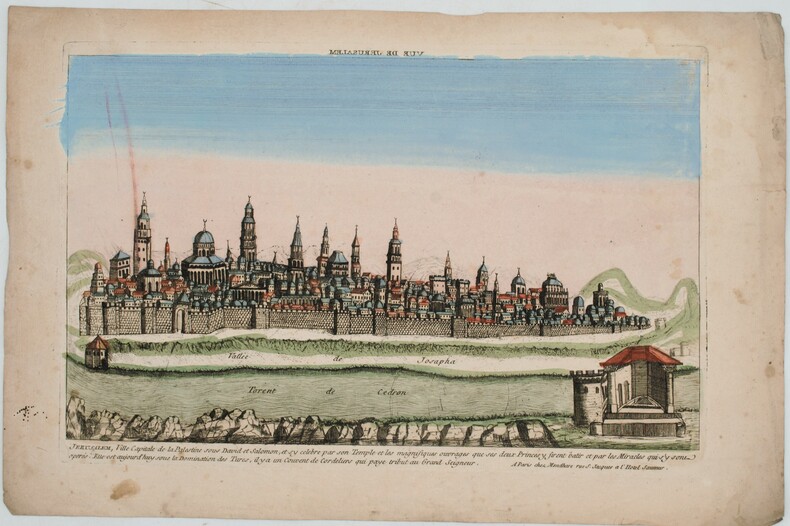
ref. PHO-129918eme ,Vue d'optique originale , en colories d’époque , dimension de feuille 495x330mm , de l’impression 415x280mm, titre à l’envers ,verso blanc , petites taches .
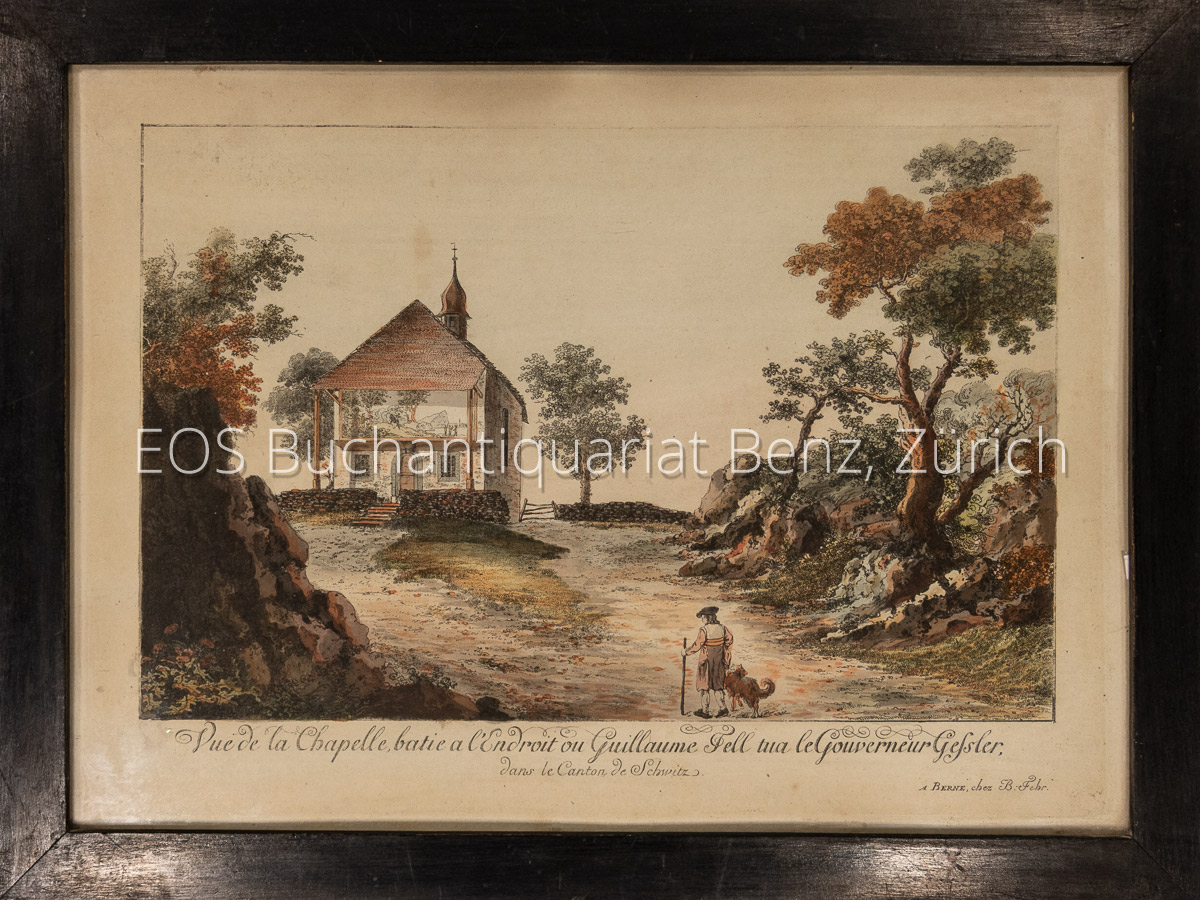
1783ref. 943CGBern, Chez B. Fehr, um 1783. Kol. Radierung. Plattengrösse: 25 x 34 cm. + Wichtig: Für unsere Kunden in der EU erfolgt der Versand alle 14 Tage verzollt ab Deutschland / Postbank-Konto in Deutschland vorhanden +, A
1783ref. 943CGBern, Chez B. Fehr, um 1783. Kol. Radierung. Plattengrösse: 25 x 34 cm.
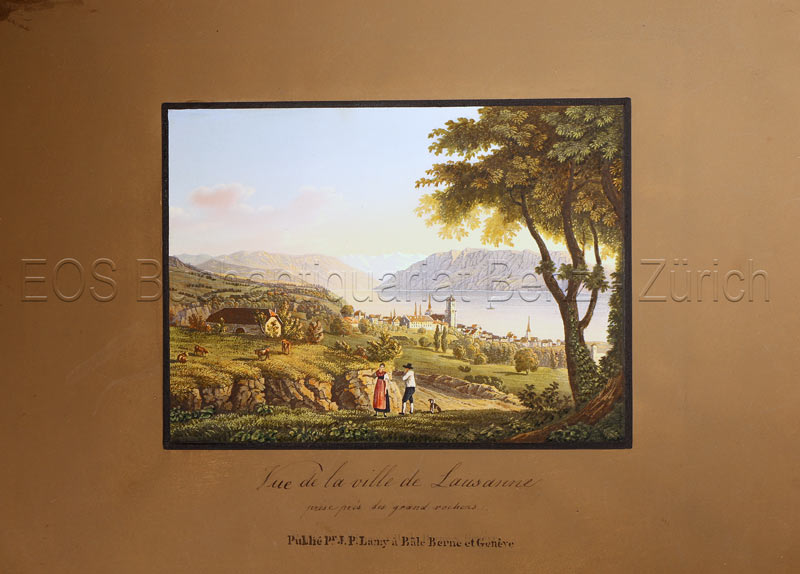
1820ref. 778CGBâle, Berne et Genève, Publié par J. P. Lamy, um 1820. Altkolorierte Aquatinta. Bildgrösse: 11,8 x 16 cm. Blattgrösse: 19,8 x 27, 3 cm. + Wichtig: Für unsere Kunden in der EU erfolgt der Versand alle 14 Tage verzollt ab Deutschland / Postbank-Konto in Deutschland vorhanden +, Abb.
1820ref. 778CGBâle, Berne et Genève, Publié par J. P. Lamy, um 1820. Altkolorierte Aquatinta. Bildgrösse: 11,8 x 16 cm. Blattgrösse: 19,8 x 27, 3 cm.
1750Paris, s.e., s.d. (vers 1750); 165/175 mm, 1 pp., une feuille. Vue provenant certainement d'un ouvrage de voyage du XVIIIème siècle. Bon état.
1750ref. A172Paris, s.e., s.d. (vers 1750) ; 165/175 mm, 1 pp., une feuille. Vue provenant certainement d'un ouvrage de voyage du XVIIIème siècle. Bon état.
ref. 5441Très belle vue des jardins de Versailles : on y voit au milieu d’arbres magnifiques, des courtisans se promener, se saluer, admirer les parterres et le bassin ...Très bon état, dans un cadre ancien. Très bon 40,5 x 55,5 (sujet) 51 x 64 (cadre)
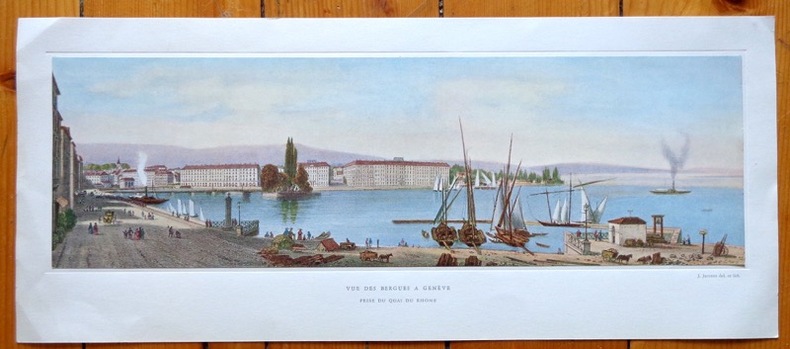
ref. 641Jolie reproduction d'une vue de Genève au format 42 x 18 cm (feuille), légendée, contrecollée dans une cuvette. Légères traces de pli aux coins.
1809ref. 274131809 Eau-forte- juin 1809 - Dimensions - Coup de planche: Hauteur : 23.5 cmx Largeur : 28.6 cmDimensions - Oeuvre: Hauteur : 25.2 cmx Légende - Au centre sous l'eau forte : "VUE DU BASSIN DU NOUVEAU CANAL DE L'OURQ / PRISE SUR LE PREMIER PONT A BASCULE / en face de la Rotonde et de la Barrière de la Villette." Signature - Sous l'eau forte à gauche : "Toussaint del". Signature - Sous l'eau forte à droite : "Chapuy sculp".
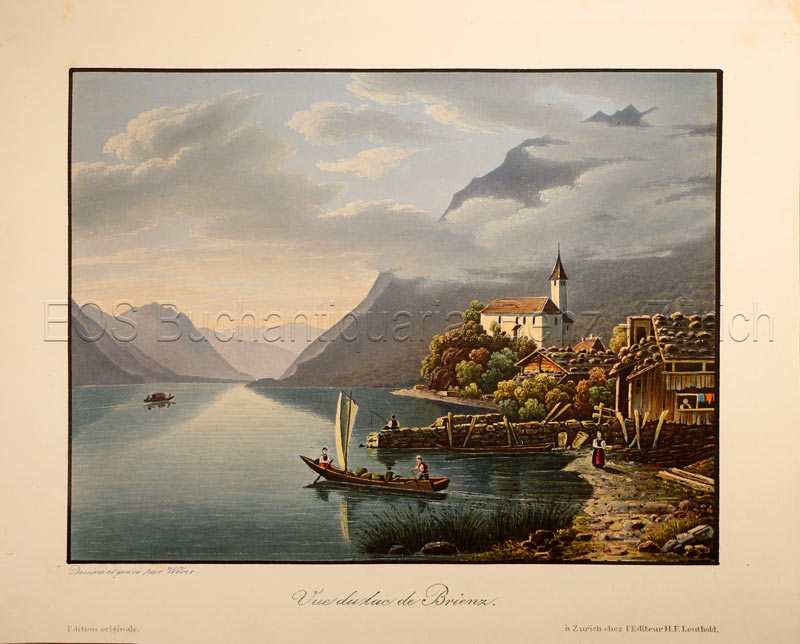
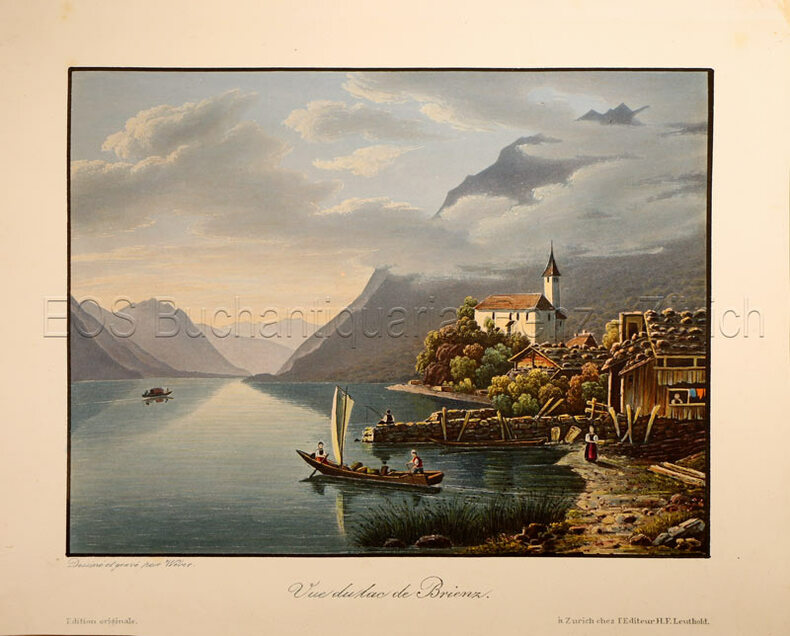
1840ref. 781CGZürich, H. F. Leuthold, um 1840. Altkolorierte Aquatinta von Lukas Weber. Bildgrösse: 13 x 17,3 cm. Blattgrösse: 17,1 x 21,5 cm. + Wichtig: Für unsere Kunden in der EU erfolgt der Versand alle 14 Tage verzollt ab Deutschland / Postbank-Konto in Deutschland vorhanden +, Abb.
1840ref. 781CGZürich, H. F. Leuthold, um 1840. Altkolorierte Aquatinta von Lukas Weber. Bildgrösse: 13 x 17,3 cm. Blattgrösse: 17,1 x 21,5 cm.
ref. 18175Imprimé par LEMERCIER,sur chine colle,22x13,3 cm,marge encadree d’un filet,bon etat
ref. 27416Taille-douce du 18è siècle attribuée à Perelle chez de Poilly.bon tirage en noir, 30,5 X 21,5 cm. Légère pliure en coin, sinon très bon état.
1900Paris, s.e., s.d. (vers 1900); 310/460 mm, 1 pp., une feuille. Vue coloriée d'époque et encadrée. Bon état.
1900ref. A120Paris, s.e., s.d. (vers 1900) ; 310/460 mm, 1 pp., une feuille. Vue coloriée d'époque et encadrée. Bon état.
1873ref. 258801873 Henri Charpentier, Paris, 1873. une feuille In-folio ,bon état
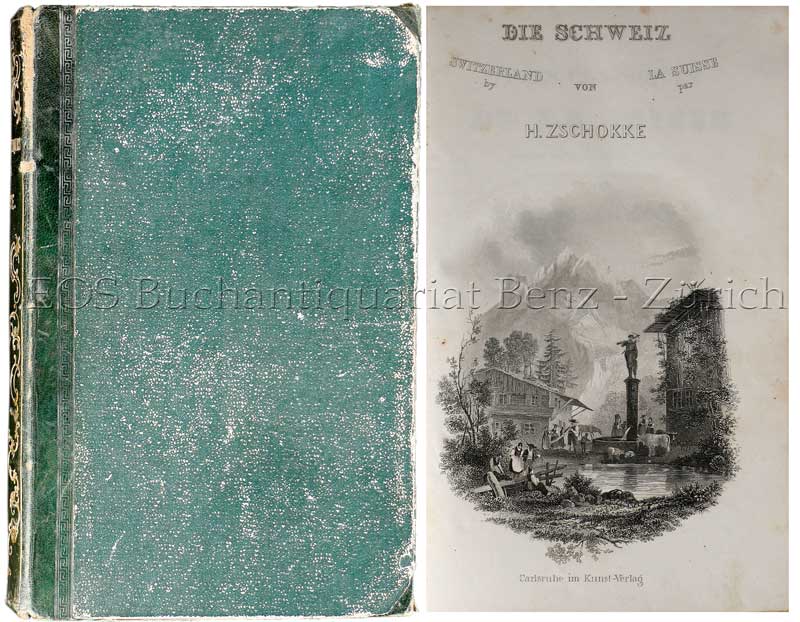
1838ref. 1174BB2 Bde. in 1 Bd. Karlsruhe, W. Creuzbauer, 1838. 8°. (1) Bl., (8), XVI, 176 S.; (4), 184 S. Mit 1 gest. Titel u. 80 (v. 82) gest. Tafeln von Henry Winkles u.a. nach Gustav Adolph Müller. Halblederbd. d. Zt. mit reicher Rückenvergoldung (berieben u. bestossen).
1838ref. 1174BBKarlsruhe, W. Creuzbauer, 1838. 8°. (1) Bl., (8), XVI, 176 S.; (4), 184 S. Mit 1 gest. Titel u. 80 (v. 82) gest. Tafeln von Henry Winkles u.a. nach Gustav Adolph Müller. Halblederbd. d. Zt. mit reicher Rückenvergoldung + Wichtig: Für unsere Kunden in der EU erfolgt der Versand alle 14 Tage verzollt ab Deutschland / Postbank-Konto in Deutschland vorhanden +, 1174B 2 Bde. in 1 Bd. (berieben u. bestossen).