10.930 resultados
2018ref. ABE-1675259210036Strange Attractor Press London 2018 This is a truly odd listing. It is easy to understand at one level. It has a powerful impact. It will set you thinking. It is also a truly original take on an historical theme. Ian Johnstone worked on this odd and fascinating collection. It is VERY odd; it is possibly unique. The wounds all twenty three of them were inspired by this artist's conception of how each stab was wielded and delivered upon Julius Caesar. An attempt to describe it sounds pretentious but with this strange book in your hands you can look and share something of this odd vision. Each was produced on - I believe - white melamine. The wounds are rendered in red pigment or ink. One of them is featured on the shiny white cover. It is an image inset into a blind stamped shape. The images inside are all in keeping with the cover and one can speculate; is this Brutus's mark And can that be yon Cassius's lean and hungry blade Was this how each wound appeared upon the toga of JC Speculate as you wish and contemplate them in whatever order you like. They are all worth a look and you will have seen nothing so strange before. And there are some photographs of the artist at the back by Kerry and Daniel O'Sullivan. Geoff Cox and Serena Korda have written the text. This is hard to describe and easy to look at. It is wondrous strange. It is peculiar.On the back cover it says '23 hawk beaks 23 fragments of a skull 23 curses hung round the neck of a scavenger.' And there are only 300 copies in the whole wide world of this book and it might be a masterpiece. It is not signed or numbered but the publisher insists only 300 copies exist. There is also a cassette of special music. YES! A cassette. The loose prints are ready to frame and the whole package is something very special indeed. Limited Edition. Hardcover. New. Strange Attractor Press London hardcover
1987A clean, unmarked book with a tight binding. Full white cloth boards. Slight edge wear to cover. 448 pages.
1893pp. xii, 99, 13 [Price List of Tissue and Materials Used in the Production of Permanent Photographs], 19 [Abridgement of the Autotype Company's Fine Art Catalogue], (1) [Press Notices] + Autotype Frontis. Frontis worn with loss at bottom corner margin. Lacks second illustration. Title page soiled. Page xi torn without loss. Old damp staining at top margins. Fly leaves penciled scribbled. Tipped in order and telegraph directions printed in red. Top edge gold gilt. 12mo. 175 mm. Original full cloth binding, lettered and decorated in gold. Extremities rubbed with loss. Binding worn. Revised Edition. Hardbound. Very good. Autotypes were a commercial photographic process for producing excellent prints, in mostly monochrome, using a carbon pigment. W103 RtStack
1787ref. 269371787 [Paris] : [s.n.], 1787- 1 est. : eau-forte, outils, colorié à main levée ; 8,7 x 5,3 cm (tr. c.) Appartient à : Tableaux de la Fable ; ou Nouvelle Histoire poétique des Dieux ; Demi-Dieux et Héros de la Fable, représentée par figures et accompagnée d'explications Dédiés à Madame la Comtesse de Genli- GRASSET DE SAINT-SAUVEUR (J.) et MARECHAL (Sylvain)- 1785
1834ref. 251291834 Heads of expressions Charles Joseph Traviès de Villers, dit Traviès (1804-1859). Caricature de presse. "Têtes d’expressions".PL.412 Planche parue dans "La Caricature" du 14 août 1834. Lithographie. Dimensions: 260 mm X 340 mm - SUR PAPIER BLANC,pli central
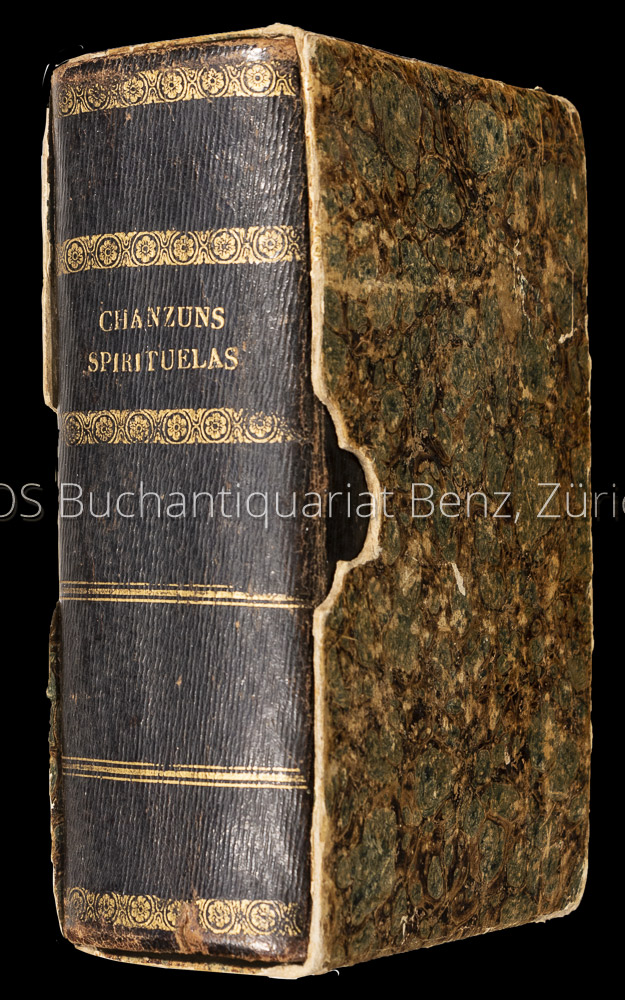
1789ref. 6848CBCellerina, Giuseppe Bistzi, 1789. 8°. (12) Bl., 1047, (9) S. Lederband der Zeit in zeitgenössischem Halbschuber. + Wichtig: Für unsere Kunden in der EU erfolgt der Versand alle 14 Tage verzollt ab Deutschland / Postbank-Konto in Deutschland vorhanden +, A|B|C [3 Warenabbildungen]
1789ref. 6848CBCellerina, Giuseppe Bistzi, 1789. 8°. (12) Bl., 1047, (9) S. Lederband der Zeit in zeitgenössischem Halbschuber.
1947Litografia originale numerata e firmata a matita dall'Artista. Una delle prime litografie di Guttuso (n. 5 del catalogo Renato Guttuso, Opera Grafica a cura di Paolo Bellini, Club Amici dell'Arte Editore, Milano 1978) Opera allegata al n. 11 (gennaio 1949) della rivista L'Immagine, diretta da Cesare Brandi, pubblicata a Roma dal maggio 1947 al dicembre 1950. L'edizione speciale di ogni numero della rivista conteneva sciolta una o più incisioni originali in tiratura di 50 esemplari di cui 30 in numerazione araba dedicate ad personam e XX in numerazione romana. La presente incisione reca il numero 15/30 ed era allegata alla copia della rivista dedicata a Riccardo Gualino. Cm 21x15 (Foglio 24,8x17,2). . . Ottimo (Fine). . Prima ed. di 1000 es. numerati e firmati dall'A.. .
ref. 66428unknown
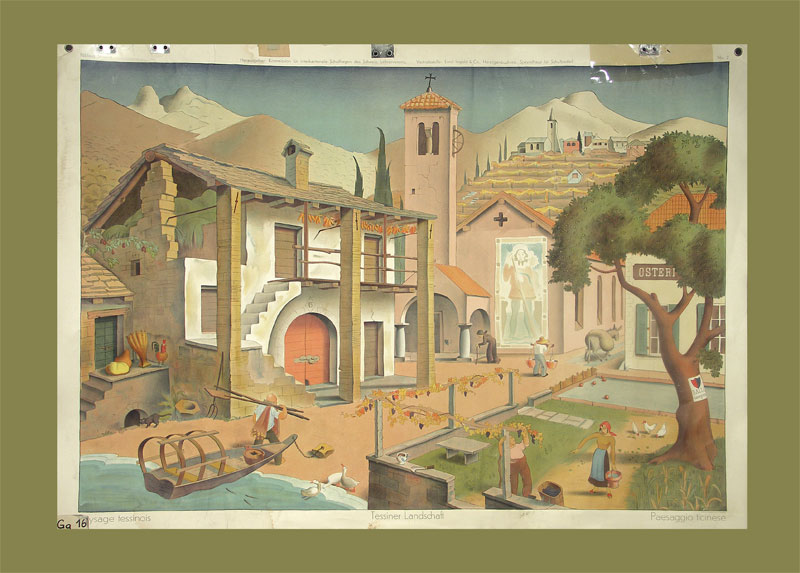
1935ref. 583CGBasel, Wassermann, o.J. (um 1935). Farblithographie. Bildformat: 65 x 90 cm. + Wichtig: Für unsere Kunden in der EU erfolgt der Versand alle 14 Tage verzollt ab Deutschland / Postbank-Konto in Deutschland vorhanden +, 583CG
1935ref. 583CGBasel, Wassermann, o.J. (um 1935). Farblithographie. Bildformat: 65 x 90 cm.
19268vo., First Edition thus, with engraved frontispiece, 40 engravings (a number full-page) and large folding map; elegantly bound in full dark green crushed morocco, sides with gilt frame border, back with raised bands, second and fourth compartments lettered and ruled in gilt, all other compartments tooled in gilt, gilt edges, gilt doublures, hand-made endpapers, ribbon marker, in custom-made marbled slip-case, an elegant copy ideal as a gift or for presentation. navy buckram, gilt back, bevelled boards, gilt top, covers very lightly age-soiled. backstrip sunned (but all gilt wholly legible) else a very good, bright, clean copy. EDITION LIMITED TO 1500 COPIES. Printed from the plates of Macmillan's definitive Wessex Edition and so including both the expanded Preface of 1912 and the episode of the dance at the hay-trusser's (pp.76-79) present there for the first time. See Purdy p.77.
19268vo., First Edition thus, with engraved frontispiece, 40 engravings (a number full-page) and large folding map, neat contemporary signatures on front paste-down; original navy buckram, bevelled boards, gilt back, gilt top, uncut, boards very lightly age-marked, backstrip mildly faded (but all gilt wholly legible), a bright, clean, crisp copy. EDITION LIMITED TO 1500 COPIES. With the trade ticket of Gilbert of Southampton on front paste-down. Printed from the plates of Macmillan's definitive Wessex Edition and so including both the expanded Preface of 1912 and the episode of the dance at the hay-trusser's (pp.76-79) present there for the first time. See Purdy p.77.
1924- Lucien Vogel éditeur, Paris 1924-1925, 18x24cm, une feuille. - Original color print, printed on vergé paper, signed in the plate. An original print used to illustrate the Gazette du bon ton, one of the most attractive and influential 20th century fashion magazines, featuring the talents of French artists and other contributors from the burgeoning Art Deco movement. A celebrated fashion magazine established in 1912 by Lucien Vogel, La Gazette du bon ton appeared until 1925, with a hiatus from 1915 to 1920 due to the war (the editor-in-chief having been called up for service). It consisted of 69 issues printed in only 2,000 copies each and notably illustrated with 573 color plates and 148 sketches of the models of the great designers. Right from the start, this sumptuous publication "was aimed at bibliophiles and fashionable society," (Françoise Tétart-Vittu, "La Gazette du bon ton", in Dictionnaire de la mode, 2016) and was printed on fine vergé paper using a type cut specially for the magazine by Georges Peignot, known as Cochin, later used (in 1946) by Christian Dior. The prints were made using stencils, heightened in colors, some highlighted in gold or palladium. The story began in 1912, when Lucien Vogel, a man of the world involved in fashion (he had already been part of the fashion magazine Femina) decided, with his wife Cosette de Brunhoff - the sister of Jean, creator of Babar - to set up the Gazette du bon ton, subtitled at the time: "Art, fashion, frivolities." Georges Charensol noted the reasoning of the editor-in-chief: "'In 1910,' he observed, 'there was no really artistic fashion magazine, nothing representative of the spirit of the time. My dream was therefore to make a luxury magazine with truly modern artists...I was assured of success, because when it comes to fashion, no country on earth can compete with France.'" ("Un grand éditeur d'art. Lucien Vogel" in Les Nouvelles littéraires, no. 133, May 1925). The magazine was immediately successful, not only in France but also in the United States and Latin America. At first, Vogel put together a team of seven artists: André-Édouard Marty and Pierre Brissaud, followed by Georges Lepape and Dammicourt, as well as eventually his friends from school and the School of Fine Arts, like George Barbier, Bernard Boutet de Monvel and Charles Martin. Other talented people soon came flocking to join the team: Guy Arnoux, Léon Bakst, Benito, Boutet de Monvel, Umberto Brunelleschi, Chas Laborde, Jean-Gabriel Domergue, Raoul Dufy, Édouard Halouze, Alexandre Iacovleff, Jean Émile Laboureur, Charles Loupot, Chalres Martin, Maggie Salcedo. These artist, mostly unknown when Lucien Vogel sought them out, later became emblematic and sought-after artistic figures. It was also they who worked on the advertising drawings for the Gazette. The plates put the spotlight on, and celebrate, dresses by seven designers of the age: Lanvin, Doeuillet, Paquin, Poiret, Worth, Vionnet and Doucet. The designers provided exclusive models for each issue. Nonetheless, some of the illustrations are not based on real models, but simply on the illustrator's conception of the fashion of the day. The Gazette du bon ton was an important step in the history of fashion. Combining aesthetic demands with the physical whole, it brought together - for the first time - the great talents of the artistic, literary, and fashion worlds; and imposed, through this alchemy, a completely new image of women: slender, independent and daring, which was shared by the new generation of designers, including Coco Chanel, Jean Patou, Marcel Rochas, and so on... Taken over in 1920 by Condé Montrose Nast, the Gazette du bon ton was an important influence on the new layout and aesthetics of that "little dying paper" that Nast had bought a few years earlier: Vogue. [FRENCH VERSION FOLLOWS] Estampe originale en couleur, tirée sur papier vergé, signée en haut à gauche de la planche. Gravure originale réalisée pour l'illustration d
1924ref. 55198Lucien Vogel éditeur | Paris 1924-1925 | 18 x 24 cm | une feuille
1780Gestochene Kupferplatte (118:66 mm). Kupferplatte mit zwei Andachtsbildchen: das Minoritenwappen (ein bloßer und ein kuttentragender Arm mit Stigmata vor einem Kreuz, von einem Strick umkränzt) sowie der Hl. Franziskus, kniend und die Stigmata empfangend. Unter der letzteren Darstellung findet sich die Legende, die auf den schon 1221 begründeten Dritten Orden der Franziskaner hinweist.
2002ref. 012914NY: Two Palms Pess 2002. 1st Edition. Soft cover. Near Fine. Portfolio of reproductions of 12 wood engravings 13 loose sheets with Winter's images on the left side of the sheet and Tallman's writings on the right. Some rubbing to title page else near fine. Two Palms Pess unknown books
2002ref. 012914NY: Two Palms Pess 2002. 1st Edition. Soft cover. Near Fine. Portfolio of reproductions of 12 wood engravings 13 loose sheets with Winter's images on the left side of the sheet and Tallman's writings on the right. Some rubbing to title page else near fine. Two Palms Pess unknown
Cartella con 6 acqueforti originali, numerate e firmate (da cm 12,5x18,5 a 23,5x29,5), tirate a braccia con torchio a stella nella stamperia del lanzello. Una poesia di Angelo Mistrangelo. Presentazione di Pierluigi Sacco Botto . Folio (cm 54x39). . . Ottimo (Fine). . Edizione originale di 30 es. numerati. .
Linoleumgrafia dalla cartella ''Terra tonda africana'' Firma, data e numerazione a matita. Stampatore: Giorgio Upiglio, Grafica Uno, Milano. Stampa su carta Duchene. Timbri a secco dello stampatore e dell'Artista. Esemplare IV/VIII. cm 29,7x39,7 (Foglio cm 38x50). . . Perfetto (Mint). . Tiratura 30 + VIII esemplari. .
Linoleumgrafia dalla cartella ''Terra tonda africana'' Firma, data e numerazione a matita. Stampatore: Giorgio Upiglio, Grafica Uno, Milano. Stampa su carta Duchene. Timbri a secco dello stampatore e dell'Artista. Esemplare IV/VIII. cm 31,4x39,5 (Foglio cm 38x50). . . Perfetto (Mint). . Tiratura 30 + VIII esemplari. .
Linoleumgrafia dalla cartella ''Terra tonda africana'' Firma, data e numerazione a matita. Stampatore: Giorgio Upiglio, Grafica Uno, Milano. Stampa su carta Duchene. Timbri a secco dello stampatore e dell'Artista. Esemplare I/VIII. cm 29,7x40 (Foglio cm 38x50). . . Perfetto (Mint). . Tiratura 30 + VIII esemplari. .
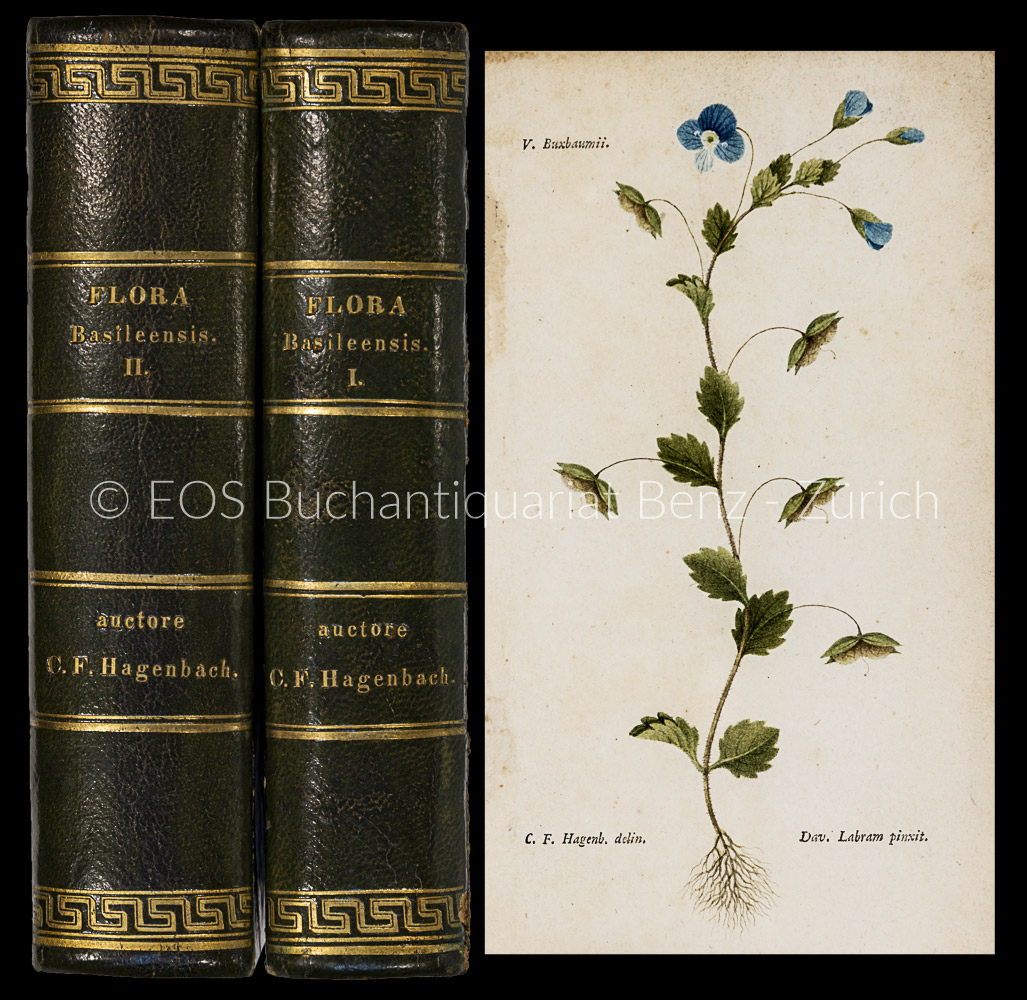
1821ref. 4145BBBasel, J. Georg Neukirch, 1821 u. 1834. 8°. XVIII, 450 (2) S.; VIII, 537 (1) S. Mit 2 kol. gest. Tafeln von Labram. Halblederbände der Zeit mit floraler Rückenvergoldung u. goldgepr. Rückenschildchen. + Wichtig: Für unsere Kunden in der EU erfolgt der Versand alle 14 Tage verzollt ab Deutschland / Postbank-Konto in Deutschland vorhanden + 2 Bände.
1821ref. 4145BB2 Bände. Basel, J. Georg Neukirch, 1821 u. 1834. 8°. XVIII, 450 (2) S.; VIII, 537 (1) S. Mit 2 kol. gest. Tafeln von Labram. Halblederbände der Zeit mit floraler Rückenvergoldung u. goldgepr. Rückenschildchen.
1821ref. 40532DBBasel, J. Georg Neukirch, 1821?1843. 8°. XVIII, 450 S., 1 Bl.; VIII, 537 S; 2 Bl, 220 S. Mit einem gestochenen Portrait im ersten Band, 2 kol. lithograph. Tafeln in Band eins und einer lithograph., kol. Tafel im Supplement von Labram. Grüne Halblederbände aus der Zeit mit klassizistischer Rückenvergoldung. + Wichtig: Für unsere Kunden in der EU erfolgt der Versand alle 14 Tage verzollt ab Deutschland / Postbank-Konto in Deutschland vorhanden +, A|B 2 Bände + Supplement in 2 Bänden. [2 Warenabbildungen]