No AuthorMareMagnum

10.940 resultados
200782 pages in oblong format, all color prints with text by the Director: Michael Monroe, Curator Stafano Catalani, two commentaries by Viet Thanh Nguyen & Moira Roth & an interview with the artist. Biography,checklist of the exhibition. Dust jacket shows slight scuffing.
1930ref. 92961930 Paris, Drouot, 17 novembre 1930. Un cahier in-8 broché, couverture verte, 13 pp., illustrations en n&b. Bon état.
1670ref. 42444Paris, Imprimerie royale, 1670. 2 parties en 1 vol. grand in-folio (550 x 410 mm) de (8)-43 pp., 1 f.bl., titre frontispice et titre gravé, 16 emblèmes gravés dans le texte, 4 planches sur double page, 47-(1) pp., titre gravé, 16 emblèmes gravés dans le texte, 4 planches sur double page, veau brun granité, dos à nerfs orné de chiffres couronnés, triple filet doré d’encadrement sur les plats, armes frappées or au centre, frise sur les coupes, tranches jaspées (reliure de l’époque).
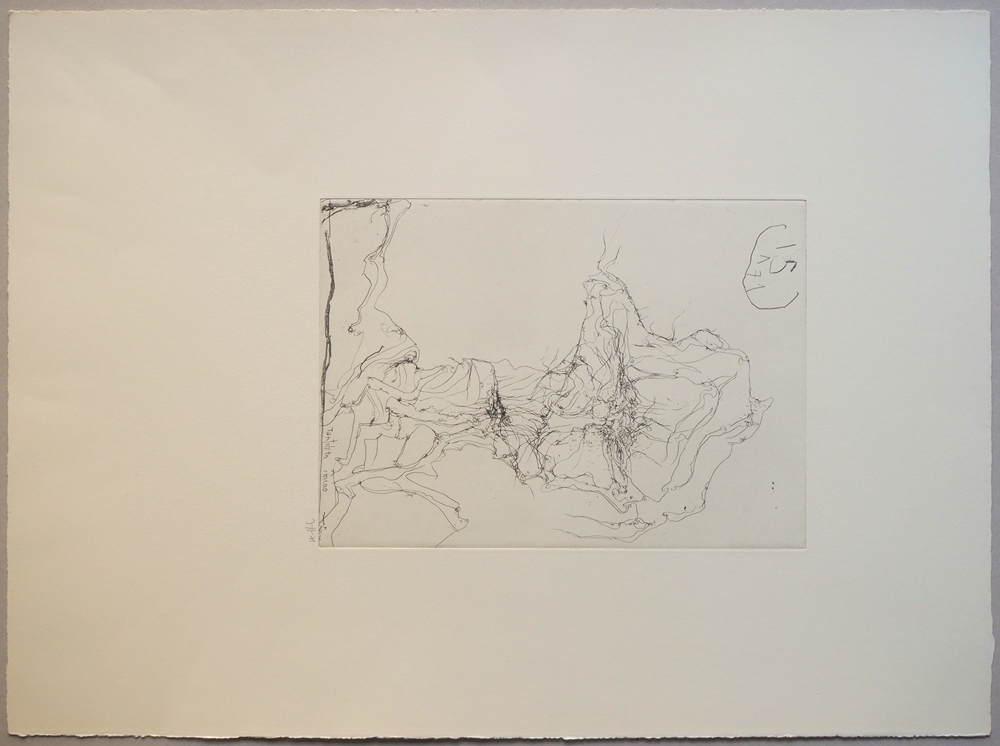
1971ref. 88114Hamburg, Edition Griffelkunst, 1971. Plattenmaß 24,4 x 18,9; Bogenmaß 53 X 39,5 cm.
ref. 500298151Sans date.
ref. 64498Hamburg B. S. Berendsohn ca. 1850. . Zwei Trommler in voller Uniform mit Tschako Schärpe u. Degen sowie umgehängten Trommeln u. je 2 Schlegeln in den Händen. Der links Stehende mit blaugoldenen Epauletten u Kragen die Hose mit blauem Seitenstreifen seine Trommel oben u. unten mit blauem Rand; der Rechte mit den gleichen Attributen in Rot. - Zu dem Maler u. Lithographen Heinrich Jessen um die Mitte des 19. Jahrhunderts in Hamburg tätig der vor allem Darstellungen des Großen Brandes sowie Trachten- u. Militärbilder lieferte siehe Der Neue Rump S. 212. - Blatt zu den Rändern hin winzig braunfleckig [Hamburg], B. S. Berendsohn, [ca. 1850. unknown
ref. 64014Hamburg B. S. Berendsohn ca. 1850. . Der "Kapellmeister" in vollem Ornat mit goldenen Epauletten hohem Federbusch auf dem Tschako Silberschärpe u. Degen u. dem langen mit Silberknauf u. Troddeln geschmückten "Taktstock". - Zu dem Maler u. Lithographen Heinrich Jessen um die Mitte des 19. Jahrhunderts tätig der vor allem Darstellungen des Großen Brandes sowie Trachten- u. Militärbilder lieferte siehe Der Neue Rump S. 212. - Blatt zu den Rändern hin begriffen mäßig braunfleckig [Hamburg], B. S. Berendsohn, [ca. 1850. unknown
1970Litografia Firma e numerazione a matita. Carta delle Cartiere Filicarta. Esemplare 37/40. Cm 50x70. . . Ottimo (Fine). . Tiratura: 40. .
ref. 1332738753.Gpaperback. Good. Access codes and supplements are not guaranteed with used items. May be an ex-library book. paperback
1884ref. 34050Paris: J. Lemonnyer Publisher 1884 Two-Volume Set in publisher's gilt-stamped navy cloth no markings NOT ex-lib t.e.g. binding tight rough cut pages bright & unfoxed all of the wonderful Eisen illustrations present & tissue-guarded offsetting to endpapers light shelf/edge wear with only lightly bumped corners & softening to spine ends else a clean tight exemplary set of a beautiful edition; Text in English; 2 royal 8vos: xvi 252 xii 334pp illus. Extra shipping charge REQUIRED for shipment of this heavy set additional charge MAY BE SUBSTANTIAL for shipment outside the United States. First Edition. Hard Cover. Very Good. Paris: J. Lemonnyer, Publisher hardcover
1884ref. 1123979Paris Fra: J. Lemonnyer 1884. Hardcover. Very Good/No Jacket. Green cloth boards with gold-gilt type to spines 23 cm each volume 252 pages Volume One 334 pages Volume Two. With 85 engravings by Eisen. Japan paper edition. A very good set. Previous owner's bookplates on front endpaper of each volume. J. Lemonnyer hardcover
1993ref. 21669ABGlarus, Tschudi, 1993. 4°. 208 Seiten. Mit 61 farbigen und 29 s/w ganzseitigen Abbildungen. Orig. Leinen mit Schutzumschlag. + Wichtig: Für unsere Kunden in der EU erfolgt der Versand alle 14 Tage verzollt ab Deutschland / Postbank-Konto in Deutschland vorhanden +
1993ref. 21669ABGlarus, Tschudi, 1993. 4°. 208 Seiten. Mit 61 farbigen und 29 s/w ganzseitigen Abbildungen. Orig. Leinen mit Schutzumschlag.
1913- Lucien Vogel éditeur, Paris Mai 1913, 19x24,5cm, une feuille. - Original color print, printed on vergé paper, signed in the plate. An original print used to illustrate the Gazette du bon ton, one of the most attractive and influential 20th century fashion magazines, featuring the talents of French artists and other contributors from the burgeoning Art Deco movement. A celebrated fashion magazine established in 1912 by Lucien Vogel, La Gazette du bon ton appeared until 1925, with a hiatus from 1915 to 1920 due to the war (the editor-in-chief having been called up for service). It consisted of 69 issues printed in only 2,000 copies each and notably illustrated with 573 color plates and 148 sketches of the models of the great designers. Right from the start, this sumptuous publication "was aimed at bibliophiles and fashionable society," (Françoise Tétart-Vittu, "La Gazette du bon ton", in Dictionnaire de la mode, 2016) and was printed on fine vergé paper using a type cut specially for the magazine by Georges Peignot, known as Cochin, later used (in 1946) by Christian Dior. The prints were made using stencils, heightened in colors, some highlighted in gold or palladium. The story began in 1912, when Lucien Vogel, a man of the world involved in fashion (he had already been part of the fashion magazine Femina) decided, with his wife Cosette de Brunhoff - the sister of Jean, creator of Babar - to set up the Gazette du bon ton, subtitled at the time: "Art, fashion, frivolities." Georges Charensol noted the reasoning of the editor-in-chief: "'In 1910,' he observed, 'there was no really artistic fashion magazine, nothing representative of the spirit of the time. My dream was therefore to make a luxury magazine with truly modern artists...I was assured of success, because when it comes to fashion, no country on earth can compete with France.'" ("Un grand éditeur d'art. Lucien Vogel" in Les Nouvelles littéraires, no. 133, May 1925). The magazine was immediately successful, not only in France but also in the United States and Latin America. At first, Vogel put together a team of seven artists: André-Édouard Marty and Pierre Brissaud, followed by Georges Lepape and Dammicourt, as well as eventually his friends from school and the School of Fine Arts, like George Barbier, Bernard Boutet de Monvel and Charles Martin. Other talented people soon came flocking to join the team: Guy Arnoux, Léon Bakst, Benito, Boutet de Monvel, Umberto Brunelleschi, Chas Laborde, Jean-Gabriel Domergue, Raoul Dufy, Édouard Halouze, Alexandre Iacovleff, Jean Émile Laboureur, Charles Loupot, Chalres Martin, Maggie Salcedo. These artist, mostly unknown when Lucien Vogel sought them out, later became emblematic and sought-after artistic figures. It was also they who worked on the advertising drawings for the Gazette. The plates put the spotlight on, and celebrate, dresses by seven designers of the age: Lanvin, Doeuillet, Paquin, Poiret, Worth, Vionnet and Doucet. The designers provided exclusive models for each issue. Nonetheless, some of the illustrations are not based on real models, but simply on the illustrator's conception of the fashion of the day. The Gazette du bon ton was an important step in the history of fashion. Combining aesthetic demands with the physical whole, it brought together - for the first time - the great talents of the artistic, literary, and fashion worlds; and imposed, through this alchemy, a completely new image of women: slender, independent and daring, which was shared by the new generation of designers, including Coco Chanel, Jean Patou, Marcel Rochas, and so on... Taken over in 1920 by Condé Montrose Nast, the Gazette du bon ton was an important influence on the new layout and aesthetics of that "little dying paper" that Nast had bought a few years earlier: Vogue. [FRENCH VERSION FOLLOWS] Estampe originale en couleur, tirée sur papier vergé, signée en bas à droite dans la planche. Gravure originale réalisée pour l'i
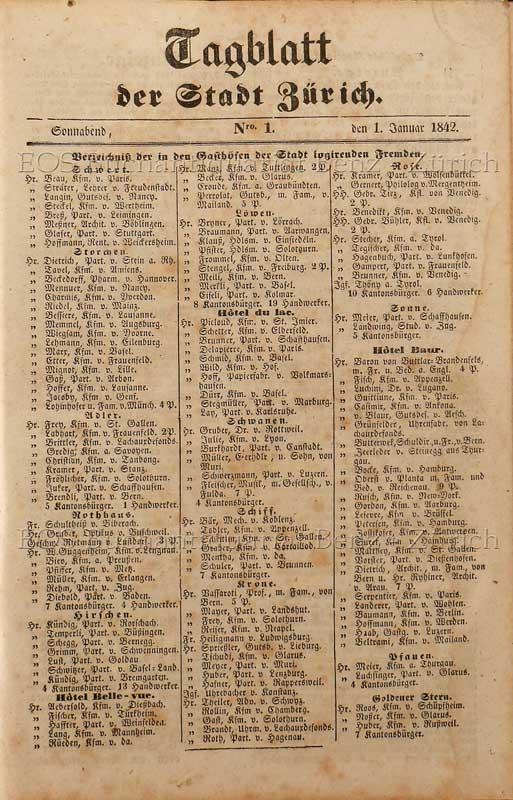
1842ref. 4818BBZürich, 1842. Lex-8°. 1908 (recte 1920) S. Mit wenigen Textillustrationen. Pappband d. Zt. mit handschriftl. Rückentitel. + Wichtig: Für unsere Kunden in der EU erfolgt der Versand alle 14 Tage verzollt ab Deutschland / Postbank-Konto in Deutschland vorhanden +, bild 357 (v. 365) Ausgaben in 1 Band.
ref. 0428064485.Gpaperback. Good. Access codes and supplements are not guaranteed with used items. May be an ex-library book. paperback
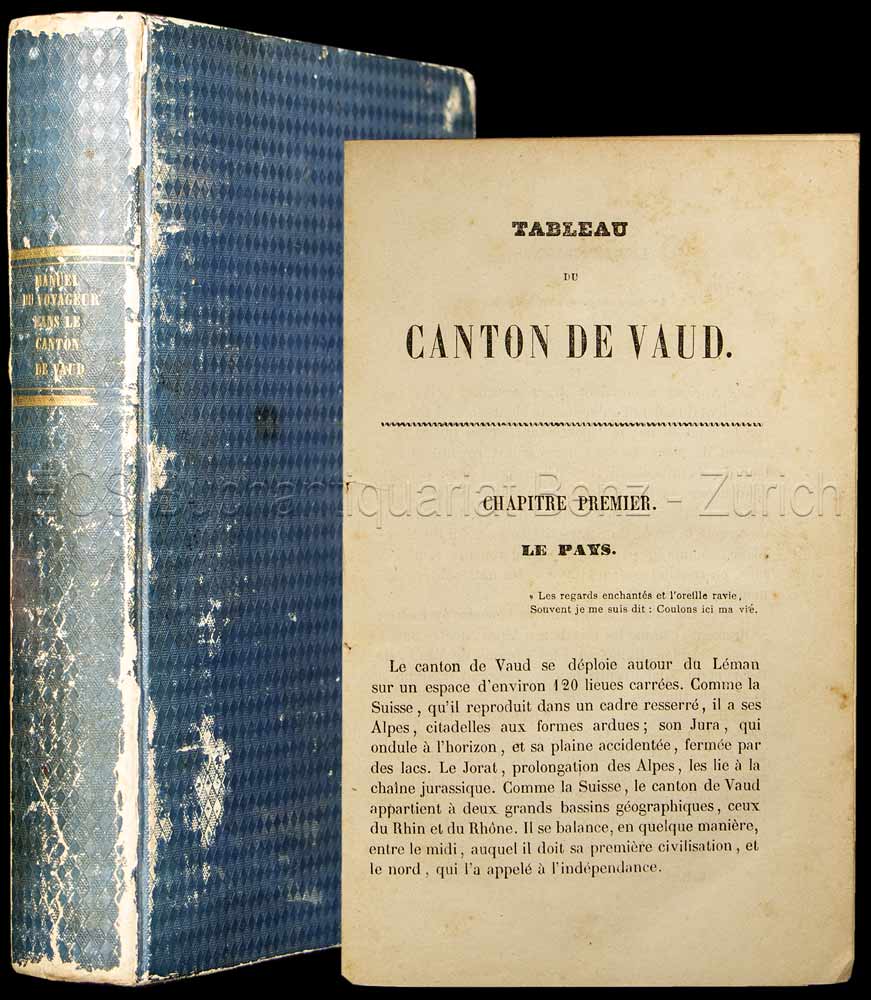
1849ref. 3747DB(Lausanne, 1849. 8°. 498 S. Pappband der Zeit. + Wichtig: Für unsere Kunden in der EU erfolgt der Versand alle 14 Tage verzollt ab Deutschland / Postbank-Konto in Deutschland vorhanden +, Abb.
1760ref. 19321760 Couverturerigide Dijon, François Desventes, 1760. Un volume in-24 étroit (11,5 x 6 cm), reliure plein maroquin lavallière de l’époque, plats ornés d’une riche plaque dorée, dos lisse orné de fleurons dorés, tranches dorées (DUBUISSON), charnières légèrement fendillées en pied. Frontispice, titre gravé, 13 feuillets non chiffrés, 198 pages, papier jauni. Huitième et dernière année parue. Le frontispice représente le portrait de Charles de Bourbon, prince de Condé, dans une composition allégorique gravée par Fessard d’après Saint-Aubin (SAFFROY 353). Conçu à la fois comme un guide pratique, un outil administratif et un précis de géographie locale, cet almanach propose une « Division générale de la Bourgogne » détaillant ses différentes contrées (Dijonnois, Autunois, Châlonnois, l'Auxerrois...), ses bailliages, ses cours d'eau (la Saône, l’Ouche, la Tille) et ses ressources. Véritable miroir de la société bourguignonne du XVIIIe siècle, il recense également les membres de la noblesse locale, le clergé, les parlements, ainsi que les foires et les aspects économiques de la région. Bon exemplaire dans une belle reliure.
1927ref. 92591927 Paris, Drouot, 19 novembre 1927. Un cahier in-8 broché, couverture jaune, 27 pp. et illustrations en n&b. Couverture tâchée, néanmoins bon état.
1925ref. 92601925 Paris, Drouot, 23 février 1925. Un cahier in-8 broché, couverture bleue, 32 pp. et illustrations en n&b. Couverture tâchée, néanmoins bon état.
1922ref. 92721922 Paris, Drouot, 17 février 1922. Un cahier in-8 broché, couverture bleue, 26 pp. et illustrations en n&b. Bon état.
1924ref. 92751924 Paris, Georges Petit, 26 juin 1924. Un cahier in-4 broché, couverture bleue, 13 pp. et illustrations en n&b. Bon état.
1927ref. 92771927 Paris, Drouot, 13 mai 1927. Un cahier in-8 broché, couverture beige, 48 pp. et illustrations en n&b. Bon état.
1932ref. 92811932 Paris, Drouot, 23 juin 1932. Un cahier in-8 broché, couverture beige, 32 pp. et illustrations en n&b. Bon état.
1921ref. 92831921 Paris, Drouot, 12 juin 1906. Un cahier in-8 broché, couverture beige, 30 pp. et illustrations en n&b. Couverture défraîchie.