VAN BROCK JanMareMagnum

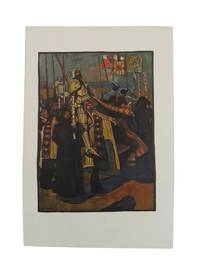
1913- s.n., Paris 1913, 14x22,5cm, une feuille. - Estampe originale en couleur, tirée sur papier vergé, signature en bas à droite de la planche. L'une des premières revues de mode françaises, parue quelques temps avant la fameuse Gazette du bon ton et réunissant les grands artistes français de la mouvance Art déco. Le Journal des dames et des modes est une revue trimensuelle de mode française illustrée créée en 1797. Sa publication est stoppée en 1839 avant d'être reprise en juin 1912 sous l'impulsion de Tommaso Antongini, le secrétaire, ami et biographe de Gabriele d'Annunzio. Elle disparaîtra en août 1914 à l'aube de la Première Guerre mondiale. La revue était tirée à 1279 exemplaires ce qui en fait, pour l'époque, une publication relativement confidentielle. Les 186 planches, d'une grande finesse, sont gravées sur papier fort puis coloriées au pochoir. Elles représentent, la majorité du temps, des femmes, mais aussi des hommes et des enfants. Les modèles ne sont pas, à la différence de ceux de la Gazette du bon ton dont la publication verra le jour quelques mois plus tard, ceux des couturiers de renom mais sont le fruit de l'imagination des illustrateurs eux-mêmes. Les pochoirs sont, la plupart du temps, exécutés par George Barbier, mais d'autres artistes collaborent à la revue : Léon Bakst, B. Berty, Bernard Boutet de Monvel, Roger Broders, Jan van Brock, Umberto Brunelleschi, H. Robert Dammy, Étienne Drian, Abel Faivre, Marie-Madeleine Franc-Nohain, Xavier Gosé, Paul Iribe, Kriegck, Victor Lhuer, Pierre Legrain, Charles Martin, Fernand Siméon, Ismael Smith, Armand Vallée et Gerda Wegener. Nombre de ces illustrateurs seront également associés à La Gazette du bon ton. Leurs travaux, emblématiques du mouvement Art déco, soulignent l'influence de l'orientalisme et des costumes des ballets russes tout en les inscrivant dans les activités quotidiennes des Français aisés de l'époque. Dès la préface du premier numéro de 1912, Anatole France déclare : « Au bout de soixante-quinze ans, il renaît. Il renaît par les soins de quelques esprits ingénieux et artistes. Il renaît pour les curieux (s'il en est encore) que ne contentent pas les journaux de modes tirés à plusieurs milliers et illustrés par la photographie. Et si les éditeurs nous rendent très exactement, dans son format, avec son papier, son impression, ses procédés de gravure et de coloris, le vieux classique des modes d'autrefois, c'est qu'ils entendent le continuer agréablement et devenir les classiques charmants de la mode d'aujourd'hui et de demain. » [ENGLISH DESCRIPTION ON DEMAND]
1914- s.n., Paris 1914, 14x22,5cm, une feuille. - Estampe originale en couleur, tirée sur papier vergé, signature en bas à droite de la planche. L'une des premières revues de mode françaises, parue quelques temps avant la fameuse Gazette du bon ton et réunissant les grands artistes français de la mouvance Art déco. Le Journal des dames et des modes est une revue trimensuelle de mode française illustrée créée en 1797. Sa publication est stoppée en 1839 avant d'être reprise en juin 1912 sous l'impulsion de Tommaso Antongini, le secrétaire, ami et biographe de Gabriele d'Annunzio. Elle disparaîtra en août 1914 à l'aube de la Première Guerre mondiale. La revue était tirée à 1279 exemplaires ce qui en fait, pour l'époque, une publication relativement confidentielle. Les 186 planches, d'une grande finesse, sont gravées sur papier fort puis coloriées au pochoir. Elles représentent, la majorité du temps, des femmes, mais aussi des hommes et des enfants. Les modèles ne sont pas, à la différence de ceux de la Gazette du bon ton dont la publication verra le jour quelques mois plus tard, ceux des couturiers de renom mais sont le fruit de l'imagination des illustrateurs eux-mêmes. Les pochoirs sont, la plupart du temps, exécutés par George Barbier, mais d'autres artistes collaborent à la revue : Léon Bakst, B. Berty, Bernard Boutet de Monvel, Roger Broders, Jan van Brock, Umberto Brunelleschi, H. Robert Dammy, Étienne Drian, Abel Faivre, Marie-Madeleine Franc-Nohain, Xavier Gosé, Paul Iribe, Kriegck, Victor Lhuer, Pierre Legrain, Charles Martin, Fernand Siméon, Ismael Smith, Armand Vallée et Gerda Wegener. Nombre de ces illustrateurs seront également associés à La Gazette du bon ton. Leurs travaux, emblématiques du mouvement Art déco, soulignent l'influence de l'orientalisme et des costumes des ballets russes tout en les inscrivant dans les activités quotidiennes des Français aisés de l'époque. Dès la préface du premier numéro de 1912, Anatole France déclare : « Au bout de soixante-quinze ans, il renaît. Il renaît par les soins de quelques esprits ingénieux et artistes. Il renaît pour les curieux (s'il en est encore) que ne contentent pas les journaux de modes tirés à plusieurs milliers et illustrés par la photographie. Et si les éditeurs nous rendent très exactement, dans son format, avec son papier, son impression, ses procédés de gravure et de coloris, le vieux classique des modes d'autrefois, c'est qu'ils entendent le continuer agréablement et devenir les classiques charmants de la mode d'aujourd'hui et de demain. » [ENGLISH DESCRIPTION ON DEMAND]
réf. 20576882A Jullien Geneve 1929 . 21.0 x 15.0cms 148pp 5 b/w woodblock prints very good hardback with elegant leather spine & alligator skin leather boards The tables des matieres: jeunesse au visage inquiet; o vie humaine simple vie.; galerie de cire; offraqnde; le retraite sereine. A Jullien Geneve 1929 hardcover
1998Oblong format exhibition catalog for a show held at the publisher's gallery. Book ( 12" x 8") is in excellent condition, exterior shows no blemishes, text/interior is clean and free of marking of any kind. 36 pages with text to page 14, the remainder plates with multiple full color, full page prints by the artist.
1998Oblong format exhibition catalog for a show held at the publisher's gallery. Book ( 12" x 8") is in excellent condition, exterior shows no blemishes, text/interior is clean and free of marking of any kind. 36 pages with text to page 14, the remainder plates with multiple full color, full page prints by the artist.
1998Oblong format exhibition catalog for a show held at the publisher's gallery. Book ( 12" x 8") is in excellent condition, exterior shows no blemishes, text/interior is clean and free of marking of any kind. 36 pages with text to page 14, the remainder plates with multiple full color, full page prints by the artist.
1998Oblong format exhibition catalog for a show held at the publisher's gallery. Book ( 12" x 8") is in excellent condition, exterior shows no blemishes, text/interior is clean and free of marking of any kind. 36 pages with text to page 14, the remainder plates with multiple full color, full page prints by the artist.
1997Book is in excellent condition. Binding is solid and square, covers have sharp corners, exterior shows a few small marks, text/interior is clean and free of marking of any kind. 194 pages; Approx. 64 full page color plates. Accompanied a traveling exhibition organized by the British Council and the Hirshhorn Museum, which appeared there and at the Hirshhorn Museum, Centro Cultural / Arte Contemporaneo, and the California Palace of the Legion of Honor; 60 page essay by MacCarthy, each plate has notes and often a long quote by the artist.
1978Book is in excellent condition. Binding is solid and square, covers have sharp corners, exterior shows very light shelf wear only, text/interior is clean and free of marking of any kind. 96 page auction catalog in trade size format with b&w photos of sculpture, carvings of soapstone and ivory, stone block prints, engravings, and other art from a great many artists from Broughton island, Pelly Bay, Coppermine, Great Whale River, Lake Harbour, Port Harrison, Clyde River, Baker Lake, Cape Dorset, Pangnirtng, Chesterfield Inlet, Pond Inlet, Wakeham Bay, Arctic Bay, Povungnituk, Frobisher Bay, Belcher Islands, Repulse Bay, Ivujivik. About 45 artist listed, about 180 carvers. With loose leaf "Prices Realized" sheet from the auction.
197624 watercolors + 15 Drawings and studies + 26 Etchings. Many of the subjects are of scenes in India. Oblong folio. Original full cloth binding.Original dust jacket, frayed at extremities. Number 82 of a Limited Edition. With a presentation card signed by the artist. **PRICE JUST REDUCED! W38
1873pp. vi, 663 + Plus frontis and full page engravings. Text drawings. Inked ownership of Eugene Snyder on title page. Damp stained frontis, title page and first and last few signatures. Paper beginning to brown. Large 12mo. Original full green cloth binding, gold embossed vignette of a hunting dog on front cover. Worn and spotted with small loss top and bottom of spine. A decent copy of this famous and important dog book. **PRICE JUST REDUCED! PETS/2
1964Small 28 page softcover booklet with an introductory text by Margot Fuerst, catalog and bibliography on Grieshaber attached to the album, 285x380mm. Unpaginated album + 28 pages. Hardcover with dust-jacket. Jacket edges slightly worn. Spine edges partly cracked. Pages slightly yellowing. Else in good condition.
1983270X300 mm. 252 pages. Hardcover. Cover edges slightly stained. Ex Library copy with the usual markings. Else in good condition.
1840163 p. + Nine plates. Woodcut vignette illustrations in the text. Foxed and age stained. 12 mo. 20 cm. Original full cloth binding, decorated in gold. Illustrations by John Leech, see: John Leech and the Victorian Scene, 41-2. W140. **PRICE JUST REDUCED!
1961RARE LIMITED EDITION OF 150 COPIES - COPY No.79 SIGNED BY ARTIST MAX HUNZIKER and printed on special and precious Japanese paper. This book contains the Ring Parable, the famous key scene of Lessing's play "Nathan the Wise". This text is amongst the most important and best known texts of the Age of Enlightenment. The parable is accompanied by two etchings by the Swiss artist Max Hunziker (1901-1976). 205x235mm. Unpaginated. Brown softcover. Cover edges worn and wavy. Hunziker's signature on last page. This beautifully illustrated book is in very good condition.
1966This is a near fine softcover copy with almost no wear. Completely clean inside and out. This catalog was prepared to accompany the exhibition at the Institute for Contemporary Art in the winter of 1966-67. The show also appeared at the Museum of Modern Art in the fall of 1966. Essay by William Lieberman, who signed the essay at the end, crossing out his printed name and writing over it. He also slightly altered the title of the essay to read 'for ...' his recipient. Checklist with 50 works by 16 artists, well known printmakers from London, New York and Hollywood. The cover is a colorful silkscreen print in red, orange, gray, pink and green. 8" high X 10" wide, about 15 pages. This book will be securely wrapped and packed in a sturdy box and shipped with tracking.
1985This is a fine hardcover copy bound in gray quarter cloth and brown and white patterned paper, with no wear at all. Completely clean. With wood engravings in reddish brown by John DePol. This is a limited edition of 125 copies, this copy is number 11. Not signed. 9" high X 6" wide, unpaginated. An additional printed paper spine label is tipped in to the inside rear cover. This book will be securely wrapped and packed in a sturdy box and shipped with tracking.
Portfolio containing twenty loose black and white prints (on 9 1/2"w x 12 5/8"h paper).One sheet of text in Spanish. White folder shows several tears. No date shown; circa 1960's.
Portfolio containing twenty loose black and white prints (on 9 1/2"w x 12 5/8"h paper) and four color prints (on 8 1/2"w x 12 1/2"h paper). One sheet of text in Spanish. White folder shows several tears. No date shown; circa 1960's.
1920RARE book of eight short stories by the renowned Jewish author Isaac Leib Peretz (1852-1915), translated into German and illustrated with eight highly-expressive lithographs by the eminent German-Jewish (later Israeli) artist Jacob Steinhardt (1887-1968). 300x240mm. 89 pages. Beige board rebound illustrated Hardcover with cloth spine. Text block upper edge dyed red. Parts of original spine pasted on spine. Cover browning and stained. Cover edges bumped. Pages yellowing, slightly wavy and rough-cut (as published). All plates clean. [SUMMARY]: This exquisite combination of Jewish literature and Jewish art is overall in good condition.
1863pp. lxxii, 445 + Folding Colored Map + Twelve Engraved Plates showing the different major Human Races. Text browned, but not brittle. Blue printed endpapers with fourteen pages of publisher's advertisements. Original full cloth binding, decorated in blind, and lettered in gilt. Joints cracked. Hardbound. Very good. It is interesting to see this famous illustrated racial analysis being published during the American Civil War. **PRICE JUST REDUCED! W145
1893pp. xii, 99, 13 [Price List of Tissue and Materials Used in the Production of Permanent Photographs], 19 [Abridgement of the Autotype Company's Fine Art Catalogue], (1) [Press Notices] + Autotype Frontis. Frontis worn with loss at bottom corner margin. Lacks second illustration. Title page soiled. Page xi torn without loss. Old damp staining at top margins. Fly leaves penciled scribbled. Tipped in order and telegraph directions printed in red. Top edge gold gilt. 12mo. 175 mm. Original full cloth binding, lettered and decorated in gold. Extremities rubbed with loss. Binding worn. Revised Edition. Hardbound. Very good. Autotypes were a commercial photographic process for producing excellent prints, in mostly monochrome, using a carbon pigment. W103 RtStack
1982réf. 005329New York NY U.S.A.: James Pott & Company 1982 1982. Hardcover. Near Fine. Dark Rose Cloth Gilt. Very Good/NA. 8vo - over 7" - 9" tall. ND 1870's/90's . probable First edition. Beveled and Illustrated front cover. Very Scarce one by this author with over 200 Wood Engravings many are full-page. A very nice Early Poetry & Prose gift book. New York, NY, U.S.A.: James Pott & Company, 1982 hardcover
1946réf. 17739Very Good. Vintage lithograph is clean and in very good condition with poem printed on back. Size: 15" x 10.75".; Prints . 1946. unknown
1898réf. 17024Very Good. Hardcover. This is an authentic 19th century illustrated plate. It is lightly toned but clean bright and in excellent condition. The reverse side is blank. Size: 7.5" x 11". . . 1898. hardcover