10 943 résultats
Albumen print, titled and numbered "13385" in the lower edge of the negative. 213 x 165 mm. A fine image showing yard and street cleaners at study. - The Russian photographer Ermakov trained as a military topographer and took part in the Russo-Turkish War before setting up his photographic business in Tbilisi. He travelled extensively as far as Iran and took part in several archaeological expeditions in the Caucasus, leaving a series of unique photographs.
1741réf. 6820Eau-forte et burin. 4 estampes gravées d'après Lancret. Très belle condition: cadres et vitres anciens. Parfait état. Cadres d'époque et vitres anciennes. Très bon 1741 39 x 45,5
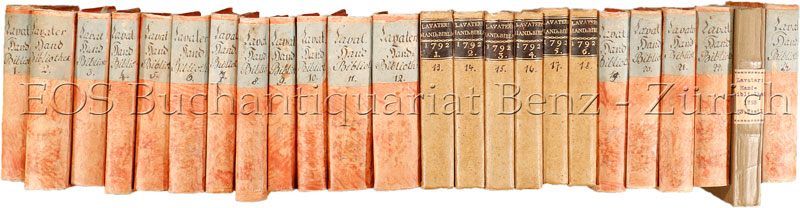
1790réf. 6010CBZürich, 1790-1793. 12°. Mit eigenhändig geschr. Titeln in gest. Rahmen. Mit 1 Portrait im 2. Band. Pappbände der Zeit mit blauen und schwarzen Rückenschildchen. + Wichtig: Für unsere Kunden in der EU erfolgt der Versand alle 14 Tage verzollt ab Deutschland / Postbank-Konto in Deutschland vorhanden +, bild 24 Bände.
1822réf. 7686CBMilano, Presso F. Artaria, 1822. Kl.-4°. XI, 175, (5) S. Mit gest. Titel, 30 kol. Aquatinta-Tafeln (meist nach Lory, gest. von Landini und Fumagalli) und 1 gef. Karte. Lederband der Zeit mit reicher Rücken-, Deckel- und Innenkantenvergoldung sowie dreis. Goldschnitt. + Wichtig: Für unsere Kunden in der EU erfolgt der Versand alle 14 Tage verzollt ab Deutschland / Postbank-Konto in Deutschland vorhanden +, 7686CB|7686CB_2|7686CB_3|7686CB_4 [4 Warenabbildungen]
161 x 218 mm. A street merchant with a lady client and a child, showing the Hagia Sophia in the background. Pinel de Grandchamp, a student of Dubois and Picot, is counted among the foremost oriental painters of the 19th century. - Mounted on backing cardboard (old edge flaws). Thieme/Becker XXVII, 56. Bénézit VIII, 344.
Aquarell auf Papier, jeweils ca. 165 x 90 mm, in drei Gruppen (2 Vierer- und eine Zweiergruppe) unter Glas und Passepartout gerahmt. Undatierte, hübsch aquarellierte Folge von 10 österreichischen Offizieren in ihren Regimentsfarben. Der aus Znaim gebürtige österreichischische Militär- und Pferdemaler und Zeichner A. Pock studierte bei Griepenkerl an der Wiener Akademie und war bis 1914 Mitarbeiter der Meggendorfer Blätter; das Heeresgeschichtliche Museum besitzt einen Bestand an Werken Pocks (vgl. Vollmer). - Sauber und wohlerhalten. Vgl. Thieme/Becker XXVII, 170; Vollmer III, 603.
1716réf. 6490CBZürich, Bodmerische Truckerey, 1716-1718. Kl.-4°. (4), 268, (6) S.; (16), 480, (8) S.; (16), 336 S. Mit gest. Frontispiz; Tl. I: Tafeln I, II und V sowie 1 unn. Taf.; Tl. II: Tafeln I-XII plus 2 unn. gef. Tafeln zu Teil I gehörend (Bergsturz von Plurs); Tl. III: 17 unn. Tafeln (mit fortlaufend num. Abbildungen). Pergamentband der Zeit mit hs. Rückentitel, goldgepr. Wappensupralibros. + Wichtig: Für unsere Kunden in der EU erfolgt der Versand alle 14 Tage verzollt ab Deutschland / Postbank-Konto in Deutschland vorhanden +, bild 3 Teile in 1 Bd.
310:245 mm, under oval mat. A seated young lady, handkerchief in hand, smiling and eyes cast down bashfully, wearing a white bonnet and a dark, semi-transparent cloth flung over her cape, her petticoat having slipped to her thighs and revealing her tightly closed legs from the knees downward. - A rare example of a risqué drawing by Shepard, best known for shaping the definitive image of "Winnie-the-Pooh", but also a prolific staff-member of "Punch" and illustrator of favourites such as "The Wind in the Willows" and "David Copperfield". - Slightly warped. No publication of this image could be traced.
Albumen print, 209 x 269 mm, mounted on backing cardboard (298 x 400 mm). A large head-and-shoulders portrait of Stalin, shortly before the beginning of the Great Purges. - A few unobtrusive scuff marks; backing cardboard smudged and stained. Russian lab label on reverse: "Foto-Laboratorija, U.P.P. Leningradskogo Otdelenija, Muzfonda SSSR, Leningrad. Lenoblgorlit No. 1094". Rare.
14 mounted plates in pencil, ink and colour wash, 2 of which are stuck to the outsides of the portfolio's protective boards with cloth ties. Various sizes, but mostly ca. 170 x 130 mm. Signed and captioned in English and Hungarian. Rare survival of a collection of sketches from the Russian POW camp in Peschanka, Siberia, all executed by an evidently accomplished, otherwise undocumented Hungarian artist (and soldier in the Austro-Hungarian army) who captured the conditions in and around the camp during the later years of the First World War. Thám's caricature-like style is marked by clear, precise outlines reminiscent of the contemporaneous work of Olaf Gulbransson and Eduard Thöny. The two larger sketches on the cover boards (measuring ca. 170 x 220 mm) show self-portraits of the artist, at work at oil paintings (one a landscape, the other a nude). The leaves within show prisoners climbing the bunk bed or resting in their crowded cots, marching through a snowed-in camp carrying heavy buckets, playing chess, etc.; some are captioned "Coming from the American Y.M.C.A. Kitchen", "The Red Cross library", or even show ladies in fur coats with an officer "at the exhibition", while a few others have Easter Greetings themes. - Peschanka is near Chita in the Transbaikalia region, on the Trans-Siberian Railway, 6035 kilometres from Moscow. While during the Great War conditions in the POW camps on the whole were vastly superior to those during WWII, thanks to the efforts of the Red Cross and inspectors from neutral countries, the situation in the Siberian camps was notoriously poor, and as many as a quarter of the 2.1 million Austro-Hungarian soldiers whom Russia held as prisoners of war did not survive. - Browned due to paper, with occasional edge flaws, but well preserved.
1772réf. 16580Paris, Le Mire, 1772. In-4 de [3]-VII-104 pages, plein maroquin cerise à grains longs, dos à nerfs orné de filet et fleuron dorés, roulette dorée en encadrement des plats, double filet aux coupes et dentelle dorée aux chasses, tranches dorées. Séduisante reliure de l'époque joliment conservée.
1826réf. 4831CBStuttgart und Tübingen, Cotta, 1826. 4°. XX S., (6) Bl. (Subskribentenliste), 370 S. Halbleinenband des 19. Jh. mit hs. Rückenschild.
1730réf. 988DGAmasterdam, Jean Convens et Corneille Mortier. 1730. Grenzkolorierte Kupferstiche. Blattformat: 56 x 64 cm. Gesamtgrösse der vier Karten: 112 x 128 cm.
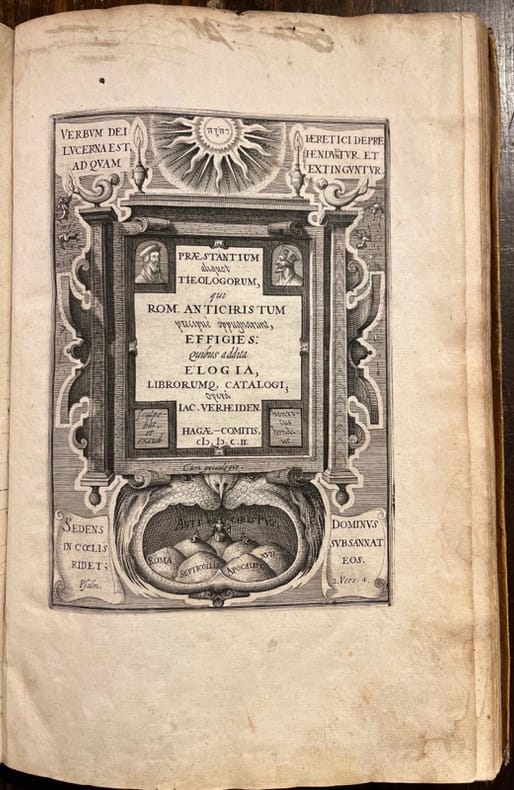
1602réf. 16378Hagae Comitis [La Haye], Ex officina Bucoldi Cornelii Nieulandii, 1602. In-folio de [12]-226 pages [*6; A-Z4;Aa-Cc4; Dd6-Ee3], plein vélin à rabats, étiquette de titre manuscrite (en vélin), traces d'attaches. Ex-libris JFC, inscription ancienne au verso du titre.
réf. 009237Los Angeles: Zeitlin & Ver Brugge Booksellers 1974. Book. Fine. Hardcover. SIGNED AND INSCRIBED BY PUBLISHER. Limited and Numbered First Edition. 8vo - over 7¾" - 9¾" tall. #105 of 120 copies printed by Saul & Lillian Marks at The Plantin Press Los Angeles completed April 1974. "The entire edition subscribed for by Jacob Israel Zeitlin & Josephine ver Brugge Zeitlin." Association Copy SIGNED AND INSCRIBED BY PUBLISHER at colophon page "for Gary Jake". From the collection of Gary Steigerwald at the time of publication a young bookseller working for Jake Zeitlin. In lovely Max J. Adjarian binding his small label to upper left corner of front pastedown of quarter brown morocco over patterned paper boards.and complementary custom clamshell case of quarter brown morocco over grey buckram boards with beige felt lining stamp-signed "Frank Burton". Both are Fine. SCARCE Association Copy. Zeitlin & Ver Brugge Booksellers, Hardcover
réf. 18803CBLeipzig, Eigendruck, 2021. je 100 x 70 cm. Diptychon. 2 Blatt. Kartondruck. Die Versandkosten für Kunstwerke und mehrbändige Werke können von den Standard-Versandkosten abweichen. Sehr guter Zustand. Im unteren weißen Rand druckbedingte Farbsspuren.In Bleistift signiert, nummeriert und betitelt.
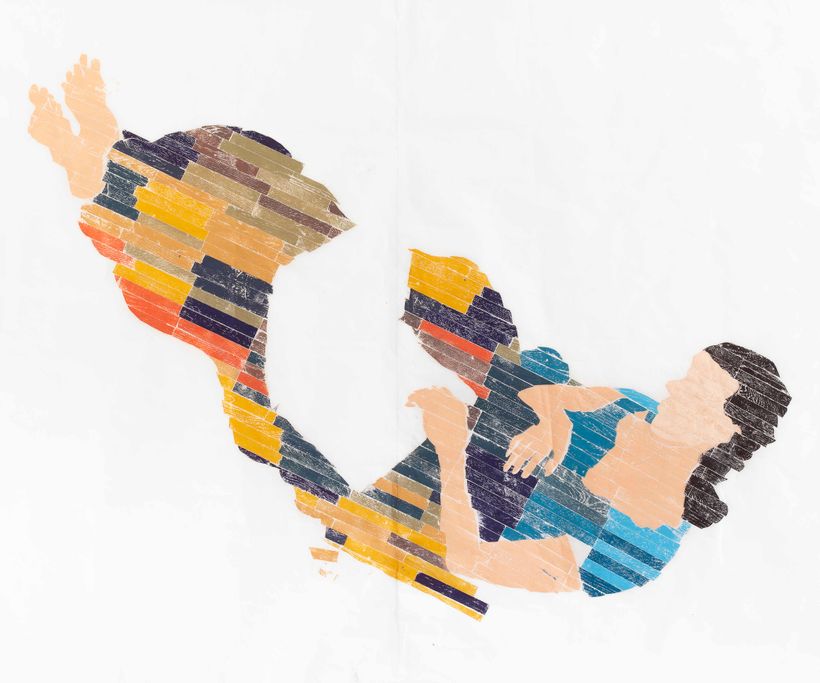
réf. 18804CBLeipzig, Eigendruck, 2019. 130 x 190 cm. Original Materialdruck auf Japanpapier. Zwei Bögen, aneinander montiert. Ohne Passepartout. Exemplar 1/1. Die Versandkosten für Kunstwerke und mehrbändige Werke können von den Standard-Versandkosten abweichen. Guter Zustand. Papierbedingt leichte Knickspuren. In Bleistift signiert, betitelt und nummeriert.
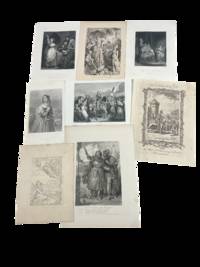
1700réf. 229131700. Cross-DressingWomen Military Joan of Arc engraving archive depicting the French military leader and martyr Jeanne d'Arc in iconic images of battle persecution and faith ca. 1770-1850s. The prints focus on Joan's leadership during the Hundred Years' War and on the gender-bending aspects of her identity and dress that contributed to her 1431 trial for heresy. Particular attention is given to her appearance in armor while directing troops or appearing before political authorities. These visual depictions emphasize Joan's adoption of male military clothing an attribute which has lead modern scholars of LGBTQ history to celebrate the saint as a queer and proto-transgender figure. Archive of eight engravings and proof impressions executed primarily in copperplate and steel engraving processes during the eighteenth and nineteenth centuries. The images depict several key episodes associated with Joan of Arc's historical narrative including portraits showing her wearing armor and holding a sword scenes of military command in which she appears mounted or directing troops and representations of her recognition by Charles VII and entry into the city of Orléans. A prison scene portrays Joan during captivity prior to her execution in 1431 emphasizing the moment when her continued cross-dressing became a major point of contention during her heresy trial. Several engravings were produced for historical publications and illustrated histories circulating in the eighteenth and nineteenth centuries including editions associated with François Guizot's History of France reflecting the renewed interest in Joan of Arc as a figure of national history. Archives includes: 1 Engraved for J. Sydney's History of England. The Maid of Orleans Receiving the Sword of St. Catherine. England c.1770-1820. A fine copper engraving framed within an elaborate Rococo border showing Joan receiving the sacred sword of St. Catherine an episode derived from medieval hagiography rather than strict historical documentation. Joan is mounted on horseback surrounded by armed men and clergy with a fortified tower rising behind her. The ornamental border and English publication context reveal the 18th-century Protestant fascination with Joan as a paradoxical figure: a warrior-prophetess both admired and viewed with suspicion. 2 Anonymous Artist. Va va fille de Dieu; délivre la France! Vision Scene. France c.1820-1850. A preparatory hand panciled engraving proof depicting Joan of Arc's divine revelation framed within penciled border guidelines. An angel descends from the clouds carrying a banner while pointing downward toward Joan who kneels in astonishment as cherubs hover above. The inscription "VA VA / FILLE DE DIEU / DELIVRE LA FRANCE!" anchors the scene as an allegory of Joan's heavenly mandate. 3 Henry Richter after. Joan of Arc Recognizes the King. London: The London Printing and Publishing Co. mid-19th century. A steel engraving portraying Joan's revelation of Charles VII at Chinon the pivotal moment when she identifies him despite his attempt at disguise. The richly detailed crowd scene and Gothic architectural setting emphasize both spectacle and legitimacy visualizing Joan as divinely guided rather than politically manipulated. 4 G. Greatbach engraver; after a painting by J. Opie R.A. Joan of Arc Declaring Her Mission. London: The London Printing and Publishing Co. Ltd. mid-19th century. Joan is shown making a dramatic gesture as she proclaims her mission before astounded soldiers and clergy. The engraving captures the tension between gender expectations and prophetic authority: Joan's outstretched arm determined expression and illuminated figure contrast with the skeptical figures behind her. 5 E. Scriven engraver. Joan D'Arc. London: H. Moore Sons & Co. mid-19th century.An engraving presenting a romanticized half-length portrait of Joan of Arc in armor holding a sword upright while gazing serenely into the distance. Behind her appear faint bystanders rendering her both an individual and an emblem of national deliverance. 6 Entry of Joan of Arc into Orléans. From Guizot's History of France. Paris/London c.1840s. A sweeping steel engraving of Joan riding triumphantly into Orléans accompanied by monks soldiers and citizens. The composition foregrounds her as a mounted military leader sword raised while crowds kneel and look upward in awe. Johannot's design visualizes Joan as a unifying national leader. 7 G. Stodart engraver; after H. E. Selous. Joan of Arc and Charles. London: Virtue & Co. mid-19th century.A dramatic steel engraving showing Joan standing beside Charles VII directing his attention toward the field of battle. The caption references their military collaboration. The interplay of armor banners and a stormy sky underscores Joan'smilitary might. 8 T. Brown engraver; after E. Corbould. Joan of Arc in Prison. London: The London Printing and Publishing Co. mid-19th century. A somber interior scene depicting Joan in captivity clasping her hands as guards and clergy surround her. Corbould emphasizes her steadfastness and the emotional gravity of her final days. Produced for an illustrated royal history King Henry the Sixth the image cast Joan as a martyr of conscience. In recent decades scholars in LGBTQ history and gender studies have increasingly examined Joan of Arc as a proto-queer icon who challenged traditional ideas of gender identity and expression. Medieval trial records document that Joan consistently wore male military clothing during her campaigns and continued to wear such clothing during imprisonment a choice that became a central accusation in the charges brought against her in 1431. Some historians and queer theorists have interpreted Joan's refusal to abandon male dress even under threat of execution as evidence of a personal gender identity that did not conform to contemporary expectations for women. Joan of Arc has been cited as an example in Medieval history of an individual navigating queer identity long before the modern understanding of terms like trans non-binary or genderfluid. Light toning and mild foxing to some edgewear and staining present to some margins. Prints are clear and paper crisp. Overall very good condition. A compelling and diverse archive of eight Joan of Arc engravings and artistic proofs representing two centuries of European historical illustration and devotional imagery. The collection captures Joan's transformation from medieval visionary to modern nationalist and feminist icon. unknown
1786réf. 376505Venezia 1786. Ora la prima volta con le stampe pubblicate. Engraved title page with vignette. Engraved Title portrait and 24 leaves of plates XIII page of text. Frontispiece & 15 engraved plates. 1 vols. Folio. Quarter morocco and green boards. Binding showing signs of wear. Interior with light foxing but overall Near Fine. Bookplate of C. W. H. Sotheby. Ora la prima volta con le stampe pubblicate". Engraved title page with vignette. Engraved Title portrait and 24 leaves of plates XIII page of text. Frontispiece & 15 engraved plates. 1 vols. Folio. Including engravings after the works of great Venetian Renaissance painters Giorgione Titian Tintoretto Zelotti and Veronese. With Titian's frescoes for the exterior of the Fondaco dei Tedeschi in Venice which have since perished. Also with engravings after the great draftsman Parmigianino. Antonio Maria Zanetti is known as a printmaker for his contributions to the style of chiaroscuro woodcuts as well as for his career as an art dealer and collector. Girolamo Francesco Zanetti was a historian and philologist known for being the first to publish one of the oldest Venetian chronicles the Chronicon Altinate. OCLC 272605179. Provenance: Bookplate of C. W. H. Sotheby d.1887 of Ecton Hall Northampton England unknown
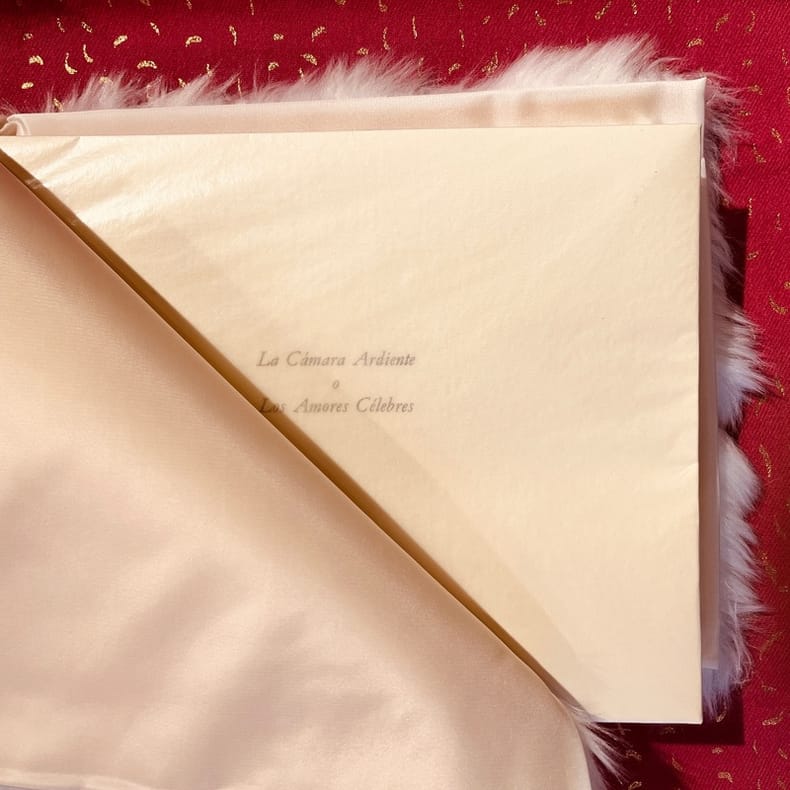
1977réf. 20185Barcelone, Editorial Gustavo Gili, 1977. Grand in-8 oblong, en feuilles sous couverture rempliée, couverture en fourrure blanche, sous emboîtage en Plexiglas.
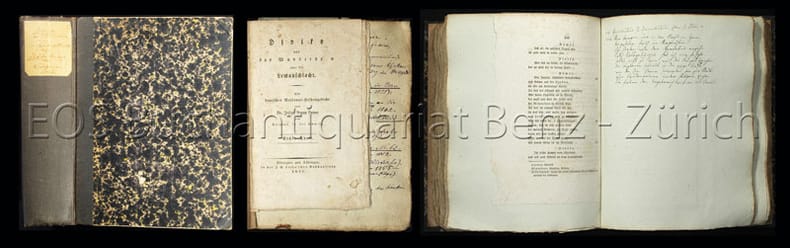
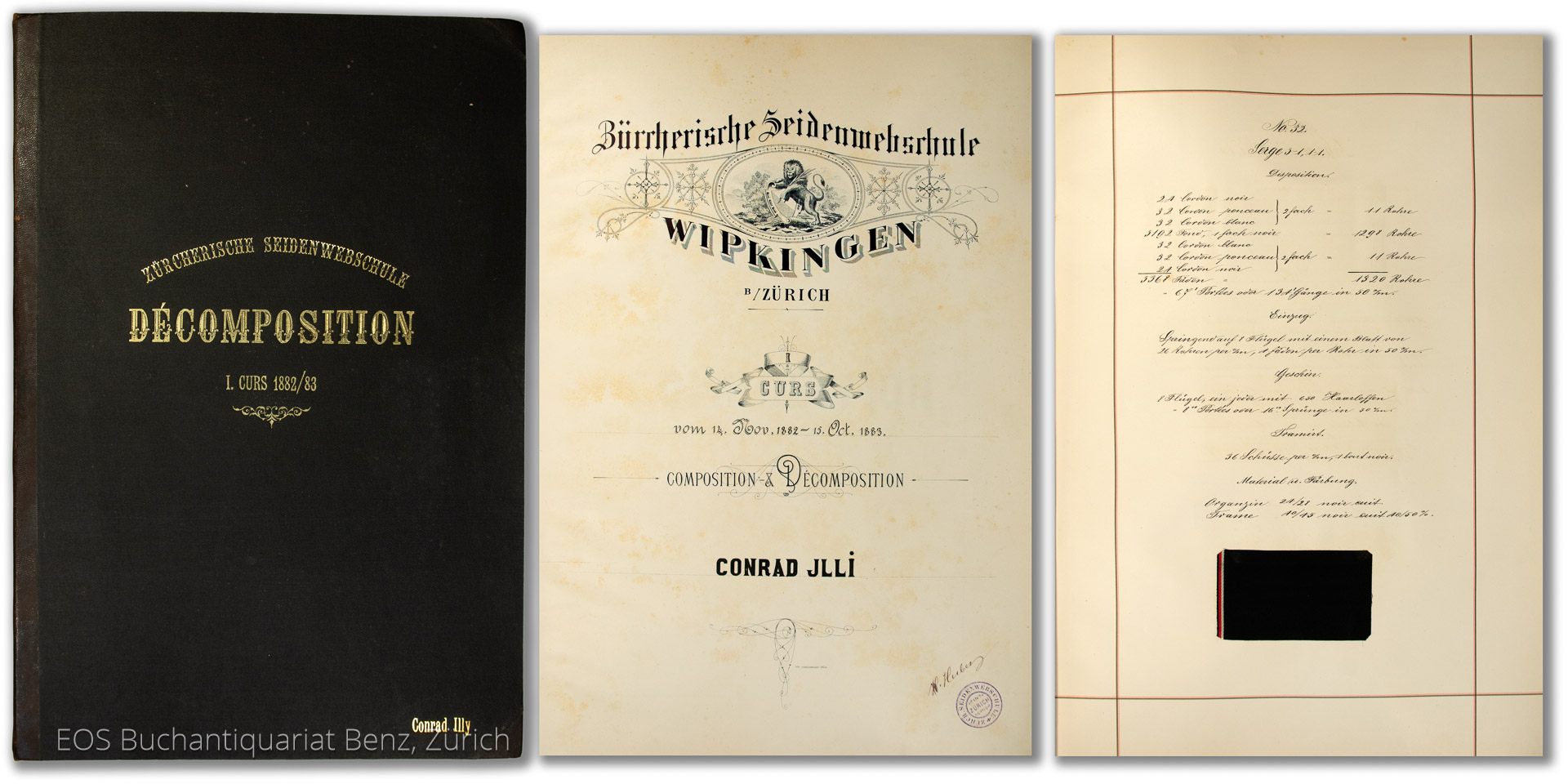
1882réf. 7614CBZürich, 1882/83 und 1884/85. Folio. Mit handschriftlichem Text. Orig.-Leinenbände. + Wichtig: Für unsere Kunden in der EU erfolgt der Versand alle 14 Tage verzollt ab Deutschland / Postbank-Konto in Deutschland vorhanden +, 7614CB|7614CB_2 4 Bände. [2 Warenabbildungen]
Each puzzle measures 195 x 245 mm. Each puzzle with an engraved plate mounted on thin wood, coloured by a contemporary hand and cut to form a jigsaw puzzle, with engraved caption and short description below the image. Stored in the original cardboard box with an etched and engraved sample plate for a fourth puzzle (with caption "Équité de l'empereur") on the top, coloured by a contemporary hand, and an embossed gilt-paper border. Each puzzle with the original pink paper wrap-around slip preserved. A fine and colourful set of jigsaw puzzles depicting scenes from the life of Napoleon Bonaparte. Two of the puzzles and the sample plate have the address "Ulysse Paris" engraved in the image. Each puzzle has 20 pieces: the first depicts Napoleon calmly sleeping in a chair after having given orders to his generals on the eve of the battle of Austerlitz (1 Dec. 1805); the second shows Napoleon addressing an exhausted soldier - a scene from the battle of Lodi on 10 May 1796, fought between Napoleon's forces and the Austrian rear guard commanded by Johann Beaulieu. The third puzzle shows Napoleon as merciful emperor, receiving the thankful wife and children of a Prussian lord accused of conspiracy, whom he pardoned. The puzzle matching the scene depicted on the top of the box is not included. A few pieces cracked at thin spots; box slightly defective with traces of handling and browned. A good set.
1781réf. 60351781 Paris , Bassan et Poignant 1781, In-4 , (300 x 220 mm ) Exemplaire avec, au titre la mention "dedié à Mr le Comte d' Orsay ".Illustration : une vignette au deuxieme feuillet non chiffré et 120 planches d'apres Rubens, Veronèse, Breuguels, Le Moine.....Reliure signée Hardy : maroquin rouge , plats et dos ornés . La date au dos " 1791" est erronée. Feuillets de titre et d'avertissement . References : Cohen 116
réf. 19724Paris, Georges Visat, 1969. In-folio, 56 pp., en feuilles, couverture originale rempliée, étui et chemise de toile rose (très léger ternissement de la toile).
réf. 39232Paris.Conquet en 1892.In-4 relié par Gruel. Ex.n°240/390.Couverture conservée.277 pages.Table des divisions.Liste des reliures reproduites, en noir et couleur.Portrait de Cuzin en dernière page. Très bel exemplaire aux armes (sur le 1er plat) de Madame Grace Whitney Hoff. ( ex-libris sur la doublure ).1862-1938.La reliure de Gruel est un plein maroquin aubergine avec 4 filets dorés. Dos à 5 nerfs soulignés de filets avec caissons entourés de 3 filets dorés aussi.Tranches dorées. Infimes rousseurs. Dos un peu décoloré.