STRIMPL LouisMareMagnum

10.209 risultati
1913- Lucien Vogel éditeur, Paris 1913, 19,5x25cm, une feuille. - Original color print, printed on vergé paper, signed in the plate. An original print used to illustrate the Gazette du bon ton, one of the most attractive and influential 20th century fashion magazines, featuring the talents of French artists and other contributors from the burgeoning Art Deco movement. A celebrated fashion magazine established in 1912 by Lucien Vogel, La Gazette du bon ton appeared until 1925, with a hiatus from 1915 to 1920 due to the war (the editor-in-chief having been called up for service). It consisted of 69 issues printed in only 2,000 copies each and notably illustrated with 573 color plates and 148 sketches of the models of the great designers. Right from the start, this sumptuous publication "was aimed at bibliophiles and fashionable society," (Françoise Tétart-Vittu, "La Gazette du bon ton", in Dictionnaire de la mode, 2016) and was printed on fine vergé paper using a type cut specially for the magazine by Georges Peignot, known as Cochin, later used (in 1946) by Christian Dior. The prints were made using stencils, heightened in colors, some highlighted in gold or palladium. The story began in 1912, when Lucien Vogel, a man of the world involved in fashion (he had already been part of the fashion magazine Femina) decided, with his wife Cosette de Brunhoff - the sister of Jean, creator of Babar - to set up the Gazette du bon ton, subtitled at the time: "Art, fashion, frivolities." Georges Charensol noted the reasoning of the editor-in-chief: "'In 1910,' he observed, 'there was no really artistic fashion magazine, nothing representative of the spirit of the time. My dream was therefore to make a luxury magazine with truly modern artists...I was assured of success, because when it comes to fashion, no country on earth can compete with France.'" ("Un grand éditeur d'art. Lucien Vogel" in Les Nouvelles littéraires, no. 133, May 1925). The magazine was immediately successful, not only in France but also in the United States and Latin America. At first, Vogel put together a team of seven artists: André-Édouard Marty and Pierre Brissaud, followed by Georges Lepape and Dammicourt, as well as eventually his friends from school and the School of Fine Arts, like George Barbier, Bernard Boutet de Monvel and Charles Martin. Other talented people soon came flocking to join the team: Guy Arnoux, Léon Bakst, Benito, Boutet de Monvel, Umberto Brunelleschi, Chas Laborde, Jean-Gabriel Domergue, Raoul Dufy, Édouard Halouze, Alexandre Iacovleff, Jean Émile Laboureur, Charles Loupot, Chalres Martin, Maggie Salcedo. These artist, mostly unknown when Lucien Vogel sought them out, later became emblematic and sought-after artistic figures. It was also they who worked on the advertising drawings for the Gazette. The plates put the spotlight on, and celebrate, dresses by seven designers of the age: Lanvin, Doeuillet, Paquin, Poiret, Worth, Vionnet and Doucet. The designers provided exclusive models for each issue. Nonetheless, some of the illustrations are not based on real models, but simply on the illustrator's conception of the fashion of the day. The Gazette du bon ton was an important step in the history of fashion. Combining aesthetic demands with the physical whole, it brought together - for the first time - the great talents of the artistic, literary, and fashion worlds; and imposed, through this alchemy, a completely new image of women: slender, independent and daring, which was shared by the new generation of designers, including Coco Chanel, Jean Patou, Marcel Rochas, and so on... Taken over in 1920 by Condé Montrose Nast, the Gazette du bon ton was an important influence on the new layout and aesthetics of that "little dying paper" that Nast had bought a few years earlier: Vogue. [FRENCH VERSION FOLLOWS] Estampe originale en couleur tirée sur papier vergé, signée en bas à droite dans la planche. Gravure originale réalisée pour l'illus
1882rif. 1943BBHorgen, J.J. Schläpfer, 1882. 8°. XII, 547 S. Mit 1 farb. Wappentafel, und 4 Holzstichtafeln mit Ansichten. Späterer Halblederband mit Rückschild (berieben und bestossen). + Wichtig: Für unsere Kunden in der EU erfolgt der Versand alle 14 Tage verzollt ab Deutschland / Postbank-Konto in Deutschland vorhanden +
1870rif. 3286BBBasel, Neukirchsche Buchhandlung, o.J. (um 1870). 12°. VIII (2), 392 S. Mit 1 Titelholzst., 7 Holzst.-Tafeln, 8 Seitentafeln und 1 Plan (Stadt Basel) sowie zahlr. Textillustr. Orig.-Leinenband.
1870rif. 3286BBBasel, Neukirchsche Buchhandlung, o.J. (um 1870). 12°. VIII (2), 392 S. Mit 1 Titelholzst., 7 Holzst.-Tafeln, 8 Seitentafeln und 1 Plan (Stadt Basel) sowie zahlr. Textillustr. Orig.-Leinenband. + Wichtig: Für unsere Kunden in der EU erfolgt der Versand alle 14 Tage verzollt ab Deutschland / Postbank-Konto in Deutschland vorhanden +
1884rif. 29556ABBern, K. J. Wyss., 1884. 4°. 56 S. Mit 39 Tab. im Text. Orig.-Heft (lose Blätter).
1884rif. 29556ABBern, K. J. Wyss., 1884. 4°. 56 S. Mit 39 Tab. im Text. Orig.-Heft + Wichtig: Für unsere Kunden in der EU erfolgt der Versand alle 14 Tage verzollt ab Deutschland / Postbank-Konto in Deutschland vorhanden + (lose Blätter).
1939rif. 6447BBZürich, Fluntern, 1939. 8°. 235 S. Mit 6 gef. Tafeln. Orig.-Broschur.
1939rif. 6447BBZürich, Fluntern, 1939. 8°. 235 S. Mit 6 gef. Tafeln. Orig.-Broschur. + Wichtig: Für unsere Kunden in der EU erfolgt der Versand alle 14 Tage verzollt ab Deutschland / Postbank-Konto in Deutschland vorhanden +
rif. 2296DBDietikon-Zürich, Josef Stocker, Folio. 107 (3) S. Mit 24 ganzs. farb. Abb. auf Tafeln und zahlr. z.T. mont. Abb. im Text. Orig.-Halbpergamentband.
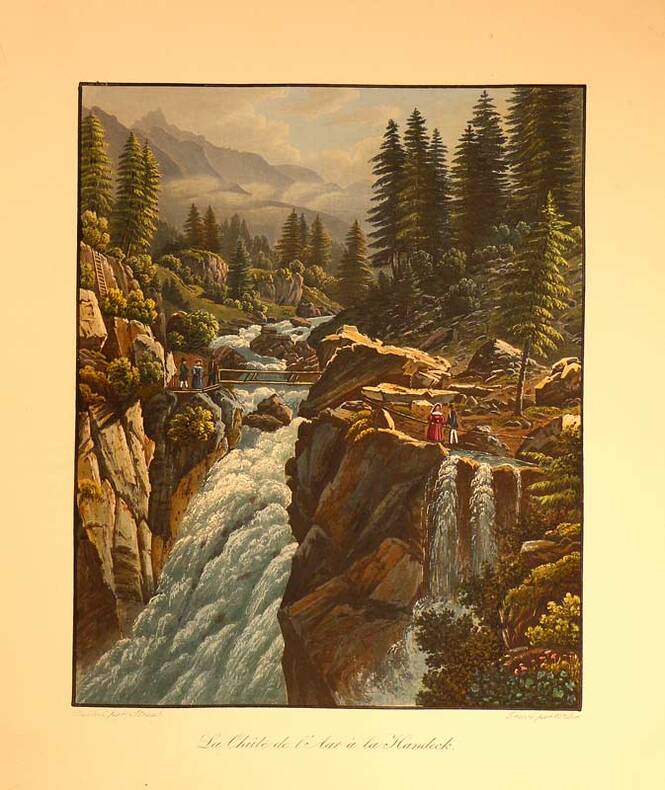
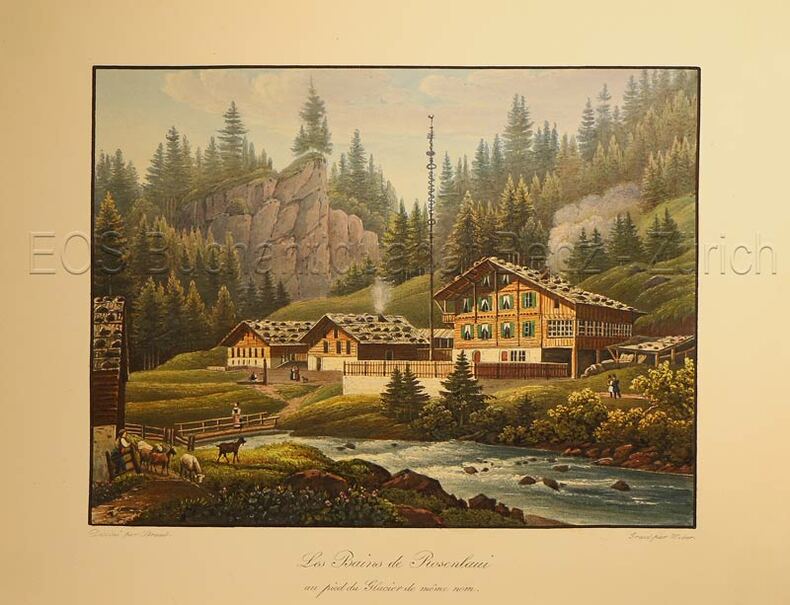
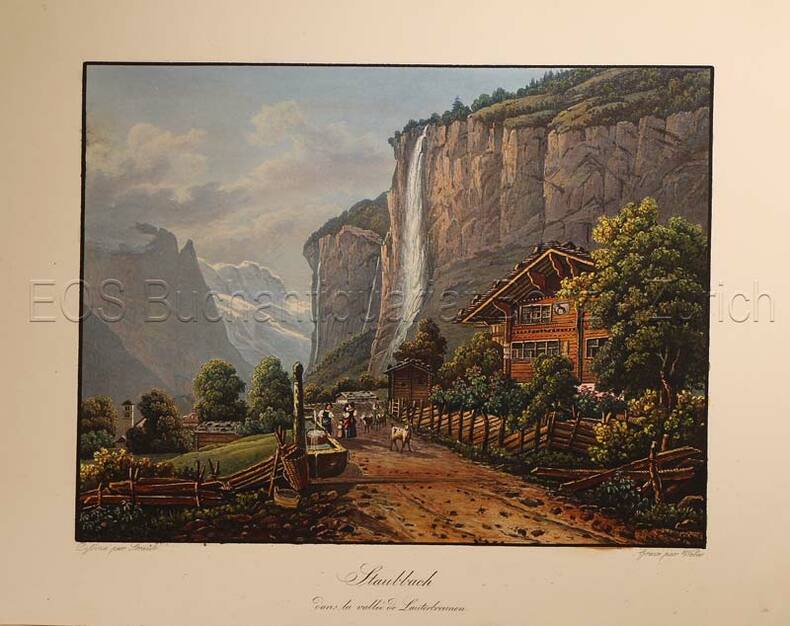
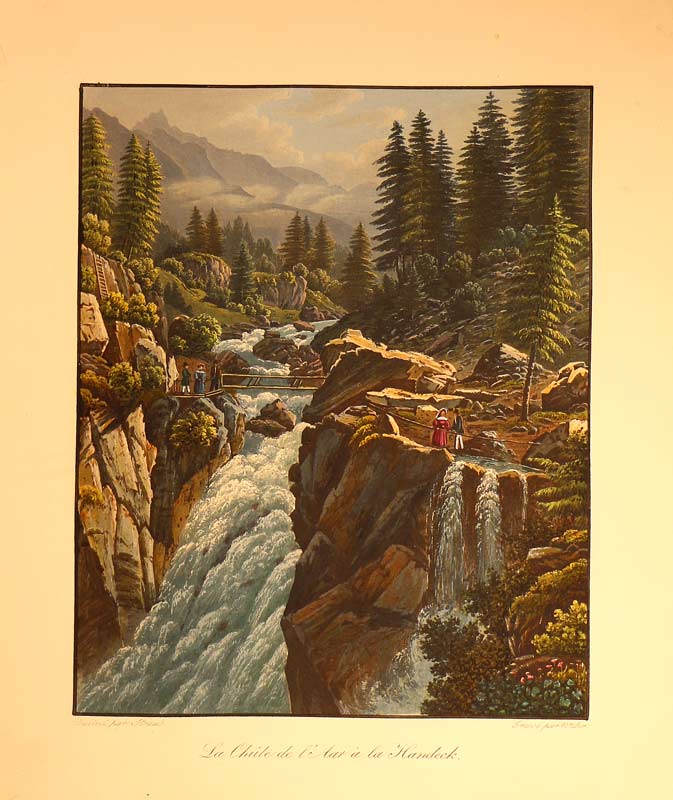
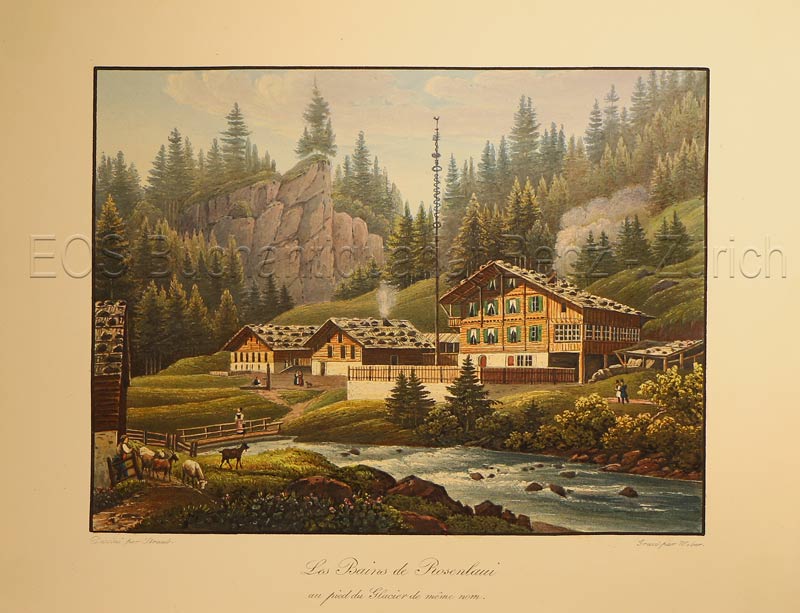
1835rif. 626DGO.O., um 1835. Aquatinata von Lukas Weber (1811-1860). Bildgrösse: 17,3 x 24,1 cm. Blattgrösse:22,2 x 18,8 cm.
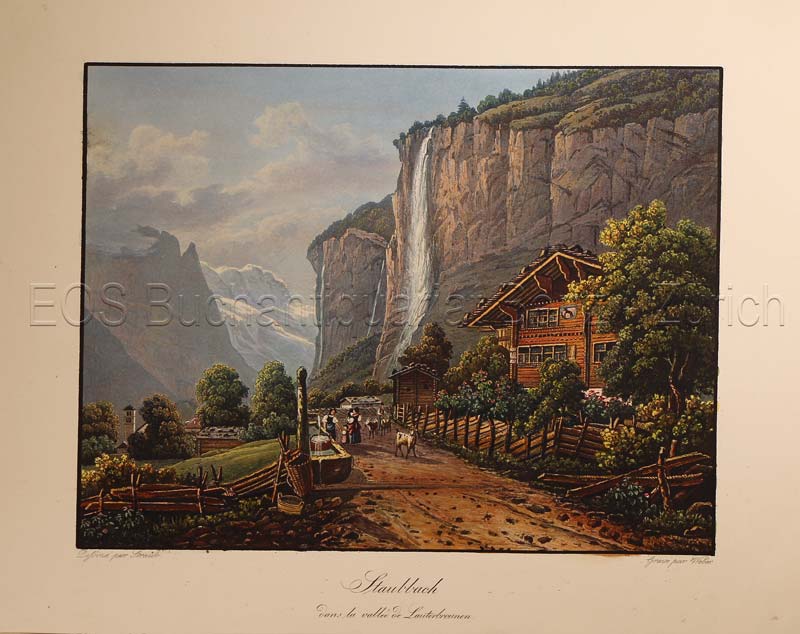
1835rif. 623DGO.O., um 1835. Aquatinata von Lukas Weber (1811-1860). Bildgrösse: 13,1 x 17,4 cm. Blattgrösse:17,5 x 22,9 cm.
1835rif. 625DGO.O., um 1835. Aquatinata von Lukas Weber (1811-1860). Bildgrösse: 13,1 x 17,3 cm. Blattgrösse:17,3 x 22,1 cm.
1835rif. 626DGO.O., um 1835. Aquatinata von Lukas Weber (1811-1860). Bildgrösse: 17,3 x 24,1 cm. Blattgrösse:22,2 x 18,8 cm. + Wichtig: Für unsere Kunden in der EU erfolgt der Versand alle 14 Tage verzollt ab Deutschland / Postbank-Konto in Deutschland vorhanden +, Abb.
1835rif. 623DGO.O., um 1835. Aquatinata von Lukas Weber (1811-1860). Bildgrösse: 13,1 x 17,4 cm. Blattgrösse:17,5 x 22,9 cm. + Wichtig: Für unsere Kunden in der EU erfolgt der Versand alle 14 Tage verzollt ab Deutschland / Postbank-Konto in Deutschland vorhanden +, Abb.
1835rif. 625DGO.O., um 1835. Aquatinata von Lukas Weber (1811-1860). Bildgrösse: 13,1 x 17,3 cm. Blattgrösse:17,3 x 22,1 cm. + Wichtig: Für unsere Kunden in der EU erfolgt der Versand alle 14 Tage verzollt ab Deutschland / Postbank-Konto in Deutschland vorhanden +, Abb.
1941rif. 2157DB2 Bde. in 1 Bd. O. O., o. Vlg., 1941–42. 8°. 30 S., (1) Bl., 119 S. Mit 1 Tafel. Privater Halbleinenband.
1739rif. 17101739 Couverture rigide Bruxelles, George Frick, 1739. Tome IV seul sur quatre parus, un volume in-12 (16 x 10,5 cm), reliure plein veau fauve marbré de l'époque, tranches rouges, dos à nerfs passé, coiffes arasées, coins émoussés, quelques épidermures. Frontispice, feuillet de titre, (20) 481 (31) pages, illustrées de deux portraits (Marie Stuart (en frontispice) et Alexandre Farnese), et de 9 planches dépliantes, dont des vues d’Anvers, Gand, Bruxelles, deux cartes et batailles navales, petite déchirure au 2ème feuillet de texte avec atteinte marginale au texte. Quatrième volume de l'importante Histoire de la guerre des Pays-Bas, oeuvre du jésuite italien Famien Strada (1572–1649), historien de renom et professeur d'éloquence au Collège romain. Composée à l’origine en latin sous le titre De Bello Belgico, cette histoire de la révolte des Provinces-Unies contre la couronne d'Espagne couvre les principaux épisodes de la guerre de Quatre-Vingts Ans (1568-1648). La traduction française de ce tome, due au P. du Ryer - écrivain et traducteur prolifique du XVIIe siècle - se distingue par un style fluide et oratoire, typique de son époque. Du Ryer, célèbre pour avoir également traduit le Coran et divers auteurs antiques et modernes, propose ici une version élégante, parfois libre, mais fidèle à l'esprit du texte. Ce tome IV poursuit le récit avec une riche galerie de portraits de chefs militaires, des analyses politiques et un souci constant de la mise en scène historique. Bon état des planches et du texte, bon exemplaire.
1976rif. 009936London Christopher Hewett 1976 In-8 Demi-reliure
1978rif. 30798ABMännedorf, Zürich Bollmann Eduard und Rammstein Verlag. 1978. (2) Bl., 16 Faksimile Reproduktionen. Illustrierte Papp-Mappe.
1978rif. 30798ABMännedorf, Zürich, Bollmann Eduard und Rammstein Verlag., 1978. (2) Bl., 16 Faksimile Reproduktionen. Illustrierte Papp-Mappe. + Wichtig: Für unsere Kunden in der EU erfolgt der Versand alle 14 Tage verzollt ab Deutschland / Postbank-Konto in Deutschland vorhanden +, A|B [2 Warenabbildungen]
rif. 25442Le Charivari, trente-sixième année, vendredi 15 novembre 1867 - Hauteur: 43.5cmx Largeur: 31cm- Trait carré : Hauteur: 25.5cmxLargeur: 20.1cmillustration page 3.- Au dessus de l'image, centré : "ACTUALITES" ; et à droite : "230" ; signature en bas de l'image à droite : "STOP" ; en dessous de l'image à gauche : "A. de Vresse R. Rivoli, 55" ; en dessous de l'image à droite : "Lith. Destouches r Paradis Pre 28" ; en dessous, centré : "- A qui le tour ?",texte imprime au dos,bon etat.
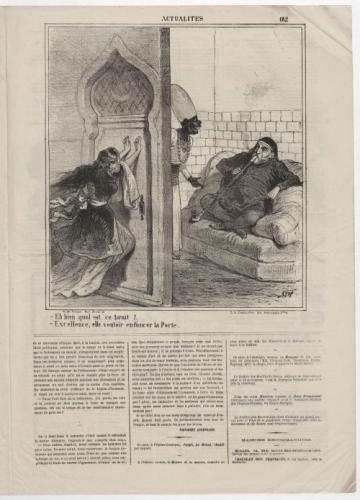
1866rif. 254311866 Le Charivari, trente-cinquième année, jeudi 20 septembre 1866- Hauteur: 43.8cmx Largeur: 31cm - Trait carré :Hauteur: 25.8cmx Largeur: 23.3cm1 feuillet ; illustration page 3. - Au-dessus de l'image, au centre : "ACTUALITÉS", et à droite : "182" ; signé dans l'image en bas à droite : "STOP", sous l'image à gauche : "A.de Vresse, Rue Rivoli, 55." et à droite : "Lith Destouches Rue Paradis Pre 28" ; au-dessous, au centre : "_Eh bien quel est ce bruit ?... / _Excellence, elle vouloir enfoncer la Porte.",texte imprime au dos,bon etat
rif. 25496Le Charivari, trente-sixième année, samedi 14 septembre 1867- Lithographie : Hauteur: 44cmx Largeur: 30.9cm - Trait carré: Hauteur: 25.9cmx Largeur: 20.2cm- 1 feuillet (4 pages) ; illustration page 3.- Au dessus de l'image, centré : "ACTUALITES" ; et à droite : "173" ; signature en bas de l'image à gauche : "STOP" ; en dessous de l'image à gauche : "A. de Vresse R. Rivoli, 55" ; en dessous de l'image à droite : "Lith. Destouches r Paradis Pre 28" ; en dessous, centré : "- Qui boira le bouillon ?"-- texte imprime au dos,bon etat.
rif. 25497Le Charivari, trente-sixième année, mardi 15 octobre 1867 - Lithographie :Hauteur: 43.7cmx Largeur: 30.5cm- Trait carré: Hauteur: 26.6cmx Largeur: 21.1cm- 1 feuillet (4 pages) ; illustration page 3.- Au dessus de l'image, centré : "ACTUALITES" ; et à droite : "213" ; signature en bas de l'image à droite : "STOP" ; en dessous de l'image à gauche : "A. de Vresse R. Rivoli, 55" ; en dessous de l'image à droite : "Lith. Destouches r Paradis Pre 28" ; en dessous, centré : "L'unité Germanique" -- texte imprime au dos,bon etat.
2018rif. 254512018 Le Charivari, trente-cinquième année, jeudi 20 septembre 1866 - Hauteur: 43.8cmx Largeur: 31cm - Trait carré- Hauteur: 25.8cmx Largeur: 23.3cmillustration page 3. - Au-dessus de l'image, au centre : "ACTUALITÉS", et à droite : "182" ; signé dans l'image en bas à droite : "STOP", sous l'image à gauche : "A.de Vresse, Rue Rivoli, 55." et à droite : "Lith Destouches Rue Paradis Pre 28" ; au-dessous, au centre : "_Eh bien quel est ce bruit ?... / _Excellence, elle vouloir enfoncer la Porte."texte imprime au dos,bon etat.