10.988 risultati
1868rif. 1911190004J. B. Burr and Company 1868-01-01. First Edition. Hardcover. Very Good. History of New York Bound in publisher's cloth. Hardcover. Good binding and cover. Spine image rubbed. 718 2 p. 12 leaves of plates : ill. ; 23 cm. "Rising immigration and increasing social stratification affected the development of American cities during the mid-nineteenth century. City guides delineating the mysteries of the metropolis as well as newspapers magazines and novels presented the East's industrializing cities—New York Philadelphia and Baltimore—as fractured societies. According to these publications each was really two cities: one orderly prosperous and bathed in "sunlight" the other menacing poor and steeped in "darkness" or "gaslight". In this frontispiece from the 1868 Sunshine and Shadow in New York the symbolic extremes of day and night were represented by a Fifth Avenue mansion and the Old Brewery an infamous "thieves' den" located in the Five Points slum district. J. B. Burr and Company hardcover
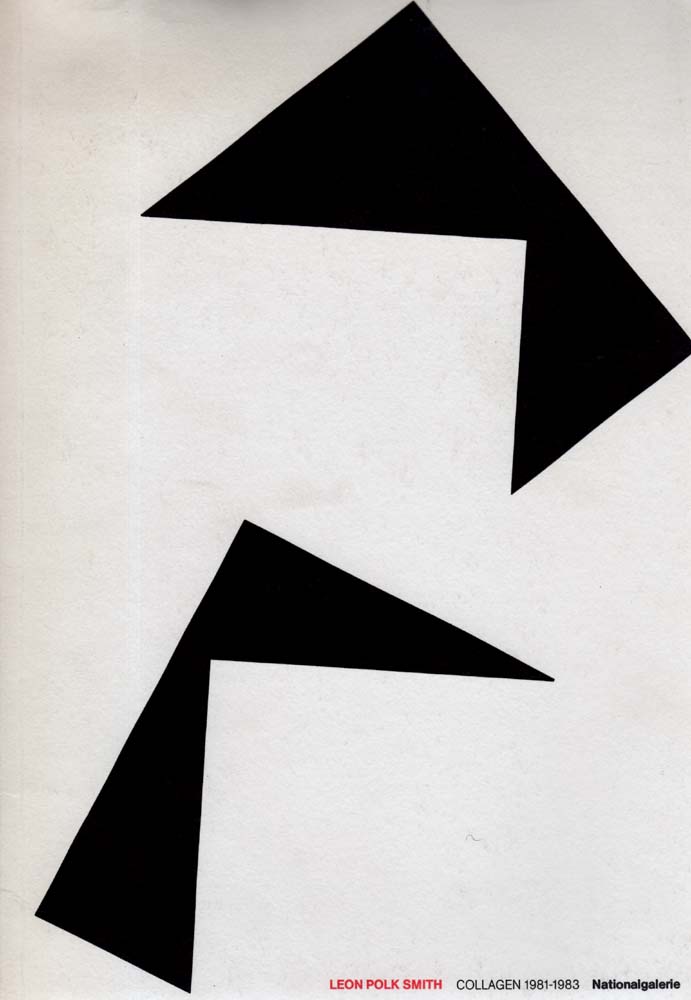
1984rif. 68557BBBerlin., Nationalgalerie Berlin., 1984. 30 x 21 cm. 39 S. Illustrierter OKarton., 68557B Erste Auflage. Kanten etwas berieben, Umschlag minimal angestaubt, sonst sehr gutes Exemplar.
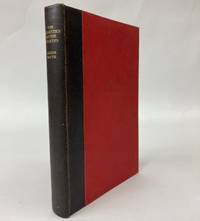
1929rif. 1349922Waltham Saint Lawrence: Golden Cockerel Press 1929. Limited edition no. 3 of 500. Hardcover. Octavo; VG Hardcover; Black cloth spine with gilt lettering and red paper-covered boards; Light rubbing to head and tail of spine; Bookplate of Robert Mackenzie Waggaman to front pastedown; Text block lightly age-toned; Illustrated with numerous engravings by Eric Ravilious; v 156 pages. 1349922. FP New Rockville Stock. Golden Cockerel Press hardcover books
1929rif. 1349922Waltham Saint Lawrence: Golden Cockerel Press 1929. Limited edition no. 3 of 500. Hardcover. Octavo; VG Hardcover; Black cloth spine with gilt lettering and red paper-covered boards; Light rubbing to head and tail of spine; Bookplate of Robert Mackenzie Waggaman to front pastedown; Text block lightly age-toned; Illustrated with numerous engravings by Eric Ravilious; v 156 pages. 1349922. FP New Rockville Stock. Golden Cockerel Press hardcover
232; 52pp., portrait frontis., some light foxing, orig. purple water-silk cloth, spine faded.
1660rif. 702417Frankfurt, Jona Rosa, 1660. 8 nnr. Blätter, 652 Seiten. Mit gestoch. Porträt und Wappen. Dekorativer Halbpergament-Einband der Zeit mit goldgeprägtem Rückentitel. Tadelsfrei.
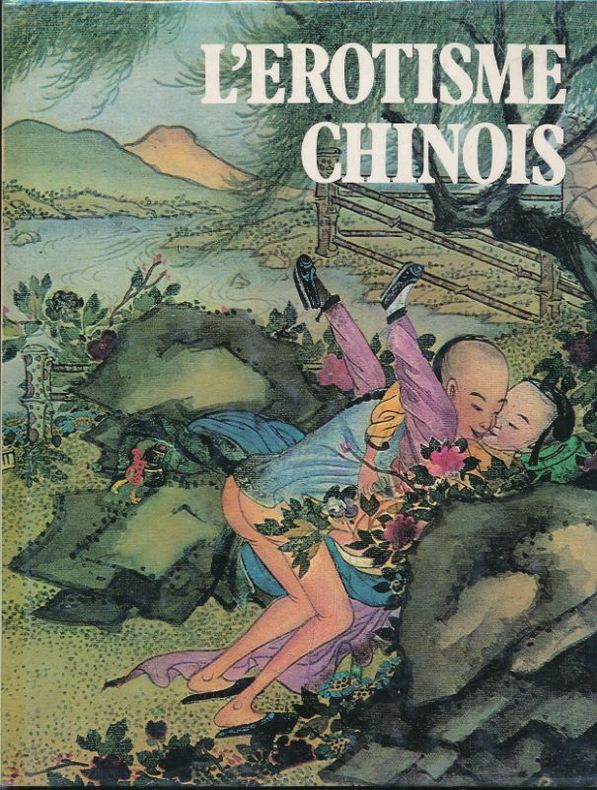
1984Solar 1984, In-4 cartonnage éditeur sous jaquette illustrée, 96 pages. Reproductions couleur. Bon état
1984rif. 9993482Solar Solar 1984, In-4 cartonnage éditeur sous jaquette illustrée, 96 pages. Reproductions couleur. Bon état
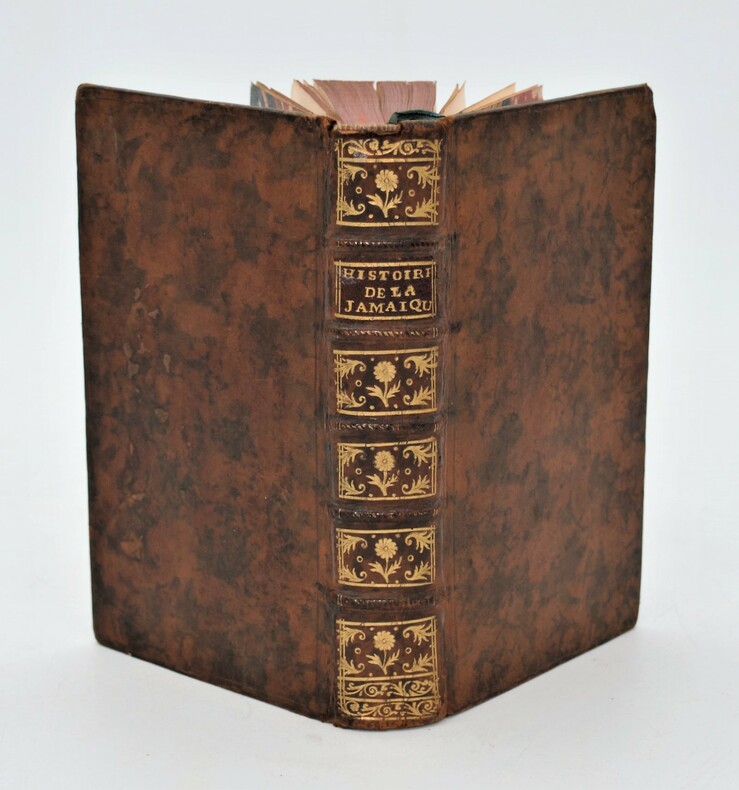
1751rif. PHO-1273LONDRES (CHEZ NOURSE) 1751 2 VOL. RELIES EN 1, IN-12°, 17 X 10 CMS, RELIÉ VEAU MOUCHETÉ, DOS A 5 NERFS ORNÉ DE FLEURONS DORÉS, TR. ROUGE. 2FF-285PPS; 1FF-148PPS. PREMIÈRE ÉDITION FRANÇAISE TRADUITE PAR RAULIN, ANCIEN OFFICIER DES DRAGONS.
1970rif. 210213036Sky Prints Corp 1970-01-01. Spiral-bound. Like New. 0x0x0. 1970-1979 and 1981 Like New inside and Out! Clean & Crisp Pages. Excellent book.Fast Shipping!11 books total Sky Prints Corp unknown
rif. 37588Skira International / World Publishing Company. As New. Portfolio with 8 Loo. FREE UPGRADE to Courier/Priority Shipping Upon Request – – IN STOCK AND IMMEDIATELY AVAILABLE FOR SHIPMENT - 4 page brochure on Chinese paintings with notes on 6 of the 8 color plates included in the packet. -- with a bonus offer--; T-Skirchin; Skira International / Skira Color Prints Chinese Painting . Skira International / World Publishing Company unknown
1979Roy. 8vo., First Edition, with frontispiece and wood-engravings (a number full-page) in the text; rose boards, backstrip with printed paper label, uncut, a near fine copy. EDITION LIMITED TO 150 NUMBERED COPIES SIGNED BY THE AUTHOR (THIS COPY NO. 53).
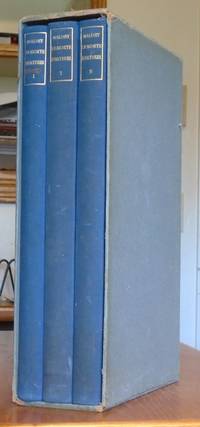
1936rif. 131332Printed at The Golden Cockerel Press London for The Limited Editions Club 1936. Book. Very Good. Hard Cover with Slipcase. Signed by Illustrators. Limited Edition. Folio - over 12 - 15" tall. Three oversized hardcovers with blue cloth spines with gilt lettering; boards covered in blue and cream-patterned paper; limited edition 1393/1500; signed by Robert Gibbings. Books in very good plus condition: spines are slightly sunned with a little scuffing and slight soiling; no wear to books; straight; hinges strong; clean and unmarked; pages slightly toned. Slipcase is only in good minus condition with some wear soiling and scuffing. Will require extra for shipping. Printed at The Golden Cockerel Press, London, for The Limited Editions Club Hardcover
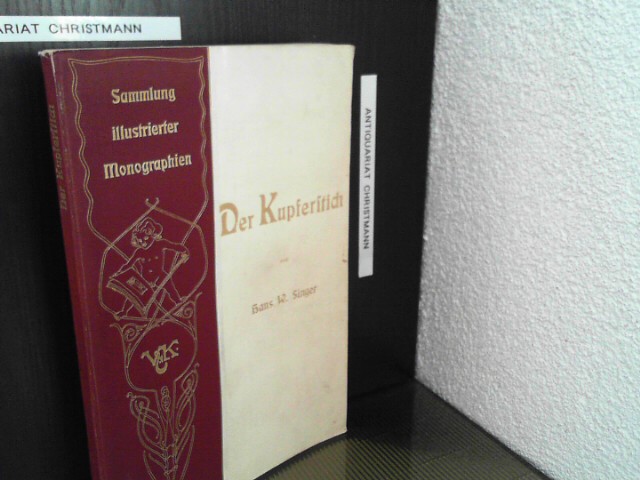
1904rif. 15664Bielefeld ; Leipzig : Velhagen & Klasing 1904. 142 S. : Mit 107 Abb., darunter 6 farb. Einschaltb. ; 4°, Eigentümersignatur auf Vorsatzblatt Kart., Softcover/Paperback, Gebrauchsspuren am Einband, Papier etwas wellig, sonst guter Zustand
1895rif. 1310520(Prag, Selbstverlag, 1895. Gr.-8vo. Titel, 2 Bl., 517, (5) S., 16 Tafeln m. 26 Abbildungen in Lichtdruck auf aufgewalztem China. OHlwdbd m. goldgeprägtem Rückentitel (Einbd etwas berieben, Innengelenke gelockert, Bildstempel a. d. Vorsatz, Verlagsadresse überklebt mit "Joseph Baer & Co. Frankfurt am Main, Rossmarkt 18", darunter der Stempel "Bibliothek Allgemeine Zeitung, München", Titel leicht fingerfleckig, Tafeln gering braunfleckig).
1914rif. 1127245Leipzig, Seemann, 1914. 4to. 4 Bl., 547, (1) S. m. zahlr. Textabb. Olwd. (angestaubt, Rücken etwas fleckig).
rif. DADAX1579903126New unknown
1922- Lucien Vogel éditeur, Paris 1922, 18x24cm, une feuille. - Original color print, printed on vergé paper, signed in the plate. An original print used to illustrate the Gazette du bon ton, one of the most attractive and influential 20th century fashion magazines, featuring the talents of French artists and other contributors from the burgeoning Art Deco movement. A celebrated fashion magazine established in 1912 by Lucien Vogel, La Gazette du bon ton appeared until 1925, with a hiatus from 1915 to 1920 due to the war (the editor-in-chief having been called up for service). It consisted of 69 issues printed in only 2,000 copies each and notably illustrated with 573 color plates and 148 sketches of the models of the great designers. Right from the start, this sumptuous publication "was aimed at bibliophiles and fashionable society," (Françoise Tétart-Vittu, "La Gazette du bon ton", in Dictionnaire de la mode, 2016) and was printed on fine vergé paper using a type cut specially for the magazine by Georges Peignot, known as Cochin, later used (in 1946) by Christian Dior. The prints were made using stencils, heightened in colors, some highlighted in gold or palladium. The story began in 1912, when Lucien Vogel, a man of the world involved in fashion (he had already been part of the fashion magazine Femina) decided, with his wife Cosette de Brunhoff - the sister of Jean, creator of Babar - to set up the Gazette du bon ton, subtitled at the time: "Art, fashion, frivolities." Georges Charensol noted the reasoning of the editor-in-chief: "'In 1910,' he observed, 'there was no really artistic fashion magazine, nothing representative of the spirit of the time. My dream was therefore to make a luxury magazine with truly modern artists...I was assured of success, because when it comes to fashion, no country on earth can compete with France.'" ("Un grand éditeur d'art. Lucien Vogel" in Les Nouvelles littéraires, no. 133, May 1925). The magazine was immediately successful, not only in France but also in the United States and Latin America. At first, Vogel put together a team of seven artists: André-Édouard Marty and Pierre Brissaud, followed by Georges Lepape and Dammicourt, as well as eventually his friends from school and the School of Fine Arts, like George Barbier, Bernard Boutet de Monvel and Charles Martin. Other talented people soon came flocking to join the team: Guy Arnoux, Léon Bakst, Benito, Boutet de Monvel, Umberto Brunelleschi, Chas Laborde, Jean-Gabriel Domergue, Raoul Dufy, Édouard Halouze, Alexandre Iacovleff, Jean Émile Laboureur, Charles Loupot, Chalres Martin, Maggie Salcedo. These artist, mostly unknown when Lucien Vogel sought them out, later became emblematic and sought-after artistic figures. It was also they who worked on the advertising drawings for the Gazette. The plates put the spotlight on, and celebrate, dresses by seven designers of the age: Lanvin, Doeuillet, Paquin, Poiret, Worth, Vionnet and Doucet. The designers provided exclusive models for each issue. Nonetheless, some of the illustrations are not based on real models, but simply on the illustrator's conception of the fashion of the day. The Gazette du bon ton was an important step in the history of fashion. Combining aesthetic demands with the physical whole, it brought together - for the first time - the great talents of the artistic, literary, and fashion worlds; and imposed, through this alchemy, a completely new image of women: slender, independent and daring, which was shared by the new generation of designers, including Coco Chanel, Jean Patou, Marcel Rochas, and so on... Taken over in 1920 by Condé Montrose Nast, the Gazette du bon ton was an important influence on the new layout and aesthetics of that "little dying paper" that Nast had bought a few years earlier: Vogue. [FRENCH VERSION FOLLOWS] Estampe originale en couleur, tirée sur papier vergé, signée en bas à droite de la planche. La Gazette du bon ton, l'une des plus belle
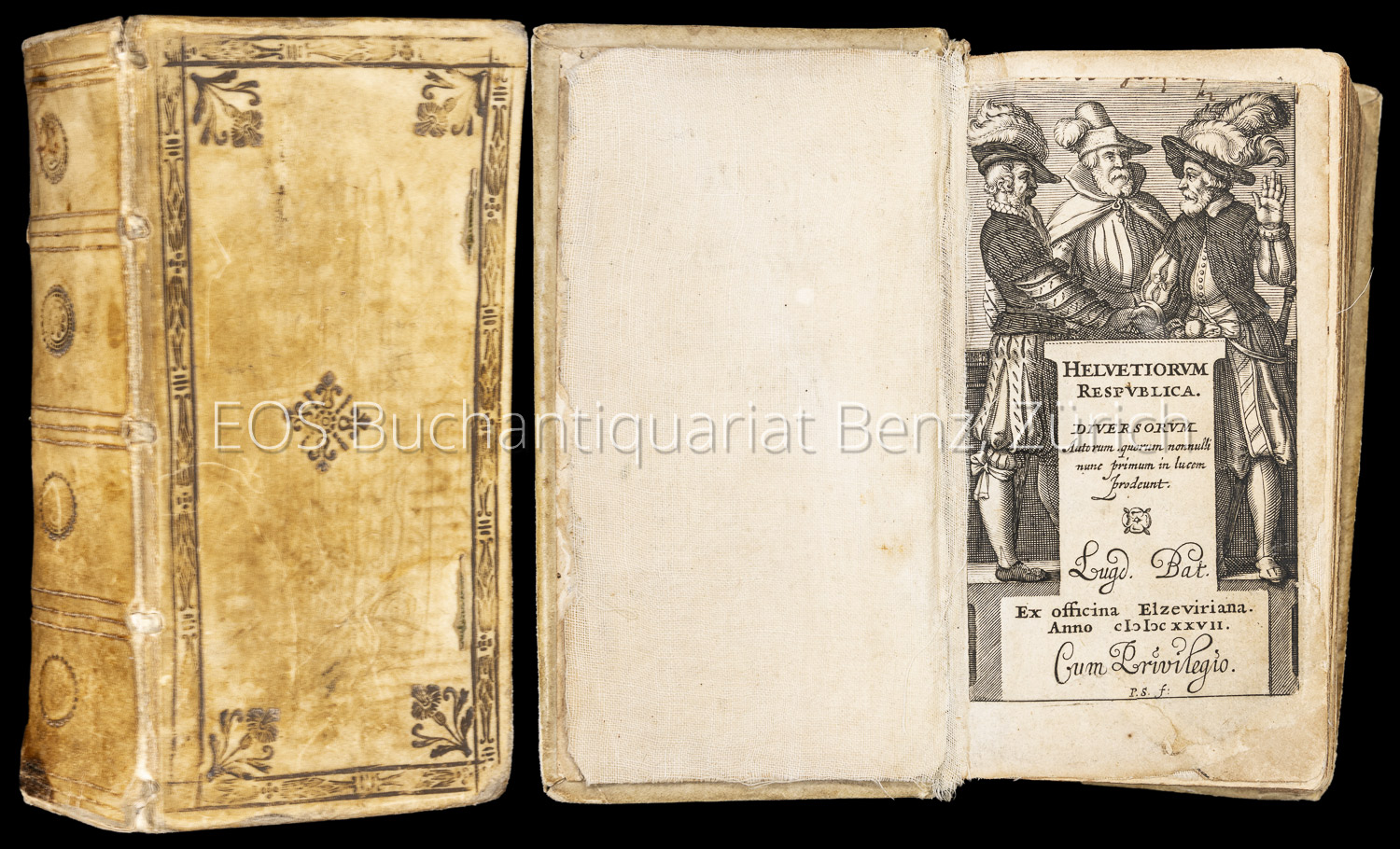
1627rif. 5159CBLeiden, Ex Officina Elzeviriana (Bonaventura & Abraham Elzevier), 1627. 12°. 535 (1) S., (16) S. Index, (1) S. Privileg. Mit gest. figürlichem Titel (Rütlischwur), signiert P.S. Etwas späteres Pergament. + Wichtig: Für unsere Kunden in der EU erfolgt der Versand alle 14 Tage verzollt ab Deutschland / Postbank-Konto in Deutschland vorhanden +, 5159C
1921- Lucien Vogel éditeur, Paris 1921, 19,5x25cm, une feuille. - Original color print, printed on vergé paper, signed in the plate. An original print used to illustrate the Gazette du bon ton, one of the most attractive and influential 20th century fashion magazines, featuring the talents of French artists and other contributors from the burgeoning Art Deco movement. A celebrated fashion magazine established in 1912 by Lucien Vogel, La Gazette du bon ton appeared until 1925, with a hiatus from 1915 to 1920 due to the war (the editor-in-chief having been called up for service). It consisted of 69 issues printed in only 2,000 copies each and notably illustrated with 573 color plates and 148 sketches of the models of the great designers. Right from the start, this sumptuous publication "was aimed at bibliophiles and fashionable society," (Françoise Tétart-Vittu, "La Gazette du bon ton", in Dictionnaire de la mode, 2016) and was printed on fine vergé paper using a type cut specially for the magazine by Georges Peignot, known as Cochin, later used (in 1946) by Christian Dior. The prints were made using stencils, heightened in colors, some highlighted in gold or palladium. The story began in 1912, when Lucien Vogel, a man of the world involved in fashion (he had already been part of the fashion magazine Femina) decided, with his wife Cosette de Brunhoff - the sister of Jean, creator of Babar - to set up the Gazette du bon ton, subtitled at the time: "Art, fashion, frivolities." Georges Charensol noted the reasoning of the editor-in-chief: "'In 1910,' he observed, 'there was no really artistic fashion magazine, nothing representative of the spirit of the time. My dream was therefore to make a luxury magazine with truly modern artists...I was assured of success, because when it comes to fashion, no country on earth can compete with France.'" ("Un grand éditeur d'art. Lucien Vogel" in Les Nouvelles littéraires, no. 133, May 1925). The magazine was immediately successful, not only in France but also in the United States and Latin America. At first, Vogel put together a team of seven artists: André-Édouard Marty and Pierre Brissaud, followed by Georges Lepape and Dammicourt, as well as eventually his friends from school and the School of Fine Arts, like George Barbier, Bernard Boutet de Monvel and Charles Martin. Other talented people soon came flocking to join the team: Guy Arnoux, Léon Bakst, Benito, Boutet de Monvel, Umberto Brunelleschi, Chas Laborde, Jean-Gabriel Domergue, Raoul Dufy, Édouard Halouze, Alexandre Iacovleff, Jean Émile Laboureur, Charles Loupot, Chalres Martin, Maggie Salcedo. These artist, mostly unknown when Lucien Vogel sought them out, later became emblematic and sought-after artistic figures. It was also they who worked on the advertising drawings for the Gazette. The plates put the spotlight on, and celebrate, dresses by seven designers of the age: Lanvin, Doeuillet, Paquin, Poiret, Worth, Vionnet and Doucet. The designers provided exclusive models for each issue. Nonetheless, some of the illustrations are not based on real models, but simply on the illustrator's conception of the fashion of the day. The Gazette du bon ton was an important step in the history of fashion. Combining aesthetic demands with the physical whole, it brought together - for the first time - the great talents of the artistic, literary, and fashion worlds; and imposed, through this alchemy, a completely new image of women: slender, independent and daring, which was shared by the new generation of designers, including Coco Chanel, Jean Patou, Marcel Rochas, and so on... Taken over in 1920 by Condé Montrose Nast, the Gazette du bon ton was an important influence on the new layout and aesthetics of that "little dying paper" that Nast had bought a few years earlier: Vogue. [FRENCH VERSION FOLLOWS] Estampe originale en couleur tirée sur papier vergé et signée dans la planche par l'auteur en bas à gauche. Gravure originale réalis
1921- Lucien Vogel éditeur, Paris 1921, 18x24cm, une feuille. - Original color print, printed on vergé paper, non signed. An original print used to illustrate the Gazette du bon ton, one of the most attractive and influential 20th century fashion magazines, featuring the talents of French artists and other contributors from the burgeoning Art Deco movement. A celebrated fashion magazine established in 1912 by Lucien Vogel, La Gazette du bon ton appeared until 1925, with a hiatus from 1915 to 1920 due to the war (the editor-in-chief having been called up for service). It consisted of 69 issues printed in only 2,000 copies each and notably illustrated with 573 color plates and 148 sketches of the models of the great designers. Right from the start, this sumptuous publication "was aimed at bibliophiles and fashionable society," (Françoise Tétart-Vittu, "La Gazette du bon ton", in Dictionnaire de la mode, 2016) and was printed on fine vergé paper using a type cut specially for the magazine by Georges Peignot, known as Cochin, later used (in 1946) by Christian Dior. The prints were made using stencils, heightened in colors, some highlighted in gold or palladium. The story began in 1912, when Lucien Vogel, a man of the world involved in fashion (he had already been part of the fashion magazine Femina) decided, with his wife Cosette de Brunhoff - the sister of Jean, creator of Babar - to set up the Gazette du bon ton, subtitled at the time: "Art, fashion, frivolities." Georges Charensol noted the reasoning of the editor-in-chief: "'In 1910,' he observed, 'there was no really artistic fashion magazine, nothing representative of the spirit of the time. My dream was therefore to make a luxury magazine with truly modern artists...I was assured of success, because when it comes to fashion, no country on earth can compete with France.'" ("Un grand éditeur d'art. Lucien Vogel" in Les Nouvelles littéraires, no. 133, May 1925). The magazine was immediately successful, not only in France but also in the United States and Latin America. At first, Vogel put together a team of seven artists: André-Édouard Marty and Pierre Brissaud, followed by Georges Lepape and Dammicourt, as well as eventually his friends from school and the School of Fine Arts, like George Barbier, Bernard Boutet de Monvel and Charles Martin. Other talented people soon came flocking to join the team: Guy Arnoux, Léon Bakst, Benito, Boutet de Monvel, Umberto Brunelleschi, Chas Laborde, Jean-Gabriel Domergue, Raoul Dufy, Édouard Halouze, Alexandre Iacovleff, Jean Émile Laboureur, Charles Loupot, Chalres Martin, Maggie Salcedo. These artist, mostly unknown when Lucien Vogel sought them out, later became emblematic and sought-after artistic figures. It was also they who worked on the advertising drawings for the Gazette. The plates put the spotlight on, and celebrate, dresses by seven designers of the age: Lanvin, Doeuillet, Paquin, Poiret, Worth, Vionnet and Doucet. The designers provided exclusive models for each issue. Nonetheless, some of the illustrations are not based on real models, but simply on the illustrator's conception of the fashion of the day. The Gazette du bon ton was an important step in the history of fashion. Combining aesthetic demands with the physical whole, it brought together - for the first time - the great talents of the artistic, literary, and fashion worlds; and imposed, through this alchemy, a completely new image of women: slender, independent and daring, which was shared by the new generation of designers, including Coco Chanel, Jean Patou, Marcel Rochas, and so on... Taken over in 1920 by Condé Montrose Nast, the Gazette du bon ton was an important influence on the new layout and aesthetics of that "little dying paper" that Nast had bought a few years earlier: Vogue. [FRENCH VERSION FOLLOWS] Estampe originale en couleur, tirée sur papier vergé, non-signée. Gravure originale réalisée pour l'illustration de La Gazette du bon ton, l'une des plus b
1912- s.n., Paris 1912, 14x22,5cm, une feuille. - Estampe originale en couleur, tirée sur papier vergé, signée en bas à gauche de la planche. L'une des premières revues de mode françaises, parue quelques temps avant la fameuse Gazette du bon ton et réunissant les grands artistes français de la mouvance Art déco. Le Journal des dames et des modes est une revue trimensuelle de mode française illustrée créée en 1797. Sa publication est stoppée en 1839 avant d'être reprise en juin 1912 sous l'impulsion de Tommaso Antongini, le secrétaire, ami et biographe de Gabriele d'Annunzio. Elle disparaîtra en août 1914 à l'aube de la Première Guerre mondiale. La revue était tirée à 1279 exemplaires ce qui en fait, pour l'époque, une publication relativement confidentielle. Les 186 planches, d'une grande finesse, sont gravées sur papier fort puis coloriées au pochoir. Elles représentent, la majorité du temps, des femmes, mais aussi des hommes et des enfants. Les modèles ne sont pas, à la différence de ceux de la Gazette du bon ton dont la publication verra le jour quelques mois plus tard, ceux des couturiers de renom mais sont le fruit de l'imagination des illustrateurs eux-mêmes. Les pochoirs sont, la plupart du temps, exécutés par George Barbier, mais d'autres artistes collaborent à la revue : Léon Bakst, B. Berty, Bernard Boutet de Monvel, Roger Broders, Jan van Brock, Umberto Brunelleschi, H. Robert Dammy, Étienne Drian, Abel Faivre, Marie-Madeleine Franc-Nohain, Xavier Gosé, Paul Iribe, Kriegck, Victor Lhuer, Pierre Legrain, Charles Martin, Fernand Siméon, Ismael Smith, Armand Vallée et Gerda Wegener. Nombre de ces illustrateurs seront également associés à La Gazette du bon ton. Leurs travaux, emblématiques du mouvement Art déco, soulignent l'influence de l'orientalisme et des costumes des ballets russes tout en les inscrivant dans les activités quotidiennes des Français aisés de l'époque. Dès la préface du premier numéro de 1912, Anatole France déclare : « Au bout de soixante-quinze ans, il renaît. Il renaît par les soins de quelques esprits ingénieux et artistes. Il renaît pour les curieux (s'il en est encore) que ne contentent pas les journaux de modes tirés à plusieurs milliers et illustrés par la photographie. Et si les éditeurs nous rendent très exactement, dans son format, avec son papier, son impression, ses procédés de gravure et de coloris, le vieux classique des modes d'autrefois, c'est qu'ils entendent le continuer agréablement et devenir les classiques charmants de la mode d'aujourd'hui et de demain. » [ENGLISH DESCRIPTION ON DEMAND]
1920- Lucien Vogel éditeur, Paris Février 1920, 18x24cm, une feuille. - Original color print heightened with gold, printed on vergé paper, signed in the plate. An original print used to illustrate the Gazette du bon ton, one of the most attractive and influential 20th century fashion magazines, featuring the talents of French artists and other contributors from the burgeoning Art Deco movement. A celebrated fashion magazine established in 1912 by Lucien Vogel, La Gazette du bon ton appeared until 1925, with a hiatus from 1915 to 1920 due to the war (the editor-in-chief having been called up for service). It consisted of 69 issues printed in only 2,000 copies each and notably illustrated with 573 color plates and 148 sketches of the models of the great designers. Right from the start, this sumptuous publication "was aimed at bibliophiles and fashionable society," (Françoise Tétart-Vittu, "La Gazette du bon ton", in Dictionnaire de la mode, 2016) and was printed on fine vergé paper using a type cut specially for the magazine by Georges Peignot, known as Cochin, later used (in 1946) by Christian Dior. The prints were made using stencils, heightened in colors, some highlighted in gold or palladium. The story began in 1912, when Lucien Vogel, a man of the world involved in fashion (he had already been part of the fashion magazine Femina) decided, with his wife Cosette de Brunhoff - the sister of Jean, creator of Babar - to set up the Gazette du bon ton, subtitled at the time: "Art, fashion, frivolities." Georges Charensol noted the reasoning of the editor-in-chief: "'In 1910,' he observed, 'there was no really artistic fashion magazine, nothing representative of the spirit of the time. My dream was therefore to make a luxury magazine with truly modern artists...I was assured of success, because when it comes to fashion, no country on earth can compete with France.'" ("Un grand éditeur d'art. Lucien Vogel" in Les Nouvelles littéraires, no. 133, May 1925). The magazine was immediately successful, not only in France but also in the United States and Latin America. At first, Vogel put together a team of seven artists: André-Édouard Marty and Pierre Brissaud, followed by Georges Lepape and Dammicourt, as well as eventually his friends from school and the School of Fine Arts, like George Barbier, Bernard Boutet de Monvel and Charles Martin. Other talented people soon came flocking to join the team: Guy Arnoux, Léon Bakst, Benito, Boutet de Monvel, Umberto Brunelleschi, Chas Laborde, Jean-Gabriel Domergue, Raoul Dufy, Édouard Halouze, Alexandre Iacovleff, Jean Émile Laboureur, Charles Loupot, Chalres Martin, Maggie Salcedo. These artist, mostly unknown when Lucien Vogel sought them out, later became emblematic and sought-after artistic figures. It was also they who worked on the advertising drawings for the Gazette. The plates put the spotlight on, and celebrate, dresses by seven designers of the age: Lanvin, Doeuillet, Paquin, Poiret, Worth, Vionnet and Doucet. The designers provided exclusive models for each issue. Nonetheless, some of the illustrations are not based on real models, but simply on the illustrator's conception of the fashion of the day. The Gazette du bon ton was an important step in the history of fashion. Combining aesthetic demands with the physical whole, it brought together - for the first time - the great talents of the artistic, literary, and fashion worlds; and imposed, through this alchemy, a completely new image of women: slender, independent and daring, which was shared by the new generation of designers, including Coco Chanel, Jean Patou, Marcel Rochas, and so on... Taken over in 1920 by Condé Montrose Nast, the Gazette du bon ton was an important influence on the new layout and aesthetics of that "little dying paper" that Nast had bought a few years earlier: Vogue. [FRENCH VERSION FOLLOWS] Estampe originale en couleur rehaussée à l'or, tirée sur papier vergé, signée en bas à gauche de la planch
1920- Lucien Vogel éditeur, Paris Juin 1920, 18x24cm, une feuille. - Original color print, printed on vergé paper, non signed. An original print used to illustrate the Gazette du bon ton, one of the most attractive and influential 20th century fashion magazines, featuring the talents of French artists and other contributors from the burgeoning Art Deco movement. A celebrated fashion magazine established in 1912 by Lucien Vogel, La Gazette du bon ton appeared until 1925, with a hiatus from 1915 to 1920 due to the war (the editor-in-chief having been called up for service). It consisted of 69 issues printed in only 2,000 copies each and notably illustrated with 573 color plates and 148 sketches of the models of the great designers. Right from the start, this sumptuous publication "was aimed at bibliophiles and fashionable society," (Françoise Tétart-Vittu, "La Gazette du bon ton", in Dictionnaire de la mode, 2016) and was printed on fine vergé paper using a type cut specially for the magazine by Georges Peignot, known as Cochin, later used (in 1946) by Christian Dior. The prints were made using stencils, heightened in colors, some highlighted in gold or palladium. The story began in 1912, when Lucien Vogel, a man of the world involved in fashion (he had already been part of the fashion magazine Femina) decided, with his wife Cosette de Brunhoff - the sister of Jean, creator of Babar - to set up the Gazette du bon ton, subtitled at the time: "Art, fashion, frivolities." Georges Charensol noted the reasoning of the editor-in-chief: "'In 1910,' he observed, 'there was no really artistic fashion magazine, nothing representative of the spirit of the time. My dream was therefore to make a luxury magazine with truly modern artists...I was assured of success, because when it comes to fashion, no country on earth can compete with France.'" ("Un grand éditeur d'art. Lucien Vogel" in Les Nouvelles littéraires, no. 133, May 1925). The magazine was immediately successful, not only in France but also in the United States and Latin America. At first, Vogel put together a team of seven artists: André-Édouard Marty and Pierre Brissaud, followed by Georges Lepape and Dammicourt, as well as eventually his friends from school and the School of Fine Arts, like George Barbier, Bernard Boutet de Monvel and Charles Martin. Other talented people soon came flocking to join the team: Guy Arnoux, Léon Bakst, Benito, Boutet de Monvel, Umberto Brunelleschi, Chas Laborde, Jean-Gabriel Domergue, Raoul Dufy, Édouard Halouze, Alexandre Iacovleff, Jean Émile Laboureur, Charles Loupot, Chalres Martin, Maggie Salcedo. These artist, mostly unknown when Lucien Vogel sought them out, later became emblematic and sought-after artistic figures. It was also they who worked on the advertising drawings for the Gazette. The plates put the spotlight on, and celebrate, dresses by seven designers of the age: Lanvin, Doeuillet, Paquin, Poiret, Worth, Vionnet and Doucet. The designers provided exclusive models for each issue. Nonetheless, some of the illustrations are not based on real models, but simply on the illustrator's conception of the fashion of the day. The Gazette du bon ton was an important step in the history of fashion. Combining aesthetic demands with the physical whole, it brought together - for the first time - the great talents of the artistic, literary, and fashion worlds; and imposed, through this alchemy, a completely new image of women: slender, independent and daring, which was shared by the new generation of designers, including Coco Chanel, Jean Patou, Marcel Rochas, and so on... Taken over in 1920 by Condé Montrose Nast, the Gazette du bon ton was an important influence on the new layout and aesthetics of that "little dying paper" that Nast had bought a few years earlier: Vogue. [FRENCH VERSION FOLLOWS] Estampe originale en couleur, tirée sur papier vergé, non-signée. Gravure originale réalisée pour l'illustration de La Gazette du bon ton
1920- Lucien Vogel éditeur, Paris 1920, 19,5x25cm, une feuille. - Original color print, printed on vergé paper, the signature does not let identify the artist. An original print used to illustrate the Gazette du bon ton, one of the most attractive and influential 20th century fashion magazines, featuring the talents of French artists and other contributors from the burgeoning Art Deco movement. A celebrated fashion magazine established in 1912 by Lucien Vogel, La Gazette du bon ton appeared until 1925, with a hiatus from 1915 to 1920 due to the war (the editor-in-chief having been called up for service). It consisted of 69 issues printed in only 2,000 copies each and notably illustrated with 573 color plates and 148 sketches of the models of the great designers. Right from the start, this sumptuous publication "was aimed at bibliophiles and fashionable society," (Françoise Tétart-Vittu, "La Gazette du bon ton", in Dictionnaire de la mode, 2016) and was printed on fine vergé paper using a type cut specially for the magazine by Georges Peignot, known as Cochin, later used (in 1946) by Christian Dior. The prints were made using stencils, heightened in colors, some highlighted in gold or palladium. The story began in 1912, when Lucien Vogel, a man of the world involved in fashion (he had already been part of the fashion magazine Femina) decided, with his wife Cosette de Brunhoff - the sister of Jean, creator of Babar - to set up the Gazette du bon ton, subtitled at the time: "Art, fashion, frivolities." Georges Charensol noted the reasoning of the editor-in-chief: "'In 1910,' he observed, 'there was no really artistic fashion magazine, nothing representative of the spirit of the time. My dream was therefore to make a luxury magazine with truly modern artists...I was assured of success, because when it comes to fashion, no country on earth can compete with France.'" ("Un grand éditeur d'art. Lucien Vogel" in Les Nouvelles littéraires, no. 133, May 1925). The magazine was immediately successful, not only in France but also in the United States and Latin America. At first, Vogel put together a team of seven artists: André-Édouard Marty and Pierre Brissaud, followed by Georges Lepape and Dammicourt, as well as eventually his friends from school and the School of Fine Arts, like George Barbier, Bernard Boutet de Monvel and Charles Martin. Other talented people soon came flocking to join the team: Guy Arnoux, Léon Bakst, Benito, Boutet de Monvel, Umberto Brunelleschi, Chas Laborde, Jean-Gabriel Domergue, Raoul Dufy, Édouard Halouze, Alexandre Iacovleff, Jean Émile Laboureur, Charles Loupot, Chalres Martin, Maggie Salcedo. These artist, mostly unknown when Lucien Vogel sought them out, later became emblematic and sought-after artistic figures. It was also they who worked on the advertising drawings for the Gazette. The plates put the spotlight on, and celebrate, dresses by seven designers of the age: Lanvin, Doeuillet, Paquin, Poiret, Worth, Vionnet and Doucet. The designers provided exclusive models for each issue. Nonetheless, some of the illustrations are not based on real models, but simply on the illustrator's conception of the fashion of the day. The Gazette du bon ton was an important step in the history of fashion. Combining aesthetic demands with the physical whole, it brought together - for the first time - the great talents of the artistic, literary, and fashion worlds; and imposed, through this alchemy, a completely new image of women: slender, independent and daring, which was shared by the new generation of designers, including Coco Chanel, Jean Patou, Marcel Rochas, and so on... Taken over in 1920 by Condé Montrose Nast, the Gazette du bon ton was an important influence on the new layout and aesthetics of that "little dying paper" that Nast had bought a few years earlier: Vogue. [FRENCH VERSION FOLLOWS] Estampe originale en couleur tirée sur papier vergé, la signature ne permet pas d'identifier l'artiste. Gravure orig