Bouchot Henri, AnonymeLivre Rare Book
10.612 risultati
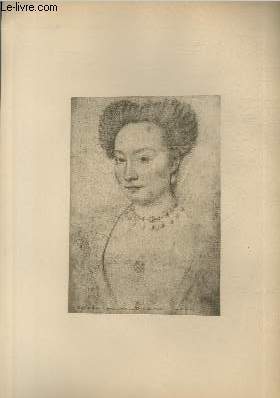
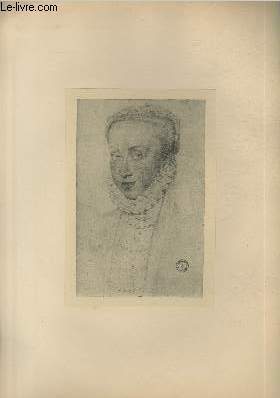
rif. RO20228513"Librairie-Imprimeries réunies ancienne Maison Morel. Non daté. In-Plano. En feuillets. Bon état, Livré sans Couverture, Dos satisfaisant, Intérieur frais. Portrait contrecollé. Planche extraite de l'ouvrage ""Musée du Cabinet des Estampes : Portraits"". Légende au verso. Reproduction d'un dessin aux crayons de couleur. Dimensions : environ 45 x 32 cm. . . . Classification Dewey : 769-Estampes"
rif. RO20228515"Librairie-Imprimeries réunies ancienne Maison Morel. Non daté. In-Plano. En feuillets. Bon état, Livré sans Couverture, Dos satisfaisant, Intérieur frais. Portrait contrecollé. Planche extraite de l'ouvrage ""Musée du Cabinet des Estampes : Portraits"". Légende au verso. Reproduction d'un dessin aux crayons de couleur. Dimensions : environ 45 x 32 cm. . . . Classification Dewey : 769-Estampes"
rif. RO20228516"Librairie-Imprimeries réunies ancienne Maison Morel. Non daté. In-Plano. En feuillets. Bon état, Livré sans Couverture, Dos satisfaisant, Intérieur frais. Portrait contrecollé. Planche extraite de l'ouvrage ""Musée du Cabinet des Estampes : Portraits"". Légende au verso. Reproduction d'une aquarelle. Dimensions : environ 45 x 32 cm. . . . Classification Dewey : 769-Estampes"
rif. RO20228517"Librairie-Imprimeries réunies ancienne Maison Morel. Non daté. In-Plano. En feuillets. Bon état, Livré sans Couverture, Dos satisfaisant, Intérieur frais. Portrait contrecollé. Planche extraite de l'ouvrage ""Musée du Cabinet des Estampes : Portraits"". Légende au verso. Reproduction d'un dessin à la plume sur vélin. Dimensions de la planche : environ 45 x 32 cm. . . . Classification Dewey : 769-Estampes"
rif. RO20228518"Librairie-Imprimeries réunies ancienne Maison Morel. Non daté. In-Plano. En feuillets. Bon état, Livré sans Couverture, Dos satisfaisant, Intérieur frais. Portrait contrecollé. Planche extraite de l'ouvrage ""Musée du Cabinet des Estampes : Portraits"". Légende au verso. Reproduction d'un dessin à la plume sur vélin. Dimensions de la planche : environ 45 x 32 cm. . . . Classification Dewey : 769-Estampes"
rif. RO20228519"Librairie-Imprimeries réunies ancienne Maison Morel. Non daté. In-Plano. En feuillets. Bon état, Livré sans Couverture, Dos satisfaisant, Intérieur frais. Portrait contrecollé. Planche extraite de l'ouvrage ""Musée du Cabinet des Estampes : Portraits"". Légende au verso. Reproduction d'un dessin lavé. Dimensions de la planche : environ 45 x 32 cm. . . . Classification Dewey : 769-Estampes"
rif. RO20228520"Librairie-Imprimeries réunies ancienne Maison Morel. Non daté. In-Plano. En feuillets. Bon état, Livré sans Couverture, Dos satisfaisant, Intérieur frais. Portrait contrecollé. Planche extraite de l'ouvrage ""Musée du Cabinet des Estampes : Portraits"". Légende au verso. Reproduction d'un dessin aux crayons de couleur. Dimensions : environ 45 x 32 cm. . . . Classification Dewey : 769-Estampes"
rif. RO20228521"Librairie-Imprimeries réunies ancienne Maison Morel. Non daté. In-Plano. En feuillets. Bon état, Livré sans Couverture, Dos satisfaisant, Intérieur frais. Portrait contrecollé. Planche extraite de l'ouvrage ""Musée du Cabinet des Estampes : Portraits"". Légende au verso. Reproduction d'un dessin aux crayons de couleur. Dimensions de la planche : environ 45 x 32 cm. . . . Classification Dewey : 769-Estampes"
rif. RO20228523"Librairie-Imprimeries réunies ancienne Maison Morel. Non daté. In-Plano. En feuillets. Bon état, Livré sans Couverture, Dos satisfaisant, Intérieur frais. Portrait contrecollé. Planche extraite de l'ouvrage ""Musée du Cabinet des Estampes : Portraits"". Légende au verso. Reproduction d'un dessin à la plume sur vélin. Dimensions de planche : environ 45 x 32 cm. Quelques rousseurs au verso. . . . Classification Dewey : 769-Estampes"
1902rif. 210851902 1 Estampe en noir et blanc sur papier Japon, titré au crayon noir en bas à gauche sous la planche, signé au crayon noir en bas à droite sous la planche, 1902, 30 x 18 cm.
1902rif. 210861902 1 Estampe en noir et blanc sur papier Japon, titré au crayon noir en bas à gauche sous la planche, signé au crayon noir en bas à droite sous la planche, 1902, 30 x 18 cm.
rif. GRAV012MFormat : 26 x 34,5 cm sur papier à la Cuve. Cuvette en très bon état.
1928rif. 16464EDITION D ART SUCCES 1928 1 Lithographie rehaussée au pochoir, 1928, 47.2 x 31.8 cm.
1913rif. 54507Lucien Vogel éditeur | Paris Février 1913 | 19 x 24.50 cm | une feuille
1913- Lucien Vogel éditeur, Paris Février 1913, 19x24,5cm, une feuille. - Original color print, printed on vergé paper, signed in the plate. An original print used to illustrate the Gazette du bon ton, one of the most attractive and influential 20th century fashion magazines, featuring the talents of French artists and other contributors from the burgeoning Art Deco movement. A celebrated fashion magazine established in 1912 by Lucien Vogel, La Gazette du bon ton appeared until 1925, with a hiatus from 1915 to 1920 due to the war (the editor-in-chief having been called up for service). It consisted of 69 issues printed in only 2,000 copies each and notably illustrated with 573 color plates and 148 sketches of the models of the great designers. Right from the start, this sumptuous publication "was aimed at bibliophiles and fashionable society," (Françoise Tétart-Vittu, "La Gazette du bon ton", in Dictionnaire de la mode, 2016) and was printed on fine vergé paper using a type cut specially for the magazine by Georges Peignot, known as Cochin, later used (in 1946) by Christian Dior. The prints were made using stencils, heightened in colors, some highlighted in gold or palladium. The story began in 1912, when Lucien Vogel, a man of the world involved in fashion (he had already been part of the fashion magazine Femina) decided, with his wife Cosette de Brunhoff - the sister of Jean, creator of Babar - to set up the Gazette du bon ton, subtitled at the time: "Art, fashion, frivolities." Georges Charensol noted the reasoning of the editor-in-chief: "'In 1910,' he observed, 'there was no really artistic fashion magazine, nothing representative of the spirit of the time. My dream was therefore to make a luxury magazine with truly modern artists...I was assured of success, because when it comes to fashion, no country on earth can compete with France.'" ("Un grand éditeur d'art. Lucien Vogel" in Les Nouvelles littéraires, no. 133, May 1925). The magazine was immediately successful, not only in France but also in the United States and Latin America. At first, Vogel put together a team of seven artists: André-Édouard Marty and Pierre Brissaud, followed by Georges Lepape and Dammicourt, as well as eventually his friends from school and the School of Fine Arts, like George Barbier, Bernard Boutet de Monvel and Charles Martin. Other talented people soon came flocking to join the team: Guy Arnoux, Léon Bakst, Benito, Boutet de Monvel, Umberto Brunelleschi, Chas Laborde, Jean-Gabriel Domergue, Raoul Dufy, Édouard Halouze, Alexandre Iacovleff, Jean Émile Laboureur, Charles Loupot, Chalres Martin, Maggie Salcedo. These artist, mostly unknown when Lucien Vogel sought them out, later became emblematic and sought-after artistic figures. It was also they who worked on the advertising drawings for the Gazette. The plates put the spotlight on, and celebrate, dresses by seven designers of the age: Lanvin, Doeuillet, Paquin, Poiret, Worth, Vionnet and Doucet. The designers provided exclusive models for each issue. Nonetheless, some of the illustrations are not based on real models, but simply on the illustrator's conception of the fashion of the day. The Gazette du bon ton was an important step in the history of fashion. Combining aesthetic demands with the physical whole, it brought together - for the first time - the great talents of the artistic, literary, and fashion worlds; and imposed, through this alchemy, a completely new image of women: slender, independent and daring, which was shared by the new generation of designers, including Coco Chanel, Jean Patou, Marcel Rochas, and so on... Taken over in 1920 by Condé Montrose Nast, the Gazette du bon ton was an important influence on the new layout and aesthetics of that "little dying paper" that Nast had bought a few years earlier: Vogue. [FRENCH VERSION FOLLOWS] Estampe originale en couleur, tirée sur papier vergé et signée en bas à droite. Gravure originale réalisée pour l'illustratio
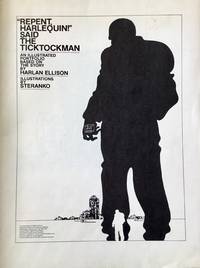
1978rif. 006367New York: BARONET PUBLISHING 1978. Print. Illus. by STERANKO. As New. Art Portfolio. Signed by Author and Illustrator. 1st Edition. Portfolio - Set of 6 Prints - As New in NF Illustrated Gatefold Cover - Signed and Numbered 1096 of 1500 by Harlan Ellison and Steranko on 1st. Print - "An Illustrated Portfolio Based on the Story by Harlan Ellison" - "Illustrations by Steranko". BARONET PUBLISHING unknown
1907rif. 141361907 Sans lieu, [1907-1908], grand panorama déroulant (9 m x 33 cm environ) sur 6 feuilles lithographiées en couleurs, réalisé par SEM en collaboration avec Auguste Roubille.Quelques restaurations anciennes au rubans adhésif, et quelques restaurations plus récentes au Filmoplast, aux extrémités au verso, très bon état de lensemble.
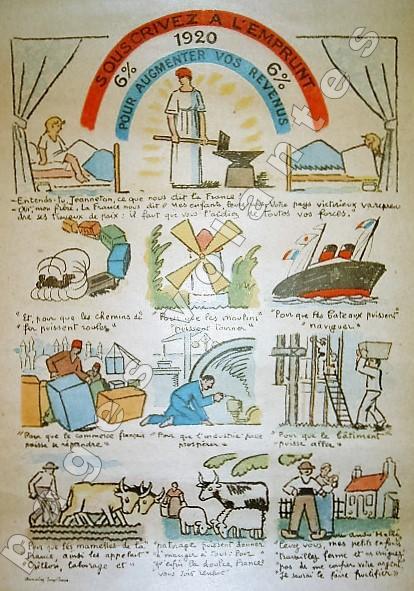
rif. 8213P., Devambez, affichette , 27X37 cm.
1922rif. 84793Lucien Vogel éditeur | Paris 1922 | 18 x 24 cm | une feuille
1922rif. 55021Lucien Vogel éditeur | Paris 1922 | 18 x 24 cm | une feuille
1922- Lucien Vogel éditeur, Paris 1922, 18x24cm, une feuille. - Original color print heightened with palladium, printed on vergé paper, signed in the plate. An original print used to illustrate the Gazette du bon ton, one of the most attractive and influential 20th century fashion magazines, featuring the talents of French artists and other contributors from the burgeoning Art Deco movement. A celebrated fashion magazine established in 1912 by Lucien Vogel, La Gazette du bon ton appeared until 1925, with a hiatus from 1915 to 1920 due to the war (the editor-in-chief having been called up for service). It consisted of 69 issues printed in only 2,000 copies each and notably illustrated with 573 color plates and 148 sketches of the models of the great designers. Right from the start, this sumptuous publication "was aimed at bibliophiles and fashionable society," (Françoise Tétart-Vittu, "La Gazette du bon ton", in Dictionnaire de la mode, 2016) and was printed on fine vergé paper using a type cut specially for the magazine by Georges Peignot, known as Cochin, later used (in 1946) by Christian Dior. The prints were made using stencils, heightened in colors, some highlighted in gold or palladium. The story began in 1912, when Lucien Vogel, a man of the world involved in fashion (he had already been part of the fashion magazine Femina) decided, with his wife Cosette de Brunhoff - the sister of Jean, creator of Babar - to set up the Gazette du bon ton, subtitled at the time: "Art, fashion, frivolities." Georges Charensol noted the reasoning of the editor-in-chief: "'In 1910,' he observed, 'there was no really artistic fashion magazine, nothing representative of the spirit of the time. My dream was therefore to make a luxury magazine with truly modern artists...I was assured of success, because when it comes to fashion, no country on earth can compete with France.'" ("Un grand éditeur d'art. Lucien Vogel" in Les Nouvelles littéraires, no. 133, May 1925). The magazine was immediately successful, not only in France but also in the United States and Latin America. At first, Vogel put together a team of seven artists: André-Édouard Marty and Pierre Brissaud, followed by Georges Lepape and Dammicourt, as well as eventually his friends from school and the School of Fine Arts, like George Barbier, Bernard Boutet de Monvel and Charles Martin. Other talented people soon came flocking to join the team: Guy Arnoux, Léon Bakst, Benito, Boutet de Monvel, Umberto Brunelleschi, Chas Laborde, Jean-Gabriel Domergue, Raoul Dufy, Édouard Halouze, Alexandre Iacovleff, Jean Émile Laboureur, Charles Loupot, Chalres Martin, Maggie Salcedo. These artist, mostly unknown when Lucien Vogel sought them out, later became emblematic and sought-after artistic figures. It was also they who worked on the advertising drawings for the Gazette. The plates put the spotlight on, and celebrate, dresses by seven designers of the age: Lanvin, Doeuillet, Paquin, Poiret, Worth, Vionnet and Doucet. The designers provided exclusive models for each issue. Nonetheless, some of the illustrations are not based on real models, but simply on the illustrator's conception of the fashion of the day. The Gazette du bon ton was an important step in the history of fashion. Combining aesthetic demands with the physical whole, it brought together - for the first time - the great talents of the artistic, literary, and fashion worlds; and imposed, through this alchemy, a completely new image of women: slender, independent and daring, which was shared by the new generation of designers, including Coco Chanel, Jean Patou, Marcel Rochas, and so on... Taken over in 1920 by Condé Montrose Nast, the Gazette du bon ton was an important influence on the new layout and aesthetics of that "little dying paper" that Nast had bought a few years earlier: Vogue. [FRENCH VERSION FOLLOWS] Estampe originale en couleur très finement rehaussée au palladium, tirée sur papier vergé, signée en bas à gauche de la
Kolorierte Lithographie auf Papier. 605 x 800 mm. Sehr seltene Monumentallithographie von Joseph Lanzedelli dem Jüngeren nach einem Entwurf von Adam Brenner, gedruckt bei B. Greiffenstein für J. Sedlaczek in Wien. Das Plakat zeigt eine Anbetung Jesu Christi als Himmelskönig auf textlicher Basis des "Te Deum Laudamus". Die irdische Sphäre ist zentral durch den schreibenden Heiligen Ambrosius von Mailand repräsentiert, dem der berühmte Hymnus zugeschrieben wird. Mehrere Textzitate mit Strophenangabe der deutschen Nachdichtung des Te Deums von Ignaz Franz sind illustriert, darunter die Anbetung der Cherubim. Erst durch die Bildunterschrift wird der Zusammenhang mit der Hochzeit des Kaiserpaares hergestellt: "Zur Erinnerung an die Oesterreichs Völker beglückende Vermählung und glorreiche Regierung Sr. kais. königl. Apostolischen Majestät unsers allgeliebten und allergnädigsten Kaisers Franz Joseph I., mit Ihrer königl. Hoheit der durchlauchtigsten Prinzessin Elisabeth Amalie Eugenie, Herzogin in Bayern". Die Betonung des Heiligen Ambrosius von Mailand als Schutzpatron des österreichischen Kaisertums hatte in der angespannten Lage vor dem zweiten italienischen Unabhängigkeitskrieg (1859) auch eine politische Dimension. - Der Wiener Kaufmannssohn Adam Brenner (1800-91) studierte unter Leopold Kupelwieser und Ferdinand Georg Waldmüller an der Akademie der bildenden Künste. Er trat sowohl in der Historienmalerei als auch in den niedrigeren Gattungen als begabter akademischer Maler hervor. - Mehrere geklebte Einrisse sowie fachgerechte Ergänzungen im Randbereich. Leicht fleckig und gebräunt.
1981rif. 62553Rahlstedt, 1981. Plattenrand 34 x 21 cm.
1979rif. 62551Rahlstedt, 1979. Plattenrand 34 x 21 cm.
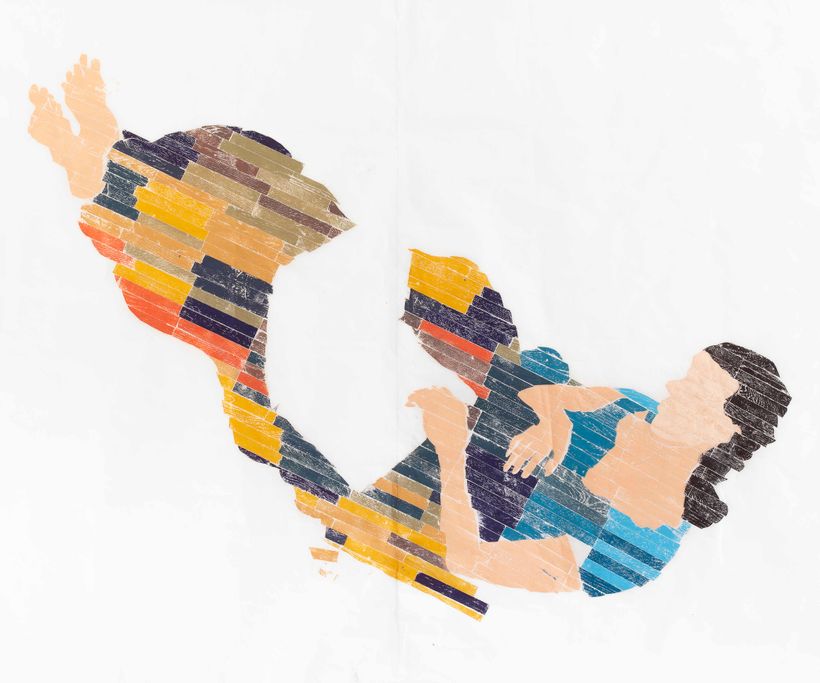
rif. 18804CBLeipzig, Eigendruck, 2019. 130 x 190 cm. Original Materialdruck auf Japanpapier. Zwei Bögen, aneinander montiert. Ohne Passepartout. Exemplar 1/1. Die Versandkosten für Kunstwerke und mehrbändige Werke können von den Standard-Versandkosten abweichen. Guter Zustand. Papierbedingt leichte Knickspuren. In Bleistift signiert, betitelt und nummeriert.