AubertLivre Rare Book

10.940 risultati
rif. 15166Épreuve sur beau papier filigrané. en feuille Très bon Paris 15,5 x 11 cm
1912rif. 54491Lucien Vogel éditeur | Paris 1912-1913 | 19 x 24.50 cm | une feuille
1912rif. 89492Paris 1912-1913 | 19 x 24.50 cm | une feuille
rif. 15157Épreuve sur beau papier filigrané. en feuille Très bon Paris 14,5 x 10,5 cm
1965rif. 1227292Paris, Institut néerlandais, 1965. 75 S., 2 gef. Taf. m. farb. Abb. u. 40 Taf. OKart. (Einbd etwas lichtrandig).
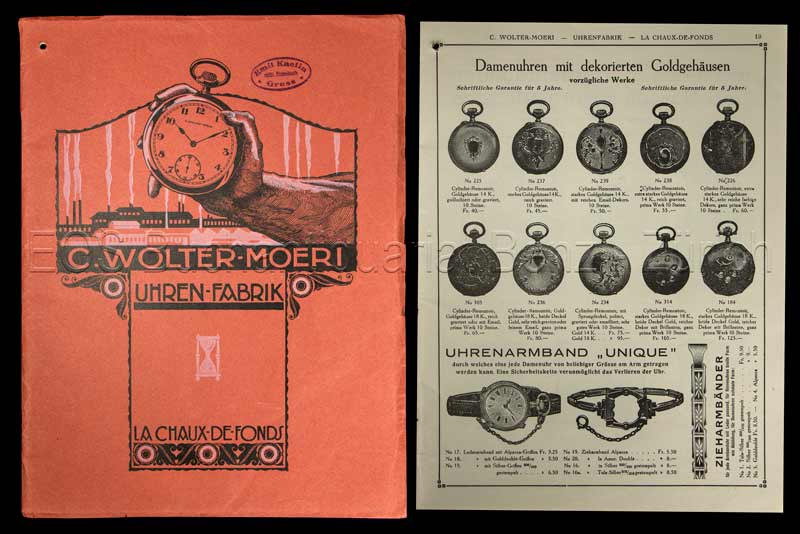
1920rif. 3764DBLa Chaux-de-Fonds, (um 1920). 4°. 64 S. Mit zahlr. Abb. Illustr. Orig.-Heft. + Wichtig: Für unsere Kunden in der EU erfolgt der Versand alle 14 Tage verzollt ab Deutschland / Postbank-Konto in Deutschland vorhanden +, Abb.
rif. 0243289642.Gpaperback. Good. Access codes and supplements are not guaranteed with used items. May be an ex-library book. paperback
1912- Lucien Vogel éditeur, Paris 1912-1913, 19x24,5cm, une feuille. - Original color print, printed on vergé paper, signed in the plate. An original print used to illustrate the Gazette du bon ton, one of the most attractive and influential 20th century fashion magazines, featuring the talents of French artists and other contributors from the burgeoning Art Deco movement. A celebrated fashion magazine established in 1912 by Lucien Vogel, La Gazette du bon ton appeared until 1925, with a hiatus from 1915 to 1920 due to the war (the editor-in-chief having been called up for service). It consisted of 69 issues printed in only 2,000 copies each and notably illustrated with 573 color plates and 148 sketches of the models of the great designers. Right from the start, this sumptuous publication "was aimed at bibliophiles and fashionable society," (Françoise Tétart-Vittu, "La Gazette du bon ton", in Dictionnaire de la mode, 2016) and was printed on fine vergé paper using a type cut specially for the magazine by Georges Peignot, known as Cochin, later used (in 1946) by Christian Dior. The prints were made using stencils, heightened in colors, some highlighted in gold or palladium. The story began in 1912, when Lucien Vogel, a man of the world involved in fashion (he had already been part of the fashion magazine Femina) decided, with his wife Cosette de Brunhoff - the sister of Jean, creator of Babar - to set up the Gazette du bon ton, subtitled at the time: "Art, fashion, frivolities." Georges Charensol noted the reasoning of the editor-in-chief: "'In 1910,' he observed, 'there was no really artistic fashion magazine, nothing representative of the spirit of the time. My dream was therefore to make a luxury magazine with truly modern artists...I was assured of success, because when it comes to fashion, no country on earth can compete with France.'" ("Un grand éditeur d'art. Lucien Vogel" in Les Nouvelles littéraires, no. 133, May 1925). The magazine was immediately successful, not only in France but also in the United States and Latin America. At first, Vogel put together a team of seven artists: André-Édouard Marty and Pierre Brissaud, followed by Georges Lepape and Dammicourt, as well as eventually his friends from school and the School of Fine Arts, like George Barbier, Bernard Boutet de Monvel and Charles Martin. Other talented people soon came flocking to join the team: Guy Arnoux, Léon Bakst, Benito, Boutet de Monvel, Umberto Brunelleschi, Chas Laborde, Jean-Gabriel Domergue, Raoul Dufy, Édouard Halouze, Alexandre Iacovleff, Jean Émile Laboureur, Charles Loupot, Chalres Martin, Maggie Salcedo. These artist, mostly unknown when Lucien Vogel sought them out, later became emblematic and sought-after artistic figures. It was also they who worked on the advertising drawings for the Gazette. The plates put the spotlight on, and celebrate, dresses by seven designers of the age: Lanvin, Doeuillet, Paquin, Poiret, Worth, Vionnet and Doucet. The designers provided exclusive models for each issue. Nonetheless, some of the illustrations are not based on real models, but simply on the illustrator's conception of the fashion of the day. The Gazette du bon ton was an important step in the history of fashion. Combining aesthetic demands with the physical whole, it brought together - for the first time - the great talents of the artistic, literary, and fashion worlds; and imposed, through this alchemy, a completely new image of women: slender, independent and daring, which was shared by the new generation of designers, including Coco Chanel, Jean Patou, Marcel Rochas, and so on... Taken over in 1920 by Condé Montrose Nast, the Gazette du bon ton was an important influence on the new layout and aesthetics of that "little dying paper" that Nast had bought a few years earlier: Vogue. [FRENCH VERSION FOLLOWS] Estampe originale en couleur, tirée sur papier vergé et signée en bas à gauche dans la planche. Gravure originale réalisée pour
rif. 26903sl,sd,-13,5x 9 cm.
1992A clean, unmarked book with a tight binding. 85 pages. Full gray cloth boards. 8 3/4"w x 11 1/4"h. Many color photos and illustrations.
1889rif. 28035Longman's Green London Printed by Stottiswoode & Co. 1889. Inlaid Slip Announcing Illustrated by Caton Woodville Reproduced by Permission of Proprietors of Illustrated London News Pictorial Endpapers Decorated Swans & Ships Introduction HB NODustJacket 1889 on Title pg. First edition. VG/VG AS-IS NOJACKET Bound Dark Black cloth with Beveled Edges & Gold Gilt on Front Bright & spine cvr has Gilt Egyptian decorations with tiny end Tears With 336 pages and 16 pages of ads dated January 1889 and 29 full page plates. Cover light rub wear tiny Chips Tears Extremities Slight Lean Interior nice Tight FOXing Some rubbing and bumping to the corners and spine ends binding is tight solid copy. Slight Roll to spine. Wear to extremities. . 1st Edition. Hardcover. Very Good/No Jacket. Illus. by Edward Whymper J. D. Cooper & B. Lloyd . Longman's Green , London , Printed by Stottiswoode & Co. hardcover
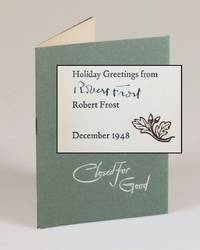
1948rif. 008728New York: Printed at The Spiral Press 1948. First edition. Paperback. This original Robert Frost 1948 Christmas Card features a trifecta of virtues. This is the first published appearance of this poem which had an unusual text history detailed further below. Of 2275 copies printed for 9 different names this is one of 375 printed for the poet himself. Last but certainly not least this is not only one of Frost's copies but is inscribed and signed by him. Following the first and second printed lines on the presentation page "This new poem brings Holiday Greetings from Robert Frost December 1948" Frost wrote "the Hendersons" and signed "Robert Frost". Condition is near fine. The gray-green card wraps are clean bright and sharp cornered the binding staple firmly intact and uncorroded. We note only a tiny blemish above the title on the front cover and a trivial hint of wear to the spine heel. The contents are crisp and clean lightly age-toned but with no spotting or soiling. With the permission of Frost and his publishers in 1929 the Spiral Press began printing an annual Robert Frost Christmas Card featuring one of his poems. The tradition continued until 1962 Frost's final Christmas. Each annual Christmas poem publication was printed with varying names on the title page to accommodate their being sent by various Frost publishers artists and important friends. This copy is one of those printed for Frost himself. The 1948 Christmas poem "Closed for Good" has an unusual textual history. After it was first printed here it appeared in a number of other Frost collections including in the 1949 edition of Complete Poems and the 1954 1955 and 1963 editions of selected poems. In 1962 a revised version of Closed for Good was published as part of In the Clearing. There the poem is altered; the first stanza lines 1-6 is deleted And becomes They in line 7 and the word brush becomes spread in line 24. This is clearly how Frost wanted the poem to evolve. In the Clearing was his final new collection and in 1958 Frost told Elizabeth Shepley Sergeant that he was trying out a new version of four stanzas. Nonetheless When Edward Connery Lathems edition of The Poetry of Robert Frost was published in 1969 the poem was presented in five stanzas and the two word changes restored to original. Given both Frosts manifestly deliberative use of words and the fact that the poem is a commentary on Frosts inheritance from the past and his legacy to the future the changes do not seem incidental. By 1948 when this poem first appeared in his annual Christmas card and he inscribed this copy Robert Frost 1874-1963 had already entered the final decades of his life as the most highly esteemed American poet of the twentieth century with an accumulating hoard of academic and civic honors. Half a decade had passed since he had won his still-to-this-day-unrivalled fourth Pulitzer Prize for Poetry. This is all the more remarkable given that he did not publish his first volume of poetry until he was nearly 40 years old. References: Crane B19; Tuten and Zubizarreta; ANB Printed at The Spiral Press paperback
1931rif. 17082110London: Jonathan Cape Printed by Walter Lewis at the University Press Cambridge 1931. Limited Edition. Hardcover. Near fine. Gill Eric. No. 129 of 160 octavo size 206 pp. signed by Eric Gill. Clothing has long been an integral part of society and can be used to reflect diverse religious and cultural identities. In this essay Eric Gill 1882-1940 discusses the significance of clothes in society and argues for a more egalitarian approach to clothing; for example Gill advocates the suitability of men's clothing trousers for women as a way to liberate the sexes and create a more equal society. Gill provides wood engravings for the book illustrating his concepts and showcasing his masterful rendering of the technique; his illustrations have a slightly satirical slant while evoking the pathos of his arguments. ___DESCRIPTION: Quarter brown pigskin with marbled paper boards gilt rules and lettering on the spine top edge gilt fore- and bottom edges uncut illustrations include title page device "Woman Dancing" P712; "Art and Prudence" P714; "Clothes as Houses" P715; "Clothes as Workshops" P716; "Clothes as Churches and Town Halls" P717; "Clothes for Special Parts" P718; "The Tyranny of Tailors" P719; "Nature and Nakedness" P720; "Trousers" P21; and a tailpiece of "Trousers and Spats" P722; octavo 7.5" by 5.25" pagination: i-vii 1-2 3-196 197-198 1 colophon one of 160 copies this number 129 signed "Eric G" on the colophon. ___CONDITION: Volume is near fine with clean boards straight corners a strong square text block with solid hinges the interior is clean and bright and entirely free of prior owner markings; some slight rubbing to the bottom edges of the boards and to the corners a faint stain to the gutter of Contents page and very slight cracking to the gutter at pages 128 and 129 but hinges are still tight. ___CITATION: Gill 22. ___POSTAGE: International customers please note that additional postage may apply as the standard shipping charge does not always cover costs; please inquire for details. ___Swan's Fine Books is pleased to be a member of the ABAA ILAB and IOBA and we stand behind book we sell. Please contact us with any questions you may have we are here to help. Jonathan Cape [Printed by Walter Lewis at the University Press, Cambridge] hardcover
1931rif. 17082110London: Jonathan Cape Printed by Walter Lewis at the University Press Cambridge 1931. Limited Edition. Hardcover. Near fine. Gill Eric. No. 129 of 160 octavo size 206 pp. signed by Eric Gill. Clothing has long been an integral part of society and can be used to reflect diverse religious and cultural identities. In this essay Eric Gill 1882-1940 discusses the significance of clothes in society and argues for a more egalitarian approach to clothing; for example Gill advocates the suitability of men's clothing trousers for women as a way to liberate the sexes and create a more equal society. Gill provides wood engravings for the book illustrating his concepts and showcasing his masterful rendering of the technique; his illustrations have a slightly satirical slant while evoking the pathos of his arguments. ___DESCRIPTION: Quarter brown pigskin with marbled paper boards gilt rules and lettering on the spine top edge gilt fore- and bottom edges uncut illustrations include title page device "Woman Dancing" P712; "Art and Prudence" P714; "Clothes as Houses" P715; "Clothes as Workshops" P716; "Clothes as Churches and Town Halls" P717; "Clothes for Special Parts" P718; "The Tyranny of Tailors" P719; "Nature and Nakedness" P720; "Trousers" P21; and a tailpiece of "Trousers and Spats" P722; octavo 7.5" by 5.25" pagination: i-vii 1-2 3-196 197-198 1 colophon one of 160 copies this number 129 signed "Eric G" on the colophon. ___CONDITION: Volume is near fine with clean boards straight corners a strong square text block with solid hinges the interior is clean and bright and entirely free of prior owner markings; some slight rubbing to the bottom edges of the boards and to the corners a faint stain to the gutter of Contents page and very slight cracking to the gutter at pages 128 and 129 but hinges are still tight. ___CITATION: Gill 22. ___POSTAGE: International customers please note that additional postage may apply as the standard shipping charge does not always cover costs; please inquire for details. ___Swan's Fine Books is pleased to be a member of the ABAA ILAB and IOBA and we stand behind book we sell. Please contact us with any questions you may have we are here to help. Jonathan Cape [Printed by Walter Lewis at the University Press, Cambridge] hardcover books
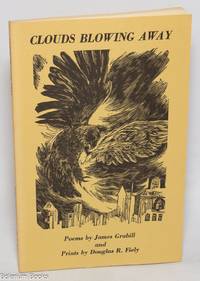
1976rif. 329622Clackamas & Santa Cruz: Seizure & Kayak Books 1976. Paperback. 68p. poems illustrations very good small press paperback first edition in yellow pictorial wraps. Seizure & Kayak Books paperback books
1956RARE SIX ORIGINAL SIGNED prints of Mendoza artists of the "Mendoza Engravings Club", which attempted to combine folk art with socialist realism. Most prominent of those artists was Carlos Alonso, whose print "La Lampa" is included in this volume. Photographs of the prints may be provided on demand; inquire with us for additional details. 345x490mm. 6 plates. Beige cloth Hardcover. No binding (folder format). Cover slightly worn and lightly stained. Cover leafs partly torn on edges. Pages slightly yellowing. Queralp's print edges wavy (no damage to print). Baumann's print left edge partly creased (no damage to print). [SUMMARY]: This rare collection of signed engravings is in good condition.
1733rif. biblio316Amsterdam: Chatelain 1733. Gravure sur cuivre La feuille = 310 X 460 mm la cuvette = 255 x 352 mm quelques rousseurs en marge image propre Chatelain unknown
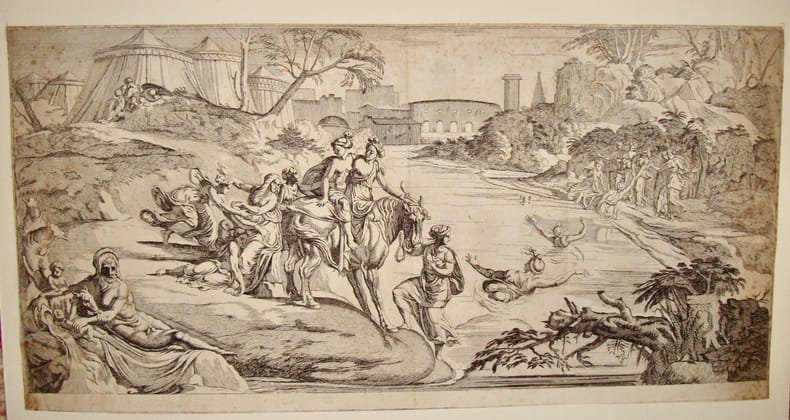
rif. 14692Très rare estampe d'après Jules Romain. Voir Bartsch tome XVI, p. 395, 49. L'estampe est très proche de celle gravée par René Boyvin (milieu du XVIè). Au verso à la plume et encre brune: F. Rechberger 1805. Celui-ci fut conservateur de la collection Moriz von Fries, puis entra à l'Albertina. Sa signature se trouve sur les feuilles de la collection du comte von Fries. En feuille. Ancienne réparation dans l'angle supérieur droit. Bon XVIè 64 x 75 cm
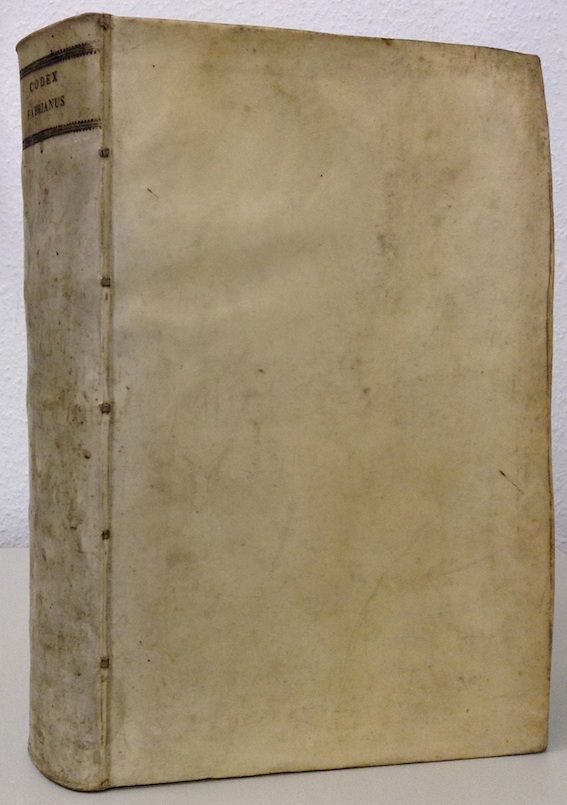
1706rif. 627536Leipzig, Fritsch, 1706. Folio. 8 Bl., 1124 S., 40 Bl. Index. Pergament d. Zeit (fleckig u. verstaubt). [3 Warenabbildungen]
1607rif. 615104Frankfurt, J. T. Schönwetter für W. Richter, 1607. Folio. 6 (statt 10) Bl., 1188 S., 37 Bl. Index. Pergament d. Zeit (fleckig, 1 Ecke mit Fehlstelle).
1951rif. 15703Très rares estampes des Xvè, XVIè et XVIIè siècles Broché. Très bon Paris Drouot 1951 1 volume in-4°
1929rif. 88241929 Paris, Hotel Drouot, 1929 ; in-4 broché, couverture beige illustrée d'un large encadrement noir au 1er plat et imprimée en noir et rouge , dos muet ( titre manuscrit au crayon); 53pp.
1914rif. 85371914 Paris, 1914. Un volume in-4 broché, couverture rempliée beige, 52 pp. et planches en noir hors-texte. Rousseurs sur les plats, néanmoins bon état.
1928rif. 85381928 Paris, 1928. Un volume in-4 broché, couverture rempliée beige, non paginé, xxvii planches en noir hors-texte. Rousseurs sur les plats, néanmoins bon état.
1920rif. 85391920 Paris, 1920. Un volume in-4 broché, couverture rempliée beige, 187 pp., planches en noir hors-texte. Rousseurs sur les plats, néanmoins bon état.