10.815 Ergebnisse
1792Best.-Nr. 703499Paris, ohne Verlag, ohne Jahr (um 1792). Groß-Folio. VI, 236 Seiten und 57 von 58 nummerierte Blätter.. Goldgeprägter Halbledereinband der Zeit. Einband mit stärkeren Gebrauchsspuren, Überzugspapier teils gelöst und mit Fehlstellen. Buchrücken fleckig und Vordergelenk mit 6 cm Einriß. Innen sauber. Die breitrandigen Tafeln in kräftigen Abdrucken. Titelblatt fehlt.
1962Cartella contenente 6 litografie originali a colori, eseguite da Luigi Bartolini nel laboratorio delle Edizioni d'Arte il Bisonte a Firenze, tra il dicembre 1961 e il marzo 1962, ed un frontespizio litografico inciso dall'Autore. Titoli delle opere: "Villa in Sabina", "Strada di Villa Madama", "Il davanzale in fiore", "Anna nei boschi", "Fonte di campagna", "Le fioraie" (cm 65x46 - 46x65 c.ca). Le litografie sono numerate, titolate e firmate da Bartolini a matita. Con due poesie dell'Autore: "La passeggiata" e "Gli uccelli" Esemplare 6/30. Cm 66x48. pp. 4 + 7. . Molto buono (Very Good). . Prima edizione di 100+XXX es. numerati. .
1900Best.-Nr. 17839Very Good. This group of 7antique magazine illustrations is slightly toned but clean and very good. 12" x 8.5" each.; Prints . 1900. unknown
7 Kupferstiche je 37,5 x 25,5 cm (Leopolds Portrait zusätzlich signiert "A. Bloem delin."). Folge von sieben Kupferstichen von Habsburgerportraits: Maximilian II., Ferdinand I., Matthias, Ferdinand II., Rudolf II., Ferdinand III. und Leopold I. (die letzteren beiden mit stärkeren Wurmgängen, sonst wohlerhalten und in guten, kräftigen Abzügen). Der Nürnberger Zeichner, Stecher, Radierer und Kunsthändler J. A. Böner (1647-1720) ist vor allem für seine historisch interessanten, meist kleinformatigen Darstellungen von Stadtansichten und Trachten aus Nürnberg, Fürth und Umgebung bekannt.
1954RARE! 7 ORIGINAL LITHOGRAPHS by Pablo Picasso, in folder format, from an unknown publication (no details within), probably circa 1954. All seven lithographs are based on the same templates used for the 1954 Verve no. 29-30 publication. Presented in folder format. The folder itself is an additional (8th) lithograph, very similar to the one used for the cover of "The Human Comedy", printed on harder, criss-crossed cloth paper. Also included: a small photograph of another Picasso print, in b&w. 330x250mm. Soft folder format, with larger red and white lithograph serving as cover for the other lithographs. Folder split halfway along the spine. Front cover stained in several places. Edges worn around cover and all lithographs. One small tear affects cover and all lithograph frames near the corner. Only one lithograph very slightly damaged by this tear. No bending, creasing or staining inside. [SUMMARY]: Overall, this extremely rare collection of original Picasso lithographs is in good condition.
1899Best.-Nr. 15794These original magazine covers have light wear and tearing to the margin but clean and very good. .; Prints . 1899-1900. unknown
Best.-Nr. 241760 Planche N°15, format 29 x 40 cm (toutes marges). Chromolithographie d'époque avec le timbre à sec de l'Imprimerie Chaix (Lugt 1777c). Notre exemplaire est une des très rares épreuves imprimées sur papier Japon, toute petite trace de punaisage dans l'extrémité de la marge supérieure droite (Our plate is one of the few copies printed on Japanese paper. Original plate in good condition). LES MAITRES DE L'AFFICHE, prestigieuse publication d'art, éditée par l'atelier de lithographie Chaix, dont la parution s'étala de décembre 1895 à novembre 1900. Chaque livraison comportait 4 planches de reproduction en chromolithographie d'une remarquable qualité d'impression des plus belles affiches illustrées des grands artistes français et étrangers (auxquelles il faut ajouter 16 planches de lithographies originales offertes en prime aux abonnés). Lors de l'Exposition universelle de 1889, fut organisée la première exposition rétrospective dévolue à l'affiche, celle-ci devait valider la reconnaissance officielle d'appartenance de l'affiche au monde de l'art. Jules Chéret (1836-1932) y sera sacré '' Maître de l'affiche '', c'est aussi à cette date que Seurat commencera à collectionner les affiches de Chéret. Bel exemplaire ( Photographies sur demande / We can send pictures of this book on simple request )
19949 ex libris presentati al XXV Congresso di Exlibri di Milano da Fumiko Yokoyama (xilografie, cm 10 x 6,5 e 7,8 x 6), Takao Yokoyama (xilografia 15 x 7,5), Yu Yuen-hong (xilografia cm 10 x 15), F. I. Van Damme (xilografia cm 15 x 12,5), Jens Rusch (Acquaforte cm 8 x 19,6), Rudolf Kuenzi (xilografia, cm 17 x 9), Jakob Demus (acquaforte, cm 11,6 x 9), Gunter Egger (Acquaforte, cm 9 x 9,8) . . pp.. . Ottimo (Fine). . . .
1840Best.-Nr. 30255ABParis, um 1840. Quer-folio. Pappband der Zeit. + Wichtig: Für unsere Kunden in der EU erfolgt der Versand alle 14 Tage verzollt ab Deutschland / Postbank-Konto in Deutschland vorhanden +, Einband und Lithographie|Z_Dudelsack [2 Warenabbildungen]
1840Best.-Nr. 30255ABParis, um 1840. Quer-folio. Pappband der Zeit.
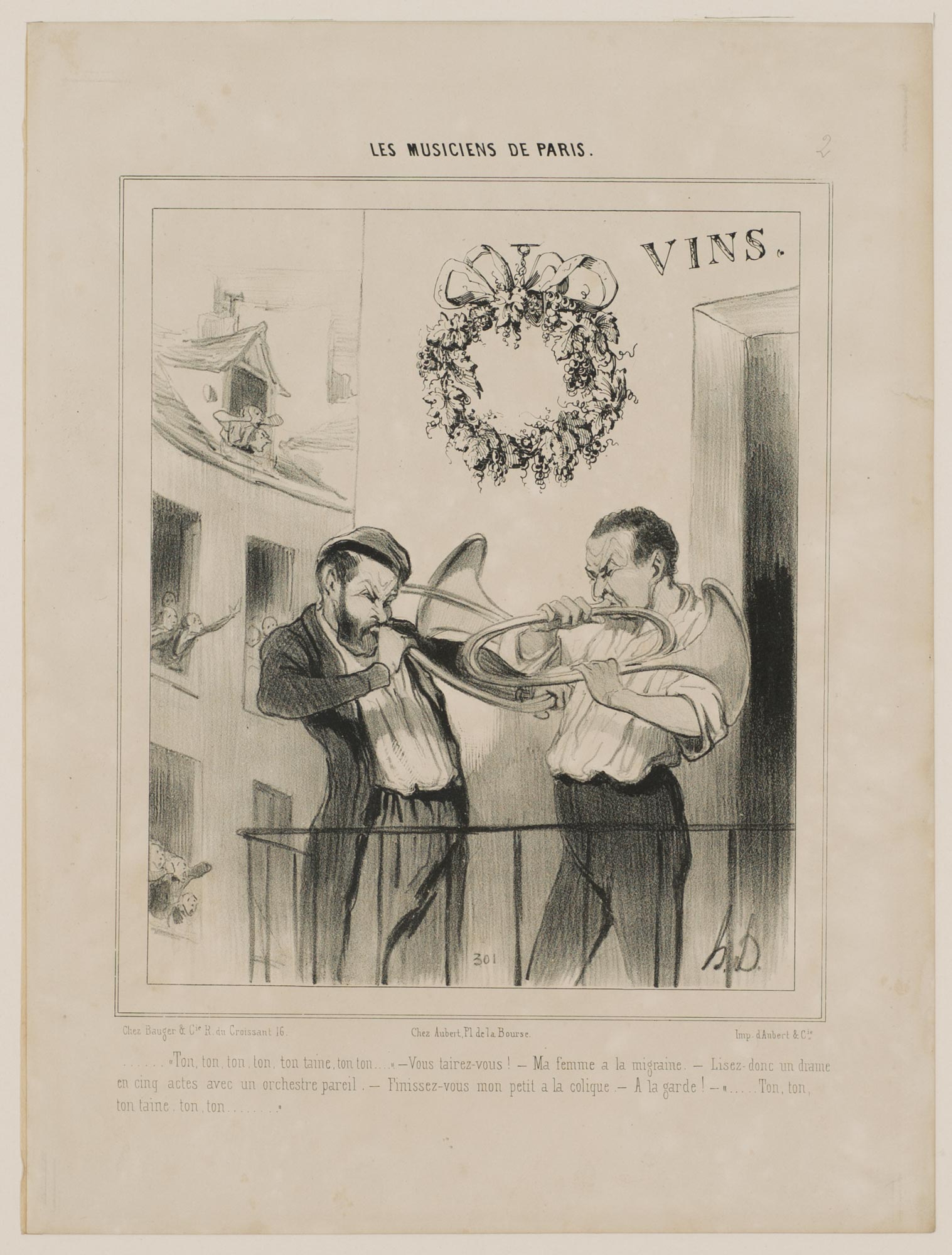
Best.-Nr. HD-127o.J. meine Frau hat die Migräne!! - Dann lesen Sie doch ein Drama in fünf Akten mit passendem Orchester! - Hören Sie auf, mein Sohn bekommt eine Kolik. - Ton, ton, ton, taine,... ton ton??. Lithographie, auf chamoisfarbenem Velin, mit der Adresse: Chez Banger & Cie. Éditeurs R. du Croissant 16, sowie: Chez Aubert Place de la Bourse, und: Imp. d?Aubert & Cie. Blattgröße 34,3:25,6 cm. Literatur: Daumier-Register 920, II (von 3); Delteil 920, II (von 3), Blatt 2 der Serie ?Les Musiciens de Paris?. Erschienen am 24.10.1841 in ?La Caricature?. ? Sur blanc.
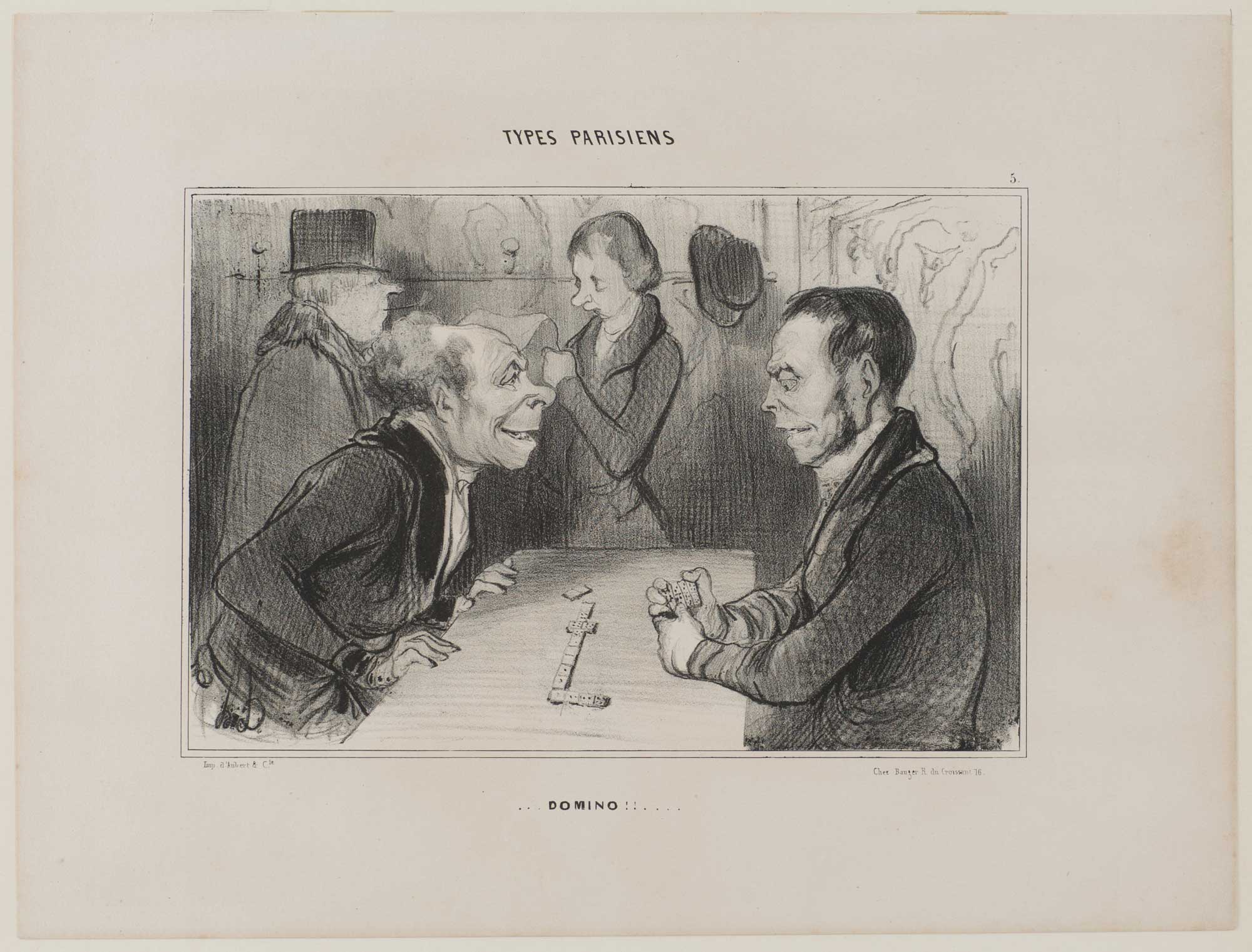
Best.-Nr. HD-032o.J. Lithographie, auf chamoisfarbenem Velin, mit den Adressen: Imp. d?Aubert et Cie., sowie: Chez Bauger R. du Croissant 16. Blattgröße 26:34,4 cm. Literatur: Daumier-Register 563; Delteil 563, Blatt 5 aus der Serie ?Types Parisiens?, erschienen 24.10.1841 in ?Le Charivari?. - Sur blanc!
305:508 mm, mounted on cardboard. Fine, large horizontal watercolour picturing a noble lady nude in the bathtub under a parted canopy, with ladies-in-waiting staring aghast or trying to shield their mistress from view, while four puttos gracefully fly from the canopy, a gentleman in 18th-century costume, seated on a sopha, faces the scene, and a small orchestra plays at far right. - A rare example of a risqué drawing by Shepard, best known for shaping the definitive image of "Winnie-the-Pooh", but also a prolific staff-member of "Punch" and illustrator of favourites such as "The Wind in the Willows" and "David Copperfield". - Some spotting. Signed in red "Ernest H. Shepard" at lower right. While the drawing is clearly marked for reproduction (size markings; notes "Sketch 3 Colour Double"; "Henry Stone" [i.e., the Banbury-based colour printing and photo-engraving concern], etc.), it is unclear if it was actually published - the book for which it was intended could not be traced, and the subject matter does not fit easily into the artist's known canon, the flamboyant period costumes reminiscent of his work for "Everybody's Pepys", but also showing Shepard as a highly accomplished, albeit tamer disciple of Aubrey Beardsley with an inclination toward Rococo rather than Art Nouveau.
310:245 mm, under oval mat. A seated young lady, handkerchief in hand, smiling and eyes cast down bashfully, wearing a white bonnet and a dark, semi-transparent cloth flung over her cape, her petticoat having slipped to her thighs and revealing her tightly closed legs from the knees downward. - A rare example of a risqué drawing by Shepard, best known for shaping the definitive image of "Winnie-the-Pooh", but also a prolific staff-member of "Punch" and illustrator of favourites such as "The Wind in the Willows" and "David Copperfield". - Slightly warped. No publication of this image could be traced.
1861Best.-Nr. 1359Paris : Plon, 1861-1865. ENSEMBLE DE 8 COUVERTURES TYPOCHROMIQUES POUR LA « BIBLIOTHÈQUE DES LÉGENDES »
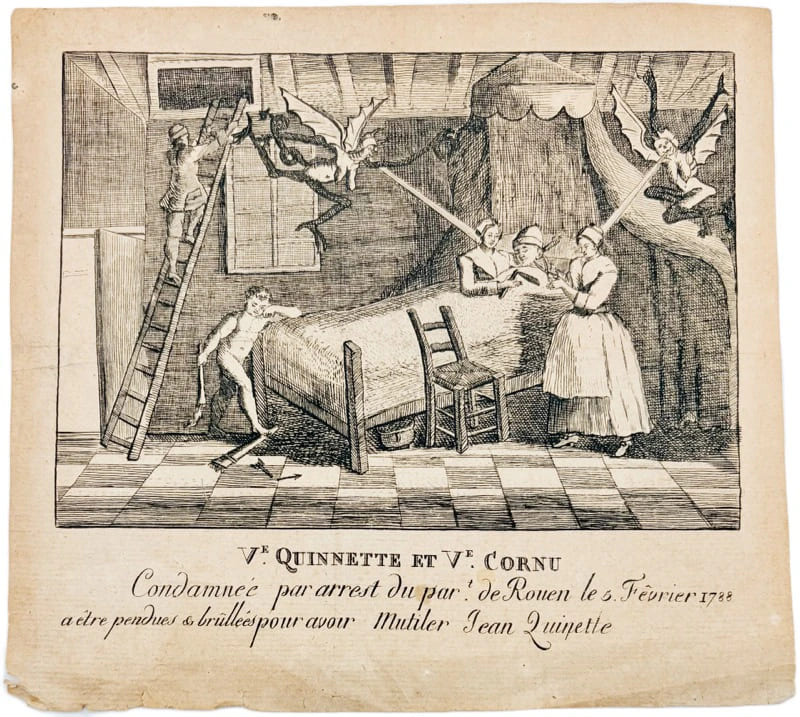
1788Best.-Nr. 44919Sans lieu, [Rouen ou Paris], , 1788. Eau-forte anonyme, 180 195 mm (cuvette 124 170 mm), légende gravée en cursive italique sous la scène. Quelques plis.
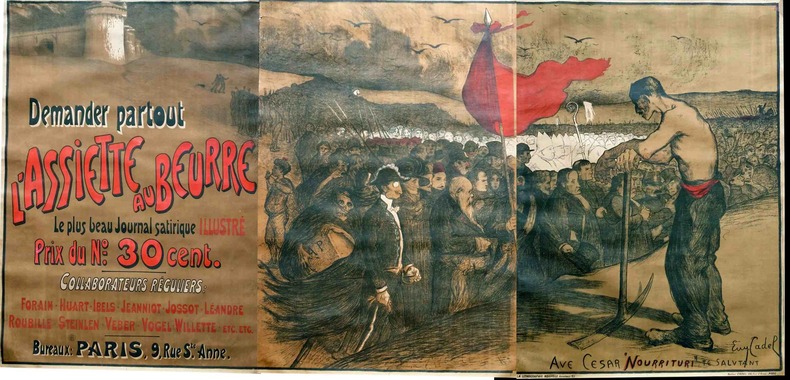
1901Best.-Nr. 11227, La Lithographie nouvelle, Atelier Cadel, [1901 ca]. Affiche en 3 panneaux mesurant 320 x 155 cm, doublés de japon et entoilés.
1971Best.-Nr. 2929Paris Editions/Galerie Marquet 1971 aucune reliure Affiche originale tirée en sérigraphie pour l'ouverture la galerie Marquet en 1972 [Paris, imp. Jacques Marquet, 1971]. 64 x 49 cm.
Best.-Nr. 962Paris : [A. Levy fils] (J. Claye imp.), s. d. [1853 ou 1859]. UN RARE CALENDRIER DÉCRIVANT LES TRAVAUX DES CHAMPS PAR MOIS DANS LE GOÛT DES MANUSCRITS MÉDIÉVAUX
1889Best.-Nr. 44508, , 1889-1909. 79 brochures reliées en 4 volumes in-12 et in-8, demi-percaline olive (3 vol.) et demi-percaline rouille à coins (1 vol.) dos lisse orné, pièce de titre, couvertures conservées (reliure de l'époque signée Viginand).
1826Lithographie (Blattmaß ca. 483:607 mm). Das wohl eindrucksvollste Einzelblatt aus der 55 Blätter umfassenden Folge "Laxenburg bei Wien in bildlicher Darstellung", die 1820-26 in Wien erschien. "Privatdruck auf Befehl Kaiser Franz I., in sehr kleiner, nicht für den Handel bestimmter Auflage erschienen" (Nebehay/W.). - Die Ränder gering angestaubt bzw. geknittert, sonst tadellos. Nebehay/Wagner 359, 36.
1881Fine original 19th century tinted lithograph. Image size ca. 160 mm X 220 mm. Paper size ca. 240 mm X 315 mm. Artists' and Publisher's names printed below image. In overall very good condition. (Some foxing; traces of pencil marks on verso.) - - We offer more prints from this series. Write for a full list. - - Several of the finest bronze cannon and mortar barrels which were captured in the East Indies by the soldiers of the First-, Second-, and Third Dutch Expedition Force (1846, 1847, and 1849 respectively) were brought to the Netherlands as a gift to the King. In 1880, the artists father and son van Looy made an elaborately detailed and delicately executed set of lithographs, drawn on stone, of practically the entire booty. The prints were pulled by the famous stone-lithographers firm of S. Lankhout & Co., of The Hague, and published in 1881 by Publisher Gouda Quint, of Arnhem. Beautifully decorative. Scarce.
1881Fine original 19th century tinted lithograph. Image size ca. 160 mm X 220 mm. Paper size ca. 240 mm X 315 mm. Artists' and Publisher's names printed below image. In overall very good condition. (Some foxing; very light pencil mark.) - - Several of the finest bronze cannon and mortar barrels which were captured in the East Indies by the soldiers of the First-, Second-, and Third Dutch Expedition Force (1846, 1847, and 1849 respectively) were brought to the Netherlands as a gift to the King. In 1880, the artists father and son van Looy made an elaborately detailed and delicately executed set of lithographs, drawn on stone, of practically the entire booty. The prints were pulled by the famous stone-lithographers firm of S. Lankhout & Co., of The Hague, and published in 1881 by Publisher Gouda Quint, of Arnhem. Beautifully decorative. Scarce.
1881Fine original 19th century tinted lithograph. Image size ca. 220 mm X 160 mm. Paper size ca. 315 mm X 240 mm. Artists' and Publisher's names printed below image. In overall very good condition. (Spot; miniature triangular stamp just touching image area.) - - Several of the finest bronze cannon and mortar barrels which were captured in the East Indies by the soldiers of the First-, Second-, and Third Dutch Expedition Force (1846, 1847, and 1849 respectively) were brought to the Netherlands as a gift to the King. In 1880, the artists father and son van Looy made an elaborately detailed and delicately executed set of lithographs, drawn on stone, of practically the entire booty. The prints were pulled by the famous stone-lithographers firm of S. Lankhout & Co., of The Hague, and published in 1881 by Publisher Gouda Quint, of Arnhem. Beautifully decorative. Scarce.
1881Fine original 19th century tinted lithograph. Image size ca. 220 mm X 160 mm. Paper size ca. 315 mm X 240 mm. Artists' and Publisher's names printed below image. In overall very good condition. (Miniature triangular stamp just touching image area.) - - Several of the finest bronze cannon and mortar barrels which were captured in the East Indies by the soldiers of the First-, Second-, and Third Dutch Expedition Force (1846, 1847, and 1849 respectively) were brought to the Netherlands as a gift to the King. In 1880, the artists father and son van Looy made an elaborately detailed and delicately executed set of lithographs, drawn on stone, of practically the entire booty. The prints were pulled by the famous stone-lithographers firm of S. Lankhout & Co., of The Hague, and published in 1881 by Publisher Gouda Quint, of Arnhem. Beautifully decorative. Scarce.