[ÉDITION CLANDESTINE] [Caricature] [Monachisme].Livre Rare Book

10.959 Ergebnisse
1780Best.-Nr. 3163circa 1780 (le titre indique première partie mais l’ouvrage est cependant complet ainsi, il n’y a jamais eu de suite) (2bl), frontispice dépliant " L'Abrégé du faux clergé romain » d'après Romeyn de Hooghe titres, (2ff) ; 20 pp (préface), 111 pp, 50 planches hors texte, gravées cuivres d’après Cornelis Dusart. In-4, reliure en plein veau blond, dos plat orné de fleurons, pièce de titre en maroquin rouge « les désordres de monachisme », filets d’encadrements à l’extérieur et à l’intérieur des plats, tranches rougies, ; reliure début XIXe. Ouvrage large de marge, frais de l’intérieur. Mors supérieur restauré.
Best.-Nr. 15172Épreuve sur beau papier filigrané. en feuille Très bon Paris 14 x 10 cm
Best.-Nr. 15201Épreuve sur beau papier filigrané. en feuille Très bon Paris 15 x 11 cm
First Edition, 69,[1]pp., cont. calf-backed marbled boards, a little rubbed. The earliest book in English devoted to the subject of engravers' marks. Containing 160 marks or monograms, the initial letters used by engravers for their marks and an alphabetical index of the Christian names and Surnames of the engravers, etc.
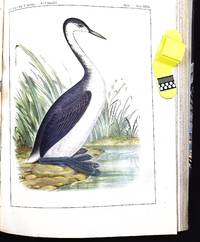
1860Best.-Nr. DEMO010833IWashington: Thomas H. Ford 1860. First & Quarto edition. Hardcover. chromolithographs b&w pls. Quartos 358 40; 399 pages 21stC 3/4 calf marbled boards waterstains House Exec. Doc. no. 56. Howes P3; Wheat TRANSMISSISSIPPI 822ff; Wagner - Camp - Becker 261ff; Rittenhouse 442. Vol.I has 70 chromolithographed scenes. With 3 folding maps. Vol.1 has the Report. Vol.2 has the Botany Zoology Ornithology Fish Mollusks & Crustaceans. "The plates in Book 1 are all really tinted. Book II has 8 fine colored plates of birds; 45 black & white plates of fish animals insects and plants -Whitman Bennett in his PRACTICAL GUIDE TO AMERICAN NINETEENTH CENTURY COLOR PLATE BOOKS p.101." Thomas H. Ford hardcover
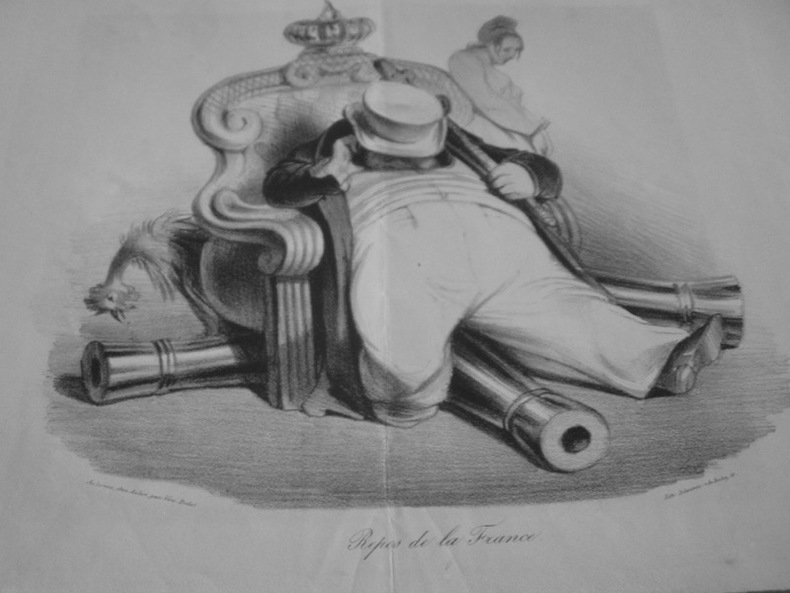
1834Best.-Nr. 251041834 Planche 417 de La Caricature N° 199.La Caricature, 28 aout 1834. Lithographie originale sur Velin blanc. . Delteil 84. épreuve en noir ; lithographie en noir sur velin blanc pli vertical,bon tirage bien noir,petite tache brune en marge - Delteil 82 ,
1874Best.-Nr. 7950Béraldi 242.Très belle épreuve. en feuille Paris Gazette des Beaux-Arts, Salmon 1874 19,2 x 14,8. Marges 28,5 x 20,2 cm.
Best.-Nr. GRA020MFormat : Cuvette : 43 x 32 cm / Feuille : 52 x 40 cm. Marges refaites (agrandies) nettoyées et doublées. Sur papier Japon.
1886Best.-Nr. BIBLIO-31166Trustees of the British Museum London first edition 1886 - 1906. 15 fascicules each in its own portfolio 52 cm parts I-IV and 66 cm parts V-XV. introductions of a few pages each and a total of 233 plates on stiff card. . Uncommon. A complete set of this series which comprises 15 portfolios each with a short introduction list of plates and between 11 and 22 finely-printed plates as follows: Part I. Early Italian. 20 plates; Part II. Early German and Flemish 22 plates; Part III. German Dutch and Italian. 18 plates; Part IV. Italian 16th century. 18 plates; Part V. Specimens of early mezzotint engraving. 16 plates; Part VI. Specimens of line-engraving by Masters of Germany and the Low Countries 1530-1620. 15 plates; Part VII. Specimens of line-engraving by Masters of the Netherlands Schools under the influence of Rubens and Vandyck about 1620-1660. 12 plates; Part VIII. Specimens of line-engraving by Masters of the French School about 1580-1680. 14 plates; Part IX. Specimens of line-engraving by the earliest Masters practising in England about 1545-1695. 18 plates; New Series Part X. Additional specimens of line-engraving by the earliest Masters working in England about 1580-1670. 21 plates; Part XI. Specimens of line-engraving by French Masters of the Eighteenth Century. 14 plates; Part XII. Specimens of line-engraving by French Masters of the Eighteenth Century continued. 12 plates; Part XIII. Specimens of line-engraving by English Masters of the Eighteenth Century. 11 plates; Part XIV. Specimens of line-engraving by Italian Masters of the Eighteenth Century. 11 plates. Part XV. Specimens of line-engraving by German Masters of the Eighteenth Century. 11 plates. The plates are generally Very Good clean copies: the versos of the final plate in each potrtfolio and the title-page rectos are in most cases tanned from contact with the portfolios. Some plates have small 'British Museum facsimile' stamps on the versos and there is sometimes a small library blindstamp in the lower margin well away from the image. The portfolio boards are generally rather duststained and a little rubbed the portfolio for Part VI has bumping and tearing to its top edges and that for Part XV is torn at the head of spine with trifling edgewear to a few plates a few other portfolio corners have minor edgewear. The porfolio flaps are generally in very good condition and seem to have been renewed in most cases; a few others are broken. A few portfoilios have library bookplates on their front inner boards. Overall a well-preserved set of a series rarely found complete. Trustees of the British Museum, London, first edition, 1886 - 1906 hardcover
1907Best.-Nr. BIBLIO-31165Trustees of the British Museum London first edition 1907 - 1913. 7 portfolios half cloth and printed boards 20 x 15 in. Introductions and contents indexes of 8 pp per part in all 175 plates 25 per part. A complete set now hard to find of this series of high-quality facsimile reproductions. Each of the 7 portfolios has an introductory text by Sidney Colvin and 25 plates. The portfolios comprise: I. Specimens of etching by German masters 1475-1575; II. Specimens of etching by Italian masters 1525-1550; III. Specimens of etching by French masters 1620-1670; IV. Specimens of etching by Flemish masters 1520-1650; V. Specimens of etching by Dutch masters 1615-1650; VI. Specimens of etching by Rembrandt Livens and Bol 1630-1680; VII. Specimens of etching by the later Dutch masters 1640-1700. A mildly ex-library set with library bookplates on the inside front boards minor library marks to portfolios unobtrusive blindstamps to some margins a few leaves only with minor creasing and very occasional chipping at the edges. Portfolio boards duststained and darkened contents generally Very Good and clean. Trustees of the British Museum, London, first edition, 1907 - 1913 hardcover
Best.-Nr. 25211Planche HT parue dans La Caricature politique, morale, littéraire et scénique, volume 5, 20 décembre 1832 (Planche n°230) Hauteur : 26.5 cm xLargeur : 35.8 cm - Image :Hauteur : 22.6 cmx Largeur : 29.4 cm - Titre en bas au centre : « Requiescant in pace amen !! » ; indications : en ht à gche : « La Caricature (Journal) N°111. », « Pl. 230. »Inscription - Dans la lettre : « Lith. de Becquet, rue Childebert, n°9. » [imprimeur], « On s’abonne chez Aubert, galerie Véro dodat. » [éditeur] ; dans l’image, en bas à gche, signature : « AB. » [Auguste Bouquet, dessinateur]
198525.5x19.5 cm. Unnumbered pages. Softcover. Cover slightly chafed. Else in good condition.
1920- Lucien Vogel éditeur, Paris 1920, 19x24,7cm, une feuille. - Original color print, printed on vergé paper, signed in the plate. An original print used to illustrate the Gazette du bon ton, one of the most attractive and influential 20th century fashion magazines, featuring the talents of French artists and other contributors from the burgeoning Art Deco movement. A celebrated fashion magazine established in 1912 by Lucien Vogel, La Gazette du bon ton appeared until 1925, with a hiatus from 1915 to 1920 due to the war (the editor-in-chief having been called up for service). It consisted of 69 issues printed in only 2,000 copies each and notably illustrated with 573 color plates and 148 sketches of the models of the great designers. Right from the start, this sumptuous publication "was aimed at bibliophiles and fashionable society," (Françoise Tétart-Vittu, "La Gazette du bon ton", in Dictionnaire de la mode, 2016) and was printed on fine vergé paper using a type cut specially for the magazine by Georges Peignot, known as Cochin, later used (in 1946) by Christian Dior. The prints were made using stencils, heightened in colors, some highlighted in gold or palladium. The story began in 1912, when Lucien Vogel, a man of the world involved in fashion (he had already been part of the fashion magazine Femina) decided, with his wife Cosette de Brunhoff - the sister of Jean, creator of Babar - to set up the Gazette du bon ton, subtitled at the time: "Art, fashion, frivolities." Georges Charensol noted the reasoning of the editor-in-chief: "'In 1910,' he observed, 'there was no really artistic fashion magazine, nothing representative of the spirit of the time. My dream was therefore to make a luxury magazine with truly modern artists...I was assured of success, because when it comes to fashion, no country on earth can compete with France.'" ("Un grand éditeur d'art. Lucien Vogel" in Les Nouvelles littéraires, no. 133, May 1925). The magazine was immediately successful, not only in France but also in the United States and Latin America. At first, Vogel put together a team of seven artists: André-Édouard Marty and Pierre Brissaud, followed by Georges Lepape and Dammicourt, as well as eventually his friends from school and the School of Fine Arts, like George Barbier, Bernard Boutet de Monvel and Charles Martin. Other talented people soon came flocking to join the team: Guy Arnoux, Léon Bakst, Benito, Boutet de Monvel, Umberto Brunelleschi, Chas Laborde, Jean-Gabriel Domergue, Raoul Dufy, Édouard Halouze, Alexandre Iacovleff, Jean Émile Laboureur, Charles Loupot, Chalres Martin, Maggie Salcedo. These artist, mostly unknown when Lucien Vogel sought them out, later became emblematic and sought-after artistic figures. It was also they who worked on the advertising drawings for the Gazette. The plates put the spotlight on, and celebrate, dresses by seven designers of the age: Lanvin, Doeuillet, Paquin, Poiret, Worth, Vionnet and Doucet. The designers provided exclusive models for each issue. Nonetheless, some of the illustrations are not based on real models, but simply on the illustrator's conception of the fashion of the day. The Gazette du bon ton was an important step in the history of fashion. Combining aesthetic demands with the physical whole, it brought together - for the first time - the great talents of the artistic, literary, and fashion worlds; and imposed, through this alchemy, a completely new image of women: slender, independent and daring, which was shared by the new generation of designers, including Coco Chanel, Jean Patou, Marcel Rochas, and so on... Taken over in 1920 by Condé Montrose Nast, the Gazette du bon ton was an important influence on the new layout and aesthetics of that "little dying paper" that Nast had bought a few years earlier: Vogue. [FRENCH VERSION FOLLOWS] Estampe originale en couleur tirée sur papier vergé, signée en bas à droite dans la planche. Gravure originale réalisée pour l'illustration de
1920Best.-Nr. 51303Lucien Vogel éditeur | Paris 1920 | 19 x 24.70 cm | une feuille
1709Best.-Nr. 628311Leipzig, Gleditsch, 1709. Folio. 14 Bl., 302, 314, 400 S., 60 Bl. Pergament d. Zeit mit neuem Rückentitel.
Best.-Nr. 134735aafFribourg, Office du Livre, 1977, in-8vo, 129 p., 84 ill. en couleur et en noir, cartonnage original, jaquette orig. en couleurs.
1897Best.-Nr. 6106Belle épreuve parue dans le numéro 2 (Juin 1897) de l’Estampe Moderne. Notre épreuve porte le timbre sec de l’Estampe Moderne en bas à droite. Parfait état. L’Estampe Moderne a paru de mai 1897 à avril 1899. Cadre et passe-partout; Très bon Paris L’Estampe Moderne 1897 33 x 25,5 cm.
1962Best.-Nr. RO80006729CHEZ L'AUTEUR. 1962. In-16. En feuillets. Bon état, Couv. convenable, Dos satisfaisant, Intérieur frais. 6 pages. exemplaire N°32/180. 4 Estampes originales gravées sur contreplaqué et imprimées en taille-douce, par René Bonargent.. . . . Classification Dewey : 769-Estampes
1818Best.-Nr. 254861818 Le Charivari, trente-cinquième année, mardi 18 septembre 1866 - Lithographie= Hauteur: 44.2cmx Largeur: 30.6cm - Trait carré : Hauteur: 21.8cmx Largeur: 19cm - 1 feuillet (4 pages) ; illustration page 3. - Au-dessus de l'image, au centre : "ACTUALITÉS.", et à droite : "168." ; signé dans l'image en bas à gauche : "HADOL", sous l'image à gauche : "A.de Vresse, R. Rivoli, 55." et à droite : "Lith Destouches R. Paradis Pre 28" ; au-dessous, au centre : RETOUR DE LA LANDWEHR / Très chôli lè fusil à aicuille, mais pli chôli encore celui qu'il / invenderai un pipe qui se bourrait tute seule. -- texte imprime au dos,bon etat.
1924- s.d. (1924), 93x78mm, autre. - Retour de pêche aux thons et bonites. Noa Noa. Unique proof of the woodcut drawn and engraved after Paul Gauguin by George-Daniel de Monfreid [between 1904 & 1924] | 9,3 x 7,8 cm | one sheet Original proof, likely unique, of this intermediate state of a woodcut drawn and engraved by George-Daniel de Monfreid after a watercolor by Paul Gauguin. Print on fine cream laid paper, annotation by the artist in the left-hand margin. Woodcut drawn and engraved from the first watercolor of the Noa Noa manuscript, pasted on a page of text of the famous album. The final woodcut will serve as the head of chapter X of the first true illustrated edition of Noa Noa, published by Crès in 1924, the first illustrated work from Paul Gauguin and a majestic tribute to this precursor of modern art. Superb and significant engraving of the work opening Paul Gauguin's manuscript, engraved by his closest friend and executor, the artist George-Daniel de Monfreid, heir to the album he would offer to the French State in 1927. This likely unique proof, part of 17 known test woodcuts from the project to prematurely publish Noa Noa, all made on various fine papers and annotated by the artist. Woodcut engraved from the watercolor inaugurating one of the painter's most beautiful albums, symbolizing the Tahitian art of living, between the nourishing sea and earthly pleasures. It is from the original illustrated manuscript of Noa Noa, brought back from Tahiti by Segalen on the artist's death in 1903, that Monfreid began producing this fundamental work from as early as 1904. This is the second version of this "to read and look at" notebook. The first manuscript, written on the return of his first voyage and entrusted by Gauguin to Charles Morice in 1893, responded to a different project. Gauguin had composed only the text, interspersed with blank pages for Morice's poems. But after several years without news, Morice preferred to publish a version entirely rewritten by himself in 1901. Gauguin, therefore, copied his manuscript and illustrated it during his second stay in Polynesia, with sketches, watercolors and collages. This album, that the artist enriched and safely preserved until his death, is preserved today at the Musée d'Orsay. It is, therefore, from this manuscript, the only one illustrated, that Monfreid composed the edition of Gauguin's Noa Noa. However, although Monfreid's publication was forward, it took more than twenty years to complete, in part due to a copyright dispute with Charles Morice who wanted to be co-author of the forthcoming edition and whose poems would eventually be preserved. The result of several years of reflection and work, the 1924 edition is both faithful to the watercolors and woodcut engravings illustrating the precious manuscript, and to the whole of Gauguin's Tahitian work, who died in indifference. Monfreid thus engraves several drawings from the original notebook and enriches it with woodcuts made from other works of which he is the custodian. Some of these compositions combine several paintings, while scrupulously respecting the artist's line, transforming the work into a true journey through the painter's works. The very choice of using wood engraving is a tribute to this technique prized by Gauguin, who, in Pont-Aven, produced 10 woodcuts to illustrate his manuscript between his two Polynesian stays. The intermediate woodcuts, until then unknown, testify to the slow work of composition to restore the artistic richness of Gauguin's work by his most faithful artistic companion and first champion: "When I saw Gauguin for the first time, I was greatly disconcerted by the details of art that radiated from his works as well as from the conversations of this extraordinary man... You immediately felt that he was the Master" (in L'Hermitage, 1903). [FRENCH VERSION FOLLOWS] Epreuve originale probablement unique de cet état intermédiaire d'un bois dessiné et gravé d'après une aquarel
Best.-Nr. 18098In-4 - N° 13 de 1984
1988Best.-Nr. 21824Genève, La Dogana, 1988. In-8 broché de 320 pages, couverture imprimée en couleurs.
1887Best.-Nr. DEMO013716IBoston: Roberts Brothers 1887. Deluxe Limited edition. Hardcover. Very Good. Wilhelm von Kaulbach. 4to 342 pages new full dark morocco leather spine label original pictorial top cover bound in at rear .top edge gilt fore-edge untrimmed; ex libris A. Freiberg of Cincinnati. No. 224 of 400 copies printed for America of the English Edition De Luxe. Twelve India Proof steel engravings after Joseph Wolf engraved by Augustus Fox. Modern form of the traditional legend of REINHART FUCHS. "Under the veil of animals the symbolic representations of the diverse passions of men stand boldly in relief ." Roberts Brothers hardcover