Janssen, Horst (1929-1995)Antiquariat.de
10.209 Ergebnisse
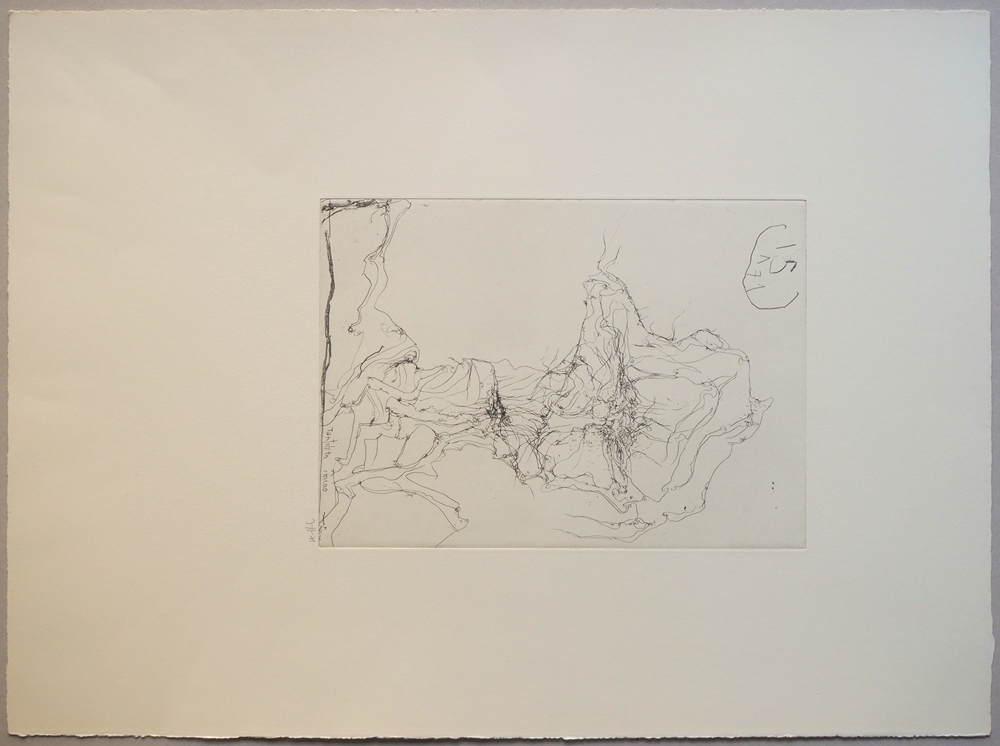
1971Best.-Nr. 88114Hamburg, Edition Griffelkunst, 1971. Plattenmaß 24,4 x 18,9; Bogenmaß 53 X 39,5 cm.
200782 pages in oblong format, all color prints with text by the Director: Michael Monroe, Curator Stafano Catalani, two commentaries by Viet Thanh Nguyen & Moira Roth & an interview with the artist. Biography,checklist of the exhibition. Dust jacket shows slight scuffing.
1930Best.-Nr. 92961930 Paris, Drouot, 17 novembre 1930. Un cahier in-8 broché, couverture verte, 13 pp., illustrations en n&b. Bon état.
1670Best.-Nr. 42444Paris, Imprimerie royale, 1670. 2 parties en 1 vol. grand in-folio (550 x 410 mm) de (8)-43 pp., 1 f.bl., titre frontispice et titre gravé, 16 emblèmes gravés dans le texte, 4 planches sur double page, 47-(1) pp., titre gravé, 16 emblèmes gravés dans le texte, 4 planches sur double page, veau brun granité, dos à nerfs orné de chiffres couronnés, triple filet doré d’encadrement sur les plats, armes frappées or au centre, frise sur les coupes, tranches jaspées (reliure de l’époque).
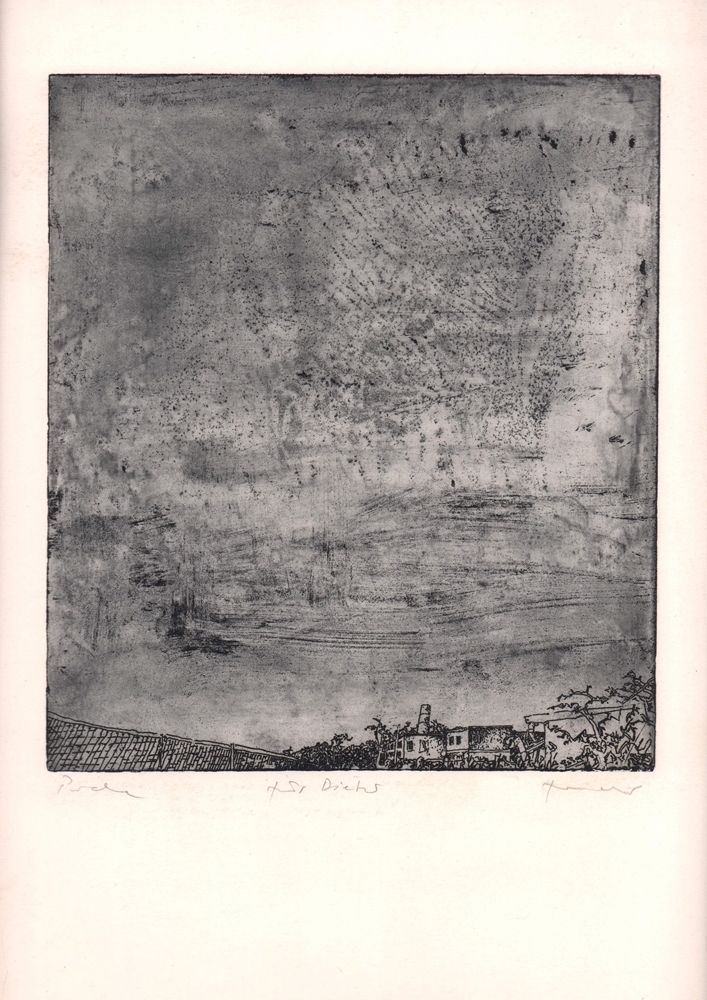
1975Best.-Nr. 93135Hamburg, 1975. Zinkätzung. Platte 28,7 x 25,1, Blatt 49,2 x 38,7 cm.
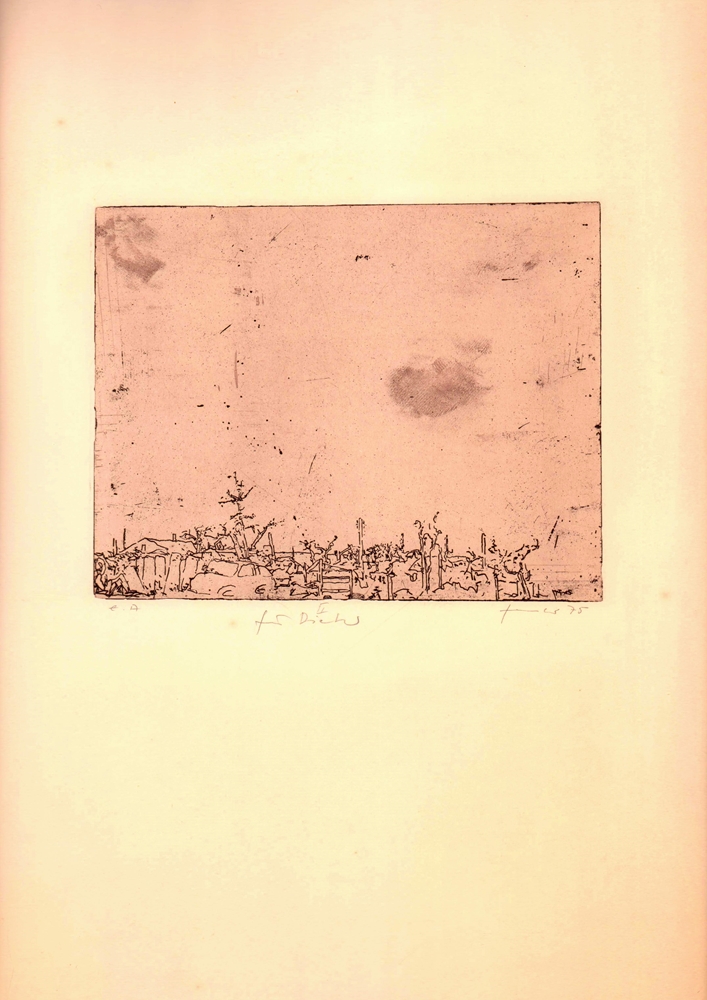
1975Best.-Nr. 93136Hamburg, 1975. Zinkätzung. Platte 16,4 x 20,9, Blatt 50 x 40 cm.
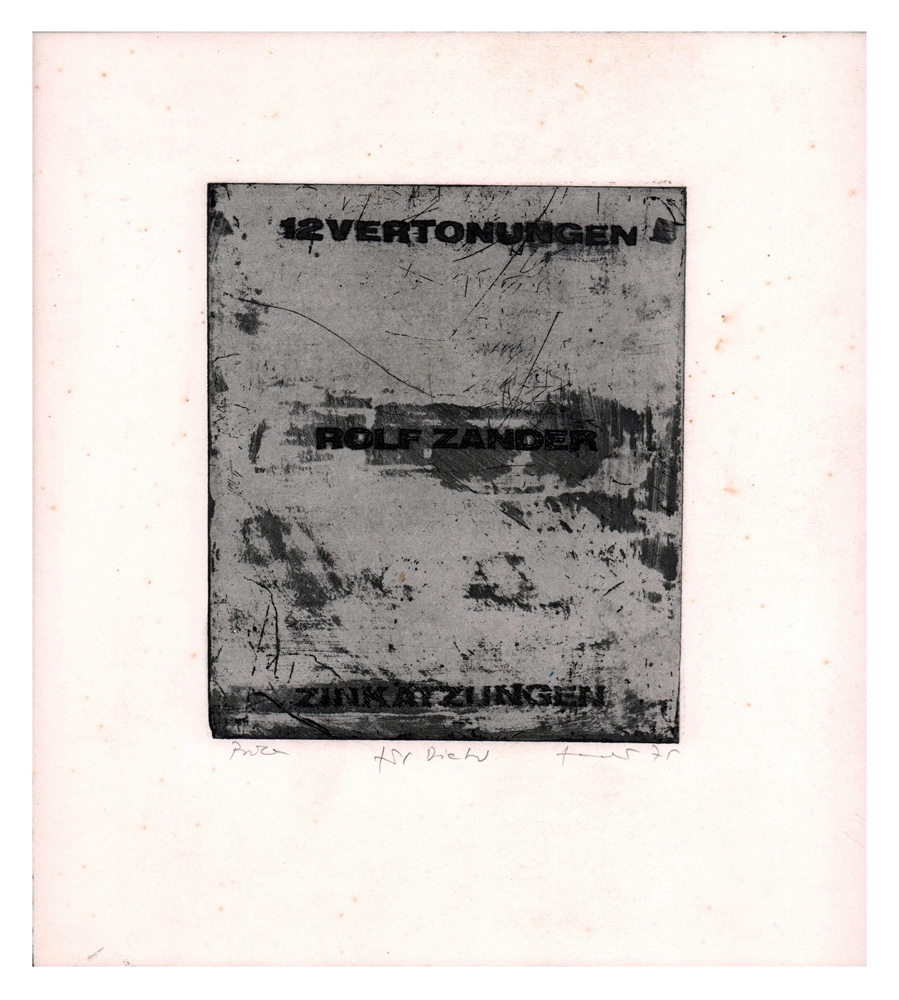
1975Best.-Nr. 93132Hamburg, 1975. Zinkätzung. Platte 19,5 x 17 cm, Blatt 33,2 x 30 cm.
1832Best.-Nr. 256071832 Planche HT parue dans La Caricature politique, morale, littéraire et scénique, volume 5, 29 novembre 1832 (Planche n°224)- Lithographie coloriée,avant les muméros- - Œuvre: Hauteur: 27.3cmx Largeur: 35.8cm - Image :Hauteur: 15cmx Largeur: 21.8cm - Titre en bas au centre : « Tau-tau-tau, battez chaud, du courage ! // il faut du cœur à l’ouvrage. » ; indications : en ht au centre : « La Caricature (Journal) // N° [108] », en ht à dte : « Pl. [224] »Inscription - Dans la lettre : « Lith. de Becquet, rue Childebert, N°9. » [imprimeur], « On s’abonne chez Aubert, Galerie véro dodat. » [éditeur] ; attribution : Jean-Jacques Grandville, dessinateur ? Le titre est un extrait du Vaudeville du Maréchal : « Tôt, tôt, tôt, // Battez chaud // tôt, tôt, tôt, // Bon courage, // Il faut avoir cœur à l’ouvrage. » (contenu dans Les Sabbats jacobites, 1791), reprenant le vaudeville final du Maréchal Ferrant, opéra comique de Philidor (1761). L'air « Tôt, tôt, tôt, battez chaud » connut un succès particulier pendant la Révolution française. La pl. inverse le discours qui, pendant la révolution française, avait une connotation fortement républicaine, incitant à mettre à bas les institutions et symboles monarchiques. Au contraire, ici, c’est la figure de la république qui est mise à mal. Un jouet d’enfant est constitué de deux figurines peintes, chacune munie d’un marteau (le manche du marteau est planté dans les ventres): il s’agit de Soult à gche (une tenaille et un autre marteau, plus petit, dépassent de sa besace) et de Louis-Philippe à dte (des clés sont accrochées à son pantalon. Philipon, dans l’explication s’interroge d’ailleurs sur leur usage : « Sont-elles un témoignage de l’ordre et de l’économie qui règnent dans sa maison ? – Veulent-elles dire qu’il est un geôlier ? – Sont-ce les clefs d’Anvers ? – ou les clefs de nos coffres ? – ou bien celles de nos cœurs ? »). Ils exercent leur marteau à tour de rôle sur la tête féminine de la République (ou la Liberté) placée au milieu de la pièce de bois transversale. Selon qu'on tire dans un sens ou dans un autre, le jouet permet à Soult ou Louis-Philippe de taper à tour de rôle sur la Liberté. La pl. dénonce ainsi le mauvais traitement infligé par les membres du gouvernement de la monarchie de juillet à la liberté, dont les principes sont bafoués.
1961Best.-Nr. RO80097800PONT ROYAL. 30 sept. 1961. In-4. Relié. Bon état, Couv. légèrement passée, Dos satisfaisant, Intérieur frais. 128 pages. Nombreuses illustrations en noir et blanc et en monochrome, dans le texte et hors-texte. Quelques plaches illustrées en couleurs.. . . . Classification Dewey : 769-Estampes
1886Best.-Nr. 135871886 P., Paul Ollendorff, éditeur, 1886, 1 vol. in-8° (235 x 158 mm) broché sous couverture crème rempliée, imprimée en noir et rouge, de (2) ff. (faux-titre et titre) - II pp. (Note du traducteur français) - (1) f. (préface de l'auteur) - 219 pp. - (2) ff. (tables des matières et des illustrations).Petites taches en haut du dos, rousseurs en première et dernière pages, due au papier de la sous-couverture, très bel exemplaire par ailleurs.
1861Best.-Nr. 47271861 Paris Charpentier [1861] Vue animée en deux teintes, dessinée et lithographiée par Ph. Benoist et A. Bayot. 24,5 x 35,5 cm hors marges, 34,5 x 50 cm toutes marges comprises.
Best.-Nr. 1638225X33 cm.
1954Full brown cloth boards show edge wear, an ink mark, and some spots. 64 pages. 6 1/2"w x 9 3/4"h.
1901Best.-Nr. 1389DBBern, Buchdruckerei Ott & Bolliger, 1901. 4°. 74 S. Orig.-Broschur + Wichtig: Für unsere Kunden in der EU erfolgt der Versand alle 14 Tage verzollt ab Deutschland / Postbank-Konto in Deutschland vorhanden + (mit hinterlegten Einrissen und Papierverlust).
1901Best.-Nr. 1389DBBern, Buchdruckerei Ott & Bolliger, 1901. 4°. 74 S. Orig.-Broschur (mit hinterlegten Einrissen und Papierverlust).
1874Best.-Nr. 1399DBZürich, o.J. (um 1874). Gr.-8°. 39(1) S. Mit 1 gefl. u. farb. Karte. Orig.-Broschur. + Wichtig: Für unsere Kunden in der EU erfolgt der Versand alle 14 Tage verzollt ab Deutschland / Postbank-Konto in Deutschland vorhanden +
Acquaforte Firma a matita. Esemplare 8/100. Cm 50x35. . . Ottimo (Fine). . Tiratura 100. .
1924- s.d. (1924), 93x78mm, autre. - Tehura. Original proof engraved after the painting "Merahi Metua no Tehamana". Intermediate state for Noa Noa [between 1904 & 1924] | 9,3 x 7,8 cm | one sheet Original proof, likely unique, of this intermediate state of "Tehura", wood drawn and engraved after Paul Gaughin's painting "Merahi Metua no Tehamana" by George-Daniel de Monfreid. Print on fine cream laid paper, annotation by the artist in the left-hand margin. The definitive wood served as the head of chapter VI, "Le Conteur parle", page 81 of the true first edition of Noa Noa published by Crès in 1924, the first illustrated work from Paul Gauguin and a majestic tribute to one of the precursors of modern art. A most important and very first woodcut of Gauguin's masterpiece, engraved by his closest friend and executor, artist George-Daniel de Monfreid, to whom Gauguin offered the painting after two unsuccessful exhibitions. Likely unique proof, part of 17 known test prints from the project to publish prematurely Noa Noa, all made on various fine papers and annotated by the artist. Precious woodcut after Gauguin's masterpiece Merahi metua no Tehamana, showing the painter's wife, his main tahitian model. It is from the original illustrated manuscript of Noa Noa, brought back from Tahiti by Segalen on the artist's death in 1903, that Monfreid began producing this fundamental work from as early as 1904. This is the second version of this "to read and look at" notebook. The first manuscript, written on the return of his first voyage and entrusted by Gauguin to Charles Morice in 1893, responded to a different project. Gauguin had composed only the text, interspersed with blank pages for Morice's poems. But after several years without news, Morice preferred to publish a version entirely rewritten by himself in 1901. Gauguin, therefore, copied his manuscript and illustrated it during his second stay in Polynesia, with sketches, watercolors and collages. This album, that the artist enriched and safely preserved until his death, is preserved today at the Musée d'Orsay. It is, therefore, from this manuscript, the only one illustrated, that Monfreid composed the edition of Gauguin's Noa Noa. However, although Monfreid's publication was forward, it took more than twenty years to complete, in part due to a copyright dispute with Charles Morice who wanted to be co-author of the forthcoming edition and whose poems would eventually be preserved. The result of several years of reflection and work, the 1924 edition is both faithful to the watercolors and woodcut engravings illustrating the precious manuscript, and to the whole of Gauguin's Tahitian work, who died in indifference. Monfreid thus engraves several drawings from the original notebook and enriches it with woodcuts made from other works of which he is the custodian. Some of these compositions combine several paintings, while scrupulously respecting the artist's line, transforming the work into a true journey through the painter's works. The very choice of using wood engraving is a tribute to this technique prized by Gauguin, who, in Pont-Aven, produced 10 woodcuts to illustrate his manuscript between his two Polynesian stays. The intermediate woodcuts, until then unknown, testify to the slow work of composition to restore the artistic richness of Gauguin's work by his most faithful artistic companion and first champion: "When I saw Gauguin for the first time, I was greatly disconcerted by the details of art that radiated from his works as well as from the conversations of this extraordinary man... You immediately felt that he was the Master" (in L'Hermitage, 1903). [FRENCH VERSION FOLLOWS] Epreuve originale probablement unique de cet état intermédiaire de "Tehura", bois dessiné et gravé d'après le tableau Merahi metua no tehamana de Paul Gauguin par Georges-Daniel de Monfreid. Tirage sur vergé crème fin, annotation de l'artiste au crayon en marge gauche. Le bois définitif servira
1924Best.-Nr. 78250s. d. [1924] | 9.30 x 7.80 cm | autre
1984340x245 mm. 207 pages. Hardcover. Cover slightly yellowing and slightly stained. Rear cover slightly scratched. Cover corners slightly bumped. Cover edges slightly worn. Spine yellowing and slightly stained. Spine edges slightly bumped and slightly worn. Inner cover and few pages slightly stained with no damage to text. Else in good condition. PLEASE NOTE: This item is overweight. We may ask for extra shipping costs.
1731Best.-Nr. biblio305Amsterdam: Chatelain 1731. Gravure sur cuivreLa feuille = 310 X 460 mm la cuvette = 255 x 352 mm quelques rousseurs en marge image propre Chatelain unknown
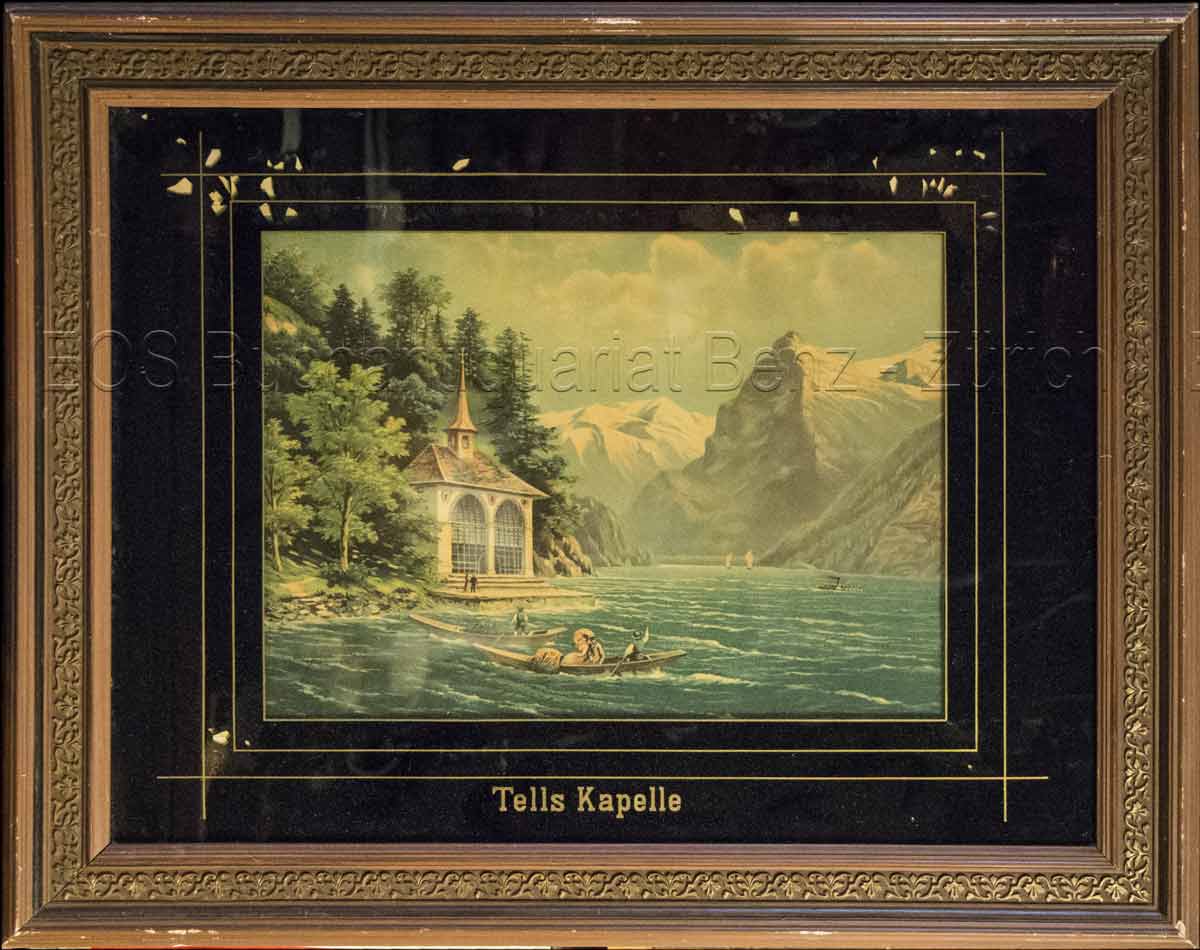
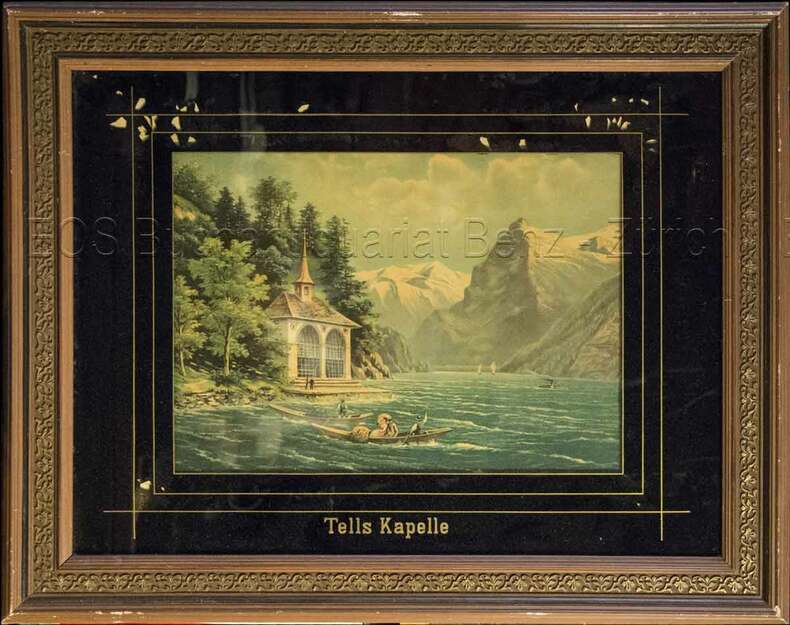
1860Best.-Nr. 824CG(um 1860). Chromolithographie hinter Glas. Bildausschnitt: 24 x 33 cm. + Wichtig: Für unsere Kunden in der EU erfolgt der Versand alle 14 Tage verzollt ab Deutschland / Postbank-Konto in Deutschland vorhanden +, Abb.
1860Best.-Nr. 824CG(um 1860). Chromolithographie hinter Glas. Bildausschnitt: 24 x 33 cm.
Ca. 477 x 326 mm (neat line). Etching on paper. Only known specimen of an anonymous copy after Georg Daniel Heumann’s monumental 1735 copper print engraving based on a design by Salomon Kleiner, with additional portraits of Empress Maria Theresa and the later Emperor Joseph II and his wife. This faithful, though qualitatively inferior copy was probably made on the occasion of the wedding of Archduke Joseph of Austria and Princess Isabella of Parma on 6 October 1760 in Vienna. The couple is shown in a double portrait presented by a crowned eagle flying on the right side of the tower. They are opposed by a similarly presented profile portrait of Maria Theresa on the left side. Superimposed, the two medallion-bearing eagles would form the double-headed Habsburg eagle. - Joseph's first and happiest marriage lasted only three years, as Isabella died of smallpox on 27 November 1763 at the age of 21, leaving behind a devastated widower. 1763 is thus the latest possible date for the creation of this beautiful etching. - Good impression with some minor stains and a larger brown stain to the upper left margin.
Best.-Nr. awd-278Lithographie en couleurs sur Arches justifiée à 100 ex. et signée. Vers 1980 (54,5/80 cm). Bon état.