Biblio.com

10.173 Ergebnisse
Best.-Nr. 17945Very Good. Print is toned in the margins but clean bright and in very good condition. Overall size: 16" x 12.25".; Prints . unknown
Best.-Nr. 17942Very Good. Print is toned in the margins but clean bright and in very good condition. Overall size: 16" x 12.25".; Prints . unknown
Best.-Nr. 17966Very Good. Print is toned in the margins but clean bright and in very good condition. Overall size: 16" x 12.25".; Prints . unknown
Best.-Nr. 17968Very Good. Print is toned in the margins but clean bright and in very good condition. Overall size: 16" x 12.25".; Prints . unknown
Best.-Nr. 17953Very Good. Print is toned in the margins but clean bright and in very good condition. Overall size: 16" x 12.25".; Prints . unknown
Best.-Nr. 17948Very Good. Print is toned in the margins but clean bright and in very good condition. Overall size: 16" x 12.25".; Prints . unknown
Best.-Nr. 17954Very Good. Print is toned in the margins but clean bright and in very good condition. Overall size: 16" x 12.25".; Prints . unknown
Best.-Nr. 17955Very Good. Print is toned in the margins but clean bright and in very good condition. Overall size: 16" x 12.25".; Prints . unknown
Best.-Nr. 17956Very Good. Print is toned in the margins but clean bright and in very good condition. Overall size: 16" x 12.25".; Prints . unknown
Best.-Nr. 17964Very Good. Print is toned in the margins but clean bright and in very good condition. Overall size: 16" x 12.25".; Prints . unknown
Best.-Nr. 17946Very Good. Print is toned in the margins but clean bright and in very good condition. Overall size: 16" x 12.25".; Prints . unknown
Best.-Nr. awd-413Gravure (ou monotype) signée sur vélin blanc sans indication de tirage, vers 1980 (23/32,5 cm). État correct.
Best.-Nr. awd-216Gravure signée au crayon et justifiée 2/40 ex. (42/55,5 cm). Bon état.
1946Best.-Nr. 4003Paris, Ed. Universelles, 1946. In-folio en feuilles de 50-[26] pages. Couverture blanche à rabats, imprimée en noir et bistre, chemise et étui carton. bleu, avec titre au premier plat. Etui scotché, pour le reste en belle condition.
1915Best.-Nr. 1678DBGenève, Sonor, 1915. Quer-4°. (2) 74 (3) S. Mit 20 ganzs. lithogr. Abb. auf Tafeln von Ed(ouard)-L(oui)s Baud und L(ouis) Dunki sowie einigen Abb. im Text. Orig.-Broschur mit Deckelillustr. + Wichtig: Für unsere Kunden in der EU erfolgt der Versand alle 14 Tage verzollt ab Deutschland / Postbank-Konto in Deutschland vorhanden + (bestossen, leicht fleckig und gebräunt).
1915Best.-Nr. 1678DBGenève, Sonor, 1915. Quer-4°. (2) 74 (3) S. Mit 20 ganzs. lithogr. Abb. auf Tafeln von Ed(ouard)-L(oui)s Baud und L(ouis) Dunki sowie einigen Abb. im Text. Orig.-Broschur mit Deckelillustr. (bestossen, leicht fleckig und gebräunt).
1987Best.-Nr. 8490Musée du Québec In-4 à l'italienne Couverture souple Québec 1987
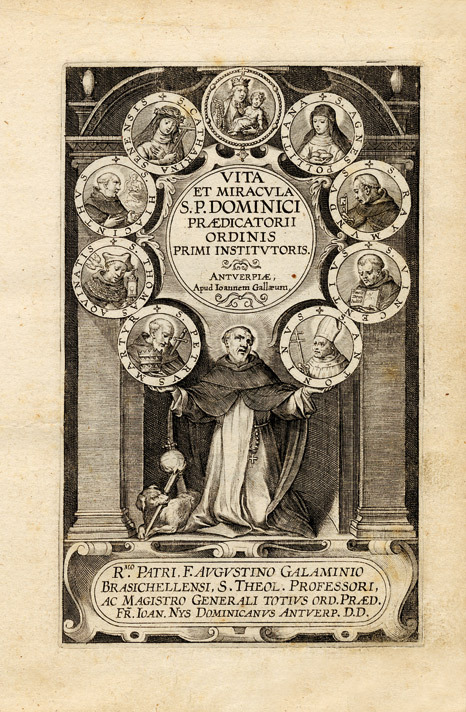
1630Best.-Nr. 11321Antverpiae, Joan Galle, (circa 1630) ; F. Ioannes Nys invenit, Peter de Jode figuravit, Theodor Galle sculpsit et excudit ; titre gravé, portrait et 32 planches légendées. SUIVI de 4 planches gravées par JOAN GALLE : I- Prudentia, II- Justitia, III- Fortitudo, IV- Temperantia (les 4 vertus cardinales). SUIVI de 14 planches de sujets religieux, gravées par CORNELIUS GALLE le Vieux : Silva sacra, Fugit familia sacra, S. Barbara, S. Ianvarius Neapolis patronis, S. Lucia, S. Leontius martyr miraculis gloriossus in Muris Helvetiorum, S. Iacobus Maior, Benedicite omnes bestiae et pecora domino, S. Hieromymus, Vierge à l'Enfant, etc. Soit en tout 52 planches, reliées en 1 volume petit in-4 ; plein vélin ivoire, titre au dos, tranches rouges (reliure du XIXe).
1721Best.-Nr. 30780Londini London: Typis Gulielmi Bowyer 1721. Very Good-. Londini London: Typis Gilielmi Bowyer 1721. First Edition. Octavo 24cm; contemporary paneled calf gilt spine in six compartments all edges speckled; 6646444pp.; engraved portrait frontispiece and two leaves of plates including one other portrait and a folding table. Leather quite scuffed and rather dried joints rubbed with exposure of spine chords spine gilt mostly effaced 20th-century ownership inscription to front free endpaper else a Good to Very Good internally clean and sound copy. Preliminary text includes the extensive list of subscribers. Posthumously-published biography of the late Dean of St. Paul's John Barwick 1612-1664 by his brother Peter 1619-1705. "Begun in 1671 Vita was clearly intended as more than simply a memoir of Barwick's brother; it is perhaps better understood as a statement of his own commitment and lifelong zeal for the restored Anglican church and its royal head" Oxford Dictionary of National Biography. ESTC T088503. Typis Gulielmi Bowyer unknown
1721Best.-Nr. 30780Londini London: Typis Gulielmi Bowyer 1721. Very Good-. Londini London: Typis Gilielmi Bowyer 1721. First Edition. Octavo 24cm; contemporary paneled calf gilt spine in six compartments all edges speckled; 6646444pp.; engraved portrait frontispiece and two leaves of plates including one other portrait and a folding table. Leather quite scuffed and rather dried joints rubbed with exposure of spine chords spine gilt mostly effaced 20th-century ownership inscription to front free endpaper else a Good to Very Good internally clean and sound copy. Preliminary text includes the extensive list of subscribers. Posthumously-published biography of the late Dean of St. Paul's John Barwick 1612-1664 by his brother Peter 1619-1705. "Begun in 1671 Vita was clearly intended as more than simply a memoir of Barwick's brother; it is perhaps better understood as a statement of his own commitment and lifelong zeal for the restored Anglican church and its royal head" Oxford Dictionary of National Biography. ESTC T088503. Typis Gulielmi Bowyer unknown books
1833Best.-Nr. 251971833 Planche HT parue dans La Caricature politique, morale, littéraire et scénique, volume 5, 28 février 1833 (Planche n°251)- Hauteur: 27.3cm-Largeur: 35.8cmDimensions - Image :Hauteur: 15cm xLargeur: 31.5cm -[sans titre] ; légendes en bas, de gche à dte et de ht en bas : « Vite main et Coussin // pleurant le 21 Janvier. », « Un monstre // en Kératry. », « Le Constitutionnel // Jocrisse. », « La gratification portée par la France nouvelle, les Débats, le // Nouvelliste, Le bonhomme Richard, Le moniteur, l’Intendant // des Casseroles. », « La Gazette et la Quotidienne, // en folies », « Mr Roule, // fournisseur des vins de la Cour », « Le Diable boiteux, // prince de bien-au-vent et de Périgord. » ; indications : en ht à gche : « La Caricature (Journal) N°121. », en ht à dte : « Pl. 251. »Inscription - Dans la lettre : « L. de Becquet, r. Childebert N°9. » [imprimeur], « On s’abonne chez Aubert, galerie véro dodat. » [éditeur] ; dans l’image, en bas à gche, signature : « J. J. Grand // E. For » [Jean-Jacques Grandville, dessinateur, et Eugène Forest, lithographe] - Inscription - Sur la capuche de Villemain et Cousin : « 21 Janvier » (en référence à la date d’exécution de Louis XVI en 1793) ; sur le chapeau du Nouvelliste : « le NOUVELLISTE // Journal du Soir » et « Police »Pl. n°3 de la série "Cérémonie des cendres politiques". Cf. pl. n°1 (pl. 248 du numéro 120) et pl. n°2 (pl. 250 du numéro 121). Villemain et Victor Cousin, cachés sous des masques (loups) et enveloppés dans de grands manteaux, pleurent la chute de la monarchie qu’ils défendaient d’ailleurs auparavant. Les mouchoirs sont décorés de motifs de poires vertes. Derrière vient Kératry déguisé en monstre vert pourvu de deux cornes faites avec ses cheveux. Les incarnations des différents journaux défendant le régime portent la gratification, sous la forme d’un gros homme couché sur une civière, dont le corps est constitué de plaques avec des inscriptions. Le Constitutionnel en bouffon Jocrisse. Le Journal des « DÉBATS » en armure médiévale, le bonhomme Richard, "Le Moniteur" en vieille femme revêtu d’une calotte ornée de la cocarde tricolore, le Nouvelliste et Montalivet portant un casque en forme de poire, un brassard orné d’une fleur de lys et le visage peint en bandes bleue, blanche et rouge. La gratification est accompagnée d’un drapeau portant l’inscription « GRATIFICATION […] [GRATIFICATIONS] // accordées pour // les // Jours Gras ». Son corps est couvert de plaques grises sur lesquelles se lisent : « Fonds secret […] [secrets] », « MONITEUR », « à Mr // Vienn… // poète à // la Cour », « Bonhomme // Richard », « NOUVELLISTE », « AU FIGARO », « Aux DÉBATS », « FRANCE NOUVELLE ». Son couvre-chef porte la mention « A L’IMPRIME […] [IMPRIMERIE] // ROYALE ». Enfin, en fin de cortège, deux journaux légitimistes et carlistes incarnés par deux hommes déguisés en fous, suivis par Talleyrand, en diable, s’appuyant sur une béquille (« un diable-béni, un évêque-courtisan, le prince de Périgord » in explication). Au premier plan, « Mr Roule », portant deux seaux censés contenir du vin.
1802Best.-Nr. 14654D'après Gatteaux. Planche n° 707 décrite dans le catalogue Leymarie. en feuille Bon Paris Demarteau 1802 54,5 x 35,5 cm
1897Best.-Nr. 261591897 Les peintres-lithographes : album trimestriel de lithographies originales et inédites 1897 - belle epreuve Impression . claires rousseurs en marge. toutes marges dimension feuille : 320 x 460mm.. timbre de la Société des Peintres-Lithographes, tirage à 100 ex.
1913Best.-Nr. 1229677Jena, Diederichs, 1913. 4to. 2 Bl., 287, (1) S. m. 200 Taf. (Die Kunst in Bildern). OHlwd (hinterer Vorsatz m. kl. Randausriß).
1920- Lucien Vogel éditeur, Paris 1920, 19,5x25cm, une feuille. - Original color print, printed on vergé paper, signed in the plate. An original print used to illustrate the Gazette du bon ton, one of the most attractive and influential 20th century fashion magazines, featuring the talents of French artists and other contributors from the burgeoning Art Deco movement. A celebrated fashion magazine established in 1912 by Lucien Vogel, La Gazette du bon ton appeared until 1925, with a hiatus from 1915 to 1920 due to the war (the editor-in-chief having been called up for service). It consisted of 69 issues printed in only 2,000 copies each and notably illustrated with 573 color plates and 148 sketches of the models of the great designers. Right from the start, this sumptuous publication "was aimed at bibliophiles and fashionable society," (Françoise Tétart-Vittu, "La Gazette du bon ton", in Dictionnaire de la mode, 2016) and was printed on fine vergé paper using a type cut specially for the magazine by Georges Peignot, known as Cochin, later used (in 1946) by Christian Dior. The prints were made using stencils, heightened in colors, some highlighted in gold or palladium. The story began in 1912, when Lucien Vogel, a man of the world involved in fashion (he had already been part of the fashion magazine Femina) decided, with his wife Cosette de Brunhoff - the sister of Jean, creator of Babar - to set up the Gazette du bon ton, subtitled at the time: "Art, fashion, frivolities." Georges Charensol noted the reasoning of the editor-in-chief: "'In 1910,' he observed, 'there was no really artistic fashion magazine, nothing representative of the spirit of the time. My dream was therefore to make a luxury magazine with truly modern artists...I was assured of success, because when it comes to fashion, no country on earth can compete with France.'" ("Un grand éditeur d'art. Lucien Vogel" in Les Nouvelles littéraires, no. 133, May 1925). The magazine was immediately successful, not only in France but also in the United States and Latin America. At first, Vogel put together a team of seven artists: André-Édouard Marty and Pierre Brissaud, followed by Georges Lepape and Dammicourt, as well as eventually his friends from school and the School of Fine Arts, like George Barbier, Bernard Boutet de Monvel and Charles Martin. Other talented people soon came flocking to join the team: Guy Arnoux, Léon Bakst, Benito, Boutet de Monvel, Umberto Brunelleschi, Chas Laborde, Jean-Gabriel Domergue, Raoul Dufy, Édouard Halouze, Alexandre Iacovleff, Jean Émile Laboureur, Charles Loupot, Chalres Martin, Maggie Salcedo. These artist, mostly unknown when Lucien Vogel sought them out, later became emblematic and sought-after artistic figures. It was also they who worked on the advertising drawings for the Gazette. The plates put the spotlight on, and celebrate, dresses by seven designers of the age: Lanvin, Doeuillet, Paquin, Poiret, Worth, Vionnet and Doucet. The designers provided exclusive models for each issue. Nonetheless, some of the illustrations are not based on real models, but simply on the illustrator's conception of the fashion of the day. The Gazette du bon ton was an important step in the history of fashion. Combining aesthetic demands with the physical whole, it brought together - for the first time - the great talents of the artistic, literary, and fashion worlds; and imposed, through this alchemy, a completely new image of women: slender, independent and daring, which was shared by the new generation of designers, including Coco Chanel, Jean Patou, Marcel Rochas, and so on... Taken over in 1920 by Condé Montrose Nast, the Gazette du bon ton was an important influence on the new layout and aesthetics of that "little dying paper" that Nast had bought a few years earlier: Vogue. [FRENCH VERSION FOLLOWS] Estampe originale en couleur tirée sur papier vergé, signée en bas à droite dans la planche. Gravure originale réalisée pour l'illustration de