With One Hundred and Nine EngravingsBiblio.com
10.977 risultati
rif. 0259508098.Gpaperback. Good. Access codes and supplements are not guaranteed with used items. May be an ex-library book. paperback
1921rif. 54889Lucien Vogel éditeur | Paris 1921 | 18 x 24 cm | une feuille
1921rif. 57546Lucien Vogel éditeur | Paris 1921 | 18 x 24 cm | une feuille
1921- Lucien Vogel éditeur, Paris 1921, 18x24cm, une feuille. - Original color print, printed on vergé paper, signed in the plate. An original print used to illustrate the Gazette du bon ton, one of the most attractive and influential 20th century fashion magazines, featuring the talents of French artists and other contributors from the burgeoning Art Deco movement. A celebrated fashion magazine established in 1912 by Lucien Vogel, La Gazette du bon ton appeared until 1925, with a hiatus from 1915 to 1920 due to the war (the editor-in-chief having been called up for service). It consisted of 69 issues printed in only 2,000 copies each and notably illustrated with 573 color plates and 148 sketches of the models of the great designers. Right from the start, this sumptuous publication "was aimed at bibliophiles and fashionable society," (Françoise Tétart-Vittu, "La Gazette du bon ton", in Dictionnaire de la mode, 2016) and was printed on fine vergé paper using a type cut specially for the magazine by Georges Peignot, known as Cochin, later used (in 1946) by Christian Dior. The prints were made using stencils, heightened in colors, some highlighted in gold or palladium. The story began in 1912, when Lucien Vogel, a man of the world involved in fashion (he had already been part of the fashion magazine Femina) decided, with his wife Cosette de Brunhoff - the sister of Jean, creator of Babar - to set up the Gazette du bon ton, subtitled at the time: "Art, fashion, frivolities." Georges Charensol noted the reasoning of the editor-in-chief: "'In 1910,' he observed, 'there was no really artistic fashion magazine, nothing representative of the spirit of the time. My dream was therefore to make a luxury magazine with truly modern artists...I was assured of success, because when it comes to fashion, no country on earth can compete with France.'" ("Un grand éditeur d'art. Lucien Vogel" in Les Nouvelles littéraires, no. 133, May 1925). The magazine was immediately successful, not only in France but also in the United States and Latin America. At first, Vogel put together a team of seven artists: André-Édouard Marty and Pierre Brissaud, followed by Georges Lepape and Dammicourt, as well as eventually his friends from school and the School of Fine Arts, like George Barbier, Bernard Boutet de Monvel and Charles Martin. Other talented people soon came flocking to join the team: Guy Arnoux, Léon Bakst, Benito, Boutet de Monvel, Umberto Brunelleschi, Chas Laborde, Jean-Gabriel Domergue, Raoul Dufy, Édouard Halouze, Alexandre Iacovleff, Jean Émile Laboureur, Charles Loupot, Chalres Martin, Maggie Salcedo. These artist, mostly unknown when Lucien Vogel sought them out, later became emblematic and sought-after artistic figures. It was also they who worked on the advertising drawings for the Gazette. The plates put the spotlight on, and celebrate, dresses by seven designers of the age: Lanvin, Doeuillet, Paquin, Poiret, Worth, Vionnet and Doucet. The designers provided exclusive models for each issue. Nonetheless, some of the illustrations are not based on real models, but simply on the illustrator's conception of the fashion of the day. The Gazette du bon ton was an important step in the history of fashion. Combining aesthetic demands with the physical whole, it brought together - for the first time - the great talents of the artistic, literary, and fashion worlds; and imposed, through this alchemy, a completely new image of women: slender, independent and daring, which was shared by the new generation of designers, including Coco Chanel, Jean Patou, Marcel Rochas, and so on... Taken over in 1920 by Condé Montrose Nast, the Gazette du bon ton was an important influence on the new layout and aesthetics of that "little dying paper" that Nast had bought a few years earlier: Vogue. [FRENCH VERSION FOLLOWS] Estampe originale en couleur, tirée sur papier vergé, signée en bas à droite de la planche. La Gazette du bon ton, l'une des plus belles et des pl
1921- Lucien Vogel éditeur, Paris 1921, 18x24cm, une feuille. - Estampe originale en couleur, tirée sur papier vergé, signée en bas à droite de la planche. La Gazette du bon ton, l'une des plus belles et des plus influentes revues de mode du XXème siècle, célébrant le talent des créateurs et des artistes français en plein essor de l'art déco. Célèbre revue de mode fondée en 1912 par Lucien Vogel, La Gazette du bon ton a paru jusqu'en 1925 avec une interruption durant la Guerre de 1915 à 1920, pour cause de mobilisation de son rédacteur en chef. Elle se constitue de 69 livraisons tirées à seulement 2000 exemplaires et est illustrée notamment de 573 planches en couleurs et de 148 croquis représentant des modèles de grands couturiers. Dès leur parution, ces luxueuses publications « s'adressent aux bibliophiles et aux mondains esthètes » (Françoise Tétart-Vittu « La Gazette du bon ton » in Dictionnaire de la mode, 2016). Imprimées sur beau papier vergé, elles utilisent une police typographique spécialement créée pour la revue par Georges Peignot, le caractère Cochin, repris en 1946 par Christian Dior. Les estampes sont réalisées grâce à la technique du pochoir métallique, rehaussées en couleurs et pour certaines soulignées à l'or ou au palladium. L'aventure commence en 1912 lorsque Lucien Vogel, homme du monde et de la mode - il a déjà participé à la revue Femina - décide de fonder avec sa femme Cosette de Brunhoff (sur de Jean, le père de Babar) la Gazette du bon ton dont le sous-titre est alors « Art, modes et frivolités ». Georges Charensol rapporte les propos du rédacteur en chef : « En 1910, observe-t-il, il n'existait aucun journal de mode véritablement artistique et représentatif de l'esprit de son époque. Je songeais donc à faire un magazine de luxe avec des artistes véritablement modernes [...] J'étais certain du succès car pour la mode aucun pays ne peut rivaliser avec la France. » (« Un grand éditeur d'art. Lucien Vogel » in Les Nouvelles littéraires, n°133, mai 1925). Le succès de la revue est immédiat, non seulement en France, mais aussi aux Etats-Unis et en Amérique du Sud. À l'origine, Vogel réunit donc un groupe de sept artistes : André-Édouard Marty et Pierre Brissaud, suivis de Georges Lepape et Dammicourt ; et enfin ses amis de l'École des beaux-arts que sont George Barbier, Bernard Boutet de Monvel, ou Charles Martin. D'autres talents viennent rapidement rejoindre l'équipée : Guy Arnoux, Léon Bakst, Benito, Boutet de Monvel, Umberto Brunelleschi, Chas Laborde, Jean-Gabriel Domergue, Raoul Dufy, Édouard Halouze, Alexandre Iacovleff, Jean Émile Laboureur, Charles Loupot, Charles Martin, Maggie Salcedo. Ces artistes, inconnus pour la plupart lorsque Lucien Vogel fait appel à eux, deviendront par la suite des figures artistiques emblématiques et recherchées. Ce sont ces mêmes illustrateurs qui réalisent les dessins des publicités de la Gazette. Les planches mettent en lumière et subliment les robes de sept créateurs de l'époque : Lanvin, Doeuillet, Paquin, Poiret, Worth, Vionnet et Doucet. Les couturiers fournissent pour chaque numéro des modèles exclusifs. Néanmoins, certaines des illustrations ne figurent aucun modèle réel, mais seulement l'idée que l'illustrateur se fait de la mode du jour. La Gazette du bon ton est une étape décisive dans l'histoire de la mode. Alliant l'exigence esthétique et l'unité plastique, elle réunit pour la première fois les grands talents du monde des arts, des lettres et de la mode et impose, par cette alchimie, une toute nouvelle image de la femme, élancée, indépendante et audacieuse, également portée par la nouvelle génération de couturiers Coco Chanel, Jean Patou, Marcel Rochas... Reprise en 1920 par Condé Montrose Nast, la Gazette du bon ton inspirera largement la nouvelle composition et les choix esthétiques du « petit journal mourant » que Nast avait racheté quelques années auparavant : le magazine Vogue. [ENGLISH DESCRIPTION ON DEMAND]
1832rif. ST15199b-eLondon 1832-58. Quartos. 26 leaves; 40 leaves of text 1 leaf ads; iv 4 256 pp. errata slip; 2 p.l. 192 pp. Four separately published works. Court Album in blue publisher's cloth decorated in gilt and blind; "Waverley Gallery" in green half morocco over green cloth raised bands spine gilt in compartments with central fleuron; "Heath's Picturesque Annual" in publisher's red morocco decorated in gilt and blind; "Tourist in Wales" in half calf over purple buckram raised bands spine panels with gilt floral sprig at center. Court Album with 14 engraved portraits of female aristocrats; "Waverley Gallery" with 36 engravings of the principal female characters in Sir Walter Scott's romances; "Heath's Picturesque Annual" with extra engraved title page and 26 engravings by Ritchie after drawings by Clarkson Stanfield; "Tourist in Wales" with extra engraved title page and 49 engravings of views. ◆Bindings with minor imperfections but all solid and pleasing; occasional mild offsetting or minor marginal foxing a couple of short marginal tears to text leaves bur excellent copies internally the text clean and fresh the plates bright with fine impressions. These are appealing examples of the illustrated works that were so popular in the Victorian era providing readers with glimpses of the nobility images of their favorite literary characters and the opportunity to enjoy dramatic scenery from the comfort of their drawing rooms. The first two works here contain portraits of beautiful women both real society belles and heroines of bestselling romances. The latter two transport the armchair traveller to the wilds of Wales to the Austrian and Italian Alps and to the Rhine River. Although in black and white the engravings are so detailed and finely executed particularly in the use of shadow and light that both portraits and landscapes come to life. In the days before photography--much less streaming videos--books like these brought beauty and imagination into everyday lives.
1832rif. ST15199b-eLondon 1832-58. Quartos. 26 leaves; 40 leaves of text 1 leaf ads; iv 4 256 pp. errata slip; 2 p.l. 192 pp. Four separately published works. Court Album in blue publisher's cloth decorated in gilt and blind; "Waverley Gallery" in green half morocco over green cloth raised bands spine gilt in compartments with central fleuron; "Heath's Picturesque Annual" in publisher's red morocco decorated in gilt and blind; "Tourist in Wales" in half calf over purple buckram raised bands spine panels with gilt floral sprig at center. Court Album with 14 engraved portraits of female aristocrats; "Waverley Gallery" with 36 engravings of the principal female characters in Sir Walter Scott's romances; "Heath's Picturesque Annual" with extra engraved title page and 26 engravings by Ritchie after drawings by Clarkson Stanfield; "Tourist in Wales" with extra engraved title page and 49 engravings of views. ◆Bindings with minor imperfections but all solid and pleasing; occasional mild offsetting or minor marginal foxing a couple of short marginal tears to text leaves bur excellent copies internally the text clean and fresh the plates bright with fine impressions. These are appealing examples of the illustrated works that were so popular in the Victorian era providing readers with glimpses of the nobility images of their favorite literary characters and the opportunity to enjoy dramatic scenery from the comfort of their drawing rooms. The first two works here contain portraits of beautiful women both real society belles and heroines of bestselling romances. The latter two transport the armchair traveller to the wilds of Wales to the Austrian and Italian Alps and to the Rhine River. Although in black and white the engravings are so detailed and finely executed particularly in the use of shadow and light that both portraits and landscapes come to life. In the days before photography--much less streaming videos--books like these brought beauty and imagination into everyday lives. books
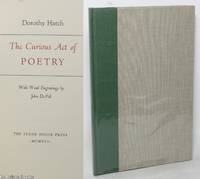
1991rif. 350570Roslyn: The Stone House Press 1991. 31p. frontispiece note from the printer rubricated initial caps #49/75 hand-numbered and signed by both the author and the artist designed Mary Ahern and printed by M. A. Gelfland by hand at The Stone House Press printed from type and woodblock on Mohawk Letterpress paper gray cloth boards over green cloth spine with gilt titles and clear mylar dust jacket in near fine condition. Essay on poetry. The Stone House Press unknown books
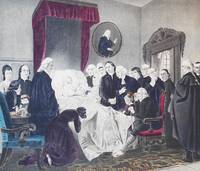
1860rif. 006727Philadelphia: William Smith 1860. Good. Sheet is 48 x 57 cm. Image is 33 x 38 cm. Hand-colored lithograph produced by Magee's Lithograph Press 48 S. 3rd St. Philadelphia. No date of publication. John L. Magee artist lithographer and engraver was located at 48 or 49 S. 3rd St. Philadelphia only in 1860. Engraved by A. Biggerman after an engraving by John Sartain. Print of deathbed scene of the Reverend John Wesley. Others shown in the image as identified by Sartain: Sarah Wesley a medical assistant the Rev. J. Bradford the Rev. P. Dickinson Mrs. Charles Wesley the Rev. T. Rankin Mrs. E.A. Rogers Miss Ritchie the Rev. J. Rogers the Rev. J. Creighton Master Rogers R.C. Brackenbury the Rev. T. Broadbent the Rev. A. Mather the Rev. J. Broadbent J. Horton the Rev. G. Whitfield Dr. Whitehead and the Rev. J. Edmonson. Scarce one copy on WorldCat. In Good Condition: some mat burn; closed tear of 2.5 cm. fromt upper edge; closed years of less than 2 cm. from lower edge; lower corner creased; image is clean and bright. William Smith unknown
A clean, unmarked book with a tight binding. Green cloth spine and gilt title and holly decoration on front cover. Edge wear and peeling paper on edges of cover.6 1/2"w x7 7/8"h. 46 pages. Black and white illustrations by Hammatt Billings. No date; circa 1890's.
1883A clean, unmarked book with a tight binding. 392 pages. Bookplate from Theosophical University Library. Previous owner's inscription in lovely penmanship. Slight wear and fading to dark green cloth cover. Library call number onspine. Beautiful engravings of medical equipment and a few ears. Tears at front hinge, but binding still tight.
193022x15 cm. 208 pages. Hardcover. Cover stained and slightly faded. Spine slightly worn. Binding visible on several pages. Pages yellowing. Else in good condition.
1980rif. 588697Market Drayton: Tern Press 1980. Softcover. Very Good. First edition. Original prints from etchings engravings and woodcuts by Nicholas Parry. Slim quarto. Printed wrappers. Modest crease near the crown top corners and spine base a bit bumped close to near fine. Copy 5 of 100 printed Signed by Nicholas Parry and Randolph Ellis on the limitation page the original printed limitation of 50 has been canceled in ink. An nice production with illustrations "which are offered as reminders rather than statements of GOYA's etchings. Tern Press unknown
1980rif. 588697Market Drayton: Tern Press 1980. Softcover. Very Good. First edition. Original prints from etchings engravings and woodcuts by Nicholas Parry. Slim quarto. Printed wrappers. Modest crease near the crown top corners and spine base a bit bumped close to near fine. Copy 5 of 100 printed Signed by Nicholas Parry and Randolph Ellis on the limitation page the original printed limitation of 50 has been canceled in ink. An nice production with illustrations "which are offered as reminders rather than statements of GOYA's etchings. Tern Press unknown books
1873pp. vi, 663 + Plus frontis and full page engravings. Text drawings. Inked ownership of Eugene Snyder on title page. Damp stained frontis, title page and first and last few signatures. Paper beginning to brown. Large 12mo. Original full green cloth binding, gold embossed vignette of a hunting dog on front cover. Worn and spotted with small loss top and bottom of spine. A decent copy of this famous and important dog book. **PRICE JUST REDUCED! PETS/2
197430X23 CM. 13+241 Pages. Softcover. In good condition. PLEASE NOTE: This item is overweight. We may ask for extra shipping costs.
1807rif. 14775This sketch, which is characterised by the artist's usual spirit when dealing with kindred subjects, represents the situation of a rustic swain, whose philanderings have landed him in the midst of the perplexities of a double dilemma. It is seemingly 'washing day,' and the gallant intruder has effected his admission to court the graces of a pretty maiden, who is thrown into consternation at the risk to which her suitor, by an awkward contretemps, is suddenly exposed. The pair have evidently been disturbed at the moment the lady was engaged in drawing a mug of ale for the refreshment of her admirer ; in the confusion, the tap of the beer barrel is still left running, and all the maid's solicitude is centred in the position of her swain, who has incautiously taken refuge in the copper. A very disagreeable-looking old beldame is kindling a blazing fire in the stove, while a buxom wench is working away at the pump, which is pouring gallons of water into the unlucky Lothario's place of concealment. The youth is hesitating midway between the ordeals of fire or water, and he is struggling to effect his escape from both, at the risk of exposure and its consequences. " Encadrée Bon Londres Thomas Tegg 1807 44 x 34 cm
1966rif. 39215Harper Torchbooks. As New. Paperback. FREE UPGRADE to Courier/Priority Shipping Upon Request – – IN STOCK AND IMMEDIATELY AVAILABLE FOR SHIPMENT - AS NEW THE TEXT BLOCK IS PRISTINE CLEAN UNMARKED AND IN EXCELLENT CONDITION - - Text in English -- with a bonus offer--; T-Hesch; Heschel Abraham Joshua; Schor Ilya wood engravings The Earth is the Lord's and The Sabbath - With Wood Engravings By Ilya Schor . 1966. Harper Torchbooks paperback
2008SIGNED LIMITED EDITION copy of an elaborately-illustrated Haggadah. 480x325mm. This beautiful Haggadah is enclosed in a thick wooden box, with a colorfully-painted front lid. Inside are 34 color lithographs (not bound). Each lithograph comprises one page of the Haggadah, including the text (in Hebrew) relevant to the image on that lithograph - together making up the complete Haggadah text. Each lithograph is SIGNED by Eliyahu Sidi (in pencil), and marked with a number to indicate the exemplar to which it belongs. The box also contains a large 25-page booklet, wherein is found the introduction by David Moss, English translations for each of the 34 color lithographs (alongside a small image of each lithograph, for reference purposes), and concluding with an interpretation of each lithograph from an artistic viewpoint by David Moss and Noam Zion. The booklet is written entirely in the English language. All copies sold fresh (not second-hand) directly from the artist, and are in PERFECT CONDITION. PLEASE NOTE: This item is overweight. We may ask for extra shipping costs.
1893rif. 261551893 Les peintres-lithographes : album trimestriel de lithographies originales et inédites 1893 - belle epreuve sur chine collé. tres claires rousseurs en marge. toutes marges, dimension feuille : 320 x 460mm.. timbre, tirage à 100 ex.
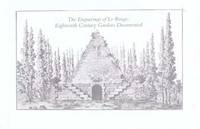
rif. 18-8226New York NY: Stubbs Books & Prints 1987. . Exhibition catalogue. 8vo. Oblong. 10 pp. Soft stapled beige and black and white illustrated wraps. As new. Black and white gravure plates. Includes text by Thomas Jayne. Catalogue created to accompany the exhibition “The Engravings of Le Rouge: Eighteenth Century Gardens Documented” held from November 12 through February 2 1987 at Stubbs Books & Prints in New York NY. Scarce. New York, NY: Stubbs Books & Prints, 1987. paperback
rif. 75-7988New York: Stubbs Books & Prints Inc. 1987. 12mo. Oblong Stapled Wrap ca. 10 pp. B&W Plates. Very Good with Creasing Sunning Abrasions.Provenance: From the Collection of Frederick Gale Ruffner Jr.The Founder of Gale Research Detroit New York: Stubbs Books & Prints, Inc., 1987 unknown
19638vo., First Edition thus, with numerous reproductions (many full-page) in the text; pictorial wrappers, a near fine copy. Published simultaneously with the cloth edition.
1994rif. 125793Sotheby's, New York, 1994. 27,5 x 22 cm ; Leinen.
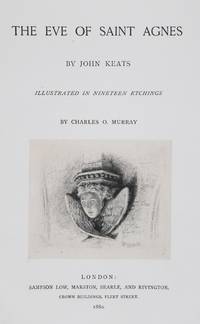
1880rif. 52357London: Sampson Low Marston Searle and Rivington 1880. First edition. Hardcover. Very good condition. 17/50. Large Folio. 51 leaves. Original three-quarter blue leather over textured blue cloth with gilt ruling on covers gilt lettering tooling and ruling on spine; raised bands. Top edge gilt. Decorative floral endpapers rendered in lithography. Frontispiece engraving. Title page with engraving. Decorative initials. Black ribbon marker. Signed "Edition limited to 50 copies No. 17 C. O. Murray" in blue handwriting on half-title. illustrated with nineteen etchings including frontispiece and title page. All but the title page etching with C. O. Murray signature in plate and reference to the respective stanza. All plates tissue guarded with heavy paper plates. Contains list of etchings at front. Light wear along edges of binding some rubbing along hinges of spine. Offsetting to outer edges of endpapers from cover leather. Some offsetting of engravings to guards. Sampson Low, Marston, Searle, and Rivington hardcover