10 182 résultats
réf. 241640 Planche N°48, format 29 x 40 cm (toutes marges). Chromolithographie d'époque avec le timbre à sec de l'Imprimerie Chaix (Lugt 1777c). Notre exemplaire est une des très rares épreuves imprimées sur papier Japon, toute petite trace de punaisage dans l'extrémité de la marge supérieure gauche (Our plate is one of the few copies printed on Japanese paper. Original plate in good condition). LES MAITRES DE L'AFFICHE, prestigieuse publication d'art, éditée par l'atelier de lithographie Chaix, dont la parution s'étala de décembre 1895 à novembre 1900. Chaque livraison comportait 4 planches de reproduction en chromolithographie d'une remarquable qualité d'impression des plus belles affiches illustrées des grands artistes français et étrangers (auxquelles il faut ajouter 16 planches de lithographies originales offertes en prime aux abonnés). Lors de l'Exposition universelle de 1889, fut organisée la première exposition rétrospective dévolue à l'affiche, celle-ci devait valider la reconnaissance officielle d'appartenance de l'affiche au monde de l'art. Jules Chéret (1836-1932) y sera sacré '' Maître de l'affiche '', c'est aussi à cette date que Seurat commencera à collectionner les affiches de Chéret. Bel exemplaire ( Photographies sur demande / We can send pictures of this book on simple request )
réf. 30804ABZürich, Orell Füssli & Co., 00 (4) Bl. (Titel und Illustrationen), 28 S., (2) Bl. (Zürich). Mit vielen zum Teil ganzseitigen Abbildungen. Blind- und goldgeprägter Orig.-Leinenband.
1930réf. 1021DG1930. Touristikplakat in Tiefdruck, nach einer Fotografie von Wehrli, Zürich. Blattgrösse: 49 x 64 cm.
1885réf. S81884New York, Frederick Keppel 1885 viii + 322pp. + frontispiece & 5 plates out-of-text, with notes and a bibliography of engraving (by Robert Hoe), 23cm., hardcover (cloth boards, spine in leather - with some traces of use, esp. at ends), upper edges gilt, very few foxing, good, S81884
1878réf. 14367Épreuve sur chine contrecollé; D'après le tableau de frederick Arthur Bridgman. En feuille Très bon 1878 21 x 28 cm
réf. 17803Hard covers. This is a photolithographic gift book of New York. There are 28 small photographs of scenes in New York that look like photographs, but many are photographs of prints which has been reworked to look like glossy photos. They have been printed in a rich sepia toned ink. The images are of various places, buildings, and landmarks in the horse and buggy days as well as elevated railroads. The opening photo is a miniature bird's eye view of Manhatten with Brooklyn and New Jersey spread across both pages - tiny, but clear. There are sailing and steam ships on the rivers. The look of New York of that period is captured and the variety of photos is encompassing - Cotton Exchange, Hebrew Orphan Asylum, High Curve Elevated Railroad, Grand Central Depot. The cover is a finely pebbled cloth - tan brown with a subtlely blind-stamped floral bouquet design and a banner title with the title New York and a sillouette of the Statue of Liberty. The gilt that was once on the cover has faded. The covers are thin. There is edge wear and a touch of soil. The interior is clean and bright. And without wear. The pages are in a folding accordian display.
réf. M828RLWCartonné bon état .Contenu propre . 1967. 22 pages . PHOTOS SUR DEMANDE
1807réf. 14775This sketch, which is characterised by the artist's usual spirit when dealing with kindred subjects, represents the situation of a rustic swain, whose philanderings have landed him in the midst of the perplexities of a double dilemma. It is seemingly 'washing day,' and the gallant intruder has effected his admission to court the graces of a pretty maiden, who is thrown into consternation at the risk to which her suitor, by an awkward contretemps, is suddenly exposed. The pair have evidently been disturbed at the moment the lady was engaged in drawing a mug of ale for the refreshment of her admirer ; in the confusion, the tap of the beer barrel is still left running, and all the maid's solicitude is centred in the position of her swain, who has incautiously taken refuge in the copper. A very disagreeable-looking old beldame is kindling a blazing fire in the stove, while a buxom wench is working away at the pump, which is pouring gallons of water into the unlucky Lothario's place of concealment. The youth is hesitating midway between the ordeals of fire or water, and he is struggling to effect his escape from both, at the risk of exposure and its consequences. " Encadrée Bon Londres Thomas Tegg 1807 44 x 34 cm
1711réf. 002657Lugduni Batavorum (Leide, Leyde), Apud Petrum Van der Aa, Bibliopolam, 1711 In-folio (41 x 27 cm), (1) ff., 15 pp., (8) pp., veau marbré, dos à six nerfs orné, pièce de titre de maroquin rouge, triple filet à froid entourant les plats, double filet doré sur les coupes, tranches rouges (reliure d'époque). Illustré d'un frontispice, un portrait de l'auteur, 1 vignette de titre, 4 vignettes dans le texte, et 60 planches gravées. Première édition en latin du "Cabinet des raretés de l'île d'Amboine" (Amboinsche Rariteitkamer), publié en hollandais en 1705 ; l'auteur, atteint de cécité, est ici représenté dans son cabinet. Précieux exemplaire provenant de la famille de Charles de MONTESQUIEU, de la bibliothèque du Château de la Brède, avec l'ex-libris des Secondat, barons de la Brède et de Montesquieu, "Virtutem Fortuna Secondat, Ex Bibliotheca Bredanense", et les initiales C. M. à l'encre. Bel exemplaire. // Folio (41 x 27 cm), (1) ff., 15 pp., (8) pp., marbled calf, spine tooled raised on six bands, red morocco title label, triple blind fillet borders on covers, double gilt fillet on turns-in, red edges (contemporary binding). Illustrated with a frontispiece, a portrait of the author, 1 vignette on title, 4 vignettes in the text, and 60 engraved plates. First edition in latin of the "Ambonese Curiosity Cabinet" (Amboinsche Rariteitkamer), first published in german in 1705 ; the author, blind, is here depicted in his office. Precious copy from Charles de MONTESQUIEU family, from the "Château de la Brède" library, with the book-plate of the Secondat, barons de la Brède et de Montesquieu "Virtutem Fortuna Secondat , Ex Bibliotheca Bredanense", and initials C. M. hand-written. Fine copy (Nissen ZBI 3520)
réf. 27627in4 plein maroquin,plats decorés,trés frotté,titré museo Londres,sans page de titre, tranches dorées, 80 eaux fortes sous serpentes avec le texte en regard, montées sur onglets, Author: Thomas H Shepherd, (Thomas Hosmer), artist.Contributor: Wallis, William, 1796- engraver.- rare-
réf. 24415La Caricature. Journal. Morale, Religieuse, Littéraire, Scénique - La Caricature ( Journal) No. 204. Plate 426. [Paris] Delaunois for Maison Aubert [12 October 1834]. Lithograph. Overall paper size 33.3 × 26.2 cm.
réf. 7359Estampe représentant l’épitaphe gravé sur la tombe d’Ortelius à Anvers. Page de titre pour une édition posthume du Theatrum. XVIIè 38 x 23,5 cm.
1909réf. 1772DB13. Aufl. London, John Murray, 1909. 8°. XIV, 224 S., (44) S. (Anzeigen). Mit zahlr. z.T. ganzs. Abb., 1 gef. Panorama und 2 gef. Karten. Illustr. Orig.-Broschur
1787réf. 269371787 [Paris] : [s.n.], 1787- 1 est. : eau-forte, outils, colorié à main levée ; 8,7 x 5,3 cm (tr. c.) Appartient à : Tableaux de la Fable ; ou Nouvelle Histoire poétique des Dieux ; Demi-Dieux et Héros de la Fable, représentée par figures et accompagnée d'explications Dédiés à Madame la Comtesse de Genli- GRASSET DE SAINT-SAUVEUR (J.) et MARECHAL (Sylvain)- 1785
1834réf. 251291834 Heads of expressions Charles Joseph Traviès de Villers, dit Traviès (1804-1859). Caricature de presse. "Têtes d’expressions".PL.412 Planche parue dans "La Caricature" du 14 août 1834. Lithographie. Dimensions: 260 mm X 340 mm - SUR PAPIER BLANC,pli central
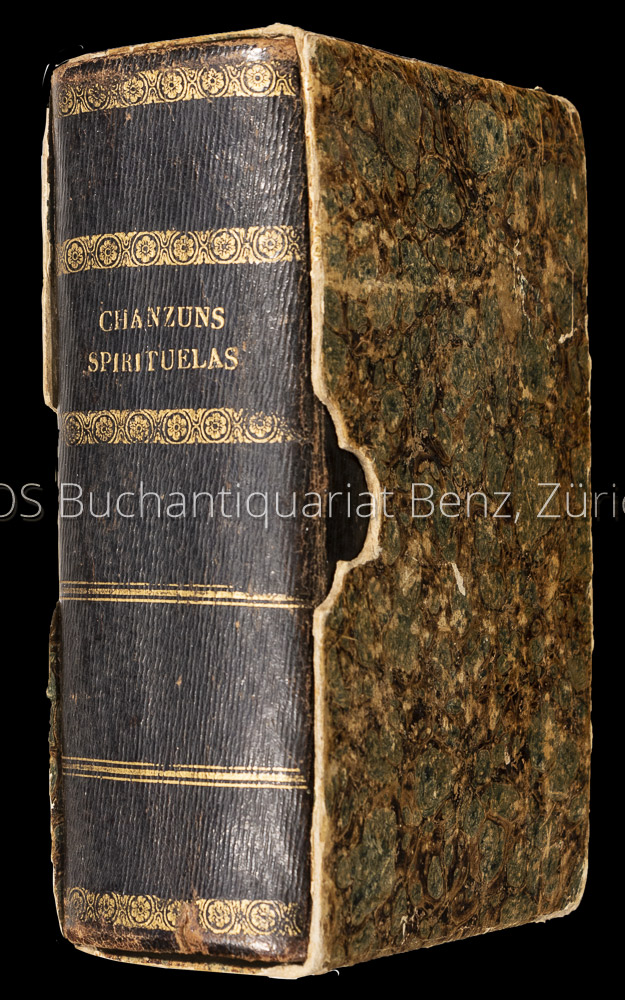
1789réf. 6848CBCellerina, Giuseppe Bistzi, 1789. 8°. (12) Bl., 1047, (9) S. Lederband der Zeit in zeitgenössischem Halbschuber. + Wichtig: Für unsere Kunden in der EU erfolgt der Versand alle 14 Tage verzollt ab Deutschland / Postbank-Konto in Deutschland vorhanden +, A|B|C [3 Warenabbildungen]
1947Litografia originale numerata e firmata a matita dall'Artista. Una delle prime litografie di Guttuso (n. 5 del catalogo Renato Guttuso, Opera Grafica a cura di Paolo Bellini, Club Amici dell'Arte Editore, Milano 1978) Opera allegata al n. 11 (gennaio 1949) della rivista L'Immagine, diretta da Cesare Brandi, pubblicata a Roma dal maggio 1947 al dicembre 1950. L'edizione speciale di ogni numero della rivista conteneva sciolta una o più incisioni originali in tiratura di 50 esemplari di cui 30 in numerazione araba dedicate ad personam e XX in numerazione romana. La presente incisione reca il numero 15/30 ed era allegata alla copia della rivista dedicata a Riccardo Gualino. Cm 21x15 (Foglio 24,8x17,2). . . Ottimo (Fine). . Prima ed. di 1000 es. numerati e firmati dall'A.. .
réf. 66428unknown
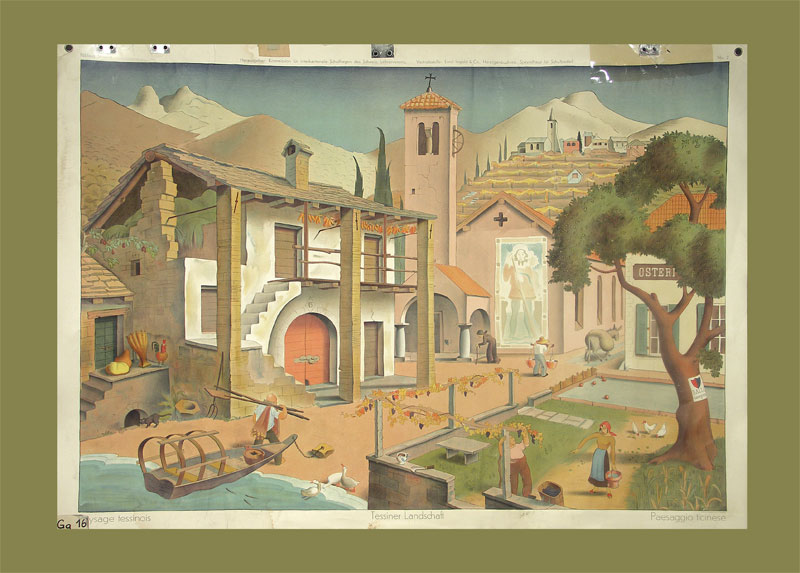
1935réf. 583CGBasel, Wassermann, o.J. (um 1935). Farblithographie. Bildformat: 65 x 90 cm. + Wichtig: Für unsere Kunden in der EU erfolgt der Versand alle 14 Tage verzollt ab Deutschland / Postbank-Konto in Deutschland vorhanden +, 583CG
19268vo., First Edition thus, with engraved frontispiece, 40 engravings (a number full-page) and large folding map; elegantly bound in full dark green crushed morocco, sides with gilt frame border, back with raised bands, second and fourth compartments lettered and ruled in gilt, all other compartments tooled in gilt, gilt edges, gilt doublures, hand-made endpapers, ribbon marker, in custom-made marbled slip-case, an elegant copy ideal as a gift or for presentation. navy buckram, gilt back, bevelled boards, gilt top, covers very lightly age-soiled. backstrip sunned (but all gilt wholly legible) else a very good, bright, clean copy. EDITION LIMITED TO 1500 COPIES. Printed from the plates of Macmillan's definitive Wessex Edition and so including both the expanded Preface of 1912 and the episode of the dance at the hay-trusser's (pp.76-79) present there for the first time. See Purdy p.77.
19268vo., First Edition thus, with engraved frontispiece, 40 engravings (a number full-page) and large folding map, neat contemporary signatures on front paste-down; original navy buckram, bevelled boards, gilt back, gilt top, uncut, boards very lightly age-marked, backstrip mildly faded (but all gilt wholly legible), a bright, clean, crisp copy. EDITION LIMITED TO 1500 COPIES. With the trade ticket of Gilbert of Southampton on front paste-down. Printed from the plates of Macmillan's definitive Wessex Edition and so including both the expanded Preface of 1912 and the episode of the dance at the hay-trusser's (pp.76-79) present there for the first time. See Purdy p.77.
1924- Lucien Vogel éditeur, Paris 1924-1925, 18x24cm, une feuille. - Original color print, printed on vergé paper, signed in the plate. An original print used to illustrate the Gazette du bon ton, one of the most attractive and influential 20th century fashion magazines, featuring the talents of French artists and other contributors from the burgeoning Art Deco movement. A celebrated fashion magazine established in 1912 by Lucien Vogel, La Gazette du bon ton appeared until 1925, with a hiatus from 1915 to 1920 due to the war (the editor-in-chief having been called up for service). It consisted of 69 issues printed in only 2,000 copies each and notably illustrated with 573 color plates and 148 sketches of the models of the great designers. Right from the start, this sumptuous publication "was aimed at bibliophiles and fashionable society," (Françoise Tétart-Vittu, "La Gazette du bon ton", in Dictionnaire de la mode, 2016) and was printed on fine vergé paper using a type cut specially for the magazine by Georges Peignot, known as Cochin, later used (in 1946) by Christian Dior. The prints were made using stencils, heightened in colors, some highlighted in gold or palladium. The story began in 1912, when Lucien Vogel, a man of the world involved in fashion (he had already been part of the fashion magazine Femina) decided, with his wife Cosette de Brunhoff - the sister of Jean, creator of Babar - to set up the Gazette du bon ton, subtitled at the time: "Art, fashion, frivolities." Georges Charensol noted the reasoning of the editor-in-chief: "'In 1910,' he observed, 'there was no really artistic fashion magazine, nothing representative of the spirit of the time. My dream was therefore to make a luxury magazine with truly modern artists...I was assured of success, because when it comes to fashion, no country on earth can compete with France.'" ("Un grand éditeur d'art. Lucien Vogel" in Les Nouvelles littéraires, no. 133, May 1925). The magazine was immediately successful, not only in France but also in the United States and Latin America. At first, Vogel put together a team of seven artists: André-Édouard Marty and Pierre Brissaud, followed by Georges Lepape and Dammicourt, as well as eventually his friends from school and the School of Fine Arts, like George Barbier, Bernard Boutet de Monvel and Charles Martin. Other talented people soon came flocking to join the team: Guy Arnoux, Léon Bakst, Benito, Boutet de Monvel, Umberto Brunelleschi, Chas Laborde, Jean-Gabriel Domergue, Raoul Dufy, Édouard Halouze, Alexandre Iacovleff, Jean Émile Laboureur, Charles Loupot, Chalres Martin, Maggie Salcedo. These artist, mostly unknown when Lucien Vogel sought them out, later became emblematic and sought-after artistic figures. It was also they who worked on the advertising drawings for the Gazette. The plates put the spotlight on, and celebrate, dresses by seven designers of the age: Lanvin, Doeuillet, Paquin, Poiret, Worth, Vionnet and Doucet. The designers provided exclusive models for each issue. Nonetheless, some of the illustrations are not based on real models, but simply on the illustrator's conception of the fashion of the day. The Gazette du bon ton was an important step in the history of fashion. Combining aesthetic demands with the physical whole, it brought together - for the first time - the great talents of the artistic, literary, and fashion worlds; and imposed, through this alchemy, a completely new image of women: slender, independent and daring, which was shared by the new generation of designers, including Coco Chanel, Jean Patou, Marcel Rochas, and so on... Taken over in 1920 by Condé Montrose Nast, the Gazette du bon ton was an important influence on the new layout and aesthetics of that "little dying paper" that Nast had bought a few years earlier: Vogue. [FRENCH VERSION FOLLOWS] Estampe originale en couleur, tirée sur papier vergé, signée en haut à gauche de la planche. Gravure originale réalisée pour l'illustration d
1789réf. 6848CBCellerina, Giuseppe Bistzi, 1789. 8°. (12) Bl., 1047, (9) S. Lederband der Zeit in zeitgenössischem Halbschuber.
1924réf. 55198Lucien Vogel éditeur | Paris 1924-1925 | 18 x 24 cm | une feuille
1935réf. 583CGBasel, Wassermann, o.J. (um 1935). Farblithographie. Bildformat: 65 x 90 cm.