Livre Rare Book

10 988 résultats
1891réf. 1396DBBerne, Karl Staempfli, 1891. 4°. 188 S. Mit 1 gefl. farb. Karte. Orig.-Broschur
réf. 24543Gravure a l'aquatinte du 18e siecle (1788) par Labrousse, d'apres le dessin de Grasset St Sauveur, imprimee sur papier vert. Coloriee a la main a l'époque.Encyclopédie des voyages,Kolorierte Aquatinta, Darstellung: 11 x 17 cm
1860réf. 298AB6. Aufl. Paris, Garnier Frères, 1860. Lex-8°. (1) Bl., (4) 474 (2) S. Mit 1 illustr. Titel sowie 53 Tafeln u. zahlr. Textillustr. nach Holzstichen, u.a. nach Zeichnungen von Töpffer Halblederbd. d. Zt. mit Rückenvergoldung u. 3-s. Goldschnitt (berieben u. leicht bestossen).
1868réf. 5262BB7. Auflage. Paris, Garnier Frères, 1868. Kl.-4°. (1) Bl., 474 S., (1) Bl. Mit illustr. Titel sowie 53 Tafeln u. zahlr. Textillustr. nach Holzstichen u.a. nach Zeichnungen von Rodolphe Töpffer. Lederband der Zeit (sign.: Palmer & Howe, Manchester) mit Stehkanten-, Aussenkanten-, Innenkanten- und reicher Rückenvergoldung.
1885réf. 6327BB8. Auflage. Paris, Garnier Frères, 1885. Kl.-4°. (1) Bl., 474 S., (1) Bl. Mit 1 illustr. Titel sowie 53 Tafeln u. zahlr. Textillustr. nach Holzstichen u.a. nach Zeichnungen von Rodolphe Töpffer. Roter Orig.-Halblederband mit Rückenvergoldung und dreis. Goldschnitt.
réf. 241890 Planche N°43, format 29 x 40 cm (toutes marges). Chromolithographie d'époque avec le timbre à sec de l'Imprimerie Chaix (Lugt 1777c). Notre exemplaire est une des très rares épreuves imprimées sur papier Japon, toute petite trace de punaisage dans l'extrémité de la marge supérieure gauche (Our plate is one of the few copies printed on Japanese paper. Original plate in good condition). LES MAITRES DE L'AFFICHE, prestigieuse publication d'art, éditée par l'atelier de lithographie Chaix, dont la parution s'étala de décembre 1895 à novembre 1900. Chaque livraison comportait 4 planches de reproduction en chromolithographie d'une remarquable qualité d'impression des plus belles affiches illustrées des grands artistes français et étrangers (auxquelles il faut ajouter 16 planches de lithographies originales offertes en prime aux abonnés). Lors de l'Exposition universelle de 1889, fut organisée la première exposition rétrospective dévolue à l'affiche, celle-ci devait valider la reconnaissance officielle d'appartenance de l'affiche au monde de l'art. Jules Chéret (1836-1932) y sera sacré '' Maître de l'affiche '', c'est aussi à cette date que Seurat commencera à collectionner les affiches de Chéret. Adolphe Willette, Châlons-sur-Marne 1857 - Paris 1926, peintre, illustrateur, dessinateur et caricaturiste français. Bel exemplaire ( Photographies sur demande / We can send pictures of this book on simple request )
A keepsake with an original type relief print by Alper and a wood-engraving by Kalman. Very scarce. Large square 8vo. Prints loose as issued in wraps. Light wear to wraps, prints fine.
Acquaforte Firma, titolo, data e numerazione a matita. Timbro a secco dello stampatore. Tirata a mano sui torchi di Giorgio Upiglio. Esemplare p.d.a. 3. cm 18,2x21,2 (Foglio 24,5x35). . . Ottimo (Fine). . . .
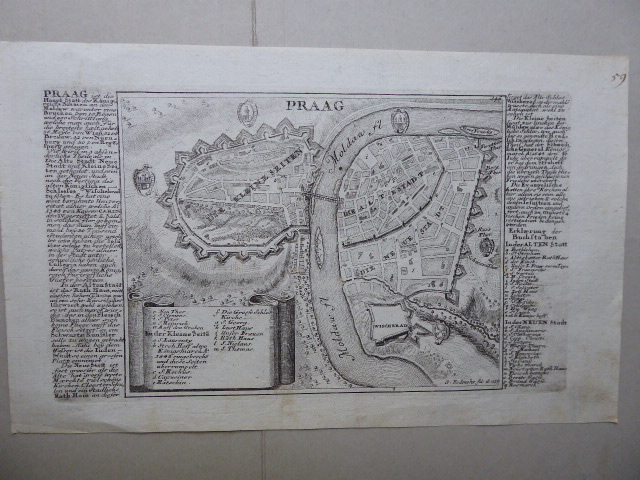
1725réf. 138895(Augsburg). (Um 1725). Kupferstichblatt in kräftigem Abdruck. Format ca. 16 x 27 cm
réf. 5717Eau-forte et aquatinte, signée au crayon et dans la planche. Cachet rouge. 29 x 18
1920RARE LIMITED EDITION of 500 COPIES - COPY No.26. Contains a woodcut illustration by William Aguet and Alexandre Noll (1890-1970) as frontispiece. 260x190mm. 30 pages. Blue cloth rebound Hardcover with gilt lettering on spine. Cover and spine rubbed and stained. Rear cover upper corner and spine yellowing. Spine edges bumped. Stamp on front whitepage bottom corner. Small green pencil cross-mark on page 4 (blank page). Title page, inner cover and several pages slightly age-stained. Pages yellowing. [SUMMARY]: This extremely rare book is otherwise in good condition.
1998réf. 0006071International Paper Co. post 1998. Loose_leaf. Very Good. Theo Van Doesburg & 73 others. 8vo 78 loose leaves in alphabetical sequence - including Unknown and ending with Hermann Zapf in a paper chemise in a die-cut paper slipcase; Note: one leaf stained on verso; also this set has 3 duplicate plates. VERY SCARCE. An international collection of 74 twentieth century typographers callligraphers artists designers contributed this series of works which is now in the permanent collection of the Guttenberg Museum after being exhibited in Europe Latin America and finally the U.S.A. International Paper Co. unknown
1924- Lucien Vogel éditeur, Paris 1924-1925, 18x24cm, une feuille. - Original color print, printed on vergé paper, signed in the plate. An original print used to illustrate the Gazette du bon ton, one of the most attractive and influential 20th century fashion magazines, featuring the talents of French artists and other contributors from the burgeoning Art Deco movement. A celebrated fashion magazine established in 1912 by Lucien Vogel, La Gazette du bon ton appeared until 1925, with a hiatus from 1915 to 1920 due to the war (the editor-in-chief having been called up for service). It consisted of 69 issues printed in only 2,000 copies each and notably illustrated with 573 color plates and 148 sketches of the models of the great designers. Right from the start, this sumptuous publication "was aimed at bibliophiles and fashionable society," (Françoise Tétart-Vittu, "La Gazette du bon ton", in Dictionnaire de la mode, 2016) and was printed on fine vergé paper using a type cut specially for the magazine by Georges Peignot, known as Cochin, later used (in 1946) by Christian Dior. The prints were made using stencils, heightened in colors, some highlighted in gold or palladium. The story began in 1912, when Lucien Vogel, a man of the world involved in fashion (he had already been part of the fashion magazine Femina) decided, with his wife Cosette de Brunhoff - the sister of Jean, creator of Babar - to set up the Gazette du bon ton, subtitled at the time: "Art, fashion, frivolities." Georges Charensol noted the reasoning of the editor-in-chief: "'In 1910,' he observed, 'there was no really artistic fashion magazine, nothing representative of the spirit of the time. My dream was therefore to make a luxury magazine with truly modern artists...I was assured of success, because when it comes to fashion, no country on earth can compete with France.'" ("Un grand éditeur d'art. Lucien Vogel" in Les Nouvelles littéraires, no. 133, May 1925). The magazine was immediately successful, not only in France but also in the United States and Latin America. At first, Vogel put together a team of seven artists: André-Édouard Marty and Pierre Brissaud, followed by Georges Lepape and Dammicourt, as well as eventually his friends from school and the School of Fine Arts, like George Barbier, Bernard Boutet de Monvel and Charles Martin. Other talented people soon came flocking to join the team: Guy Arnoux, Léon Bakst, Benito, Boutet de Monvel, Umberto Brunelleschi, Chas Laborde, Jean-Gabriel Domergue, Raoul Dufy, Édouard Halouze, Alexandre Iacovleff, Jean Émile Laboureur, Charles Loupot, Chalres Martin, Maggie Salcedo. These artist, mostly unknown when Lucien Vogel sought them out, later became emblematic and sought-after artistic figures. It was also they who worked on the advertising drawings for the Gazette. The plates put the spotlight on, and celebrate, dresses by seven designers of the age: Lanvin, Doeuillet, Paquin, Poiret, Worth, Vionnet and Doucet. The designers provided exclusive models for each issue. Nonetheless, some of the illustrations are not based on real models, but simply on the illustrator's conception of the fashion of the day. The Gazette du bon ton was an important step in the history of fashion. Combining aesthetic demands with the physical whole, it brought together - for the first time - the great talents of the artistic, literary, and fashion worlds; and imposed, through this alchemy, a completely new image of women: slender, independent and daring, which was shared by the new generation of designers, including Coco Chanel, Jean Patou, Marcel Rochas, and so on... Taken over in 1920 by Condé Montrose Nast, the Gazette du bon ton was an important influence on the new layout and aesthetics of that "little dying paper" that Nast had bought a few years earlier: Vogue. [FRENCH VERSION FOLLOWS] Estampe originale en couleur, tirée sur papier vergé, signée en bas à gauche de la planche. Gravure originale réalisée pour l'illu
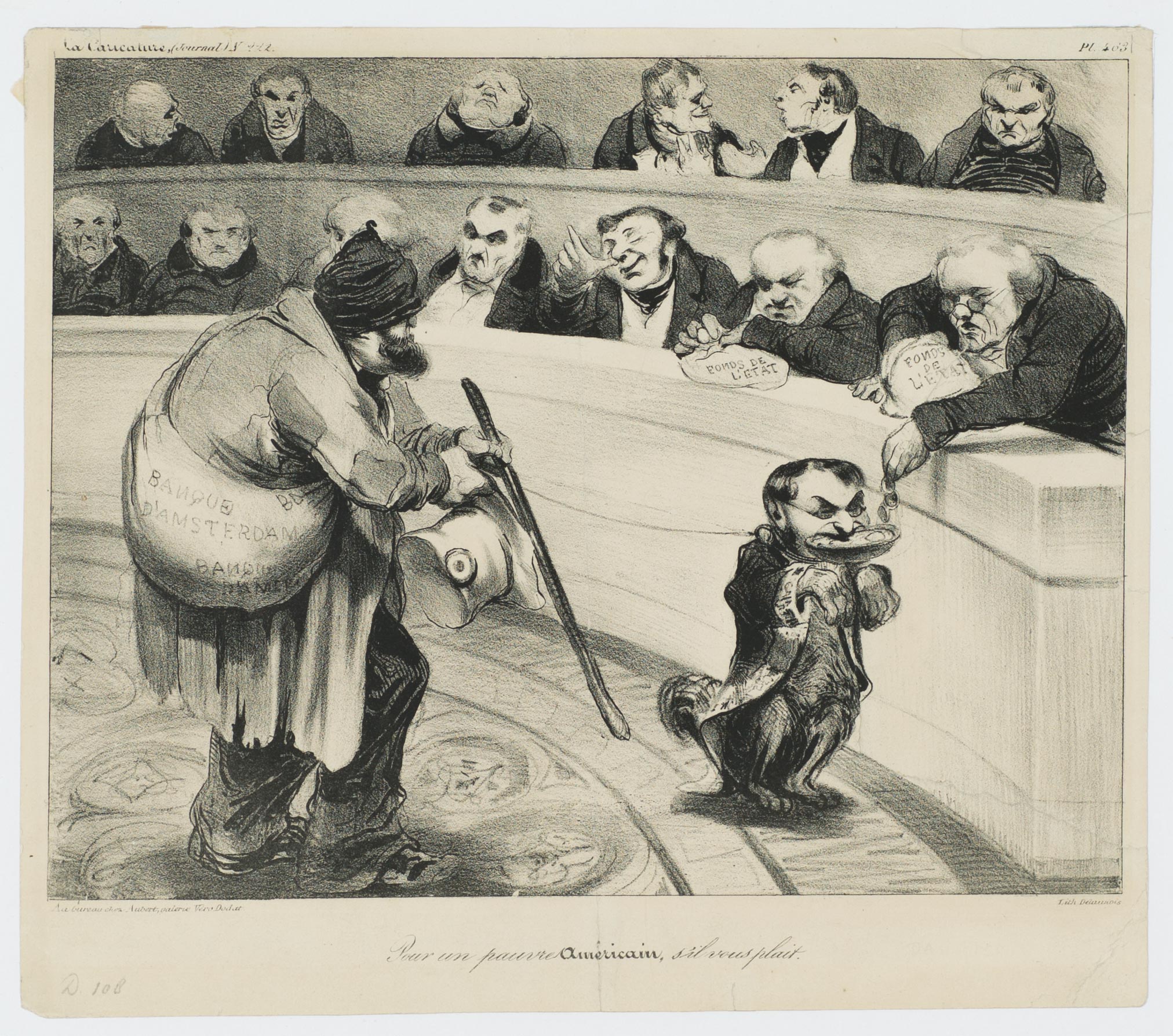
réf. HD-161o.J. Lithographie, auf chamoisfarbenem Velin, mit den Adressen: Au bureau ,chez Aubert, pass. Véro-Dodat., sowie: Lith. Delaunois. Darstellungsgröße 21,7:27,8 cm, Blattgröße 25,5:29 cm. Literatur: Daumier-Register 108 I, (von III); Delteil 108 I (von III); Blatt 463, erschienen am 05.02.1835 in ?LA CARICATURE?, Nr. 222. ? Sur blanc.
1920- Lucien Vogel éditeur, Paris 1920, 19x24,5cm, une feuille. - Original color print, printed on vergé paper, signed in the plate. An original print used to illustrate the Gazette du bon ton, one of the most attractive and influential 20th century fashion magazines, featuring the talents of French artists and other contributors from the burgeoning Art Deco movement. A celebrated fashion magazine established in 1912 by Lucien Vogel, La Gazette du bon ton appeared until 1925, with a hiatus from 1915 to 1920 due to the war (the editor-in-chief having been called up for service). It consisted of 69 issues printed in only 2,000 copies each and notably illustrated with 573 color plates and 148 sketches of the models of the great designers. Right from the start, this sumptuous publication "was aimed at bibliophiles and fashionable society," (Françoise Tétart-Vittu, "La Gazette du bon ton", in Dictionnaire de la mode, 2016) and was printed on fine vergé paper using a type cut specially for the magazine by Georges Peignot, known as Cochin, later used (in 1946) by Christian Dior. The prints were made using stencils, heightened in colors, some highlighted in gold or palladium. The story began in 1912, when Lucien Vogel, a man of the world involved in fashion (he had already been part of the fashion magazine Femina) decided, with his wife Cosette de Brunhoff - the sister of Jean, creator of Babar - to set up the Gazette du bon ton, subtitled at the time: "Art, fashion, frivolities." Georges Charensol noted the reasoning of the editor-in-chief: "'In 1910,' he observed, 'there was no really artistic fashion magazine, nothing representative of the spirit of the time. My dream was therefore to make a luxury magazine with truly modern artists...I was assured of success, because when it comes to fashion, no country on earth can compete with France.'" ("Un grand éditeur d'art. Lucien Vogel" in Les Nouvelles littéraires, no. 133, May 1925). The magazine was immediately successful, not only in France but also in the United States and Latin America. At first, Vogel put together a team of seven artists: André-Édouard Marty and Pierre Brissaud, followed by Georges Lepape and Dammicourt, as well as eventually his friends from school and the School of Fine Arts, like George Barbier, Bernard Boutet de Monvel and Charles Martin. Other talented people soon came flocking to join the team: Guy Arnoux, Léon Bakst, Benito, Boutet de Monvel, Umberto Brunelleschi, Chas Laborde, Jean-Gabriel Domergue, Raoul Dufy, Édouard Halouze, Alexandre Iacovleff, Jean Émile Laboureur, Charles Loupot, Chalres Martin, Maggie Salcedo. These artist, mostly unknown when Lucien Vogel sought them out, later became emblematic and sought-after artistic figures. It was also they who worked on the advertising drawings for the Gazette. The plates put the spotlight on, and celebrate, dresses by seven designers of the age: Lanvin, Doeuillet, Paquin, Poiret, Worth, Vionnet and Doucet. The designers provided exclusive models for each issue. Nonetheless, some of the illustrations are not based on real models, but simply on the illustrator's conception of the fashion of the day. The Gazette du bon ton was an important step in the history of fashion. Combining aesthetic demands with the physical whole, it brought together - for the first time - the great talents of the artistic, literary, and fashion worlds; and imposed, through this alchemy, a completely new image of women: slender, independent and daring, which was shared by the new generation of designers, including Coco Chanel, Jean Patou, Marcel Rochas, and so on... Taken over in 1920 by Condé Montrose Nast, the Gazette du bon ton was an important influence on the new layout and aesthetics of that "little dying paper" that Nast had bought a few years earlier: Vogue. [FRENCH VERSION FOLLOWS] Estampe originale en couleur tirée sur papier vergé, signée en bas à droite dans la planche. Gravure originale réalisée pour l'illus
2007réf. 13102007 Couverture souple Gravelines, Editions Gourcuff et Gradenigo, 2007. In-4 broché (28 x 22 cm), couverture à rabats de l'éditeur. 95 pages, nombreuses illustrations en couleurs de l'artiste. Catalogue édité à l'occasion de l'exposition "Joseph Beuys, estampes et multiples", en 2007. Bon exemplaire, en très bon état.
1945réf. 016110Paris 1945 En feuilles
réf. 25643Planche numérotée 229, publiée dans le journal la Caricature n°111 du 20 décembre 1832- Lithographie - Œuvre: Hauteur: 26.4cmx Largeur: 35.5cm
1924réf. 55197Lucien Vogel éditeur | Paris 1924-1925 | 18 x 24 cm | une feuille
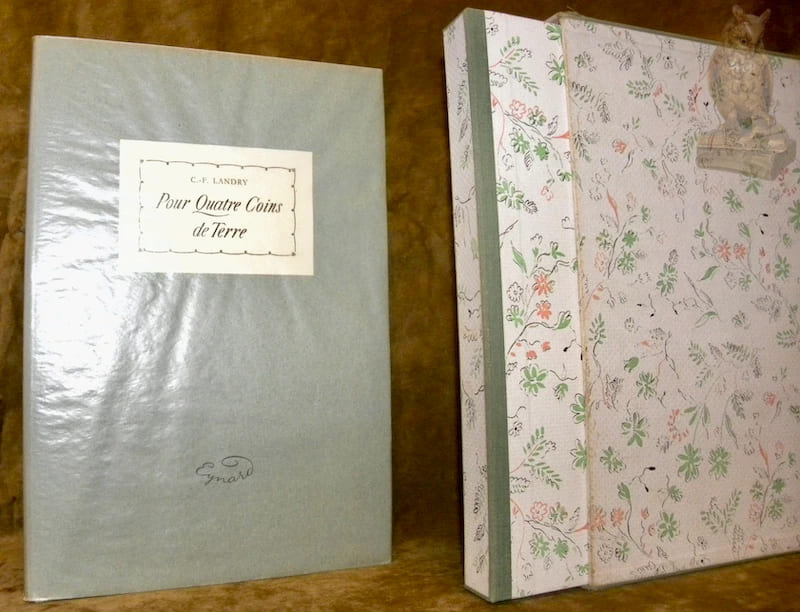
réf. 121456Rolle, Paul Eynard 1947, 295x205mm, 118pages, broché. En feuille sous couverture rempliée avec papier cistal d’origine conservà, cartable et etui rigides et illustrés. Edition originale et unique sur papier pur chiffon Lana des papeteries de Docelles, numéroté n° 120 / 247. Dédicacé pa Charles Clément sur le haut du cin de la première page de garde. Très bel exemplaire.
réf. 241530 Planche N°39, format 29 x 40 cm (toutes marges). Chromolithographie d'époque avec le timbre à sec de l'Imprimerie Chaix (Lugt 1777c). Notre exemplaire est une des très rares épreuves imprimées sur papier Japon, toute petite trace de punaisage dans l'extrémité de la marge supérieure gauche (Our plate is one of the few copies printed on Japanese paper. Original plate in good condition). LES MAITRES DE L'AFFICHE, prestigieuse publication d'art, éditée par l'atelier de lithographie Chaix, dont la parution s'étala de décembre 1895 à novembre 1900. Chaque livraison comportait 4 planches de reproduction en chromolithographie d'une remarquable qualité d'impression des plus belles affiches illustrées des grands artistes français et étrangers (auxquelles il faut ajouter 16 planches de lithographies originales données en prime aux abonnés). Lors de l'Exposition universelle de 1889, fut organisée la première exposition rétrospective dévolue à l'affiche, celle-ci devait valider la reconnaissance officielle d'appartenance de l'affiche au monde de l'art. Jules Chéret (1836-1932) y sera sacré '' Maître de l'affiche '', c'est aussi à cette date que Seurat commencera à collectionner les affiches de Chéret. Bel exemplaire ( Photographies sur demande / We can send pictures of this book on simple request )
1920réf. 51304Lucien Vogel éditeur | Paris 1920 | 19 x 24.50 cm | une feuille
1965réf. BOOKS074343ISterling Junction MA: The Scarab Press 1965. HC. very good gray paper covered boards hardcover acetate jacket. engravings by Besnia. One of 300 copies. Signed by Howard John Besnia on the colophon. 22pp. The Scarab Press unknown
Acquaforte acquatinta originale a colori Firma, titolo e numerazione a matita. Esemplare 42/48. cm 50x64,5 (Foglio 54x68,5). . . . . Tiratura 48. .
1976réf. 1227437Hamburg, Christians, 1976. 4to. 209 S. m. 61 teils farb. Taf., 1 Bl. OPp. m. OUmschl.