Charleroi - BODENEHR, GabrielAntiquariat.de
10 209 résultats
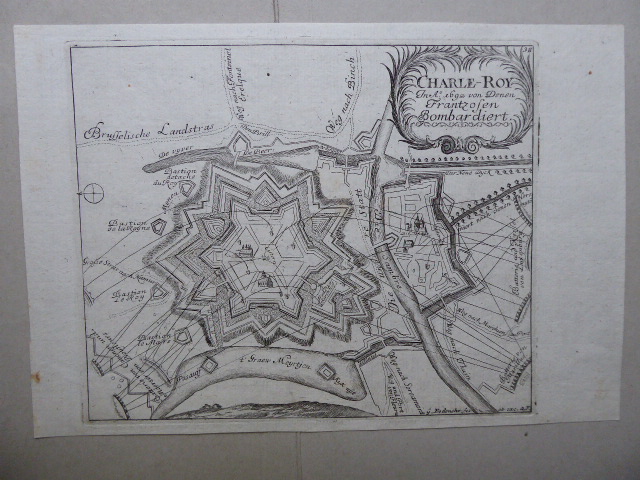
1720réf. 138896(Augsburg). (Um 1720). Kupferstichblatt. Format ca. 16 x 19,5 cm
réf. 24162Le Journal des Dames et es Modes, Costume Parisens., .an 7,Belle épreuve aux coloris très frais, coupée aux limites du cuivre 19 x 12 cm,sur papier vert, doublée et montée sur carton fort,gravure d'époque.
1921- Lucien Vogel éditeur, Paris 1921, 18x24cm, une feuille. - Original color print, printed on vergé paper, signed in the plate. An original print used to illustrate the Gazette du bon ton, one of the most attractive and influential 20th century fashion magazines, featuring the talents of French artists and other contributors from the burgeoning Art Deco movement. A celebrated fashion magazine established in 1912 by Lucien Vogel, La Gazette du bon ton appeared until 1925, with a hiatus from 1915 to 1920 due to the war (the editor-in-chief having been called up for service). It consisted of 69 issues printed in only 2,000 copies each and notably illustrated with 573 color plates and 148 sketches of the models of the great designers. Right from the start, this sumptuous publication "was aimed at bibliophiles and fashionable society," (Françoise Tétart-Vittu, "La Gazette du bon ton", in Dictionnaire de la mode, 2016) and was printed on fine vergé paper using a type cut specially for the magazine by Georges Peignot, known as Cochin, later used (in 1946) by Christian Dior. The prints were made using stencils, heightened in colors, some highlighted in gold or palladium. The story began in 1912, when Lucien Vogel, a man of the world involved in fashion (he had already been part of the fashion magazine Femina) decided, with his wife Cosette de Brunhoff - the sister of Jean, creator of Babar - to set up the Gazette du bon ton, subtitled at the time: "Art, fashion, frivolities." Georges Charensol noted the reasoning of the editor-in-chief: "'In 1910,' he observed, 'there was no really artistic fashion magazine, nothing representative of the spirit of the time. My dream was therefore to make a luxury magazine with truly modern artists...I was assured of success, because when it comes to fashion, no country on earth can compete with France.'" ("Un grand éditeur d'art. Lucien Vogel" in Les Nouvelles littéraires, no. 133, May 1925). The magazine was immediately successful, not only in France but also in the United States and Latin America. At first, Vogel put together a team of seven artists: André-Édouard Marty and Pierre Brissaud, followed by Georges Lepape and Dammicourt, as well as eventually his friends from school and the School of Fine Arts, like George Barbier, Bernard Boutet de Monvel and Charles Martin. Other talented people soon came flocking to join the team: Guy Arnoux, Léon Bakst, Benito, Boutet de Monvel, Umberto Brunelleschi, Chas Laborde, Jean-Gabriel Domergue, Raoul Dufy, Édouard Halouze, Alexandre Iacovleff, Jean Émile Laboureur, Charles Loupot, Chalres Martin, Maggie Salcedo. These artist, mostly unknown when Lucien Vogel sought them out, later became emblematic and sought-after artistic figures. It was also they who worked on the advertising drawings for the Gazette. The plates put the spotlight on, and celebrate, dresses by seven designers of the age: Lanvin, Doeuillet, Paquin, Poiret, Worth, Vionnet and Doucet. The designers provided exclusive models for each issue. Nonetheless, some of the illustrations are not based on real models, but simply on the illustrator's conception of the fashion of the day. The Gazette du bon ton was an important step in the history of fashion. Combining aesthetic demands with the physical whole, it brought together - for the first time - the great talents of the artistic, literary, and fashion worlds; and imposed, through this alchemy, a completely new image of women: slender, independent and daring, which was shared by the new generation of designers, including Coco Chanel, Jean Patou, Marcel Rochas, and so on... Taken over in 1920 by Condé Montrose Nast, the Gazette du bon ton was an important influence on the new layout and aesthetics of that "little dying paper" that Nast had bought a few years earlier: Vogue. [FRENCH VERSION FOLLOWS] Estampe originale en couleur, tirée sur papier vergé, signée en haut à droite de la planche. La Gazette du bon ton, l'une des plus bell
1921réf. 54923Lucien Vogel éditeur | Paris 1921 | 18 x 24 cm | une feuille
réf. 24164Le Journal des Dames et es Modes, Costume Parisens., .an 8,Belle épreuve aux coloris très frais, coupée aux limites du cuivre 19 x 12 cm,sur papier vert, doublée et montée sur carton fort,gravure d'époque.
réf. 19192Le Journal des Dames et es Modes, Costume Parisens., .an 8,Belle épreuve aux coloris très frais, coupée aux limites du cuivre 19 x 12 cm,sur papier vert, doublée et montée sur carton fort,infimes piqûres
2002réf. 444348Northfield : Black Willow Press 2002. 1st edition. Softcover. SIGNED and INSCRIBED by the author to Peter Porter with additional letter signed by Harrison loosely inserted. Near fine paperback copy; edges very slightly dulled. Remains particularly well-preserved overall; tight bright clean and especially sharp-cornered. Physical description; 371 p. : ill. ; 24 cm. Subjects; Contemporary poetry. Poetry anthologies. Australian poetry. Poems against war. Language cultures. Northfield : Black Willow Press paperback
1924- Lucien Vogel éditeur, Paris 1924-1925, 18x24cm, une feuille. - Original color print, printed on vergé paper, signed in the plate. An original print used to illustrate the Gazette du bon ton, one of the most attractive and influential 20th century fashion magazines, featuring the talents of French artists and other contributors from the burgeoning Art Deco movement. A celebrated fashion magazine established in 1912 by Lucien Vogel, La Gazette du bon ton appeared until 1925, with a hiatus from 1915 to 1920 due to the war (the editor-in-chief having been called up for service). It consisted of 69 issues printed in only 2,000 copies each and notably illustrated with 573 color plates and 148 sketches of the models of the great designers. Right from the start, this sumptuous publication "was aimed at bibliophiles and fashionable society," (Françoise Tétart-Vittu, "La Gazette du bon ton", in Dictionnaire de la mode, 2016) and was printed on fine vergé paper using a type cut specially for the magazine by Georges Peignot, known as Cochin, later used (in 1946) by Christian Dior. The prints were made using stencils, heightened in colors, some highlighted in gold or palladium. The story began in 1912, when Lucien Vogel, a man of the world involved in fashion (he had already been part of the fashion magazine Femina) decided, with his wife Cosette de Brunhoff - the sister of Jean, creator of Babar - to set up the Gazette du bon ton, subtitled at the time: "Art, fashion, frivolities." Georges Charensol noted the reasoning of the editor-in-chief: "'In 1910,' he observed, 'there was no really artistic fashion magazine, nothing representative of the spirit of the time. My dream was therefore to make a luxury magazine with truly modern artists...I was assured of success, because when it comes to fashion, no country on earth can compete with France.'" ("Un grand éditeur d'art. Lucien Vogel" in Les Nouvelles littéraires, no. 133, May 1925). The magazine was immediately successful, not only in France but also in the United States and Latin America. At first, Vogel put together a team of seven artists: André-Édouard Marty and Pierre Brissaud, followed by Georges Lepape and Dammicourt, as well as eventually his friends from school and the School of Fine Arts, like George Barbier, Bernard Boutet de Monvel and Charles Martin. Other talented people soon came flocking to join the team: Guy Arnoux, Léon Bakst, Benito, Boutet de Monvel, Umberto Brunelleschi, Chas Laborde, Jean-Gabriel Domergue, Raoul Dufy, Édouard Halouze, Alexandre Iacovleff, Jean Émile Laboureur, Charles Loupot, Chalres Martin, Maggie Salcedo. These artist, mostly unknown when Lucien Vogel sought them out, later became emblematic and sought-after artistic figures. It was also they who worked on the advertising drawings for the Gazette. The plates put the spotlight on, and celebrate, dresses by seven designers of the age: Lanvin, Doeuillet, Paquin, Poiret, Worth, Vionnet and Doucet. The designers provided exclusive models for each issue. Nonetheless, some of the illustrations are not based on real models, but simply on the illustrator's conception of the fashion of the day. The Gazette du bon ton was an important step in the history of fashion. Combining aesthetic demands with the physical whole, it brought together - for the first time - the great talents of the artistic, literary, and fashion worlds; and imposed, through this alchemy, a completely new image of women: slender, independent and daring, which was shared by the new generation of designers, including Coco Chanel, Jean Patou, Marcel Rochas, and so on... Taken over in 1920 by Condé Montrose Nast, the Gazette du bon ton was an important influence on the new layout and aesthetics of that "little dying paper" that Nast had bought a few years earlier: Vogue. [FRENCH VERSION FOLLOWS] Estampe originale en couleur, tirée sur papier vergé, signée en bas à droite de la planche. Gravure originale réalisée pour l'illu
1924réf. 55146Lucien Vogel éditeur | Paris 1924-1925 | 18 x 24 cm | une feuille
2001Large format book of Yehouda Chaki's works containing 111 pages of full color prints, usually one print per page. With chronology, exhibitions and collections and select bibliography at back. Book is in excellent condition. Binding is solid and square, covers have sharp corners and are creaseless, as is spine, exterior shows light shelf wear only, text/interior is clean and free of marking of any kind.
1990réf. 126407Galerie enrico navarra 1990 Livre en anglais, japonais. In-4 broché 29 cm sur 24,8. 132 pages. Bon état d’occasion.
réf. 45863Paris Librairie Séguier 1989 in 8 (21x16) 1 volume broché, couverture illustrée, 250 pages [2]. Bel exemplaire ( Photographies sur demande / We can send pictures of this book on simple request )
réf. 30348Monte-Carlo André Sauret 1974 in 4 (32,5x25) 1 volume reliure toilée de l'éditeur sous jaquette illustrée en couleurs, rhodoid, 180 pages [2], avec de nombreuses reproductions en noir et blanc, et en couleurs. Répertoire de 148 notices par Fernand Mourlot et Charles Sorlier décrivant les lithographies exécutées par Chagall entre 1969 et 1973. Edition originale. Ouvrage orné 2 lithographies originales en couleurs de Chagall (dont la couverture) tirées sur les presses de Mourlot (with two original colour lithographs). Très bel exemplaire ( Photographies sur demande / We can send pictures of this book on simple request )
1983Contains Lithography. 32x25 cm. 191 pages. Gilt hardcover with dust jacket. In good condition. PLEASE NOTE: This item is overweight. We may ask for extra shipping costs.
1990Very large format book in dark blue heavy weave cloth hardback with damage to lower 1/2" of front cover at hinge; scuffing to covers. Book is in excellent condition. Text/interior is clean and free of marking of any kind with huge full page, sometimes dual page prints throughout, at least 75 in number. Dust jacket shows general wear, damage to same lover spine area, chipping at corners.
1990Very large format book in dark blue heavy weave cloth hardback in excellent condition with a few very small, light marks to covers. Text/interior is clean and free of marking of any kind with huge full page, sometimes dual page prints throughout, at least 75 in number. Dust jacket shows light shelf wear only, no tears.
réf. 25126La Caricature politique, morale, littéraire et scénique, volume 6, 27 décembre 1833 (Planche n°344)Titre en bas au centre : « Chacun son tour en politique. » ; indications : en ht à gche : « La Caricature (Journal) N°164. », en ht à dte : « Pl. 344. » Inscription - Dans la lettre : « Chez Aubert, galerie véro dodat. » [éditeur], « L. de Becquet, rue Furstemberg 6. » [imprimeur] ; dans l’image, en bas à dte, signature : « C. J T. » [Charles-Joseph Traviès, dessinateur]Hauteur: 27.2cm -Largeur: 35.5cmDimensions - ImageHauteur: 15cmLargeur: 29cm - pli central,plis
1832réf. 256121832 La Caricature politique, morale, littéraire Lithographie 1832 - Œuvre : Hauteur: 36.3cm x Largeur: 24.1cm,tache habituelle au milieu
1833réf. 244091833 Planche HT parue dans La Caricature politique, morale, littéraire et scénique, volume 6, 29 août 1833 (Planche n°308)- La Caricature. Journal. Morale, Religieuse, Littéraire, Scénique - La Caricature ( Journal) No 147.coloriée. Plate 308. [Paris de Becquet for Maison Aubert [29 August 1833] Lithograph. Overall paper size 34.5 × 25.8 cm.French caricature of Talleyrand’s proposal to Lord Palmerston to form an alliance with Britain to counter-balance the continental league of the autocratic states of Russia, Austria, and Prussia.The print represents Talleyrand standing, supported on a crutch, reining in the infant Louis-Philippe, whilst King William IV bemus- edly looks on, commenting: ‘this child will never walk alone’. One rein is marked ‘Traite de 1815’, the other ‘Sainte Alliance’. Louis- Philippe is depicted from behind as a small boy in skirts playing with a miniature fortress and pulling a toy cannon. As usual with this artist, Talleyrand’s surgical boot is attached in error to his left foot.1 Benjamin Roubaud (1811–1847), lithographer, etcher and painter, made his name as an inspired Parisian caricaturist, contributing to the humorous comic journal La Caricature (1830–1835); he signed himself ‘Benjamin’or ‘A.B.’Dwyer 762 (misdated 1834).
1849réf. 14338Franc-Maçonnerie : Certificat vierge imprimé sur parchemin En feuille Très bon Paris Teissier et Schmidt Avant 1849
1980réf. 111389Editions Borderie, coll. « Images Obliques », n° 7 1980 In-8 reliure éditeur toile verte. 21,5 cm sur 14. 126 pages. Reproductions de gravures XVIII en noir et blanc hors-texte. Bon état d’occasion.
réf. AJ2743PLWBroché très bon état.Contenu propre. 1967. PHOTOS SUR DEMANDE
1967réf. 31713Cabinet Des Estampes Des Collections D'Etat A Dresde. As New. Paperback. FREE UPGRADE to Courier/Priority Shipping Upon Request - IN STOCK AND IMMEDIATELY AVAILABLE FOR SHIPMENT - Text in French; 24 lovely black and white plates by artists including Rembrandt Bruegel Cranach Reni and others. -- with a bonus offer--; T-Schmica; Cabinet Des Estampes Des Collections d'Etat a Dresde; Schmidt W.; Libaers H.; Dittrich C. Cent Dessins De Maitres Anciens Du Cabinet Des Estampes De Dresde / One Hundred Old Master Drawings from the Department of Prints of Dresden - Bibliotheque Albert 1er - April & May 1967 Catalogue No. 24 . 1967. Cabinet Des Estampes Des Collections D'Etat A Dresde paperback
1920- Lucien Vogel éditeur, Paris Mai 1920, 18x24cm, une feuille. - Estampe originale en couleur, tirée sur papier vergé, signée en bas à gauche de la planche. Gravure originale réalisée pour l'illustration de La Gazette du bon ton, l'une des plus belles et des plus influentes revues de mode du XXème siècle, célébrant le talent des créateurs et des artistes français en plein essor de l'art déco. Célèbre revue de mode fondée en 1912 par Lucien Vogel, La Gazette du bon ton a paru jusqu'en 1925 avec une interruption durant la Guerre de 1915 à 1920, pour cause de mobilisation de son rédacteur en chef. Elle se constitue de 69 livraisons tirées à seulement 2000 exemplaires et est illustrée notamment de 573 planches en couleurs et de 148 croquis représentant des modèles de grands couturiers. Dès leur parution, ces luxueuses publications « s'adressent aux bibliophiles et aux mondains esthètes » (Françoise Tétart-Vittu « La Gazette du bon ton » in Dictionnaire de la mode, 2016). Imprimées sur beau papier vergé, elles utilisent une police typographique spécialement créée pour la revue par Georges Peignot, le caractère Cochin, repris en 1946 par Christian Dior. Les estampes sont réalisées grâce à la technique du pochoir métallique, rehaussées en couleurs et pour certaines soulignées à l'or ou au palladium. L'aventure commence en 1912 lorsque Lucien Vogel, homme du monde et de la mode - il a déjà participé à la revue Femina - décide de fonder avec sa femme Cosette de Brunhoff (sur de Jean, le père de Babar) la Gazette du bon ton dont le sous-titre est alors « Art, modes et frivolités ». Georges Charensol rapporte les propos du rédacteur en chef : « En 1910, observe-t-il, il n'existait aucun journal de mode véritablement artistique et représentatif de l'esprit de son époque. Je songeais donc à faire un magazine de luxe avec des artistes véritablement modernes [...] J'étais certain du succès car pour la mode aucun pays ne peut rivaliser avec la France. » (« Un grand éditeur d'art. Lucien Vogel » in Les Nouvelles littéraires, n°133, mai 1925). Le succès de la revue est immédiat, non seulement en France, mais aussi aux Etats-Unis et en Amérique du Sud. À l'origine, Vogel réunit donc un groupe de sept artistes : André-Édouard Marty et Pierre Brissaud, suivis de Georges Lepape et Dammicourt ; et enfin ses amis de l'École des beaux-arts que sont George Barbier, Bernard Boutet de Monvel, ou Charles Martin. D'autres talents viennent rapidement rejoindre l'équipée : Guy Arnoux, Léon Bakst, Benito, Boutet de Monvel, Umberto Brunelleschi, Chas Laborde, Jean-Gabriel Domergue, Raoul Dufy, Édouard Halouze, Alexandre Iacovleff, Jean Émile Laboureur, Charles Loupot, Charles Martin, Maggie Salcedo. Ces artistes, inconnus pour la plupart lorsque Lucien Vogel fait appel à eux, deviendront par la suite des figures artistiques emblématiques et recherchées. Ce sont ces mêmes illustrateurs qui réalisent les dessins des publicités de la Gazette. Les planches mettent en lumière et subliment les robes de sept créateurs de l'époque : Lanvin, Doeuillet, Paquin, Poiret, Worth, Vionnet et Doucet. Les couturiers fournissent pour chaque numéro des modèles exclusifs. Néanmoins, certaines des illustrations ne figurent aucun modèle réel, mais seulement l'idée que l'illustrateur se fait de la mode du jour. La Gazette du bon ton est une étape décisive dans l'histoire de la mode. Alliant l'exigence esthétique et l'unité plastique, elle réunit pour la première fois les grands talents du monde des arts, des lettres et de la mode et impose, par cette alchimie, une toute nouvelle image de la femme, élancée, indépendante et audacieuse, également portée par la nouvelle génération de couturiers Coco Chanel, Jean Patou, Marcel Rochas... Reprise en 1920 par Condé Montrose Nast, la Gazette du bon ton inspirera largement la nouvelle composition et les choix esthétiques du « petit journal mourant » que Nast avait racheté quelques années auparavant : le magazine Vogue. [ENGLISH DESCRIP


