10.990 Ergebnisse
1912Best.-Nr. 57637S. n. | Paris 1912 | 14 x 22.50 cm | une feuille
1912Best.-Nr. 57648S. n. | Paris 1912 | 14 x 22.50 cm | une feuille
1912Best.-Nr. 57642S. n. | Paris 1912 | 14 x 22.50 cm | une feuille
1913Best.-Nr. 57651S. n. | Paris 1913 | 14 x 22.50 cm | une feuille
1913Best.-Nr. 57659S. n. | Paris 1913 | 14 x 22.50 cm | une feuille
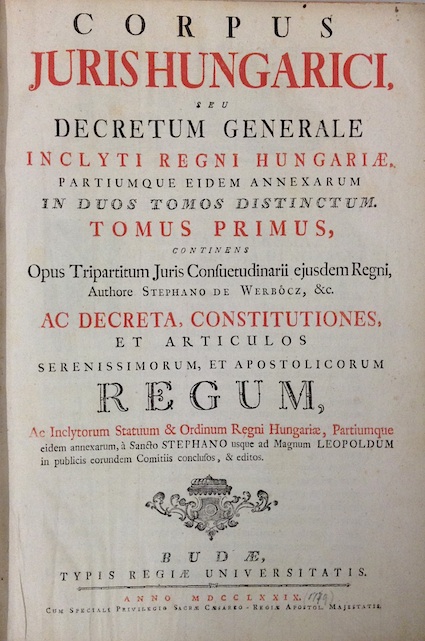
1779Best.-Nr. 615105Buda, Typis regiae universitatis, 1779. Folio. 8 Bl., 878 S., 3 Bl. Mit einigen Textkupfern. Halbleder d. Zeit (stark beschabt u. bestoßen, tintenfleckig). [2 Warenabbildungen]
1776Best.-Nr. 486468Göttingen, Dieterich, 1776-97. Folio. Halbleder d. 20. Jahrhunderts (Rücken u. Ecken berieben u. teilw. verblaßt).
1695Best.-Nr. 482986(Leipzig), Gleditsch (Juxta exemplar Parisiis antehac excusum), 1695. Folio. 32 Bl., 492 S.; 6 Bl., 488 S., 41 Bl.; 4 Bl., 140 S. Mit 2 gestochenen Titelvignetten, 1 gestochenen Kopfvignette u. 2 ganzseitigen Kupfern (Stammbäume). Pergament d. Zeit (fleckig, hinterer freier Vorsatz fehlt).
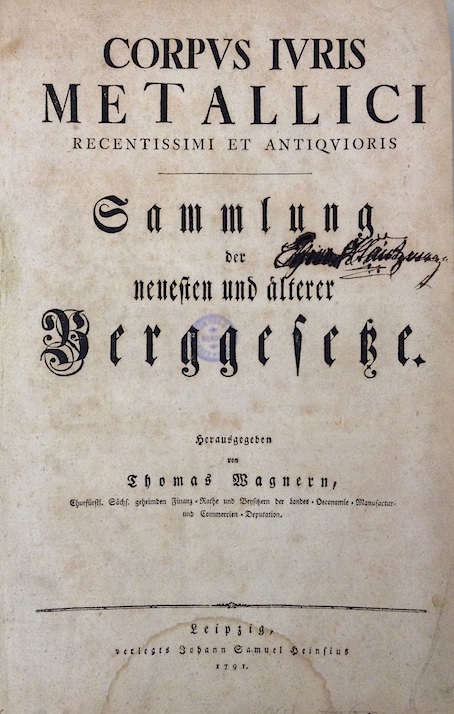
1791Best.-Nr. 611919Leipzig, J. S. Heinsius, 1791. Folio. 6 Bl., XL S.; 1430 Spalten, 22 Bl. Halblederband d. 19. Jahrhunderts (beschabt u. bestoßen, Gelenke mit Leinen überklebt). [2 Warenabbildungen]
Best.-Nr. CORV-BBP-14980Unknown. Loose Leaf. Very Good. Very good. Folio sheet. 6 inch by 9 1/8 inch illustration on a page pulled from the News. No text accompanies it. > Language: English > Size: Folio > Media/Binding: Unbound Unknown unknown
1996Best.-Nr. 3415Bibliothèque Nationale 1996 In-8 broché. 127 pages. Bon état d’occasion.
1970Best.-Nr. 015714Galerie La Pochade 1970 En feuilles
1833Best.-Nr. 199011833 Planche double 299-300 de La Caricature. 1833. Lithographie originale sur Velin blanc. 515 x 338. Delteil 65. Belle épreuve en beau coloris du temps, avec pli vertical médian normal,et pli horizontal,legere decharge sur une moitié de la double feuille,plis;lithographie coloriée sur velin blanc,Delteil 65
Best.-Nr. 24161Le Journal des Dames et es Modes, Costume Parisens., .an 7,Belle épreuve aux coloris très frais, coupée aux limites du cuivre 19 x 12 cm,sur papier vert, doublée et montée sur carton fort,gravure d'époque.
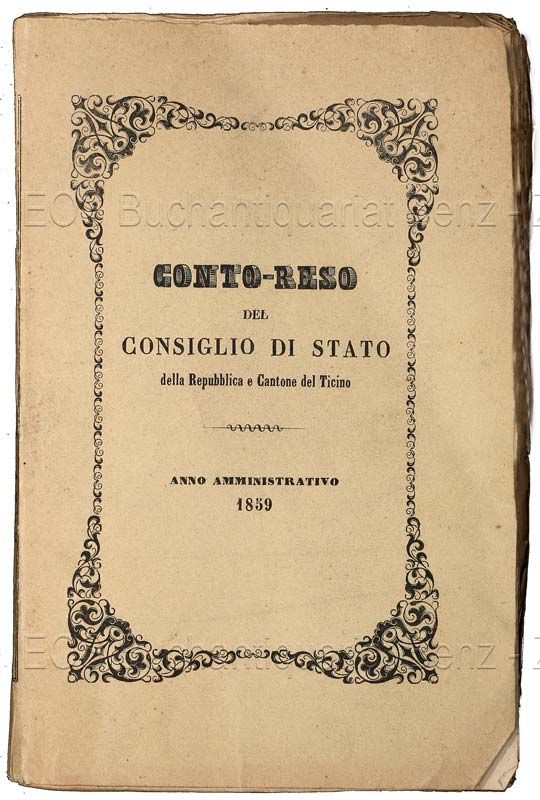
1860Best.-Nr. 2590CBLocarno, Tip. e Lit. Cantonale, 1860. 8°. 276 S. Mit dazwischen gebundenen gef. Tabellen. Broschur der Zeit. + Wichtig: Für unsere Kunden in der EU erfolgt der Versand alle 14 Tage verzollt ab Deutschland / Postbank-Konto in Deutschland vorhanden +, Umschlag
1965Best.-Nr. 9900038062Kansas City MO: Excalibur Press 1965. Hardcover. etchings. Unpaginated. Large 4to. Small rubber stamp of Carnegie Public Library to copyright page and evidence of pocket removal from rear free endpaper. Slight trace of accession number to base of spine. No other such markings. Contents clean and tight. Corners of boards bumped. Slight wear to edges of boards. Else in good plus to very good condition. Each plate numbered and signed by the artist with limitation of 50 noted in pencil. This book is one of only 50 copies produced. The text was set in Bulmer and printed on a Chandler and Price hand press on Rives lightweight; etchings are intaglio: inked wiped and printed by hand on a Charles Brand etcher's press using dampened Rives heavyweight. Binding is sewn on cords and covered with Fabriano and raw linen. Headbands hand-sewn. Printed and bound by Louise A. Moss Excalibur Press in 1965. Excalibur Press hardcover
1977Ex-library book with the usual stamps and markings. 108 pages. Re-bound by library in bright red buckram cloth. Oblong: 10 3/4"w x 8 1/2"h. Catalogue of 72 drawings, all full page in b&w by Pierre Alechinsky, James brooks, Jim Dine, Russell Drysdale, Helen Frankenthaler, Franco Gentilini, David Hockney, Patrick heron, Oskar Kokoschka, Willem de Kooning, Henri Michaux, Ben Nicholson, Victor Pasmore, Lloyd Rees, Bridget Riley, Jack Smith Antoni Tapies, and many others.
1976SIGNED BY EDITOR. Contains color and b&w plates. 315x265 mm. 100+32 pages. Hardcover with dust-jacket. Jacket yellowing. Cover slightly curved. Cover corners rubbed. Spine slightly worn. Text block edges slightly age-stained. Pages yellowing. Else in good condition.
1921- Lucien Vogel éditeur, Paris 1921, 18x24cm, une feuille. - Original color print, printed on vergé paper, signed in the plate. An original print used to illustrate the Gazette du bon ton, one of the most attractive and influential 20th century fashion magazines, featuring the talents of French artists and other contributors from the burgeoning Art Deco movement. A celebrated fashion magazine established in 1912 by Lucien Vogel, La Gazette du bon ton appeared until 1925, with a hiatus from 1915 to 1920 due to the war (the editor-in-chief having been called up for service). It consisted of 69 issues printed in only 2,000 copies each and notably illustrated with 573 color plates and 148 sketches of the models of the great designers. Right from the start, this sumptuous publication "was aimed at bibliophiles and fashionable society," (Françoise Tétart-Vittu, "La Gazette du bon ton", in Dictionnaire de la mode, 2016) and was printed on fine vergé paper using a type cut specially for the magazine by Georges Peignot, known as Cochin, later used (in 1946) by Christian Dior. The prints were made using stencils, heightened in colors, some highlighted in gold or palladium. The story began in 1912, when Lucien Vogel, a man of the world involved in fashion (he had already been part of the fashion magazine Femina) decided, with his wife Cosette de Brunhoff - the sister of Jean, creator of Babar - to set up the Gazette du bon ton, subtitled at the time: "Art, fashion, frivolities." Georges Charensol noted the reasoning of the editor-in-chief: "'In 1910,' he observed, 'there was no really artistic fashion magazine, nothing representative of the spirit of the time. My dream was therefore to make a luxury magazine with truly modern artists...I was assured of success, because when it comes to fashion, no country on earth can compete with France.'" ("Un grand éditeur d'art. Lucien Vogel" in Les Nouvelles littéraires, no. 133, May 1925). The magazine was immediately successful, not only in France but also in the United States and Latin America. At first, Vogel put together a team of seven artists: André-Édouard Marty and Pierre Brissaud, followed by Georges Lepape and Dammicourt, as well as eventually his friends from school and the School of Fine Arts, like George Barbier, Bernard Boutet de Monvel and Charles Martin. Other talented people soon came flocking to join the team: Guy Arnoux, Léon Bakst, Benito, Boutet de Monvel, Umberto Brunelleschi, Chas Laborde, Jean-Gabriel Domergue, Raoul Dufy, Édouard Halouze, Alexandre Iacovleff, Jean Émile Laboureur, Charles Loupot, Chalres Martin, Maggie Salcedo. These artist, mostly unknown when Lucien Vogel sought them out, later became emblematic and sought-after artistic figures. It was also they who worked on the advertising drawings for the Gazette. The plates put the spotlight on, and celebrate, dresses by seven designers of the age: Lanvin, Doeuillet, Paquin, Poiret, Worth, Vionnet and Doucet. The designers provided exclusive models for each issue. Nonetheless, some of the illustrations are not based on real models, but simply on the illustrator's conception of the fashion of the day. The Gazette du bon ton was an important step in the history of fashion. Combining aesthetic demands with the physical whole, it brought together - for the first time - the great talents of the artistic, literary, and fashion worlds; and imposed, through this alchemy, a completely new image of women: slender, independent and daring, which was shared by the new generation of designers, including Coco Chanel, Jean Patou, Marcel Rochas, and so on... Taken over in 1920 by Condé Montrose Nast, the Gazette du bon ton was an important influence on the new layout and aesthetics of that "little dying paper" that Nast had bought a few years earlier: Vogue. [FRENCH VERSION FOLLOWS] Estampe originale en couleur, tirée sur papier vergé, signée en bas à droite dans la planche. La Gazette du bon ton, l'une des plus bel
1746Best.-Nr. 703536Leipzig, John Grosse's Heir, 1746. 21 x 13,5 x 5 cm. 784, 239 Seiten, 1 (weißes) Blatt. Leder der Zeit auf 5 gehöhten Bünden mit Rückenschild und reicher Rückenvergoldung. Rotschnitt. Einband gering berieben.
1711Best.-Nr. 703550Dresden und Leipzig, J.Ch. Zimmermann, 1711. Gr.-4°. 9 nnr. Bl., 1332 Spalten, 52 nnr. Blätter. Kupferfrontispiz. Pergament der Zeit auf 5 Bünden. Handschriftlicher Rückentitel. Einband gering fleckig. Rückentitel etwas verblaßt. Pergament am Vordergelenk beschädigt. Titelblatt rückseitig gestempelt und gebräunt und schwacher Abklatsch dieser Bräunung auch auf dem folgenden Blatt. Geringer Wasserschaden am unteren Rand der letzten Blätter. Sonst innen sauber und ohne nennenswerte Altersspuren.
1924- Lucien Vogel éditeur, Paris 1924-1925, 18x24cm, une feuille. - Original color print, printed on vergé paper, signed in the plate. An original print used to illustrate the Gazette du bon ton, one of the most attractive and influential 20th century fashion magazines, featuring the talents of French artists and other contributors from the burgeoning Art Deco movement. A celebrated fashion magazine established in 1912 by Lucien Vogel, La Gazette du bon ton appeared until 1925, with a hiatus from 1915 to 1920 due to the war (the editor-in-chief having been called up for service). It consisted of 69 issues printed in only 2,000 copies each and notably illustrated with 573 color plates and 148 sketches of the models of the great designers. Right from the start, this sumptuous publication "was aimed at bibliophiles and fashionable society," (Françoise Tétart-Vittu, "La Gazette du bon ton", in Dictionnaire de la mode, 2016) and was printed on fine vergé paper using a type cut specially for the magazine by Georges Peignot, known as Cochin, later used (in 1946) by Christian Dior. The prints were made using stencils, heightened in colors, some highlighted in gold or palladium. The story began in 1912, when Lucien Vogel, a man of the world involved in fashion (he had already been part of the fashion magazine Femina) decided, with his wife Cosette de Brunhoff - the sister of Jean, creator of Babar - to set up the Gazette du bon ton, subtitled at the time: "Art, fashion, frivolities." Georges Charensol noted the reasoning of the editor-in-chief: "'In 1910,' he observed, 'there was no really artistic fashion magazine, nothing representative of the spirit of the time. My dream was therefore to make a luxury magazine with truly modern artists...I was assured of success, because when it comes to fashion, no country on earth can compete with France.'" ("Un grand éditeur d'art. Lucien Vogel" in Les Nouvelles littéraires, no. 133, May 1925). The magazine was immediately successful, not only in France but also in the United States and Latin America. At first, Vogel put together a team of seven artists: André-Édouard Marty and Pierre Brissaud, followed by Georges Lepape and Dammicourt, as well as eventually his friends from school and the School of Fine Arts, like George Barbier, Bernard Boutet de Monvel and Charles Martin. Other talented people soon came flocking to join the team: Guy Arnoux, Léon Bakst, Benito, Boutet de Monvel, Umberto Brunelleschi, Chas Laborde, Jean-Gabriel Domergue, Raoul Dufy, Édouard Halouze, Alexandre Iacovleff, Jean Émile Laboureur, Charles Loupot, Chalres Martin, Maggie Salcedo. These artist, mostly unknown when Lucien Vogel sought them out, later became emblematic and sought-after artistic figures. It was also they who worked on the advertising drawings for the Gazette. The plates put the spotlight on, and celebrate, dresses by seven designers of the age: Lanvin, Doeuillet, Paquin, Poiret, Worth, Vionnet and Doucet. The designers provided exclusive models for each issue. Nonetheless, some of the illustrations are not based on real models, but simply on the illustrator's conception of the fashion of the day. The Gazette du bon ton was an important step in the history of fashion. Combining aesthetic demands with the physical whole, it brought together - for the first time - the great talents of the artistic, literary, and fashion worlds; and imposed, through this alchemy, a completely new image of women: slender, independent and daring, which was shared by the new generation of designers, including Coco Chanel, Jean Patou, Marcel Rochas, and so on... Taken over in 1920 by Condé Montrose Nast, the Gazette du bon ton was an important influence on the new layout and aesthetics of that "little dying paper" that Nast had bought a few years earlier: Vogue. [FRENCH VERSION FOLLOWS] Estampe originale en couleur, tirée sur papier vergé, signée en bas à droite de la planche. Une petite déchirure sans manque en ma
161 x 218 mm. A street merchant with a lady client and a child, showing the Hagia Sophia in the background. Pinel de Grandchamp, a student of Dubois and Picot, is counted among the foremost oriental painters of the 19th century. - Mounted on backing cardboard (old edge flaws). Thieme/Becker XXVII, 56. Bénézit VIII, 344.
1886Best.-Nr. 278361886. Print. Otherwise very good condition. Multiple views in Constantinople in chromolithographs entitled Bridge of Galata Cemetery Street in Pera Sultan's Palaces Turkish Scissors Grinder Howling Dervish. Color chromolithographs. 6 plates 8 x 10.5" some marks in margins. unknown
2013Best.-Nr. 1670Istanbul: Demirören 2013. Hardover. New. 31x41 cm. In English. Cloth bdg. In publisher's special slip case. B/w and colour ills. Linen binding on cardboard with gold foil logo printing; color printing on fancy paper; magnetic fancy paper tassel box on cardboard; special plush ribbon and bag additions. Limited edition. Thomas Allom'un 1838'de Londra'da yayınlanan eşsiz eserinin tıpkıbasımı gerçekleştirildi. Kitap elle renklendirilmiş 97 adet Türkiye gravürü ve İstanbul'un çeşitli görünümlerini içeriyor. Ayrıca Bursa Manisa İzmir Efes Bergama ve Pamukkale gibi tarihi antik kentlerin gravürlerine de yer veriliyor. Kitabın sayfalarını çevirirken binalar manzaralar ve dönemin sosyal hayatına dair kesitler göreceksiniz. Bu kitap 19. yüzyıl seyahat edebiyatının temel örneklerinden biri olarak kabul edilirken Osmanlı tarihçileri toplum bilimcileri ve şarkiyatçılar için önemli bir kaynak ve çalışma alanı sunuyor. Demirören hardcover