11.046 Ergebnisse
1963Best.-Nr. 163824Glendale CA: Allied Artists 1963. Vintage insert poster for the 1963 film. Samuel Fuller's hallucinatory tour-de-force wherein Daily Globe journalist Johnny Barrett Peter Breck determined to win a Pulitzer Prize has himself institutionalized in an asylum to solve a case where an inmate had recently been murdered. 14 x 36 inches. Very Good plus with three horizontal creases from being previously folded and light edgewear. National Film Registry. Criterion Collection 19. Rosenbaum 1000. Scorsese A Personal Journey Through American Movies. Spicer US. Grant US. Allied Artists unknown
1952Best.-Nr. 159784Beverly Hills CA: United Artists 1952. Two vintage publicity photographs taken at a special premiere of the 1952 film held in New York at the Waldorf-Astoria's Starlight Roof. One photograph shows director Samuel Fuller with New York Post columnist Leonard Lyons and the other shows Fuller with Hearst Foundation executive Richard Berlin and King Features Syndicate columnist George Sokolsky. Both photographs with printed snipes affixed to the versos along with "Photofest" labels. Generally considered one of Fuller's greatest early achievements "Park Row" takes place in the red-hot newspaper scene of 1880s New York City where every kind of newspaper-from those being championed by Joseph Pulitzer to the multitude of yellow-rag tabloids-held sway over the public's attention and opinion. The plot concerns an upstart newspaper The Globe that is founded by an employee fired by an established one resulting in a circulation war. Snipes note that the special premiere was held specifically for newspaper publishers and was attended by over 600 publishers and editors. 10 x 8 inches. Very Good plus with light creasing on the center of the top edge and the left edge from paper clips. United Artists unknown books
1963Best.-Nr. 163824Glendale CA: Allied Artists 1963. Vintage insert poster for the 1963 film. Samuel Fuller's hallucinatory tour-de-force wherein Daily Globe journalist Johnny Barrett Peter Breck determined to win a Pulitzer Prize has himself institutionalized in an asylum to solve a case where an inmate had recently been murdered. 14 x 36 inches. Very Good plus with three horizontal creases from being previously folded and light edgewear. National Film Registry. Criterion Collection 19. Rosenbaum 1000. Scorsese A Personal Journey Through American Movies. Spicer US. Grant US. Allied Artists unknown books
1990Best.-Nr. 166471N.p.: Clyde is Hungry Productions 1990. Shooting script for the 1991 film. Noted as Shooting Script and copy No. 20 in manuscript ink on the title page. Incomplete script ending on page 117. Sean Penn's directorial debut based on the 1982 Bruce Springsteen song "Highway Patrolman" about two brothers on opposite sides of the law. The final film performance of Sandy Dennis who died six months after the film's release. Set in 1960s Nebraska shot on location in Plattsmouth and Omaha Nebraska. Self wrappers. Title page present dated June 25 1990 noted as shooting script with credit for Penn. 118 leaves with last page of text numbered 117. Xerographic duplication rectos only. Pages Very Good plus bound with two gold brads with first and last leaves partially detached from the binding. Clyde is Hungry Productions unknown
1990Best.-Nr. 166471N.p.: Clyde is Hungry Productions 1990. Shooting script for the 1991 film. Noted as Shooting Script and copy No. 20 in manuscript ink on the title page. Incomplete script ending on page 117. Sean Penn's directorial debut based on the 1982 Bruce Springsteen song "Highway Patrolman" about two brothers on opposite sides of the law. The final film performance of Sandy Dennis who died six months after the film's release. Set in 1960s Nebraska shot on location in Plattsmouth and Omaha Nebraska. Self wrappers. Title page present dated June 25 1990 noted as shooting script with credit for Penn. 118 leaves with last page of text numbered 117. Xerographic duplication rectos only. Pages Very Good plus bound with two gold brads with first and last leaves partially detached from the binding. Clyde is Hungry Productions unknown books
1976Best.-Nr. 151965Paris: President Films 1976. Vintage borderless reference photograph of Jane Birkin from the 1976 film. "Societe Nationale" stamp on verso. Waitress Johnny works and lives in a truck stop lonely and longing for love. She develops a crush on the garbage truck driver Krassky although her sleazy boss Boris warns her that Krassky is gay. Krassky likes Johnny too perhaps because of her boyish physique. But both of them fail to notice the growing jealousy of Krassky's boyfriend Padovan and trouble sets in. Billy Stevenson of notes in the "A Film Canon" blog: "Serge Gainsbourg directed this film based on his iconic song and it plays as an extended gloss on that song an attempt to visualize what was happening during those infamous sighs and pants . It is a testament to Gainsbourg's commitment to the song and his own status as sexual outlaw that he presents us with a film that's just as confronting and titillating some 30 years later. "Set against a drifting rambling desert backdrop part New Wave part New Hollywood. Johnny and Krassky's attraction is sexually charged and yet it doesn't seem to conform to their sexual proclivities.with an audioverite that makes you wonder whether these scenes might actually involve real sex. In its yearning to experience sex in every conceivable way-as a gay man as a lesbian as a man as a woman as pleasure as pain-the film ends up virtualizing it or at least generalizing it into an undifferentiated sexual access that feels quite incorporeal a clear forerunner to both the Cinema du Look and art porn movements." 6.5 x 9 inches. Near Fine. President Films unknown
1976Best.-Nr. 151965Paris: President Films 1976. Vintage borderless reference photograph of Jane Birkin from the 1976 film. "Societe Nationale" stamp on verso. Waitress Johnny works and lives in a truck stop lonely and longing for love. She develops a crush on the garbage truck driver Krassky although her sleazy boss Boris warns her that Krassky is gay. Krassky likes Johnny too perhaps because of her boyish physique. But both of them fail to notice the growing jealousy of Krassky's boyfriend Padovan and trouble sets in. Billy Stevenson of notes in the "A Film Canon" blog: "Serge Gainsbourg directed this film based on his iconic song and it plays as an extended gloss on that song an attempt to visualize what was happening during those infamous sighs and pants . It is a testament to Gainsbourg's commitment to the song and his own status as sexual outlaw that he presents us with a film that's just as confronting and titillating some 30 years later. "Set against a drifting rambling desert backdrop part New Wave part New Hollywood. Johnny and Krassky's attraction is sexually charged and yet it doesn't seem to conform to their sexual proclivities.with an audioverite that makes you wonder whether these scenes might actually involve real sex. In its yearning to experience sex in every conceivable way-as a gay man as a lesbian as a man as a woman as pleasure as pain-the film ends up virtualizing it or at least generalizing it into an undifferentiated sexual access that feels quite incorporeal a clear forerunner to both the Cinema du Look and art porn movements." 6.5 x 9 inches. Near Fine. President Films unknown books
1975Best.-Nr. 155637N.p.: N.p. 1975. Six vintage borderless reference photographs from the 1975 French sexploitation film including two photographs taken on location. A sexually frustrated executive assistant goes to see a psychologist and recovers his prowess proceeding to embark on a number of erotic adventures with the secretaries at his office. Shot on location in Calvados France. 7 x 9.5 inches. Very Good with light fading to two of the photographs. Bier 807. N.p. unknown
1975Best.-Nr. 155637N.p.: N.p. 1975. Six vintage borderless reference photographs from the 1975 French sexploitation film including two photographs taken on location. A sexually frustrated executive assistant goes to see a psychologist and recovers his prowess proceeding to embark on a number of erotic adventures with the secretaries at his office. Shot on location in Calvados France. 7 x 9.5 inches. Very Good with light fading to two of the photographs. Bier 807. N.p. unknown books
1966Best.-Nr. 138830Moscow: Mosfilm 1966. Three vintage borderless black-and-white reference photographs from the 1966 French release of the 1964 film. With the archival stamp of the noted cinema historian Maurice Bessy on the verso of each photo. A stunning set of battle scene photos including one three-part panoramic shot demonstrating the massive scale of the film shot on location in Dorogobuzh a region in the Smolensk province of Russia. An epic film over seven hours long and slavishly faithful to Tolstoy's novel that was for many years the most expensive European movie every made. The lengthy graphic battle scenes which killed a number of horses led to the film being boycotted in many American cities. Winner of the Academy Award for Best Foreign Language film. 8 x 10 inches. Near Fine. Mosfilm unknown
1966Best.-Nr. 138830Moscow: Mosfilm 1966. Three vintage borderless black-and-white reference photographs from the 1966 French release of the 1964 film. With the archival stamp of the noted cinema historian Maurice Bessy on the verso of each photo. A stunning set of battle scene photos including one three-part panoramic shot demonstrating the massive scale of the film shot on location in Dorogobuzh a region in the Smolensk province of Russia. An epic film over seven hours long and slavishly faithful to Tolstoy's novel that was for many years the most expensive European movie every made. The lengthy graphic battle scenes which killed a number of horses led to the film being boycotted in many American cities. Winner of the Academy Award for Best Foreign Language film. 8 x 10 inches. Near Fine. Mosfilm unknown books
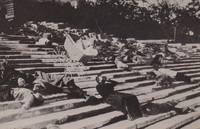
1925Best.-Nr. 168469N.p.: N.p. 1925. Nine reference photographs from the 1925 Soviet silent film seven borderless and two bordered struck and issued by Cinémathèque Française circa 1936. All seven borderless photographs with the stamp of Archives Cinémathèque Française on the verso. A dramatization of a real-life mutiny which occurred on the Russian battleship Potemkin in 1905. The film's violence led to it being banned in West Germany and the UK until 1954 and even after that given an X rating until 1978. It was shown in a much-edited form in East Germany though the US premiere in December 1926 was shown unedited. A written introduction by Leon Trotsky at the beginning of the film was cut from later Soviet prints due to Trotsky running afoul of Stalin. The film's famous sequence showing a massacre by Tsarist soldiers of civilians on the Odessa Steps is considered the first example of a montage sequence in cinema. All photogaphs 5 x 3.5 inches. Generally Near Fine. BFI 1494. Godard Histoires du cinema. Rosenbaum 1000. N.p. unknown
1925Best.-Nr. 168469N.p.: N.p. 1925. Nine reference photographs from the 1925 Soviet silent film seven borderless and two bordered struck and issued by Cinémathèque Française circa 1936. All seven borderless photographs with the stamp of Archives Cinémathèque Française on the verso. A dramatization of a real-life mutiny which occurred on the Russian battleship Potemkin in 1905. The film's violence led to it being banned in West Germany and the UK until 1954 and even after that given an X rating until 1978. It was shown in a much-edited form in East Germany though the US premiere in December 1926 was shown unedited. A written introduction by Leon Trotsky at the beginning of the film was cut from later Soviet prints due to Trotsky running afoul of Stalin. The film's famous sequence showing a massacre by Tsarist soldiers of civilians on the Odessa Steps is considered the first example of a montage sequence in cinema. All photogaphs 5 x 3.5 inches. Generally Near Fine. BFI 1494. Godard Histoires du cinema. Rosenbaum 1000. N.p. unknown books
1977Best.-Nr. 164245N.p.: N.p. 1977. Seven vintage borderless reference photographs from the 1977 film. Provenance stamps on the versos. Director Robert Altman's experimental dreamlike masterwork about three ethereal fractured women originally overlooked but later celebrated. Featuring brilliant performances from Shelley Duvall as the self-deluded socially maladroit Millie Rule as the mysterious pregnant painter Willie and Sissy Spacek as the young timid and fawning Pinky. Nominated for the Palme d'Or. Set in a small California desert town and shot on location in Palm Springs Thousand Palms and Desert Hot Springs California. 9.5 x 7 inches. About Fine. N.p. unknown
1977Best.-Nr. 164245N.p.: N.p. 1977. Seven vintage borderless reference photographs from the 1977 film. Provenance stamps on the versos. Director Robert Altman's experimental dreamlike masterwork about three ethereal fractured women originally overlooked but later celebrated. Featuring brilliant performances from Shelley Duvall as the self-deluded socially maladroit Millie Rule as the mysterious pregnant painter Willie and Sissy Spacek as the young timid and fawning Pinky. Nominated for the Palme d'Or. Set in a small California desert town and shot on location in Palm Springs Thousand Palms and Desert Hot Springs California. 9.5 x 7 inches. About Fine. N.p. unknown books
1960Best.-Nr. 143203Tokyo: Nikkatsu 1960. Post-production script for the 1961 film. Based on the novel by Kazu Otsuka. A literal and metaphorical title to Shohei Imamura's fifth feature depicting postwar Japan's distrust of the west's cultural imperialism and his fascination with the pimps and prostitutes who benefit from the American presence at the naval base Yokosuka. Imamura drew from his own experience as a black market hustler and spent time with gangsters researching the film. Highly controversial upon release Nikkatsu suspended Imamaura from making films for two years with the release of "Pigs and Battleships." Imamura began his film career as an assistant to Yaujiro Ozu a director he veered severely from in style and tone. Imamura quickly realized his interest in focusing on the lower strata of Japanese society seeing himself as more of a cultural anthropologist. Imamura moved on to Japan's oldes major movie studio Nikkatsu and worked as an assistant to Yuzo Kawashima who gave Imamura his first opportunity directing B films targeted toward the postwar youth. Imamura established his own production company in 1965 to free himself of studio interference and is considered a leading figure in Japanese New Wave cinema. Set in Yokosuka. White titled wrappers rubber-stamped production No. 11885. Title page present . 71 leaves with last page of text numbered 9-5. Mechanical duplication. Pages Fine wrapper Very Good mild foxing and mold spores along spine both wrappers and paper edge. Criterion Collection 472. Eureka Masters of Cinema 21. Nikkatsu unknown
1960Best.-Nr. 143203Tokyo: Nikkatsu 1960. Post-production script for the 1961 film. Based on the novel by Kazu Otsuka. A literal and metaphorical title to Shohei Imamura's fifth feature depicting postwar Japan's distrust of the west's cultural imperialism and his fascination with the pimps and prostitutes who benefit from the American presence at the naval base Yokosuka. Imamura drew from his own experience as a black market hustler and spent time with gangsters researching the film. Highly controversial upon release Nikkatsu suspended Imamaura from making films for two years with the release of "Pigs and Battleships." Imamura began his film career as an assistant to Yaujiro Ozu a director he veered severely from in style and tone. Imamura quickly realized his interest in focusing on the lower strata of Japanese society seeing himself as more of a cultural anthropologist. Imamura moved on to Japan's oldes major movie studio Nikkatsu and worked as an assistant to Yuzo Kawashima who gave Imamura his first opportunity directing B films targeted toward the postwar youth. Imamura established his own production company in 1965 to free himself of studio interference and is considered a leading figure in Japanese New Wave cinema. Set in Yokosuka. White titled wrappers rubber-stamped production No. 11885. Title page present . 71 leaves with last page of text numbered 9-5. Mechanical duplication. Pages Fine wrapper Very Good mild foxing and mold spores along spine both wrappers and paper edge. Criterion Collection 472. Eureka Masters of Cinema 21. Nikkatsu unknown books
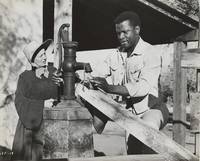
1963Best.-Nr. 148780Beverly Hills CA: United Artists 1963. Collection of 18 vintage reference photographs all but one borderless and 4 vintage studio still photographs from the 1963 film. Two with provenance stamps on the verso. Based on the 1962 novel following an unemployed African American handyman conscripted by a group of Eastern European nuns into building a chapel for them in the Arizona desert. Nominated for five Academy Awards and winning one for Best Actor for Sidney Poitier making him the first African American man to receive an Oscar. Set and shot on location in Arizona. 18 photographs 9.5 x 7 inches four photographs 10 x 8 inches. Near Fine. United Artists unknown
1963Best.-Nr. 148780Beverly Hills CA: United Artists 1963. Collection of 18 vintage reference photographs all but one borderless and 4 vintage studio still photographs from the 1963 film. Two with provenance stamps on the verso. Based on the 1962 novel following an unemployed African American handyman conscripted by a group of Eastern European nuns into building a chapel for them in the Arizona desert. Nominated for five Academy Awards and winning one for Best Actor for Sidney Poitier making him the first African American man to receive an Oscar. Set and shot on location in Arizona. 18 photographs 9.5 x 7 inches four photographs 10 x 8 inches. Near Fine. United Artists unknown books
1982Best.-Nr. 162551London: Tartan Video 1982. Six vintage photographs from the 1982 film including four reference photographs two borderless and matte finish two glossy and bordered and two studio still photographs. Aliens seeking opiates released during human sex land their UFO on top of a New York apartment building where they witness the antics of bisexual androgynous fashion model Margaret and her cocaine-addled friends. A bizarre new wave science fiction film produced on a shoestring budget now considered a cult classic. Broadly responsible for popularizing the electroclash club scene of the early 2000s. Set and shot in downtown New York. Four photographs 10 x 8 inches two 7 x 5 inches. Near Fine to Very Good plus. Tartan Video unknown
1982Best.-Nr. 162551London: Tartan Video 1982. Six vintage photographs from the 1982 film including four reference photographs two borderless and matte finish two glossy and bordered and two studio still photographs. Aliens seeking opiates released during human sex land their UFO on top of a New York apartment building where they witness the antics of bisexual androgynous fashion model Margaret and her cocaine-addled friends. A bizarre new wave science fiction film produced on a shoestring budget now considered a cult classic. Broadly responsible for popularizing the electroclash club scene of the early 2000s. Set and shot in downtown New York. Four photographs 10 x 8 inches two 7 x 5 inches. Near Fine to Very Good plus. Tartan Video unknown books
1961Best.-Nr. 160054New South Wales: Cine-Alliance / Embassy Pictures 1961. Seven vintage borderless reference photographs from the 1961 film. Based on the 1893 play by Victorien Sardou and Émile Moreau. A laundry woman in France follows her husband to the battlefield inadvertently helping Napoleon win a battle. They are both given the title of Duke and Duchess though she does not understand and/or comply with the social manners of courtly life. Set in France shot on location in Tuscany Italy and Madrid Spain. 7 x 9.25 inches. Very Good plus with some wear to the finish and light offsetting adhesive residue on the verso. Cine-Alliance / Embassy Pictures unknown
1961Best.-Nr. 160054New South Wales: Cine-Alliance / Embassy Pictures 1961. Seven vintage borderless reference photographs from the 1961 film. Based on the 1893 play by Victorien Sardou and Émile Moreau. A laundry woman in France follows her husband to the battlefield inadvertently helping Napoleon win a battle. They are both given the title of Duke and Duchess though she does not understand and/or comply with the social manners of courtly life. Set in France shot on location in Tuscany Italy and Madrid Spain. 7 x 9.25 inches. Very Good plus with some wear to the finish and light offsetting adhesive residue on the verso. Cine-Alliance / Embassy Pictures unknown books
1965Best.-Nr. 166115London: Gibraltar Productions 1965. Revised Draft script for the 1966 British horror film copy belonging to Art Director George Provis with his name written in ink on the top of the front wrapper with manuscript pencil annotations and paste-ups of clippings of goldenrod revision pages throughout here under the working title "The Obi." Laid in is a rough pencil sketch of settings and a set. George Provis was a British Art Director and Production Designer who began his career working on quota quickies low budget features made to comply with Britain's Cinematograph Films Act of 1927 in the 1930s. After the Second World War Provis was appointed by British film producer Sydney Box to head the art department at Gainsborough Pictures and is credited on over 120 films. Based on the BBC-TV play "The Obi" by Jon Manchip White. At an interracial college in a small British town small glass bottles filled with graveyard dirt and feathers obis sent as Obeah voodoo curses to students and faculty precede a series of voodoo killings on campus. Re-released in 1973 as the television movie "Exorcism at Midnight" following the success of "The Exorcist" with new color sequences with an American cast which re-framed the original black and white film as a flashback. Tall tan untitled wrappers. Title page present dated 28.5.1965 noted as Revised Screenplay with credits for screenwriter Stanley Goulder and playwright Jon Manchip White. 104 leaves with last page of text numbered 101. Mimeograph duplication rectos only with undated goldenrod revision clippings and pages pasted in throughout. Pages Near Fine wrapper Near Fine bound with a black plastic comb-binding. Gibraltar Productions unknown
1965Best.-Nr. 166115London: Gibraltar Productions 1965. Revised Draft script for the 1966 British horror film copy belonging to Art Director George Provis with his name written in ink on the top of the front wrapper with manuscript pencil annotations and paste-ups of clippings of goldenrod revision pages throughout here under the working title "The Obi." Laid in is a rough pencil sketch of settings and a set. George Provis was a British Art Director and Production Designer who began his career working on quota quickies low budget features made to comply with Britain's Cinematograph Films Act of 1927 in the 1930s. After the Second World War Provis was appointed by British film producer Sydney Box to head the art department at Gainsborough Pictures and is credited on over 120 films. Based on the BBC-TV play "The Obi" by Jon Manchip White. At an interracial college in a small British town small glass bottles filled with graveyard dirt and feathers obis sent as Obeah voodoo curses to students and faculty precede a series of voodoo killings on campus. Re-released in 1973 as the television movie "Exorcism at Midnight" following the success of "The Exorcist" with new color sequences with an American cast which re-framed the original black and white film as a flashback. Tall tan untitled wrappers. Title page present dated 28.5.1965 noted as Revised Screenplay with credits for screenwriter Stanley Goulder and playwright Jon Manchip White. 104 leaves with last page of text numbered 101. Mimeograph duplication rectos only with undated goldenrod revision clippings and pages pasted in throughout. Pages Near Fine wrapper Near Fine bound with a black plastic comb-binding. Gibraltar Productions unknown books